
COOK ISLANDS NAMA Presentation November 2013 Warsaw Government

COOK ISLANDS NAMA Presentation November 2013, Warsaw
Government Policy 50% of islands (inhabited) powered by renewable energy means by 2015. 100% of islands (inhabited) powered by renewable energy means by 2020.
Influencing Indicators Economical Climate Change • Costly Maintenance of Diesel Generators. • Quality of Power Supply. • Cost of Doing Business. • Government Subsidy. • Supply of Diesel (Outer Islands). • Volatile Nature of Diesel Prices. • Household Energy Budget. • International Obligations • Mitigation Action (reducing carbon emission) • Resilient Community
NAMA Description of NAMA The Cook Islands Government (CIG) has set a policy goal for 100% renewable electricity by 2020 with a phased-in implementation plan that achieves 50% by 2015. (The level was estimated to be 6% at the end of 2011, ~300 k. W out of ~5 MW. ) This NAMA sets out the support requirements beyond that which has already been secured from international sources. Sector • • Energy Supply Forestry Industry Agriculture Buildings Waste Transportation
Cont… Type of action(s) in this NAMA • National/Sector Goal • Strategy • National/Sector Policy or Programme • Project (or programme of projects): Investment in equipment • Project (or programme of projects): Investment in infrastructure • Other
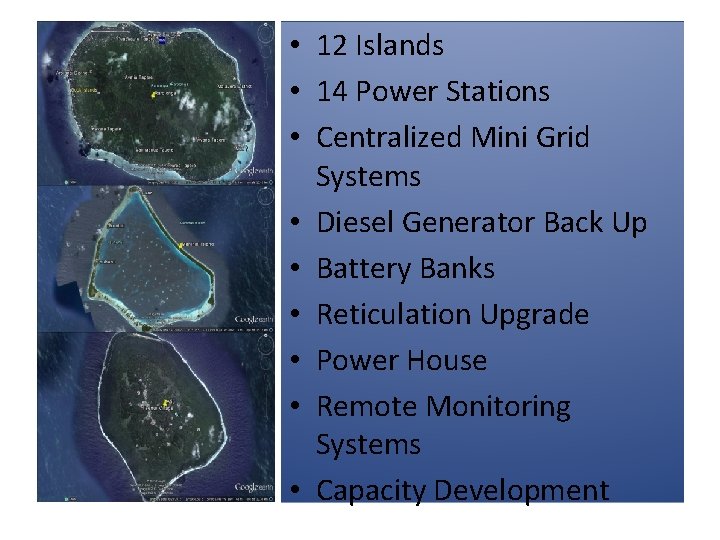
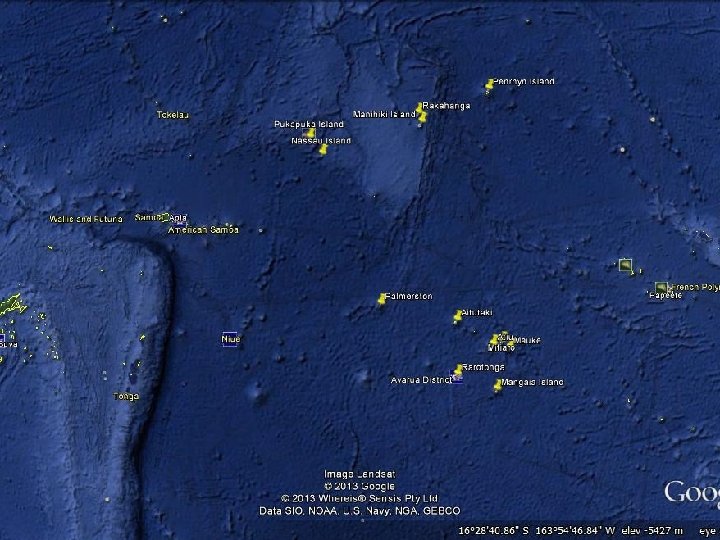
• 12 Islands • 14 Power Stations • Centralized Mini Grid Systems • Diesel Generator Back Up • Battery Banks • Reticulation Upgrade • Power House • Remote Monitoring Systems • Capacity Development
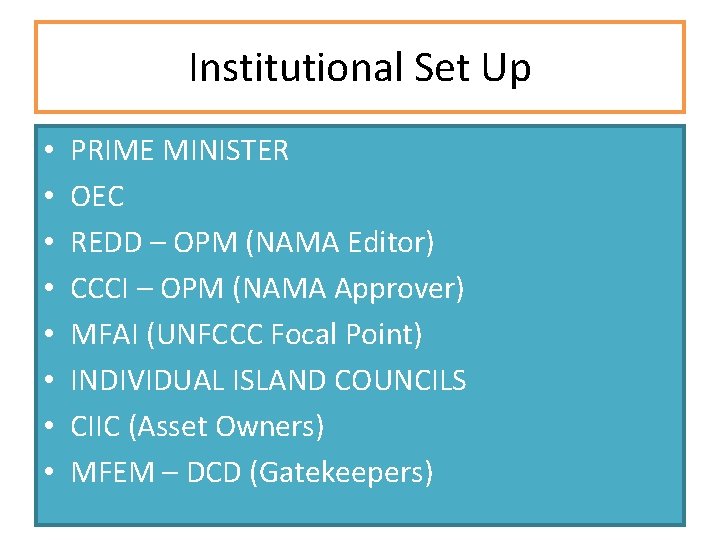
Institutional Set Up • • PRIME MINISTER OEC REDD – OPM (NAMA Editor) CCCI – OPM (NAMA Approver) MFAI (UNFCCC Focal Point) INDIVIDUAL ISLAND COUNCILS CIIC (Asset Owners) MFEM – DCD (Gatekeepers)
CONT… • PRIVATE SECTOR • POWER UTILITY (SOE) • NEC (Inactive at the moment)
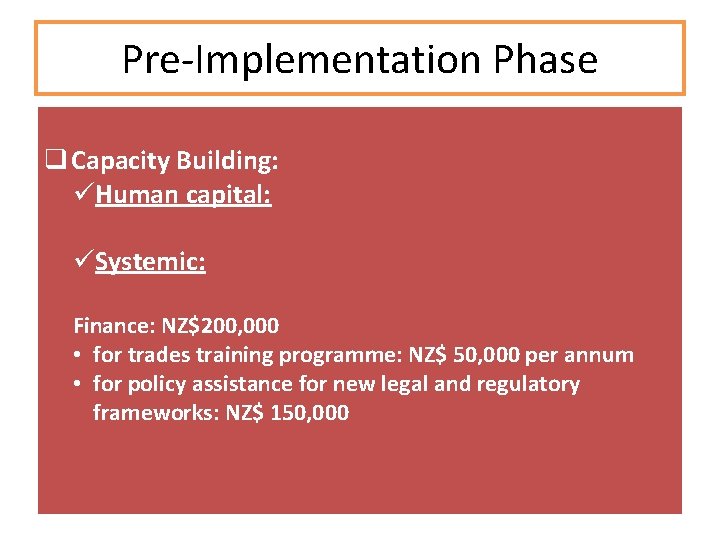
Pre-Implementation Phase q Capacity Building: üHuman capital: üSystemic: Finance: NZ$200, 000 • for trades training programme: NZ$ 50, 000 per annum • for policy assistance for new legal and regulatory frameworks: NZ$ 150, 000
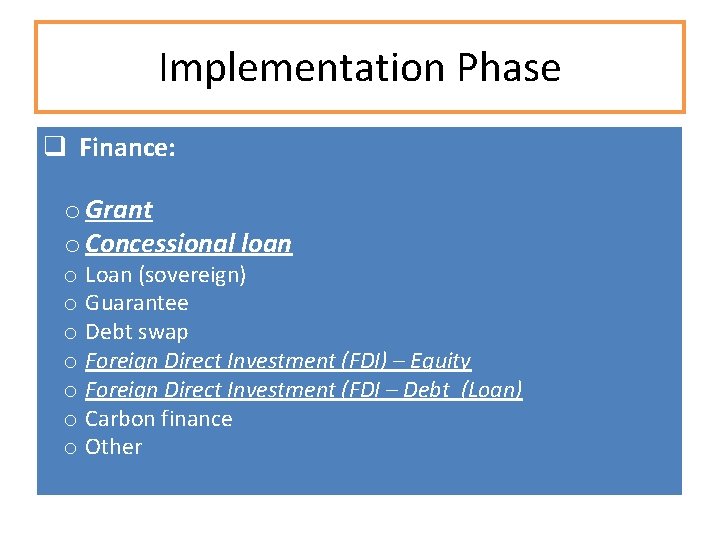
Implementation Phase q Finance: o Grant o Concessional loan o Loan (sovereign) o Guarantee o Debt swap o Foreign Direct Investment (FDI) – Equity o Foreign Direct Investment (FDI – Debt (Loan) o Carbon finance o Other
Implementation Phase q Technological: ü Mature ü Proven ü Economic energy technologies.
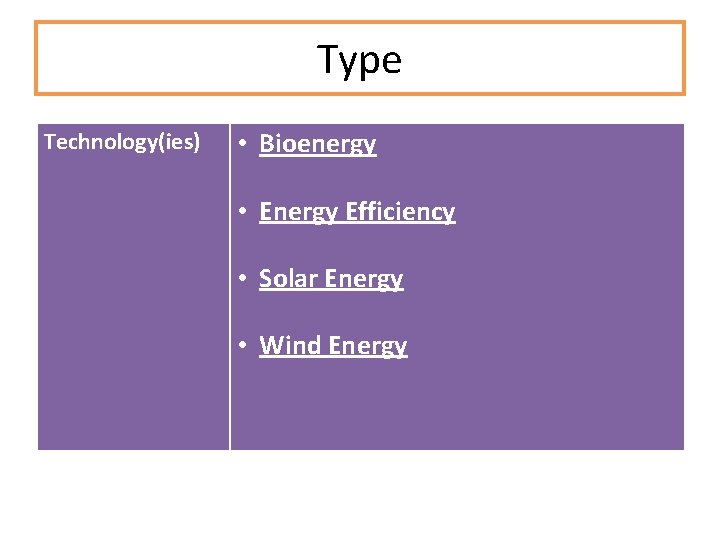
Type Technology(ies) • Bioenergy • Energy Efficiency • Solar Energy • Wind Energy
Mitigation Benefits Mitigation Using an emissions factor of 2. 7 benefits kg. CO 2/litre diesel, the avoided emissions based on the current total generation per annum in the Cook Islands is about 25 kt CO 2.
MRV • NSDP • Business Plans (Outputs & Outcomes) • Periodic Reporting Requirements (management) • Project Milestones • Technology performance • Carbon Emissions are measurable
MRV • • • Development Partner processes CI Financial Policies and Procedures (Law) Paris Declaration for AID Effectiveness Audit Processes Project To. R require Verification/Liability period
Development of the NAMA • SPREP Assistance (Developed Pacific NAMA Guidelines Template & TA) • Clear Policy and Political Will • Championed by the Prime Minister • An approved Implementation Plan • Involved a committee (MFAI, CCCI, REDD) • A story line was then determined • Consultancy Process took 2 weeks • Difficulty was on the Symantec's
Limitation • Finance – Overall Cost NZ$220 Million » Incremental Cost to be considered • Human Capacity – Pre-Implementation - Post Implementation • Geographical Location & Distribution • Transportation – shipping • Change in Government – change in Priority
THANK YOU
- Slides: 19