
COO LEARNING FROM COMMUNITY STORIES INFORMATION SESSION AUGUST

- Slides: 29
COO LEARNING FROM COMMUNITY STORIES INFORMATION SESSION AUGUST 27 TH, 2020 1
LAND ACKNOWLEDGEMENT We gather today on the ancestral land of the first people of Seattle, the Duwamish People. We honor with gratitude the land itself and the Duwamish Tribe, and all of the Native people who call King County home.
Technology Tips • Sign in with your name, pronouns, and organization. • Use the chat or hand raise function to submit questions to the group. • Keep your phone or headset muted unless you’re speaking to the group. • To enable closed caption, click ‘Closed Caption’ → ‘Show Subtitles’ 3
What we will cover § Communities of Opportunity Introduction § Funding Opportunity § COVID-19 Data § Participatory Research 101 § Community Engagement in Research § Application Specifics § Questions
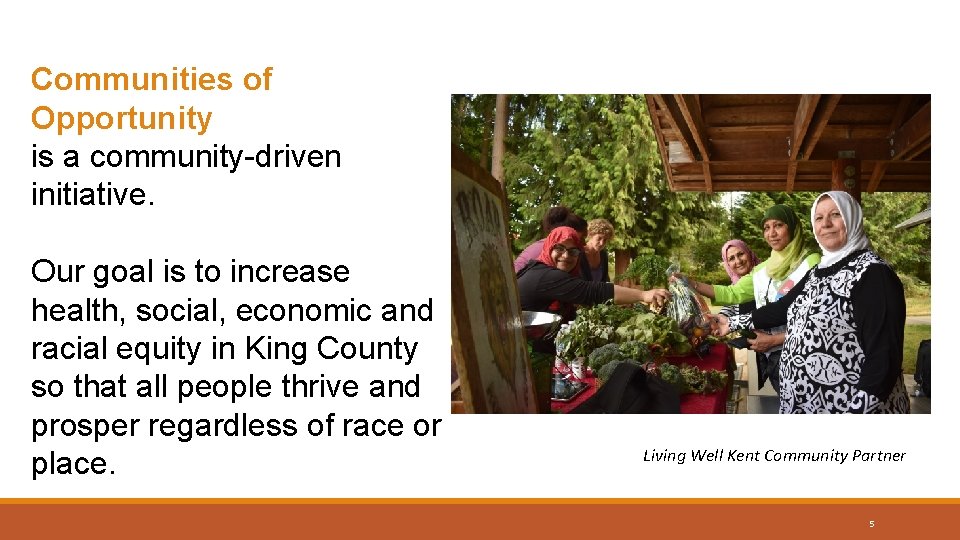
Communities of Opportunity is a community-driven initiative. Our goal is to increase health, social, economic and racial equity in King County so that all people thrive and prosper regardless of race or place. Living Well Kent Community Partner 5
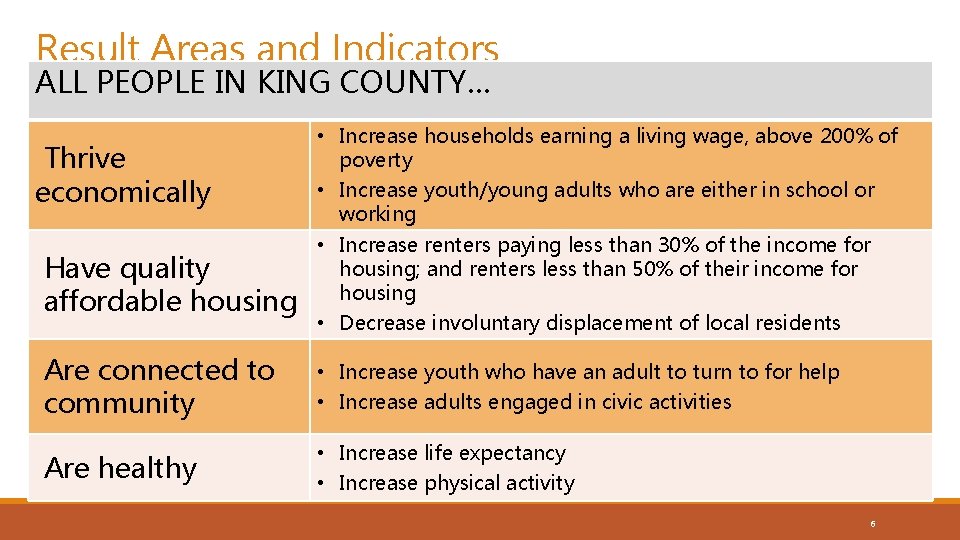
Result Areas and Indicators ALL PEOPLE IN KING COUNTY… Thrive. economically • Increase households earning a living wage, above 200% of poverty • Increase youth/young adults who are either in school or working Have quality affordable housing • Increase renters paying less than 30% of the income for housing; and renters less than 50% of their income for housing • Decrease involuntary displacement of local residents Are connected to community • Increase youth who have an adult to turn to for help • Increase adults engaged in civic activities Are healthy • Increase life expectancy • Increase physical activity 6
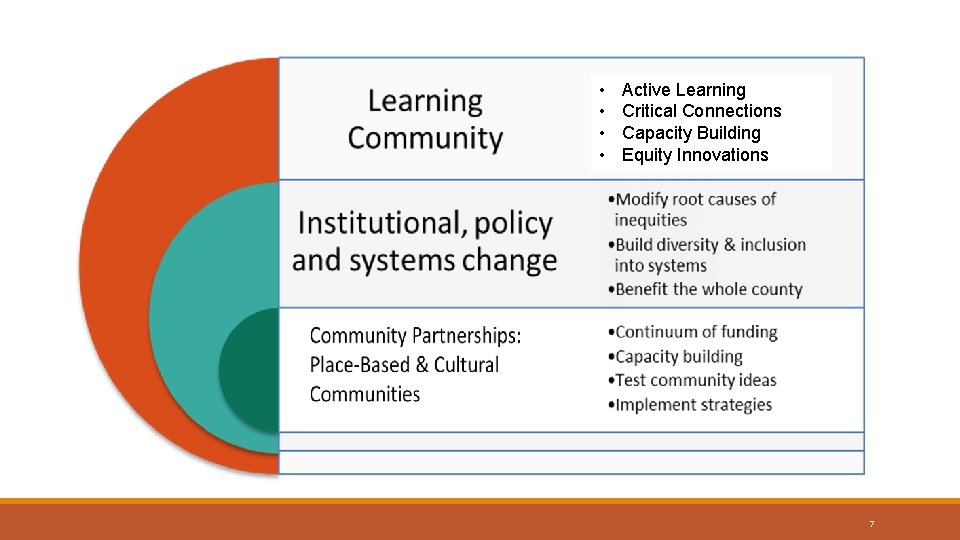
• • Active Learning Critical Connections Capacity Building Equity Innovations 7
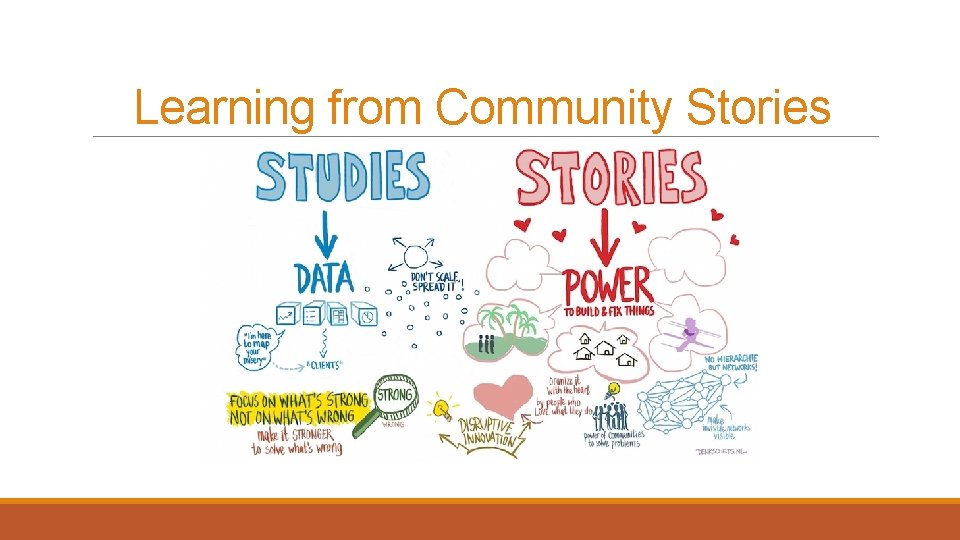
Learning from Community Stories
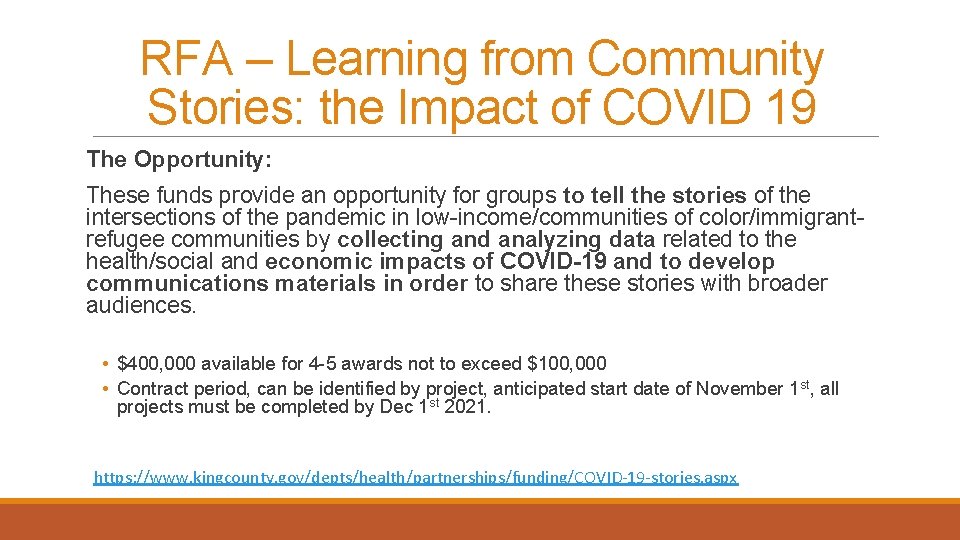
RFA – Learning from Community Stories: the Impact of COVID 19 The Opportunity: These funds provide an opportunity for groups to tell the stories of the intersections of the pandemic in low-income/communities of color/immigrantrefugee communities by collecting and analyzing data related to the health/social and economic impacts of COVID-19 and to develop communications materials in order to share these stories with broader audiences. • $400, 000 available for 4 -5 awards not to exceed $100, 000 • Contract period, can be identified by project, anticipated start date of November 1 st, all projects must be completed by Dec 1 st 2021. https: //www. kingcounty. gov/depts/health/partnerships/funding/COVID-19 -stories. aspx
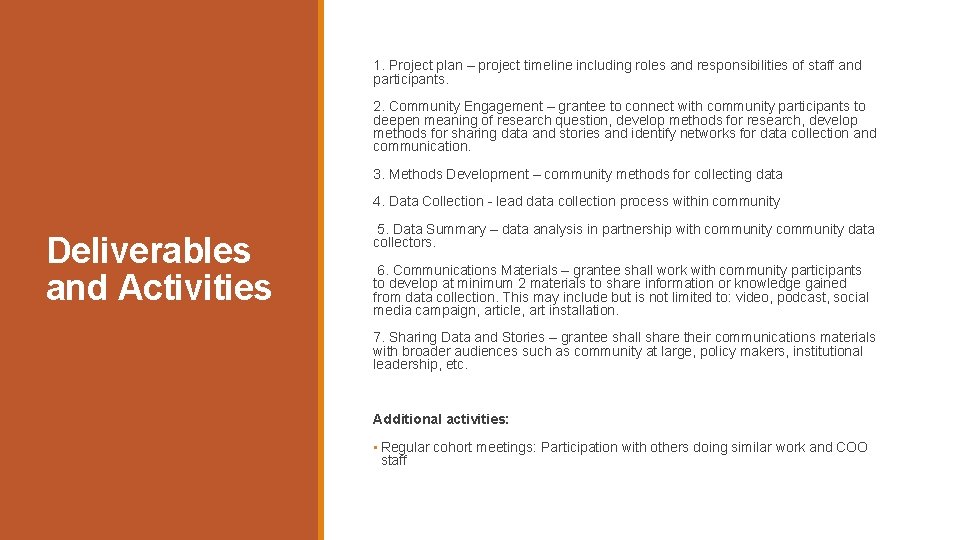
1. Project plan – project timeline including roles and responsibilities of staff and participants. 2. Community Engagement – grantee to connect with community participants to deepen meaning of research question, develop methods for research, develop methods for sharing data and stories and identify networks for data collection and communication. 3. Methods Development – community methods for collecting data 4. Data Collection - lead data collection process within community Deliverables and Activities 5. Data Summary – data analysis in partnership with community data collectors. 6. Communications Materials – grantee shall work with community participants to develop at minimum 2 materials to share information or knowledge gained from data collection. This may include but is not limited to: video, podcast, social media campaign, article, art installation. 7. Sharing Data and Stories – grantee shall share their communications materials with broader audiences such as community at large, policy makers, institutional leadership, etc. Additional activities: • Regular cohort meetings: Participation with others doing similar work and COO staff
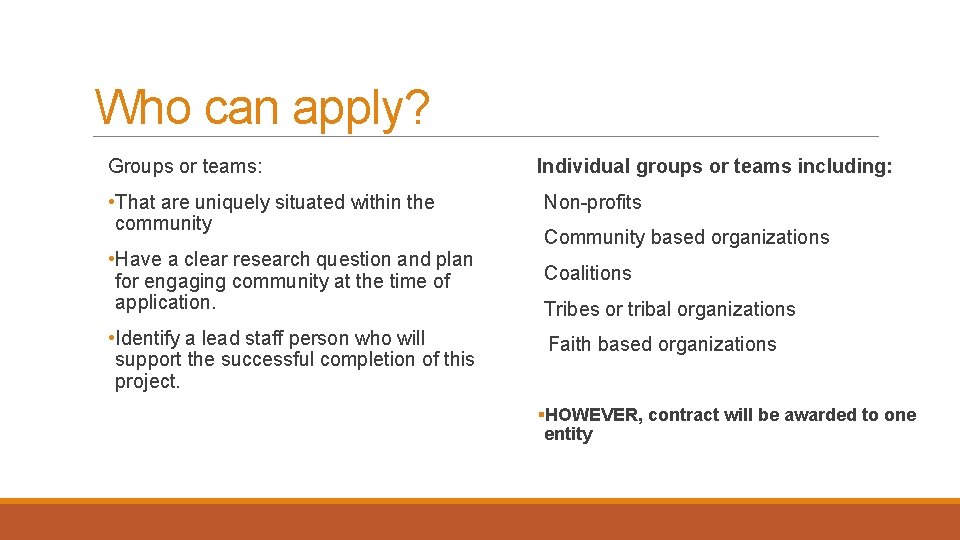
Who can apply? Groups or teams: • That are uniquely situated within the community • Have a clear research question and plan for engaging community at the time of application. • Identify a lead staff person who will support the successful completion of this project. Individual groups or teams including: Non-profits Community based organizations Coalitions Tribes or tribal organizations Faith based organizations §HOWEVER, contract will be awarded to one entity
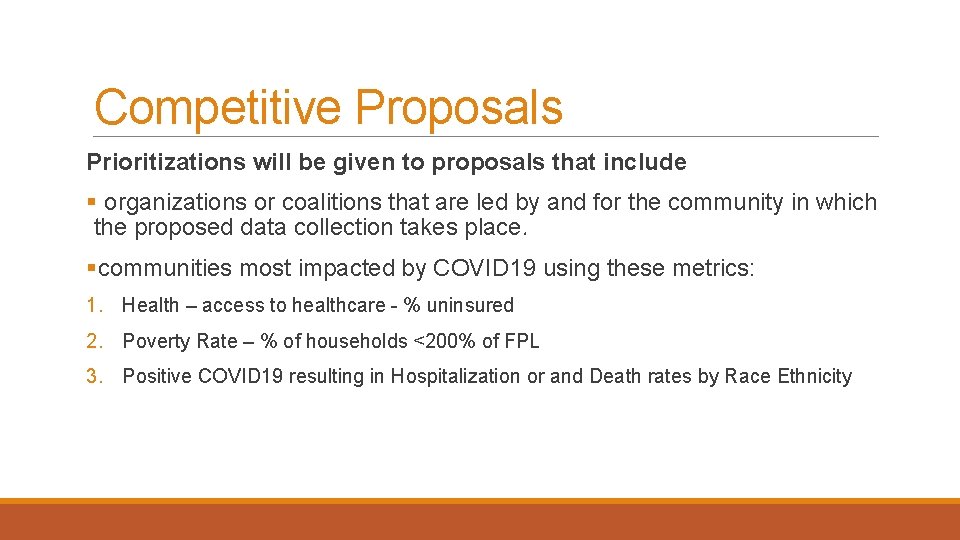
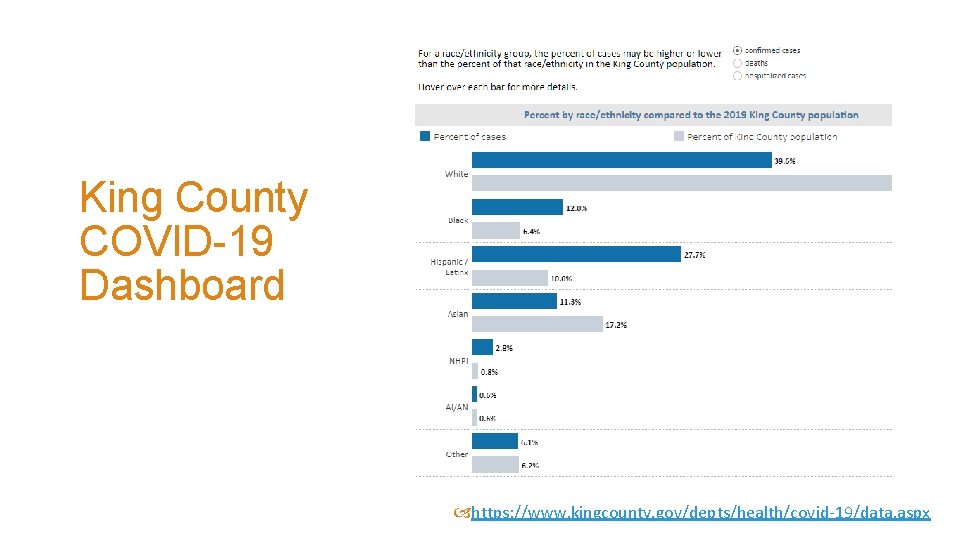
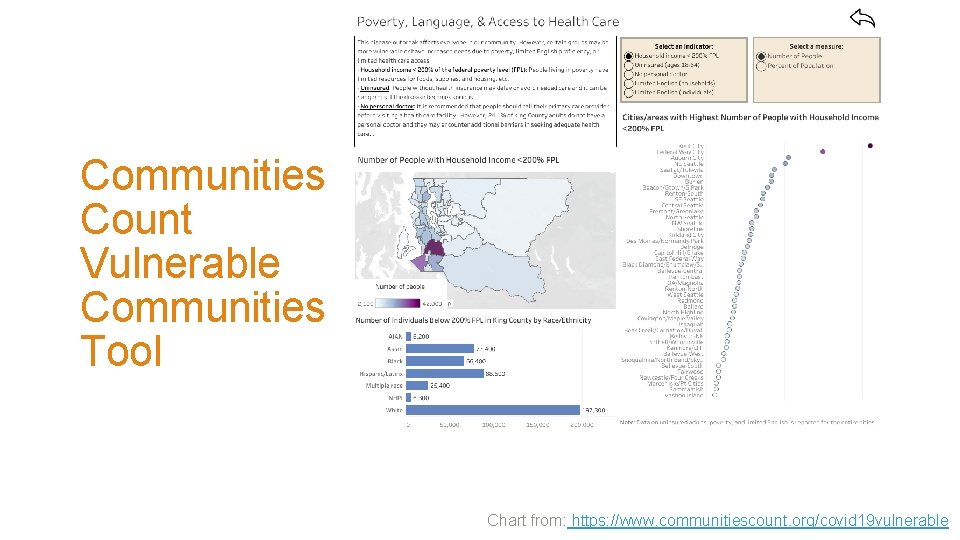
Competitive Proposals Prioritizations will be given to proposals that include § organizations or coalitions that are led by and for the community in which the proposed data collection takes place. §communities most impacted by COVID 19 using these metrics: 1. Health – access to healthcare - % uninsured 2. Poverty Rate – % of households <200% of FPL 3. Positive COVID 19 resulting in Hospitalization or and Death rates by Race Ethnicity
King County COVID-19 Dashboard https: //www. kingcounty. gov/depts/health/covid-19/data. aspx
Communities Count Vulnerable Communities Tool Chart from: https: //www. communitiescount. org/covid 19 vulnerable
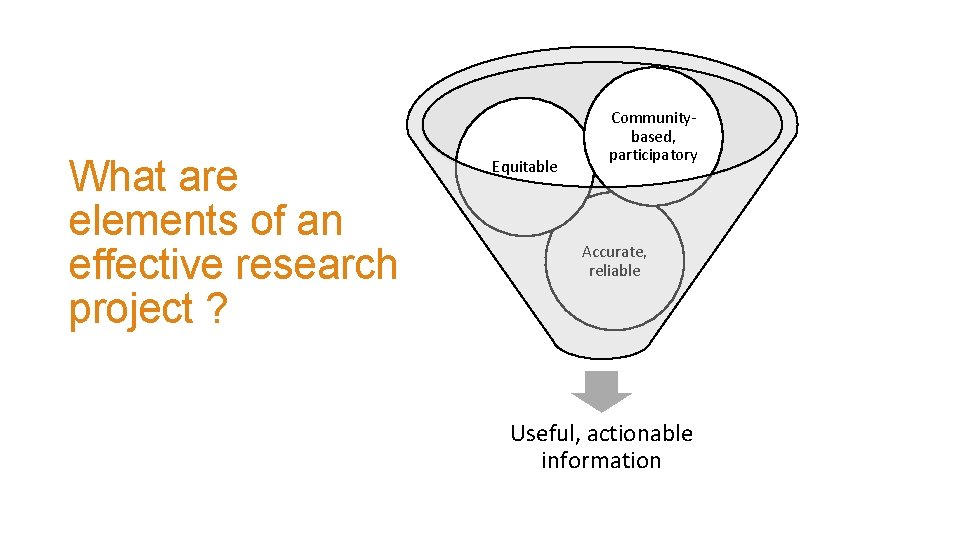
What are elements of an effective research project ? Equitable Communitybased, participatory Accurate, reliable Useful, actionable information
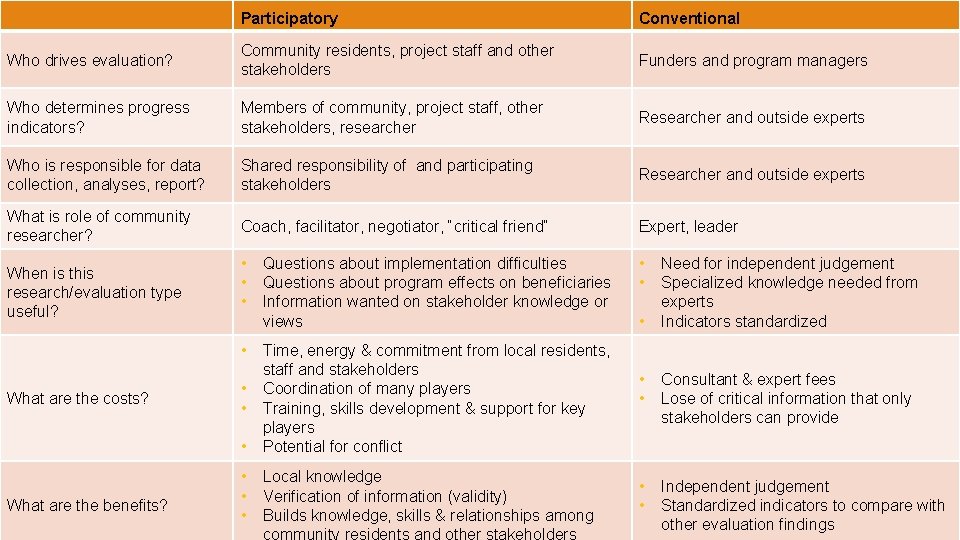
Participatory Conventional Who drives evaluation? Community residents, project staff and other stakeholders Funders and program managers Who determines progress indicators? Members of community, project staff, other stakeholders, researcher Researcher and outside experts Who is responsible for data collection, analyses, report? Shared responsibility of and participating stakeholders Researcher and outside experts What is role of community researcher? Coach, facilitator, negotiator, “critical friend” Expert, leader • • • When is this research/evaluation type useful? • What are the costs? • • • Questions about implementation difficulties Questions about program effects on beneficiaries Information wanted on stakeholder knowledge or views Time, energy & commitment from local residents, staff and stakeholders Coordination of many players Training, skills development & support for key players Potential for conflict Local knowledge Verification of information (validity) What are the benefits? Builds knowledge, skills & relationships among https: //depts. washington. edu/ccph/pdf_files/Evaluation. pdf community residents and other stakeholders • Need for independent judgement Specialized knowledge needed from experts Indicators standardized • • Consultant & expert fees Lose of critical information that only stakeholders can provide • • Independent judgement Standardized indicators to compare with other evaluation findings
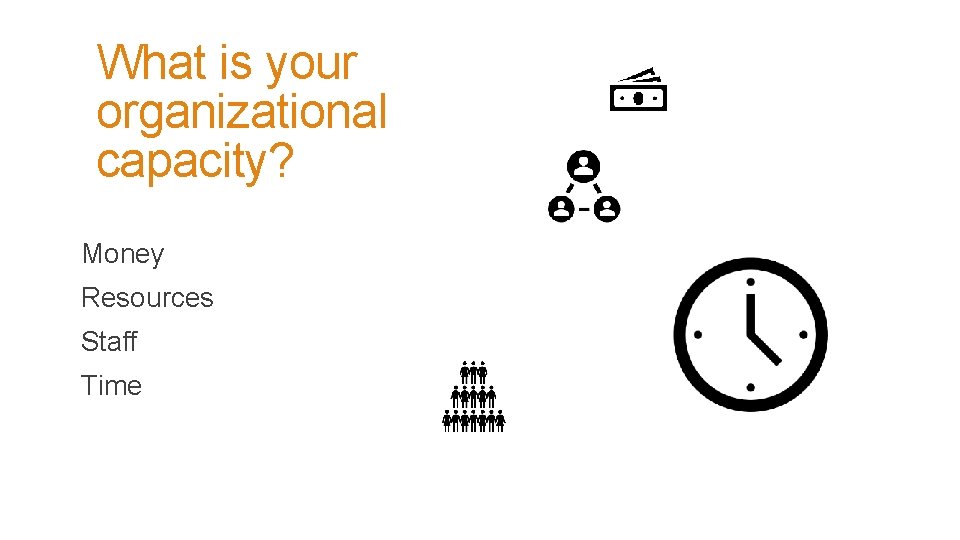
What is your organizational capacity? Money Resources Staff Time
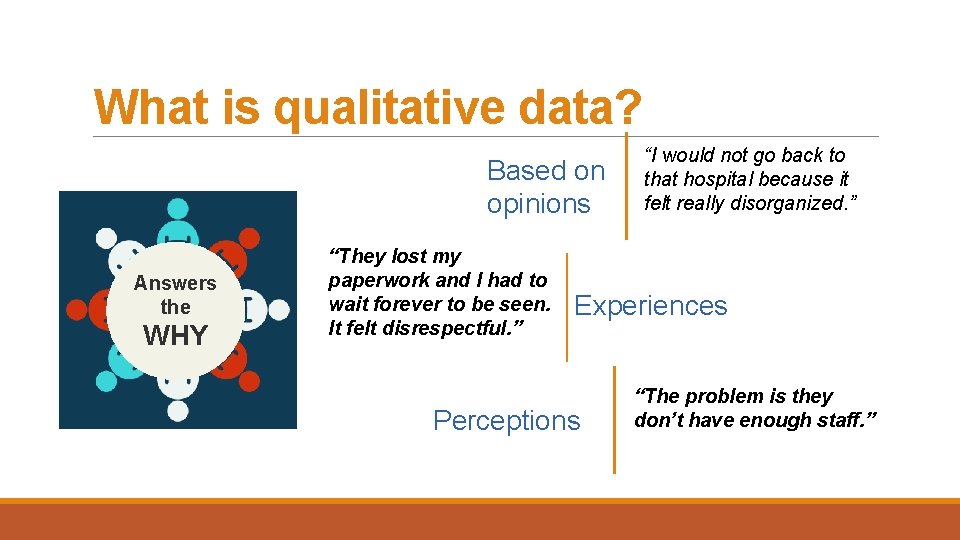
What is qualitative data? Based on opinions Answers the WHY “They lost my paperwork and I had to wait forever to be seen. It felt disrespectful. ” “I would not go back to that hospital because it felt really disorganized. ” Experiences Perceptions “The problem is they don’t have enough staff. ”
Why storytelling with data?
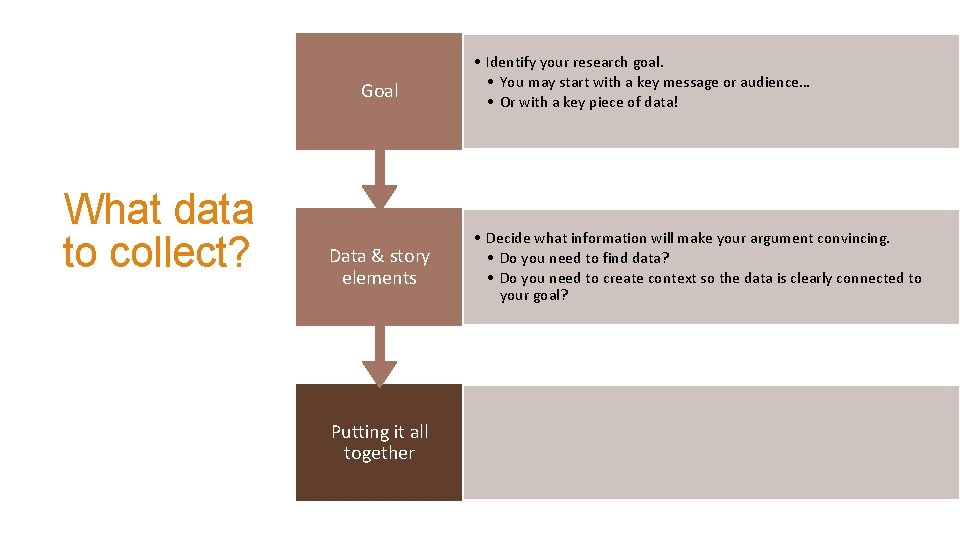
Goal What data to collect? Data & story elements Putting it all together • Identify your research goal. • You may start with a key message or audience… • Or with a key piece of data! • Decide what information will make your argument convincing. • Do you need to find data? • Do you need to create context so the data is clearly connected to your goal?
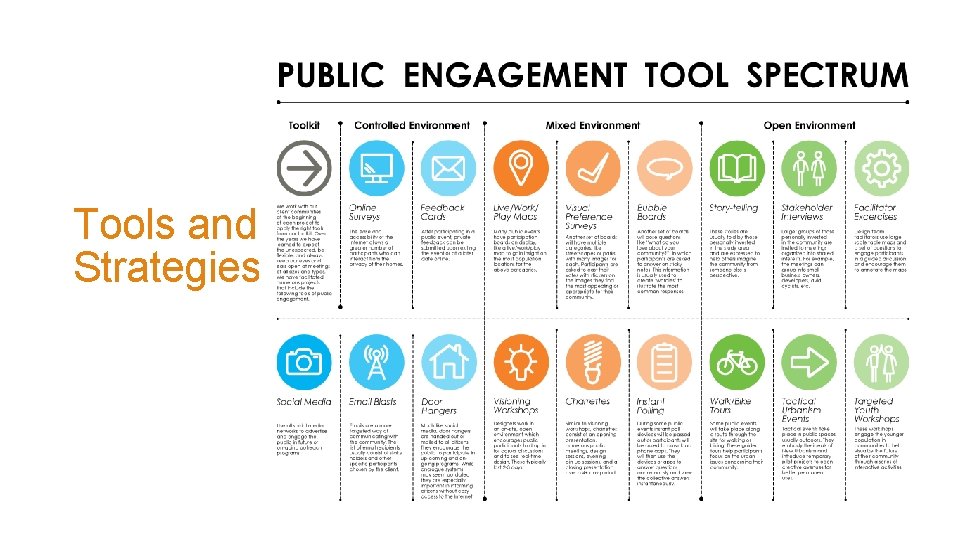
Tools and Strategies
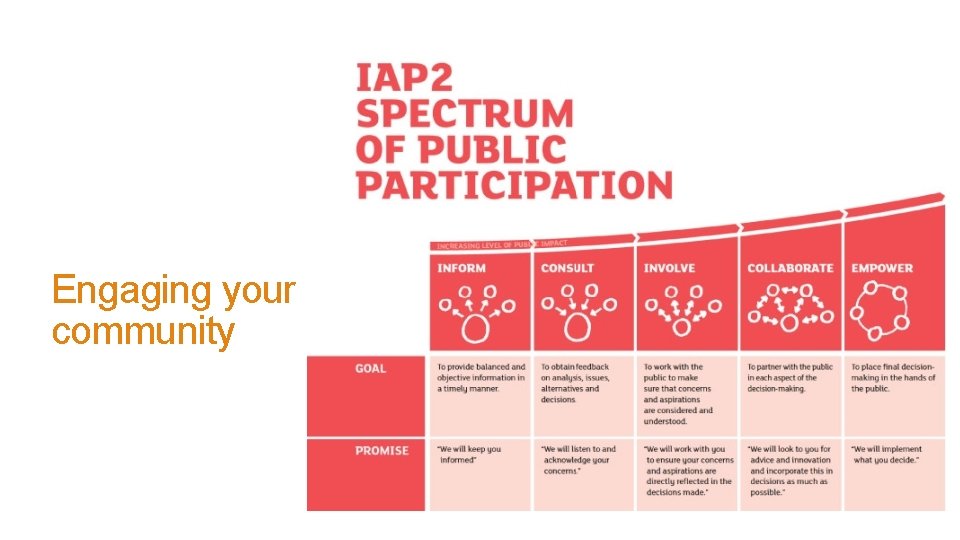
Engaging your community
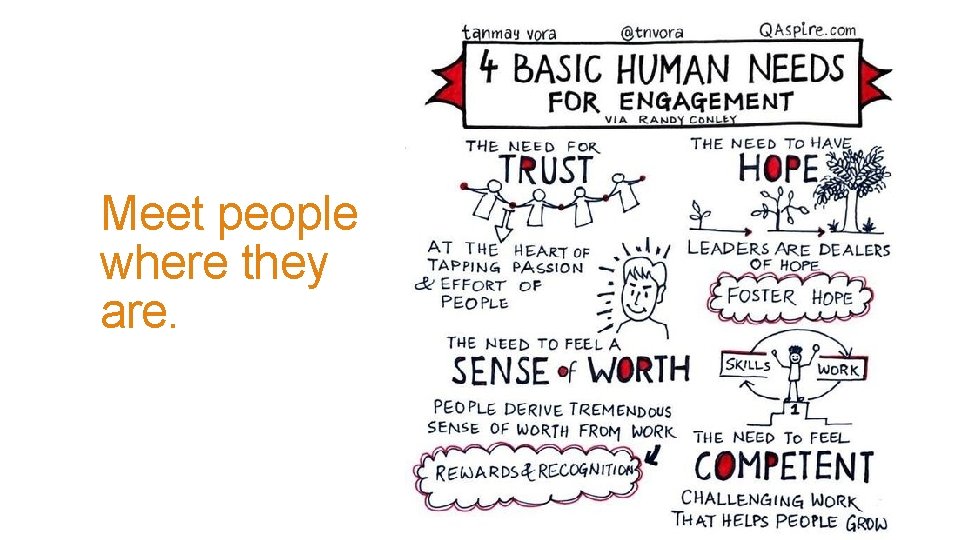
Meet people where they are.
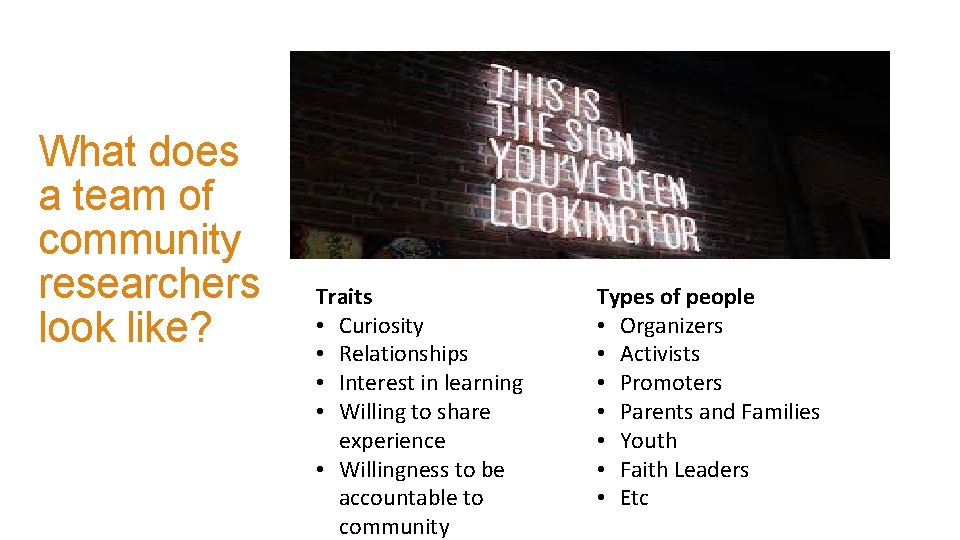
What does a team of community researchers look like? Traits • Curiosity • Relationships • Interest in learning • Willing to share experience • Willingness to be accountable to community Types of people • Organizers • Activists • Promoters • Parents and Families • Youth • Faith Leaders • Etc
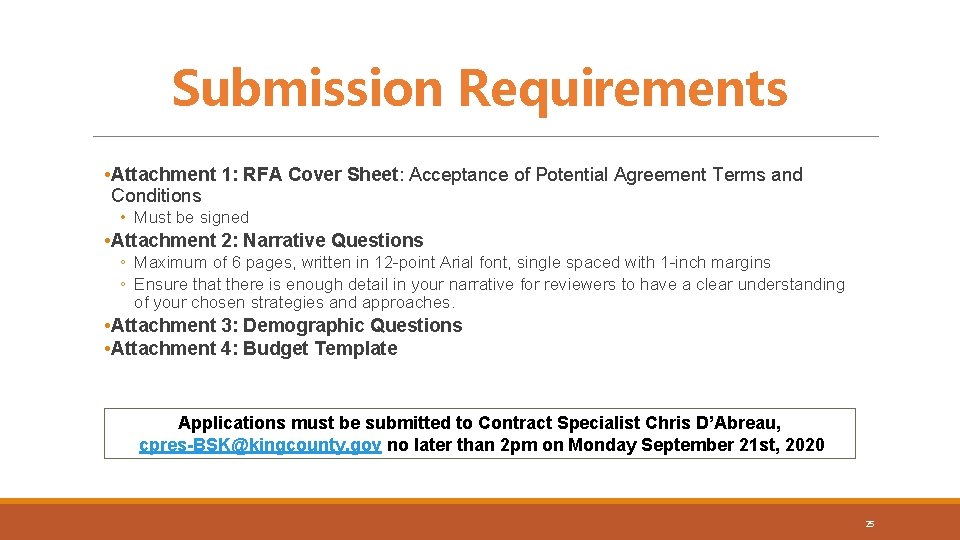
Submission Requirements • Attachment 1: RFA Cover Sheet: Acceptance of Potential Agreement Terms and Conditions • Must be signed • Attachment 2: Narrative Questions ◦ Maximum of 6 pages, written in 12 -point Arial font, single spaced with 1 -inch margins ◦ Ensure that there is enough detail in your narrative for reviewers to have a clear understanding of your chosen strategies and approaches. • Attachment 3: Demographic Questions • Attachment 4: Budget Template Applications must be submitted to Contract Specialist Chris D’Abreau, cpres-BSK@kingcounty. gov no later than 2 pm on Monday September 21 st, 2020 25
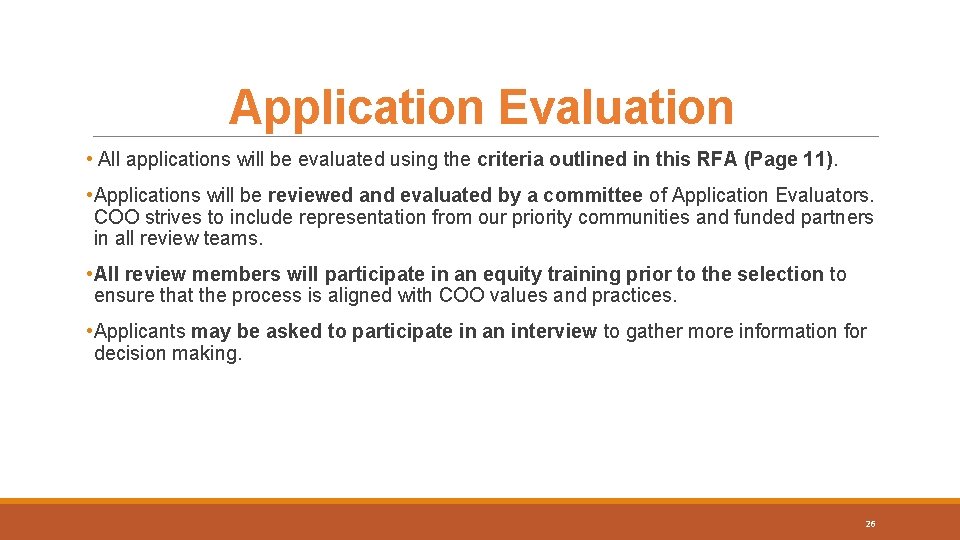
Application Evaluation • All applications will be evaluated using the criteria outlined in this RFA (Page 11). • Applications will be reviewed and evaluated by a committee of Application Evaluators. COO strives to include representation from our priority communities and funded partners in all review teams. • All review members will participate in an equity training prior to the selection to ensure that the process is aligned with COO values and practices. • Applicants may be asked to participate in an interview to gather more information for decision making. 26
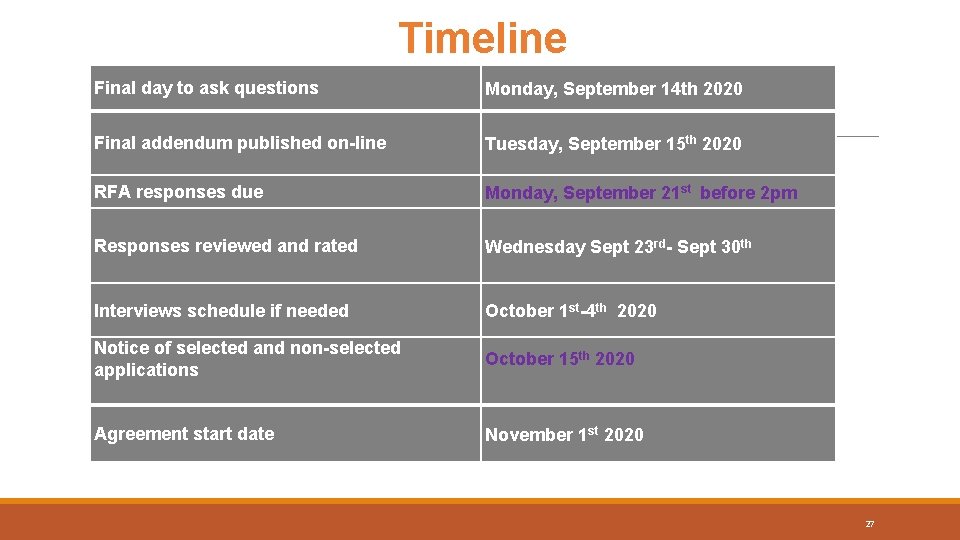
Timeline Final day to ask questions Monday, September 14 th 2020 Final addendum published on-line Tuesday, September 15 th 2020 RFA responses due Monday, September 21 st before 2 pm Responses reviewed and rated Wednesday Sept 23 rd- Sept 30 th Interviews schedule if needed October 1 st-4 th 2020 Notice of selected and non-selected applications October 15 th 2020 Agreement start date November 1 st 2020 27
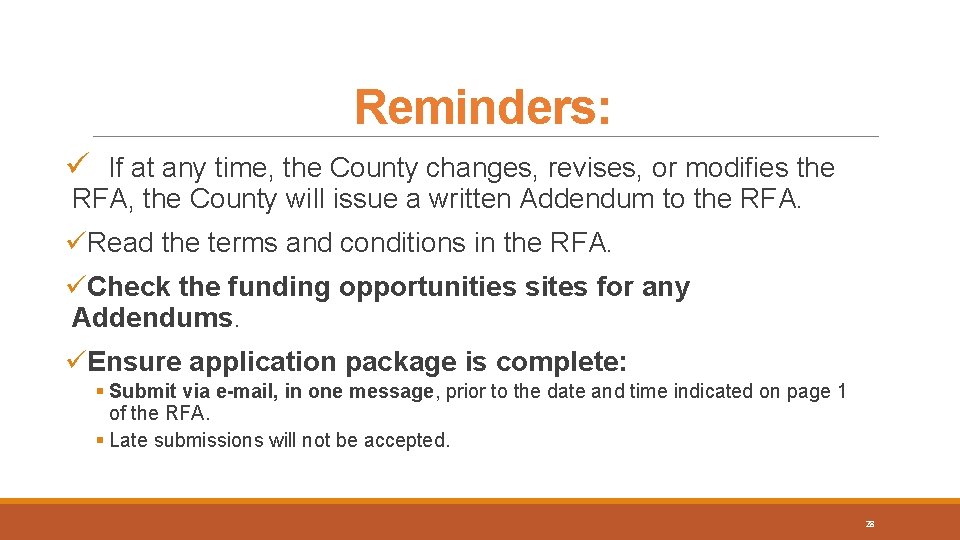
Reminders: ü If at any time, the County changes, revises, or modifies the RFA, the County will issue a written Addendum to the RFA. üRead the terms and conditions in the RFA. üCheck the funding opportunities sites for any Addendums. üEnsure application package is complete: § Submit via e-mail, in one message, prior to the date and time indicated on page 1 of the RFA. § Late submissions will not be accepted. 28
Questions and Additional Information 1. Questions on Participatory Research? 2. Questions about RFA? COO is offering Technical Assistance for the application process: ◦ Catherine Verrenti at catherine@verrenticonsulting. com ◦ Roxanne Hood Lyons, RHL Consulting, at roxannelyons@gmail. com Send all questions directly to Contract Specialist: Chris D’Abreau: cpresbsk@kingcounty. gov Learn more about Communities of Opportunity at: https: //www. coopartnerships. org