
Convolutional neural networks Many slides from Rob Fergus
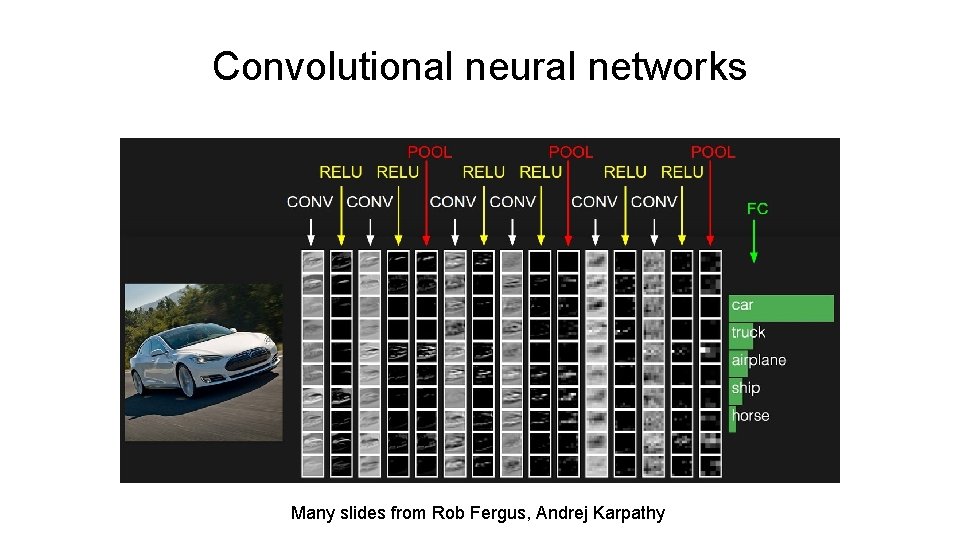
Convolutional neural networks Many slides from Rob Fergus, Andrej Karpathy
Outline • Building blocks • • Convolutional layers and backprop rules Pooling layers and nonlinearities • Architectures: • • 1 st generation (2012 -2013): Alex. Net 2 nd generation (2014): VGGNet, Goog. Le. Net 3 rd generation (2015): Res. Net 4 th generation (2016): Res. Ne. Xt, Dense. Net
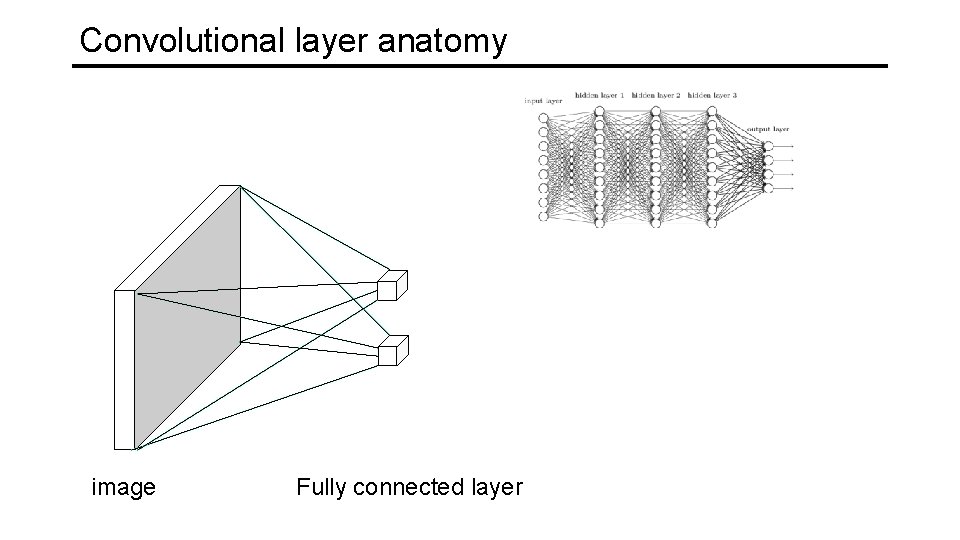
Convolutional layer anatomy image Fully connected layer
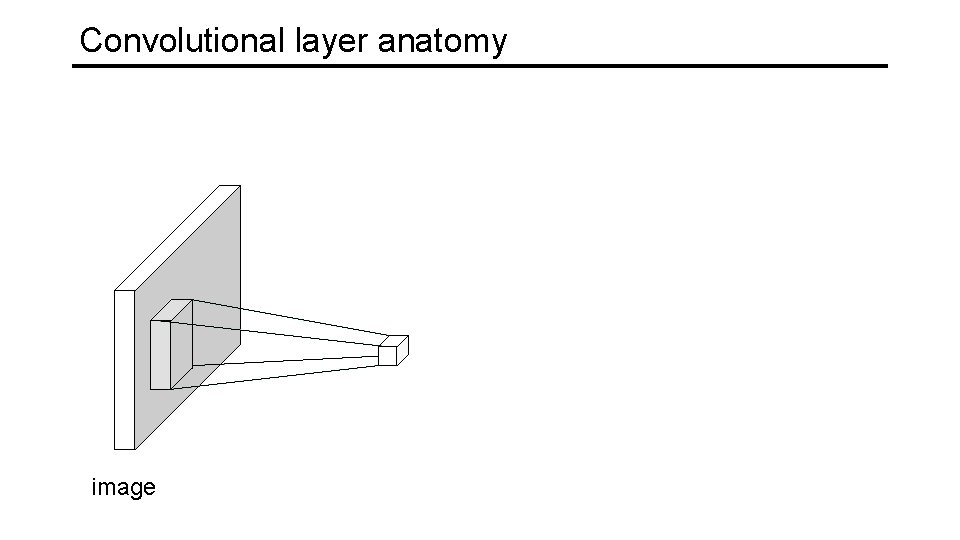
Convolutional layer anatomy image
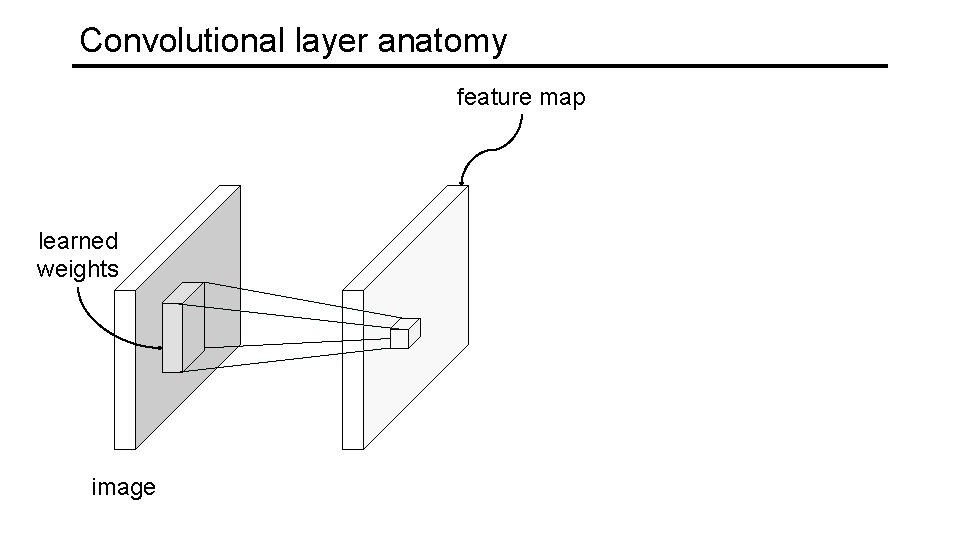
Convolutional layer anatomy feature map learned weights image
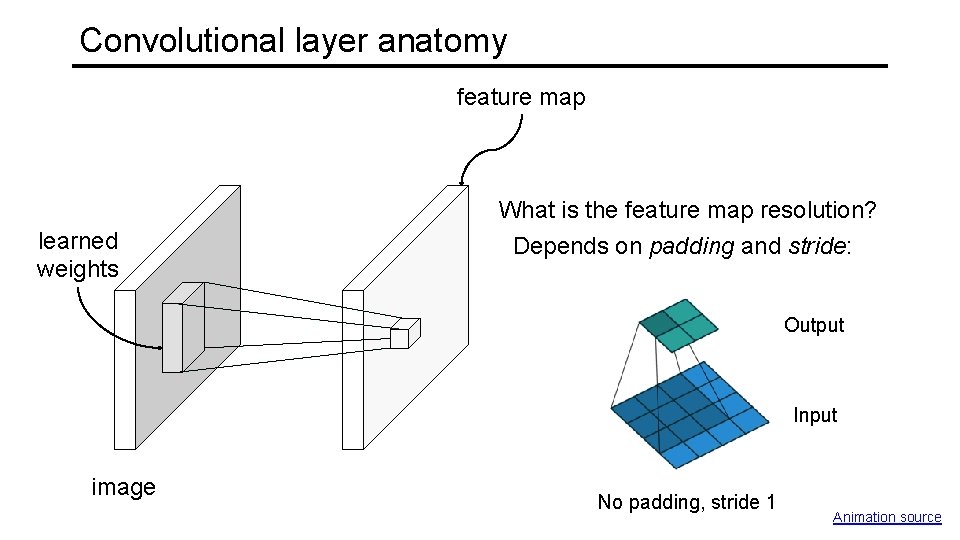
Convolutional layer anatomy feature map What is the feature map resolution? learned weights Depends on padding and stride: Output Input image No padding, stride 1 Animation source
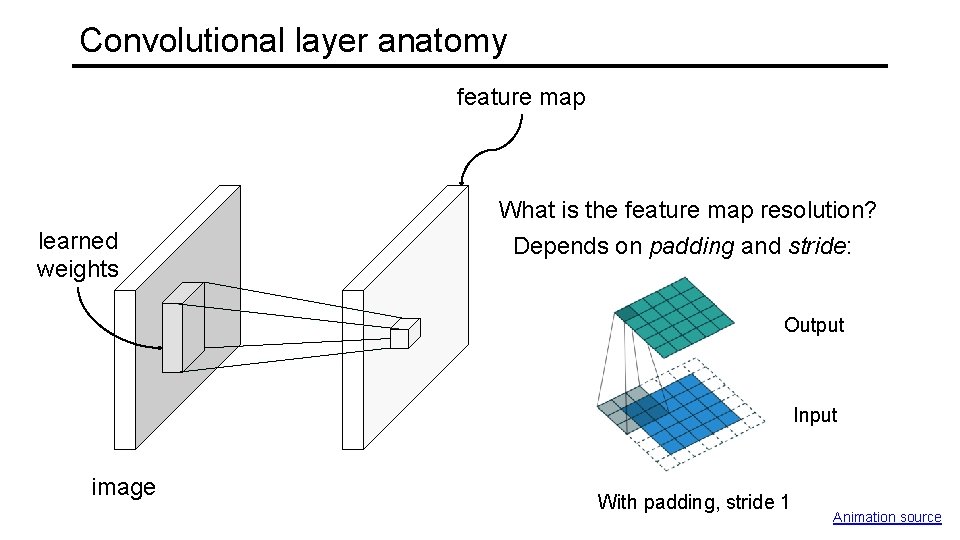
Convolutional layer anatomy feature map What is the feature map resolution? learned weights Depends on padding and stride: Output Input image With padding, stride 1 Animation source
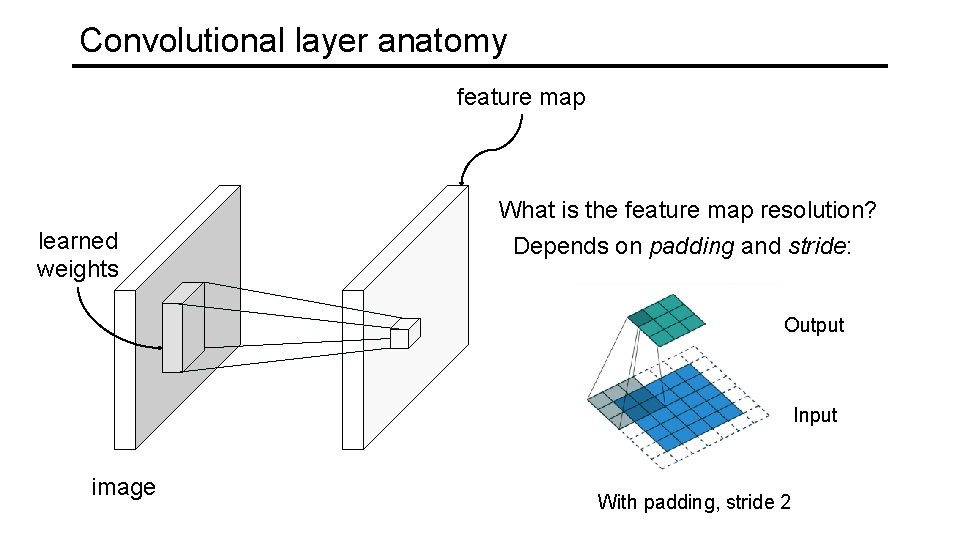
Convolutional layer anatomy feature map What is the feature map resolution? learned weights Depends on padding and stride: Output Input image With padding, stride 2
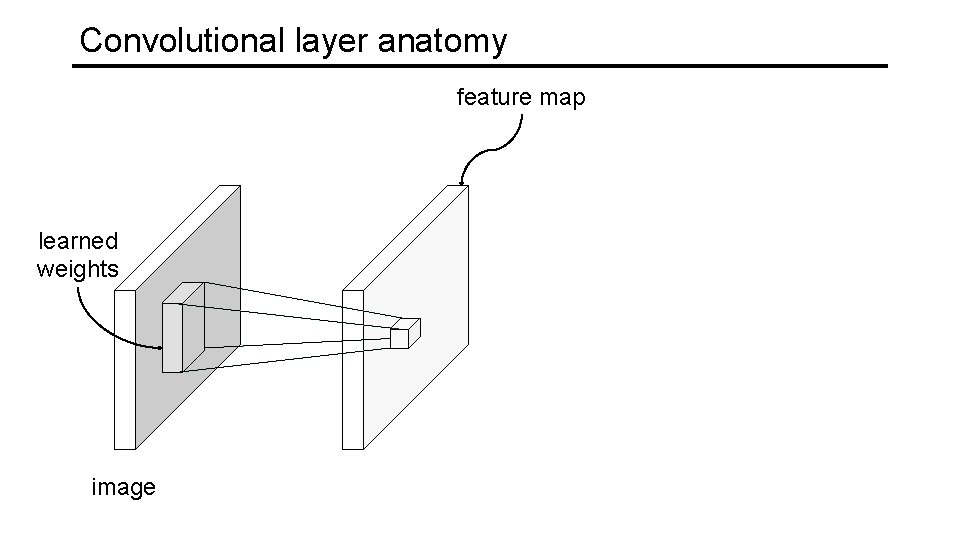
Convolutional layer anatomy feature map learned weights image
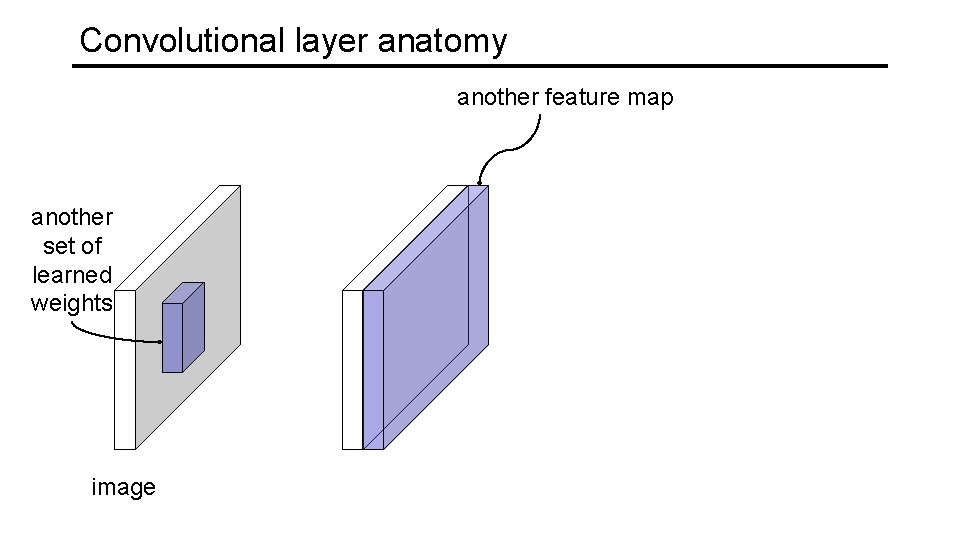
Convolutional layer anatomy another feature map another set of learned weights image
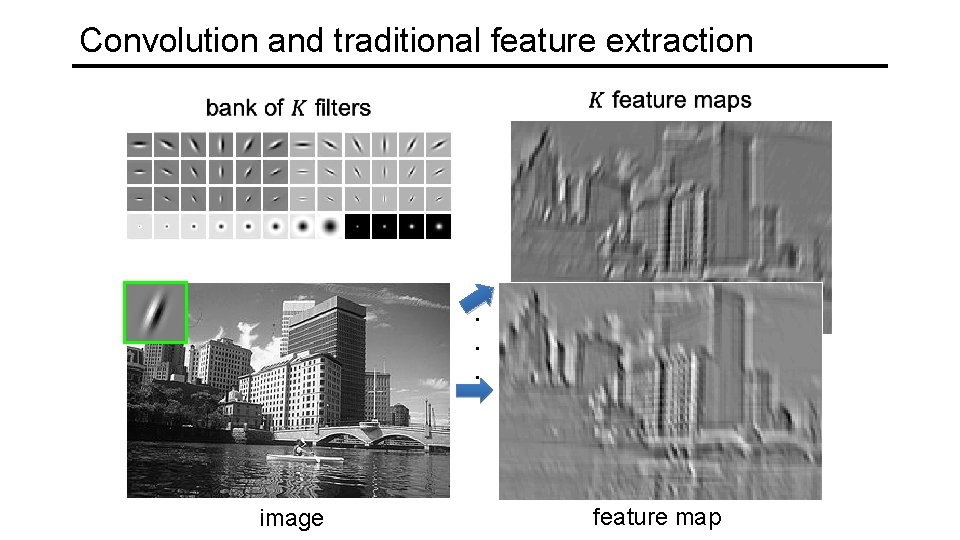
Convolution and traditional feature extraction . . . image feature map
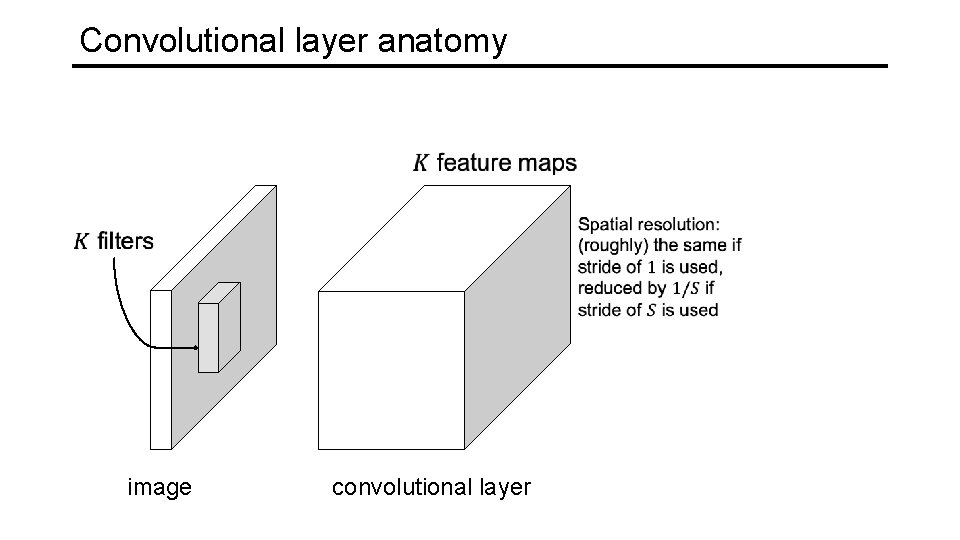
Convolutional layer anatomy image convolutional layer
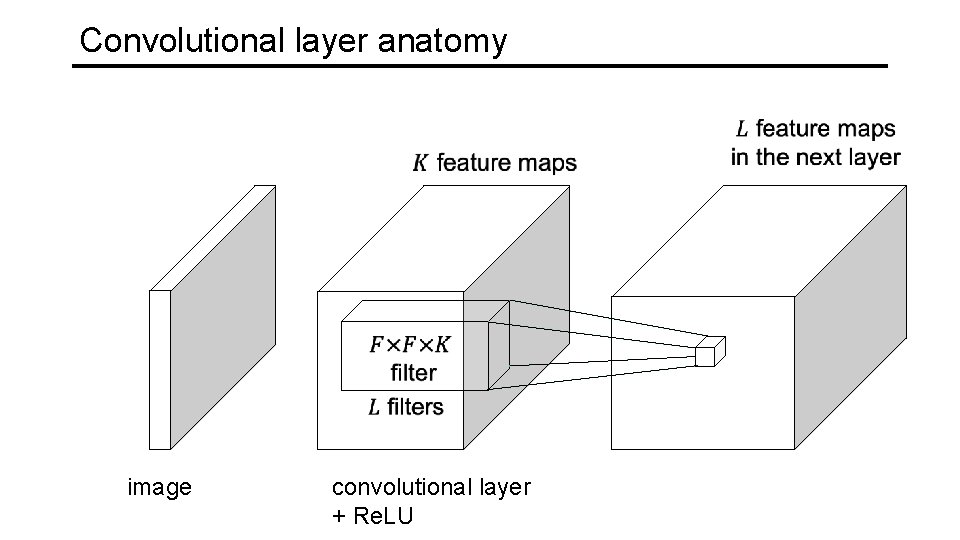
Convolutional layer anatomy image convolutional layer + Re. LU
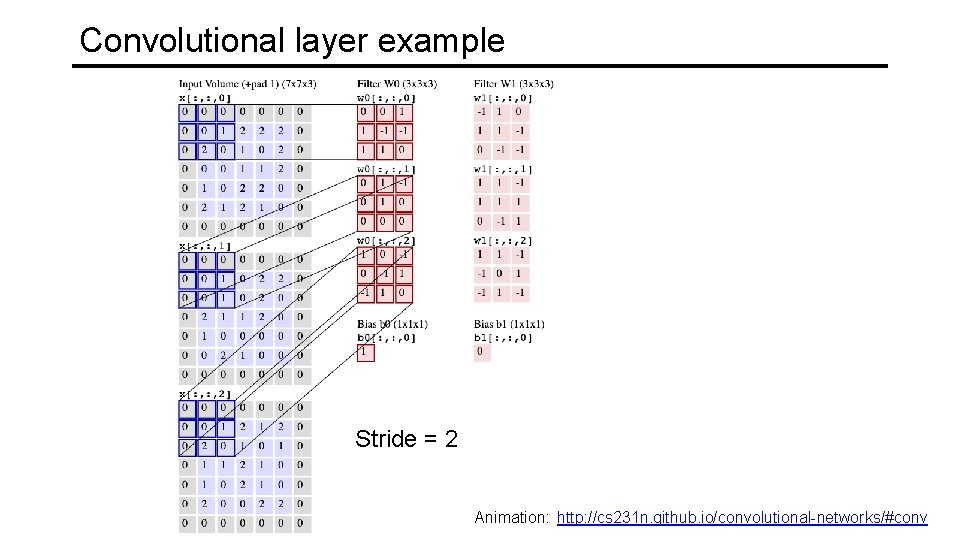
Convolutional layer example Stride = 2 Animation: http: //cs 231 n. github. io/convolutional-networks/#conv
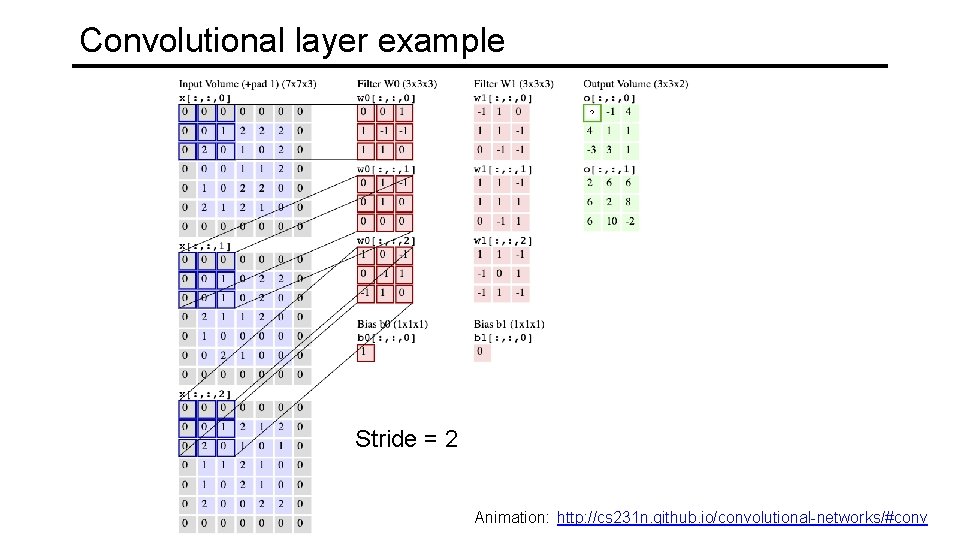
Convolutional layer example ? Stride = 2 Animation: http: //cs 231 n. github. io/convolutional-networks/#conv
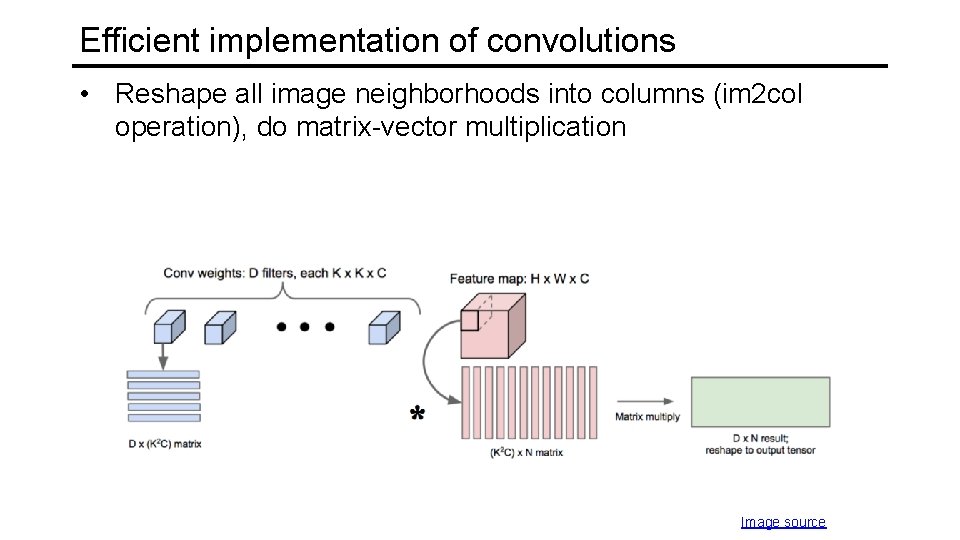
Efficient implementation of convolutions • Reshape all image neighborhoods into columns (im 2 col operation), do matrix-vector multiplication Image source
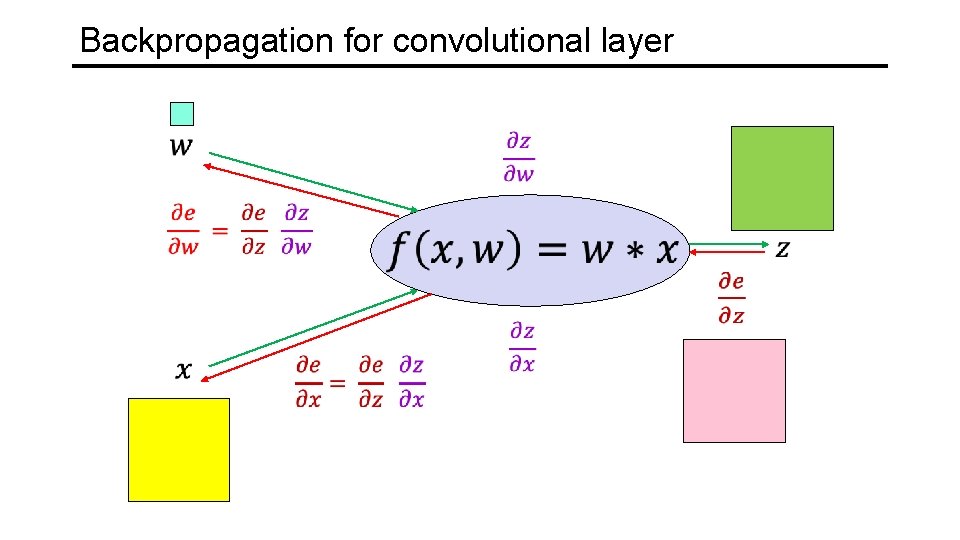
Backpropagation for convolutional layer
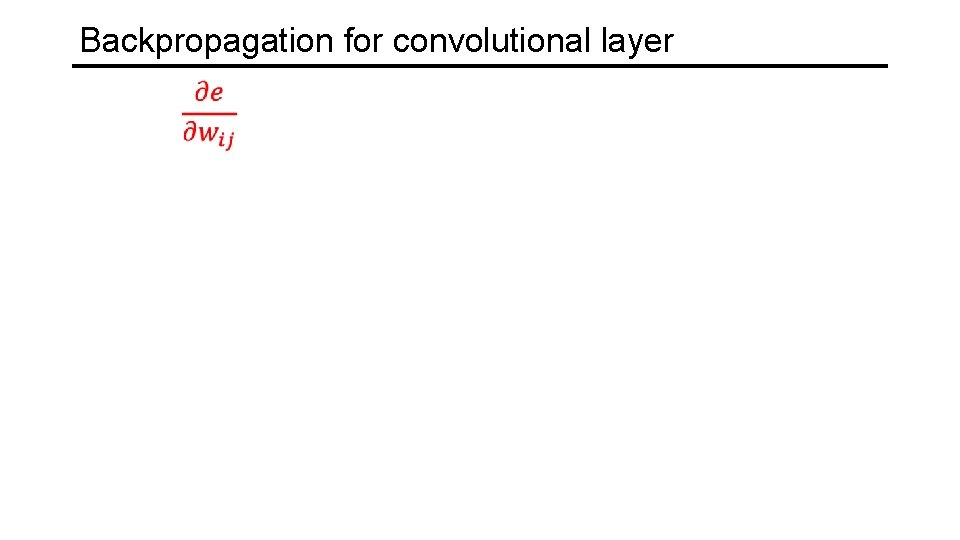
Backpropagation for convolutional layer
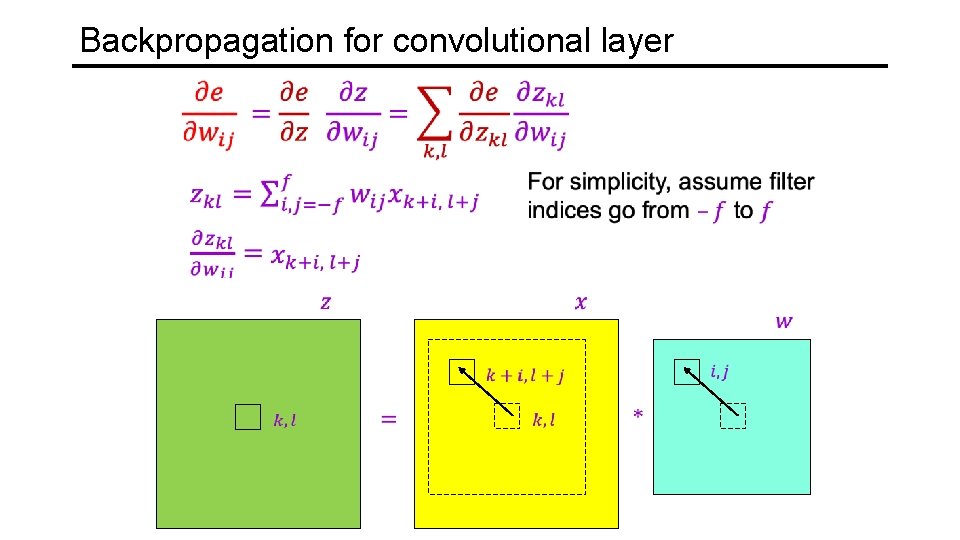
Backpropagation for convolutional layer
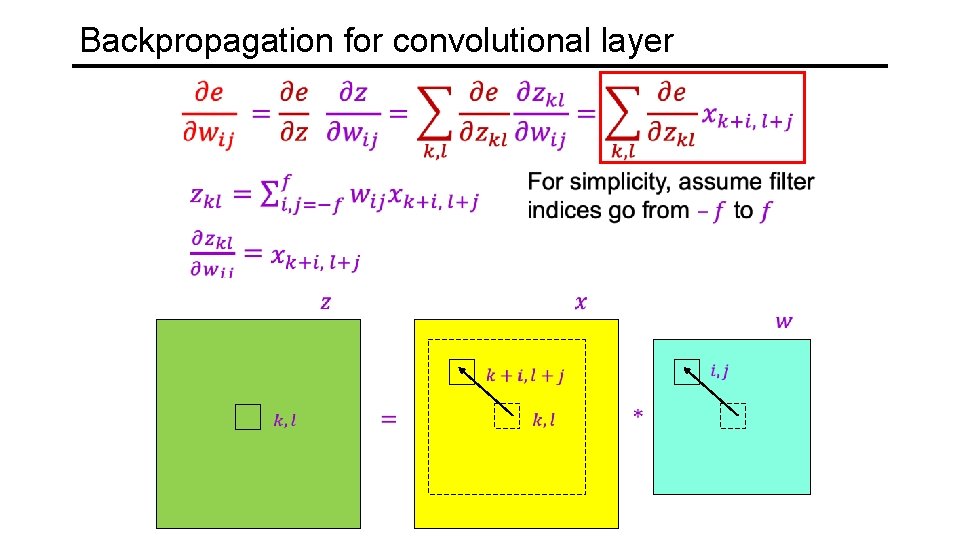
Backpropagation for convolutional layer
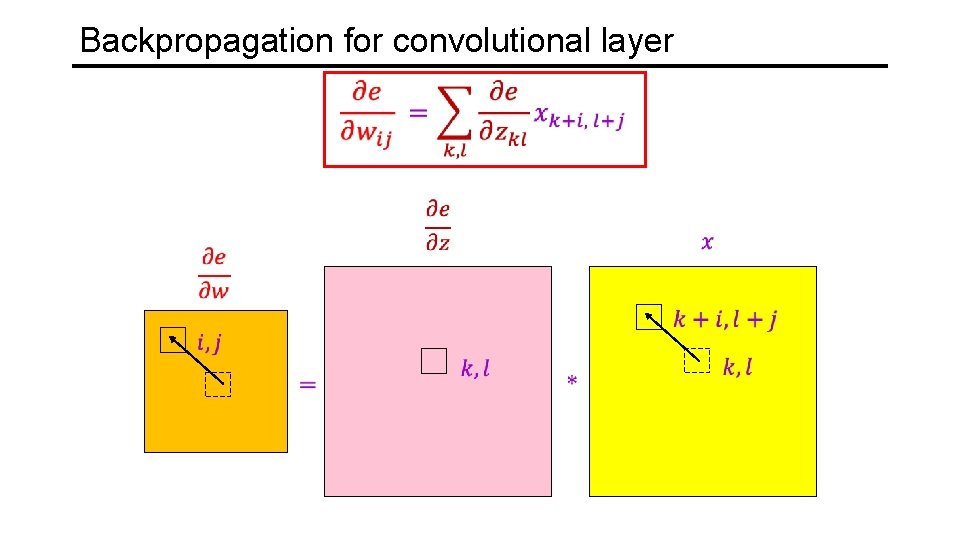
Backpropagation for convolutional layer
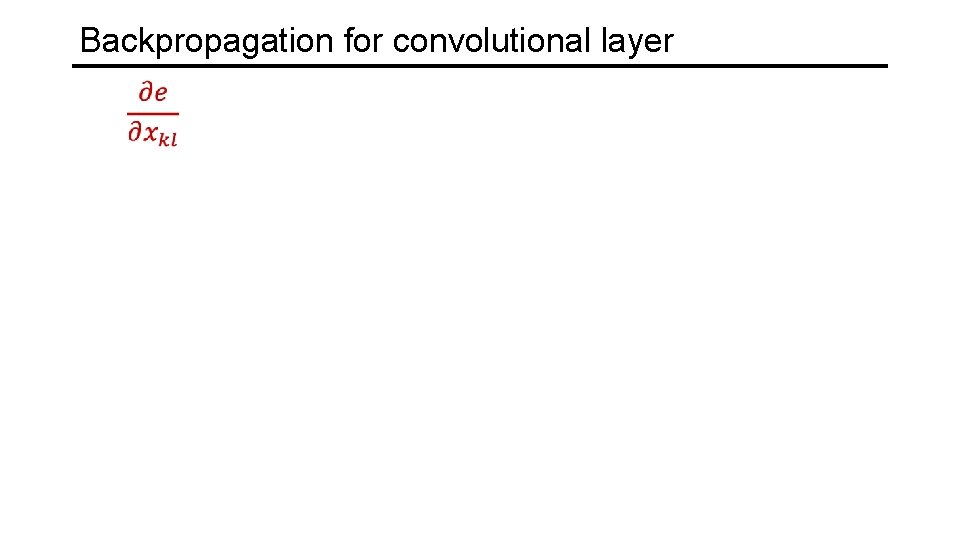
Backpropagation for convolutional layer
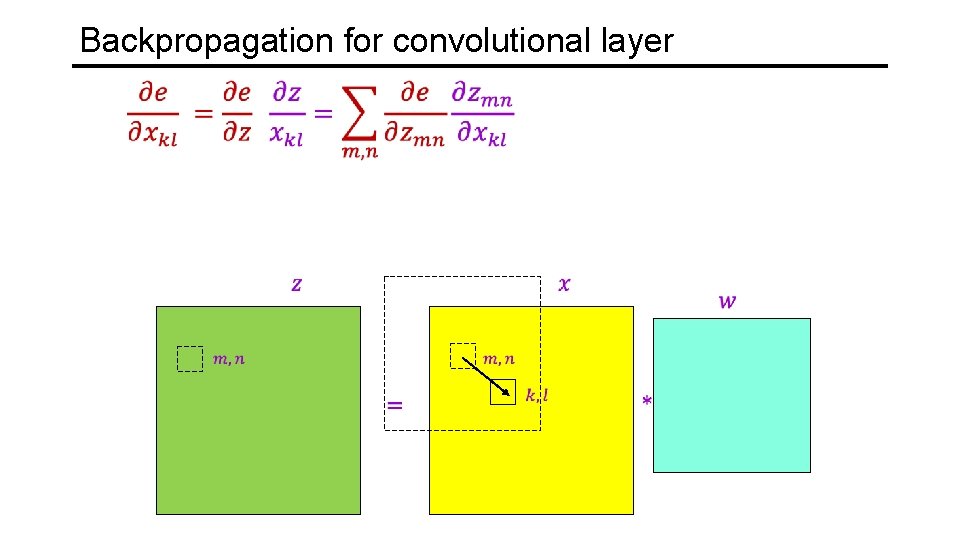
Backpropagation for convolutional layer
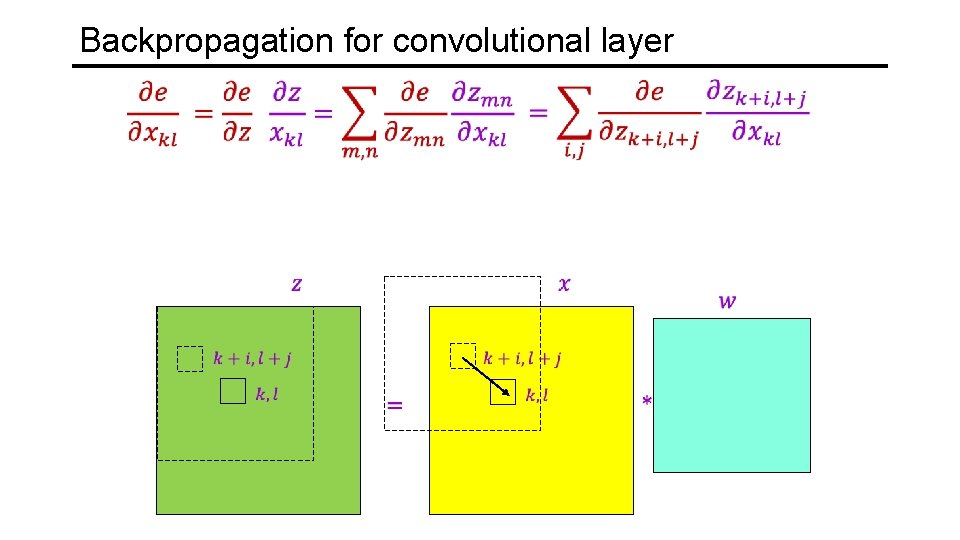
Backpropagation for convolutional layer
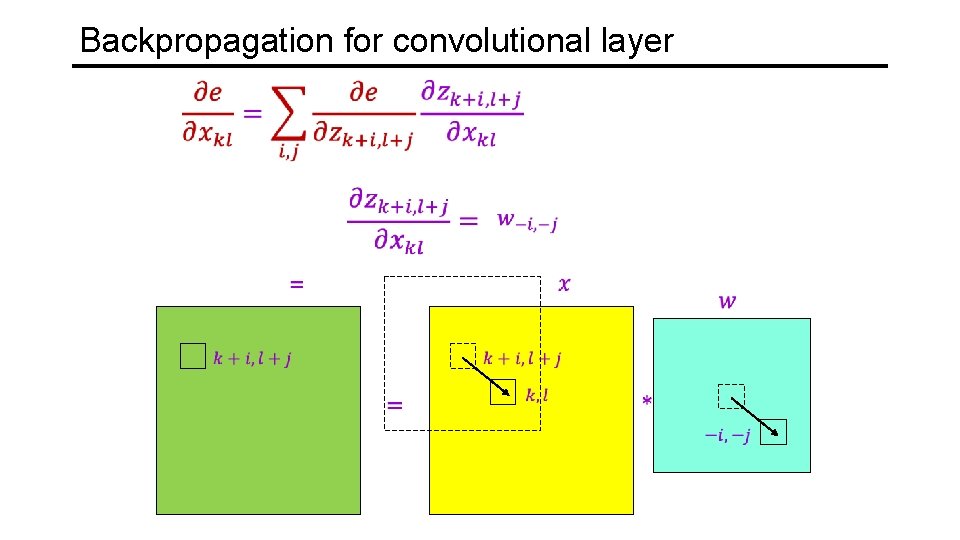
Backpropagation for convolutional layer
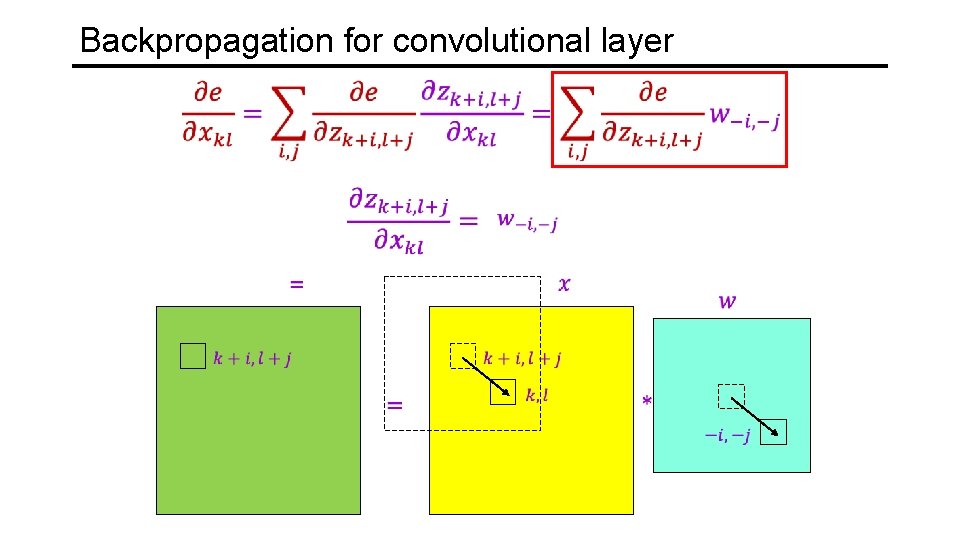
Backpropagation for convolutional layer
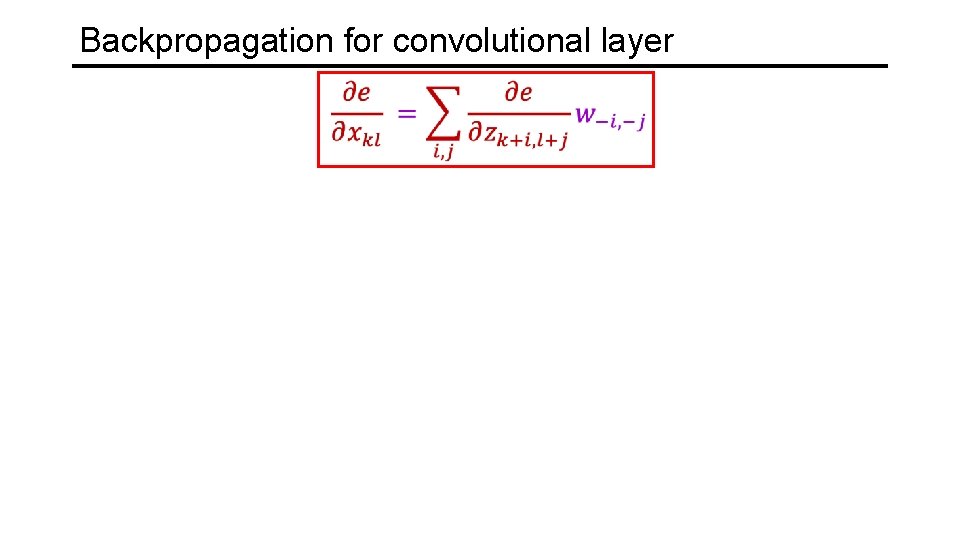
Backpropagation for convolutional layer
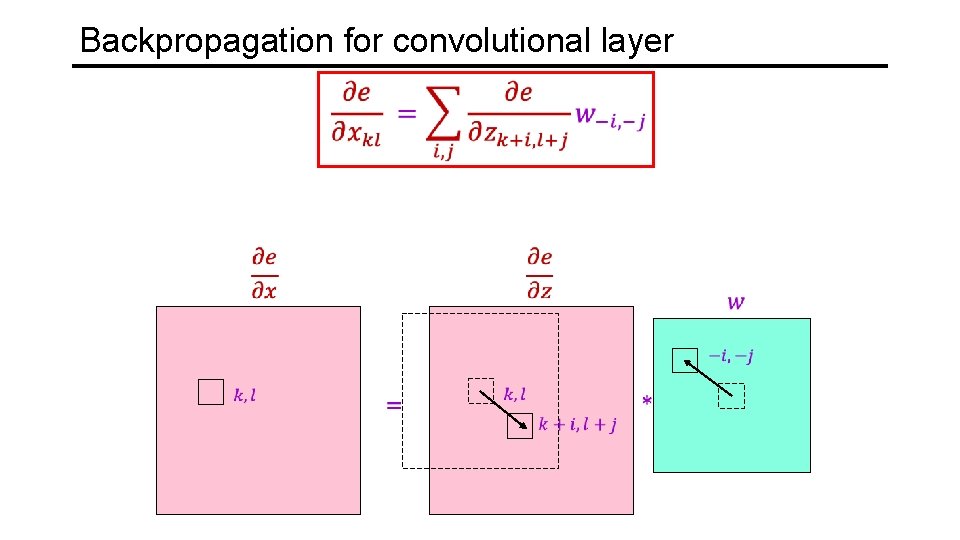
Backpropagation for convolutional layer
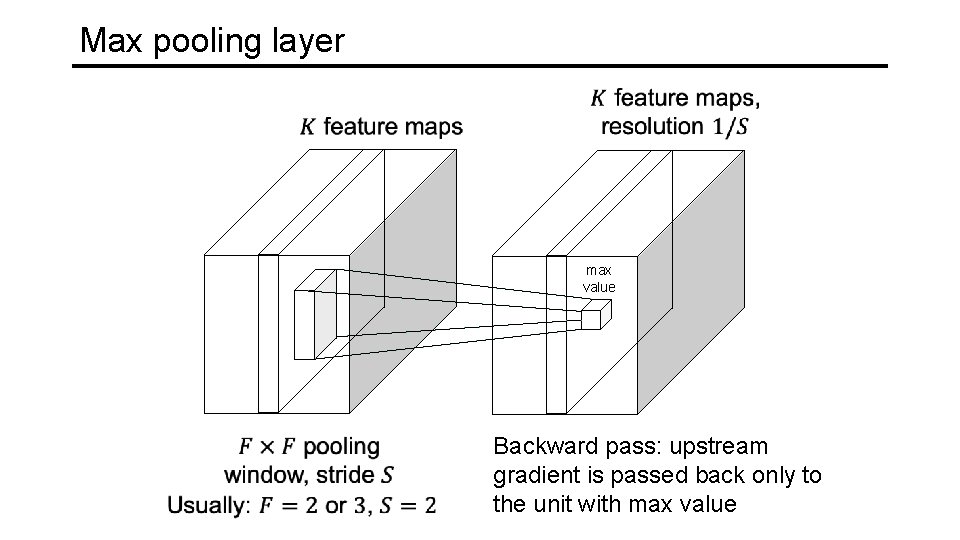
Max pooling layer max value Backward pass: upstream gradient is passed back only to the unit with max value
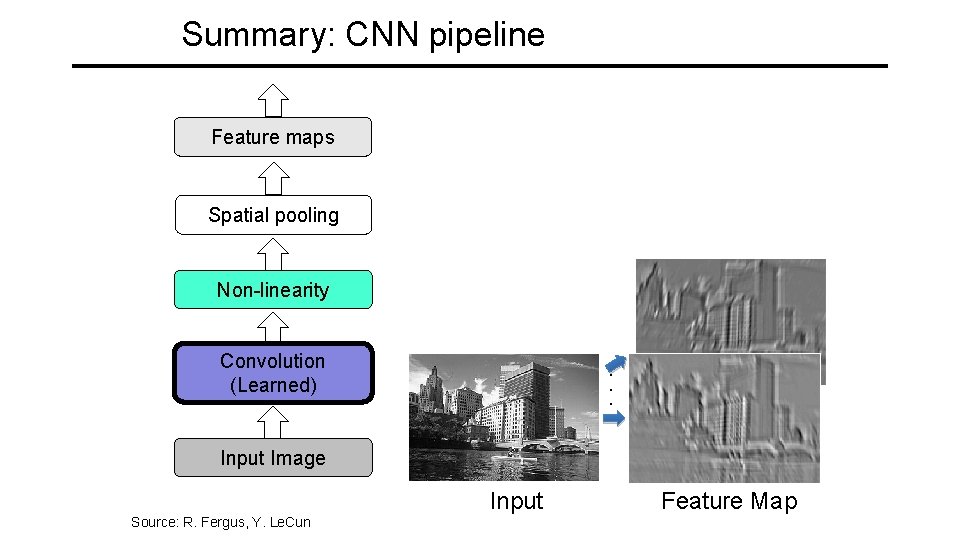
Summary: CNN pipeline Feature maps Spatial pooling Non-linearity Convolution (Learned) . . . Input Image Input Source: R. Fergus, Y. Le. Cun Feature Map
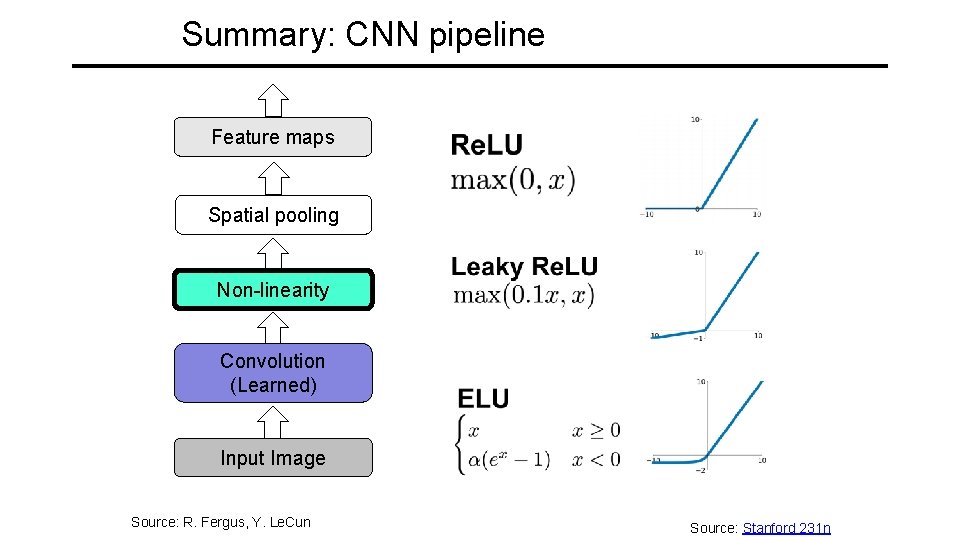
Summary: CNN pipeline Feature maps Spatial pooling Non-linearity Convolution (Learned) Input Image Source: R. Fergus, Y. Le. Cun Source: Stanford 231 n
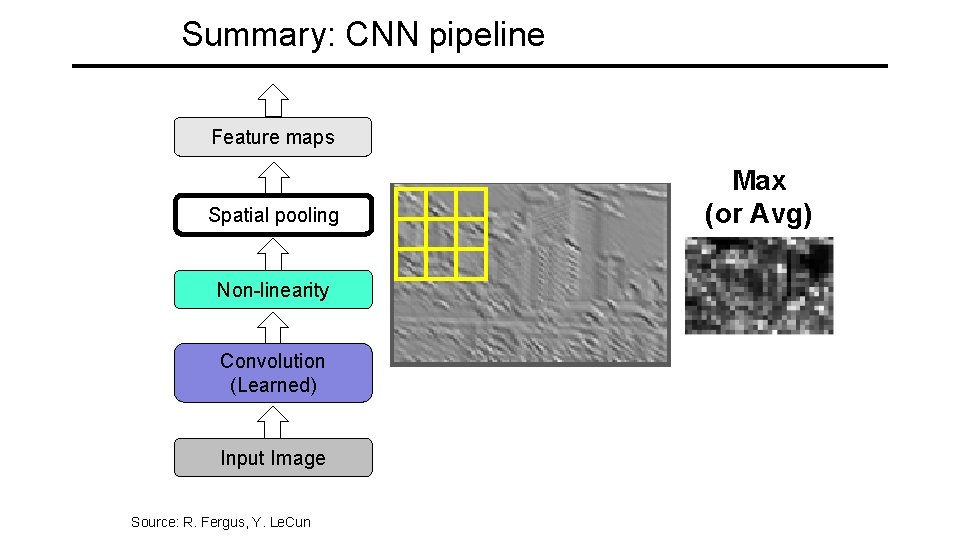
Summary: CNN pipeline Feature maps Spatial pooling Non-linearity Convolution (Learned) Input Image Source: R. Fergus, Y. Le. Cun Max (or Avg)
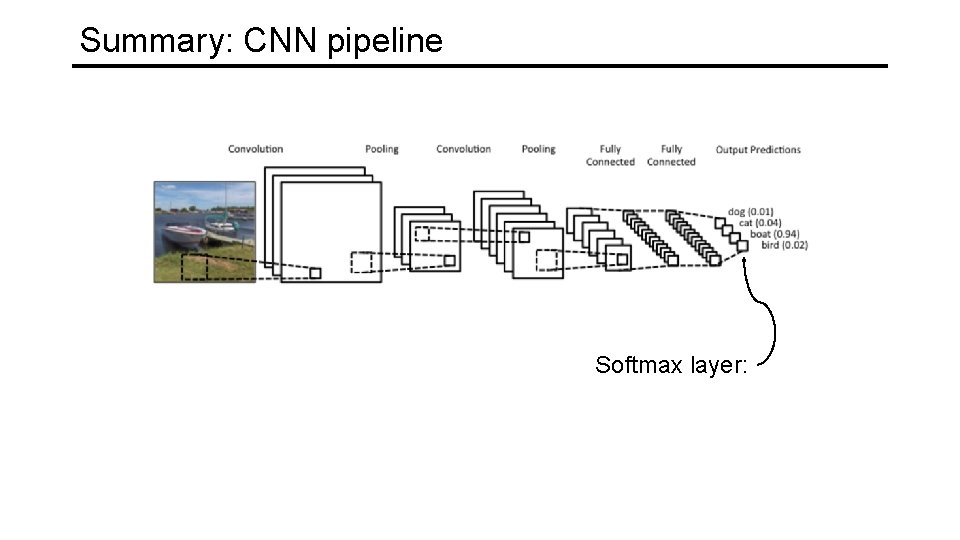
Summary: CNN pipeline Softmax layer:
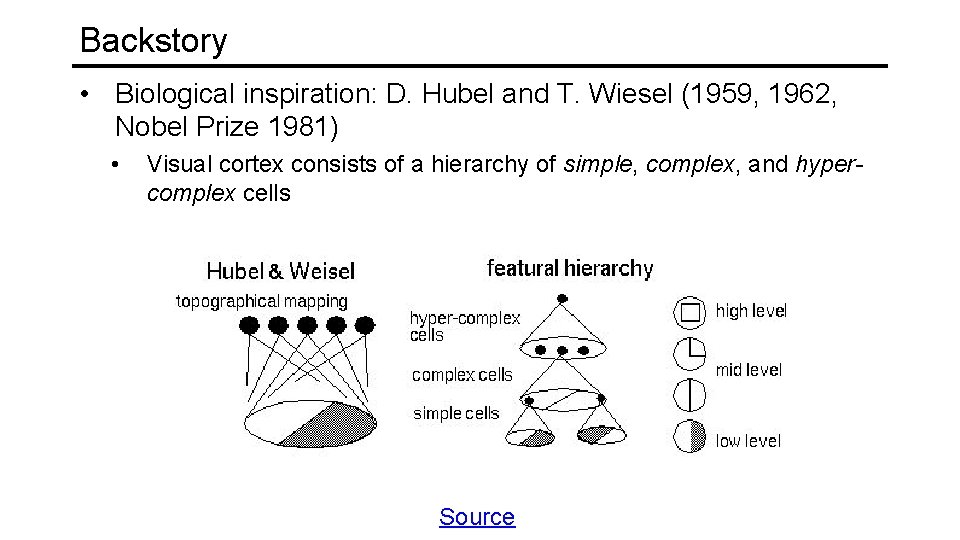
Backstory • Biological inspiration: D. Hubel and T. Wiesel (1959, 1962, Nobel Prize 1981) • Visual cortex consists of a hierarchy of simple, complex, and hypercomplex cells Source
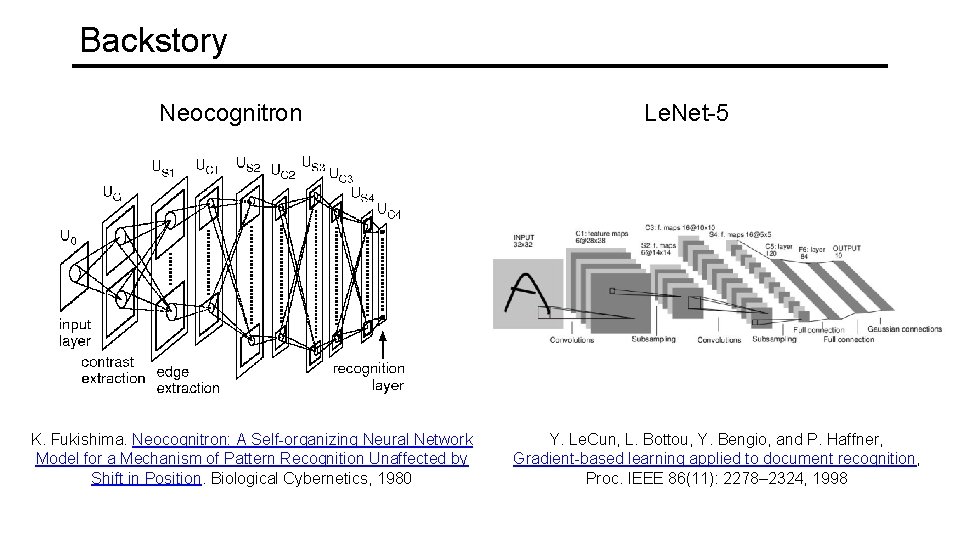
Backstory Neocognitron K. Fukishima. Neocognitron: A Self-organizing Neural Network Model for a Mechanism of Pattern Recognition Unaffected by Shift in Position. Biological Cybernetics, 1980 Le. Net-5 Y. Le. Cun, L. Bottou, Y. Bengio, and P. Haffner, Gradient-based learning applied to document recognition, Proc. IEEE 86(11): 2278– 2324, 1998
Outline • Building blocks • • Convolutional layers and backprop rules Pooling layers and nonlinearities • Architectures: • • 1 st generation (2012 -2013): Alex. Net 2 nd generation (2014): VGGNet, Goog. Le. Net 3 rd generation (2015): Res. Net 4 th generation (2016): Res. Ne. Xt, Dense. Net
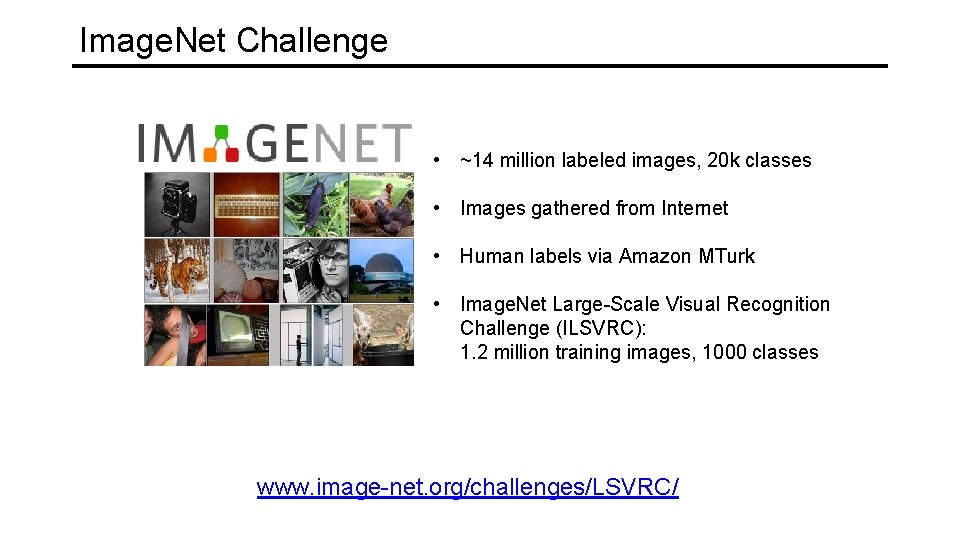
Image. Net Challenge • ~14 million labeled images, 20 k classes • Images gathered from Internet • Human labels via Amazon MTurk • Image. Net Large-Scale Visual Recognition Challenge (ILSVRC): 1. 2 million training images, 1000 classes www. image-net. org/challenges/LSVRC/
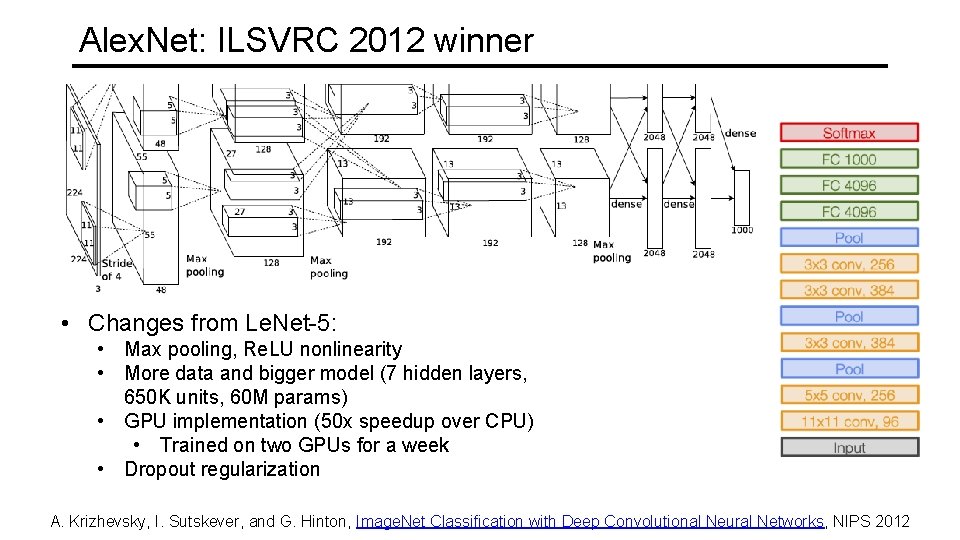
Alex. Net: ILSVRC 2012 winner • Changes from Le. Net-5: • Max pooling, Re. LU nonlinearity • More data and bigger model (7 hidden layers, 650 K units, 60 M params) • GPU implementation (50 x speedup over CPU) • Trained on two GPUs for a week • Dropout regularization A. Krizhevsky, I. Sutskever, and G. Hinton, Image. Net Classification with Deep Convolutional Neural Networks, NIPS 2012
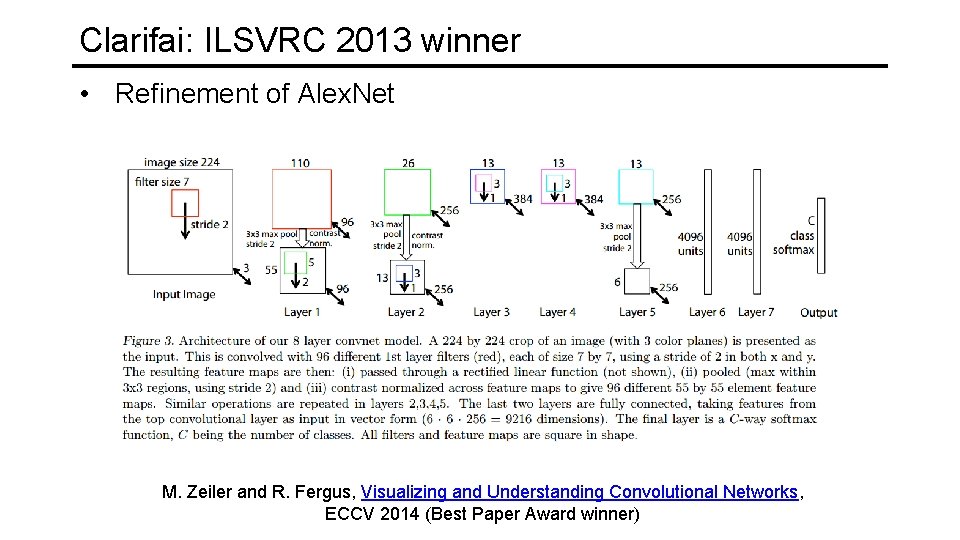
Clarifai: ILSVRC 2013 winner • Refinement of Alex. Net M. Zeiler and R. Fergus, Visualizing and Understanding Convolutional Networks, ECCV 2014 (Best Paper Award winner)
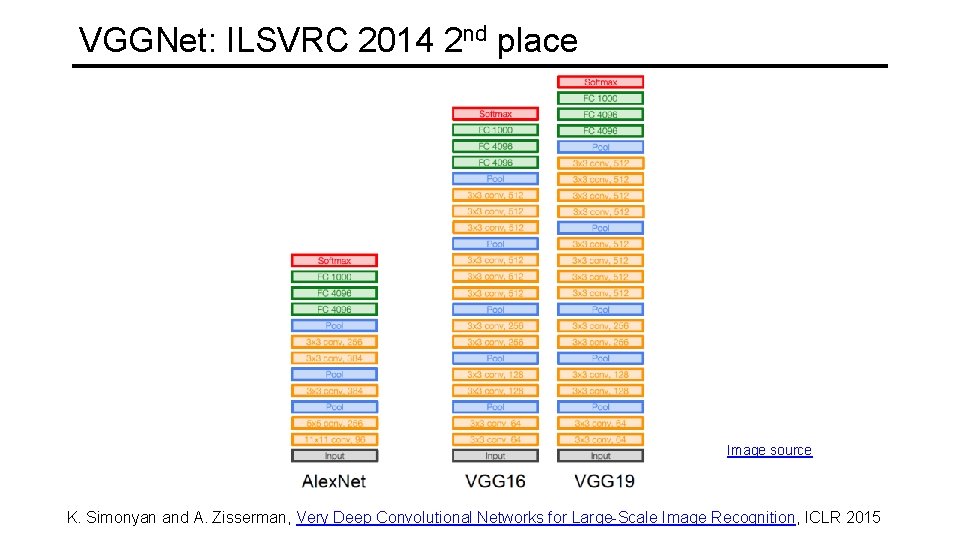
VGGNet: ILSVRC 2014 2 nd place Image source K. Simonyan and A. Zisserman, Very Deep Convolutional Networks for Large-Scale Image Recognition, ICLR 2015
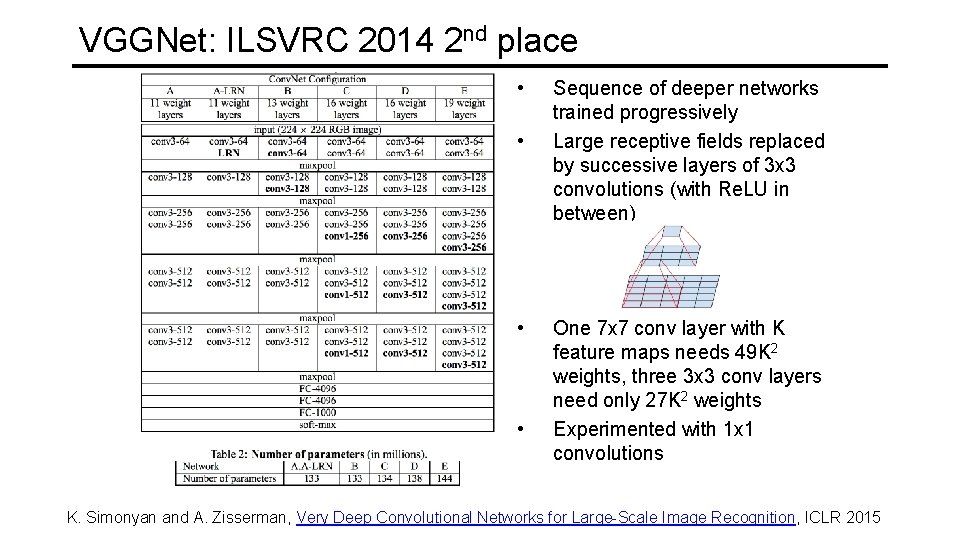
VGGNet: ILSVRC 2014 2 nd place • • Sequence of deeper networks trained progressively Large receptive fields replaced by successive layers of 3 x 3 convolutions (with Re. LU in between) One 7 x 7 conv layer with K feature maps needs 49 K 2 weights, three 3 x 3 conv layers need only 27 K 2 weights Experimented with 1 x 1 convolutions K. Simonyan and A. Zisserman, Very Deep Convolutional Networks for Large-Scale Image Recognition, ICLR 2015
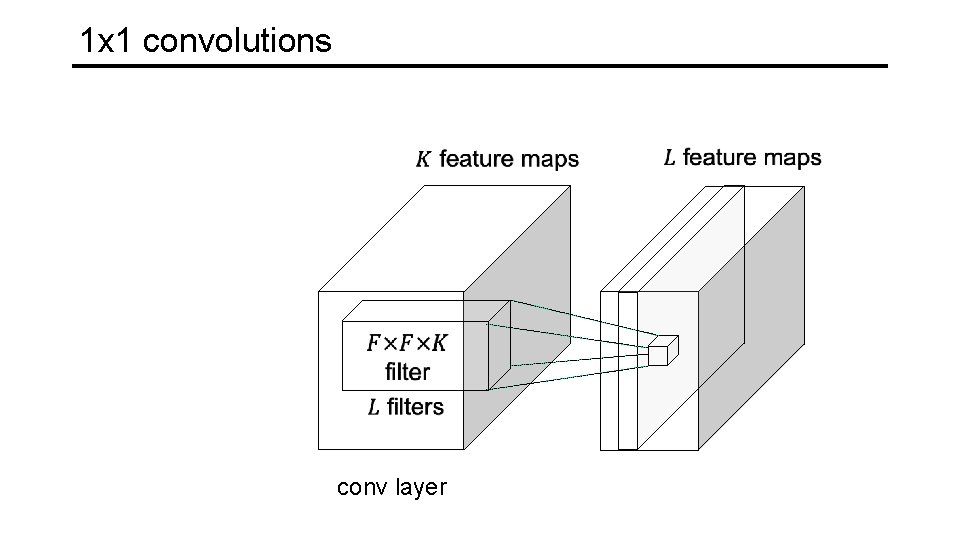
1 x 1 convolutions conv layer
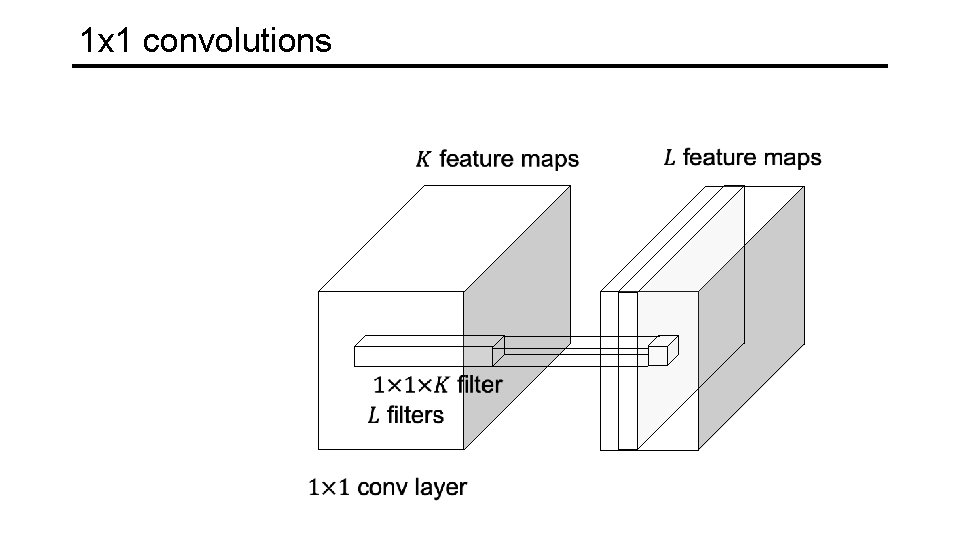
1 x 1 convolutions
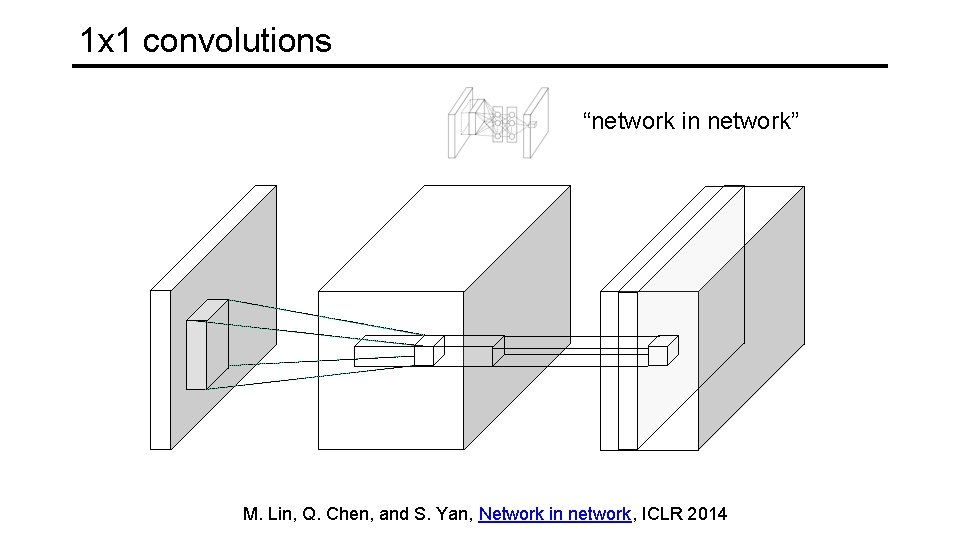
1 x 1 convolutions “network in network” M. Lin, Q. Chen, and S. Yan, Network in network, ICLR 2014
Goog. Le. Net: ILSVRC 2014 winner • The Inception Module http: //knowyourmeme. com/memes/we-need-to-go-deeper C. Szegedy et al. , Going deeper with convolutions, CVPR 2015
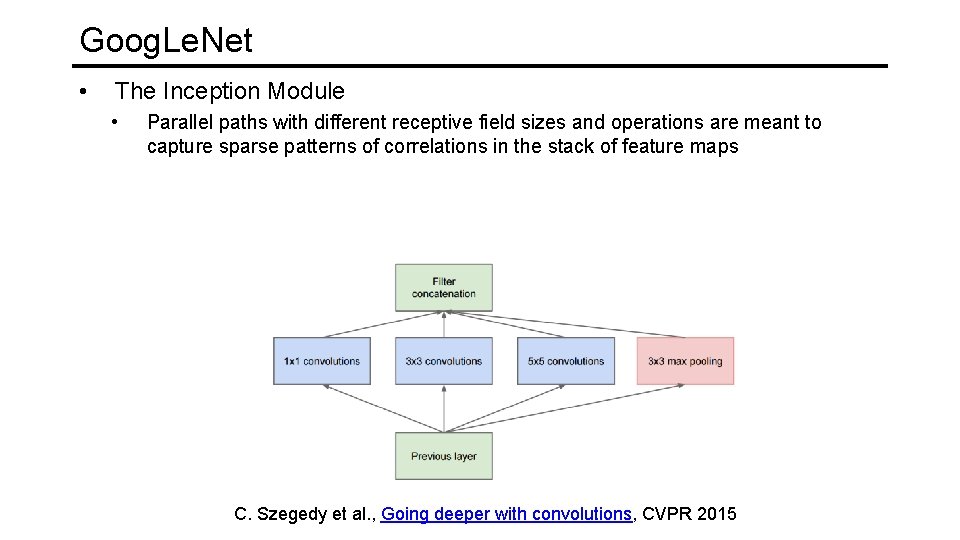
Goog. Le. Net • The Inception Module • Parallel paths with different receptive field sizes and operations are meant to capture sparse patterns of correlations in the stack of feature maps C. Szegedy et al. , Going deeper with convolutions, CVPR 2015
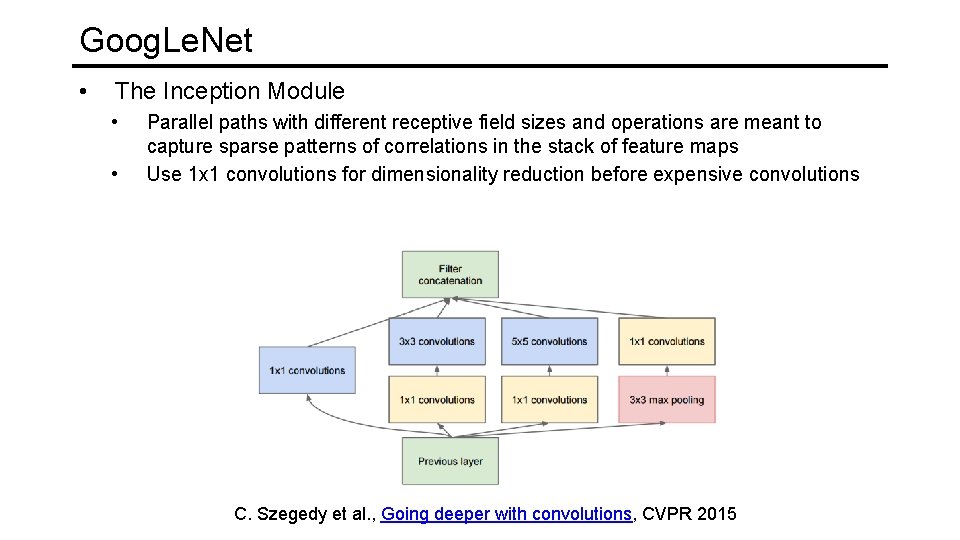
Goog. Le. Net • The Inception Module • • Parallel paths with different receptive field sizes and operations are meant to capture sparse patterns of correlations in the stack of feature maps Use 1 x 1 convolutions for dimensionality reduction before expensive convolutions C. Szegedy et al. , Going deeper with convolutions, CVPR 2015
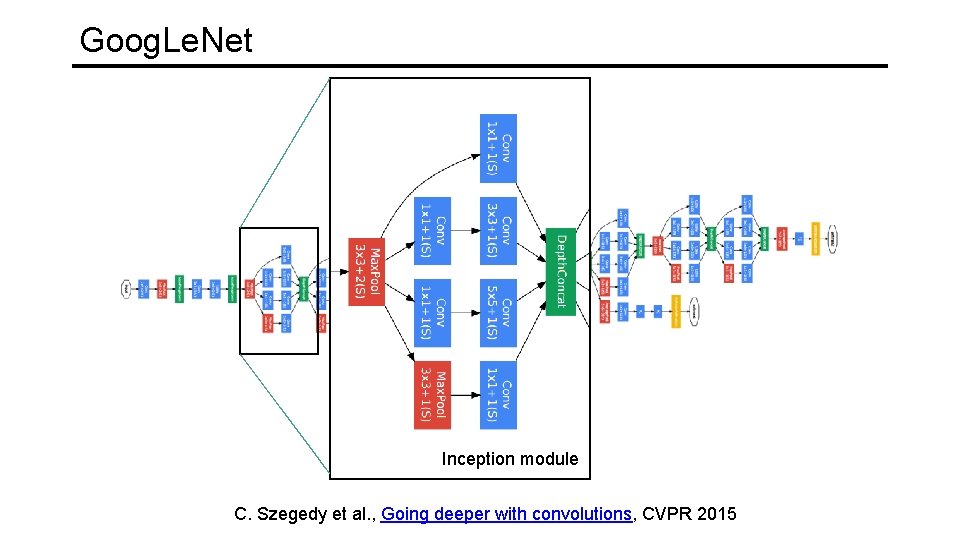
Goog. Le. Net Inception module C. Szegedy et al. , Going deeper with convolutions, CVPR 2015
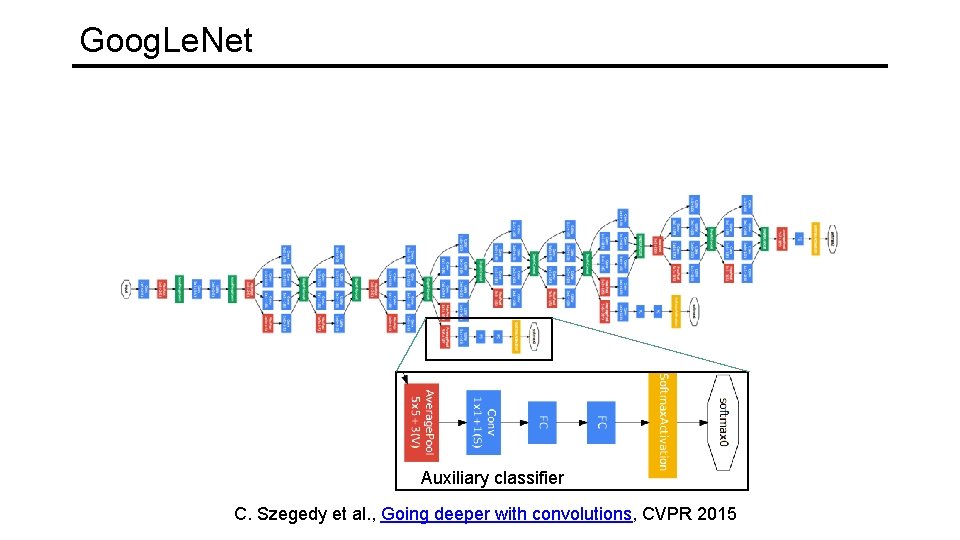
Goog. Le. Net Auxiliary classifier C. Szegedy et al. , Going deeper with convolutions, CVPR 2015
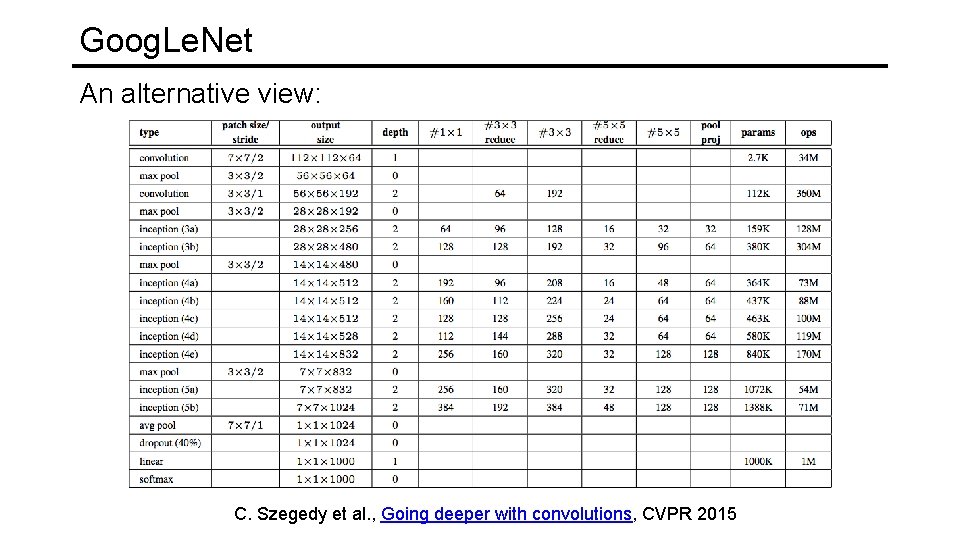
Goog. Le. Net An alternative view: C. Szegedy et al. , Going deeper with convolutions, CVPR 2015
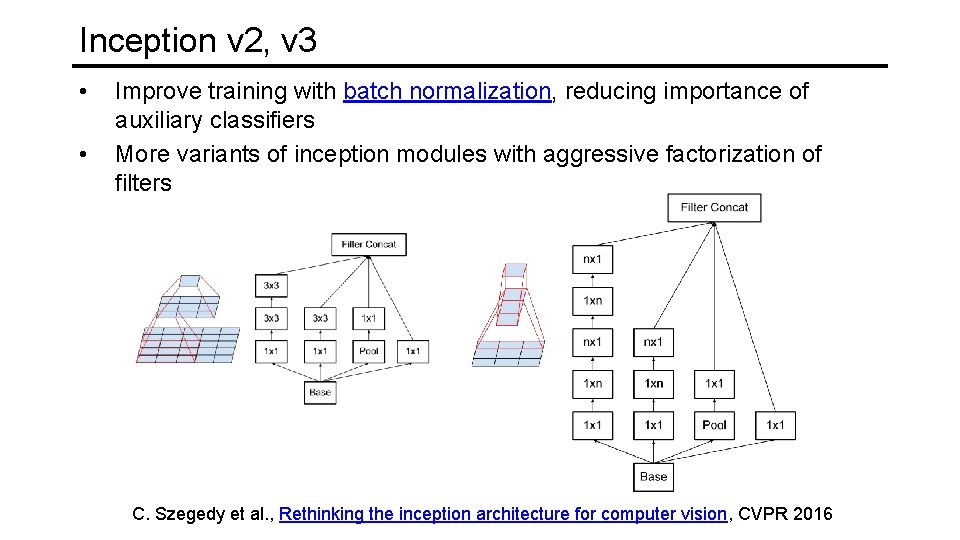
Inception v 2, v 3 • • Improve training with batch normalization, reducing importance of auxiliary classifiers More variants of inception modules with aggressive factorization of filters C. Szegedy et al. , Rethinking the inception architecture for computer vision, CVPR 2016
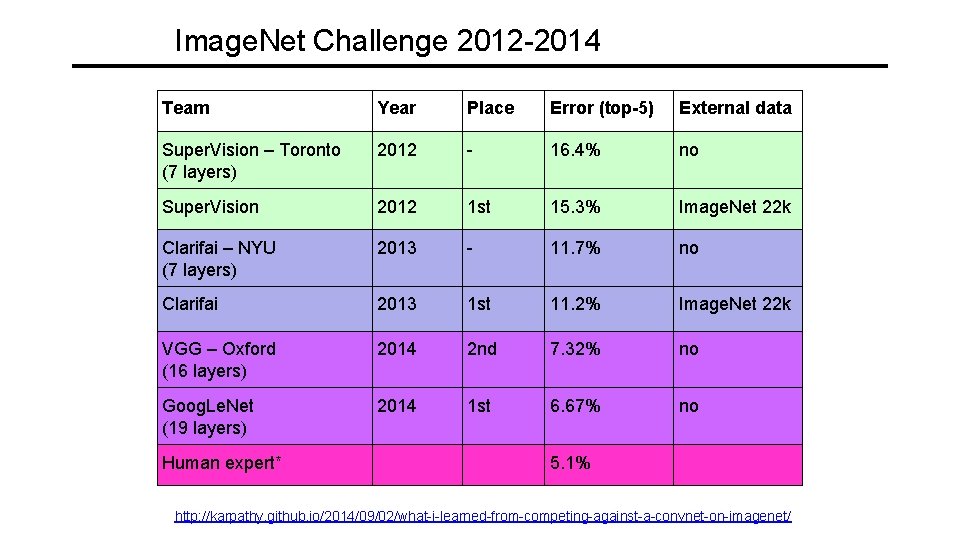
Image. Net Challenge 2012 -2014 Team Year Place Error (top-5) External data Super. Vision – Toronto (7 layers) 2012 - 16. 4% no Super. Vision 2012 1 st 15. 3% Image. Net 22 k Clarifai – NYU (7 layers) 2013 - 11. 7% no Clarifai 2013 1 st 11. 2% Image. Net 22 k VGG – Oxford (16 layers) 2014 2 nd 7. 32% no Goog. Le. Net (19 layers) 2014 1 st 6. 67% no Human expert* 5. 1% http: //karpathy. github. io/2014/09/02/what-i-learned-from-competing-against-a-convnet-on-imagenet/
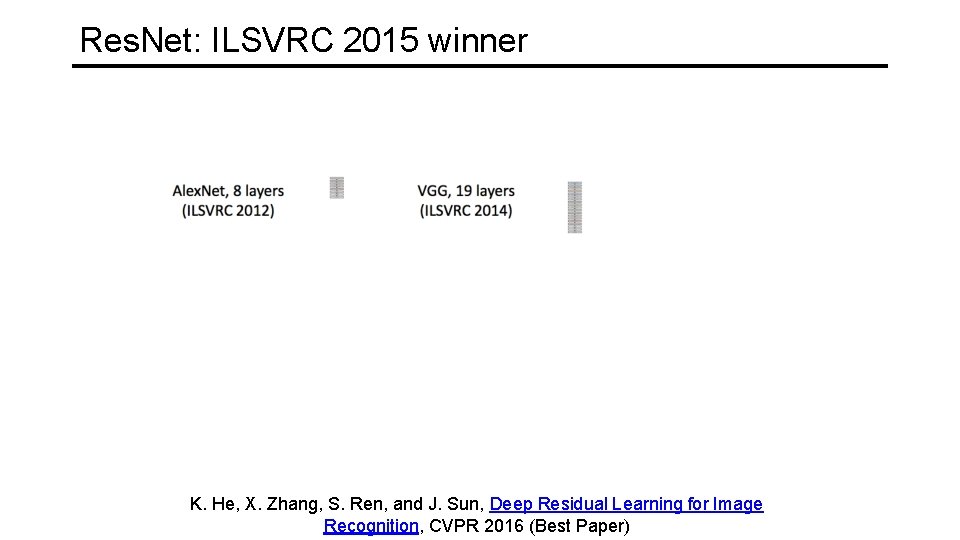
Res. Net: ILSVRC 2015 winner K. He, X. Zhang, S. Ren, and J. Sun, Deep Residual Learning for Image Recognition, CVPR 2016 (Best Paper)
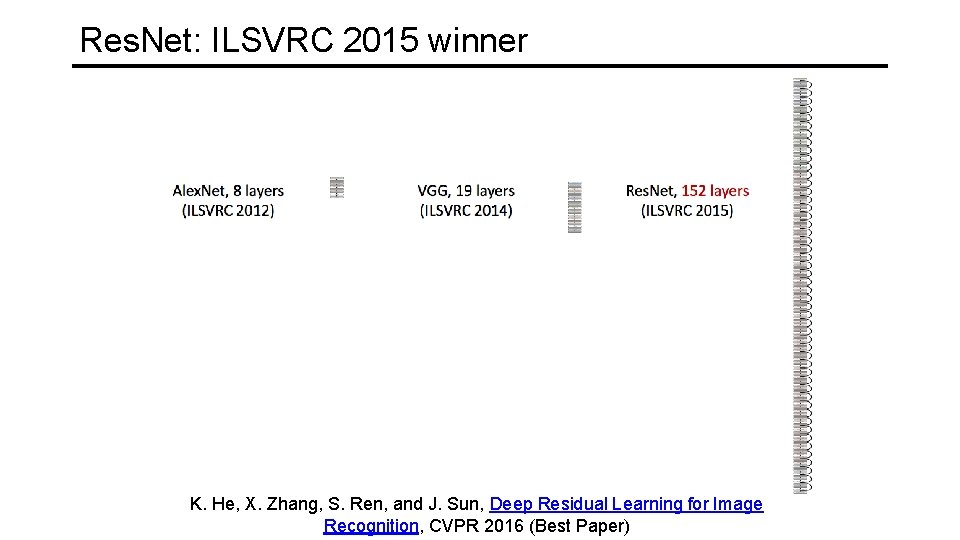
Res. Net: ILSVRC 2015 winner K. He, X. Zhang, S. Ren, and J. Sun, Deep Residual Learning for Image Recognition, CVPR 2016 (Best Paper)
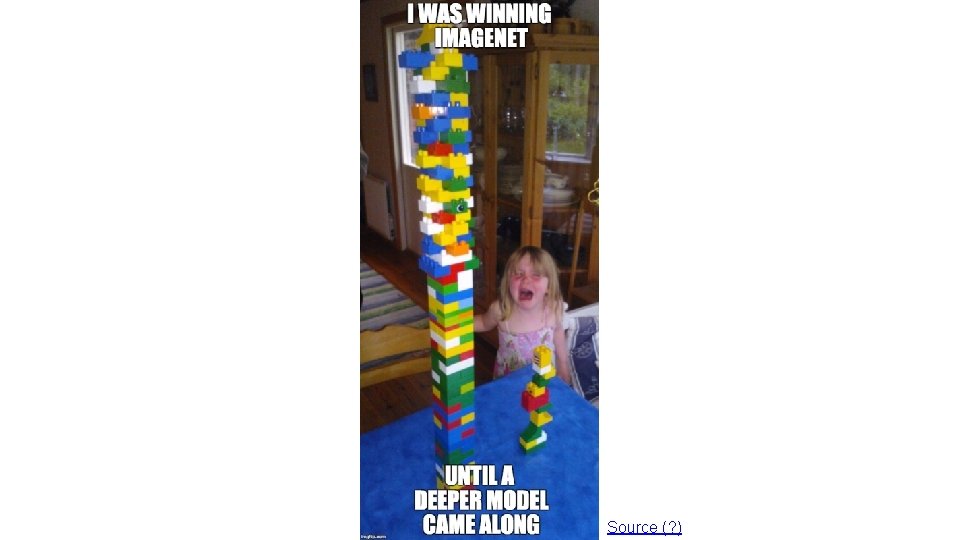
Source (? )
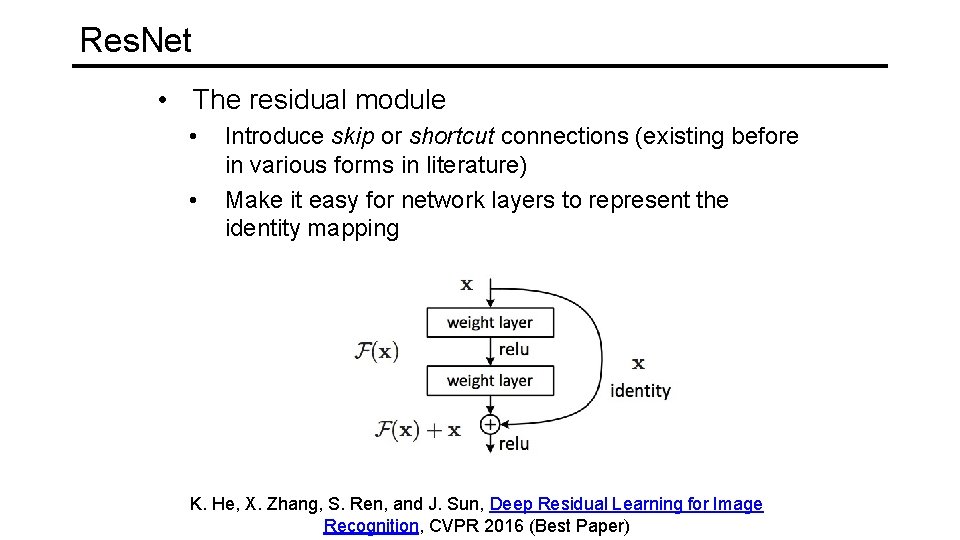
Res. Net • The residual module • • Introduce skip or shortcut connections (existing before in various forms in literature) Make it easy for network layers to represent the identity mapping K. He, X. Zhang, S. Ren, and J. Sun, Deep Residual Learning for Image Recognition, CVPR 2016 (Best Paper)
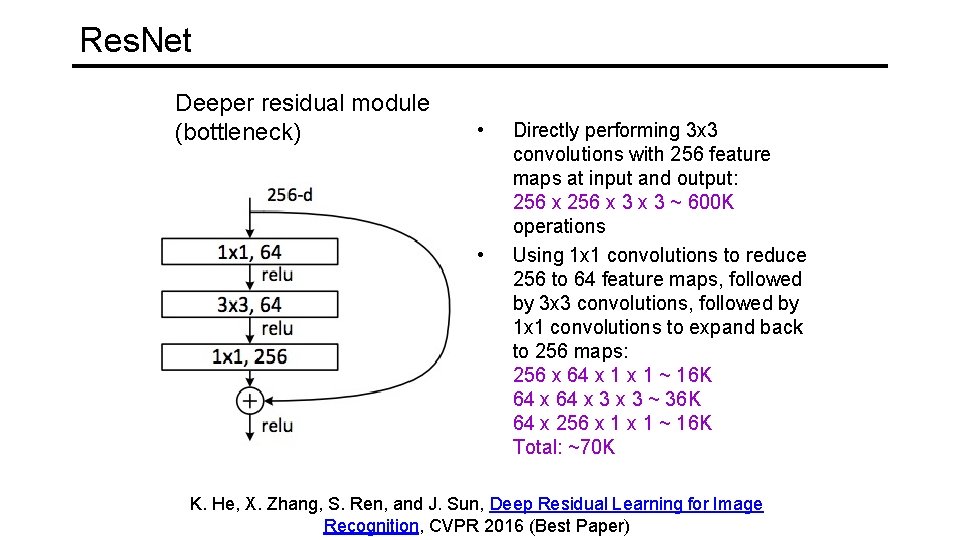
Res. Net Deeper residual module (bottleneck) • • Directly performing 3 x 3 convolutions with 256 feature maps at input and output: 256 x 3 x 3 ~ 600 K operations Using 1 x 1 convolutions to reduce 256 to 64 feature maps, followed by 3 x 3 convolutions, followed by 1 x 1 convolutions to expand back to 256 maps: 256 x 64 x 1 ~ 16 K 64 x 3 x 3 ~ 36 K 64 x 256 x 1 ~ 16 K Total: ~70 K K. He, X. Zhang, S. Ren, and J. Sun, Deep Residual Learning for Image Recognition, CVPR 2016 (Best Paper)
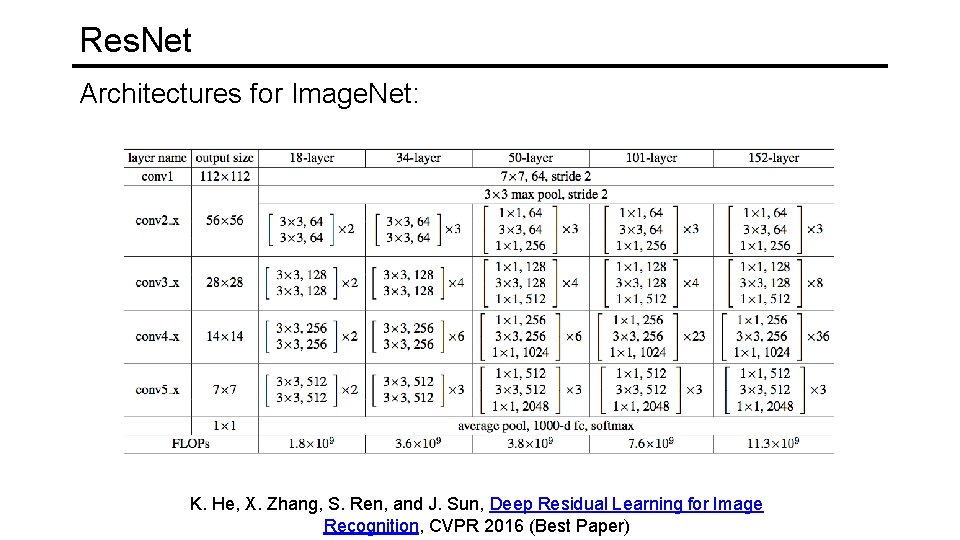
Res. Net Architectures for Image. Net: K. He, X. Zhang, S. Ren, and J. Sun, Deep Residual Learning for Image Recognition, CVPR 2016 (Best Paper)
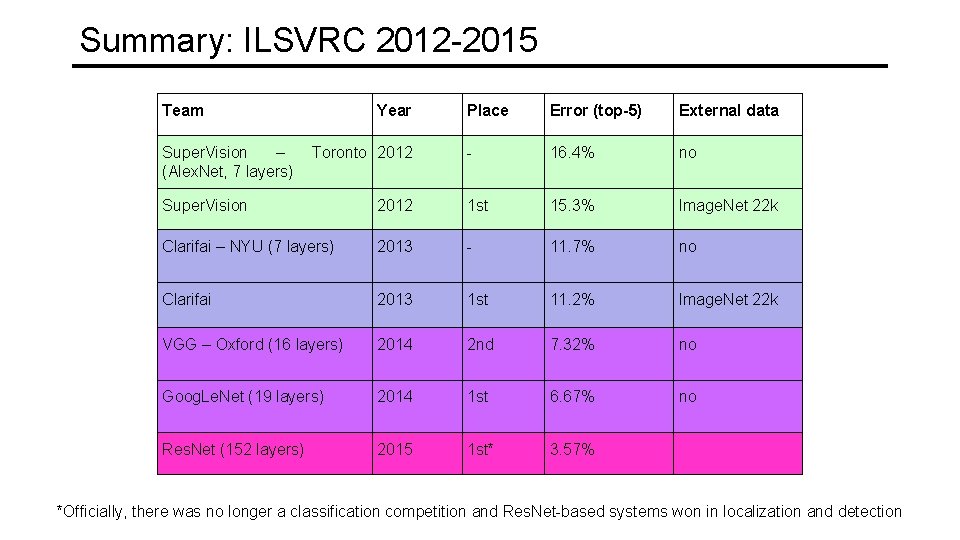
Summary: ILSVRC 2012 -2015 Team Super. Vision – (Alex. Net, 7 layers) Year Toronto 2012 Place Error (top-5) External data - 16. 4% no Super. Vision 2012 1 st 15. 3% Image. Net 22 k Clarifai – NYU (7 layers) 2013 - 11. 7% no Clarifai 2013 1 st 11. 2% Image. Net 22 k VGG – Oxford (16 layers) 2014 2 nd 7. 32% no Goog. Le. Net (19 layers) 2014 1 st 6. 67% no Res. Net (152 layers) 2015 1 st* 3. 57% *Officially, there was no longer a classification competition and Res. Net-based systems won in localization and detection
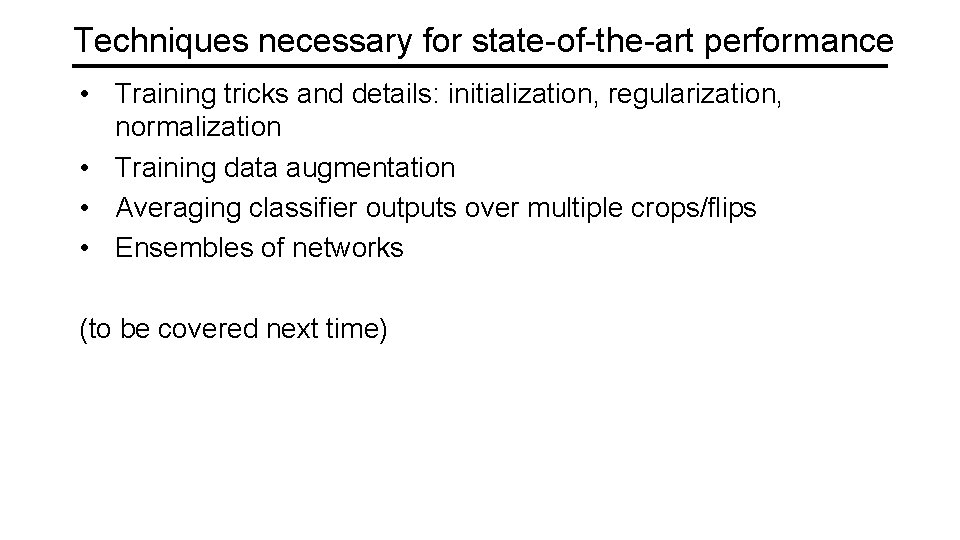
Techniques necessary for state-of-the-art performance • Training tricks and details: initialization, regularization, normalization • Training data augmentation • Averaging classifier outputs over multiple crops/flips • Ensembles of networks (to be covered next time)
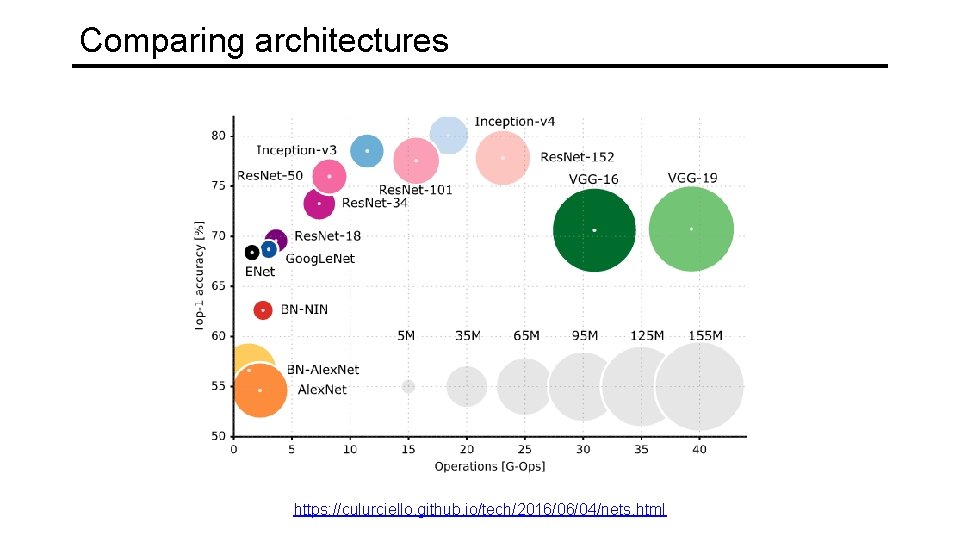
Comparing architectures https: //culurciello. github. io/tech/2016/06/04/nets. html
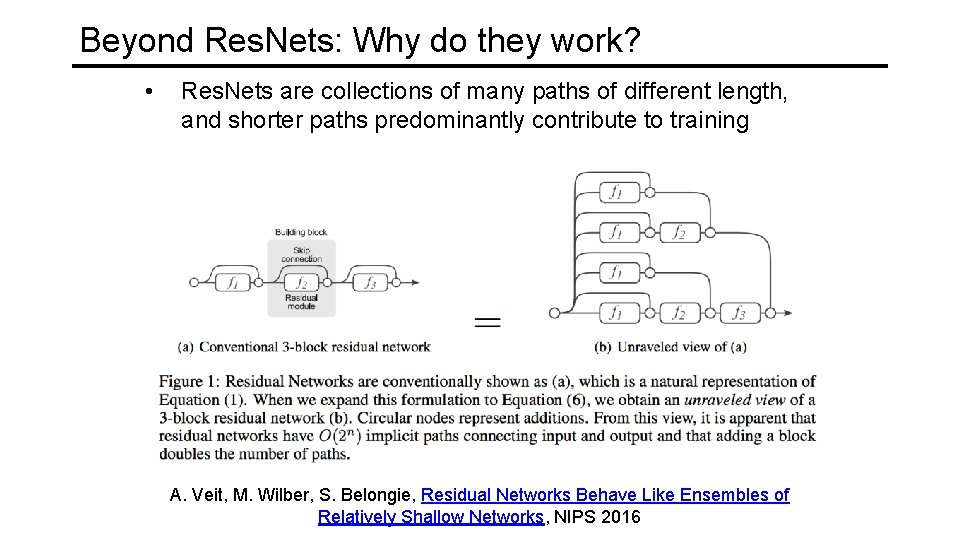
Beyond Res. Nets: Why do they work? • Res. Nets are collections of many paths of different length, and shorter paths predominantly contribute to training A. Veit, M. Wilber, S. Belongie, Residual Networks Behave Like Ensembles of Relatively Shallow Networks, NIPS 2016
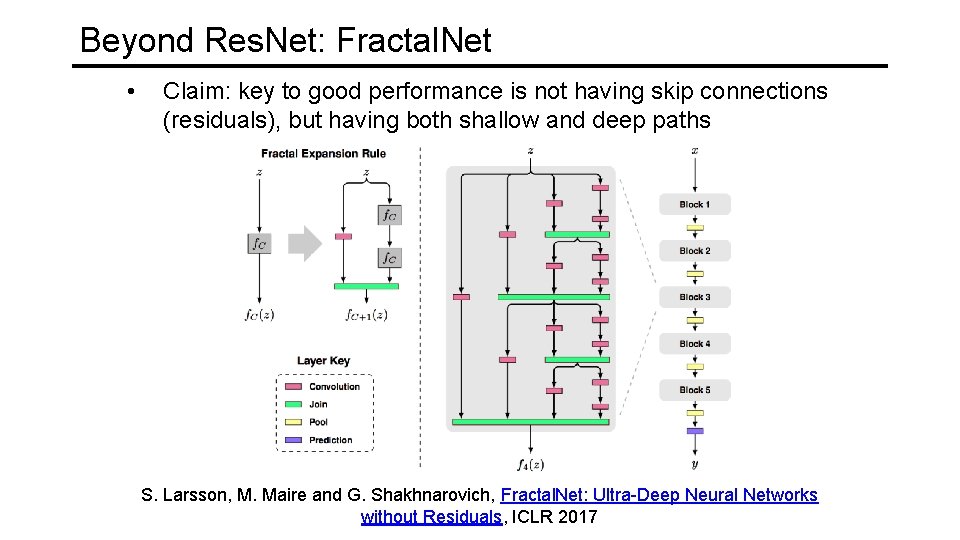
Beyond Res. Net: Fractal. Net • Claim: key to good performance is not having skip connections (residuals), but having both shallow and deep paths S. Larsson, M. Maire and G. Shakhnarovich, Fractal. Net: Ultra-Deep Neural Networks without Residuals, ICLR 2017
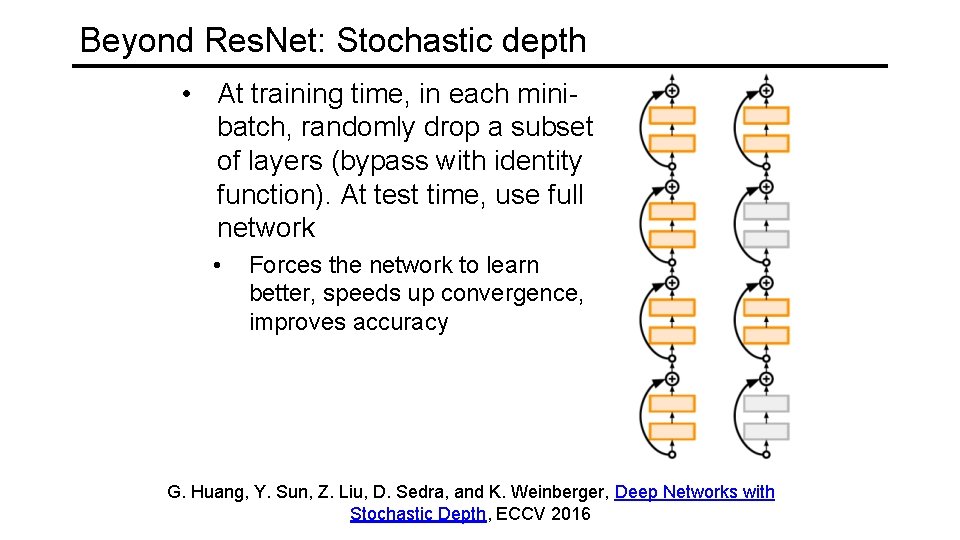
Beyond Res. Net: Stochastic depth • At training time, in each minibatch, randomly drop a subset of layers (bypass with identity function). At test time, use full network • Forces the network to learn better, speeds up convergence, improves accuracy G. Huang, Y. Sun, Z. Liu, D. Sedra, and K. Weinberger, Deep Networks with Stochastic Depth, ECCV 2016
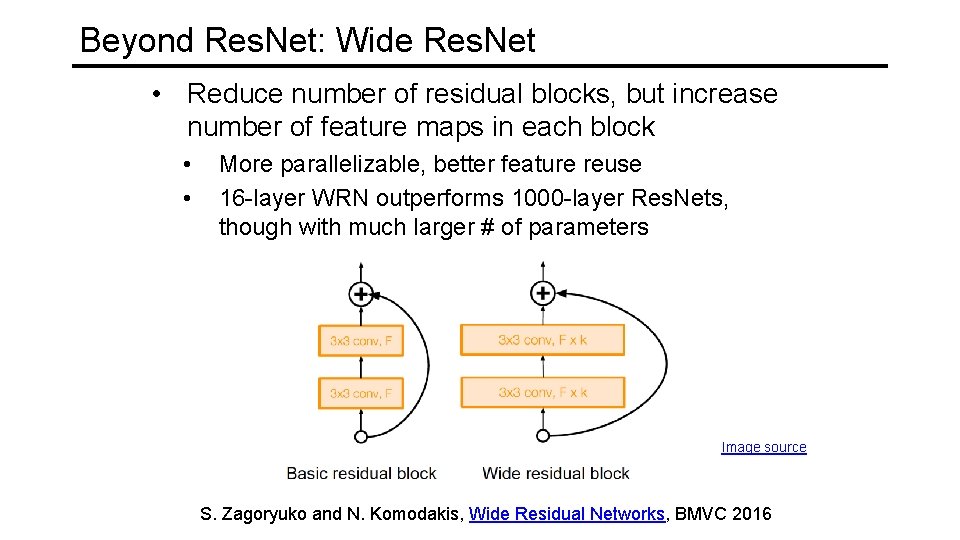
Beyond Res. Net: Wide Res. Net • Reduce number of residual blocks, but increase number of feature maps in each block • • More parallelizable, better feature reuse 16 -layer WRN outperforms 1000 -layer Res. Nets, though with much larger # of parameters Image source S. Zagoryuko and N. Komodakis, Wide Residual Networks, BMVC 2016
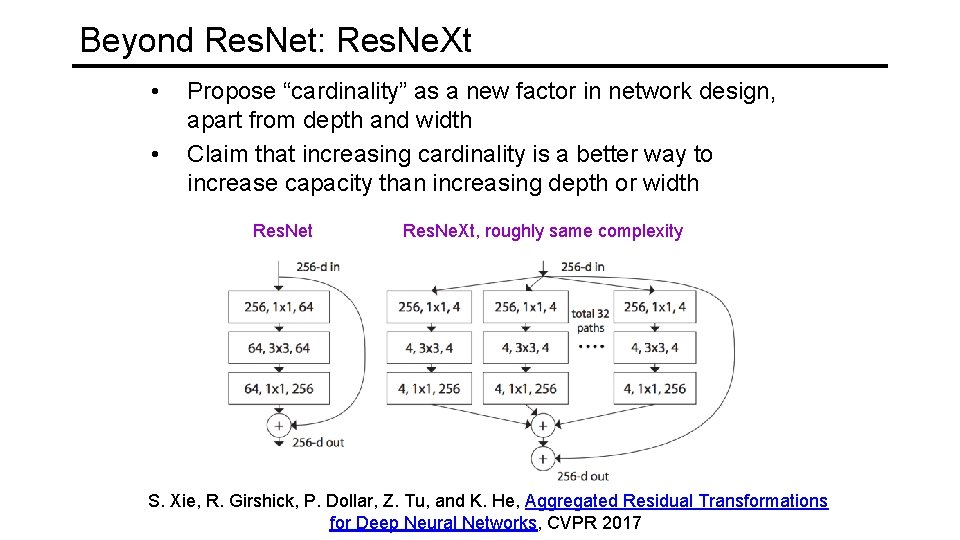
Beyond Res. Net: Res. Ne. Xt • • Propose “cardinality” as a new factor in network design, apart from depth and width Claim that increasing cardinality is a better way to increase capacity than increasing depth or width Res. Net Res. Ne. Xt, roughly same complexity S. Xie, R. Girshick, P. Dollar, Z. Tu, and K. He, Aggregated Residual Transformations for Deep Neural Networks, CVPR 2017
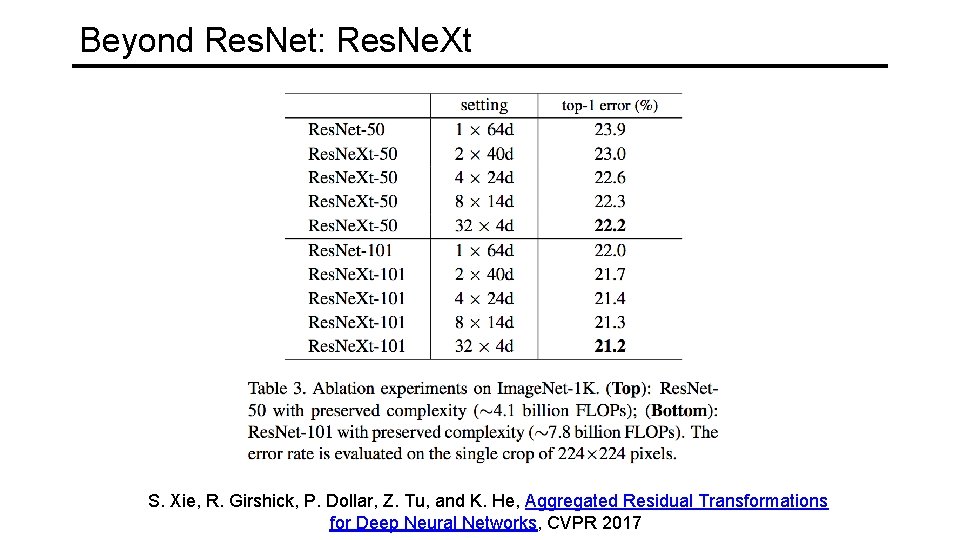
Beyond Res. Net: Res. Ne. Xt S. Xie, R. Girshick, P. Dollar, Z. Tu, and K. He, Aggregated Residual Transformations for Deep Neural Networks, CVPR 2017
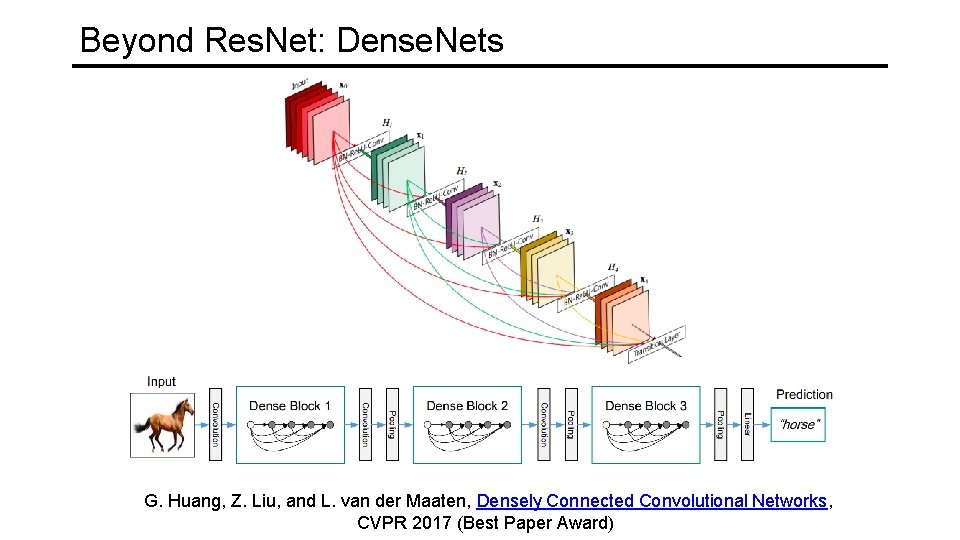
Beyond Res. Net: Dense. Nets G. Huang, Z. Liu, and L. van der Maaten, Densely Connected Convolutional Networks, CVPR 2017 (Best Paper Award)
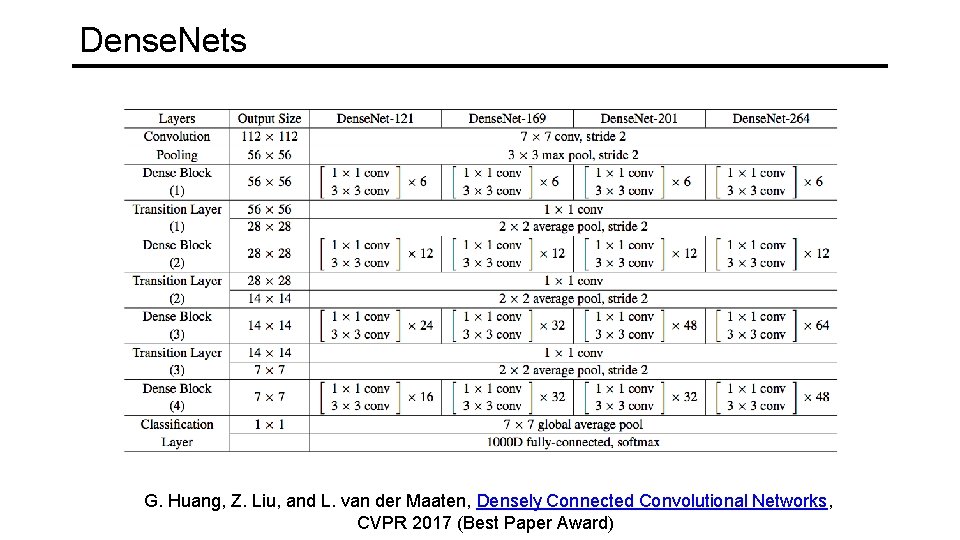
Dense. Nets G. Huang, Z. Liu, and L. van der Maaten, Densely Connected Convolutional Networks, CVPR 2017 (Best Paper Award)
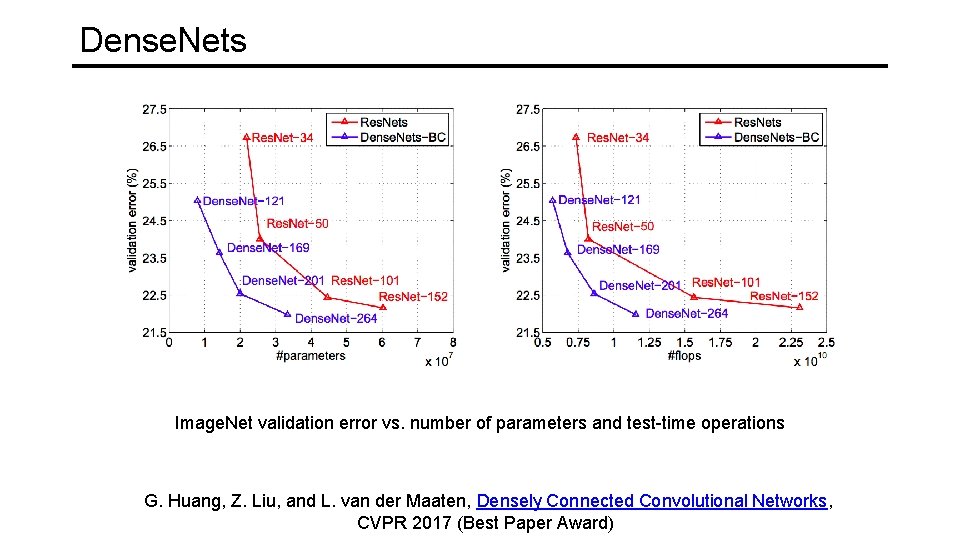
Dense. Nets Image. Net validation error vs. number of parameters and test-time operations G. Huang, Z. Liu, and L. van der Maaten, Densely Connected Convolutional Networks, CVPR 2017 (Best Paper Award)
Design principles • Make networks parameter-efficient • • • Reduce filter sizes, factorize filters Use 1 x 1 convolutions to reduce number of feature maps before more expensive operations Minimize reliance on FC layers • Reduce spatial resolution gradually, within each level of resolution replicate a given “block” multiple times • Use skip connections and/or create multiple redundant paths through the network • Play around with depth vs. width vs. “cardinality”
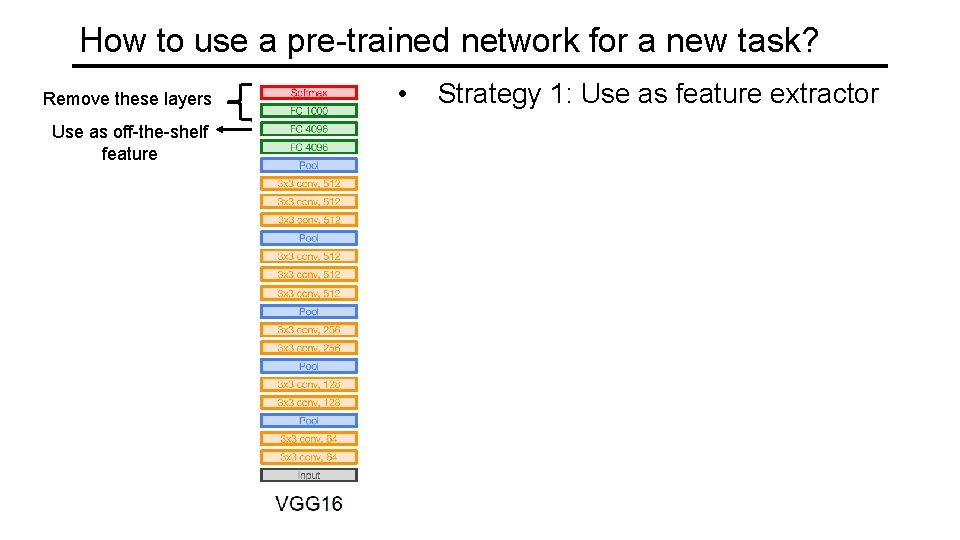
How to use a pre-trained network for a new task? Remove these layers Use as off-the-shelf feature • Strategy 1: Use as feature extractor
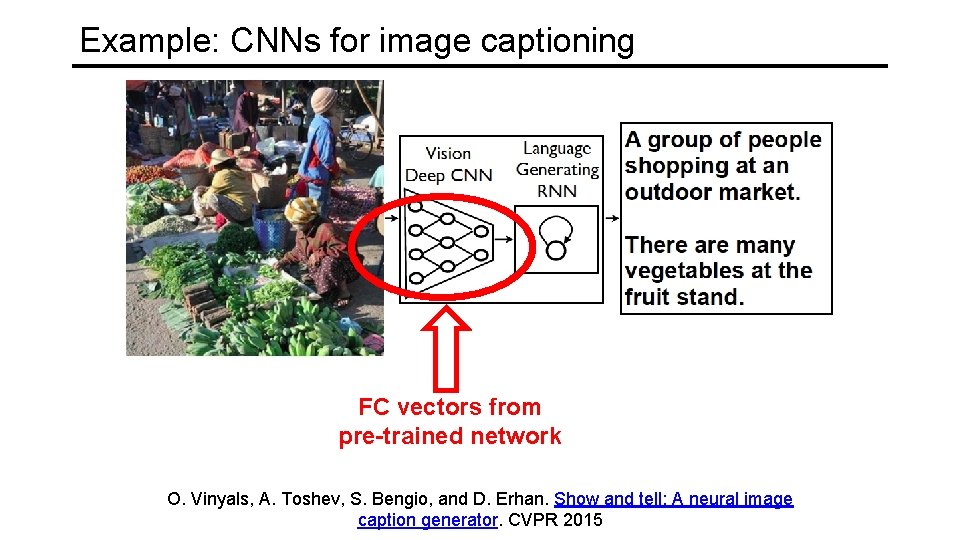
Example: CNNs for image captioning FC vectors from pre-trained network O. Vinyals, A. Toshev, S. Bengio, and D. Erhan. Show and tell: A neural image caption generator. CVPR 2015
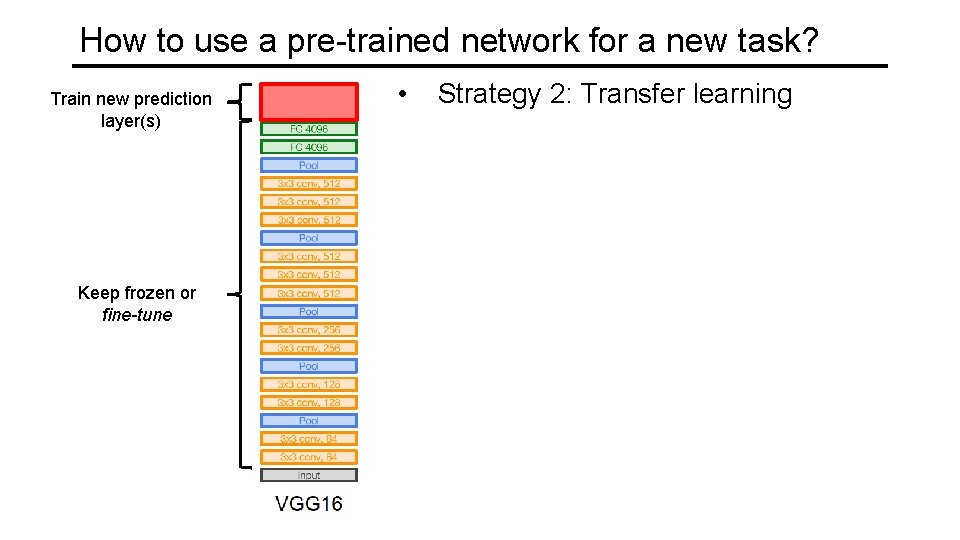
How to use a pre-trained network for a new task? Train new prediction layer(s) Keep frozen or fine-tune • Strategy 2: Transfer learning
References (incomplete) • • • https: //culurciello. github. io/tech/2016/06/04/nets. html Y. Le. Cun, L. Bottou, Y. Bengio, and P. Haffner, Gradient-based learning applied to document recognition, Proc. IEEE 86(11): 2278– 2324, 1998. A. Krizhevsky, I. Sutskever, and G. Hinton, Image. Net Classification with Deep Convolutional Neural Networks, NIPS 2012 M. Zeiler and R. Fergus, Visualizing and Understanding Convolutional Networks, ECCV 2014 K. Simonyan and A. Zisserman, Very Deep Convolutional Networks for Large-Scale Image Recognition, ICLR 2015 M. Lin, Q. Chen, and S. Yan, Network in network, ICLR 2014 C. Szegedy et al. , Going deeper with convolutions, CVPR 2015 C. Szegedy et al. , Rethinking the inception architecture for computer vision, CVPR 2016 K. He, X. Zhang, S. Ren, and J. Sun, Deep Residual Learning for Image Recognition, CVPR 2016 G. Huang, Z. Liu, and L. van der Maaten, Densely Connected Convolutional Networks, CVPR 2017
- Slides: 75