
Converting Ds to Cs in Controlled Assessments Connect


- Slides: 22
Converting Ds to Cs in Controlled Assessments
Connect – Keep talking Compare
Written Controlled Assessments Main issues Tasks which have worked well
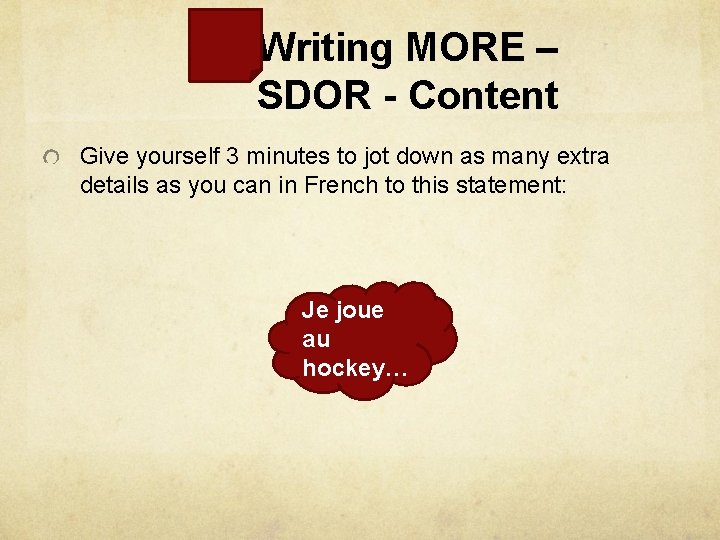
Writing MORE – SDOR - Content Give yourself 3 minutes to jot down as many extra details as you can in French to this statement: Je joue au hockey…
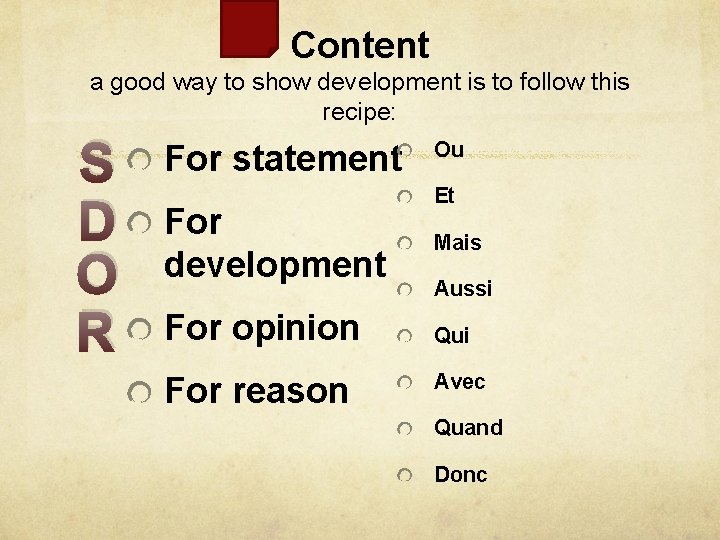
Content a good way to show development is to follow this recipe: S D O R For statement For development Ou Et Mais Aussi For opinion Qui For reason Avec Quand Donc
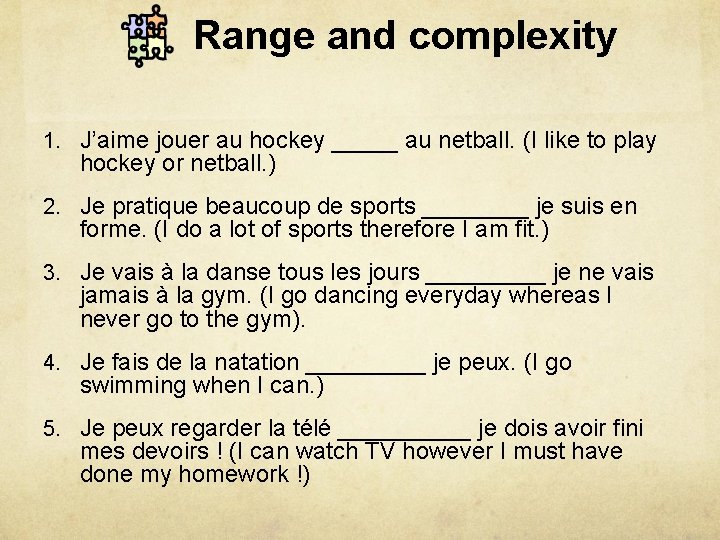
Range and complexity 1. J’aime jouer au hockey _____ au netball. (I like to play hockey or netball. ) 2. Je pratique beaucoup de sports ____ je suis en forme. (I do a lot of sports therefore I am fit. ) 3. Je vais à la danse tous les jours _____ je ne vais jamais à la gym. (I go dancing everyday whereas I never go to the gym). 4. Je fais de la natation _____ je peux. (I go swimming when I can. ) 5. Je peux regarder la télé _____ je dois avoir fini mes devoirs ! (I can watch TV however I must have done my homework !)
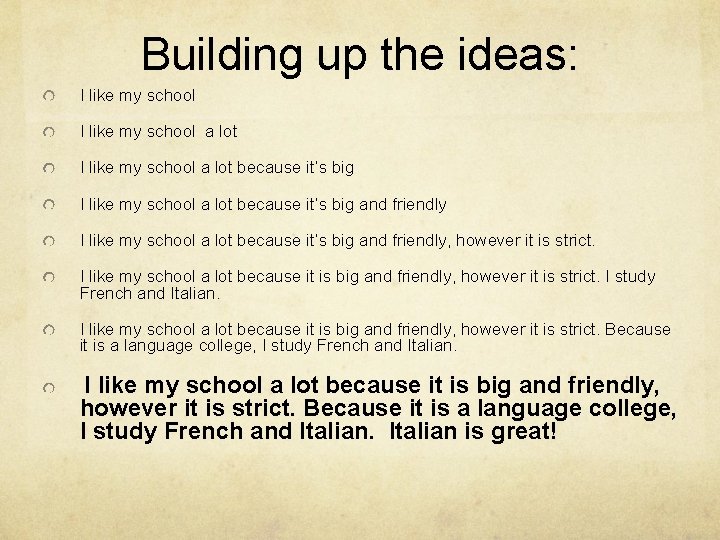
Building up the ideas: I like my school a lot because it’s big and friendly I like my school a lot because it’s big and friendly, however it is strict. I like my school a lot because it is big and friendly, however it is strict. I study French and Italian. I like my school a lot because it is big and friendly, however it is strict. Because it is a language college, I study French and Italian is great!
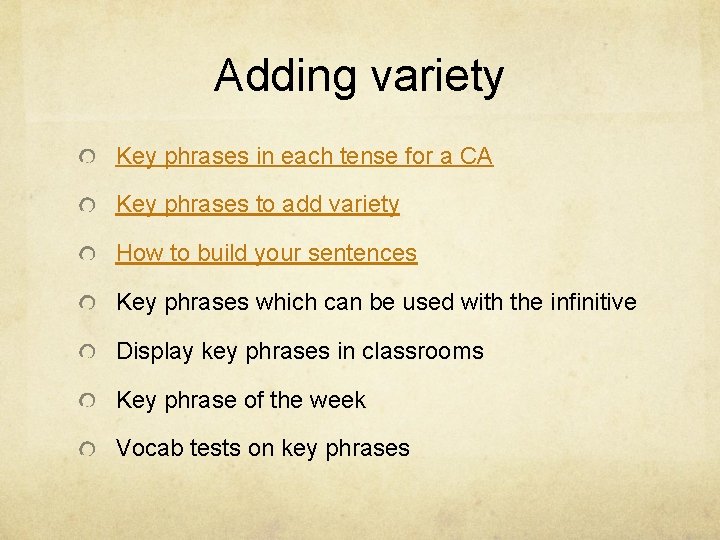
Adding variety Key phrases in each tense for a CA Key phrases to add variety How to build your sentences Key phrases which can be used with the infinitive Display key phrases in classrooms Key phrase of the week Vocab tests on key phrases
Model texts Translation – with extension A/ A* structures Model texts
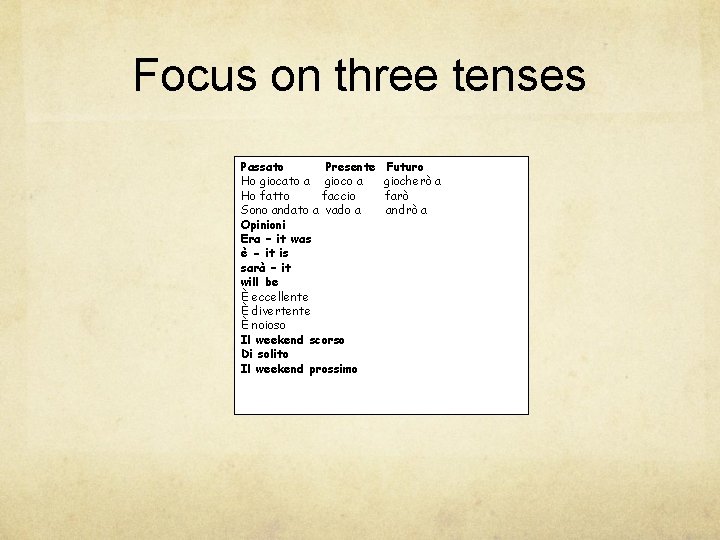
Focus on three tenses Passato Presente Ho giocato a gioco a Ho fatto faccio Sono andato a vado a Opinioni Era – it was è - it is sarà – it will be È eccellente È divertente È noioso Il weekend scorso Di solito Il weekend prossimo Futuro giocherò a farò andrò a
Focus on three tenses Tenses a regular feature of lessons – starter or plenary Colour coding tenses throughout KS 3 and KS 4 and ensuring pupils do this too Random word generator connectives Link verbs with Sudoku Quizlet Bingo Squares and dots game Pass the parcel
Other strategies Overlap between speaking and listening resources Feedback sheets Aspirational target setting Your ideas?
Speaking Assessments Main issues Which tasks have worked well? Making sure pupils are clear on expectations
Speaking Controlled Assessments - Questions Continual focus on question words Input each question word Random word generator Quizlet / task magic match questions with question starters Online crosswords http: //edhelper. com/crossword. htm
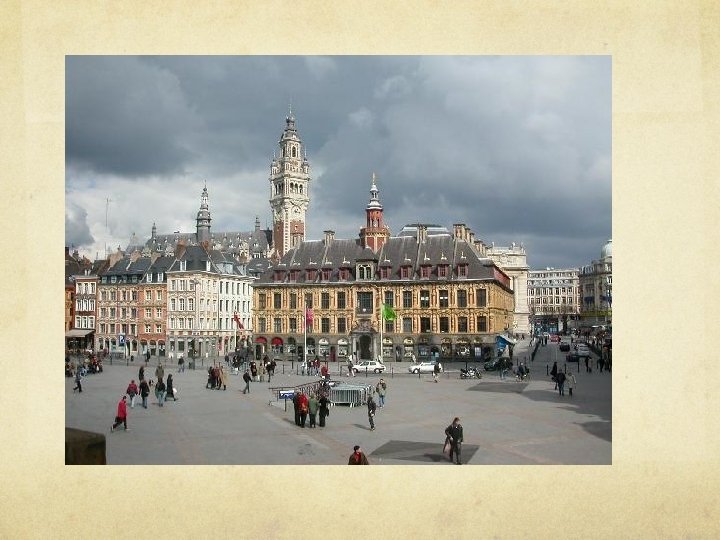
Speaking Controlled Assessments - questions Focus on common questions on photos Focus on match questions and answers, and vice versa Select question words – devise a question – devise an answer
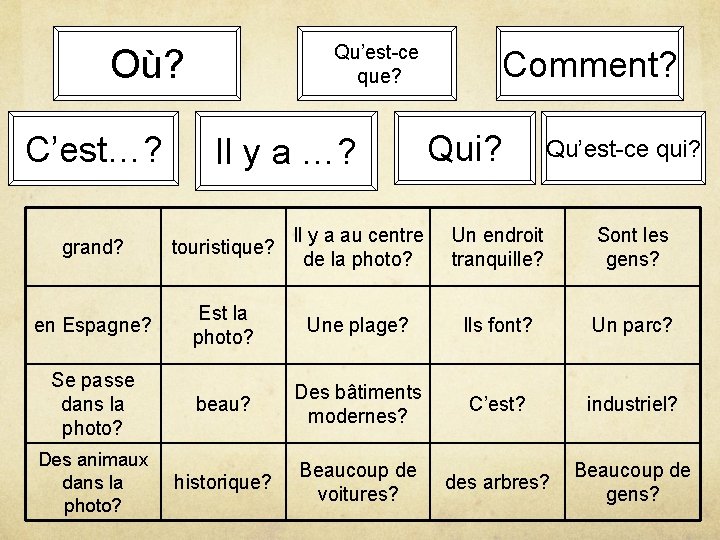
Qu’est-ce que? Où? C’est…? Il y a …? Comment? Qui? Qu’est-ce qui? grand? touristique? Il y a au centre de la photo? Un endroit tranquille? Sont les gens? en Espagne? Est la photo? Une plage? Ils font? Un parc? Se passe dans la photo? beau? Des bâtiments modernes? C’est? industriel? Des animaux dans la photo? historique? Beaucoup de voitures? des arbres? Beaucoup de gens?
Success in Speaking Controlled Assessments Manipulation of verbs – using questions to create answers – random word generator Verb tennis The merits of over preparation Just a minute Less is more
UNE RÉPONSE DE SEPT MOTS As-tu des frères ou des soeurs? As-tu des animaux? As-tu un film préféré? As-tu un livre préféré? Il faut inventer une réponse de sept mots. Qui peut inventer une réponse de dix mots?
A model speaking assessment Model text for focused listening AVOCADO checklist Plan 30 words sheet
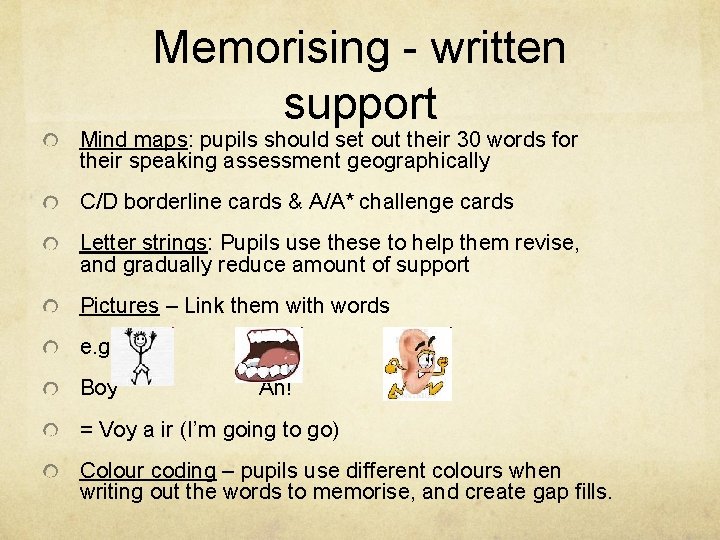
Memorising - written support Mind maps: pupils should set out their 30 words for their speaking assessment geographically C/D borderline cards & A/A* challenge cards Letter strings: Pupils use these to help them revise, and gradually reduce amount of support Pictures – Link them with words e. g. Boy Ah! Ear = Voy a ir (I’m going to go) Colour coding – pupils use different colours when writing out the words to memorise, and create gap fills.
Other Techniques Mnemonics/acronymns – create a memorable phrase for each letter of the word, or each word of a sentence. Pupils can create their own ‘silly sentence’ for individual items of vocabulary, or for key sentences Linking words Memory Games YOUR IDEAS?