
Conversion of Breaker Oriented Model into CIM objects
Conversion of Breaker Oriented Model into CIM objects Karel Máslo Department of Transmission System Analysis ČEPS, a. s. 10 -13 May 2011, Prague, Czech Republic
Contents § § § § ENTSO E CIM – Model Exchange Profile CIM Using for EMS Applications Dispatcher Training Simulator -DTS Basic network model – BROM versus BOM Extended model – protections and automatics Migration to CIM Conclusions
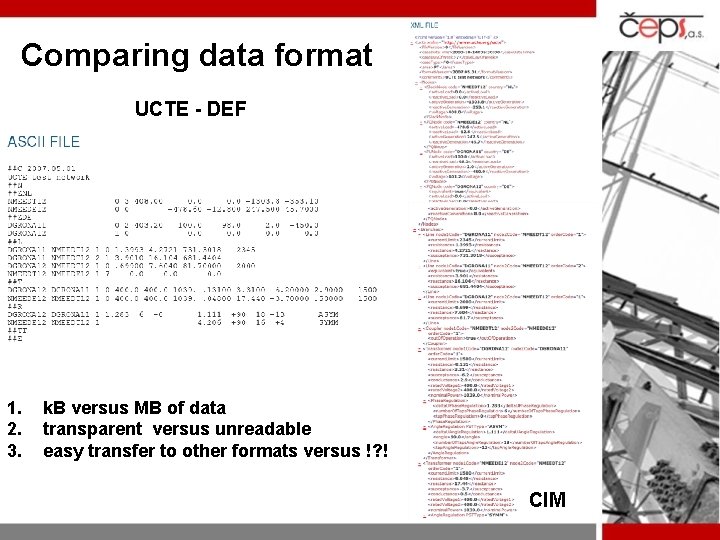
Comparing data format UCTE - DEF 1. 2. 3. k. B versus MB of data transparent versus unreadable easy transfer to other formats versus !? ! CIM
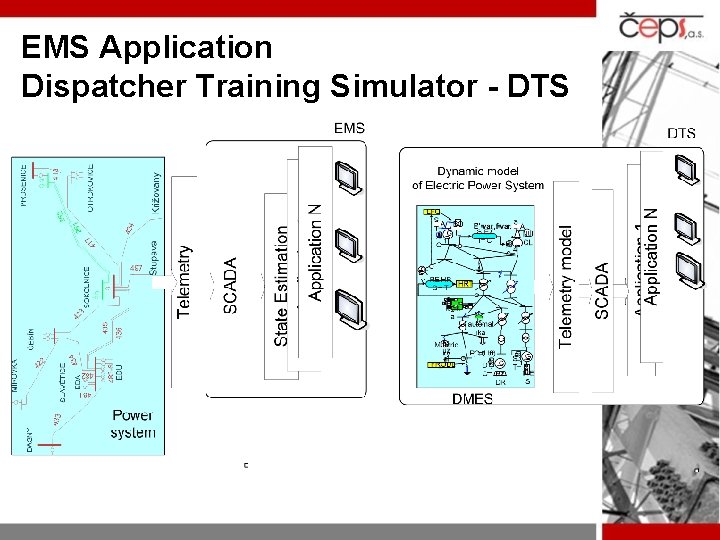
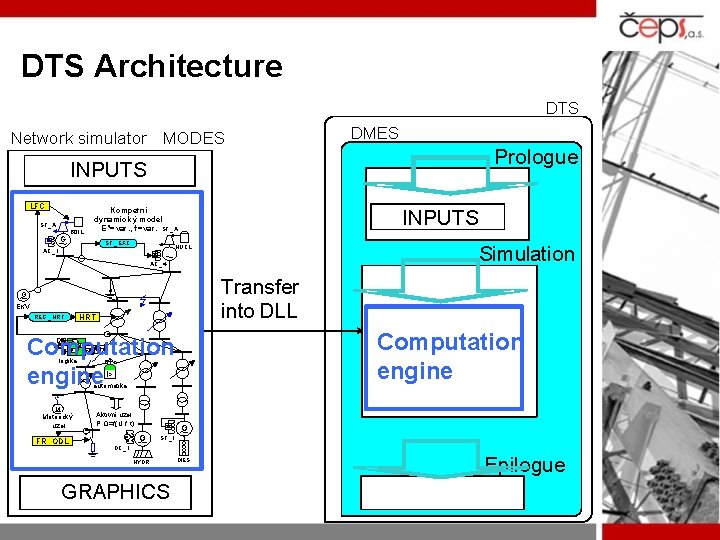
EMS Application Dispatcher Training Simulator - DTS
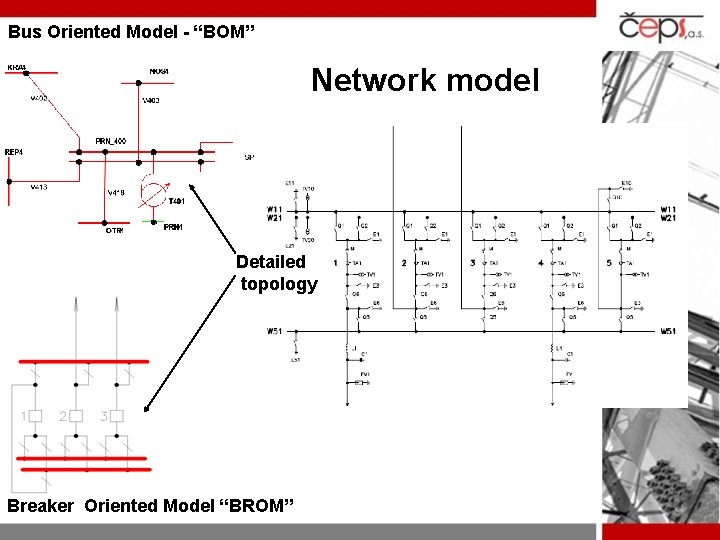
Bus Oriented Model - “BOM” Network model Detailed topology Breaker Oriented Model “BROM”
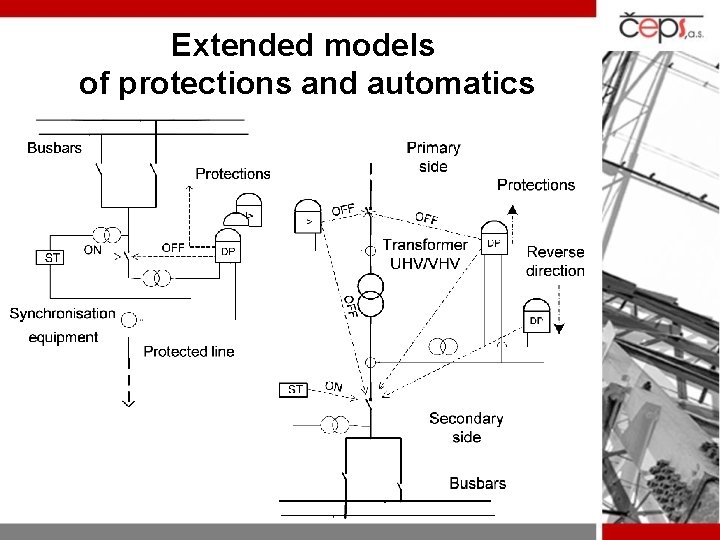
Extended models of protections and automatics
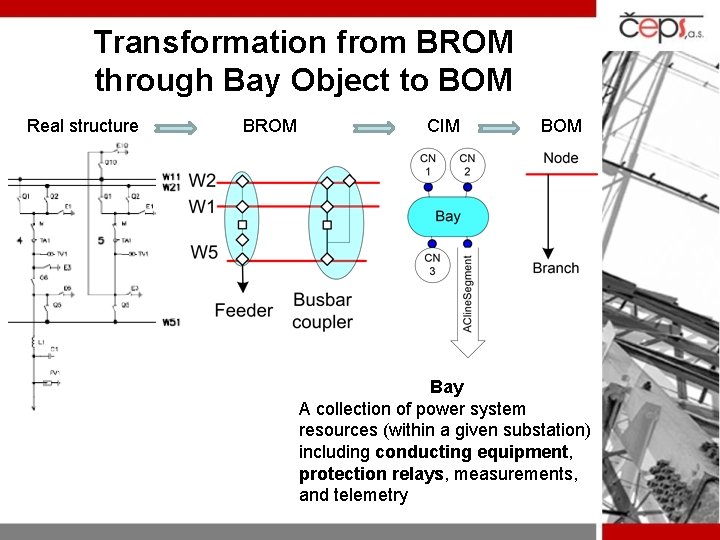
Transformation from BROM through Bay Object to BOM Real structure BROM CIM BOM Bay A collection of power system resources (within a given substation) including conducting equipment, protection relays, measurements, and telemetry
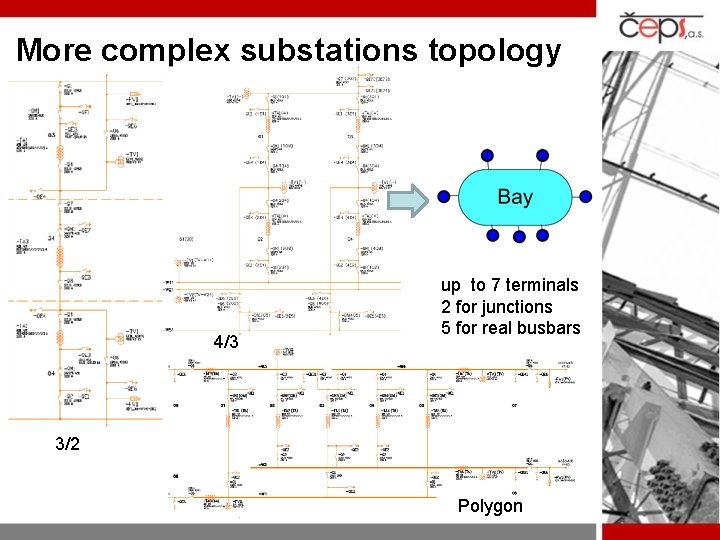
More complex substations topology 4/3 up to 7 terminals 2 for junctions 5 for real busbars 3/2 Polygon
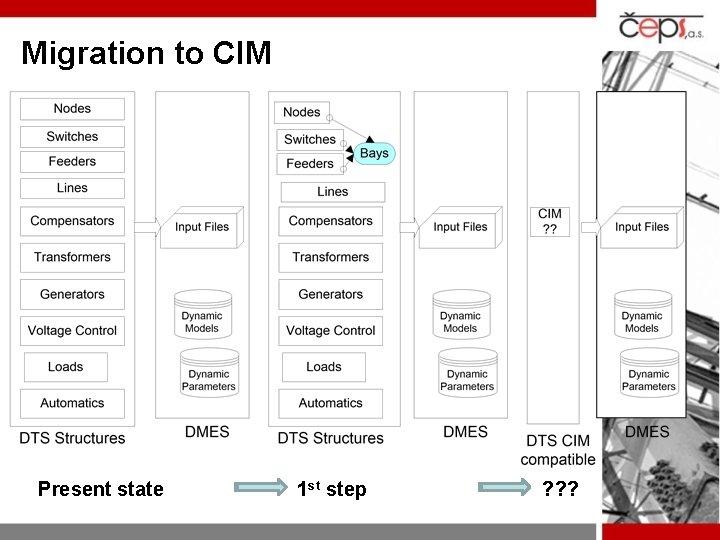
Migration to CIM Present state 1 st step ? ? ?
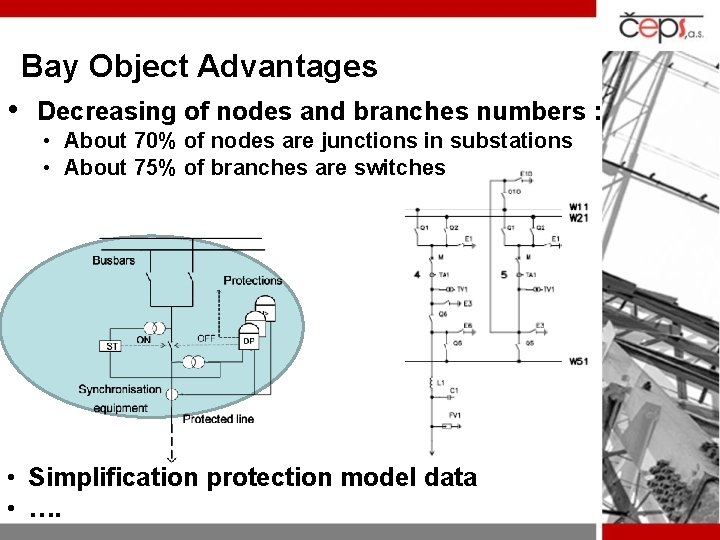
Bay Object Advantages • Decreasing of nodes and branches numbers : • About 70% of nodes are junctions in substations • About 75% of branches are switches • Simplification protection model data • ….
Conclusions § DTS is one from the most complex application in EMS § It requires huge input data to simulate real power system – Load flow data – Protection, automatics and control equipment data – Dynamic model data § Creating Bay object is the first step to using CIM § This way will be long and probably distressful § But it is useful and perhaps necessary Thank you for your attention and in advance for help Conclusions
Well Unbundled Connectivity Karel Máslo Head of Transmisson System Analysis Department ČEPS, a. s Elektrárenská 774/2 Praha 10 Czech Republic maslo@ceps. cz www. ceps. cz
DTS Architecture DTS Network simulator MODES DMES Prologue INPUTS LFC ST _A G BOIL Kompetn í dynamick ý model E"=var. , f=var. ST _A ST _EXC INPUTS Simulation NUCL AC _1 AC _4 Transfer into DLL G EKV REG _HRT Computation engine logika I> automatika M Motorický uzel FR_ODL Aktivní uzel P, Q=f(U, f, t) = G G ST _1 DC _1 HYDR GRAPHICS DIES Epilogue
Observability and responsibility areas in the EMS
- Slides: 14