
Conversion from conventional to organic dairy farming an
- Slides: 29
Conversion from conventional to organic dairy farming – an example NMBU, Ås 24. 10. 17 Martha Ebbesvik
2 A. Farm resources and current situation The example farm from Vestfold, dairy farming and crop production: • 110, 5 ha total – 63, 8 ha grass (the leys: 3 times cutting) – 19, 7 ha of these are pasture – 36, 7 ha spring wheat (variety: Mirakel) – 10 ha for potatoes and vegetables (leased to a neighbour) • Soil: not any special problems apart from some areas with too much water in the ground (these areas are protected, so she is not allowed to make ditches) • Weed: not heavy weed pressure – frequently ploughing
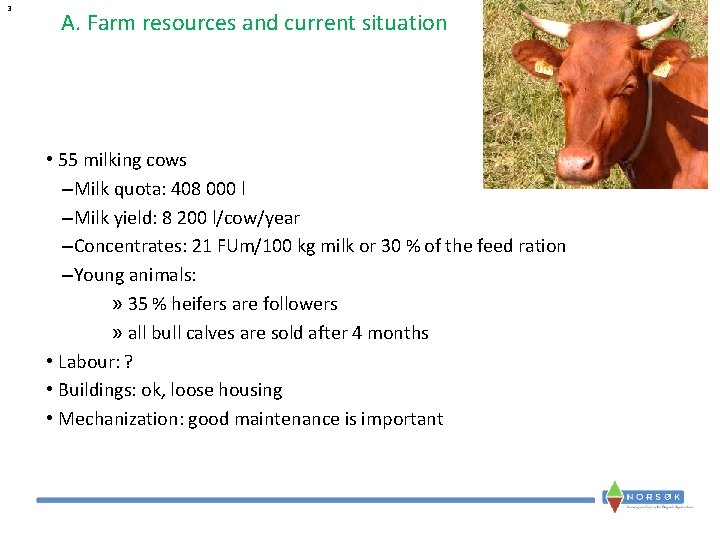
3 A. Farm resources and current situation • 55 milking cows –Milk quota: 408 000 l –Milk yield: 8 200 l/cow/year –Concentrates: 21 FUm/100 kg milk or 30 % of the feed ration –Young animals: » 35 % heifers are followers » all bull calves are sold after 4 months • Labour: ? • Buildings: ok, loose housing • Mechanization: good maintenance is important
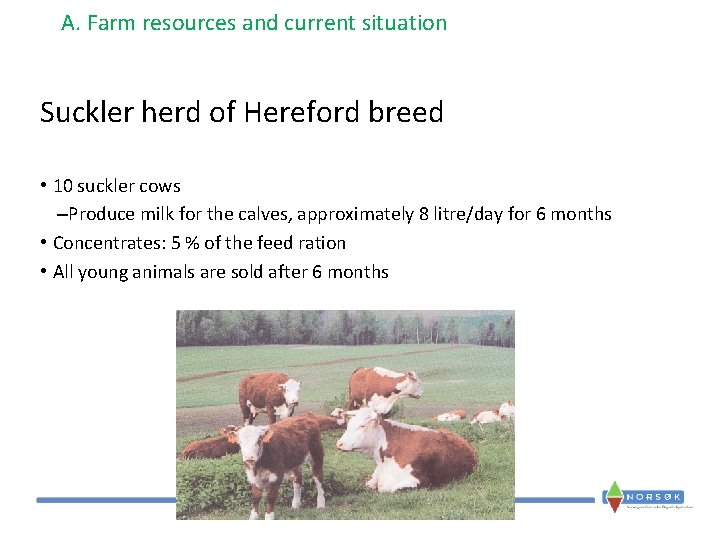
A. Farm resources and current situation Suckler herd of Hereford breed • 10 suckler cows –Produce milk for the calves, approximately 8 litre/day for 6 months • Concentrates: 5 % of the feed ration • All young animals are sold after 6 months
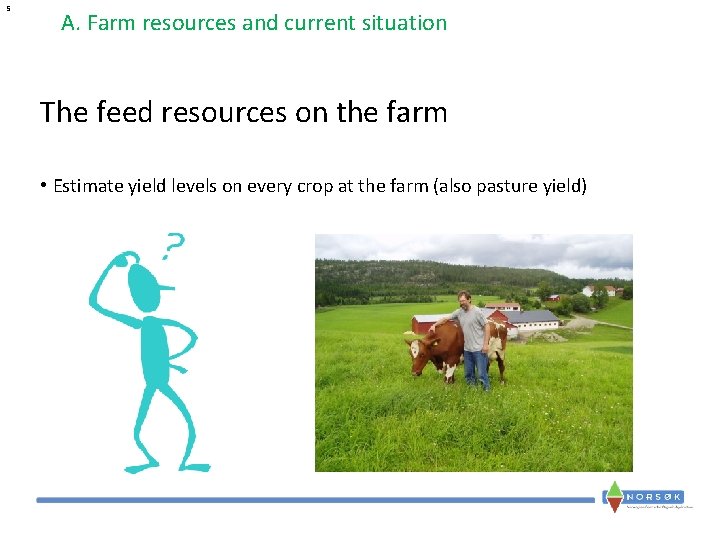
5 A. Farm resources and current situation The feed resources on the farm • Estimate yield levels on every crop at the farm (also pasture yield)
6 A. Farm resources and current situation Yields before conversion • Well-known on each field (dream situation) or • Calculate on the basis of animals and take into account the purchased feed • Calculate on the basis of food store • Sold crop
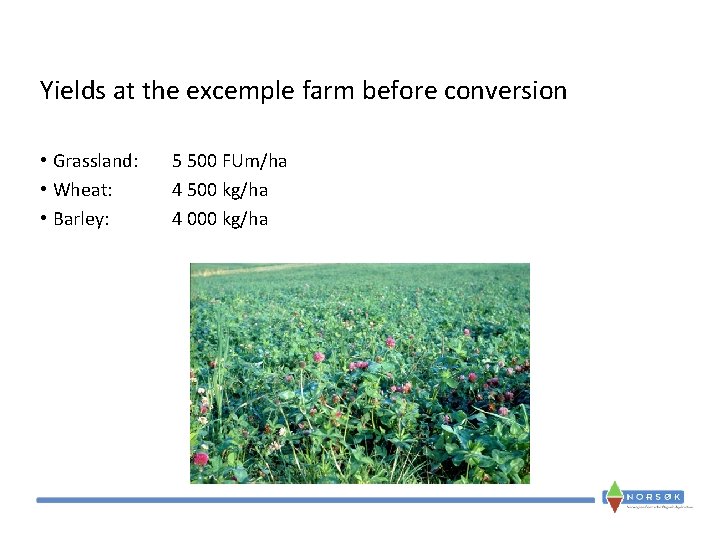
Yields at the excemple farm before conversion • Grassland: • Wheat: • Barley: 5 500 FUm/ha 4 500 kg/ha 4 000 kg/ha
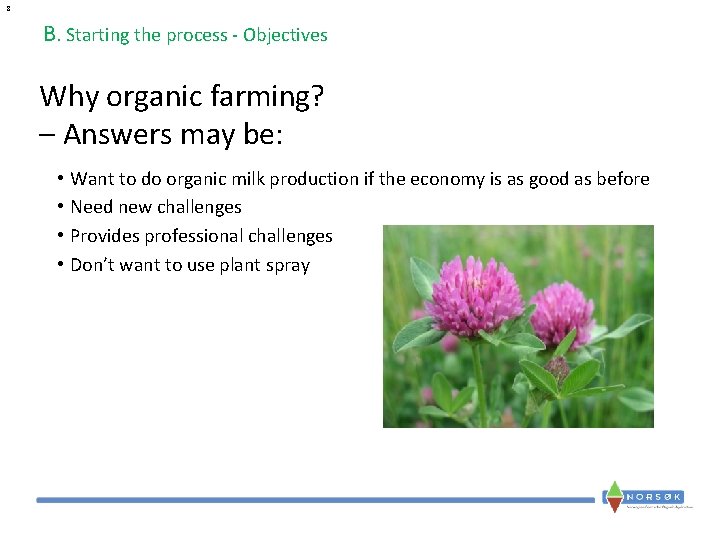
8 B. Starting the process - Objectives Why organic farming? – Answers may be: • Want to do organic milk production if the economy is as good as before • Need new challenges • Provides professional challenges • Don’t want to use plant spray
9 C. Plans for converted farm Ley-yields after conversion • Ley-yields were compared between organic and conventional farms in Norway: –on average, yields on organic leys were 12% lower, measured as FUm* per ha –but: significant variation between farms, some having higher yields, other lower yields than on comparable conventional farms * feed units (net energy of lactation)
Grain-yields after conversion • Surveys in Norway have indicated that organic grain-growing without cattle manure can give 35 % less oat yield and 40 % less barley- and wheat yield compared to conventional grain growing • With manure it is possible to obtain nearly the same yields as in conventional growing • With cattle manure and “Grønn 8 K”, a type of fertilizer based on manure from chicken, it is possible to obtain the same yields as in conventional growing –In a competition between organic barley-growers in 2016 they achieved from 4 530– 7 030 kg barley/ha
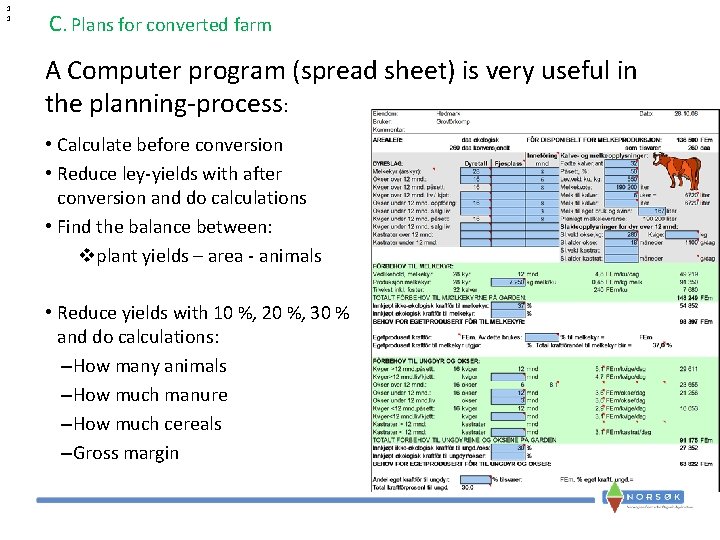
1 1 C. Plans for converted farm A Computer program (spread sheet) is very useful in the planning-process: • Calculate before conversion • Reduce ley-yields with after conversion and do calculations • Find the balance between: vplant yields – area - animals • Reduce yields with 10 %, 20 %, 30 % and do calculations: –How many animals –How much manure –How much cereals –Gross margin
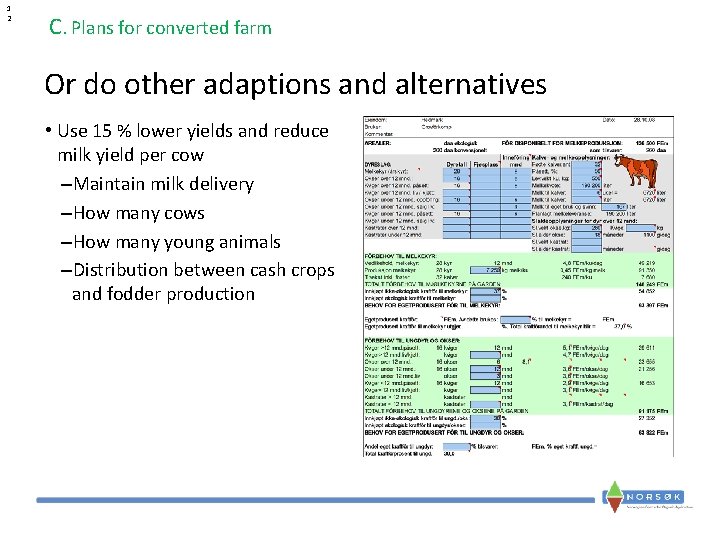
1 2 C. Plans for converted farm Or do other adaptions and alternatives • Use 15 % lower yields and reduce milk yield per cow –Maintain milk delivery –How many cows –How many young animals –Distribution between cash crops and fodder production
1 3 C. Plans for converted farm If the land is too small: • Reduce number of animals • Reduce cash crops • Rent land • Increase the amount of purchased fodder • Start to use outfields / uncultivated land • Cultivate crops with high energy yield/ha
1 4 To the example: • Yield-estimates after conversion: –Leys: reduction of 10 to 15 %, we use ca 12 % in our calculations • Grass and pasture –grass: 5 500 FUm/ha x 0, 88 = 4 800 FUm/ha • Forage area have to increase with 12 % to maintain the same total yield as before: 63, 8 ha x 1, 12 = 71, 5 ha (Δha = 7, 7 ha) –Cereals: It is a lot of manure on the farm and organic fertilizer is purchased – 10 % reduction • Wheat: 4 500 kg/ha x 0, 9 = 4 000 kg/ha • Barley: 4 000 kg/ha x 0, 9 = 3 600 kg/ha • Area for cereals: 36, 7 ha – 7, 7 ha = 29 ha
1 5 Distribution of area for cereals • Area for cereals = 29 ha – We grow barley on 11 ha and spring wheat on 18 ha
1 6 How many animals? Milk-yield, what level? Meet production, how much? Purchased concentrate, how much? • We try to maintain the total milk delivery (economic reasons), so we reduce meet production – no bulls. • Less young animals and reduced meat production • Use some of the land used for cereals to grow grass • The same amount of concentrate
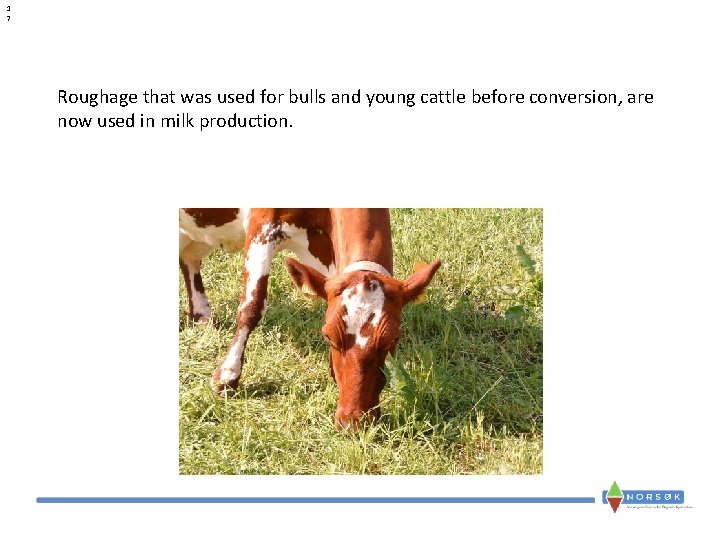
1 7 Roughage that was used for bulls and young cattle before conversion, are now used in milk production.
1 8 Cropping plan • Start with the number of fields on the farm before conversion • The size of the fields • Calculate the need for area for each crop (forage production, vegetables, cereals) • Decide the length of the crop rotation; 3 years, 5 years, 7 years? • Make a new field map / field boundaries
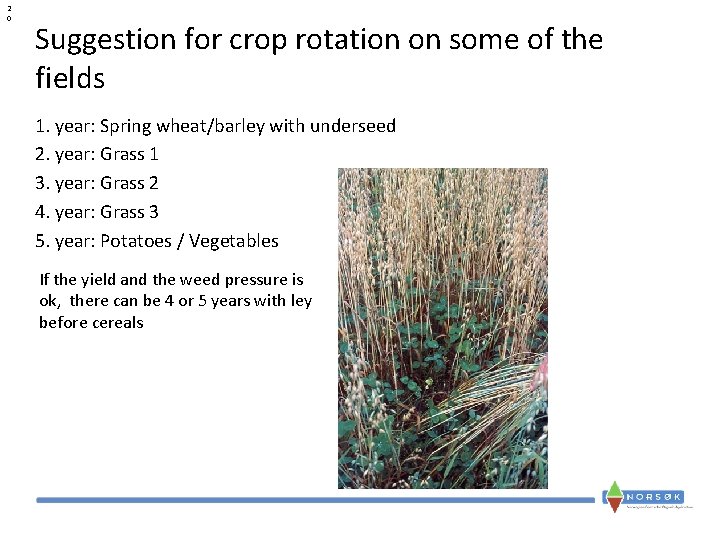
2 0 Suggestion for crop rotation on some of the fields 1. year: Spring wheat/barley with underseed 2. year: Grass 1 3. year: Grass 2 4. year: Grass 3 5. year: Potatoes / Vegetables If the yield and the weed pressure is ok, there can be 4 or 5 years with ley before cereals
2 1 • When the cropping plan is made, plan the process from today until the whole area is included in the crop rotation – 2 years, 5 or 10 years? –Where to start?
2 2 • When the cropping plan is done and there is a balance between animal numbers and area, it’s time to make the fertilizer management plan –(Get help from advisors)
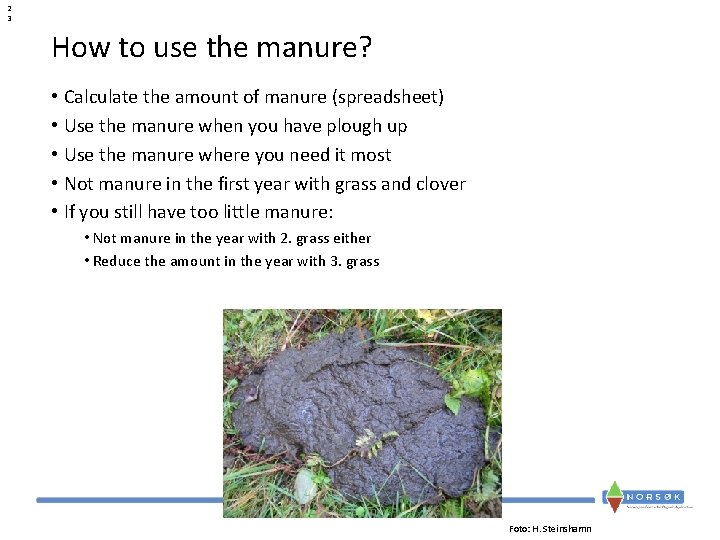
2 3 How to use the manure? • Calculate the amount of manure (spreadsheet) • Use the manure when you have plough up • Use the manure where you need it most • Not manure in the first year with grass and clover • If you still have too little manure: • Not manure in the year with 2. grass either • Reduce the amount in the year with 3. grass Foto: H. Steinshamn
2 4 Economic results • Gross margin today • Gross margin after conversion • Gross margin for different alternatives Foto: A. De. Boer
Exemple farm GM
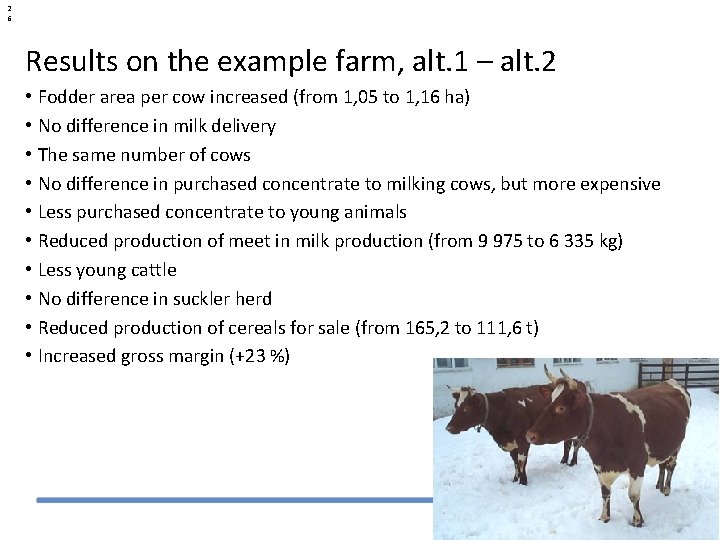
2 6 Results on the example farm, alt. 1 – alt. 2 • Fodder area per cow increased (from 1, 05 to 1, 16 ha) • No difference in milk delivery • The same number of cows • No difference in purchased concentrate to milking cows, but more expensive • Less purchased concentrate to young animals • Reduced production of meet in milk production (from 9 975 to 6 335 kg) • Less young cattle • No difference in suckler herd • Reduced production of cereals for sale (from 165, 2 to 111, 6 t) • Increased gross margin (+23 %)
2 7 Then continue with: • D. Conversion Period –The strategy –How to approach a desired crop rotation • E. The conversion in the first year
2 9 F. Follow-up
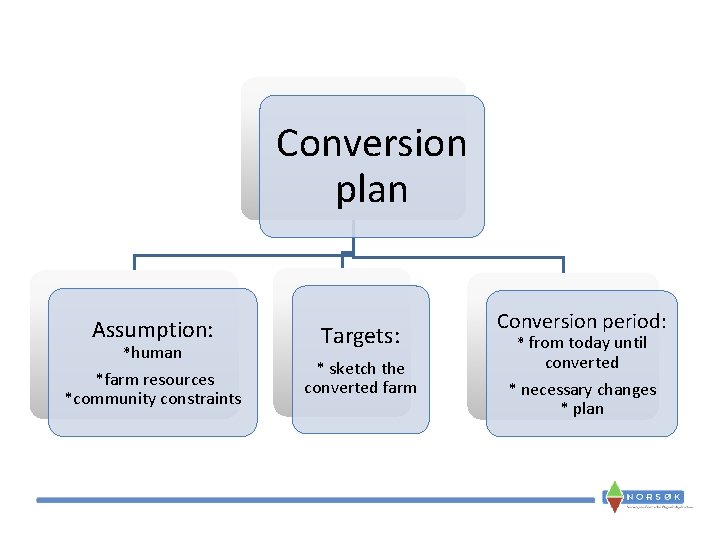
Conversion plan Assumption: *human *farm resources *community constraints Targets: * sketch the converted farm Conversion period: * from today until converted * necessary changes * plan
www. norsok. no