
Conversations About Teaching Peter Mc Dermott Jennifer Pankowski
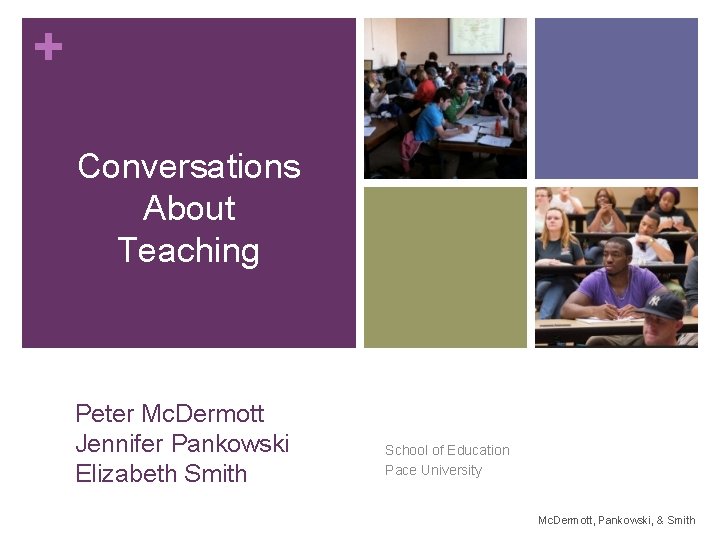
+ Conversations About Teaching Peter Mc. Dermott Jennifer Pankowski Elizabeth Smith School of Education Pace University Mc. Dermott, Pankowski, & Smith
+ 2 Teaching Circles 2017 -2018 n. Fall: Sept 19 and Oct 17 th. n. Spring: Feb 20 th and Mar 20 th. Mc. Dermott, Pankowski, & Smith
+ 3 Quick Write n. What role should lecture have in your current coursework? n. What else might you try? Mc. Dermott, Pankowski, & Smith
+ 4 Engagement Encourage students to participate in academic work with interest and thoughtfulness. Mc. Dermott, Pankowski, & Smith
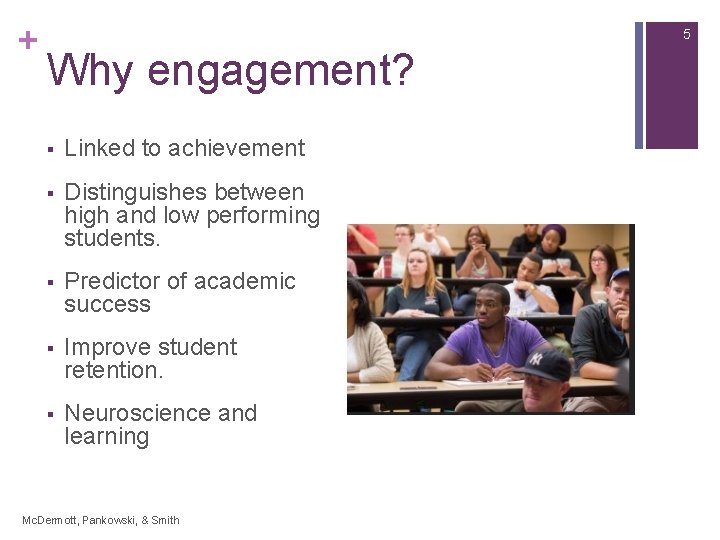
+ 5 Why engagement? § Linked to achievement § Distinguishes between high and low performing students. § Predictor of academic success § Improve student retention. § Neuroscience and learning Mc. Dermott, Pankowski, & Smith
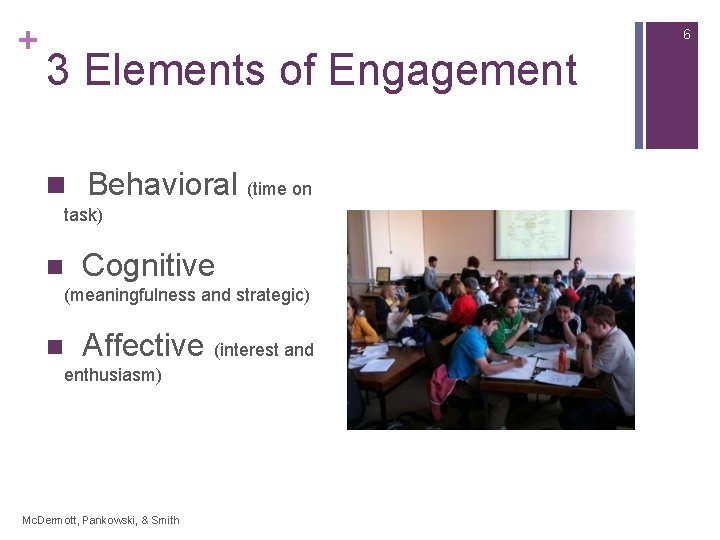
+ 6 3 Elements of Engagement n Behavioral (time on task) n Cognitive (meaningfulness and strategic) n Affective (interest and enthusiasm) Mc. Dermott, Pankowski, & Smith
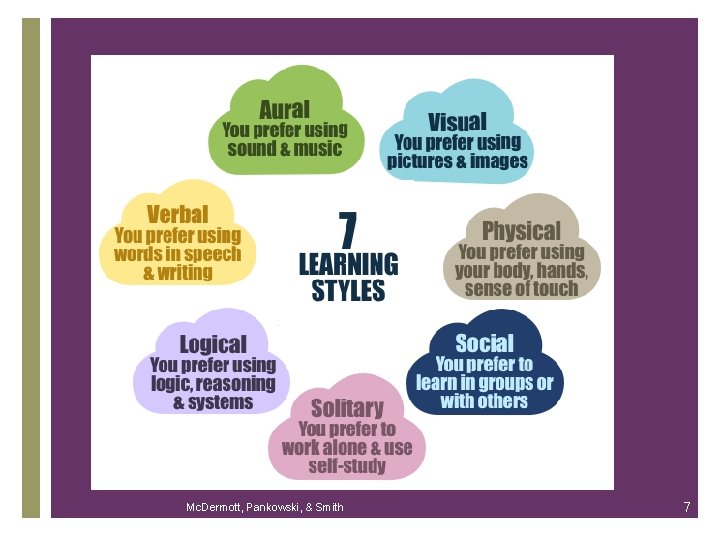
+ Mc. Dermott, Pankowski, & Smith 7

+ Alternatives to Lecture https: //tinyurl. com/ycgmnw 7 f Mc. Dermott, Pankowski, & Smith
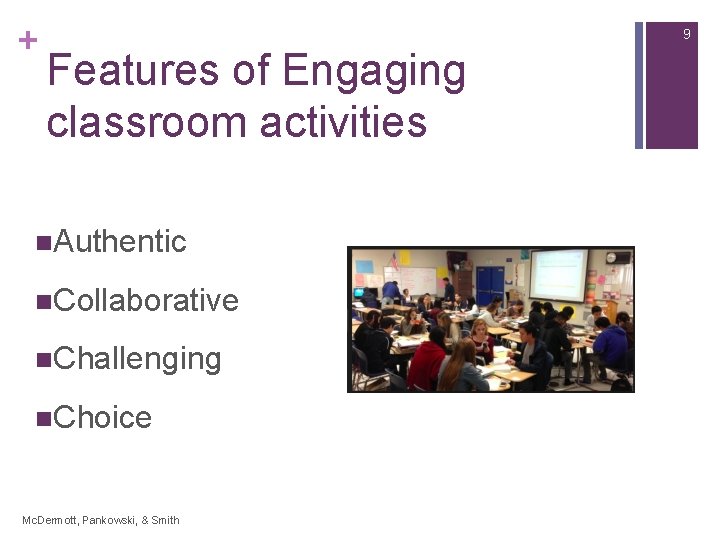
+ 9 Features of Engaging classroom activities n. Authentic n. Collaborative n. Challenging n. Choice Mc. Dermott, Pankowski, & Smith
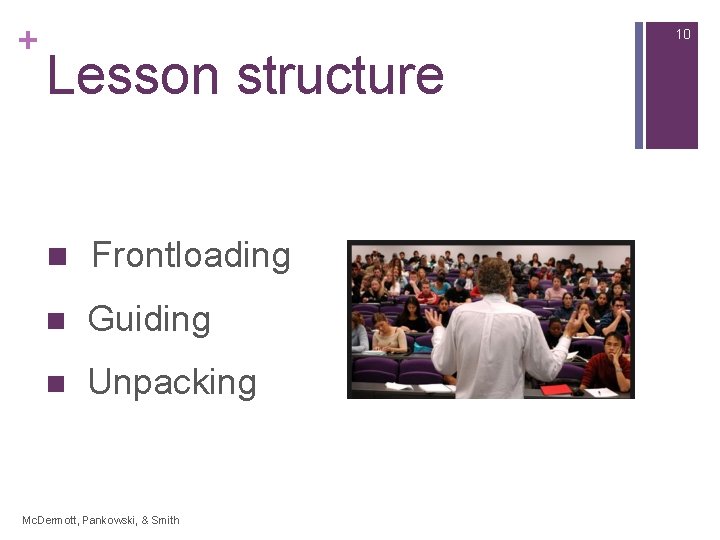
+ 10 Lesson structure n Frontloading n Guiding n Unpacking Mc. Dermott, Pankowski, & Smith
+ 11 Frontloading n Warm-ups n Think-pair-share n Anticipation guides n Questioning n Quick writes Mc. Dermott, Pankowski, & Smith
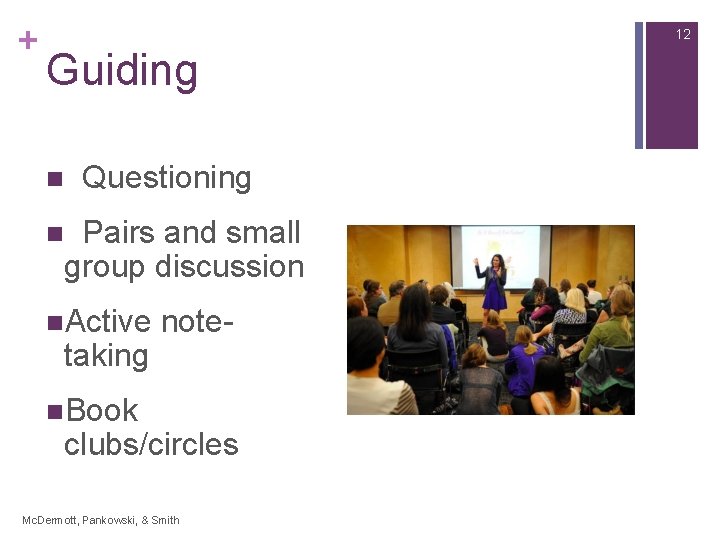
+ 12 Guiding n Questioning Pairs and small group discussion n n. Active taking note- n. Book clubs/circles Mc. Dermott, Pankowski, & Smith
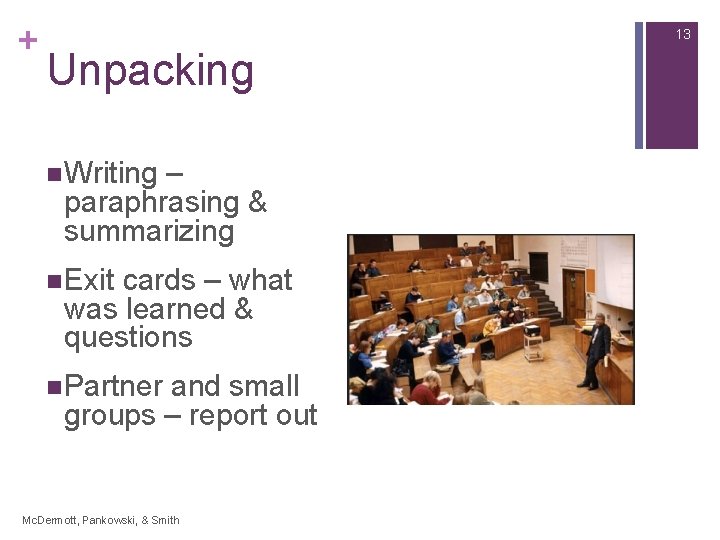
+ 13 Unpacking n Writing – paraphrasing & summarizing n Exit cards – what was learned & questions n Partner and small groups – report out Mc. Dermott, Pankowski, & Smith

+ 14 Interactive technologies Mc. Dermott, Pankowski, & Smith
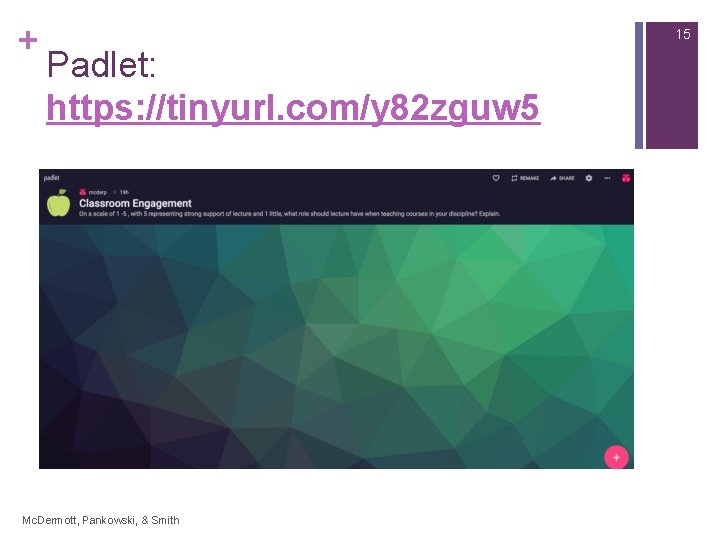
+ 15 Padlet: https: //tinyurl. com/y 82 zguw 5 Mc. Dermott, Pankowski, & Smith
+ 16 Why a Book Club? n Small groups (4 -5 students) reading the same book. n Students choose a book from the instructor’s suggested list or option to self-select with approval. n Students read the whole book or section by section and prepare discussion questions for the book club members. n “Meet” on discussion board or at a synchronized meet-up time online. Mc. Dermott, Pankowski, & Smith
+ 17 What are the Benefits of Book Clubs? n Fosters student collaboration. n Delve deeper into a topic vs. jumping from one concept to another. n Connect to content or author in a new way, “real world” connections. n Encourages ‘personalized learning’ and forming evidence-based arguments/opinions. n Exposed to other club members’ perspectives and experiences. Mc. Dermott, Pankowski, & Smith
+ 18 Learning Objectives for Book Clubs Students will: n identify and discuss “big ideas” of the book. n articulate questions to lead to a deeper group discussion. n collaborate with other book club members to explore problems or challenges highlighted in the reading. n reflect on learning, application to course goals and content understanding. R. Beach and S. Yussen. Practices of productive adult book clubs. Journal of Adolescent and Adult Literacy 55 (20) 121 -123. http: //www. northeastern. edu/cpsfacultycentral/wp-content/uploads/2014/10/FL 14 -Harrington-Shauna_Book-Clubs. pdf Mc. Dermott, Pankowski, & Smith
+ Great ways to use Poll Everywhere in the classroom
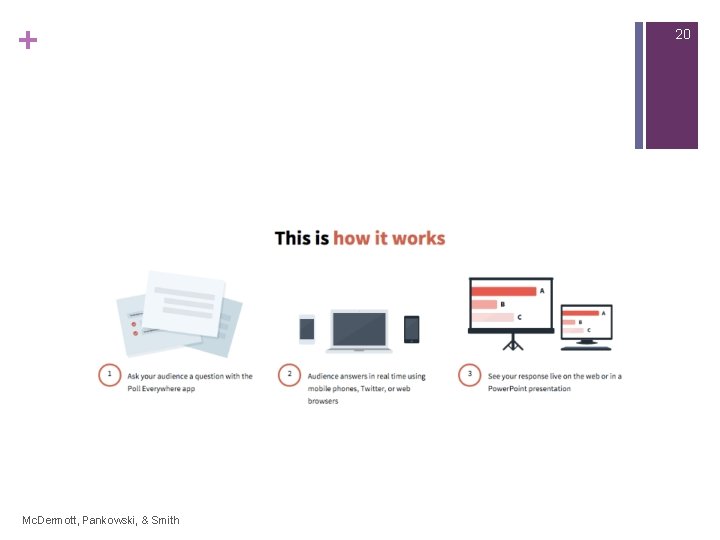
+ Mc. Dermott, Pankowski, & Smith 20
+ 21 How do instructors use Poll Everywhere? n Teachers use Poll Everywhere to find out where students stand in regards to important issues raised by, or related to, the subject matter. n Who do you think will become the next president of the United States? (for a US Government class) n In Mary Shelly’s novel Frankenstein do you think the monster is born evil or good? (for an English Literature class) n If a substance is strongly acidic, what is the PH range on a scale of 1 -14? (for a Chemistry class) n What is the correct way of saying, “Being alone is preferable to being in bad company”? (for a Spanish class) Mc. Dermott, Pankowski, & Smith
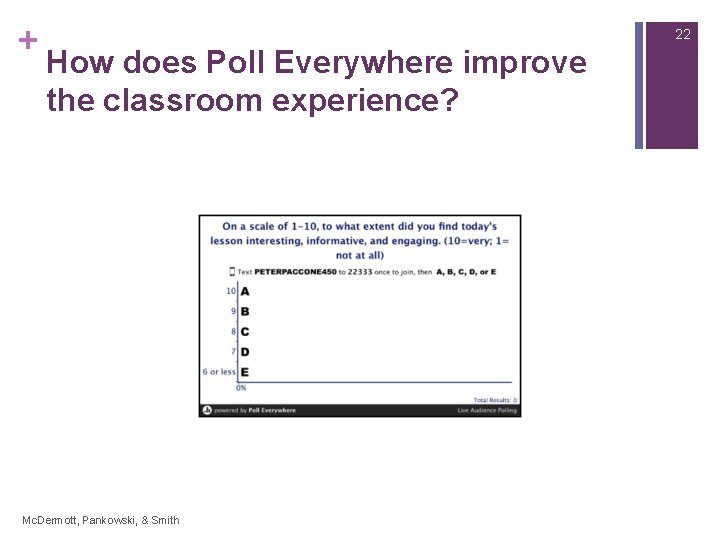
+ 22 How does Poll Everywhere improve the classroom experience? Mc. Dermott, Pankowski, & Smith

+ 23 My Polls n https: //www. polleverywhere. com/my/polls Mc. Dermott, Pankowski, & Smith

+ Upgrade for free!! http: //www. pace. edu/its/teaching-andlearning/classroom-technologies/poll-everywhere
+ 25 Work Informing Presentation Doyle, W. (1982). Academic work. Review of Educational Research, 53(2), 159 -199. Guthrie, J. T. , Wigfield, A. , & You, W. (2012). Instructional contexts for engagement and achievement in reading. In S. L. Christenson, A. L. Reschly, & C. Wylie (Eds. ), Handbook of research on student engagement (pp. 601– 634). New York: Springer. Parsons, S. A. , Nland, L. R. , & Parsons, A. W. (2014). The ABCs of student engagement. Phi Delta Kappan, 95(8), 23 -37. Parsons, S. A. et al. (2015). Students’ engagement in literacy tasks. The Reading Teacher, 69(2), 223 -231. Mc. Dermott, Pankowski, & Smith
- Slides: 25