
Conversation skill training in Virtual Reality a study
- Slides: 21
Conversation skill training in Virtual Reality: a study with people with communication deficit. DISES conference, July 3 rd 2018, Cape Town, South Africa This research was supported by funding from the charity RESPECT and the People Programme (Marie Curie Actions) of the European Union's Seventh Framework Programme (FP 7/20072013) under REA grant agreement no. PCOFUND-GA-2013 -608728’
Presenter: Yurgos Politis 1 Co-authors: Michael Leahy 2, Connie Sung 2, Lizbeth Goodman 1, Louis Olivia 3, Thomas Olivia 3, Ian Clemente 2, Zihyun Lim 2 1 University College Dublin, Ireland (UCD) 2 Michigan State University, USA (MSU) 3 HIVE-RD LLP Contact: Yurgos Politis Email: yurgos. politis@ucd. ie Website: https: //www. researchgate. net/project/Virtual-Learning-for-people-with-ASD
Background • People with autism spectrum disorder (ASD) typically have difficulties with communication and socialization skills, (Fombonne, 2005; Levy & Perry, 2011; Rivet & Matson, 2011; Suzuki 2011). • Such difficulties are linked to the development of problem behaviours, and thus young adults with ASD struggle to find or keep employment; to begin or maintain a relationship; to become part of a community, • Assistive technology aims improving their quality of life by helping them attain employment and independent living.
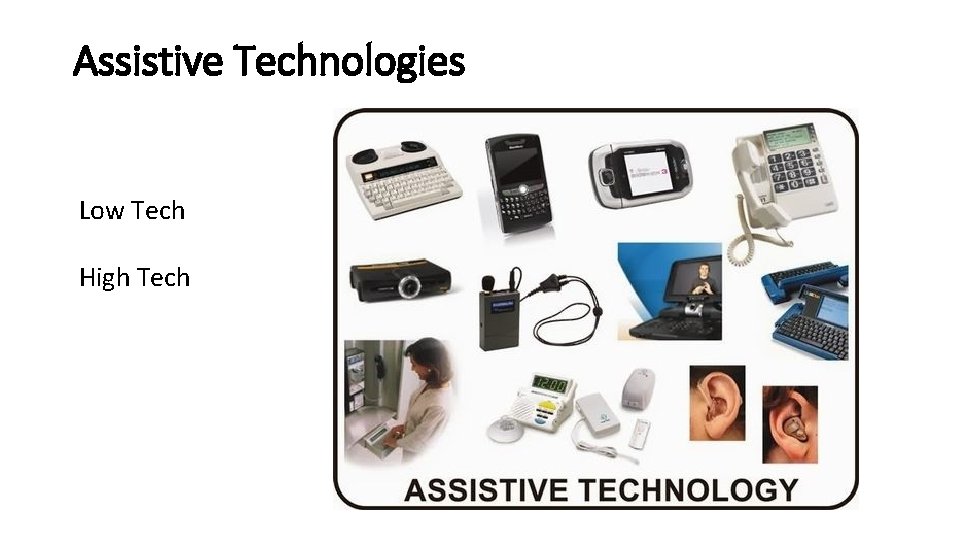
Assistive Technologies Low Tech High Tech
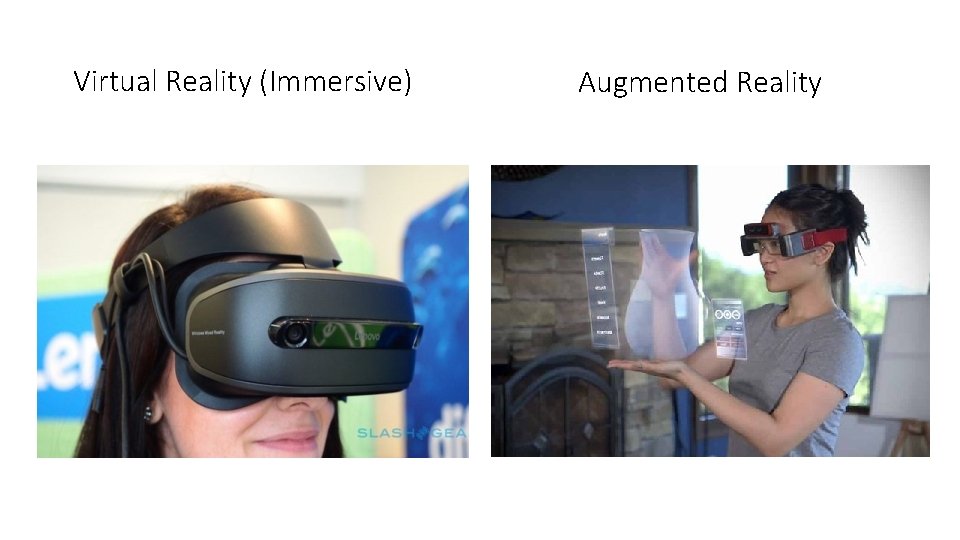
Virtual Reality (Immersive) Augmented Reality
Virtual Reality Affordances Studies have shown that a Virtual World can: • stimulate users’ interactivity (Roussou, 2004) and motivation (Garris et al. , 2002; Ott & Tavella, 2009) • make conversations easy, structured and inclusive (Newbutt, 2013) • offer users a sense of co-presence and realism (Childs, 2010; Yee et al. , 2009) • provide an increased sense of control (de Freitas et al. , 2010) • improve users’ knowledge, enjoyment and interest in learning (Papastergiou, 2009).
Virtual Learning for people with ASD project (VL 4 ASD)
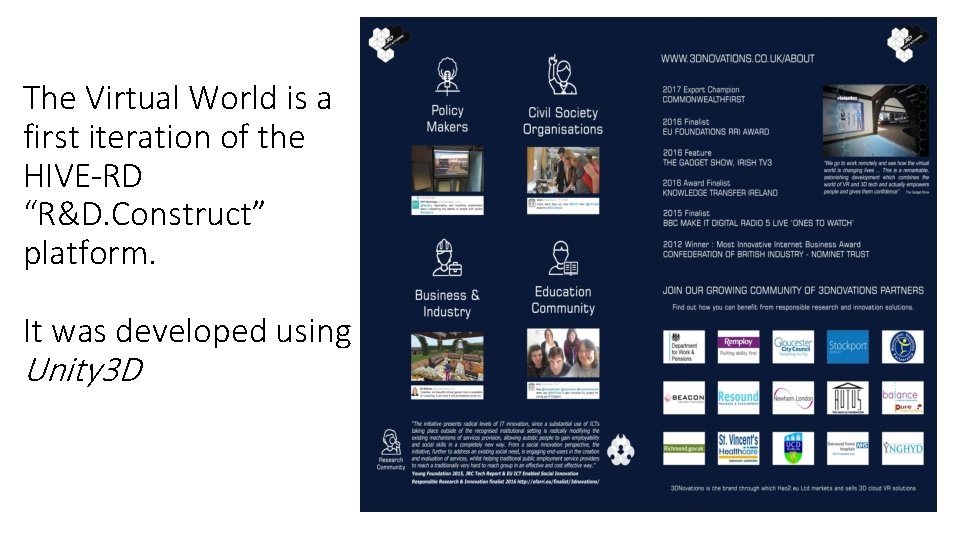
The Virtual World is a first iteration of the HIVE-RD “R&D. Construct” platform. It was developed using Unity 3 D
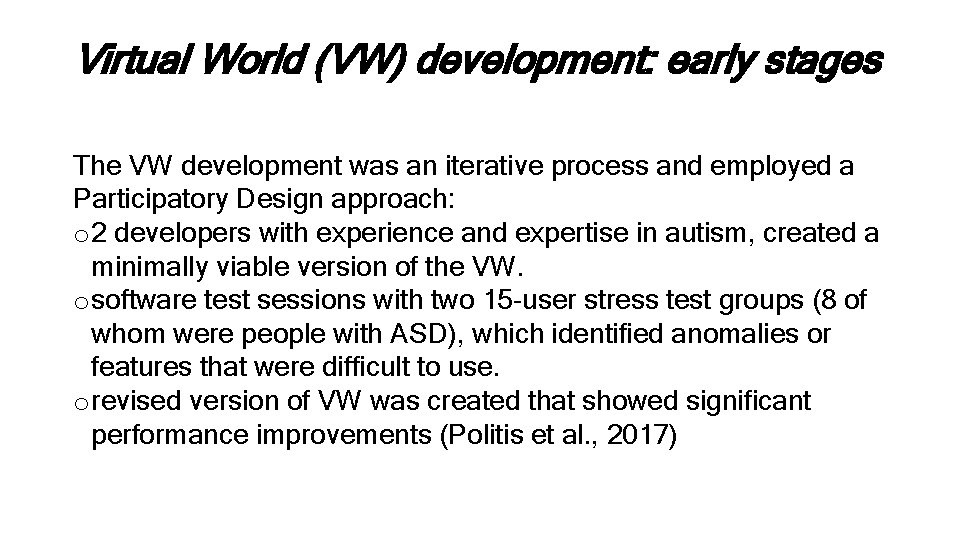
Virtual World (VW) development: early stages The VW development was an iterative process and employed a Participatory Design approach: o 2 developers with experience and expertise in autism, created a minimally viable version of the VW. o software test sessions with two 15 -user stress test groups (8 of whom were people with ASD), which identified anomalies or features that were difficult to use. o revised version of VW was created that showed significant performance improvements (Politis et al. , 2017)
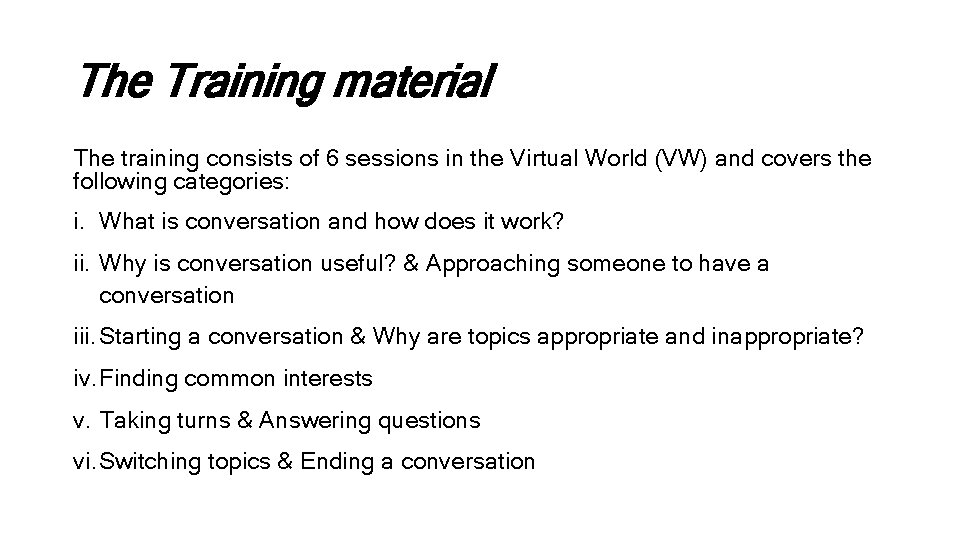
The Training material The training consists of 6 sessions in the Virtual World (VW) and covers the following categories: i. What is conversation and how does it work? ii. Why is conversation useful? & Approaching someone to have a conversation iii. Starting a conversation & Why are topics appropriate and inappropriate? iv. Finding common interests v. Taking turns & Answering questions vi. Switching topics & Ending a conversation
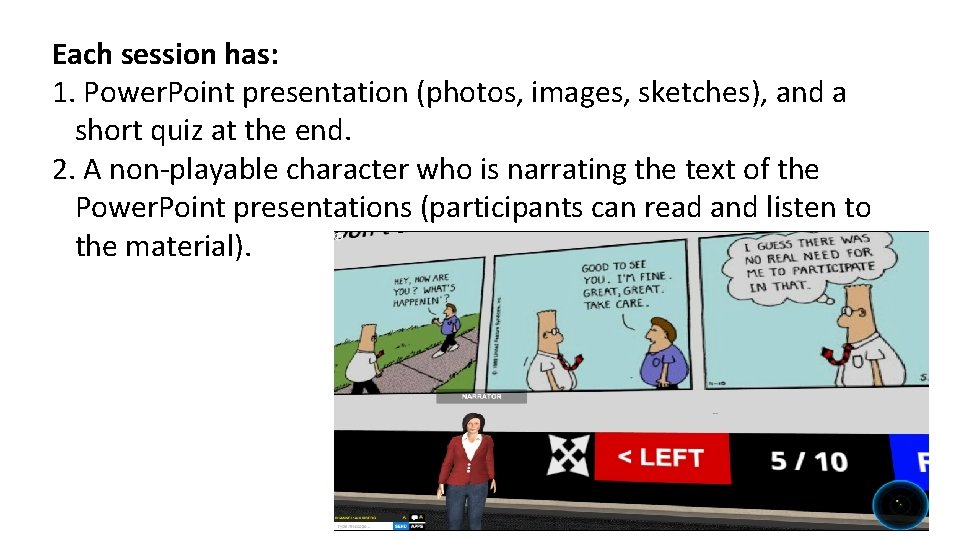
Each session has: 1. Power. Point presentation (photos, images, sketches), and a short quiz at the end. 2. A non-playable character who is narrating the text of the Power. Point presentations (participants can read and listen to the material).
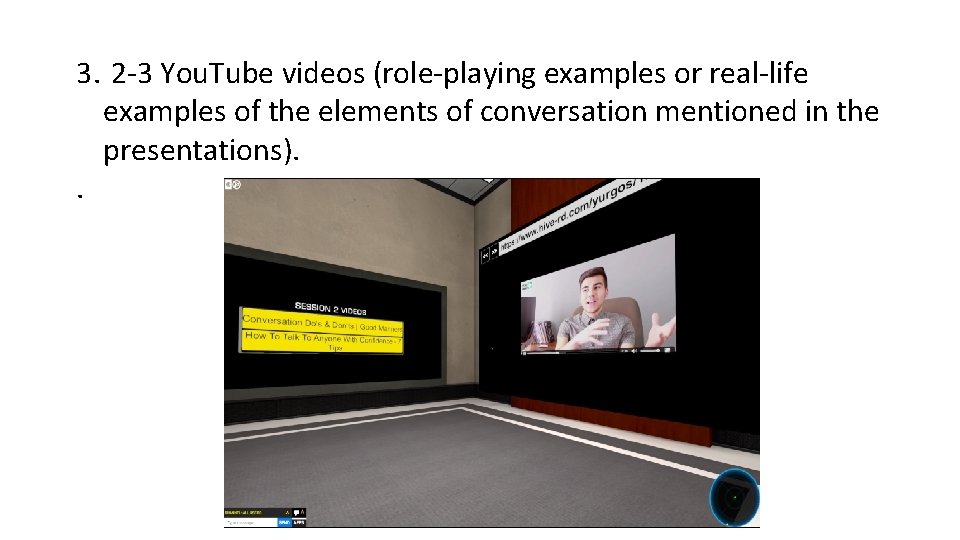
3. 2 -3 You. Tube videos (role-playing examples or real-life examples of the elements of conversation mentioned in the presentations). .
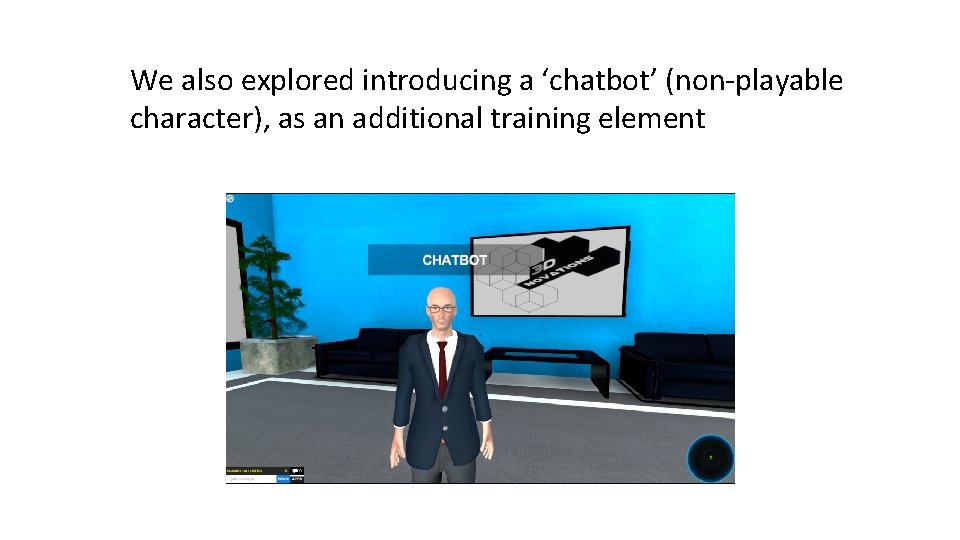
We also explored introducing a ‘chatbot’ (non-playable character), as an additional training element
VW development: User feedback of training material This testing phase included a feedback session with 6 people with ASD, and another with 2 practitioners. PROS: Participants felt that VR has potential in providing training for neurodiverse populations; They thought delivering training in three formats (Power. Point, videos, chatbot) could contribute to the learning.
CONS: Participants commented on the visual presentation, pacing and organisation of the content. They felt that in its current stage of development the chatbot was not interactive enough. They focused more on design elements, rather than the educational content (Politis et al. , 2017)
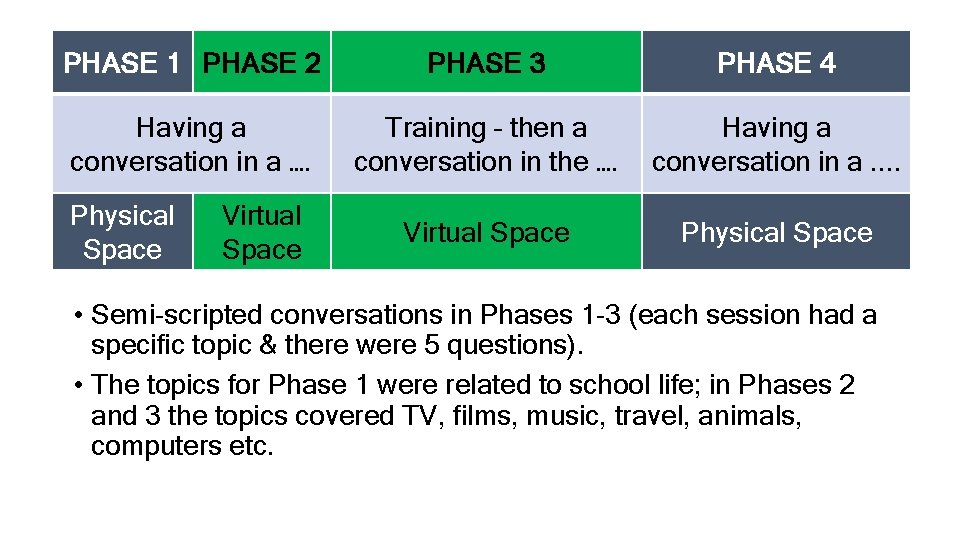
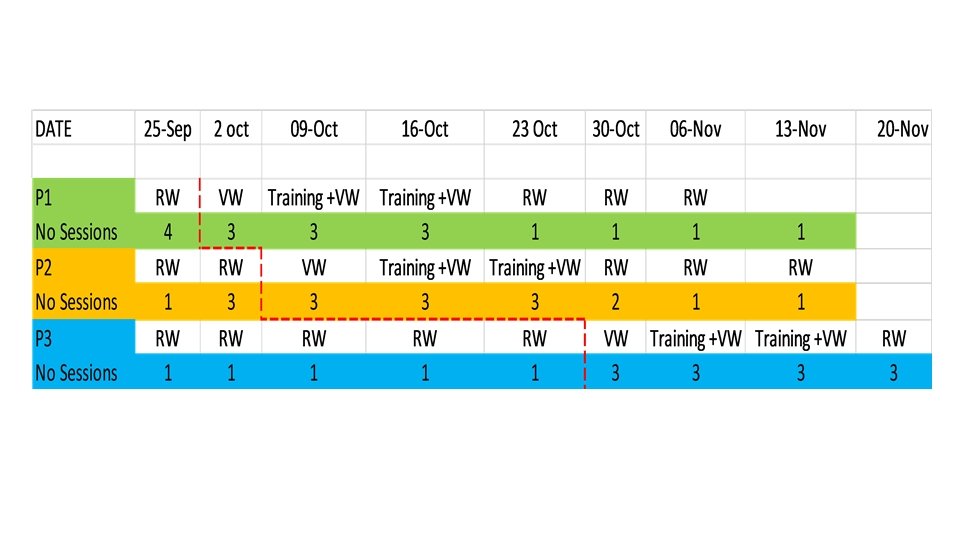
Intervention: Study Design: Multiple Baseline Design Sample: 3 participants on the mild/moderate end of the autism spectrum (one had co-morbid Anxiety, depression & ADHD); early 20 s (2 male -1 female); all three were students (one also has a full-time job); one was receiving another treatment at that time. Procedure: 4 Phases; 15 -16 sessions in total over 9 -week period Duration: 10 -30 minutes each session
PHASE 1 PHASE 2 PHASE 3 PHASE 4 Having a conversation in a …. Training – then a conversation in the …. Having a conversation in a. . Virtual Space Physical Space Virtual Space • Semi-scripted conversations in Phases 1 -3 (each session had a specific topic & there were 5 questions). • The topics for Phase 1 were related to school life; in Phases 2 and 3 the topics covered TV, films, music, travel, animals, computers etc.
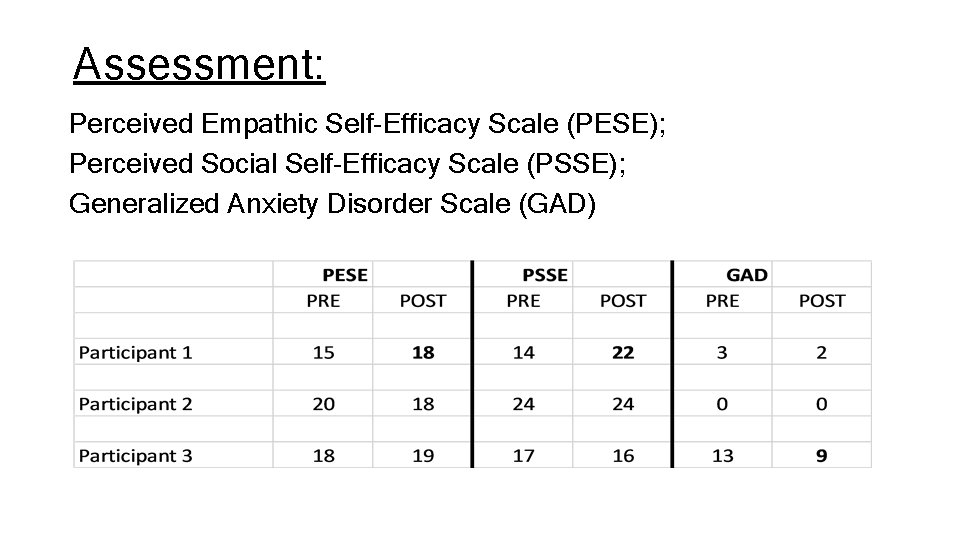
Assessment: Perceived Empathic Self-Efficacy Scale (PESE); Perceived Social Self-Efficacy Scale (PSSE); Generalized Anxiety Disorder Scale (GAD)
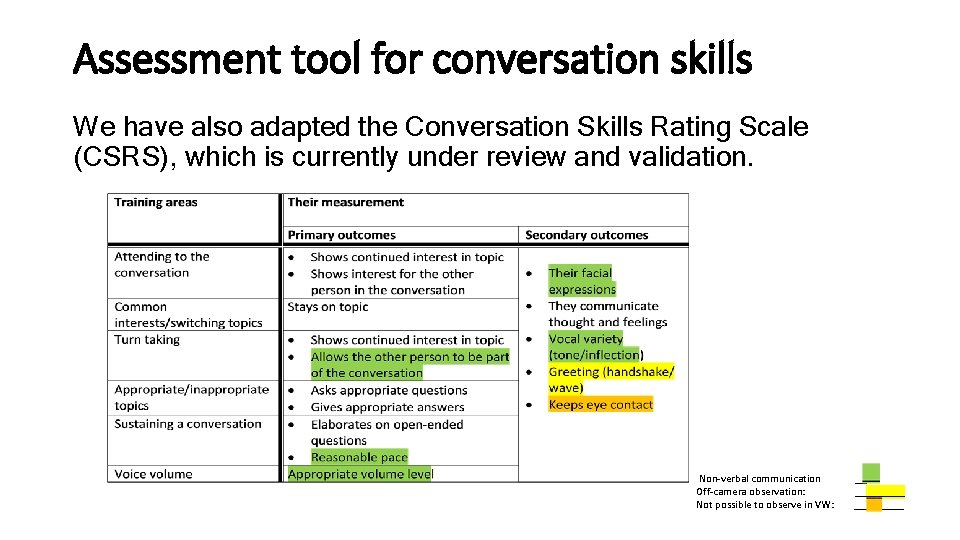
Assessment tool for conversation skills We have also adapted the Conversation Skills Rating Scale (CSRS), which is currently under review and validation. Non-verbal communication Off-camera observation: Not possible to observe in VW: __ _________
THANK YOU Follow VL 4 ASD updates and get access to publications and presentations at: https: //www. researchgate. net/project/Virtual-Learning-for-people-with-ASD