
Convergent Divergent Adaptive Radiation Gradual and Punctuated Coevolution

- Slides: 17
Convergent – Divergent Adaptive Radiation Gradual and Punctuated Coevolution
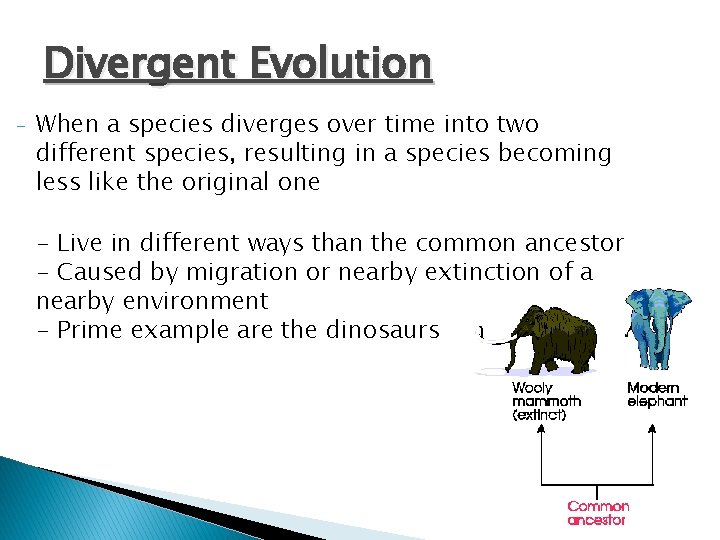
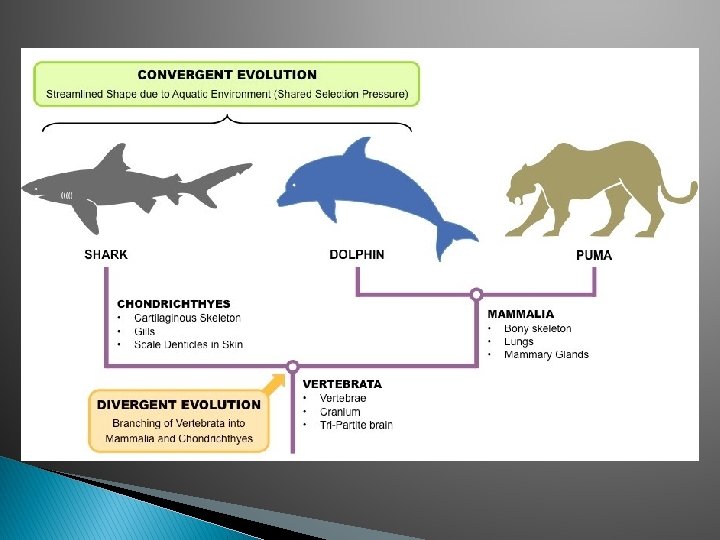
Divergent Evolution - When a species diverges over time into two different species, resulting in a species becoming less like the original one - Live in different ways than the common ancestor - Caused by migration or nearby extinction of a nearby environment - Prime example are the dinosaurs
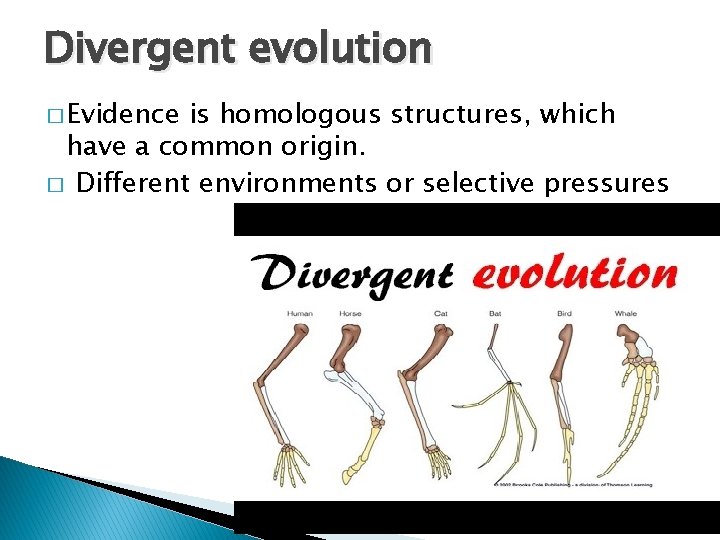
Divergent evolution � Evidence is homologous structures, which have a common origin. � Different environments or selective pressures
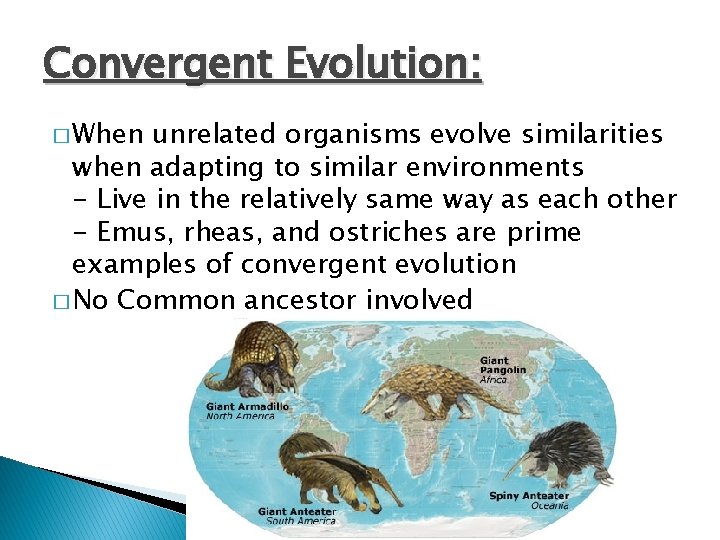
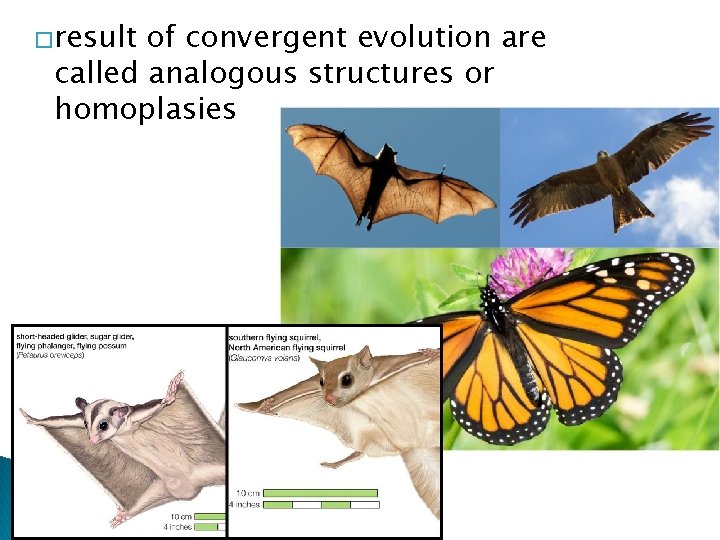
Convergent Evolution: � When unrelated organisms evolve similarities when adapting to similar environments - Live in the relatively same way as each other - Emus, rheas, and ostriches are prime examples of convergent evolution � No Common ancestor involved
�result of convergent evolution are called analogous structures or homoplasies
Significance…. . � The importance of these types of evolution is generating variation, as well as species performing their niche in their environment. As every species has a role to play, these types of evolution ensure that these are carried out.
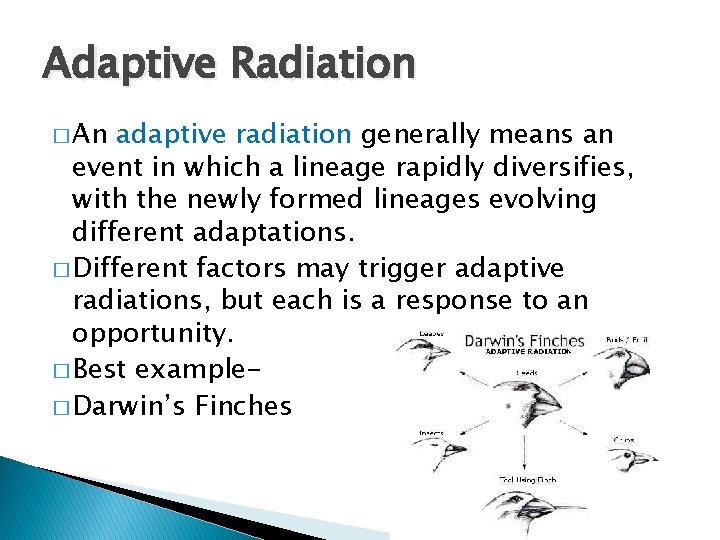
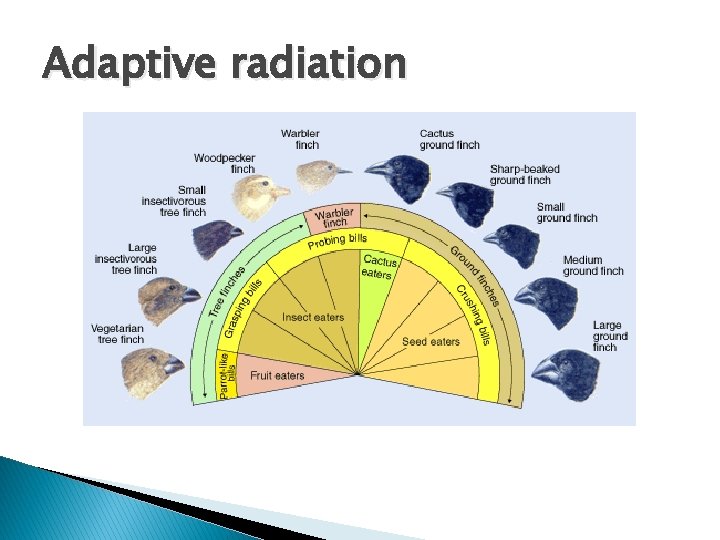
Adaptive Radiation � An adaptive radiation generally means an event in which a lineage rapidly diversifies, with the newly formed lineages evolving different adaptations. � Different factors may trigger adaptive radiations, but each is a response to an opportunity. � Best example� Darwin’s Finches
Adaptive radiation
Problem • On his voyage with the Beagle, Charles Darwin carefully studied several species of finches. He found that many had come from a single species, but they had adapted to their environment by choosing different food sources and developing radically different beak designs to match their choice of food. What pattern of evolution did the finches show? The finches showed divergent evolution. As time passed, the different species adapted to their own lifestyles and became more and more different from the other closely related species.
Problem • Many species of owls hunt only at night. These winged predators have evolved extremely sensitive hearing to help track insects and other prey. Another night hunting winged predator, the bat also has extremely sensitive hearing to track prey in the dark. What pattern of evolution does this show? • This is an example of convergent evolution. Owls (birds) and bats (mammals) are not closely related, but both have evolved similar traits (flight and good hearing) to help them fill the same role as night hunters.
• Imagine two types of ancient forest animals: a goat-like grazing animal and a small ground-dwelling rodent that lives on insect prey. At the same time, these two animals leave the forest and begin living in grassy plains. The rodent evolves large powerful claws for digging burrows to hide in, while the grazer develops long legs for running from predators. What type of evolution does this show? • This is an example of parallel evolution. The two animals were fairly dissimilar to begin with. They filled different roles in the forest environment. When they moved to the plains, both animals evolved to adapt to the new environment, but they did not become any more or less similar to each other.
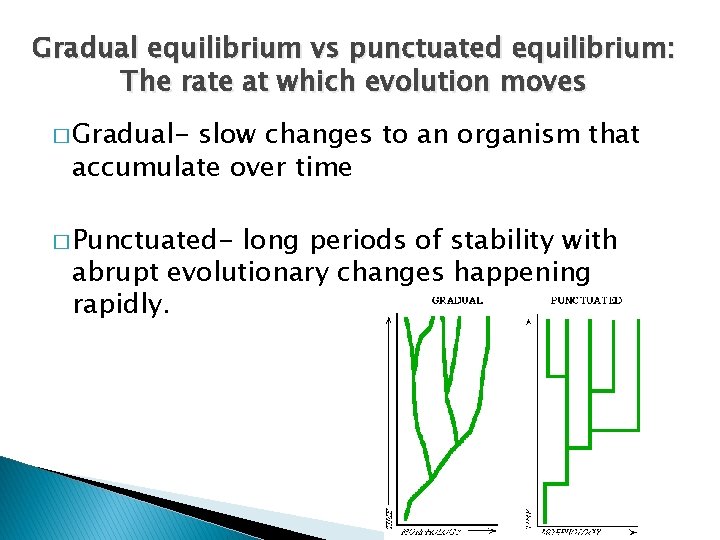
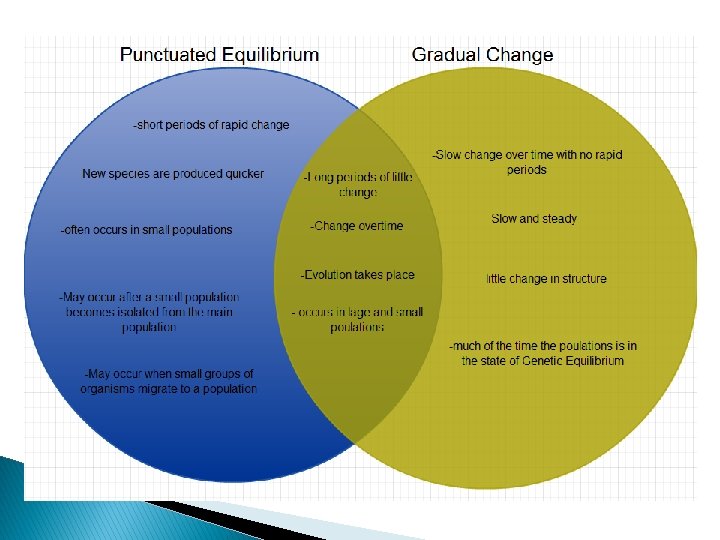
Gradual equilibrium vs punctuated equilibrium: The rate at which evolution moves � Gradual- slow changes to an organism that accumulate over time � Punctuated- long periods of stability with abrupt evolutionary changes happening rapidly.
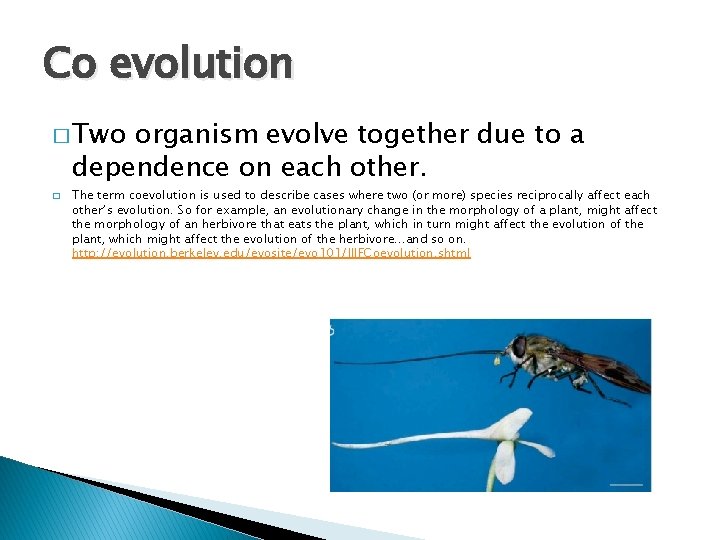
Co evolution � Two organism evolve together due to a dependence on each other. � The term coevolution is used to describe cases where two (or more) species reciprocally affect each other’s evolution. So for example, an evolutionary change in the morphology of a plant, might affect the morphology of an herbivore that eats the plant, which in turn might affect the evolution of the plant, which might affect the evolution of the herbivore. . . and so on. http: //evolution. berkeley. edu/evosite/evo 101/IIIFCoevolution. shtml
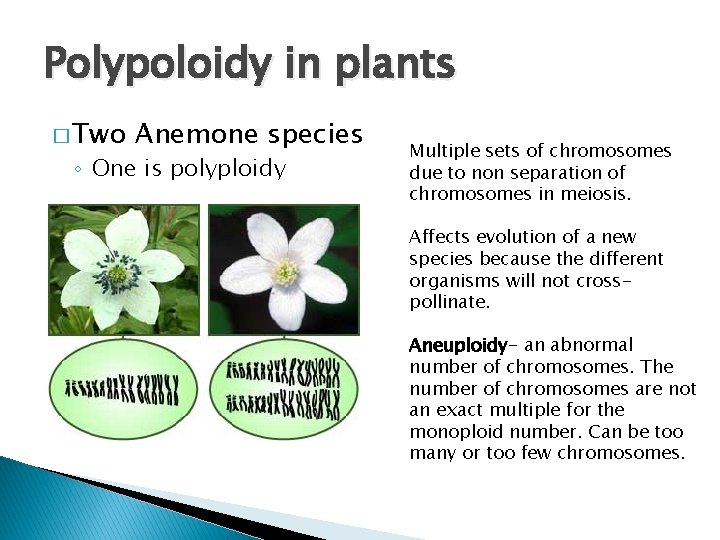
Polypoloidy in plants � Two Anemone species ◦ One is polyploidy Multiple sets of chromosomes due to non separation of chromosomes in meiosis. Affects evolution of a new species because the different organisms will not crosspollinate. Aneuploidy- an abnormal number of chromosomes. The number of chromosomes are not an exact multiple for the monoploid number. Can be too many or too few chromosomes.
Just some extra slide…. .