
Conventional laparoscopy vs Robotics Nikos F Vlahos MD
Conventional laparoscopy vs. Robotics Nikos F. Vlahos. MD. Ph. D , FACS, FACOG Associate professor of Gynecology and Obstetrics University of Athens School of Medicine 1

Evidence Based Medicine 2

When there is no evidence At least these should be common sense 3

Quiz? ? • How many of you have seen the Da. Vinci System? • How may have seen surgery with the Da. Vinci? (real time…. . in the room ) • How many have you done surgery with the Da. Vinci? 4
Quiz? ? • How many believe that robotic surgery is better than conventional laparoscopy? 5
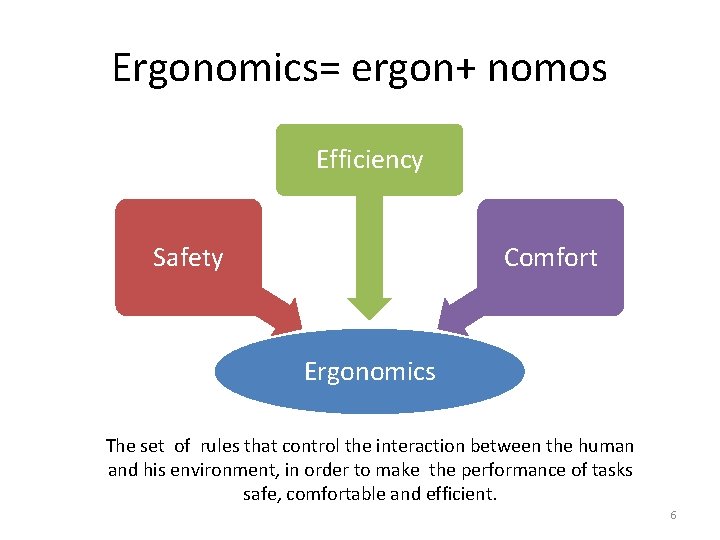
Ergonomics= ergon+ nomos Efficiency Safety Comfort Ergonomics The set of rules that control the interaction between the human and his environment, in order to make the performance of tasks safe, comfortable and efficient. 6

This is not Ergonomics!!! 7

My mission • Use of the robotic system for Gynecologic surgery at this time is: – Waste of money! – Waste of time! – Does not offer any benefit to the patient! 8
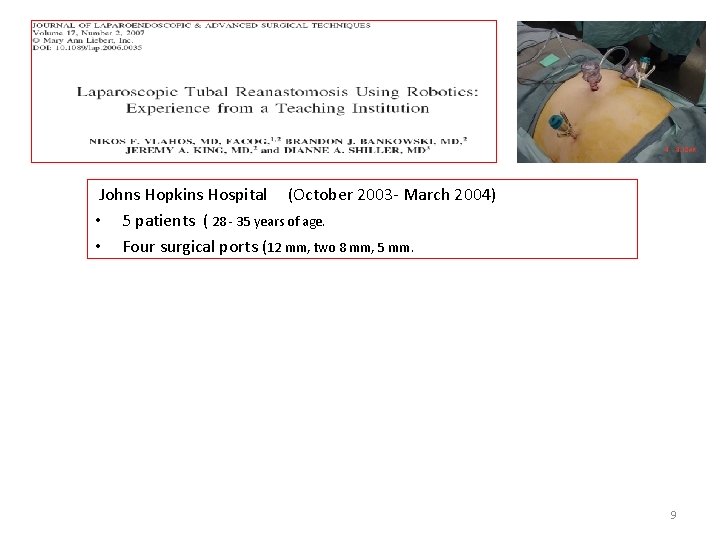
Johns Hopkins Hospital (October 2003 - March 2004) • 5 patients ( 28 - 35 years of age. • Four surgical ports (12 mm, two 8 mm, 5 mm. 9
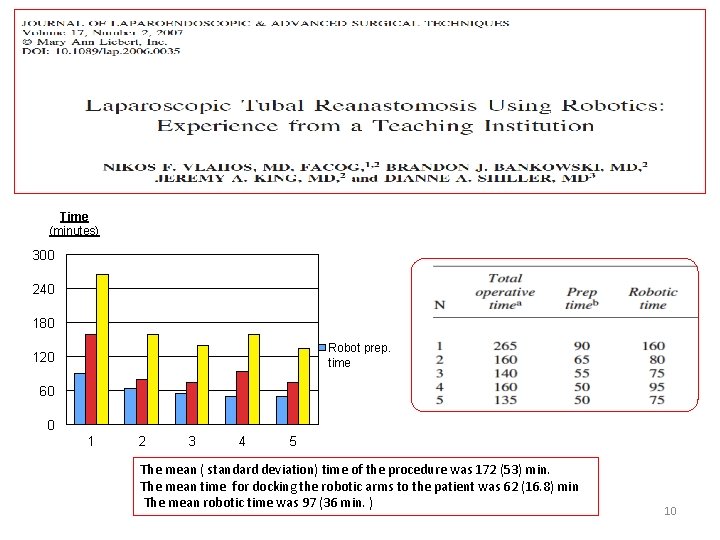
Time (minutes) 300 240 180 Robot prep. time 120 60 0 1 2 3 4 5 The mean ( standard deviation) time of the procedure was 172 (53) min. The mean time for docking the robotic arms to the patient was 62 (16. 8) min The mean robotic time was 97 (36 min. ) 10
Advantages Drawbacks • Superb optics • Preparation time (docking time) • Requirement for specially trained OR personnel • Absence of tactile sensation • Bulky equipment • Positioning between the legs • Difficulty to use a uterine manipulator • High cost of equipment and disposables • Robotic room may be necessary – 3 -D vision • Enhanced motor control – Elimination of tremor – 7 degrees of freedom in motion • Minimal manipulation of tissues • Laparoscopic approach by a single skilled surgeon • All other benefits of laparoscopy 11
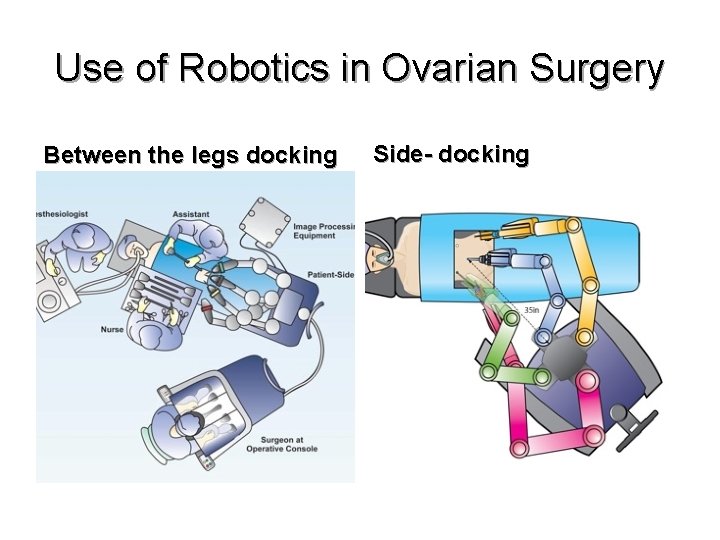
Use of Robotics in Ovarian Surgery Between the legs docking Side- docking 12
Robotics vs Conventional laparoscopy Morcellation Suturing Use of Endobag 13
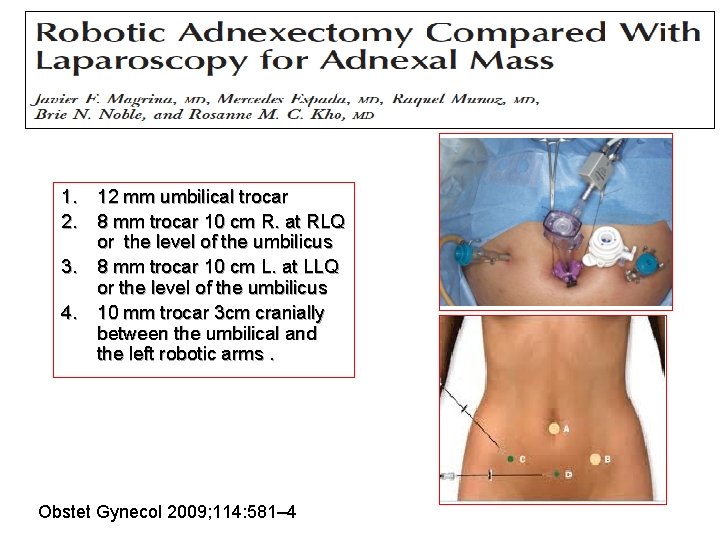
Robotic adnexectomy compared with laparoscopy for adnexal mass. 1. 12 mm umbilical trocar 2. 8 mm trocar 10 cm R. at RLQ or the level of the umbilicus 3. 8 mm trocar 10 cm L. at LLQ or the level of the umbilicus 4. 10 mm trocar 3 cm cranially between the umbilical and the left robotic arms. Obstet Gynecol 2009; 114: 581– 4 14
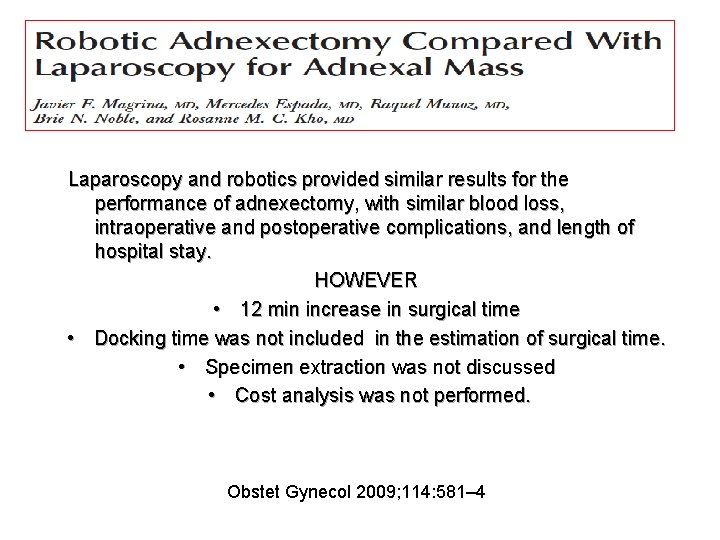
Robotic adnexectomy compared with laparoscopy for adnexal mass. Laparoscopy and robotics provided similar results for the performance of adnexectomy, with similar blood loss, intraoperative and postoperative complications, and length of hospital stay. HOWEVER • 12 min increase in surgical time • Docking time was not included in the estimation of surgical time. • Specimen extraction was not discussed • Cost analysis was not performed. Obstet Gynecol 2009; 114: 581– 4 15
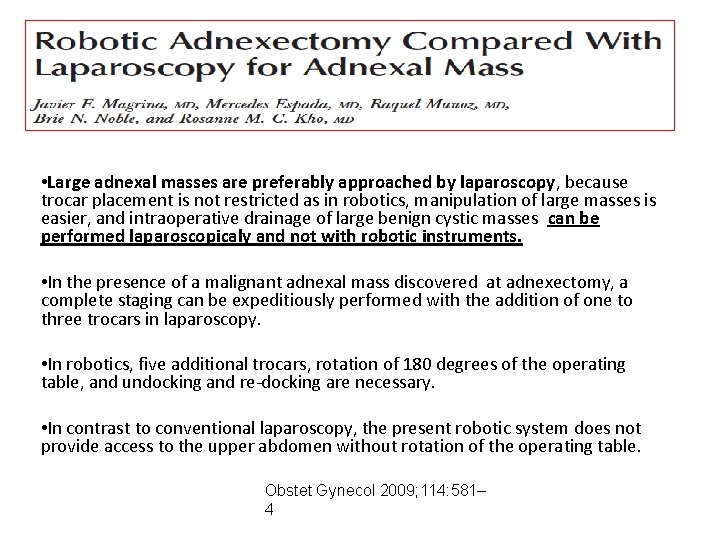
• Large adnexal masses are preferably approached by laparoscopy, because trocar placement is not restricted as in robotics, manipulation of large masses is easier, and intraoperative drainage of large benign cystic masses can be performed laparoscopicaly and not with robotic instruments. • In the presence of a malignant adnexal mass discovered at adnexectomy, a complete staging can be expeditiously performed with the addition of one to three trocars in laparoscopy. • In robotics, five additional trocars, rotation of 180 degrees of the operating table, and undocking and re-docking are necessary. • In contrast to conventional laparoscopy, the present robotic system does not provide access to the upper abdomen without rotation of the operating table. Obstet Gynecol 2009; 114: 581– 4 16
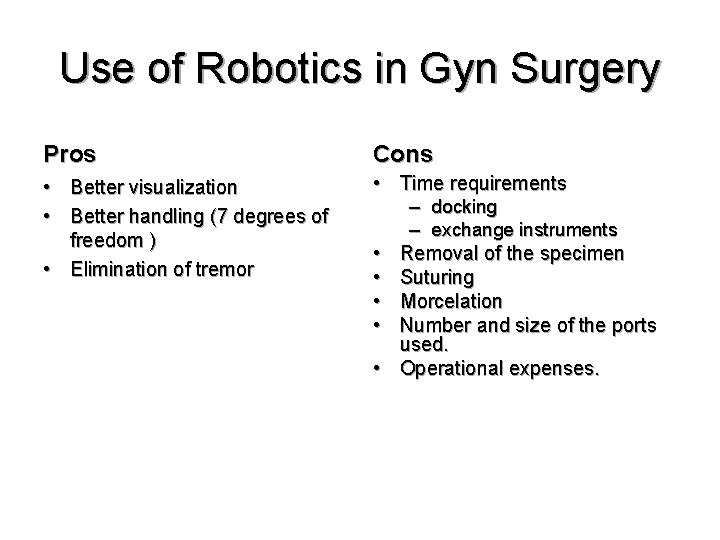
Use of Robotics in Gyn Surgery Pros Cons • Better visualization • Better handling (7 degrees of freedom ) • Elimination of tremor • Time requirements – docking – exchange instruments • Removal of the specimen • Suturing • Morcelation • Number and size of the ports used. • Operational expenses. 17
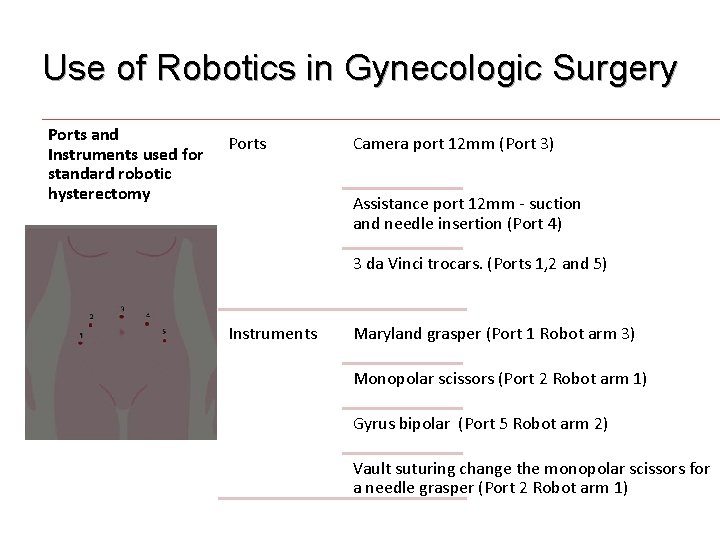
Use of Robotics in Gynecologic Surgery Ports and Instruments used for standard robotic hysterectomy Ports Camera port 12 mm (Port 3) Assistance port 12 mm - suction and needle insertion (Port 4) 3 da Vinci trocars. (Ports 1, 2 and 5) Instruments Maryland grasper (Port 1 Robot arm 3) Monopolar scissors (Port 2 Robot arm 1) Gyrus bipolar (Port 5 Robot arm 2) Vault suturing change the monopolar scissors for a needle grasper (Port 2 Robot arm 1) 18
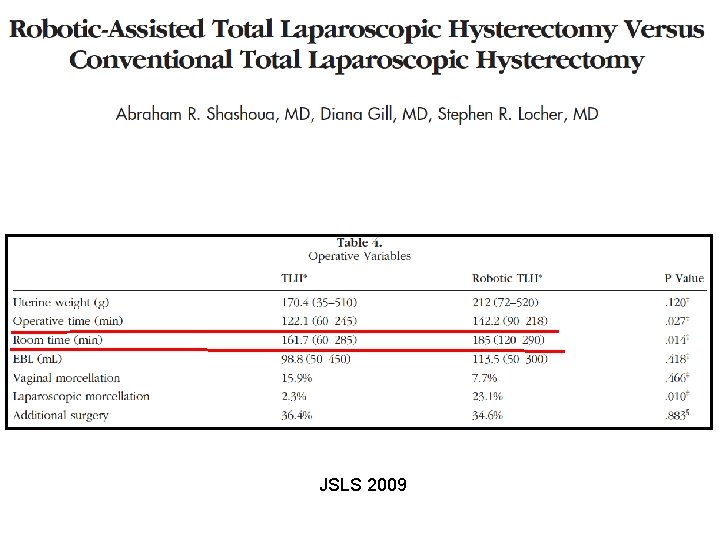
JSLS 2009 19
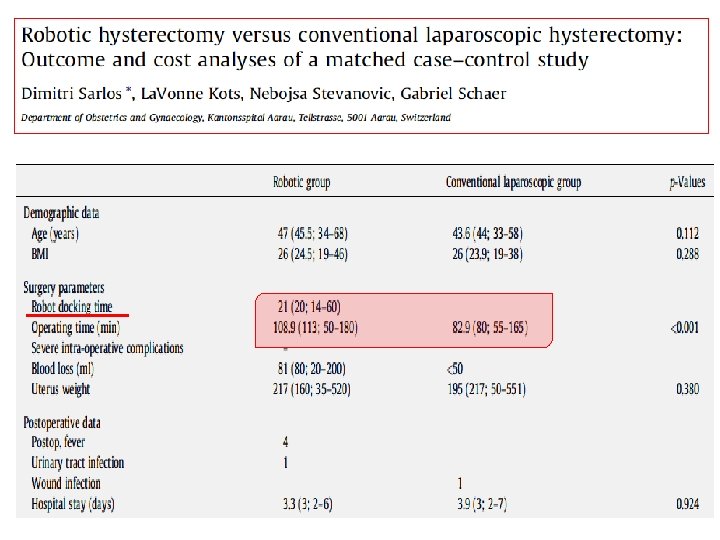
20
§ 22

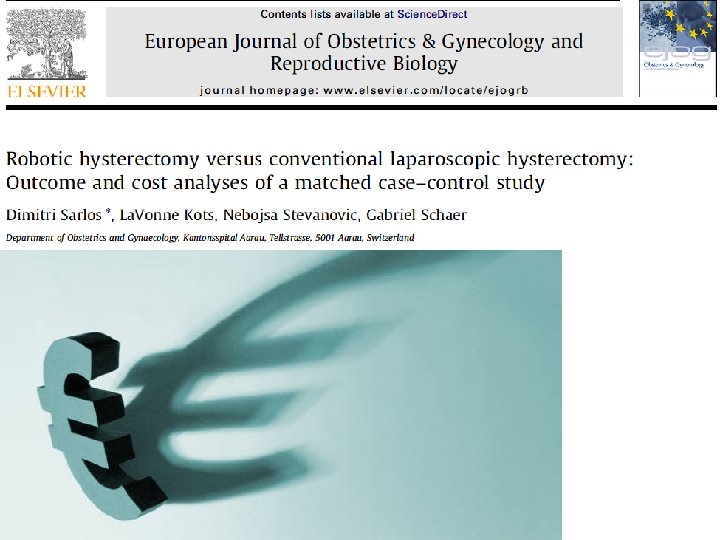
1. 6 Million Euros and 150. 000 annually operating costs. 23
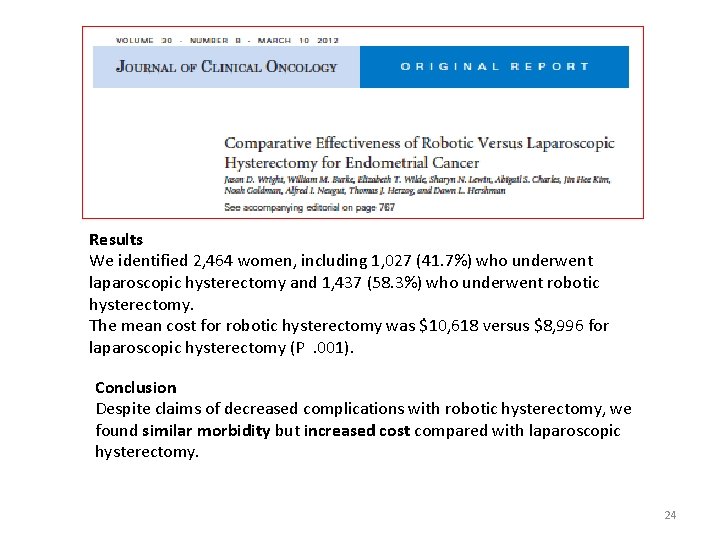
Results We identified 2, 464 women, including 1, 027 (41. 7%) who underwent laparoscopic hysterectomy and 1, 437 (58. 3%) who underwent robotic hysterectomy. The mean cost for robotic hysterectomy was $10, 618 versus $8, 996 for laparoscopic hysterectomy (P . 001). Conclusion Despite claims of decreased complications with robotic hysterectomy, we found similar morbidity but increased cost compared with laparoscopic hysterectomy. 24

25

26
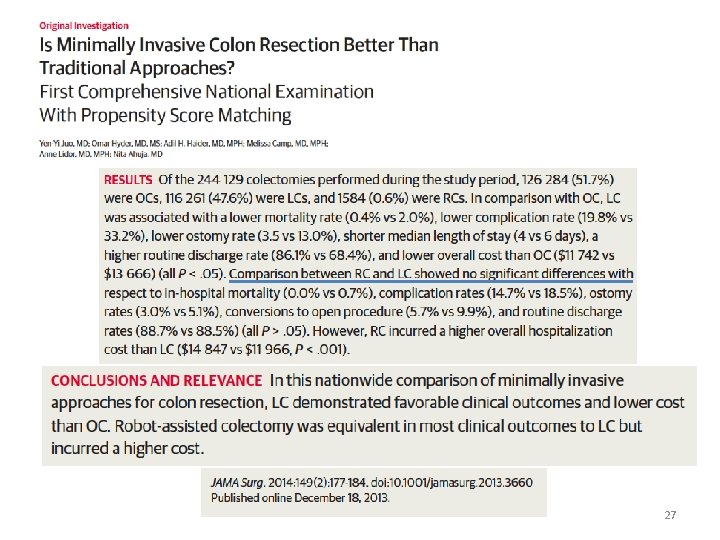
27
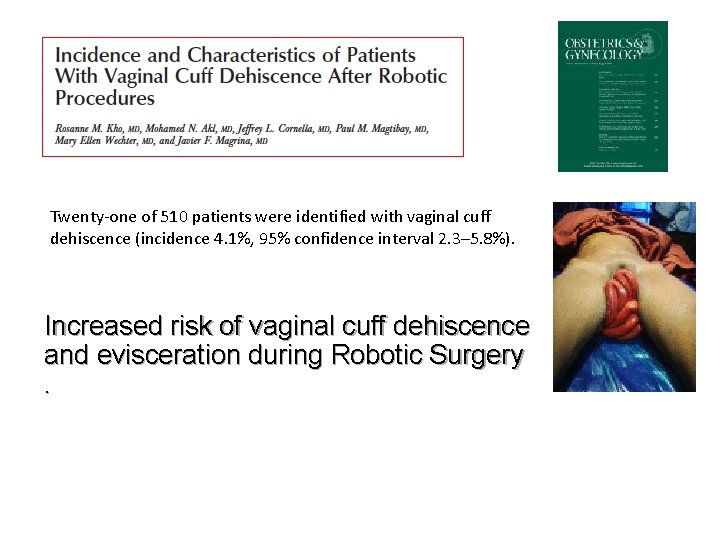
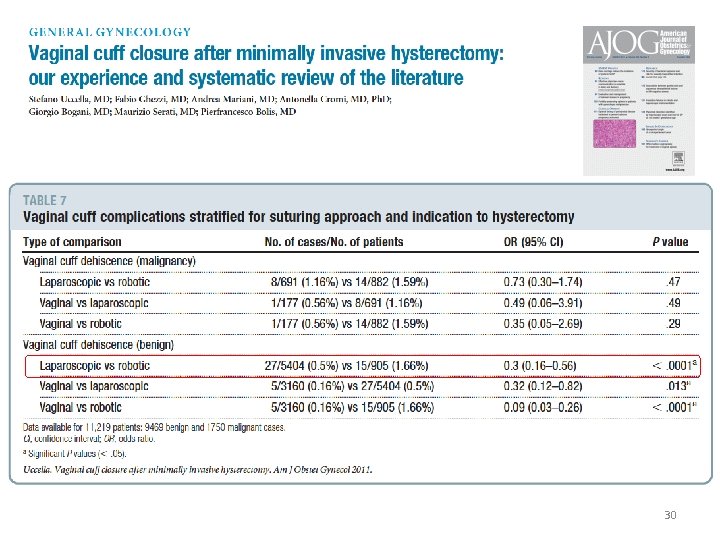
Twenty-one of 510 patients were identified with vaginal cuff dehiscence (incidence 4. 1%, 95% confidence interval 2. 3– 5. 8%). Increased risk of vaginal cuff dehiscence and evisceration during Robotic Surgery. 28
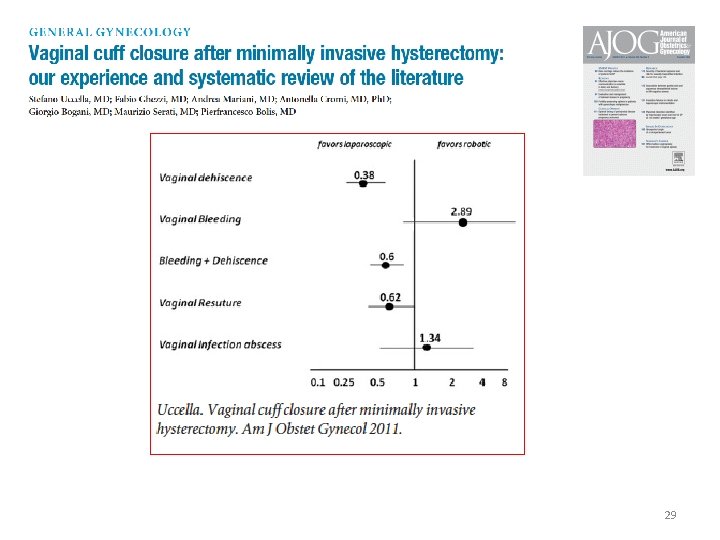
29
30
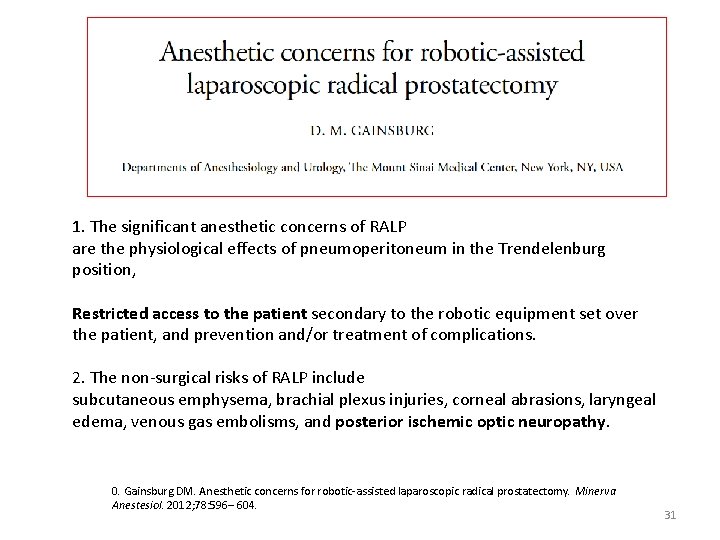
1. The significant anesthetic concerns of RALP are the physiological effects of pneumoperitoneum in the Trendelenburg position, Restricted access to the patient secondary to the robotic equipment set over the patient, and prevention and/or treatment of complications. 2. The non-surgical risks of RALP include subcutaneous emphysema, brachial plexus injuries, corneal abrasions, laryngeal edema, venous gas embolisms, and posterior ischemic optic neuropathy. 0. Gainsburg DM. Anesthetic concerns for robotic-assisted laparoscopic radical prostatectomy. Minerva Anestesiol. 2012; 78: 596– 604. 31
32
33

34

35
TODAY • There is no evidence to support the use of robotic surgery for gynecological patients – The use of robot is associated with increased costs and increased operating times. – In addition there are specific complications associated with the use of the robot. – The current technology in the robotic surgery is still primitive and for the past 10 years has not solved specific problems 36

Evolution!!!! 37
However !!!!!!! Technology is here to stay: • We need better robots. • The robotic arms should be mounted on the ceiling. • Allocated robotic room in each hospital. • Dedicated robotic personnel. • Acquisition and operational expenses should be reduced. Competition= Evolution 38

39

Thank you 40

41

Robotics: the future? 42
Hysterectomies – A Journal of the American Medical Association study found that robotic surgeries added $2, 000 to the cost of the procedure, with no significant clinical advantages in pain, healing time or reducing complications compared to laparoscopic surgery. Intuitive Surgical states that the results should be compared to open surgeries, rather than other minimally-invasive techniques. However, a 2011 analysis published in the American Journal of Obstetrics & Gynecology reported double the complication rate with robotic surgery compared to traditional surgery. 43
Quiz? ? • How many believe that robotic surgery is better than conventional laparoscopy TODAY ? 44
- Slides: 43