
Conventional design versus low cost structures www Channelcoast
- Slides: 40
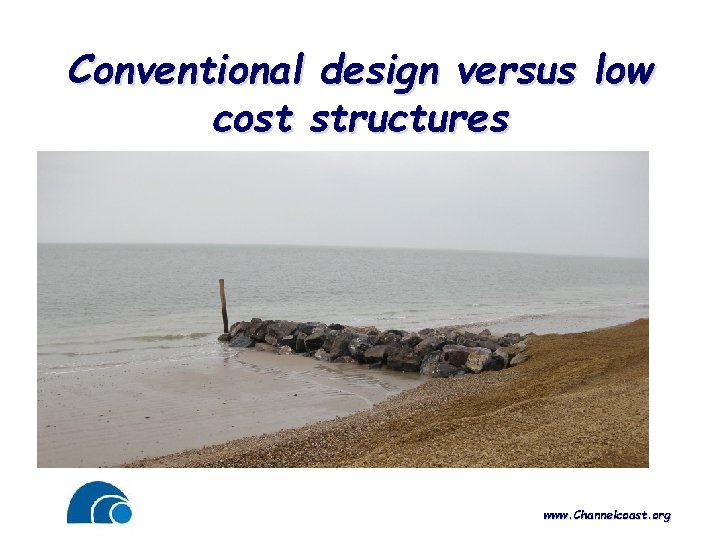
Conventional design versus low cost structures www. Channelcoast. org
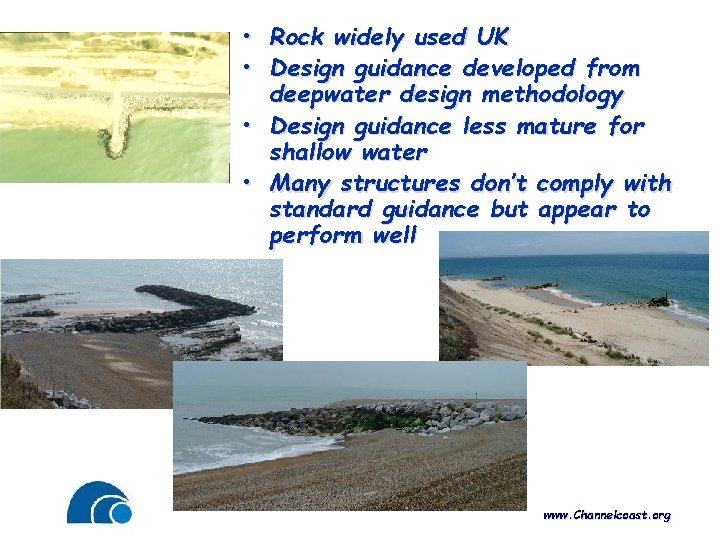
• Rock widely used UK • Design guidance developed from deepwater design methodology • Design guidance less mature for shallow water • Many structures don’t comply with standard guidance but appear to perform well www. Channelcoast. org
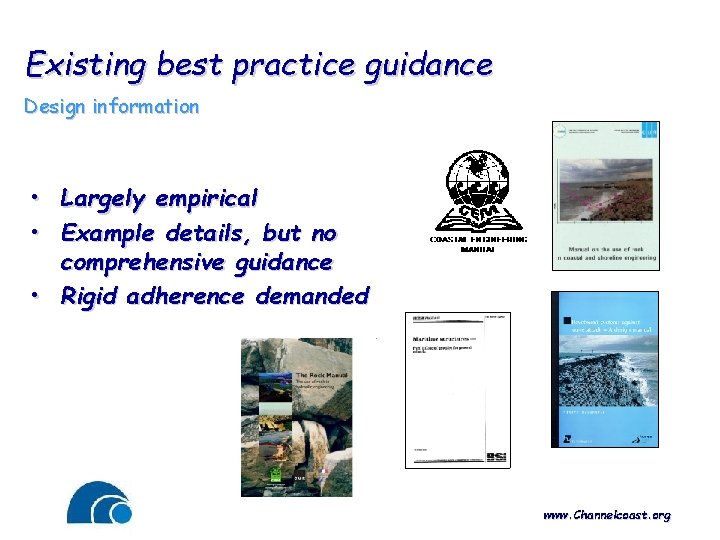
Existing best practice guidance Design information • Largely empirical • Example details, but no comprehensive guidance • Rigid adherence demanded www. Channelcoast. org
Constraints of simplified rock structures • Best practice guides and standards suggest complex layering, filters and toes are needed • Limited design guidance is available for simplified foundations • Little documentation of structure performance www. Channelcoast. org
Background • Concern regarding application of existing guidance to beach based structures • Field performance based investigation – non standard structures – DEFRA / EA funding – Complement existing guidance www. Channelcoast. org
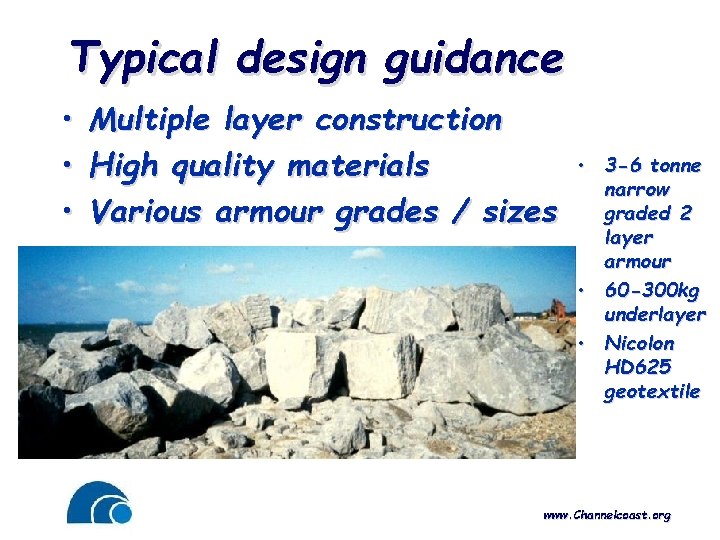
Typical design guidance • • • Multiple layer construction High quality materials Various armour grades / sizes • 3 -6 tonne narrow graded 2 layer armour • 60 -300 kg underlayer • Nicolon HD 625 geotextile www. Channelcoast. org
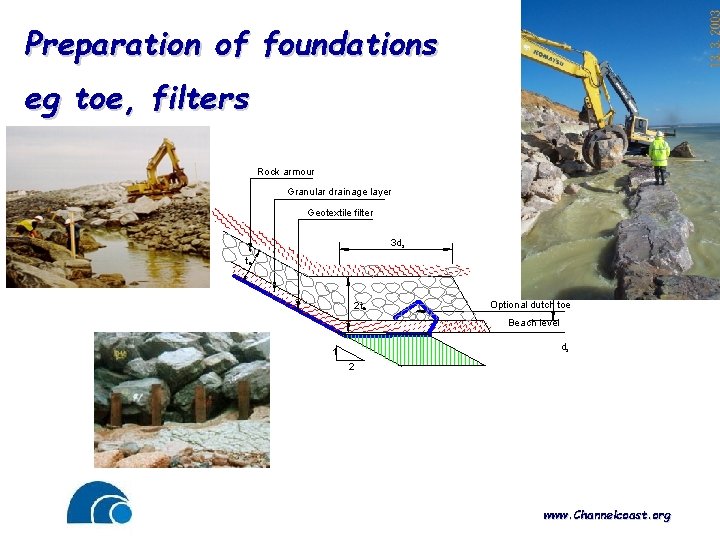
Preparation of foundations eg toe, filters Rock armour Granular drainage layer Geotextile filter 3 ds ta 2 ta Optional dutch toe Beach level ds 1 2 www. Channelcoast. org
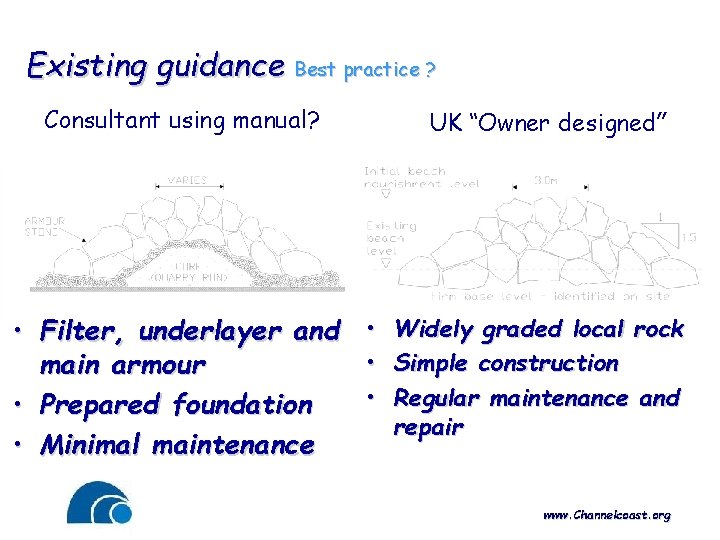
Existing guidance Best practice ? Consultant using manual? • Filter, underlayer and main armour • Prepared foundation • Minimal maintenance UK “Owner designed” • • • Widely graded local rock Simple construction Regular maintenance and repair www. Channelcoast. org
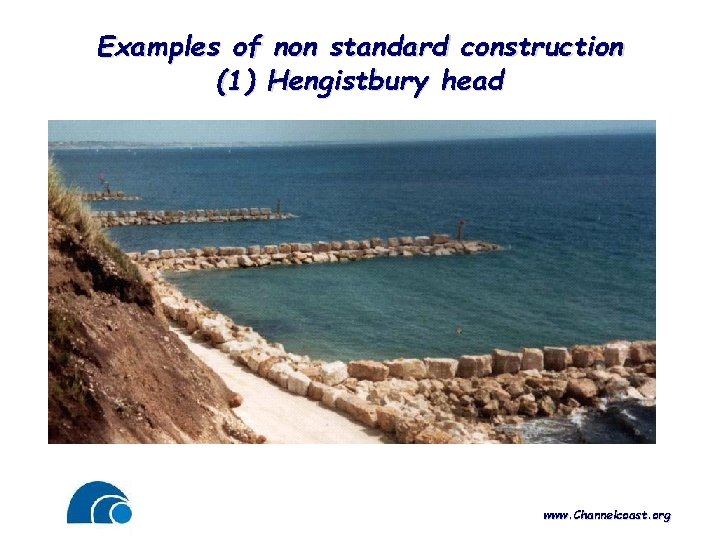
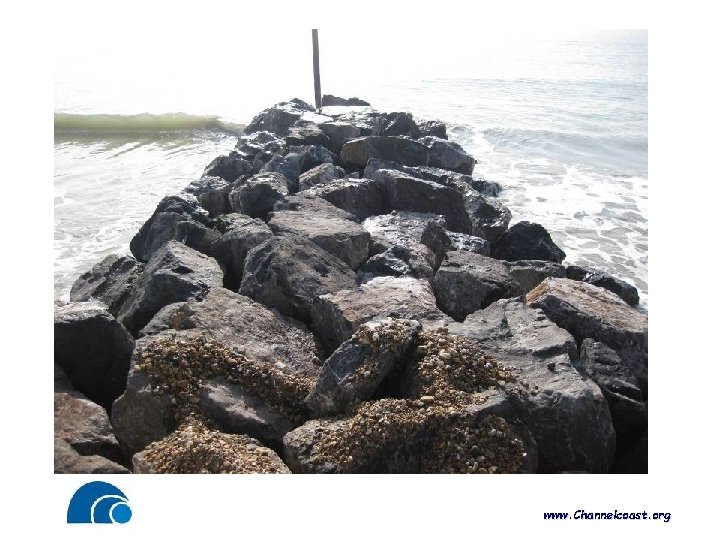
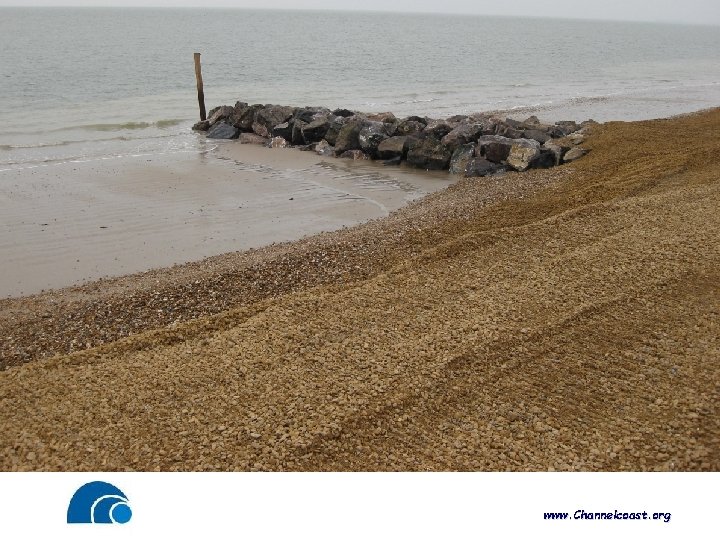
Examples of non standard construction (1) Hengistbury head www. Channelcoast. org
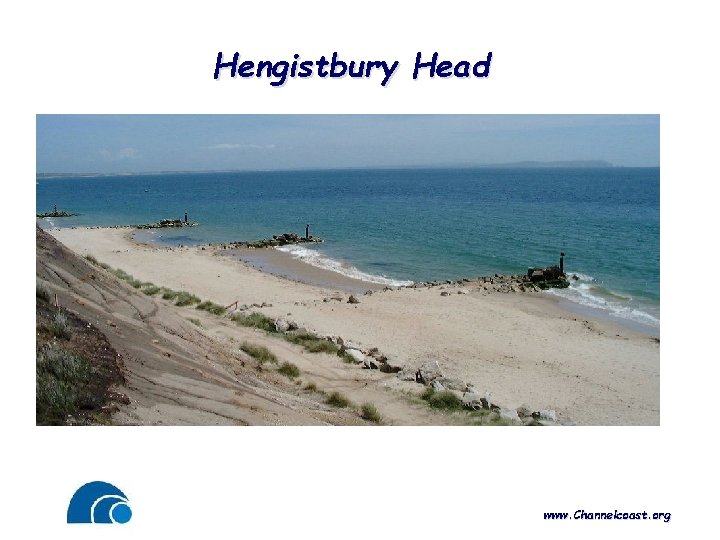
Hengistbury Head www. Channelcoast. org
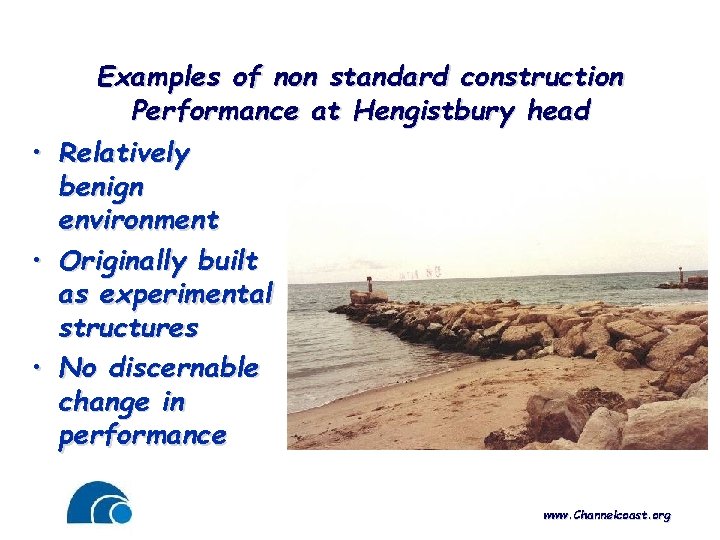
Examples of non standard construction Performance at Hengistbury head • Relatively benign environment • Originally built as experimental structures • No discernable change in performance www. Channelcoast. org
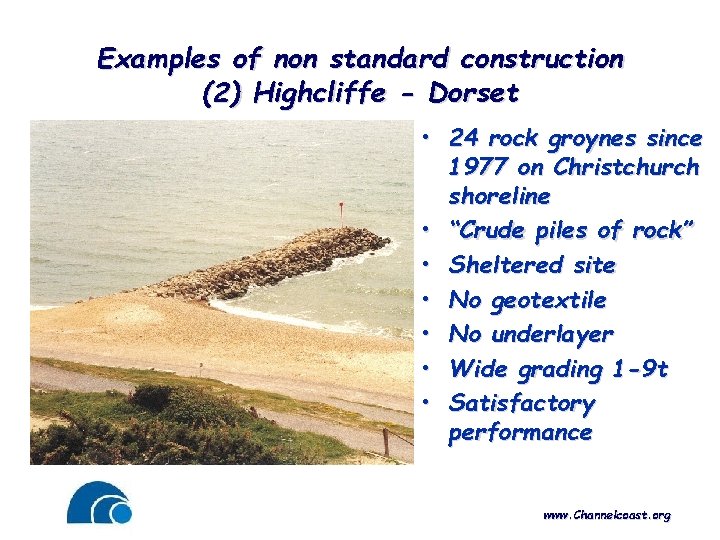
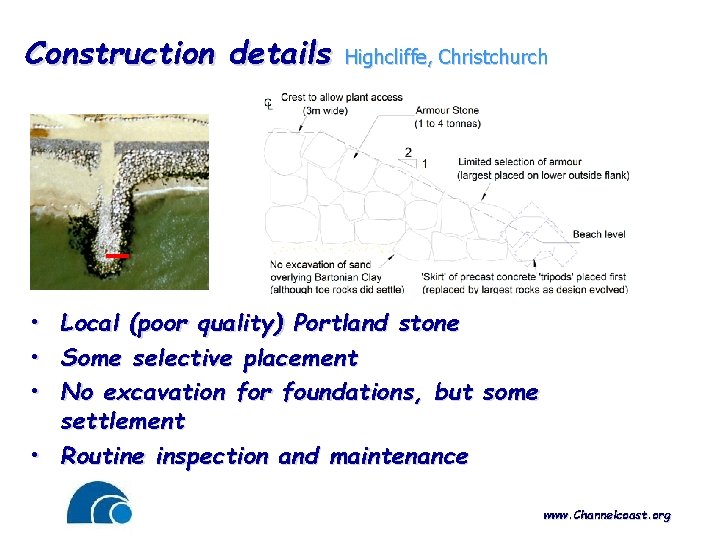
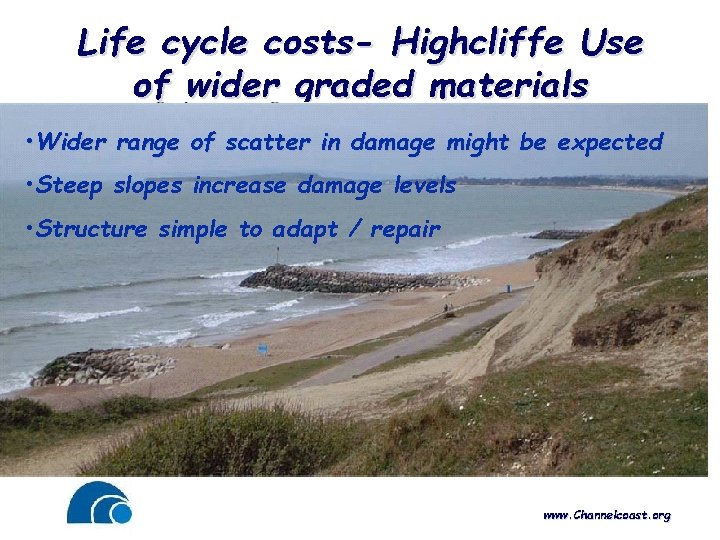
Examples of non standard construction (2) Highcliffe - Dorset • 24 rock groynes since 1977 on Christchurch shoreline • “Crude piles of rock” • Sheltered site • No geotextile • No underlayer • Wide grading 1 -9 t • Satisfactory performance www. Channelcoast. org
Construction details Highcliffe, Christchurch • • • Local (poor quality) Portland stone Some selective placement No excavation for foundations, but some settlement • Routine inspection and maintenance www. Channelcoast. org
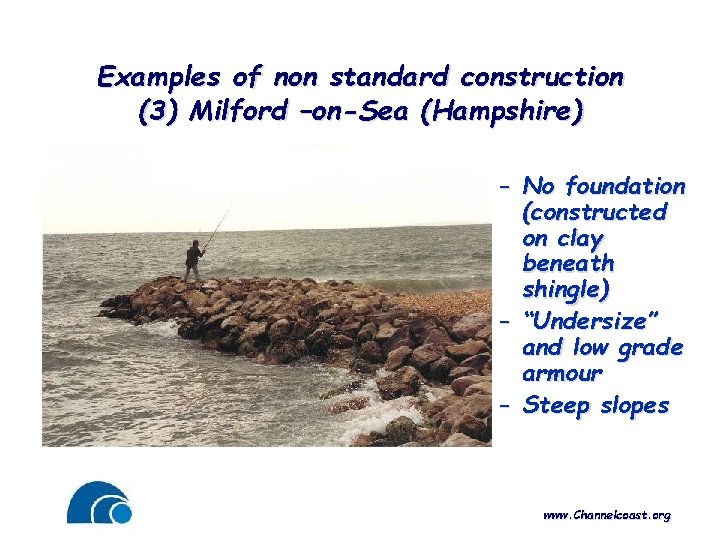
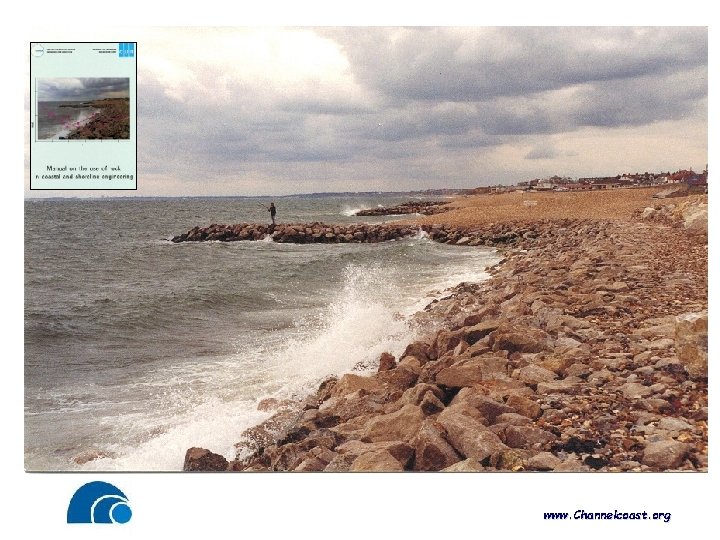
Examples of non standard construction (3) Milford –on-Sea (Hampshire) – No foundation (constructed on clay beneath shingle) – “Undersize” and low grade armour – Steep slopes www. Channelcoast. org
www. Channelcoast. org
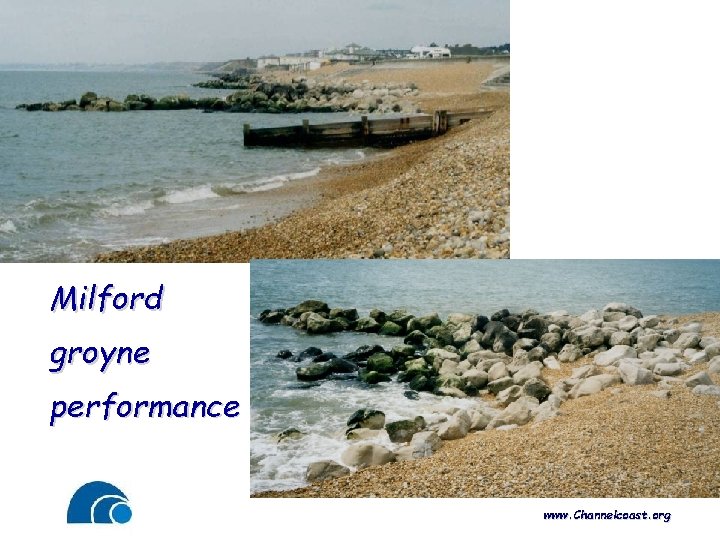
Milford groyne performance www. Channelcoast. org
www. Channelcoast. org
www. Channelcoast. org
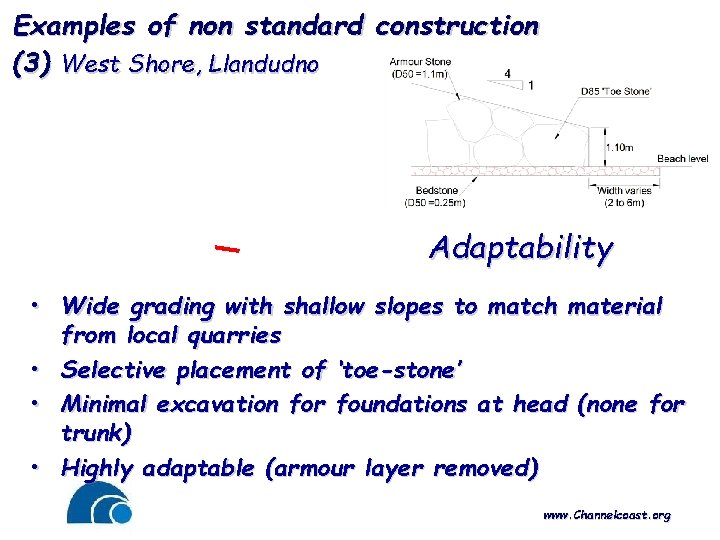
Examples of non standard construction (3) West Shore, Llandudno Adaptability • Wide grading with shallow slopes to match material from local quarries • Selective placement of ‘toe-stone’ • Minimal excavation for foundations at head (none for trunk) • Highly adaptable (armour layer removed) www. Channelcoast. org
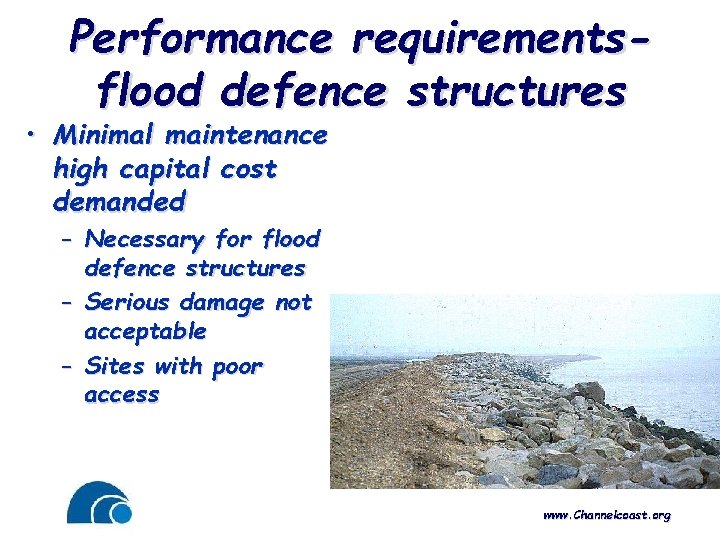
Performance requirementsflood defence structures • Minimal maintenance high capital cost demanded – Necessary for flood defence structures – Serious damage not acceptable – Sites with poor access www. Channelcoast. org
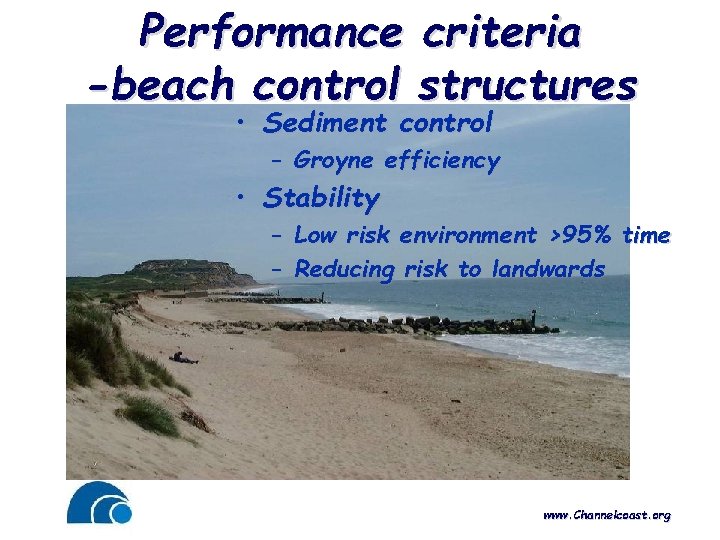
Performance criteria -beach control structures • Sediment control – Groyne efficiency • Stability – Low risk environment >95% time – Reducing risk to landwards www. Channelcoast. org
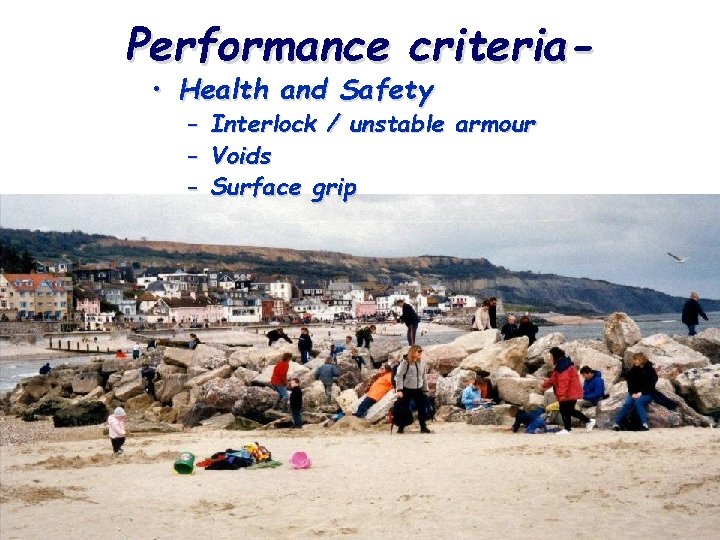
Performance criteria • Health and Safety – – – Interlock / unstable armour Voids Surface grip www. Channelcoast. org
Performance criteria -life cycle costs • UK practice requires discounted BCA over 50 years (3. 5% discount multiplier) • Capital costs required • Maintenance (life cycle) costs required – Need to know impacts and costs of relaxing conventional guidance – Understand implications of simplified design www. Channelcoast. org
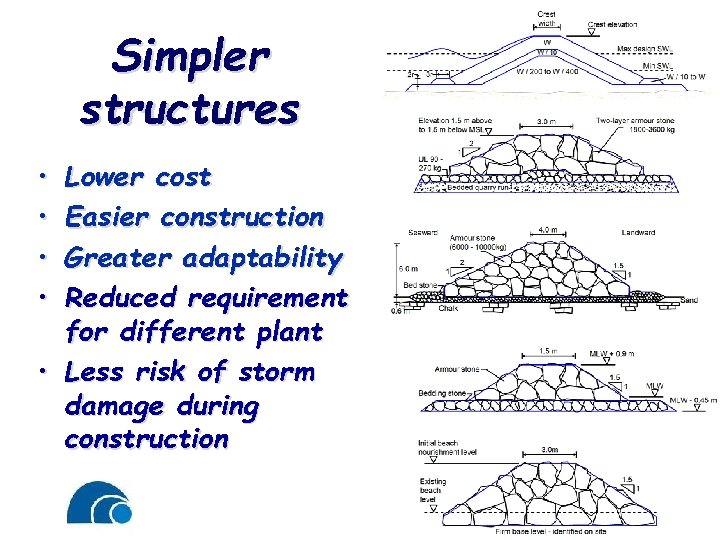
Simpler structures • • Lower cost Easier construction Greater adaptability Reduced requirement for different plant • Less risk of storm damage during construction www. Channelcoast. org
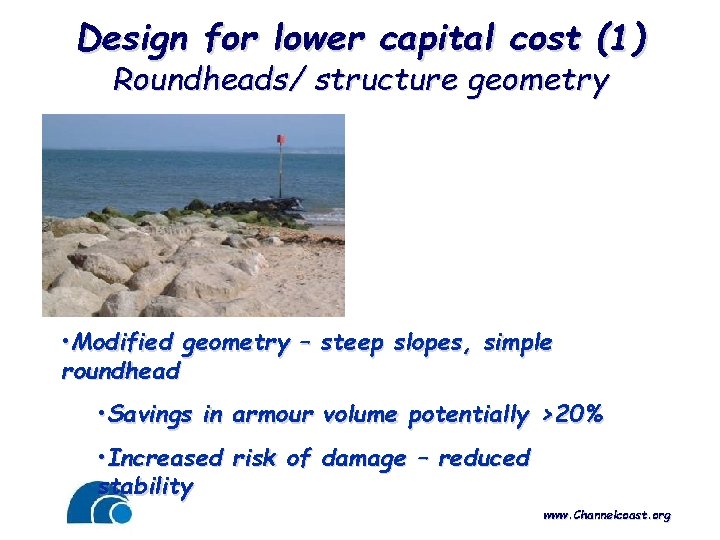
Design for lower capital cost (1) Roundheads/ structure geometry • Modified geometry – steep slopes, simple roundhead • Savings in armour volume potentially >20% • Increased risk of damage – reduced stability www. Channelcoast. org
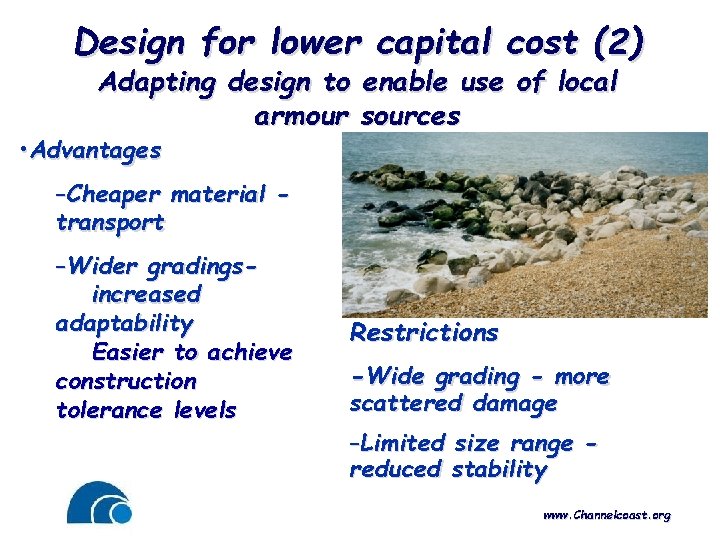
Design for lower capital cost (2) Adapting design to enable use of local armour sources • Advantages –Cheaper material transport –Wider gradingsincreased adaptability Easier to achieve construction tolerance levels Restrictions -Wide grading - more scattered damage –Limited size range reduced stability www. Channelcoast. org
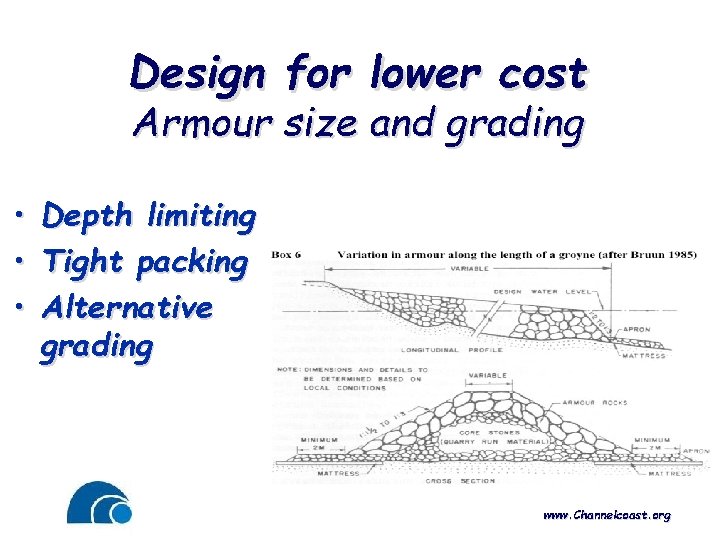
Design for lower cost Armour size and grading • • • Depth limiting Tight packing Alternative grading www. Channelcoast. org
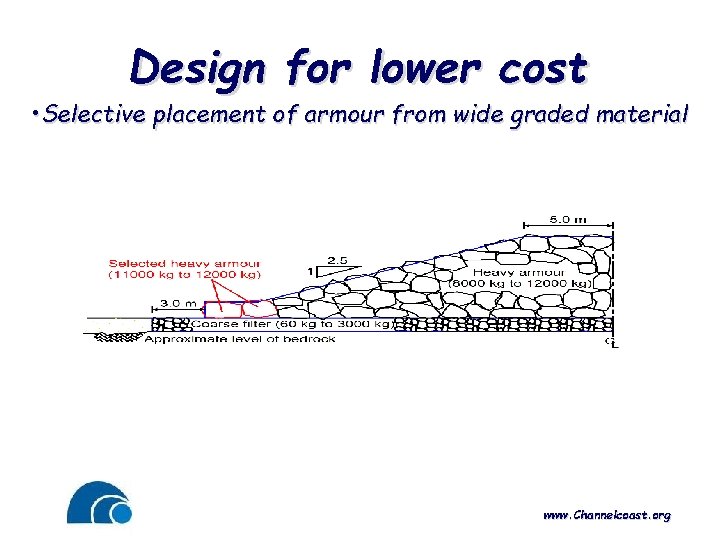
Design for lower cost • Selective placement of armour from wide graded material www. Channelcoast. org
Use of low quality materials • Restrictions – Reduced life of material – Requirement for regular maintenance due to degradation armour movement www. Channelcoast. org
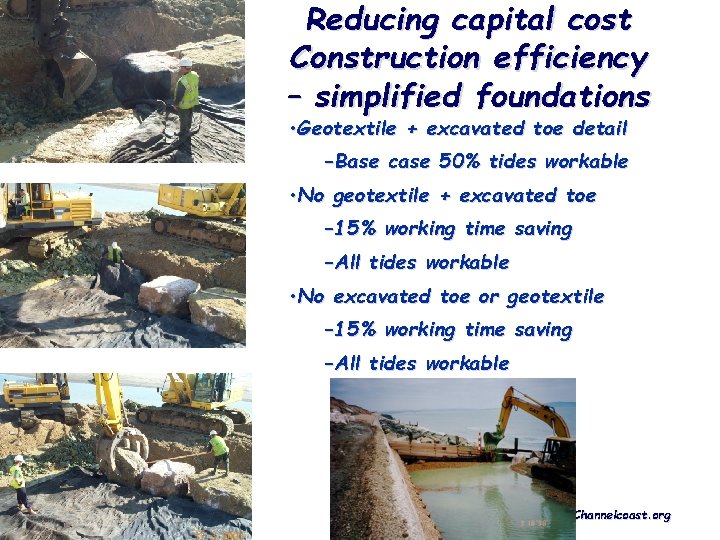
Reducing capital cost Construction efficiency – simplified foundations • Geotextile + excavated toe detail –Base case 50% tides workable • No geotextile + excavated toe – 15% working time saving –All tides workable • No excavated toe or geotextile – 15% working time saving –All tides workable www. Channelcoast. org
Life cycle costs- Highcliffe Use of wider graded materials • Wider range of scatter in damage might be expected • Steep slopes increase damage levels • Structure simple to adapt / repair www. Channelcoast. org
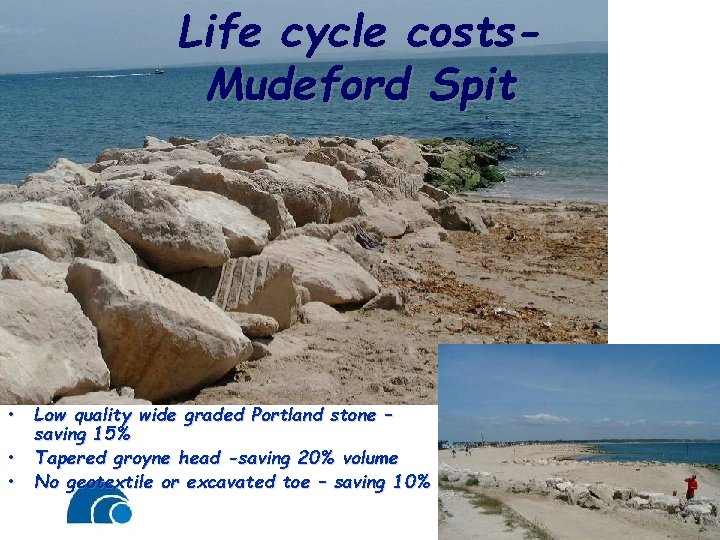
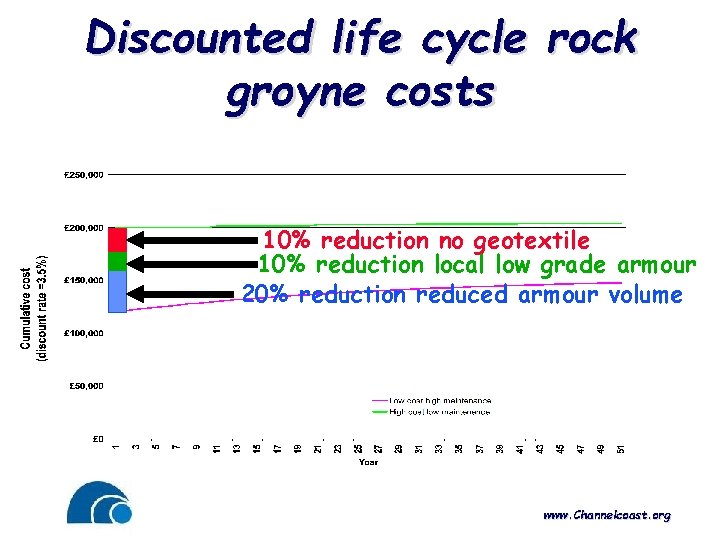
Life cycle costs. Mudeford Spit • • • Low quality wide graded Portland stone – saving 15% Tapered groyne head -saving 20% volume No geotextile or excavated toe – saving 10% www. Channelcoast. org
Discounted life cycle rock groyne costs 10% reduction no geotextile 10% reduction local low grade armour 20% reduction reduced armour volume www. Channelcoast. org
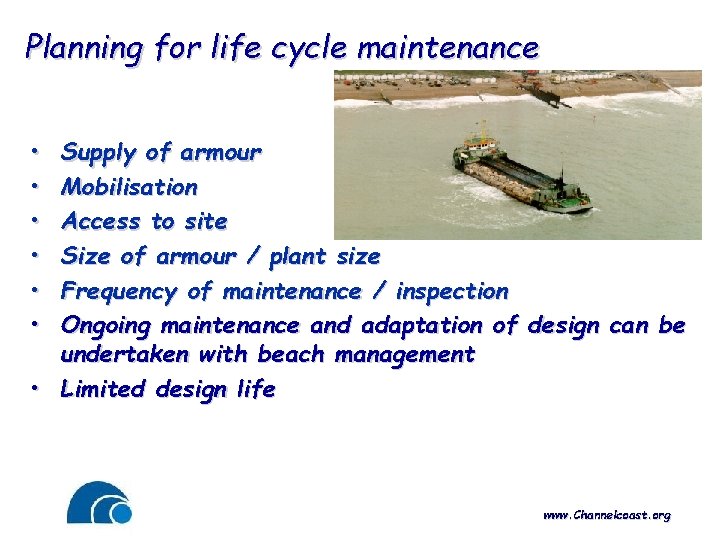
Planning for life cycle maintenance • • • Supply of armour Mobilisation Access to site Size of armour / plant size Frequency of maintenance / inspection Ongoing maintenance and adaptation of design can be undertaken with beach management • Limited design life www. Channelcoast. org
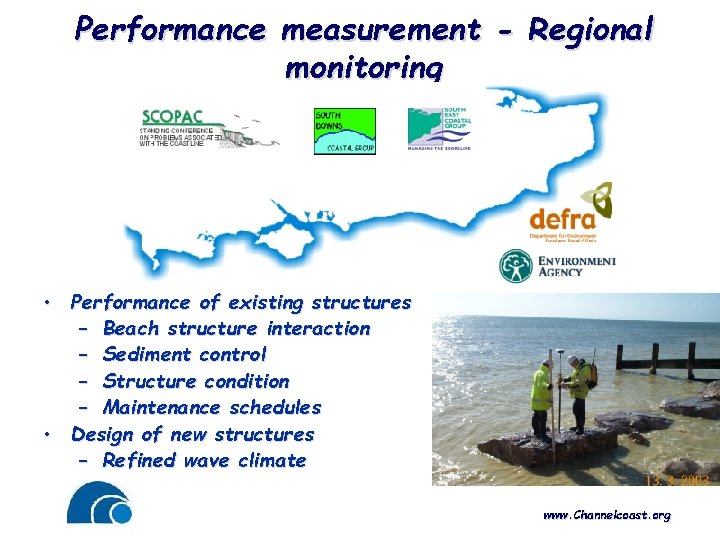
Performance measurement - Regional monitoring • Performance of existing structures – Beach structure interaction – Sediment control – Structure condition – Maintenance schedules • Design of new structures – Refined wave climate www. Channelcoast. org
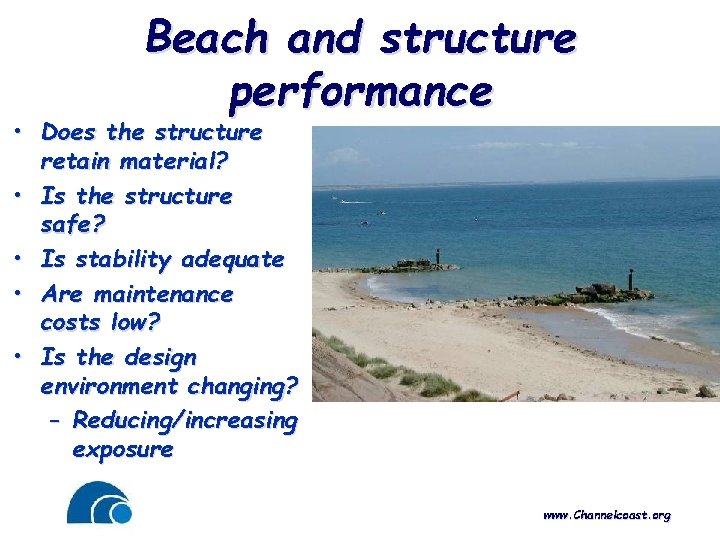
Beach and structure performance • Does the structure retain material? • Is the structure safe? • Is stability adequate • Are maintenance costs low? • Is the design environment changing? – Reducing/increasing exposure www. Channelcoast. org
Conclusions Promising applications • Beach control and coast protection structures (NOT ‘brittle’ flood defences) • Locations where conventional defences may not be economical justified • Low amenity value areas www. Channelcoast. org
Constraints Barriers to innovation • ‘Best practice’ and PI insurance requirements • Good understanding of site conditions, problems and sources of materials required • Must be identified during conceptual design • Uncertain performance and maintenance costs • Inflexible requirements and preconceived ideas www. Channelcoast. org
Continuing Research needs • When does structure fail to perform function? (field / physical model) • Development of sediment transport models to incorporate complex structures (numerical) – Improvements in definition of structure efficiency www. Channelcoast. org
• • • Conclusions Marked differences from conventional designs Many simple structures appear to work well Significant cost savings whilst maintaining acceptable performance • Limited quantitative guidance available • Need for better guidance on design and performance – – Limited data to support construction of structures – monitoring required • Need to work within best practice guidelines • Not universally applicable ! www. Channelcoast. org