
Conventional Cooking Techniques FACS Standards 8 5 1
- Slides: 36
Conventional Cooking Techniques FACS Standards 8. 5. 1, 8. 5. 2, 8. 5. 3, 8. 5. 4, 8. 5. 5, 8. 5. 6, 8. 5. 7 Kowtaluk, Helen and Orphanos Kopan, Alice. Food For Today. Mc. Graw Hill-Glencoe. 2004.
�Involves cooking foods in hot water, steam, or a combination �Long, slow moist-heat cooking tenderizes meat; blends flavors of foods �Boiling, simmering, steaming, pressure cooking Moist-heat Methods
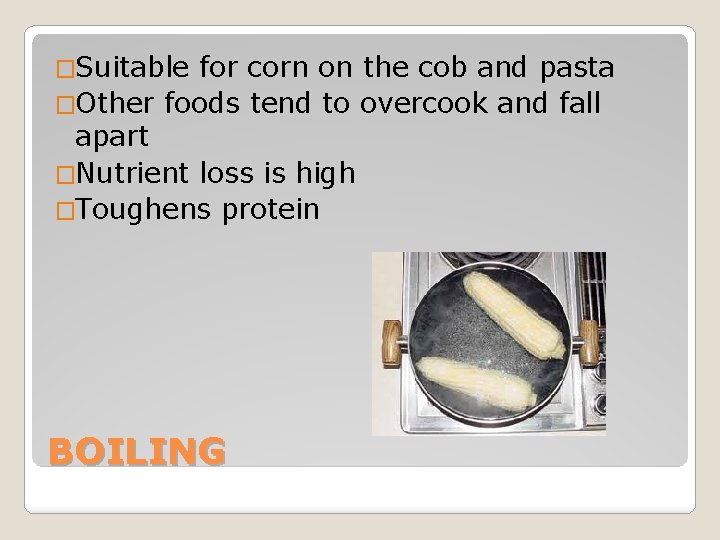
�Suitable for corn on the cob and pasta �Other foods tend to overcook and fall apart �Nutrient loss is high �Toughens protein BOILING
�Be sure to use pan large enough for the food and the water �Bring liquid to a boil; then add food; liquid should continue to boil as food is added �Useful method when you want water to evaporate quickly – thicken sauce or concentrate flavor of a soup
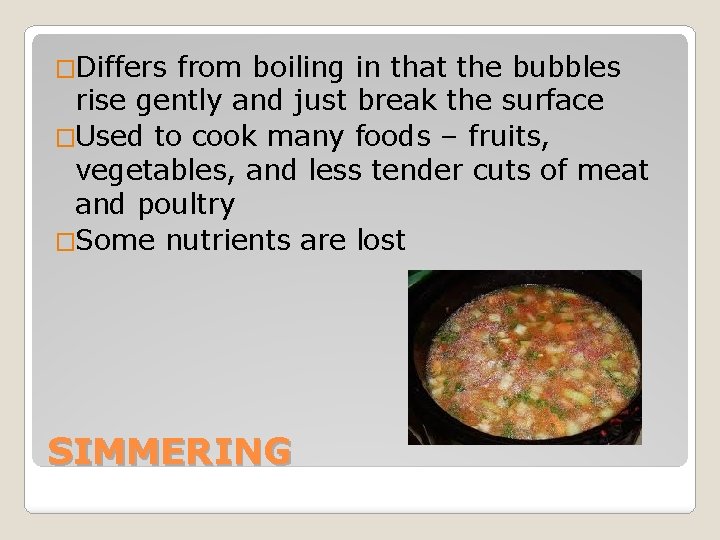
�Differs from boiling in that the bubbles rise gently and just break the surface �Used to cook many foods – fruits, vegetables, and less tender cuts of meat and poultry �Some nutrients are lost SIMMERING
�Use water when possible �To simmer, bring water to a boil; add food; when water begins to boil again, reduce the heat so food simmers �Slow cooker can be used to simmer foods – meats and dry beans
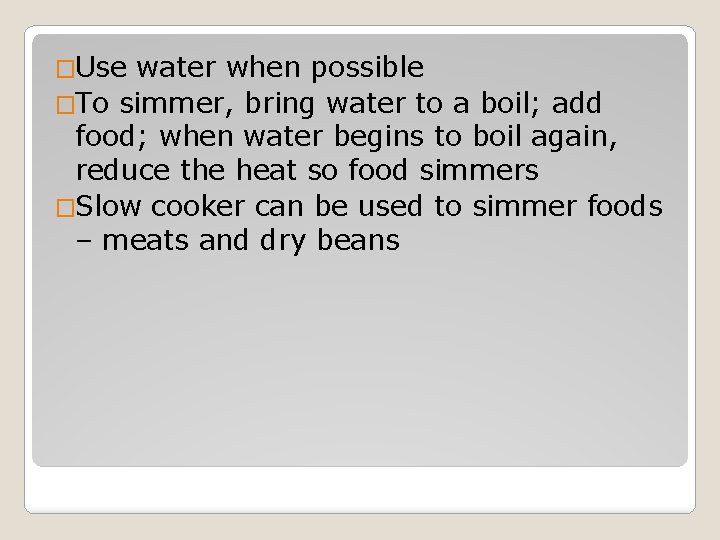
�A form of simmering �Involves covering small pieces of food with liquid and simmering until done STEWING
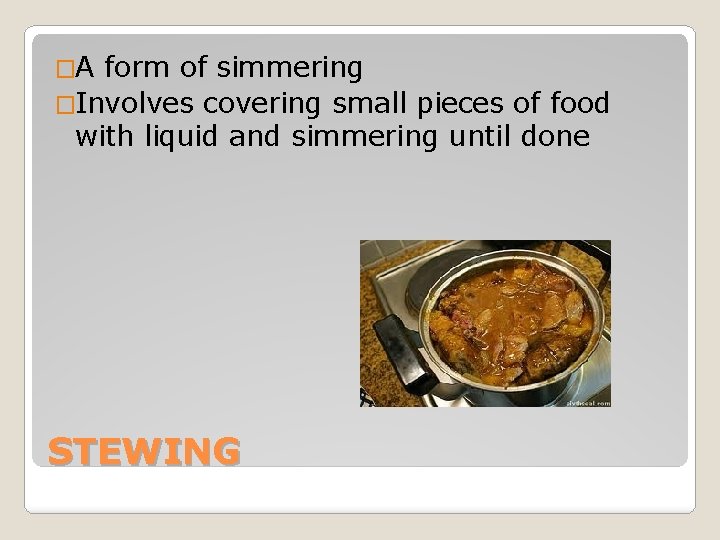
�A form of simmering �Simmer food in small amount of water until done �Eggs, whole fruits, and fish often prepared this way POACHING
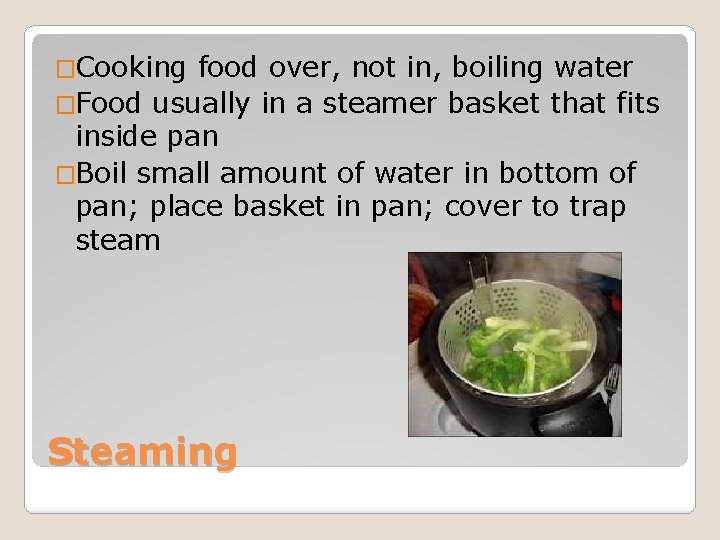
�Cooking food over, not in, boiling water �Food usually in a steamer basket that fits inside pan �Boil small amount of water in bottom of pan; place basket in pan; cover to trap steam Steaming
�Water does not touch food �Vegetables and fish often cooked this way �Foods retain their color, shape, and flavor well �Few nutrients are lost �Cooking time longer
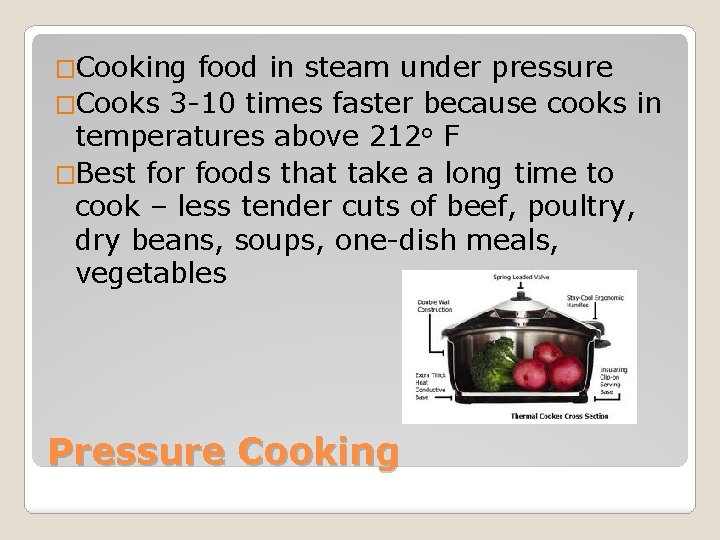
�Cooking food in steam under pressure �Cooks 3 -10 times faster because cooks in temperatures above 212 o F �Best for foods that take a long time to cook – less tender cuts of beef, poultry, dry beans, soups, one-dish meals, vegetables Pressure Cooking
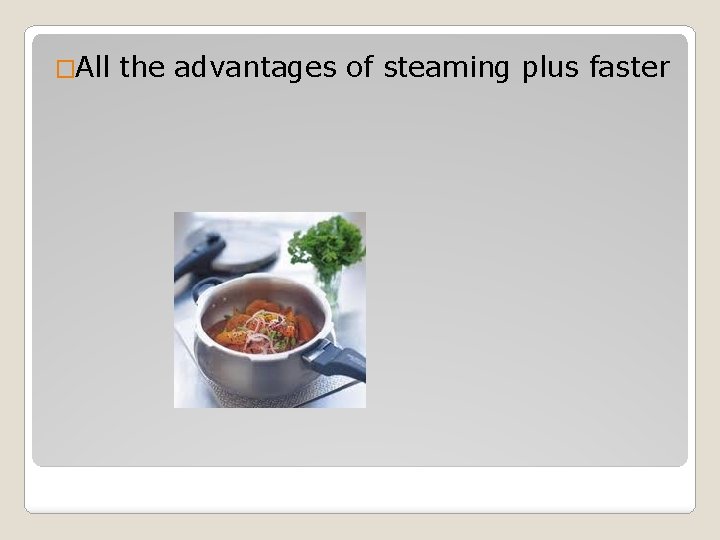
�All the advantages of steaming plus faster
�Cooking food uncovered without added liquid or fat �Roasting, baking, broiling, pan-broiling Dry-heat Methods
�Cooking food uncovered in a conventional or convection oven �Roasting – cooking a large, tender cuts of meat or poultry �Baking – breads, cookies, vegetables, poultry, fish, casseroles Roasting and Baking
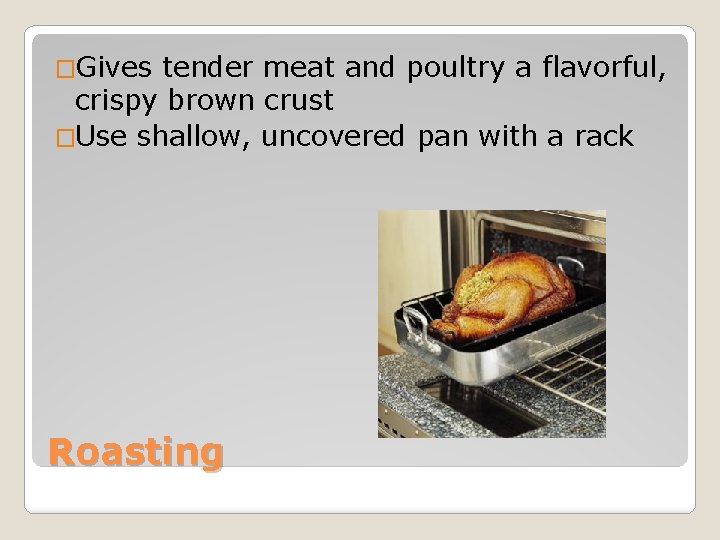
�Gives tender meat and poultry a flavorful, crispy brown crust �Use shallow, uncovered pan with a rack Roasting
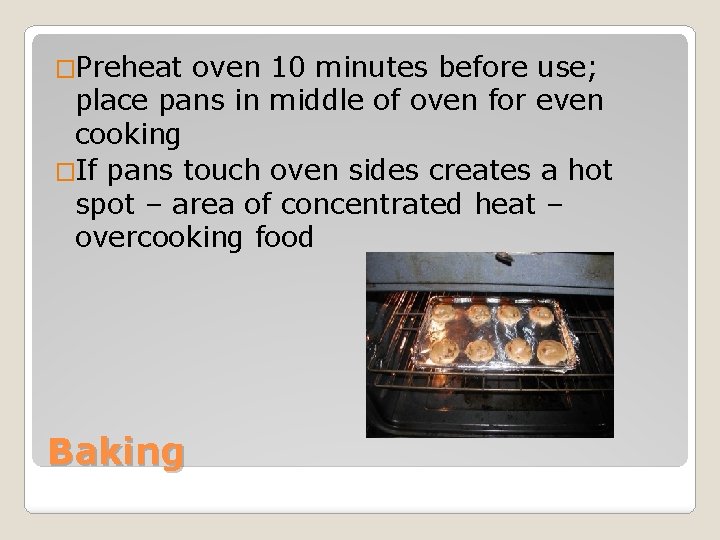
�Preheat oven 10 minutes before use; place pans in middle of oven for even cooking �If pans touch oven sides creates a hot spot – area of concentrated heat – overcooking food Baking
�If baking several pans at once, place them diagonally opposite of one another for better air circulation
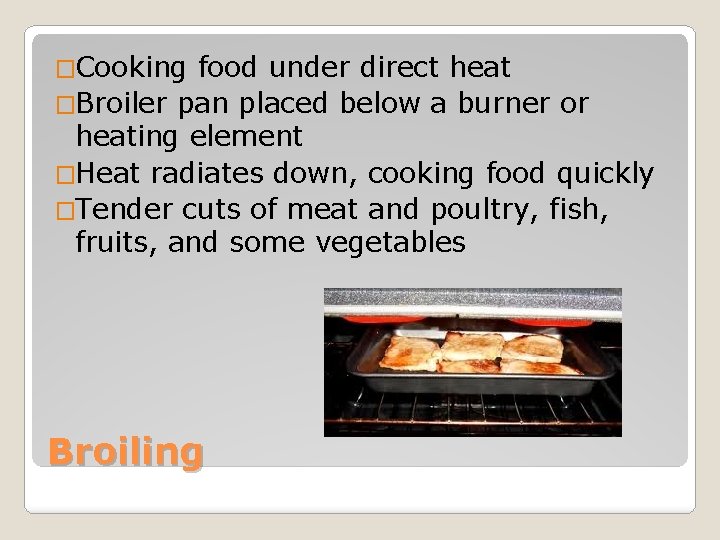
�Cooking food under direct heat �Broiler pan placed below a burner or heating element �Heat radiates down, cooking food quickly �Tender cuts of meat and poultry, fish, fruits, and some vegetables Broiling
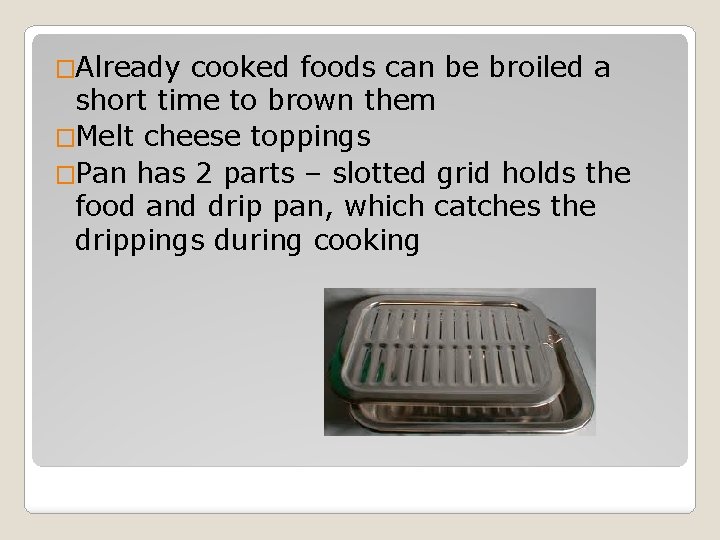
�Already cooked foods can be broiled a short time to brown them �Melt cheese toppings �Pan has 2 parts – slotted grid holds the food and drip pan, which catches the drippings during cooking
�To broil, set oven control to broil – can’t control temperature �The farther you place the food from the heat source the slower the cooking time, but food will cook all the way through
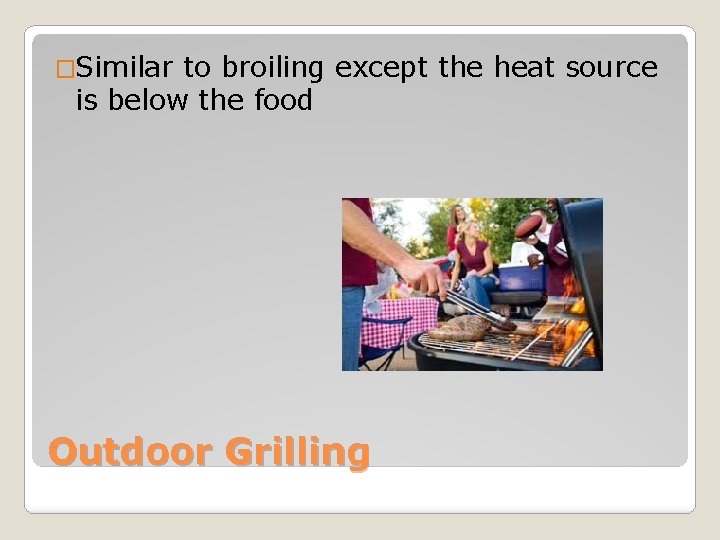
�Similar to broiling except the heat source is below the food Outdoor Grilling
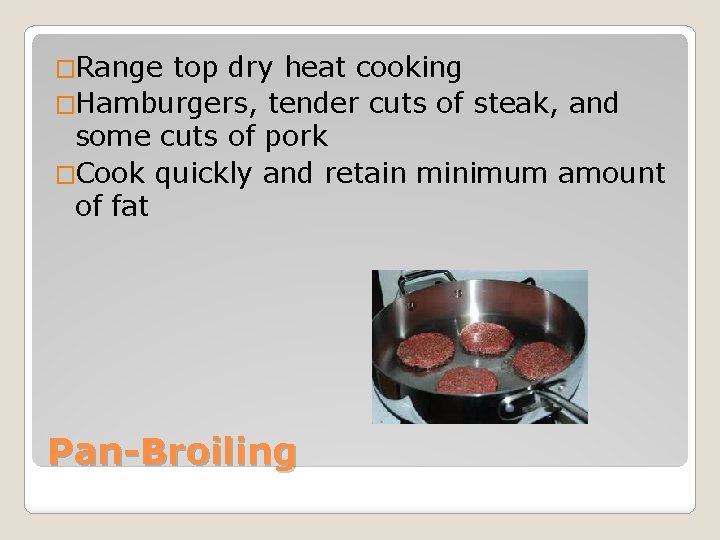
�Range top dry heat cooking �Hamburgers, tender cuts of steak, and some cuts of pork �Cook quickly and retain minimum amount of fat Pan-Broiling
�To pan-broil, cook food in heavy skillet over medium heat; don’t add fat; as fat accumulates, pour it off or remove with a baster
�Cooking Frying food in oil or melted fat
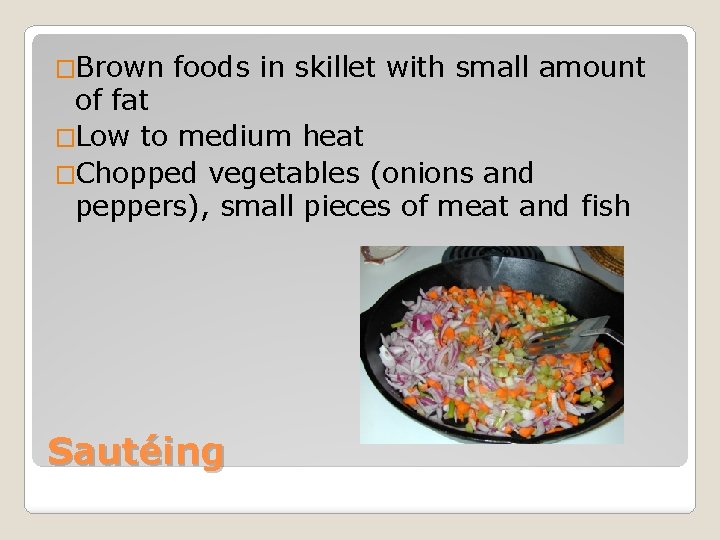
�Brown foods in skillet with small amount of fat �Low to medium heat �Chopped vegetables (onions and peppers), small pieces of meat and fish Sautéing
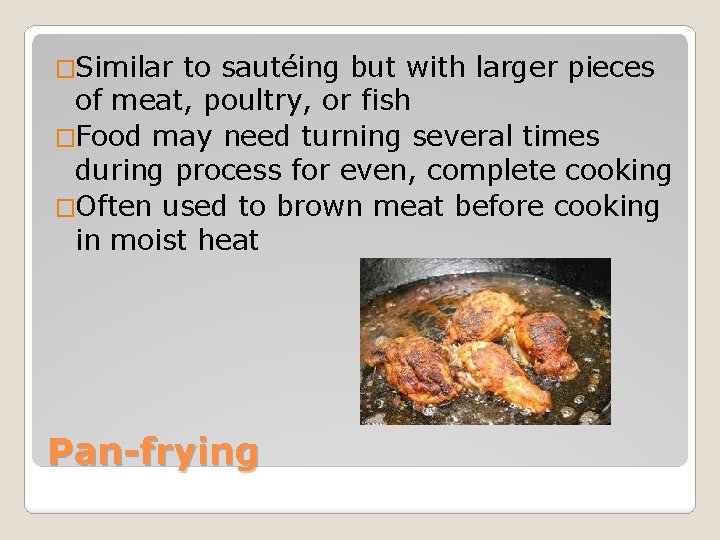
�Similar to sautéing but with larger pieces of meat, poultry, or fish �Food may need turning several times during process for even, complete cooking �Often used to brown meat before cooking in moist heat Pan-frying
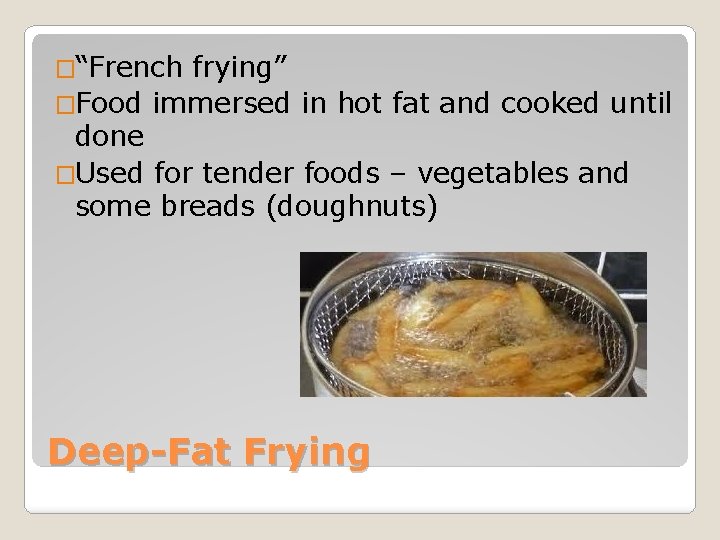
�“French frying” �Food immersed in hot fat and cooked until done �Used for tender foods – vegetables and some breads (doughnuts) Deep-Fat Frying
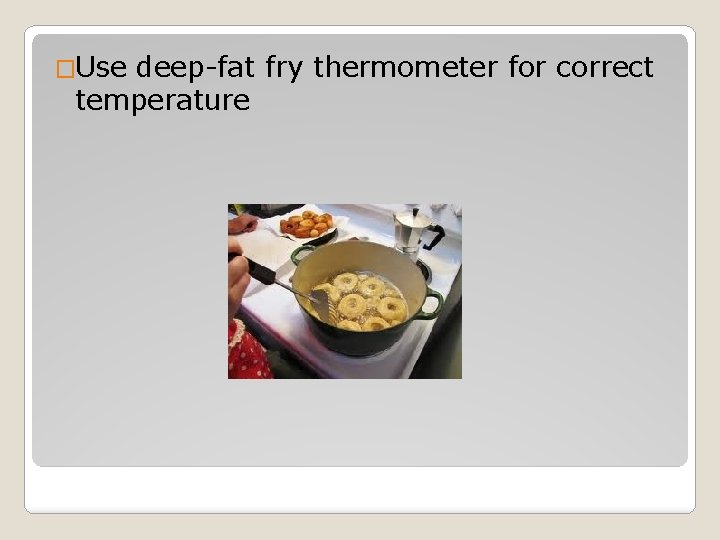
�Use deep-fat fry thermometer for correct temperature
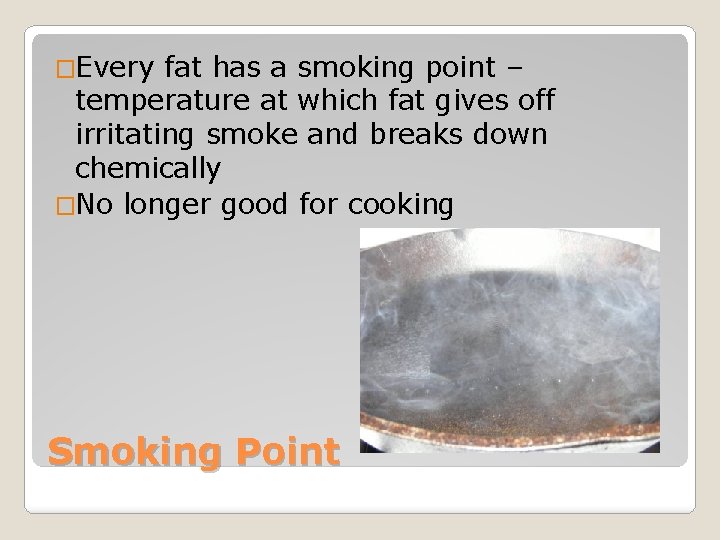
�Every fat has a smoking point – temperature at which fat gives off irritating smoke and breaks down chemically �No longer good for cooking Smoking Point
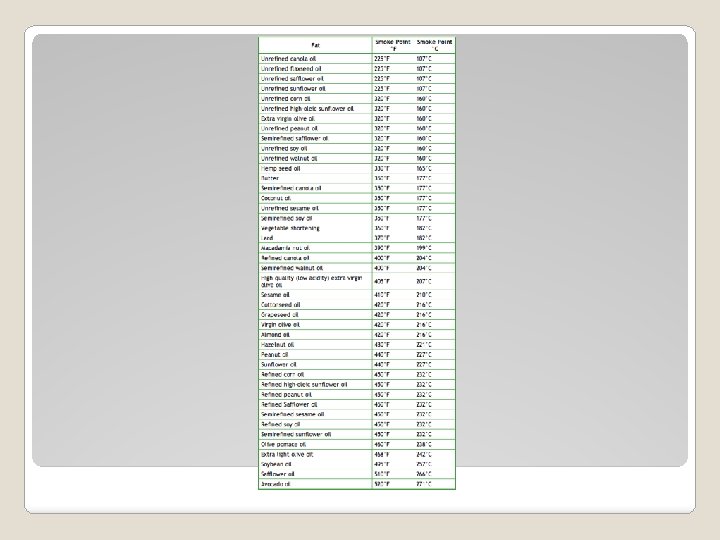
�Animal fats – butter, lard – have low smoking points �Vegetable fats – safflower, soybean, corn, and peanut oils – relatively high smoking point – best choices for frying
�Best cooking method for food often combination of methods �Braising and stir-frying – methods combining dry-heat and moist-heat cooking Combination Methods
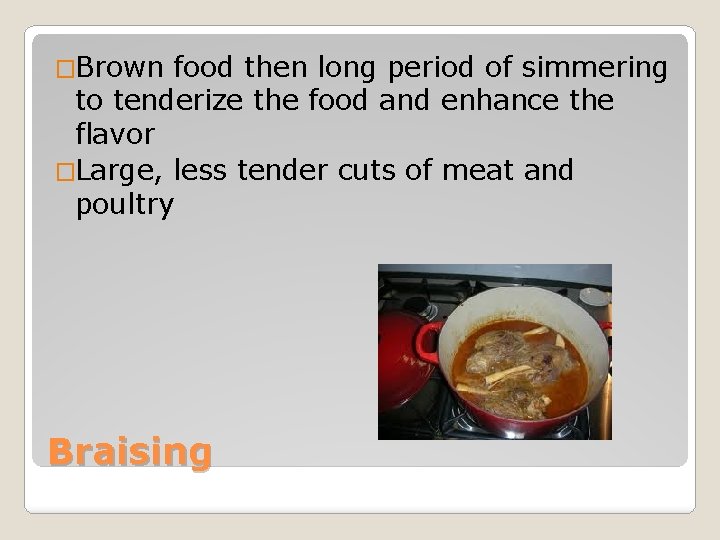
�Brown food then long period of simmering to tenderize the food and enhance the flavor �Large, less tender cuts of meat and poultry Braising
�Use Dutch oven or heavy pot with tightfitting lid �Brown food on all sides; add seasonings and small amount of liquid; cover the pot �Can be done either on stovetop or in oven at 350 o F �Vegetables are often added near end of cooking time
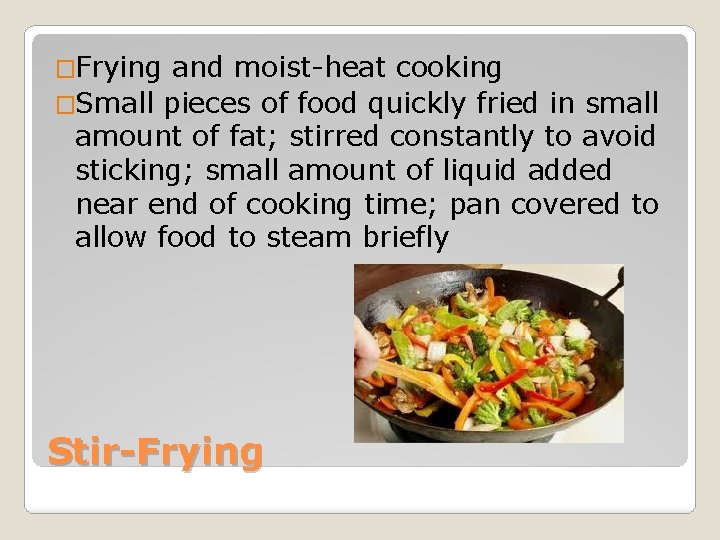
�Frying and moist-heat cooking �Small pieces of food quickly fried in small amount of fat; stirred constantly to avoid sticking; small amount of liquid added near end of cooking time; pan covered to allow food to steam briefly Stir-Frying
�Began in Asia �Most often used for cooking mixtures of vegetables and other foods �Traditional pan used is a wok, but regular skillet works well