
Convention s Structure of the Engli sh Language
- Slides: 8
Convention s Structure of the Engli sh Language By Stacey R eilly
Verb Tense Overview Verb tense expresses the time of an event or action. Time and how it is expressed in writing is very important to English readers. The English language has twelve different tenses. In this lesson, we will review the meaning of each verb tense.
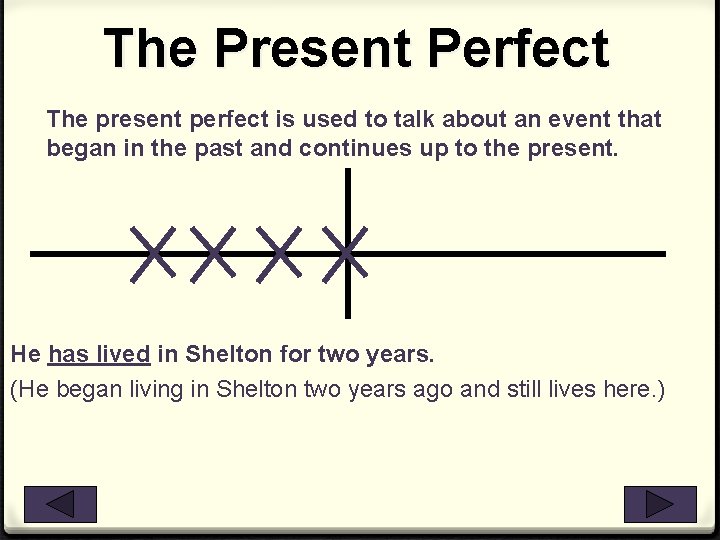
The Present Perfect The present perfect is used to talk about an event that began in the past and continues up to the present. He has lived in Shelton for two years. (He began living in Shelton two years ago and still lives here. )
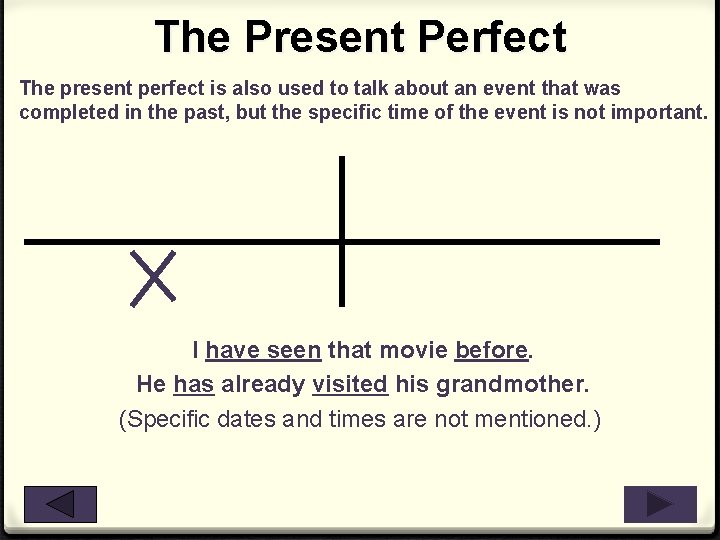
The Present Perfect The present perfect is also used to talk about an event that was completed in the past, but the specific time of the event is not important. I have seen that movie before. He has already visited his grandmother. (Specific dates and times are not mentioned. )
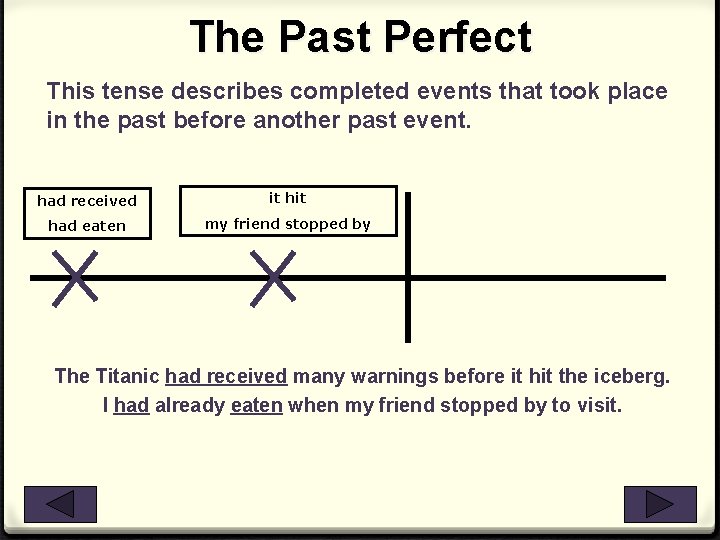
The Past Perfect This tense describes completed events that took place in the past before another past event. had received it had eaten my friend stopped by The Titanic had received many warnings before it hit the iceberg. I had already eaten when my friend stopped by to visit.
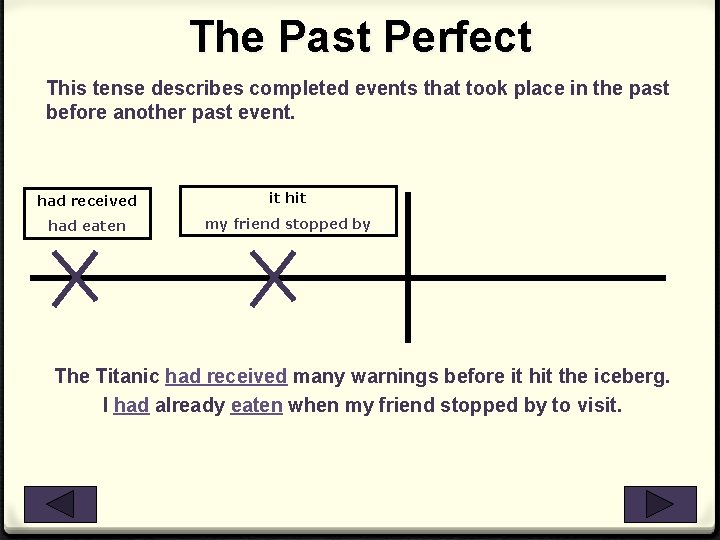
The Past Perfect This tense describes completed events that took place in the past before another past event. had received it had eaten my friend stopped by The Titanic had received many warnings before it hit the iceberg. I had already eaten when my friend stopped by to visit.
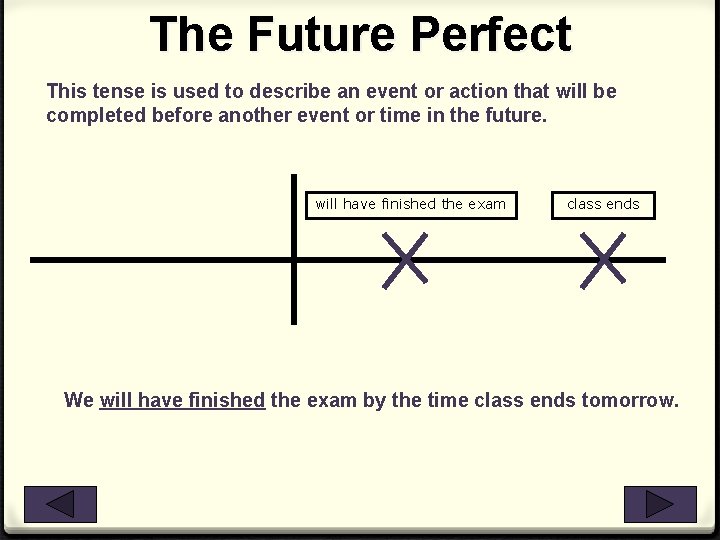
The Future Perfect This tense is used to describe an event or action that will be completed before another event or time in the future. will have finished the exam class ends We will have finished the exam by the time class ends tomorrow.
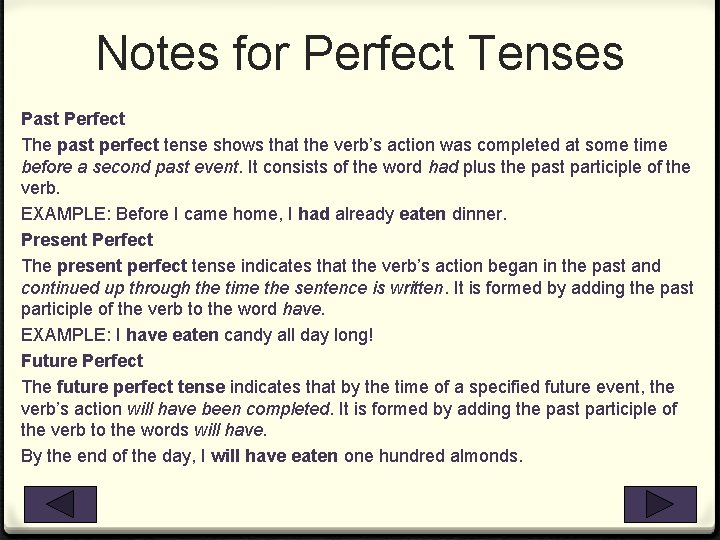
Notes for Perfect Tenses Past Perfect The past perfect tense shows that the verb’s action was completed at some time before a second past event. It consists of the word had plus the past participle of the verb. EXAMPLE: Before I came home, I had already eaten dinner. Present Perfect The present perfect tense indicates that the verb’s action began in the past and continued up through the time the sentence is written. It is formed by adding the past participle of the verb to the word have. EXAMPLE: I have eaten candy all day long! Future Perfect The future perfect tense indicates that by the time of a specified future event, the verb’s action will have been completed. It is formed by adding the past participle of the verb to the words will have. By the end of the day, I will have eaten one hundred almonds.