
Convenience Foods Lets Build the Convenience Sandwich Build
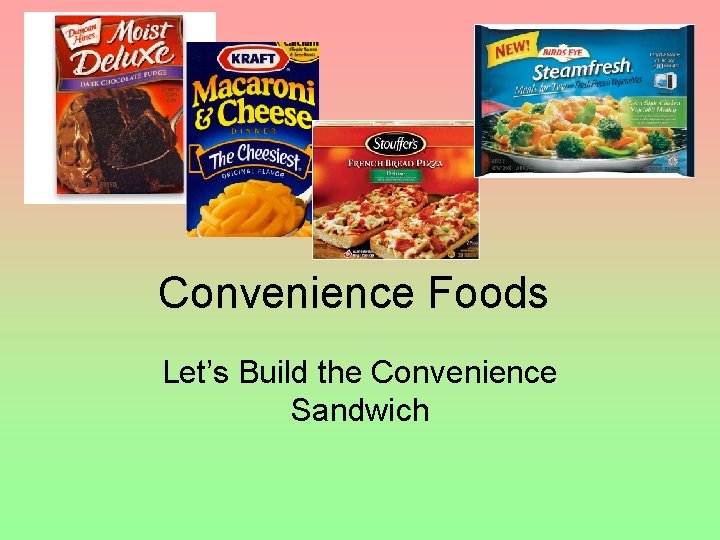
Convenience Foods Let’s Build the Convenience Sandwich
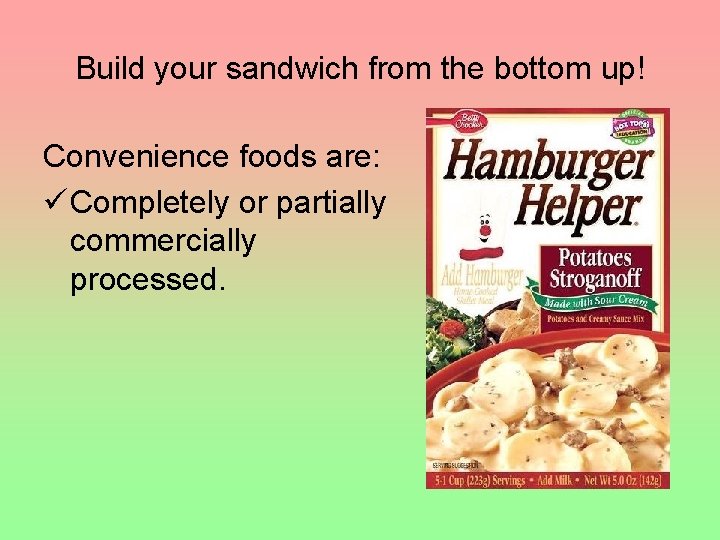
Build your sandwich from the bottom up! Convenience foods are: ü Completely or partially commercially processed.
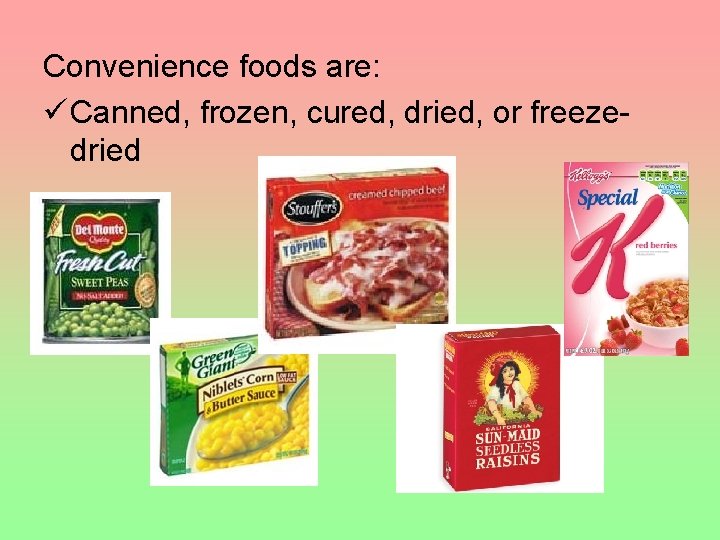
Convenience foods are: ü Canned, frozen, cured, dried, or freezedried
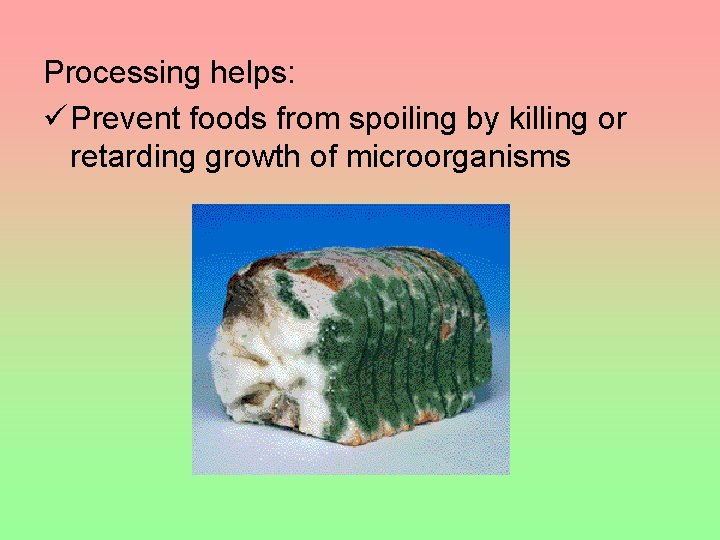
Processing helps: ü Prevent foods from spoiling by killing or retarding growth of microorganisms
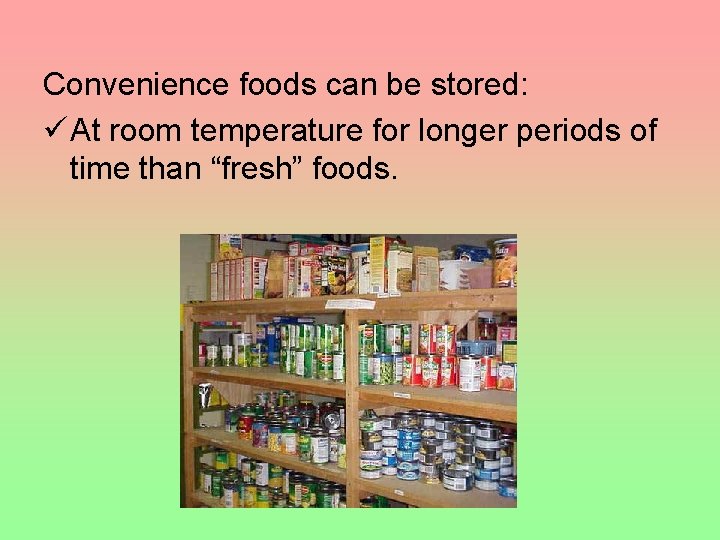
Convenience foods can be stored: ü At room temperature for longer periods of time than “fresh” foods.
The Label: ü Directions enable the inexperienced cook prepare tasty, nutritious meals quickly. ü Provides info on how to use the food in a healthful diet. ü Reassures that no special skills or equipment are needed.
Advantages of convenience foods are: ü Save time & energy ü Which enables families to eat at home ü Food is available year ‘round ü Inexpensive way to add creativity to meal ü Offer suggestions for reduced fat/calorie preparation methods.

Disadvantages of convenience foods are: ü Good nutrients lost during processing ü Bad nutrients increased: contain high levels of salt, fat, and sugar ü May cost more than fresh ü Contain preservative, chemicals, etc that may be harmful to some people. ü Packaging negatively impacts the environment.
Classifications of label information: ü Yield ü Ingredients & amounts ü Directions ü Container type & size ü Cooking time and temperature
Following label directions helps: ü Ensure successful preparation ü Avoid frustration ü Reduce wasted money & ingredients ü Facilitates combinations of convenience foods with fresh ingredients for easier quicker meal preparation.
- Slides: 10