
Controlling the Spread of Disease Communicable Diseases A
Controlling the Spread of Disease
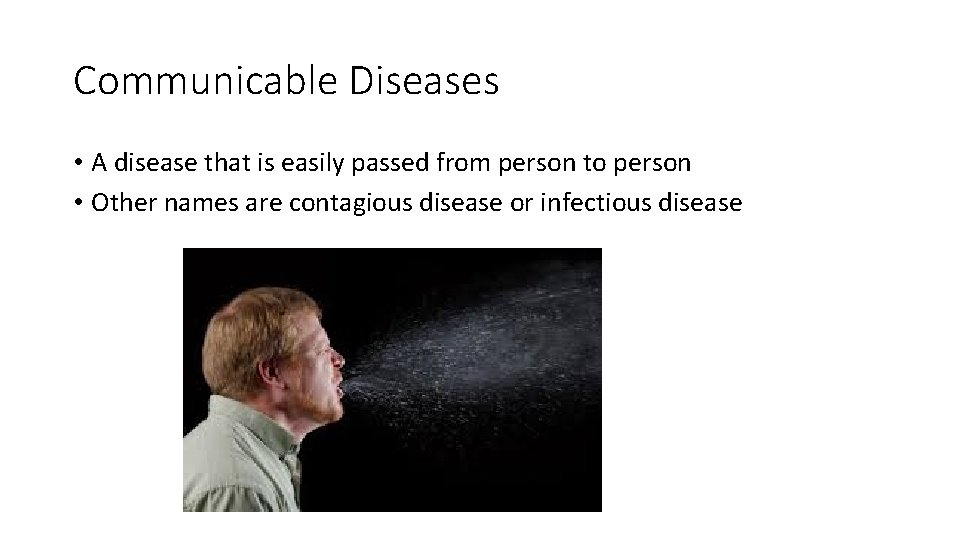
Communicable Diseases • A disease that is easily passed from person to person • Other names are contagious disease or infectious disease
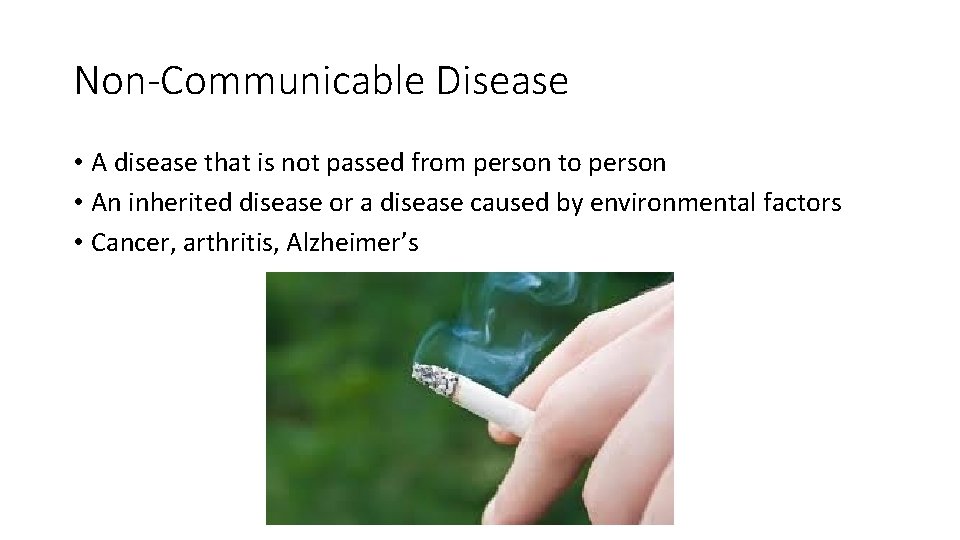
Non-Communicable Disease • A disease that is not passed from person to person • An inherited disease or a disease caused by environmental factors • Cancer, arthritis, Alzheimer’s
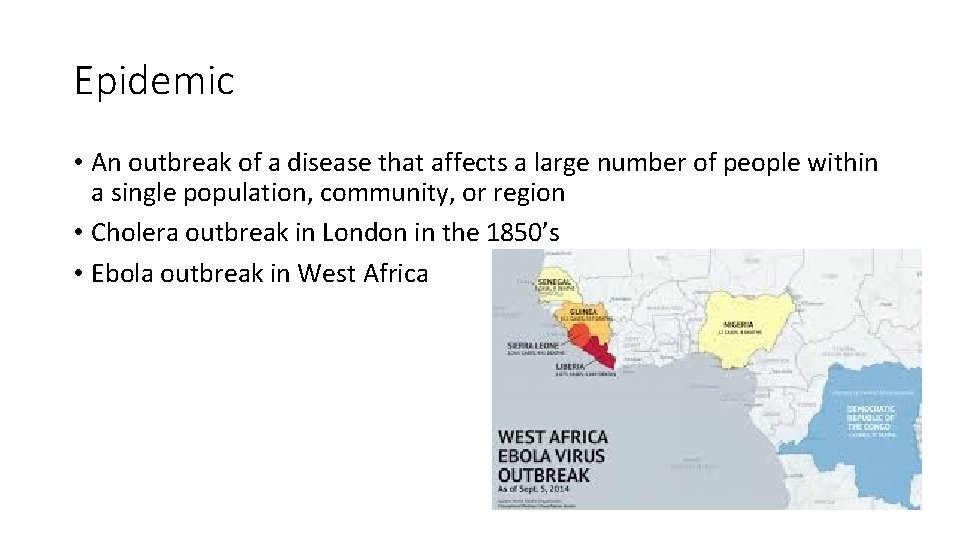
Epidemic • An outbreak of a disease that affects a large number of people within a single population, community, or region • Cholera outbreak in London in the 1850’s • Ebola outbreak in West Africa
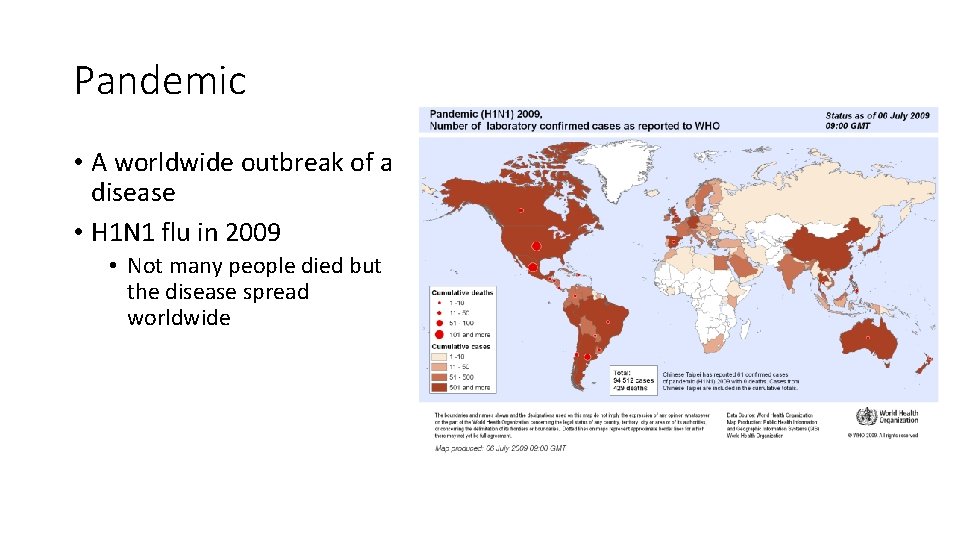
Pandemic • A worldwide outbreak of a disease • H 1 N 1 flu in 2009 • Not many people died but the disease spread worldwide
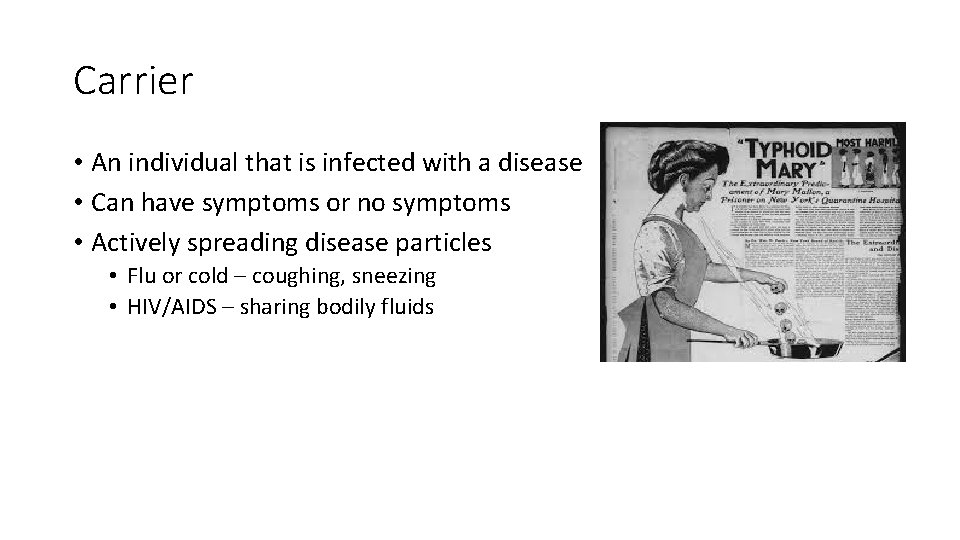
Carrier • An individual that is infected with a disease • Can have symptoms or no symptoms • Actively spreading disease particles • Flu or cold – coughing, sneezing • HIV/AIDS – sharing bodily fluids
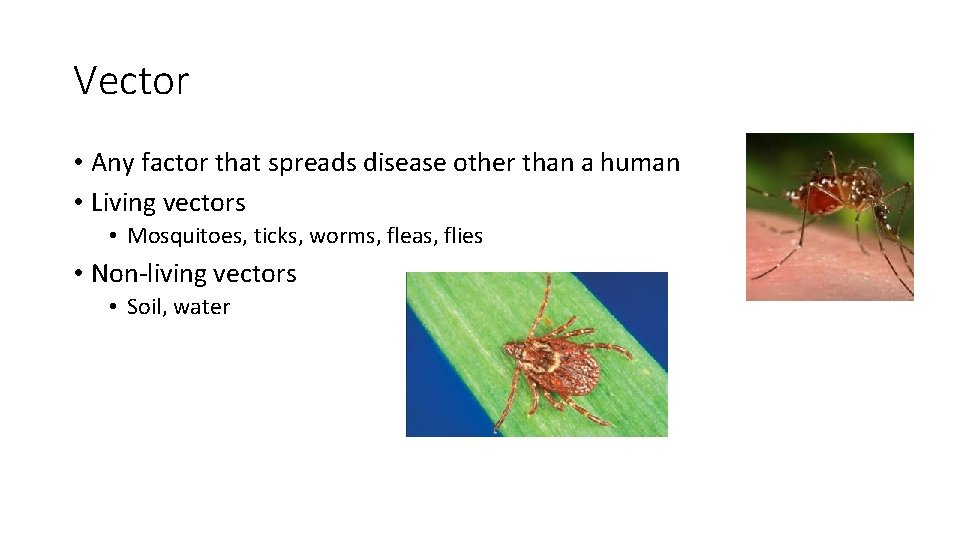
Vector • Any factor that spreads disease other than a human • Living vectors • Mosquitoes, ticks, worms, fleas, flies • Non-living vectors • Soil, water
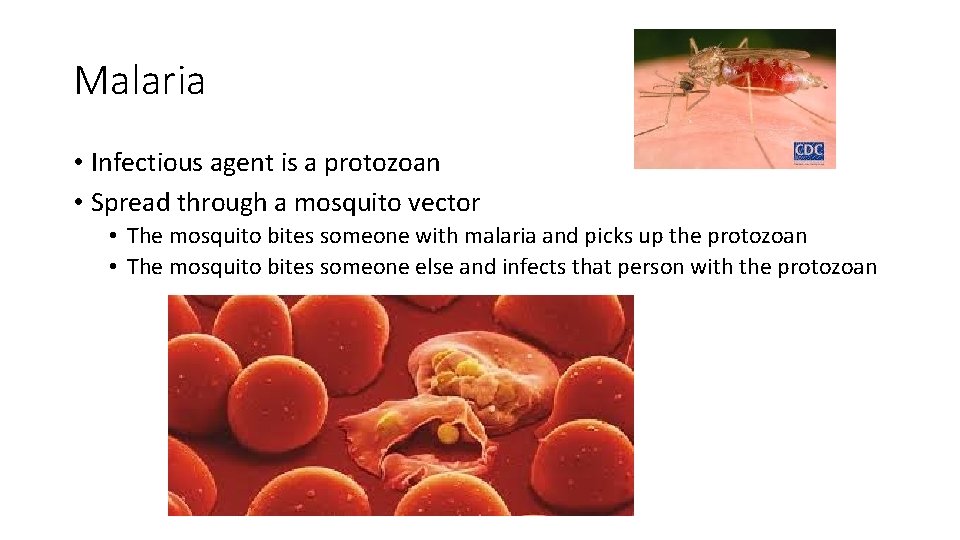
Malaria • Infectious agent is a protozoan • Spread through a mosquito vector • The mosquito bites someone with malaria and picks up the protozoan • The mosquito bites someone else and infects that person with the protozoan

Lyme Disease • Infectious agent is a bacteria • Spread through a tick vector • Tick bites someone with Lyme disease and picks up the bacteria • Tick bites someone else and infects that person with the bacteria
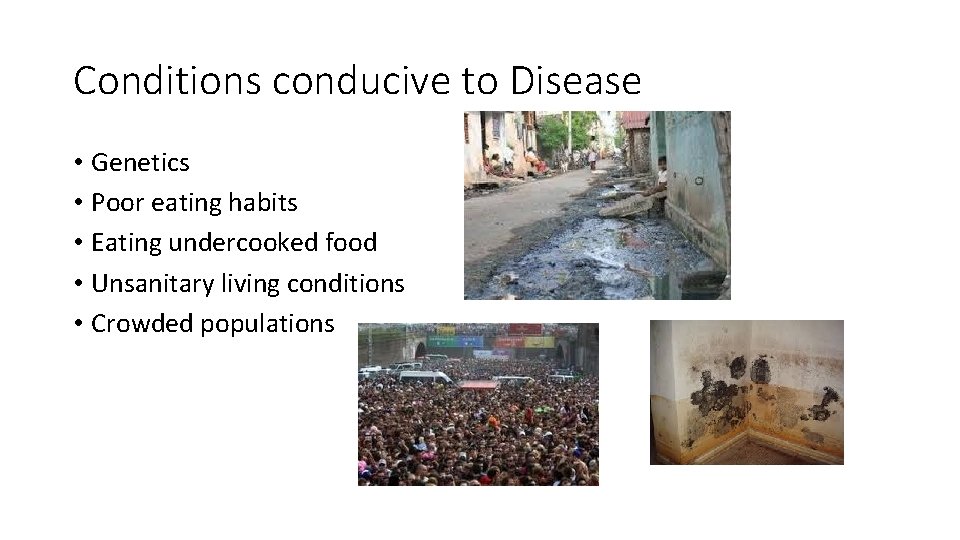
Conditions conducive to Disease • Genetics • Poor eating habits • Eating undercooked food • Unsanitary living conditions • Crowded populations
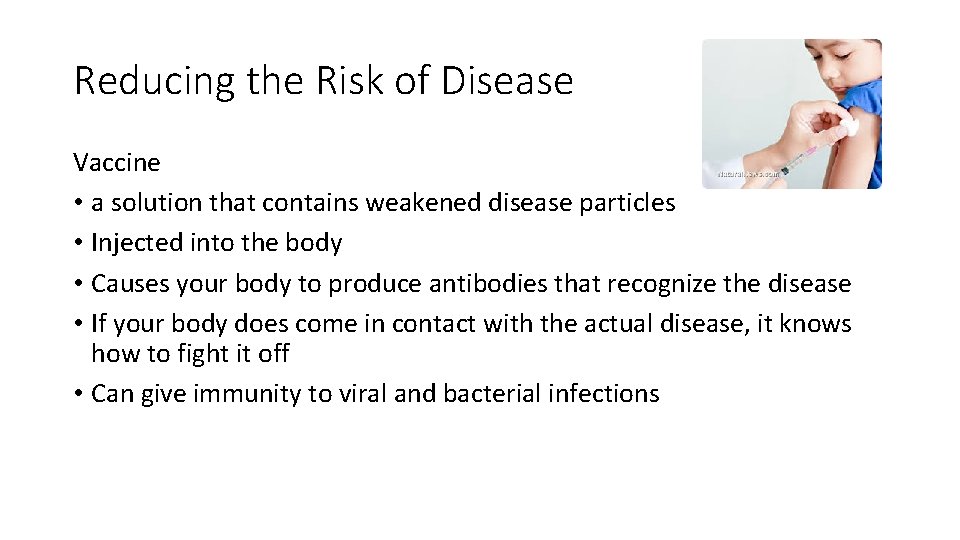
Reducing the Risk of Disease Vaccine • a solution that contains weakened disease particles • Injected into the body • Causes your body to produce antibodies that recognize the disease • If your body does come in contact with the actual disease, it knows how to fight it off • Can give immunity to viral and bacterial infections
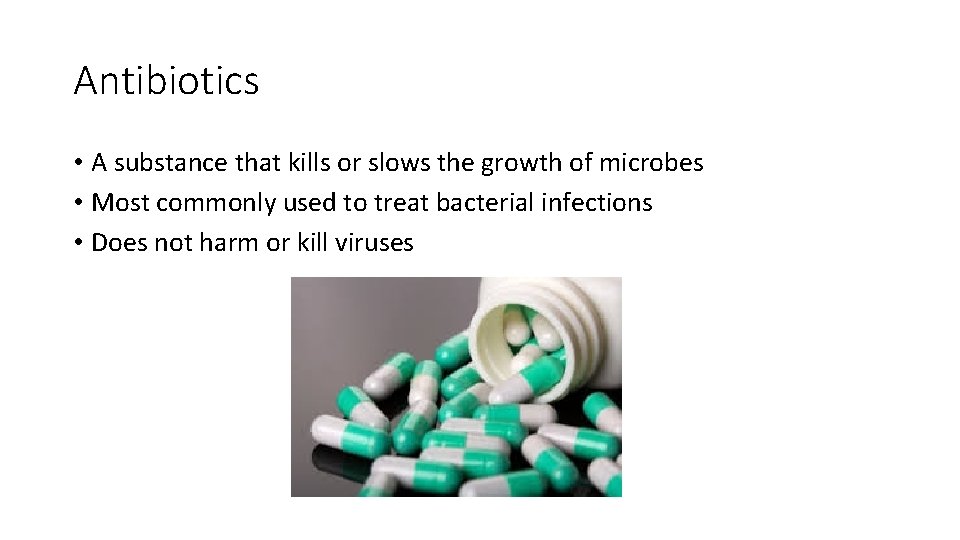
Antibiotics • A substance that kills or slows the growth of microbes • Most commonly used to treat bacterial infections • Does not harm or kill viruses
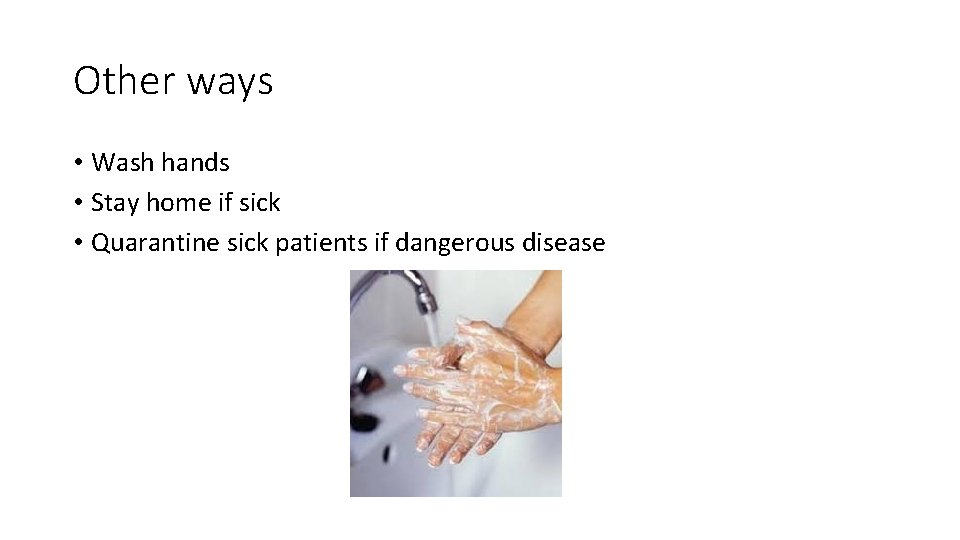
Other ways • Wash hands • Stay home if sick • Quarantine sick patients if dangerous disease
Quick Check 1. Which type of infection is controlled with antibiotics? A. Bacterial infection B. Viral infection C. Fungal infection D. Infections cannot be controlled by antibiotics.
Quick Check 2. A(n) _____ is a solution that is made up of weakened disease particles and is injected to produce immunity to a disease. A. antibiotic B. carrier C. vaccine D. vector
Quick Check 3. A ____ is an outbreak of a disease that is worldwide. A. carrier B. vector C. epidemic D. pandemic
Quick Check 4. The vector for the spread of Malaria is ____. A. water B. a mosquito C. a tick D. soil
Quick Check 5. A(n) ____ disease is a disease that is contagious and can be spread from person to person. A. communicable B. non-communicable C. inherited D. vector
- Slides: 18