
Controlling Movement Underlying Questions l What is being
Controlling Movement
Underlying Questions l What is being controlled? l How is movement controlled? l What beliefs exist to explain this control?
Degrees of Freedom l Number of ways independent components a system can act – Motor units – Muscles – Joints l How does the nervous system control the many muscles and joints involved in producing a given pattern? How does it solve this degrees-offreedom problem? of
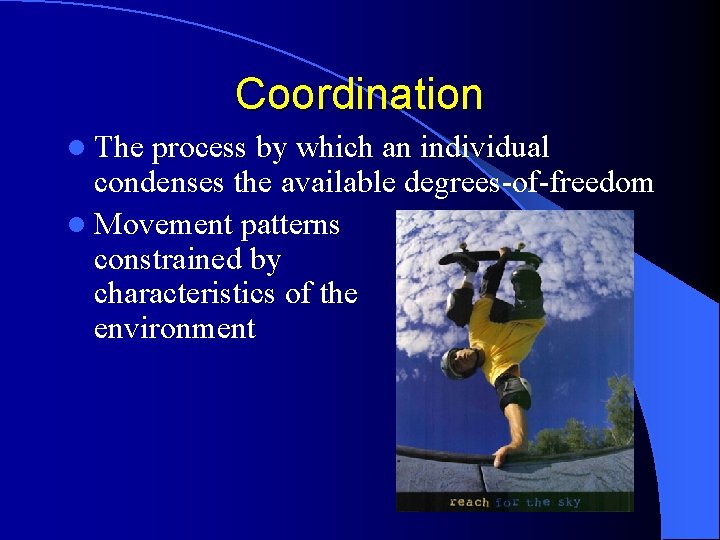
Coordination l The process by which an individual condenses the available degrees-of-freedom l Movement patterns constrained by characteristics of the environment

Control Mechanisms Closed-Loop commands control center comparator feedback effectors
Closed-Loop Control l Involves use of feedback and error detection & correction to maintain desired goal Type of skills (classification)? Examples? Driving a Car!
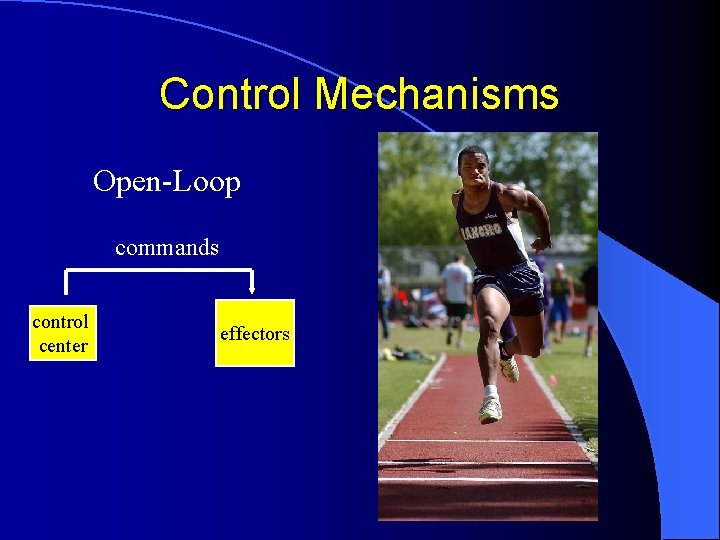
Control Mechanisms Open-Loop commands control center effectors
Open-Loop Control l Use of centrally determined, prestructured commands sent to effectors and run off without use of feedback Type of skills (classification)? Examples?
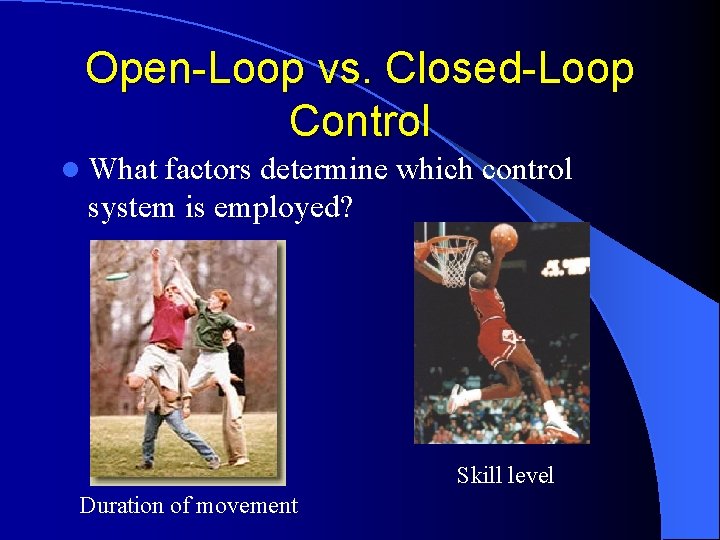
Open-Loop vs. Closed-Loop Control l What factors determine which control system is employed? Skill level Duration of movement
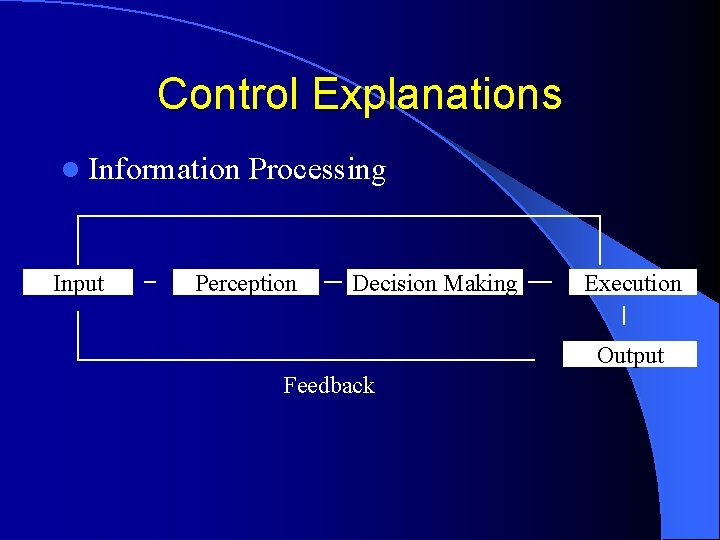
Control Explanations l Information Input Processing Perception Decision Making Execution Output Feedback
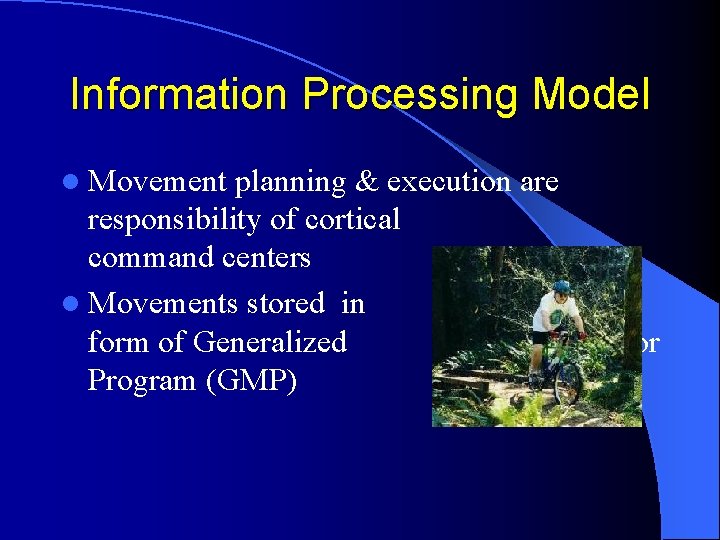
Information Processing Model l Movement planning & execution are responsibility of cortical command centers l Movements stored in form of Generalized Motor Program (GMP)
Generalized Motor Program Abstract representation of stored pattern for class of action l Prestructured set of movement commands l Invariant features stored l – – l Particular muscles needed to produce action Order of muscle activation Relative timing & sequencing of contractions Relative force of various muscle contractions Organizes many df into single unit for efficient and effective action
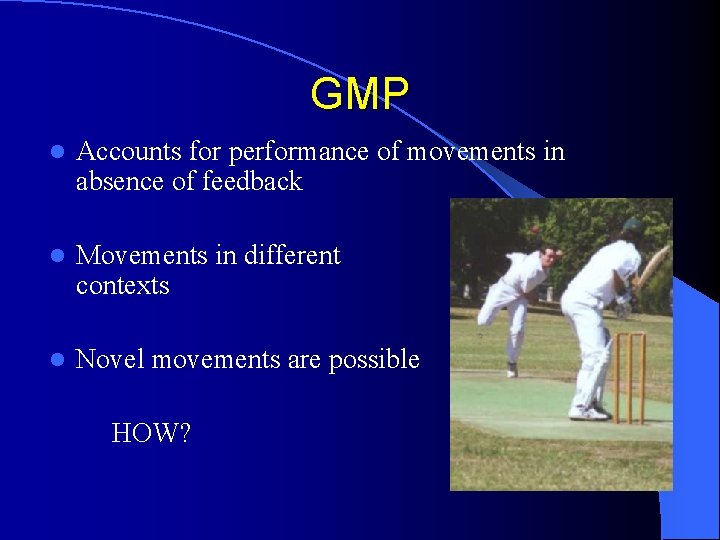
GMP l Accounts for performance of movements in absence of feedback l Movements in different contexts l Novel movements are possible HOW?
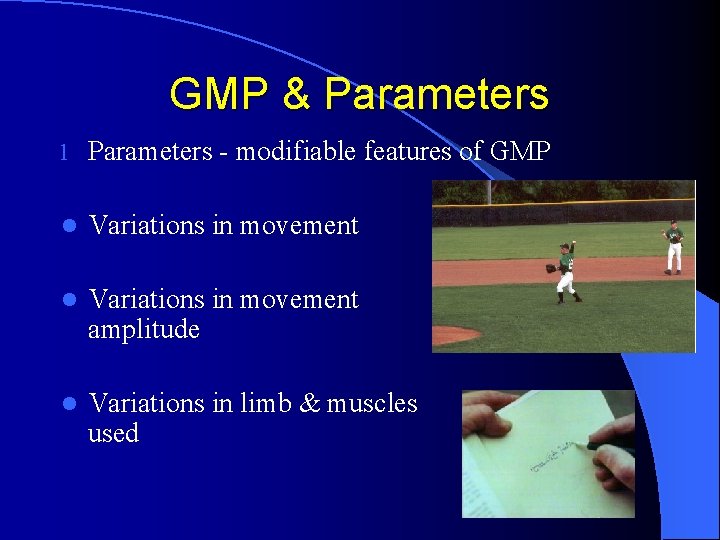
GMP & Parameters l Parameters - modifiable features of GMP l Variations in movement amplitude l Variations in limb & muscles used time
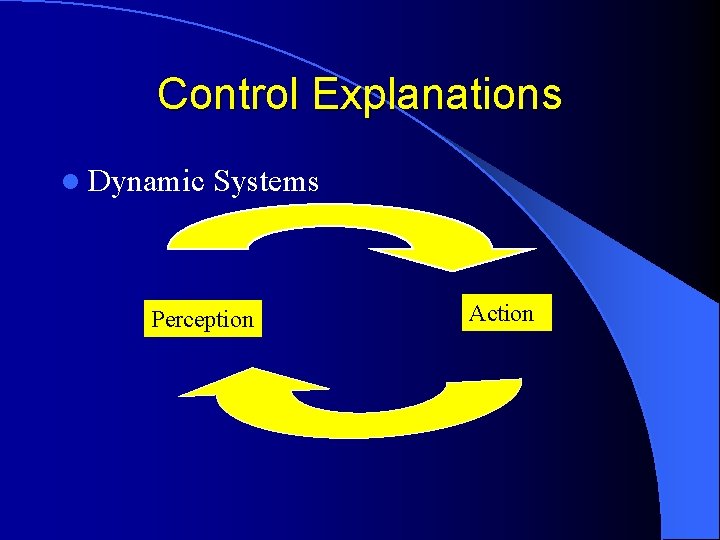
Control Explanations l Dynamic Systems Perception Action
Dynamic Systems l Planning of actions does not require elaborate cognitive processing l Motor behavior emerges from interaction of multiple subsystems l Actions shaped by intention of performer and constraints of environment
- Slides: 16