
Controlled Studies PTSD Author Year of Pts Equipment




- Slides: 23
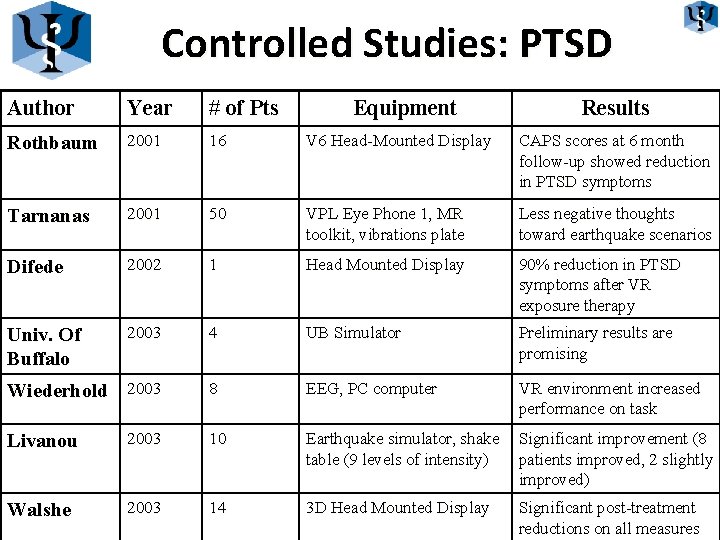
Controlled Studies: PTSD Author Year # of Pts Equipment Results Rothbaum 2001 16 V 6 Head-Mounted Display CAPS scores at 6 month follow-up showed reduction in PTSD symptoms Tarnanas 2001 50 VPL Eye Phone 1, MR toolkit, vibrations plate Less negative thoughts toward earthquake scenarios Difede 2002 1 Head Mounted Display 90% reduction in PTSD symptoms after VR exposure therapy Univ. Of Buffalo 2003 4 UB Simulator Preliminary results are promising Wiederhold 2003 8 EEG, PC computer VR environment increased performance on task Livanou 2003 10 Earthquake simulator, shake table (9 levels of intensity) Significant improvement (8 patients improved, 2 slightly improved) Walshe 2003 14 3 D Head Mounted Display Significant post-treatment reductions on all measures
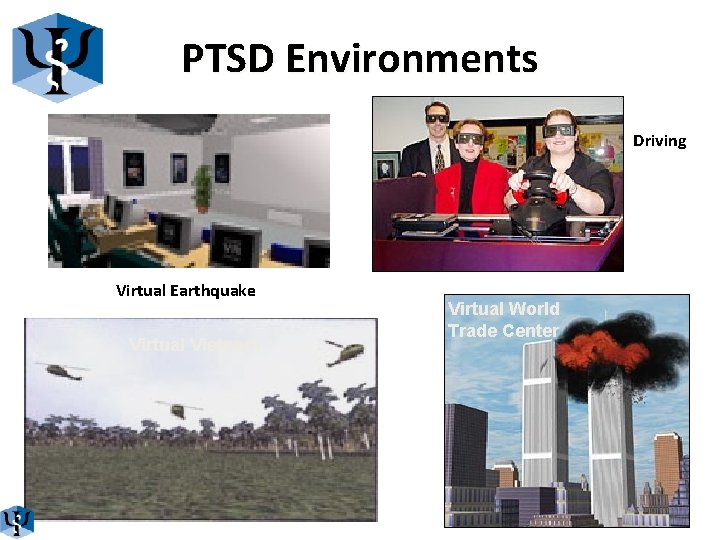
PTSD Environments Driving Virtual Earthquake Virtual Vietnam Virtual World Trade Center
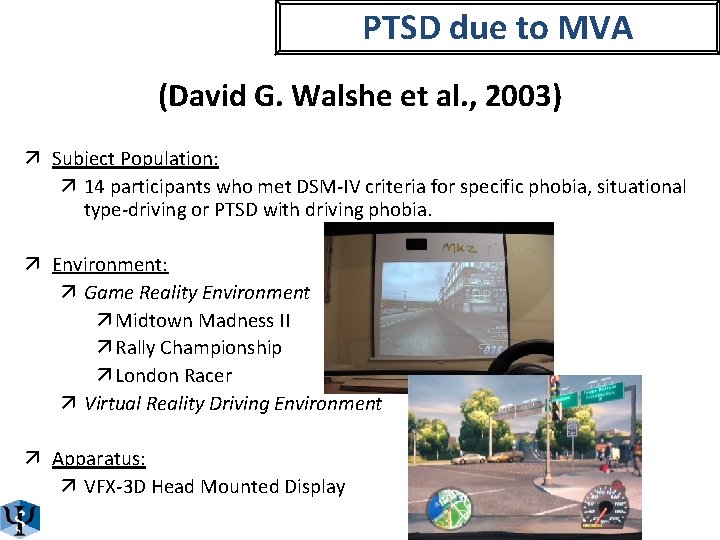
PTSD due to MVA (David G. Walshe et al. , 2003) ä Subject Population: ä 14 participants who met DSM-IV criteria for specific phobia, situational type-driving or PTSD with driving phobia. ä Environment: ä Game Reality Environment ä Midtown Madness II ä Rally Championship ä London Racer ä Virtual Reality Driving Environment ä Apparatus: ä VFX-3 D Head Mounted Display
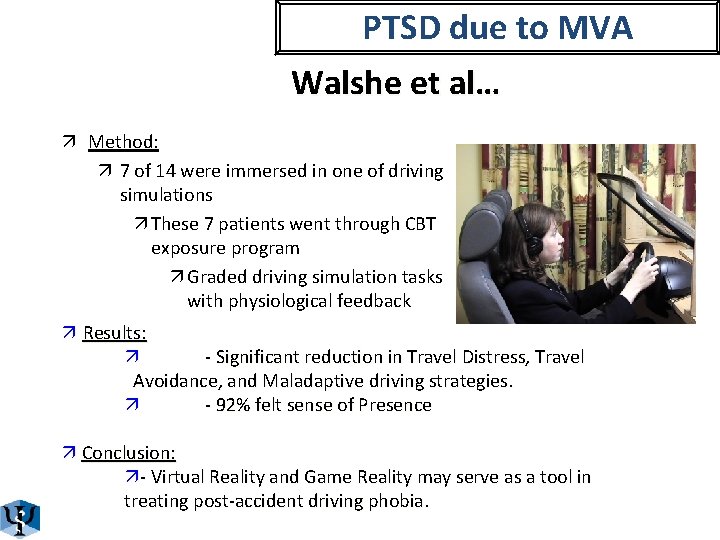
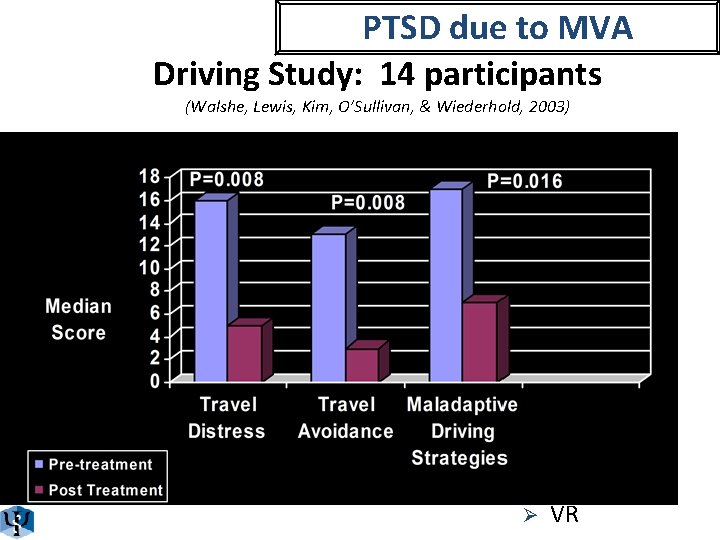
PTSD due to MVA Walshe et al… ä Method: ä 7 of 14 were immersed in one of driving simulations ä These 7 patients went through CBT exposure program ä Graded driving simulation tasks with physiological feedback ä Results: ä - Significant reduction in Travel Distress, Travel Avoidance, and Maladaptive driving strategies. ä - 92% felt sense of Presence ä Conclusion: ä- Virtual Reality and Game Reality may serve as a tool in treating post-accident driving phobia.
PTSD due to MVA Driving Study: 14 participants (Walshe, Lewis, Kim, O’Sullivan, & Wiederhold, 2003) Ø Ø VGVR VR
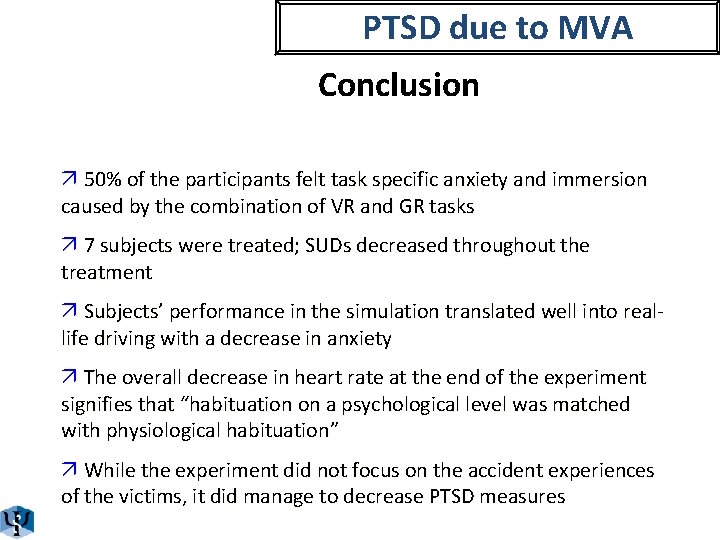
PTSD due to MVA Conclusion ä 50% of the participants felt task specific anxiety and immersion caused by the combination of VR and GR tasks ä 7 subjects were treated; SUDs decreased throughout the treatment ä Subjects’ performance in the simulation translated well into reallife driving with a decrease in anxiety ä The overall decrease in heart rate at the end of the experiment signifies that “habituation on a psychological level was matched with physiological habituation” ä While the experiment did not focus on the accident experiences of the victims, it did manage to decrease PTSD measures
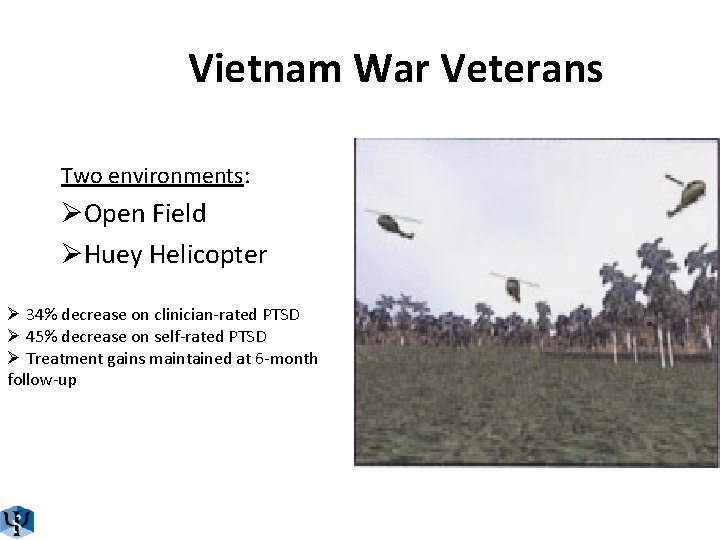
Vietnam War Veterans Two environments: ØOpen Field ØHuey Helicopter Ø 34% decrease on clinician-rated PTSD Ø 45% decrease on self-rated PTSD Ø Treatment gains maintained at 6 -month follow-up
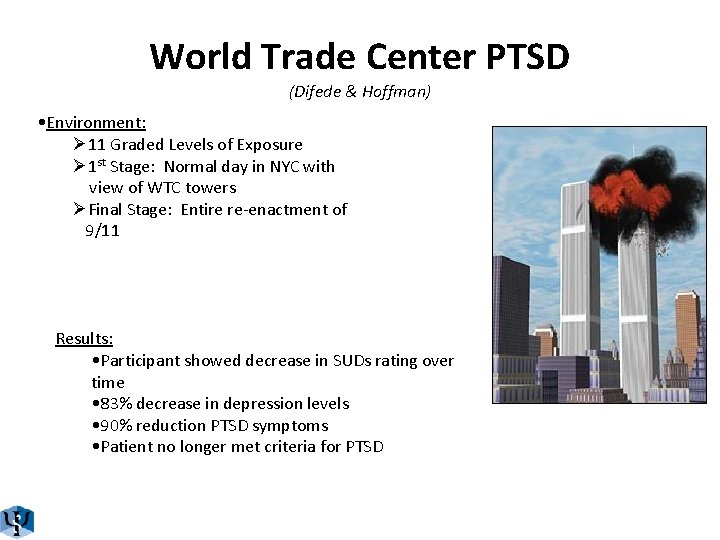
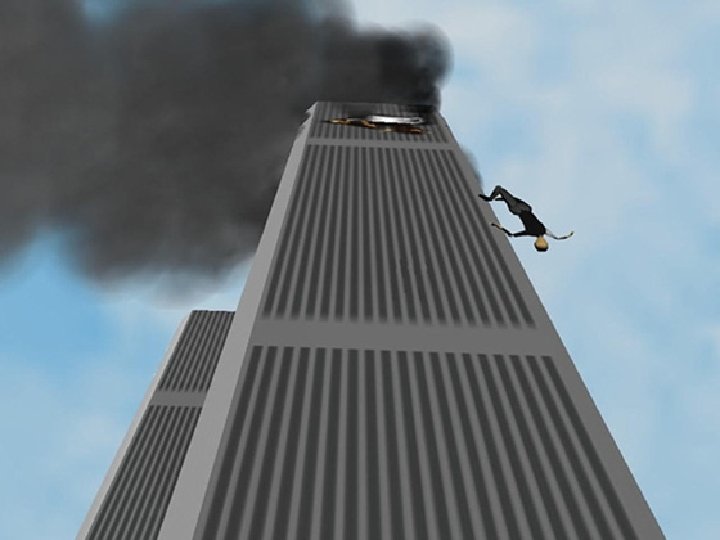
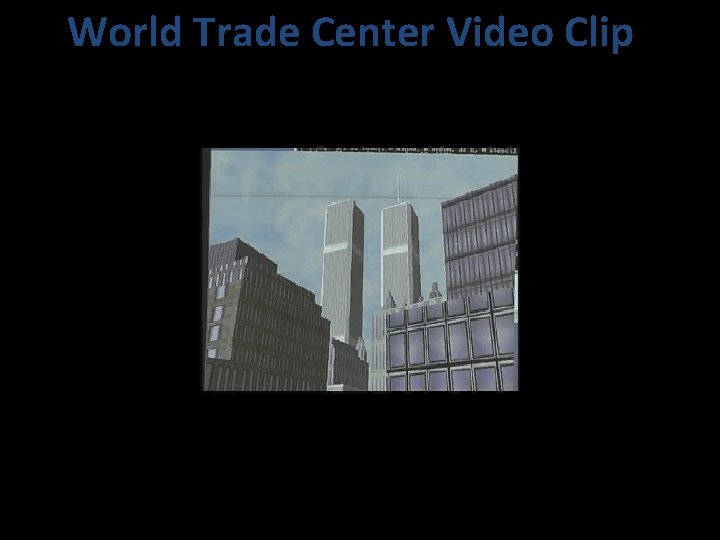
World Trade Center PTSD (Difede & Hoffman) • Environment: Ø 11 Graded Levels of Exposure Ø 1 st Stage: Normal day in NYC with view of WTC towers ØFinal Stage: Entire re-enactment of 9/11 Results: • Participant showed decrease in SUDs rating over time • 83% decrease in depression levels • 90% reduction PTSD symptoms • Patient no longer met criteria for PTSD
World Trade Center Video Clip
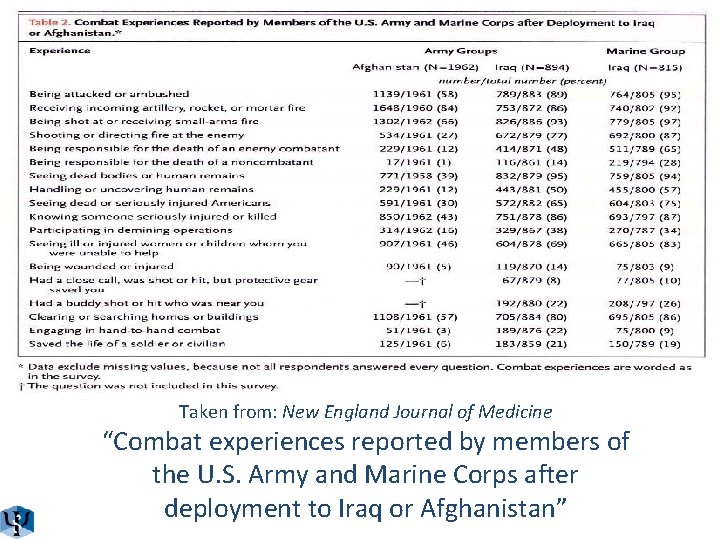
Taken from: New England Journal of Medicine “Combat experiences reported by members of the U. S. Army and Marine Corps after deployment to Iraq or Afghanistan”
ONR Funded Project Ø Develop VR worlds for non-combatants Ø Test VR worlds for treating PTSD in non-combatants Ø VR will be created with off-the-shelf videogame engine Ø Received funding letter on Thursday (last week) Ø Conducting focus groups with military personnel at Camp Pendelton, Balboa Naval Hospital, and San Diego VA Hospital
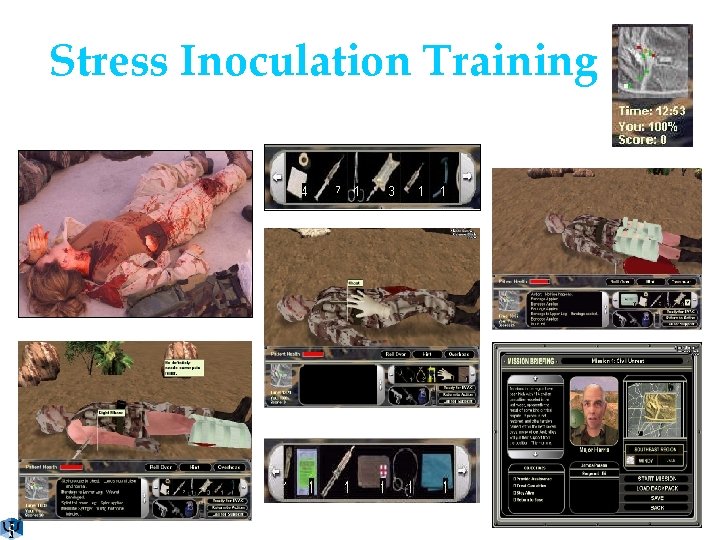
Stress Inoculation Training
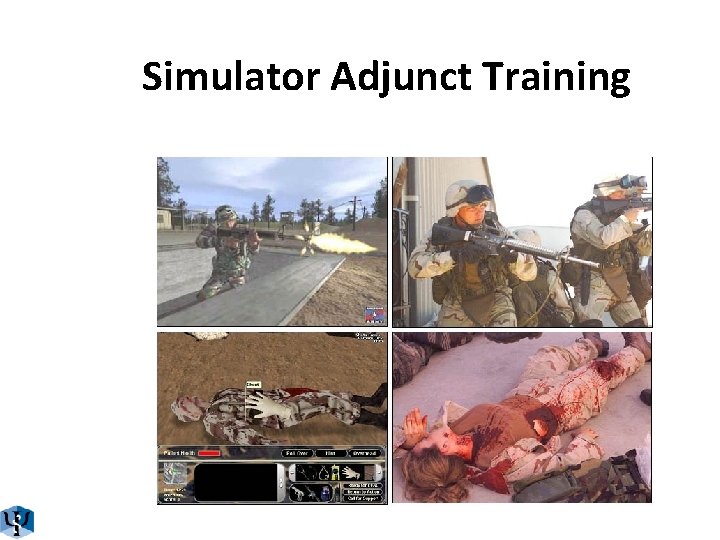
Simulator Adjunct Training
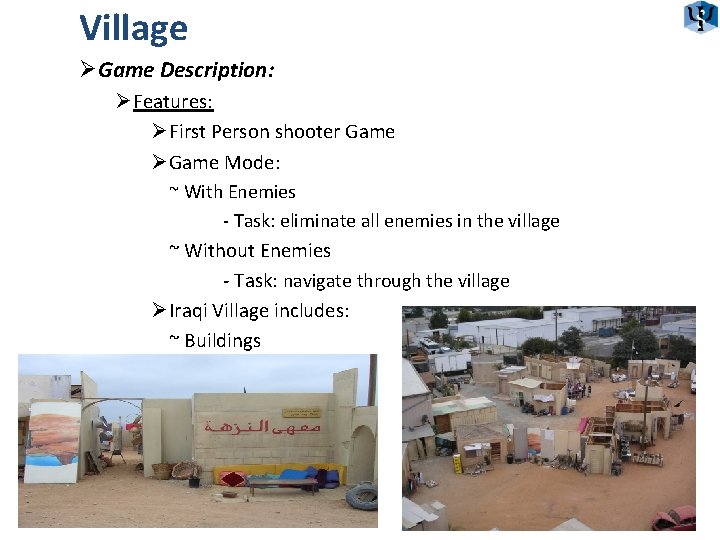
Village ØGame Description: Ø Features: Ø First Person shooter Game Ø Game Mode: ~ With Enemies - Task: eliminate all enemies in the village ~ Without Enemies - Task: navigate through the village Ø Iraqi Village includes: ~ Buildings
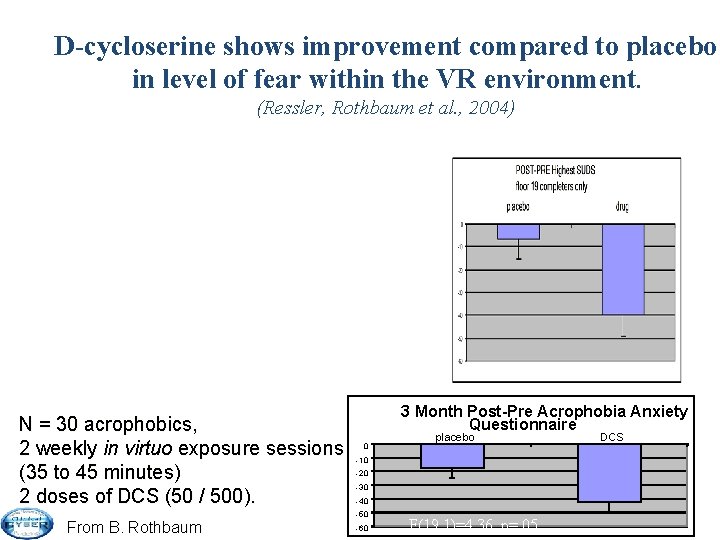
D-cycloserine shows improvement compared to placebo in level of fear within the VR environment. (Ressler, Rothbaum et al. , 2004) N = 30 acrophobics, 2 weekly in virtuo exposure sessions (35 to 45 minutes) 2 doses of DCS (50 / 500). From B. Rothbaum 3 Month Post-Pre Acrophobia Anxiety Questionnaire 0 placebo -10 -20 -30 -40 -50 -60 F(19, 1)=4. 36, p=. 05 DCS
Indexed in: - Med. Line - Psych. Info - Excerpta Medica - Social Sciences Citations Published by: American Psychological Association
Recently Indexed in Psyc. INFO Introducing the Journal of Cyber. Therapy and Rehabilitation
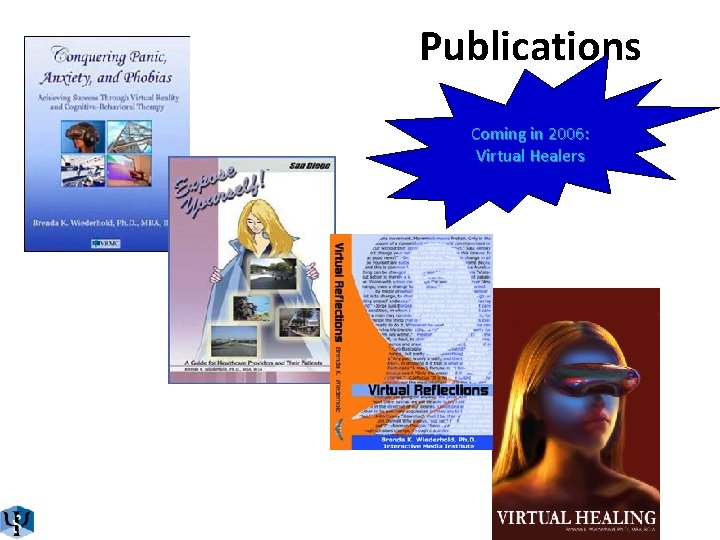
Publications Coming in 2006: Virtual Healers
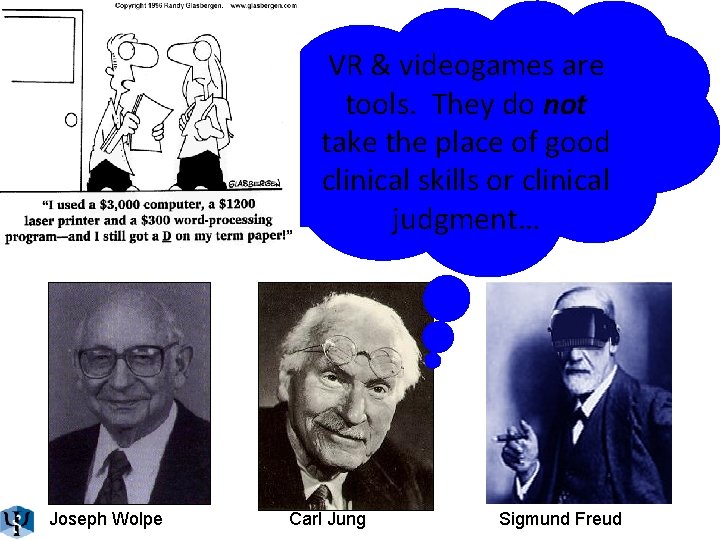
VR & videogames are tools. They do not take the place of good clinical skills or clinical judgment… Joseph Wolpe Carl Jung Sigmund Freud