
Controlled assessment Section B Methods of data collection
Controlled assessment Section B: Methods of data collection (Methodology) Now that you have explained what it is that you are going to do, you need to explain how it is that you are going to do it and why you are using certain methods
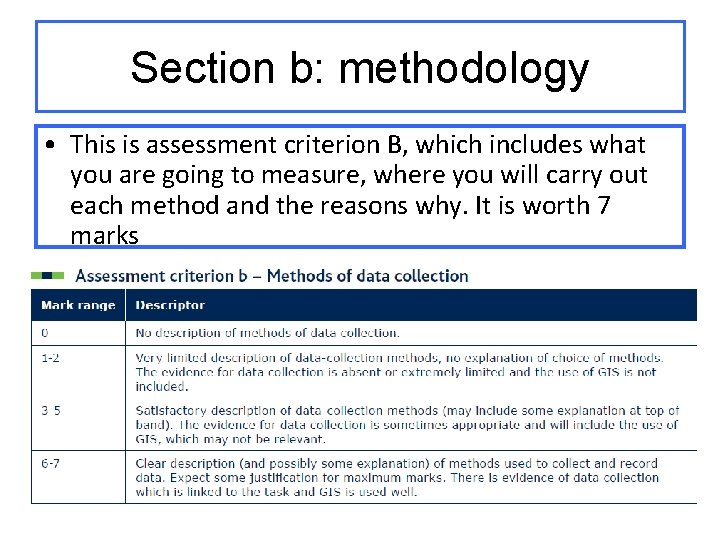
Section b: methodology • This is assessment criterion B, which includes what you are going to measure, where you will carry out each method and the reasons why. It is worth 7 marks
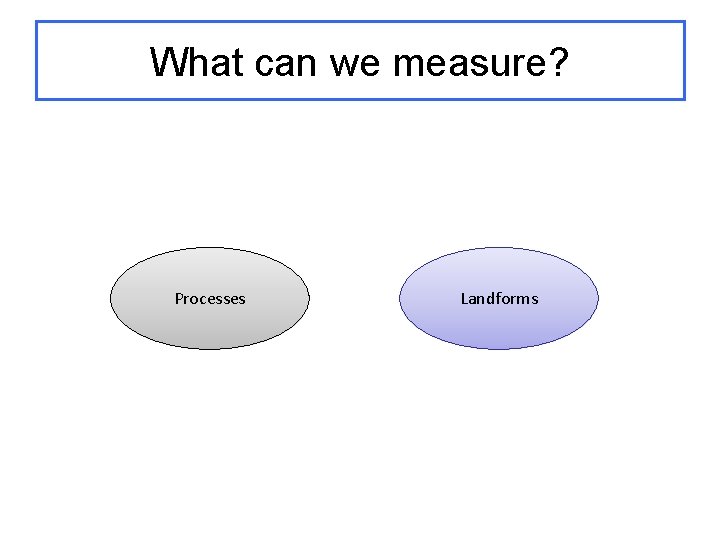
What can we measure? Processes Landforms
How can we measure processes and landforms?
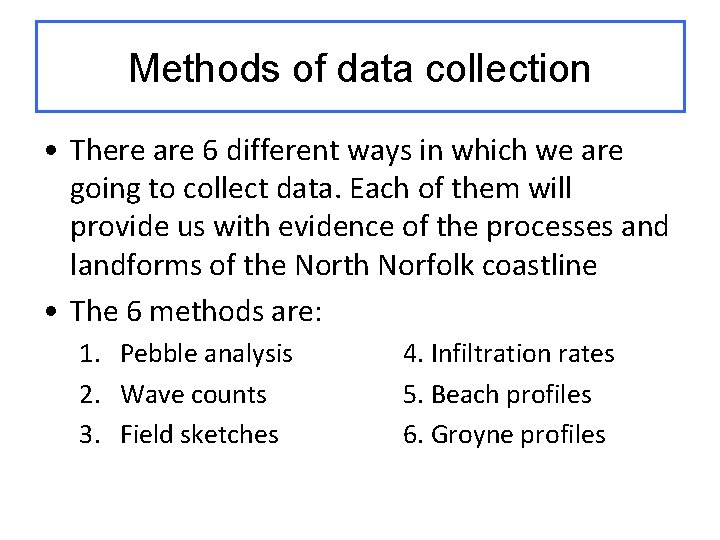
Methods of data collection • There are 6 different ways in which we are going to collect data. Each of them will provide us with evidence of the processes and landforms of the North Norfolk coastline • The 6 methods are: 1. Pebble analysis 2. Wave counts 3. Field sketches 4. Infiltration rates 5. Beach profiles 6. Groyne profiles
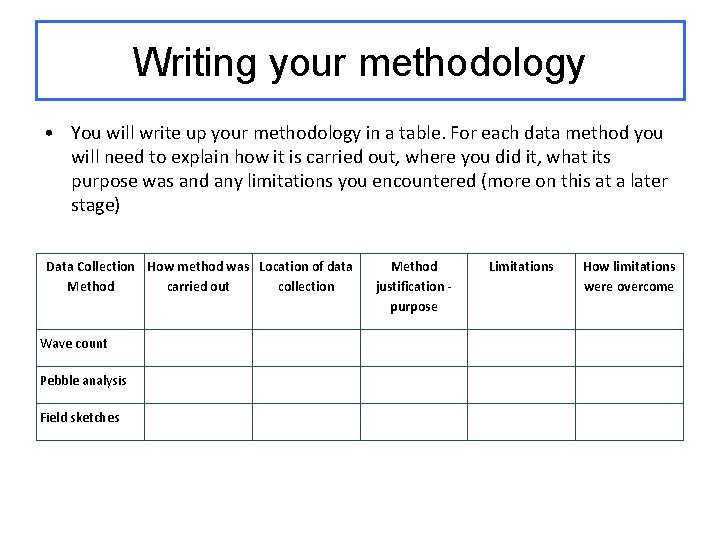
Writing your methodology • You will write up your methodology in a table. For each data method you will need to explain how it is carried out, where you did it, what its purpose was and any limitations you encountered (more on this at a later stage) Data Collection How method was Location of data Method carried out collection Method justification purpose Limitations How limitations were overcome Wave count Pebble analysis Field sketches
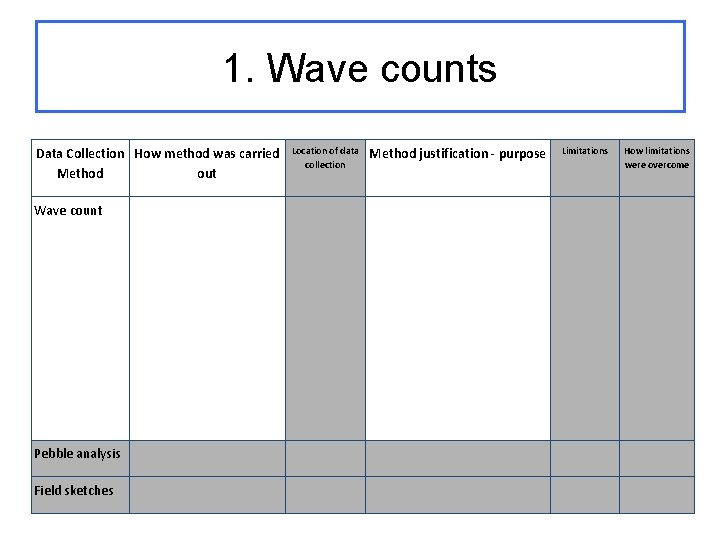
1. Wave counts Data Collection How method was carried Method out Location of data collection Limitations Method justification - purpose How limitations were overcome Wave count Pebble analysis Field sketches

1. Wave counts • There are multiple factors that affect the size of a wave and therefore whether it will be destructive or constructive • One way to measure whether waves are constructive or destructive is to count how often they are hitting the coast • If the wind is stronger and the fetch is larger (which create bigger, more destructive waves), the waves will also hit the coast at a higher frequency • By counting the number of waves that hit the coast in a minute we can therefore work out if waves are destructive or constructive and if erosion or deposition is occurring • 7 or more (? ) waves in a minute means destructive waves

1. Wave counts Data Collection How method was carried Method out Location of data collection Limitations Method justification - purpose How limitations were overcome Wave count Pebble analysis Field sketches

2. Pebble Analysis • Used to measure the size and roundness of pebbles along a transect of the beach • Every metre along the transect you pick up a pebble, measure its length (in cm) and decide on its roundness in relation to the ‘Power’s Index of Roundness’ • This will help you to measure the level of erosion taking place/that has taken place at this point along the coastline – the smoother and smaller the pebbles, the more erosion has happened

2. Pebble analysis Data Collection How method was carried Method out Wave count Location of data collection Limitations Method justification - purpose We stood in each location and counted the number of waves that hit the coastline in 1 minute By counting the number of waves we can tell if the waves are going to be destructive or constructive. If there are more than 6 waves a minute then… How limitations were overcome Pebble analysis Field sketches
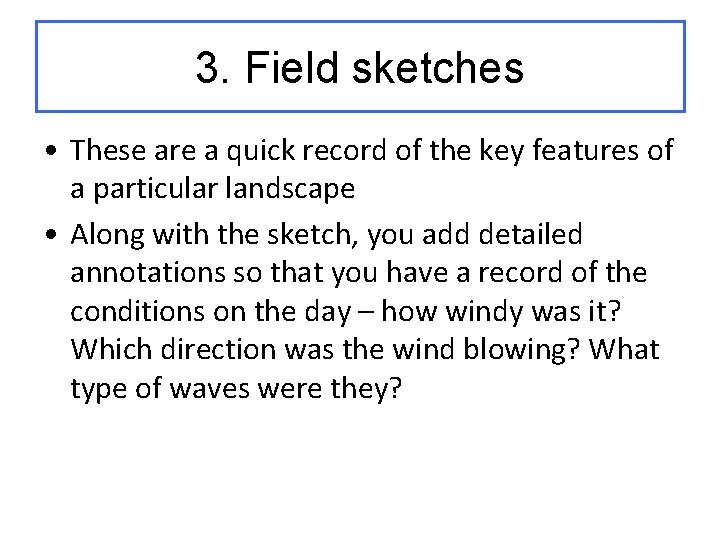
3. Field sketches • These are a quick record of the key features of a particular landscape • Along with the sketch, you add detailed annotations so that you have a record of the conditions on the day – how windy was it? Which direction was the wind blowing? What type of waves were they?
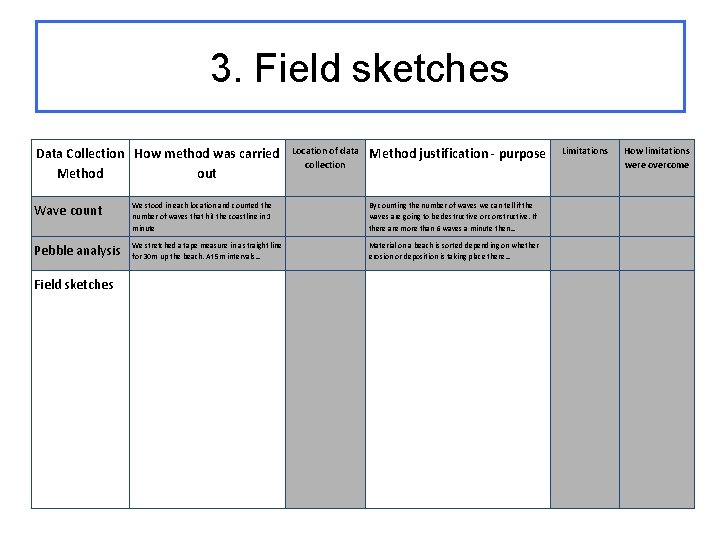
3. Field sketches Data Collection How method was carried Method out Location of data collection Limitations Method justification - purpose Wave count We stood in each location and counted the number of waves that hit the coastline in 1 minute By counting the number of waves we can tell if the waves are going to be destructive or constructive. If there are more than 6 waves a minute then… Pebble analysis We stretched a tape measure in a straight line for 30 m up the beach. At 5 m intervals… Material on a beach is sorted depending on whether erosion or deposition is taking place there… Field sketches How limitations were overcome
- Slides: 13