
Control Systems With Embedded Implementation CSEI Lecture1 Introduction
Control Systems With Embedded Implementation (CSEI) Lecture-1 Introduction to the Digital Control Systems Dr. Imtiaz Hussain Assistant Professor email: imtiaz. hussain@faculty. muet. edu. pk URL : http: //imtiazhussainkalwar. weebly. com/ 1
Lecture Outline • Introduction • Difference Equations • Review of Z-Transform • Inverse Z-transform • Relations between s-plane and z-plane • Solution of difference Equations 2
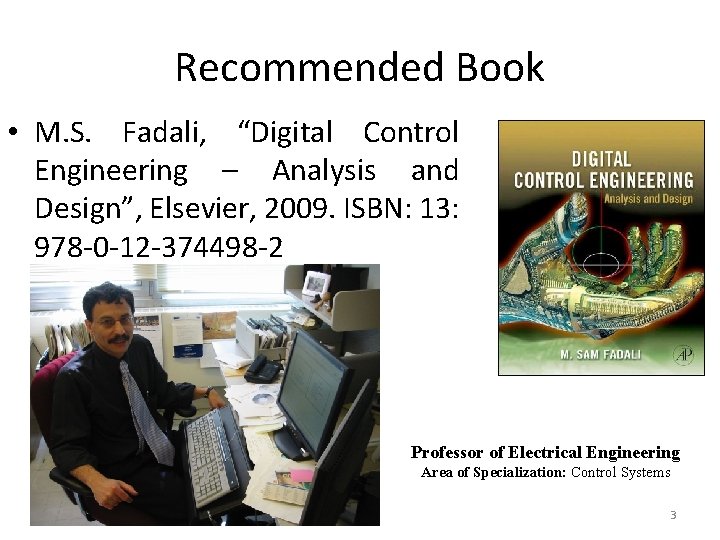
Recommended Book • M. S. Fadali, “Digital Control Engineering – Analysis and Design”, Elsevier, 2009. ISBN: 13: 978 -0 -12 -374498 -2 Professor of Electrical Engineering Area of Specialization: Control Systems 3
Introduction • Digital control offers distinct advantages over analog control that explain its popularity. • Accuracy: Digital signals are more accurate than their analogue counterparts. • Implementation Errors: Implementation errors are negligible. • Flexibility: Modification of a digital controller is possible without complete replacement. • Speed: Digital computers may yield superior performance at very fast speeds • Cost: Digital controllers are more economical than analogue controllers. 4

Structure of a Digital Control System 5
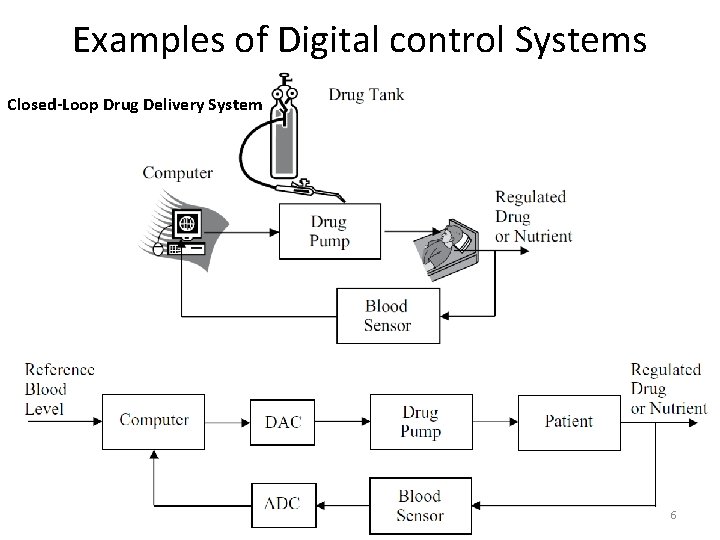
Examples of Digital control Systems Closed-Loop Drug Delivery System 6
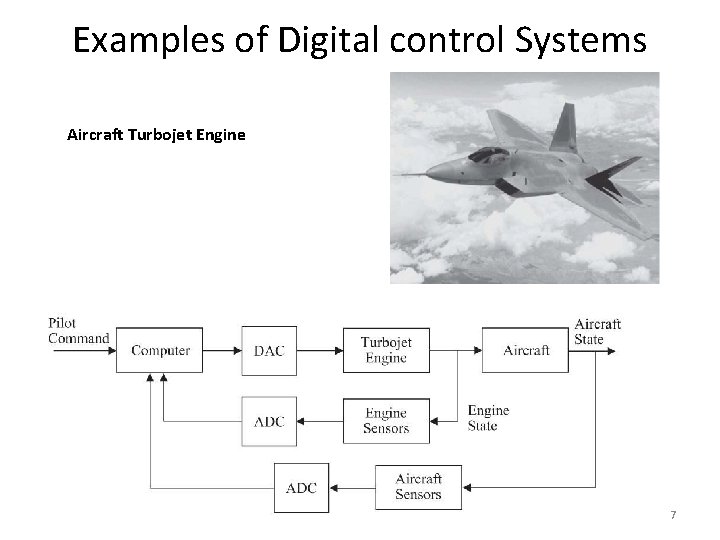
Examples of Digital control Systems Aircraft Turbojet Engine 7
Difference Equation vs Differential Equation • A difference equation expresses the change in some variable as a result of a finite change in another variable. • A differential equation expresses the change in some variable as a result of an infinitesimal change in another variable. 8
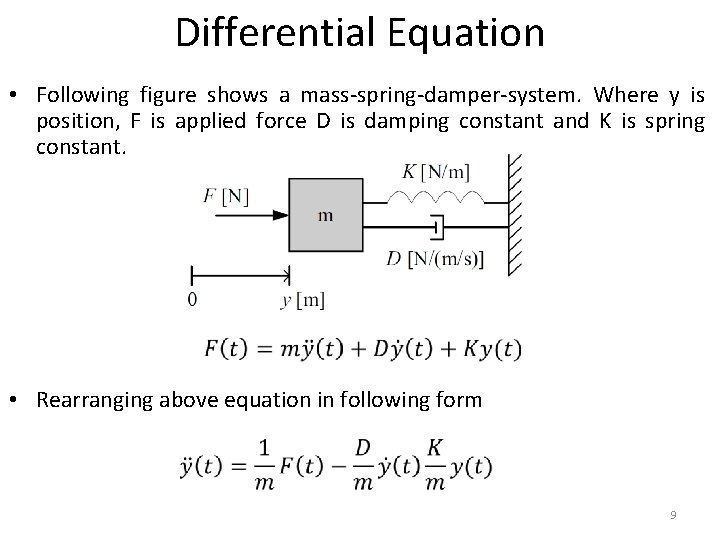
Differential Equation • Following figure shows a mass-spring-damper-system. Where y is position, F is applied force D is damping constant and K is spring constant. • Rearranging above equation in following form 9
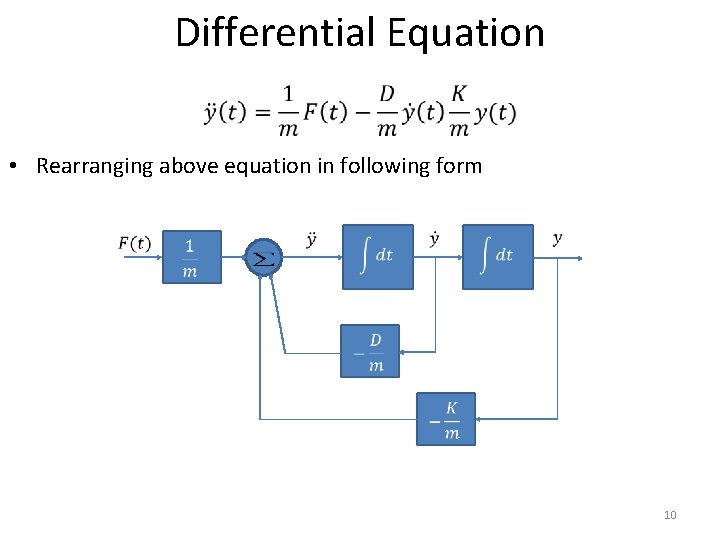
Differential Equation • Rearranging above equation in following form 10
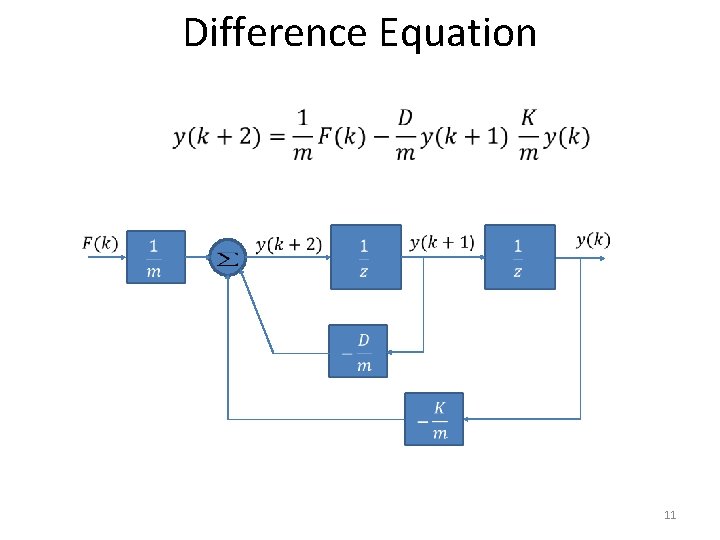
Difference Equation 11
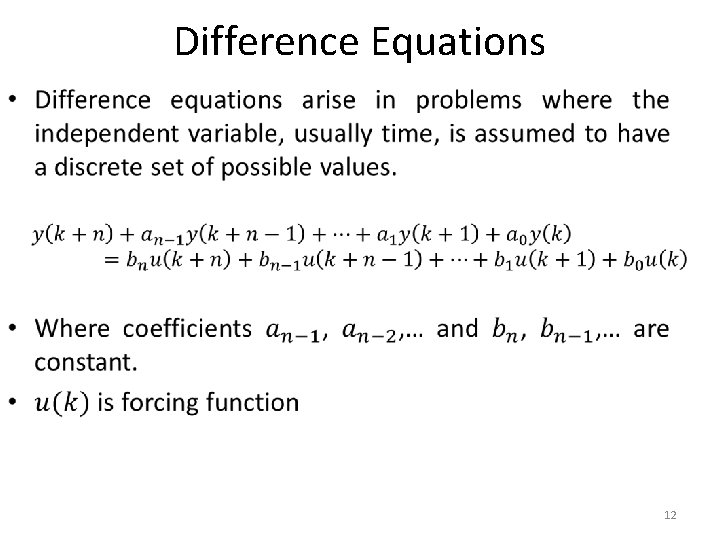
Difference Equations • 12
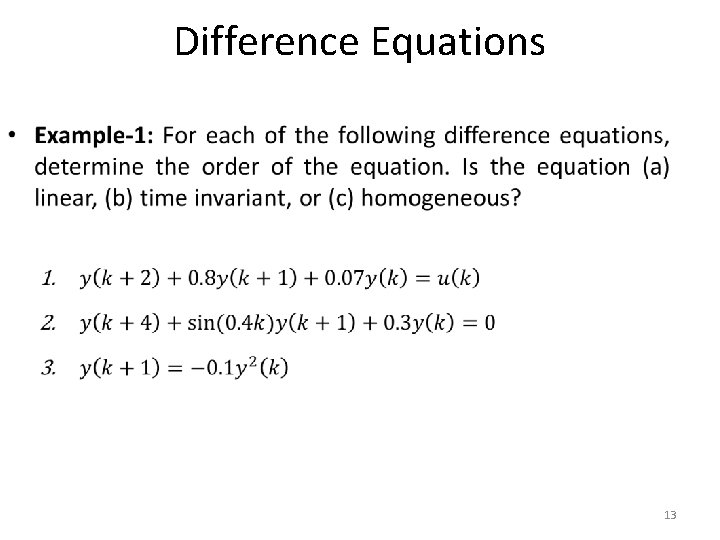
Difference Equations • 13
Z-Transform • Difference equations can be solved using classical methods analogous to those available for differential equations. • Alternatively, z-transforms provide a convenient approach for solving LTI equations. • The z-transform is an important tool in the analysis and design of discrete-time systems. • It simplifies the solution of discrete-time problems by converting LTI difference equations to algebraic equations and convolution to multiplication. • Thus, it plays a role similar to that served by Laplace transforms in continuous-time problems. 14
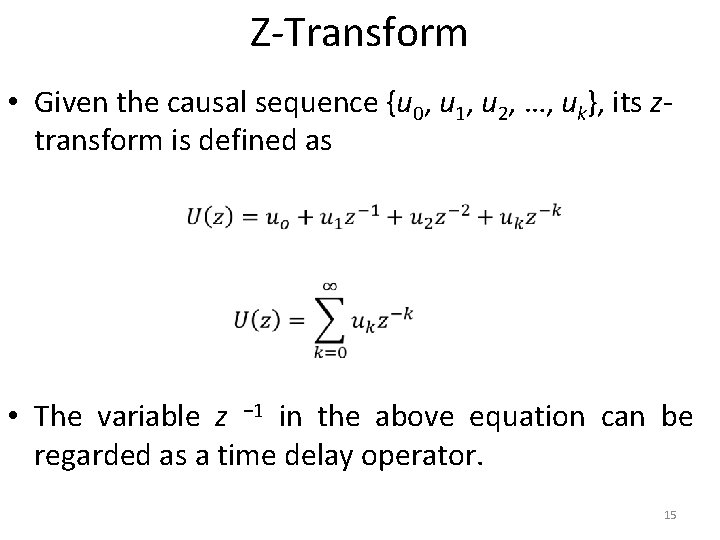
Z-Transform • Given the causal sequence {u 0, u 1, u 2, …, uk}, its ztransform is defined as • The variable z − 1 in the above equation can be regarded as a time delay operator. 15
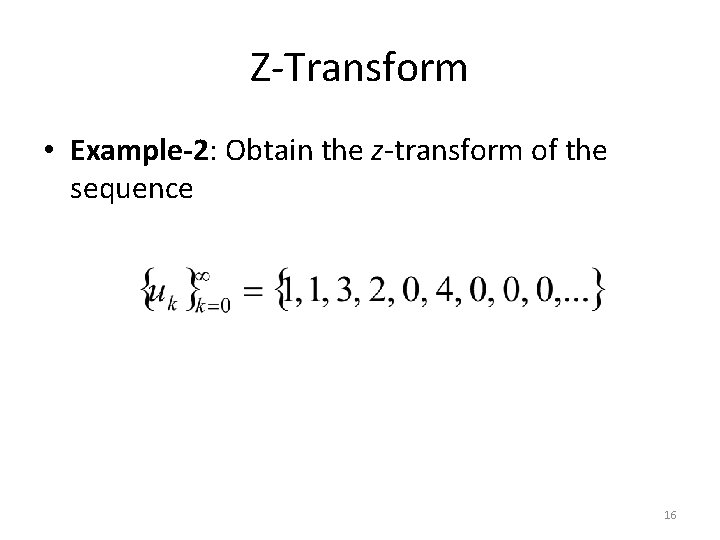
Z-Transform • Example-2: Obtain the z-transform of the sequence 16
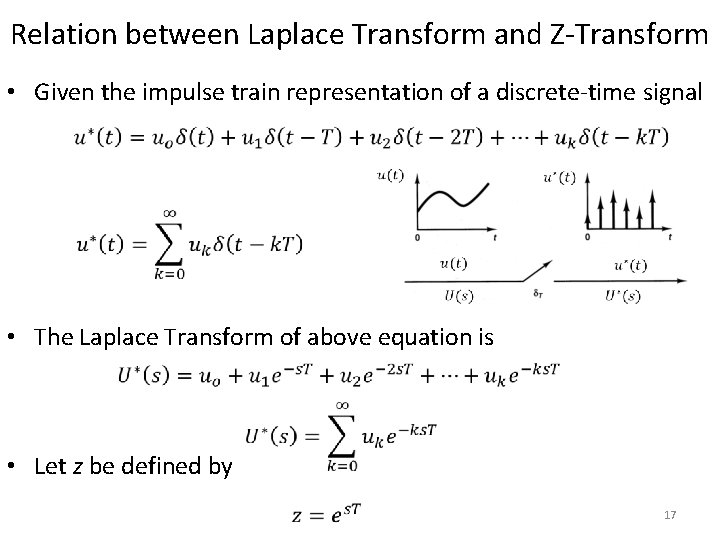
Relation between Laplace Transform and Z-Transform • Given the impulse train representation of a discrete-time signal • The Laplace Transform of above equation is • Let z be defined by 17
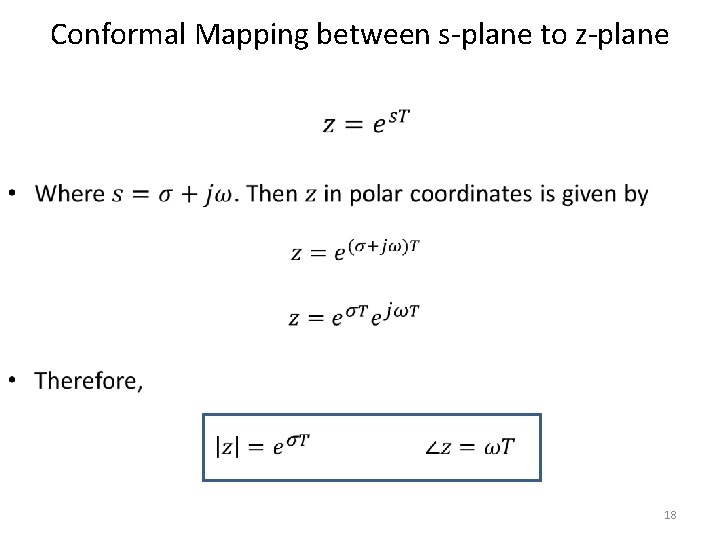
Conformal Mapping between s-plane to z-plane • 18
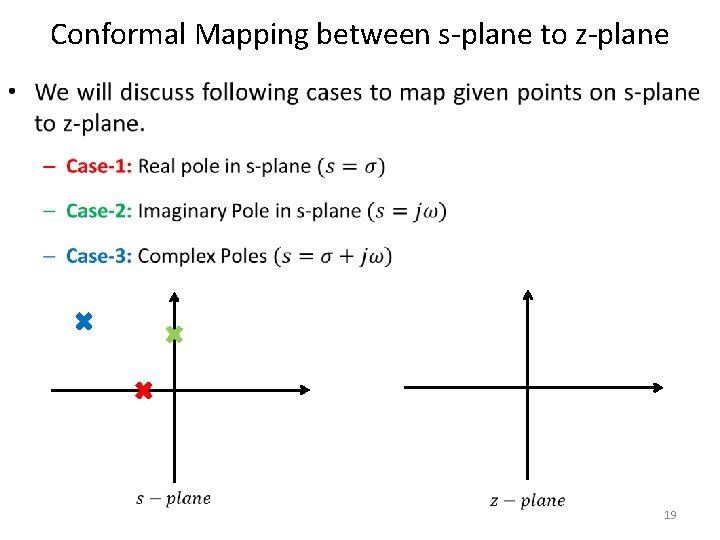
Conformal Mapping between s-plane to z-plane • 19
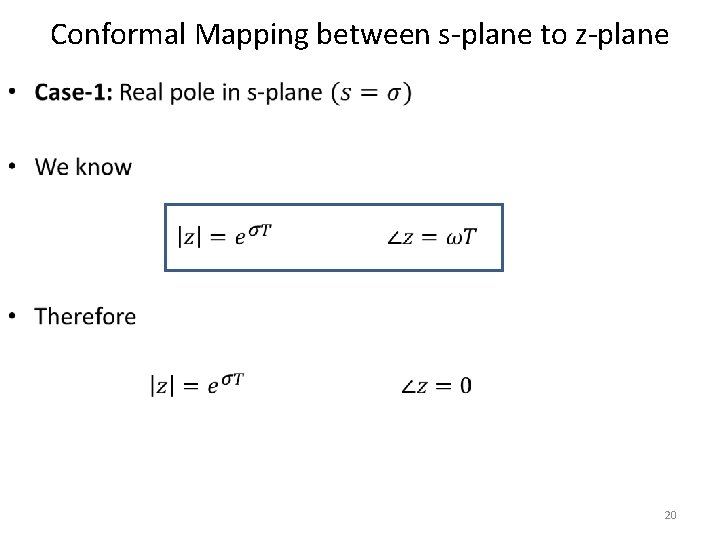
Conformal Mapping between s-plane to z-plane • 20
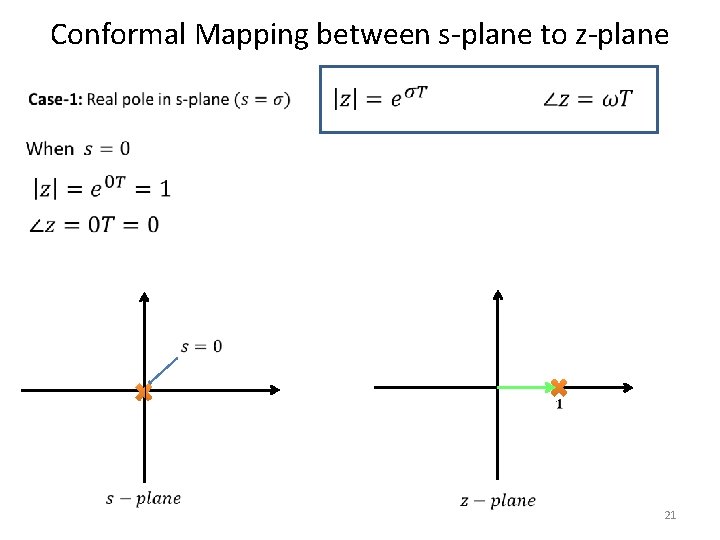
Conformal Mapping between s-plane to z-plane 21
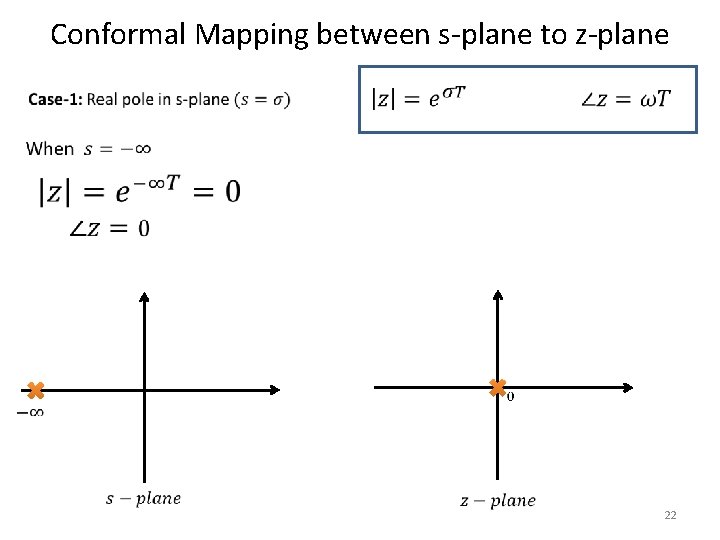
Conformal Mapping between s-plane to z-plane 22
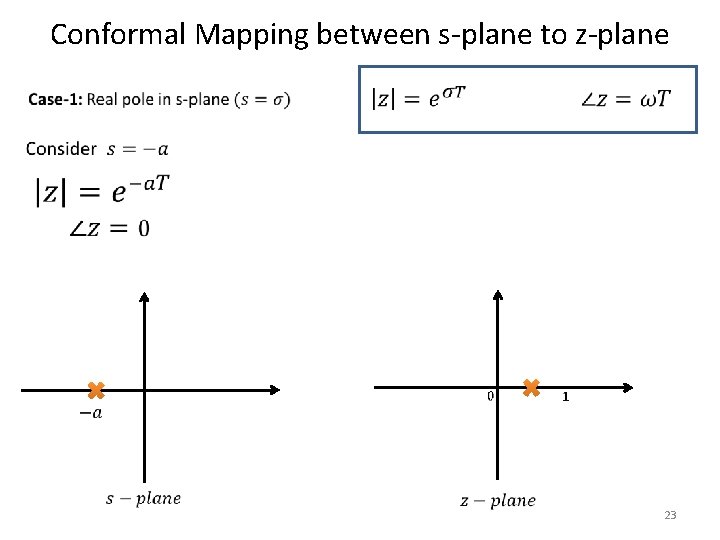
Conformal Mapping between s-plane to z-plane 23
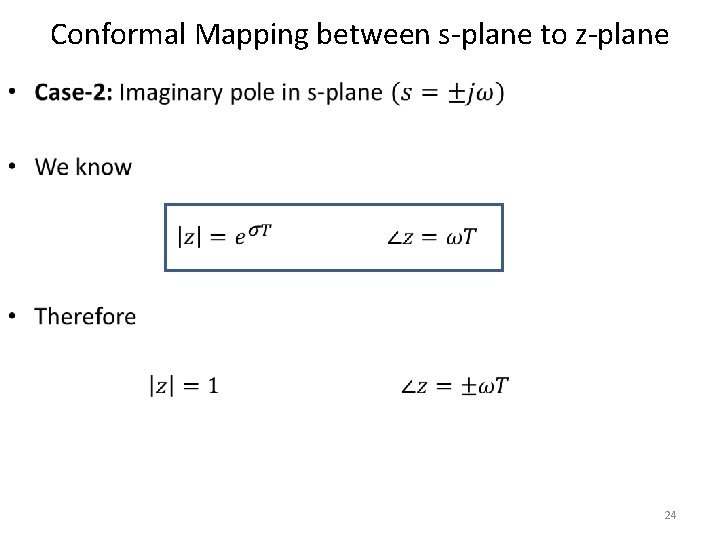
Conformal Mapping between s-plane to z-plane • 24
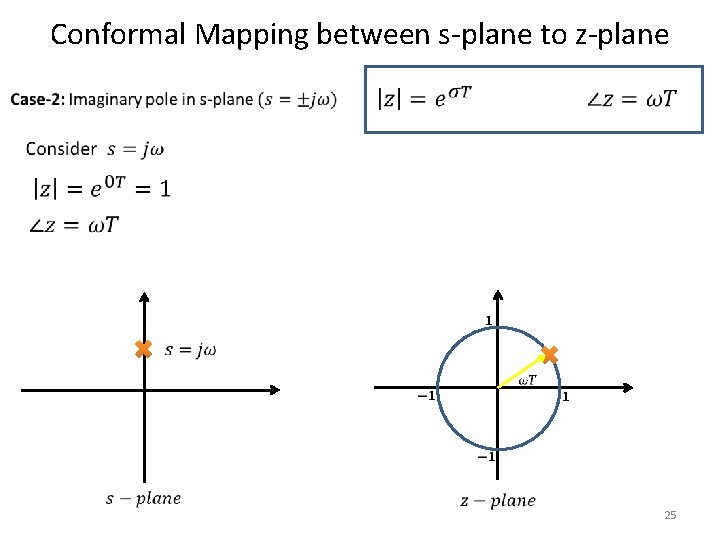
Conformal Mapping between s-plane to z-plane 25
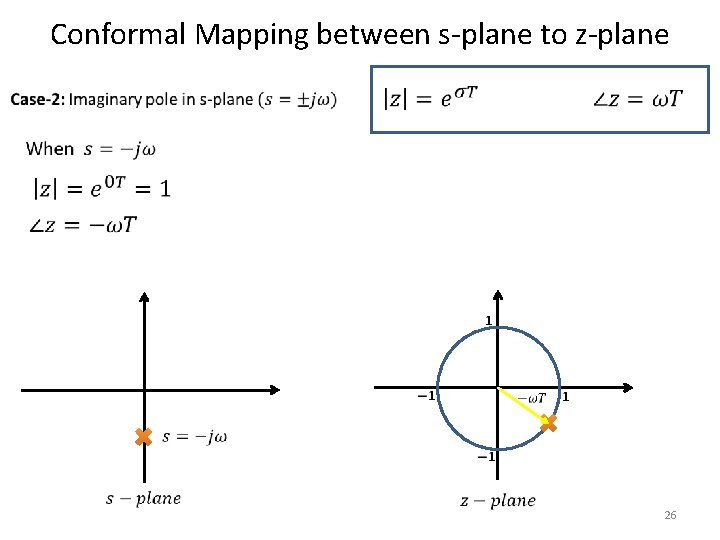
Conformal Mapping between s-plane to z-plane 26
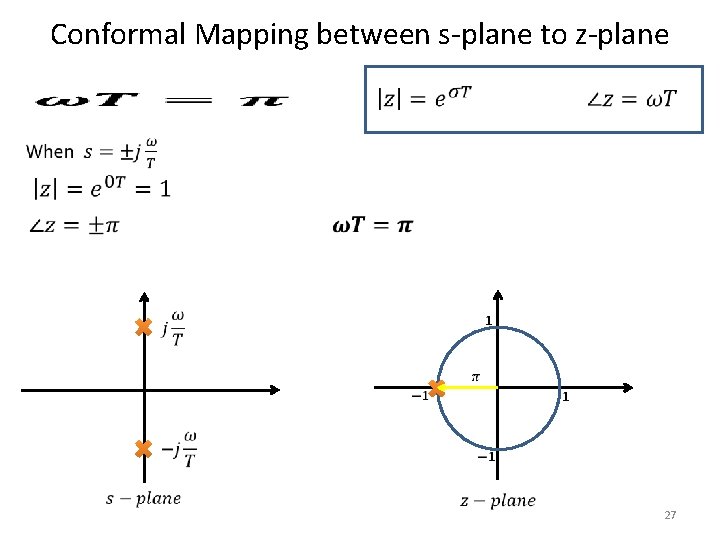
Conformal Mapping between s-plane to z-plane 27
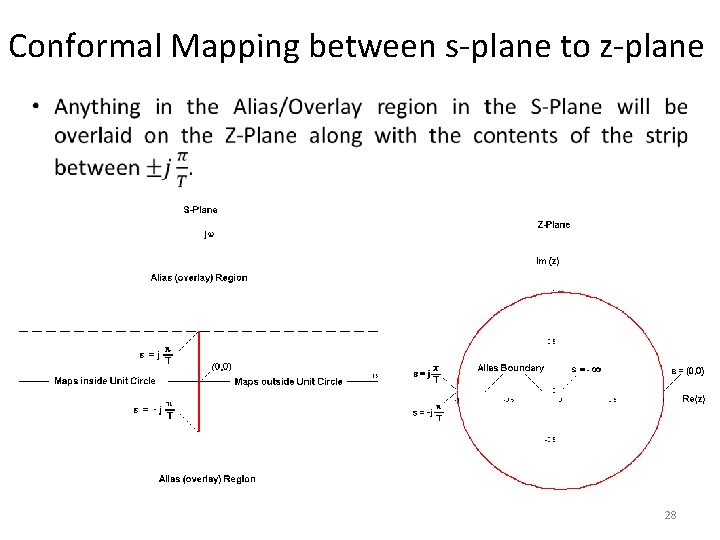
Conformal Mapping between s-plane to z-plane 28
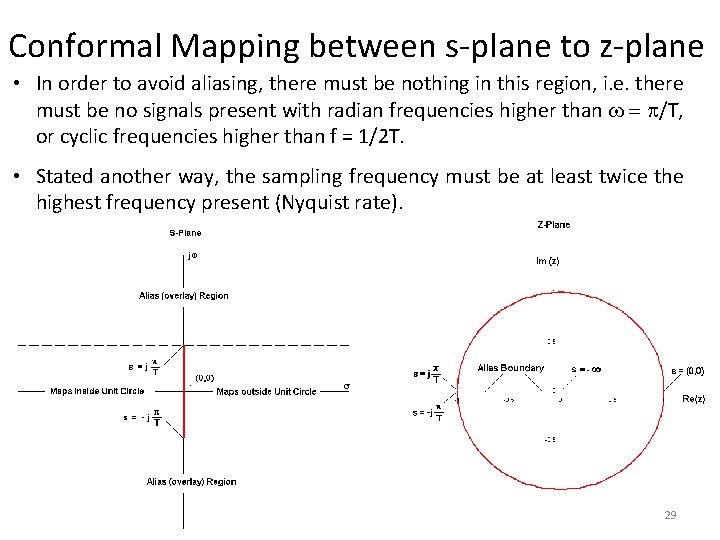
Conformal Mapping between s-plane to z-plane • In order to avoid aliasing, there must be nothing in this region, i. e. there must be no signals present with radian frequencies higher than w = p/T, or cyclic frequencies higher than f = 1/2 T. • Stated another way, the sampling frequency must be at least twice the highest frequency present (Nyquist rate). 29
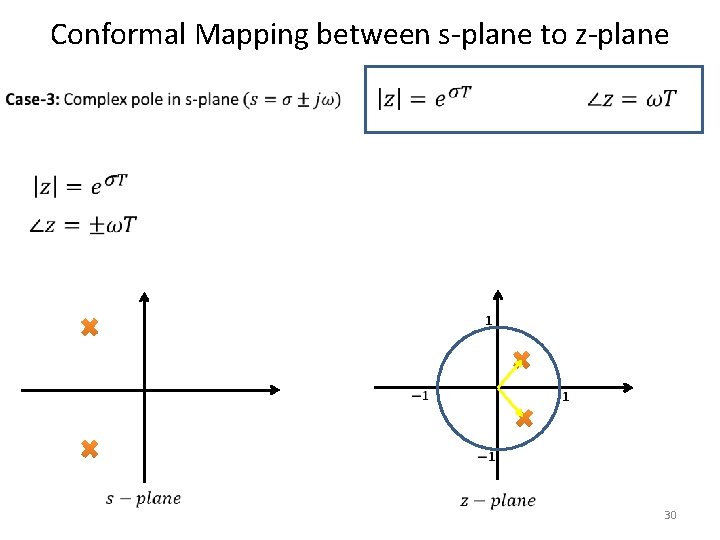
Conformal Mapping between s-plane to z-plane 30
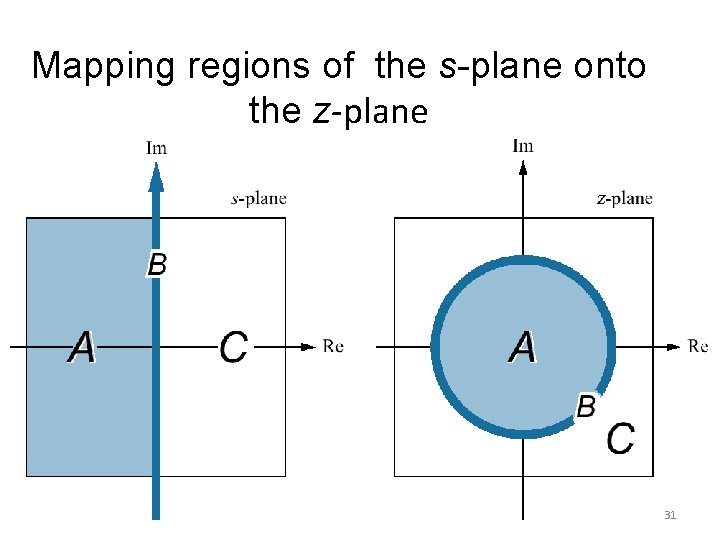
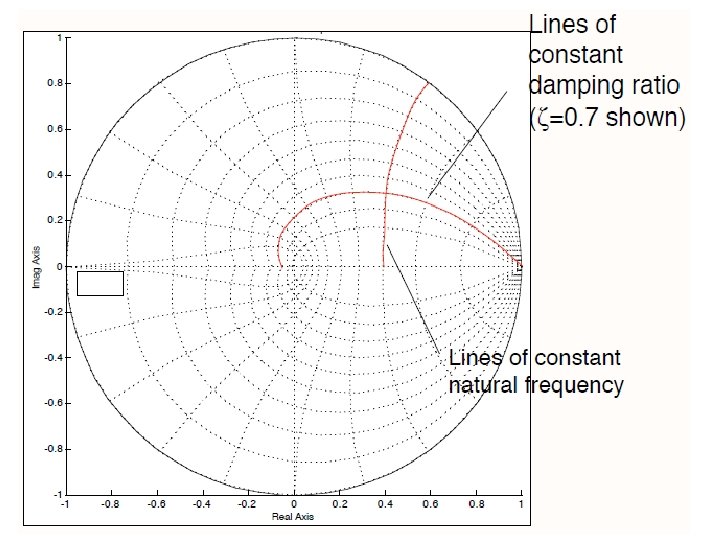
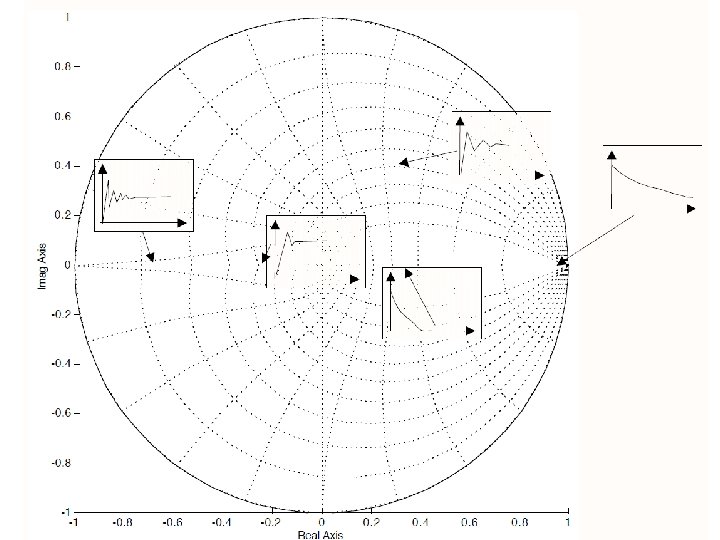
Mapping regions of the s-plane onto the z-plane 31
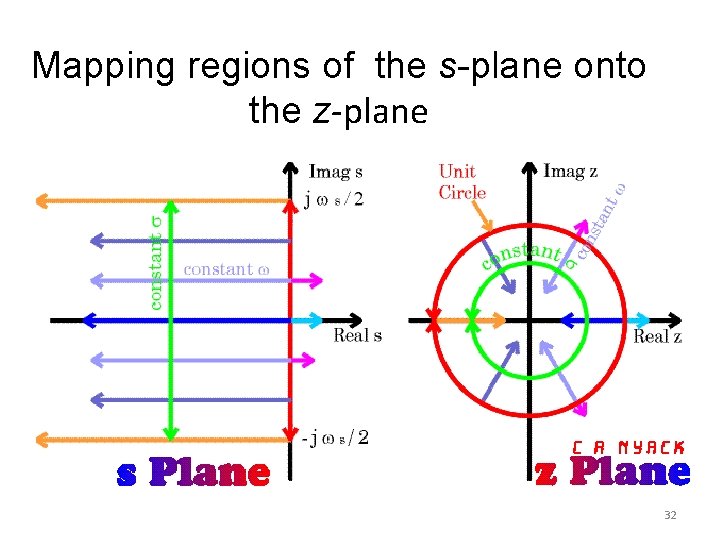
Mapping regions of the s-plane onto the z-plane 32
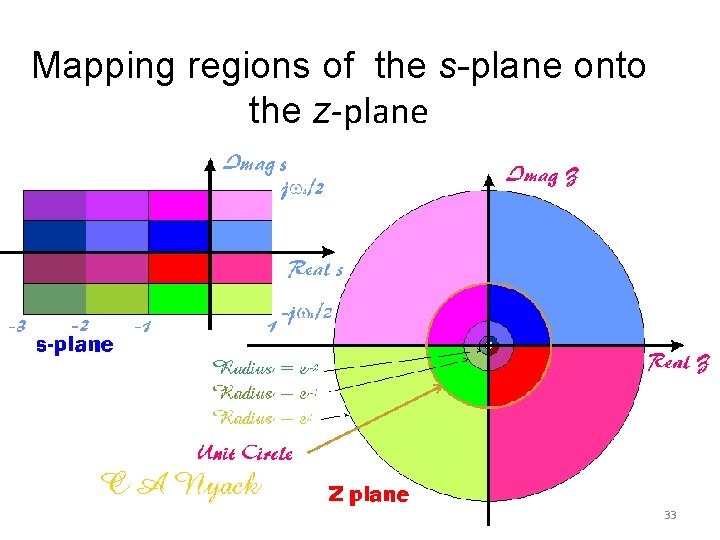
Mapping regions of the s-plane onto the z-plane 33
34
35
Example-3 • 36
z-Transforms of Standard Discrete-Time Signals • The following identities are used repeatedly to derive several important results. 37
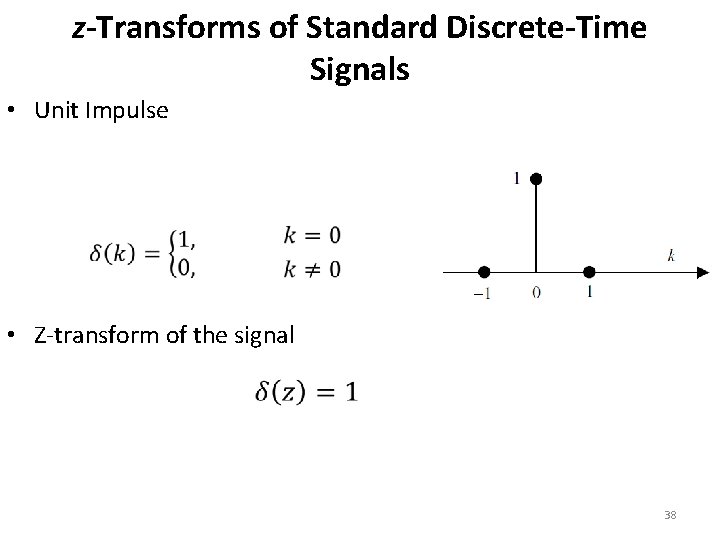
z-Transforms of Standard Discrete-Time Signals • Unit Impulse • Z-transform of the signal 38
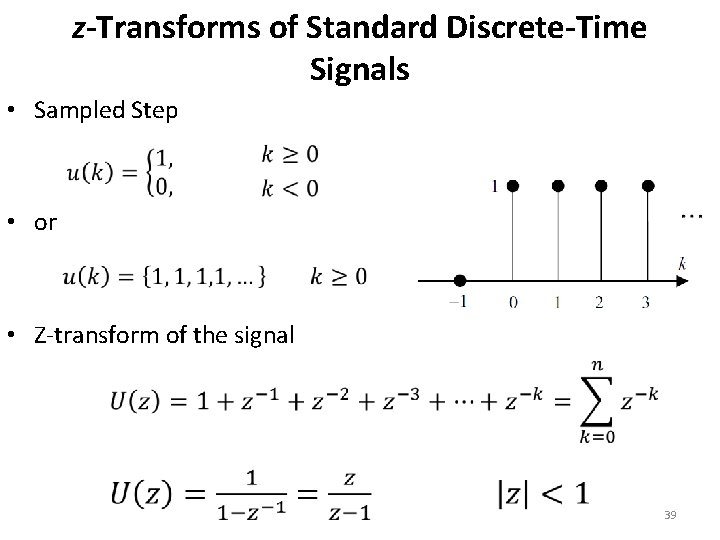
z-Transforms of Standard Discrete-Time Signals • Sampled Step • or • Z-transform of the signal 39
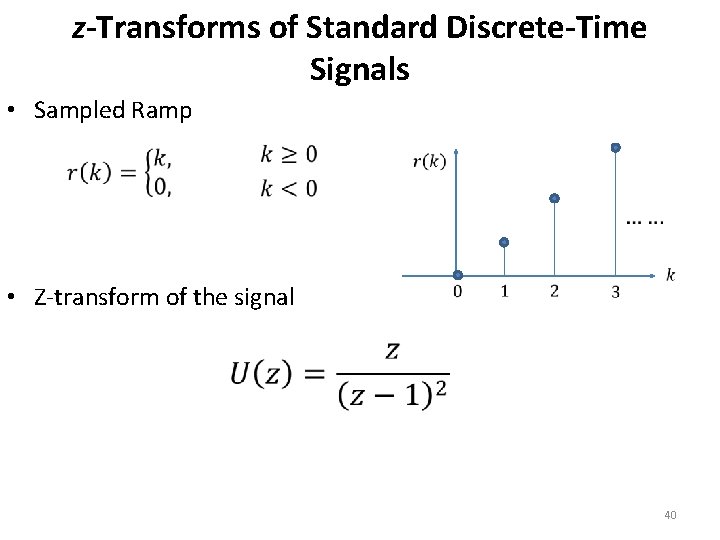
z-Transforms of Standard Discrete-Time Signals • Sampled Ramp • Z-transform of the signal 40
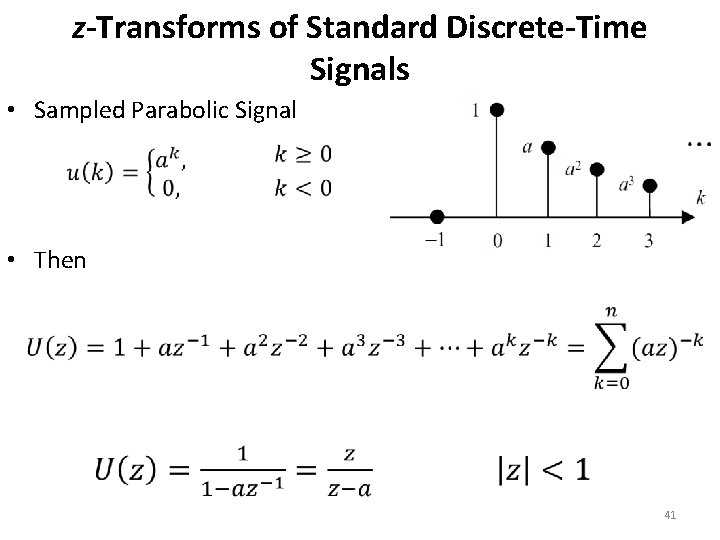
z-Transforms of Standard Discrete-Time Signals • Sampled Parabolic Signal • Then 41
Inverse Z-transform 1. Long Division: We first use long division to obtain as many terms as desired of the ztransform expansion. 2. Partial Fraction: This method is almost identical to that used in inverting Laplace transforms. However, because most z-functions have the term z in their numerator, it is often convenient to expand F(z)/z rather than F(z). 42
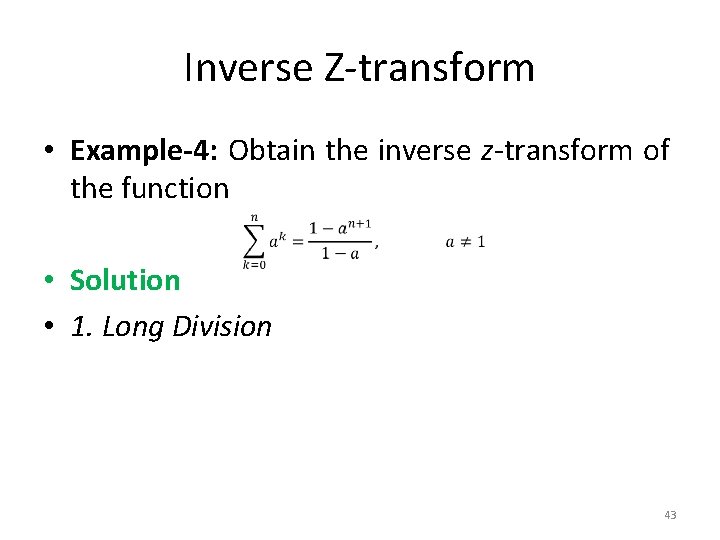
Inverse Z-transform • Example-4: Obtain the inverse z-transform of the function • Solution • 1. Long Division 43
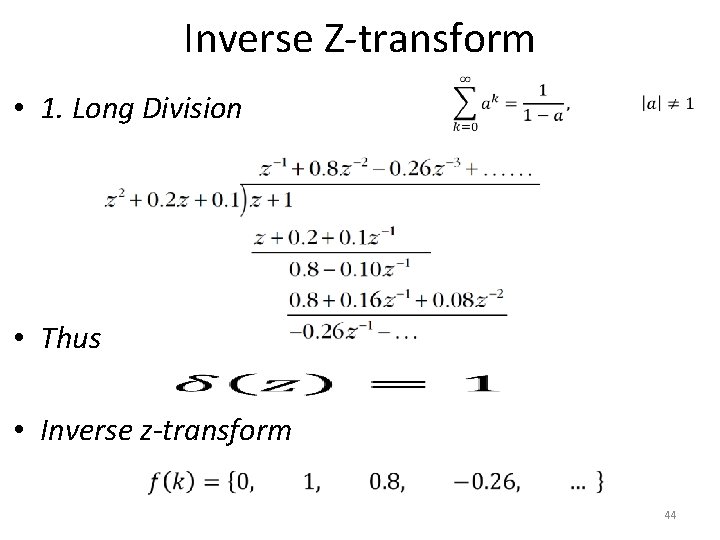
Inverse Z-transform • 1. Long Division • Thus • Inverse z-transform 44
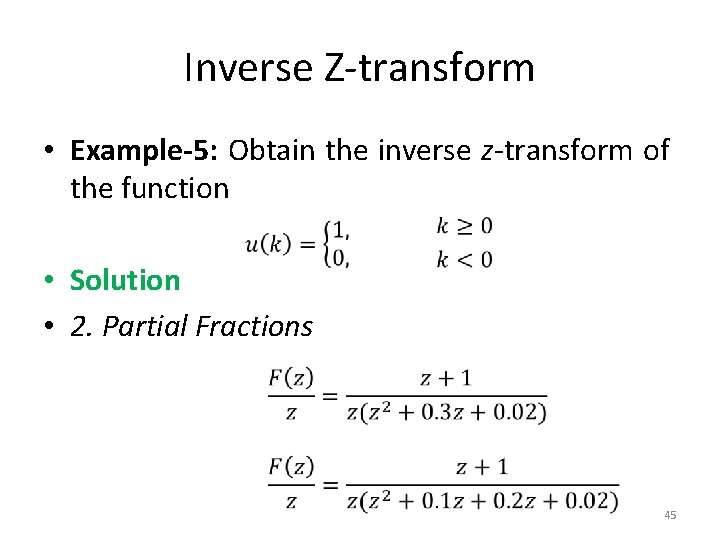
Inverse Z-transform • Example-5: Obtain the inverse z-transform of the function • Solution • 2. Partial Fractions 45
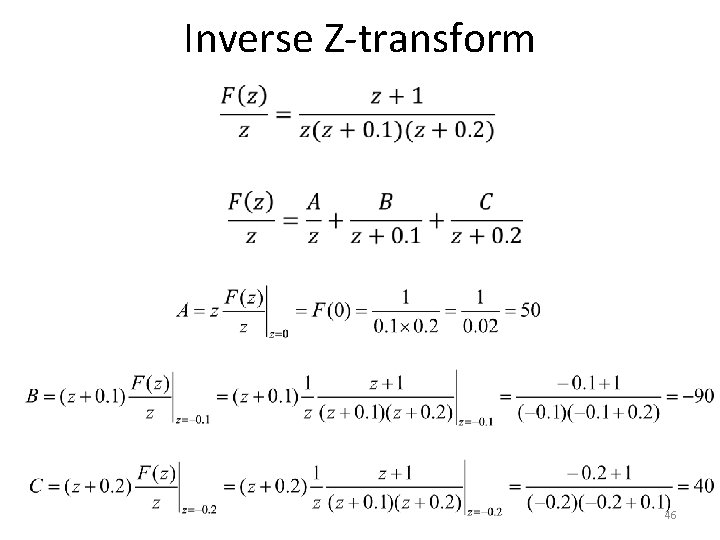
Inverse Z-transform 46
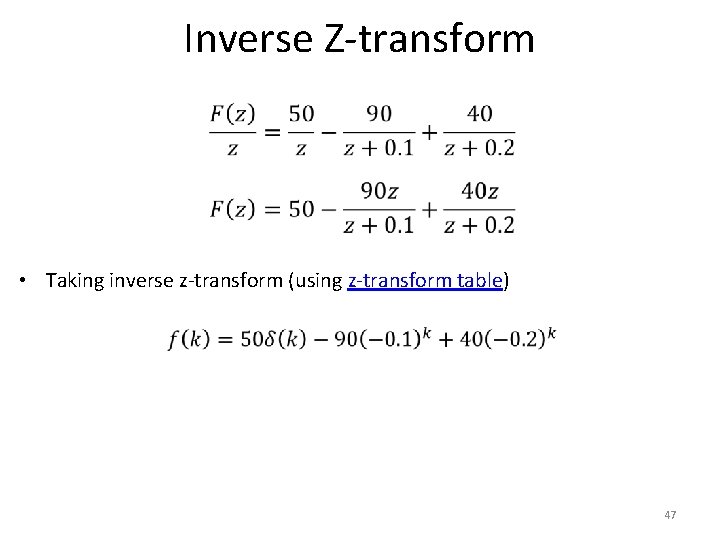
Inverse Z-transform • Taking inverse z-transform (using z-transform table) 47
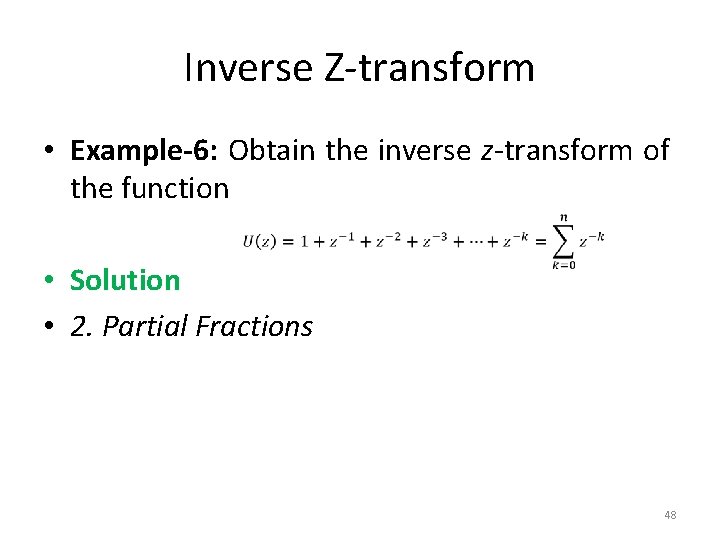
Inverse Z-transform • Example-6: Obtain the inverse z-transform of the function • Solution • 2. Partial Fractions 48
Z-transform solution of Difference Equations • By a process analogous to Laplace transform solution of differential equations, one can easily solve linear difference equations. 1. The equations are first transformed to the z-domain (i. e. , both the right- and left-hand side of the equation are ztransformed). 2. Then the variable of interest is solved. 3. Finally inverse z-transformed is computed. 49
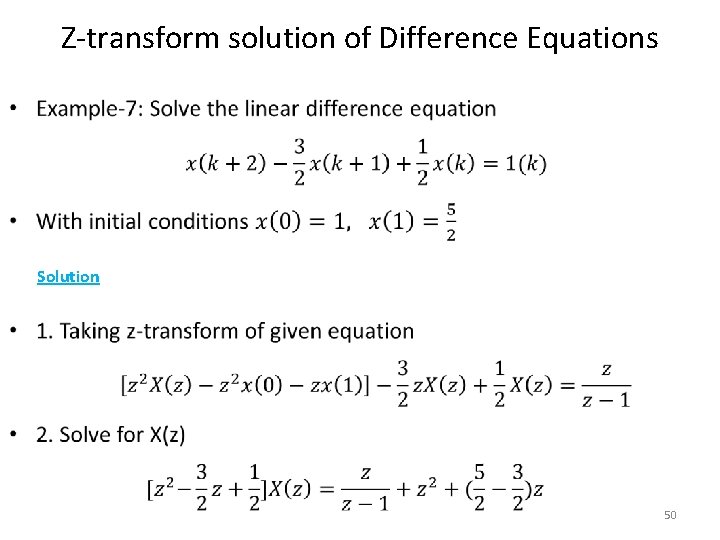
Z-transform solution of Difference Equations • Solution 50
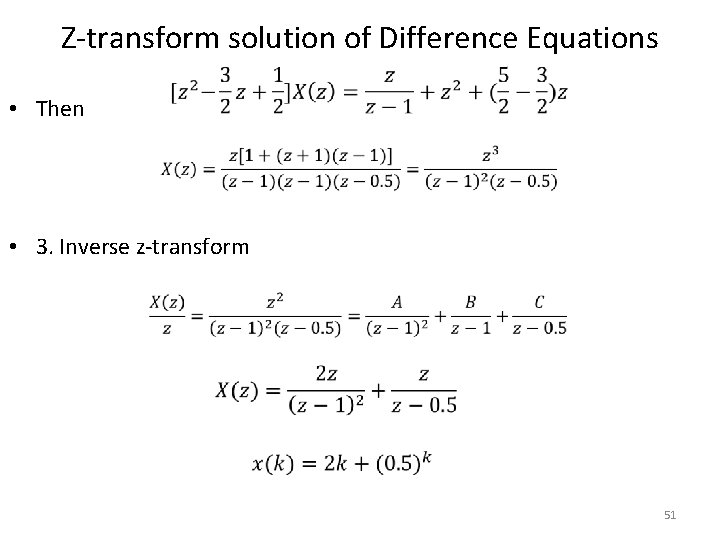
Z-transform solution of Difference Equations • Then • 3. Inverse z-transform 51
To download this lecture visit http: //imtiazhussainkalwar. weebly. com/ END OF LECTURE-1 52
- Slides: 52