
Control Systems in Plants Plant Hormones What is
![Ethylene • Gaseous hormone • High [auxin] induces release of ethylene • Causes senescence](https://slidetodoc.com/presentation_image_h/7fe4d1fdcde495a8732d03996fa14621/image-14.jpg "Ethylene • Gaseous hormone • High [auxin] induces release of ethylene • Causes senescence")
- Slides: 22
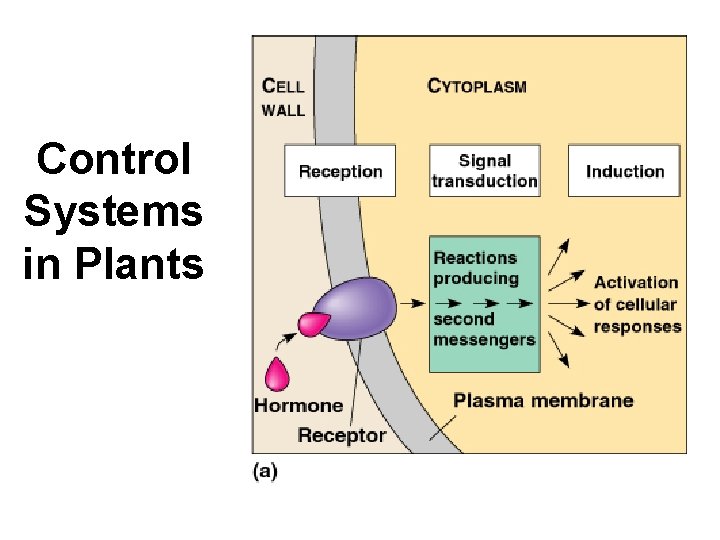
Control Systems in Plants
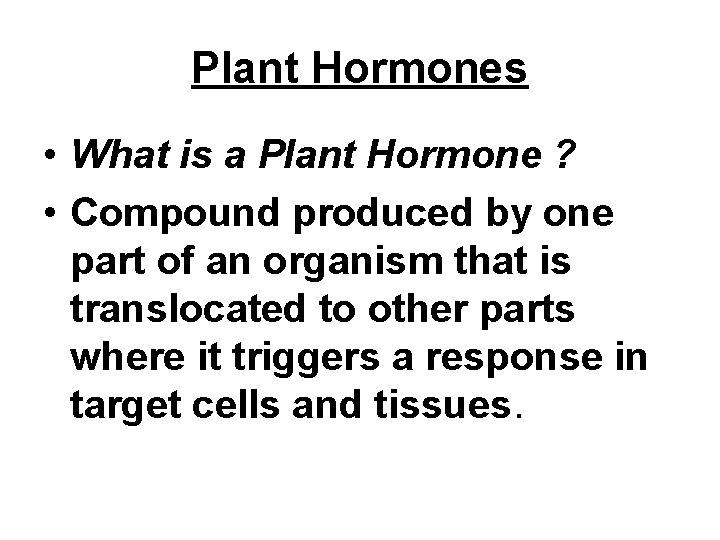
Plant Hormones • What is a Plant Hormone ? • Compound produced by one part of an organism that is translocated to other parts where it triggers a response in target cells and tissues.
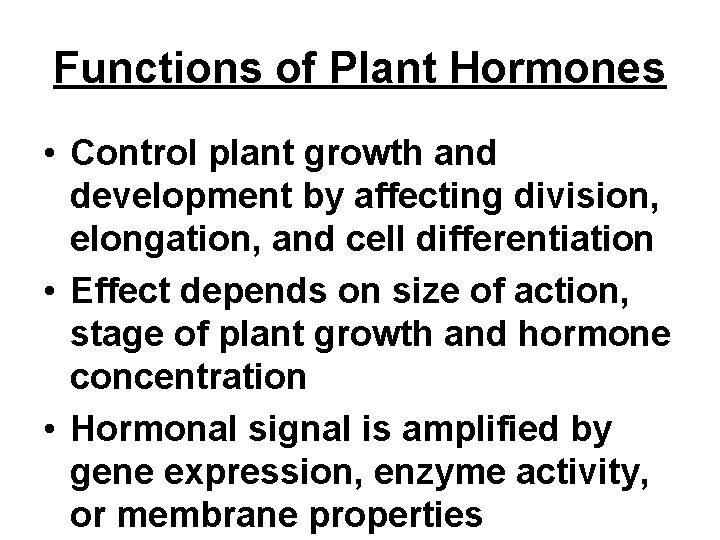
Functions of Plant Hormones • Control plant growth and development by affecting division, elongation, and cell differentiation • Effect depends on size of action, stage of plant growth and hormone concentration • Hormonal signal is amplified by gene expression, enzyme activity, or membrane properties
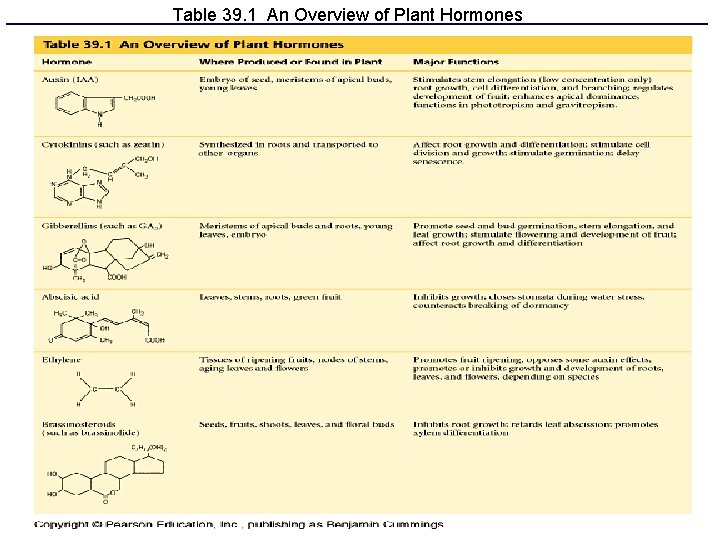
Table 39. 1 An Overview of Plant Hormones
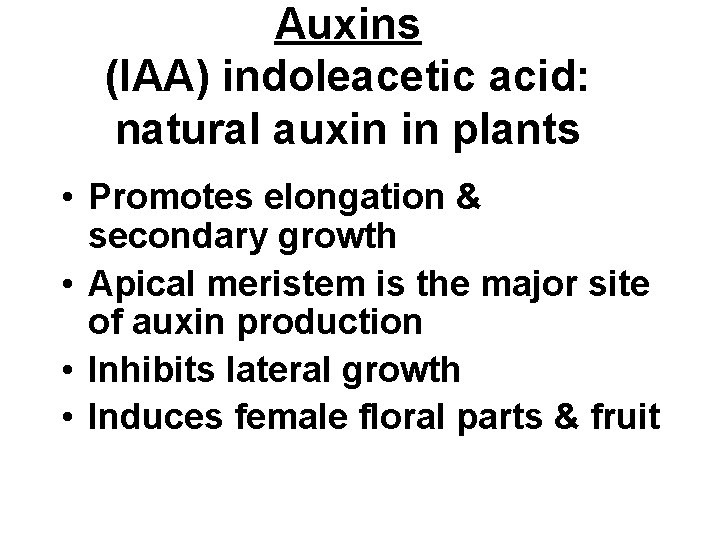
Auxins (IAA) indoleacetic acid: natural auxin in plants • Promotes elongation & secondary growth • Apical meristem is the major site of auxin production • Inhibits lateral growth • Induces female floral parts & fruit
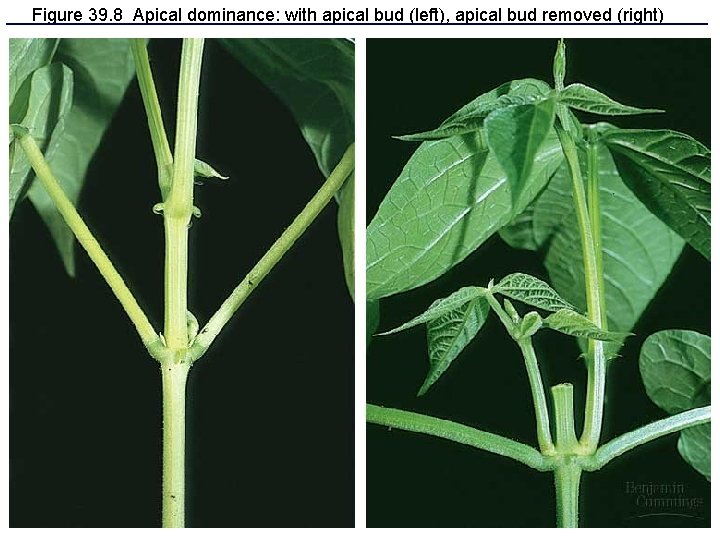
Figure 39. 8 Apical dominance: with apical bud (left), apical bud removed (right)
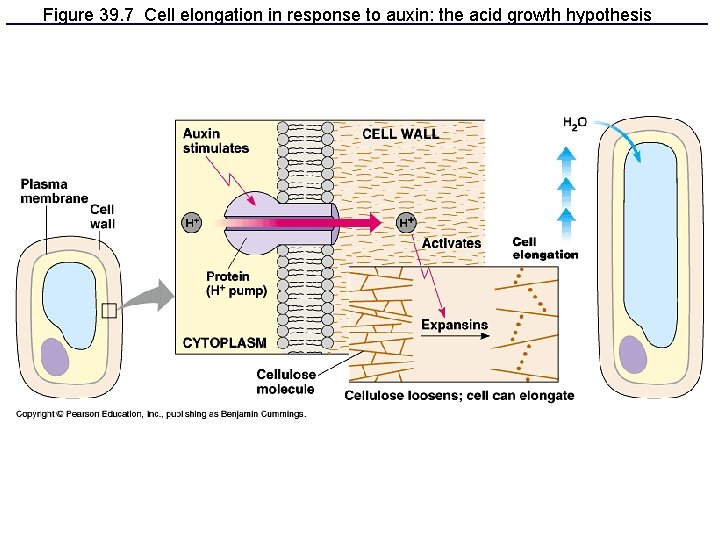
Figure 39. 7 Cell elongation in response to auxin: the acid growth hypothesis
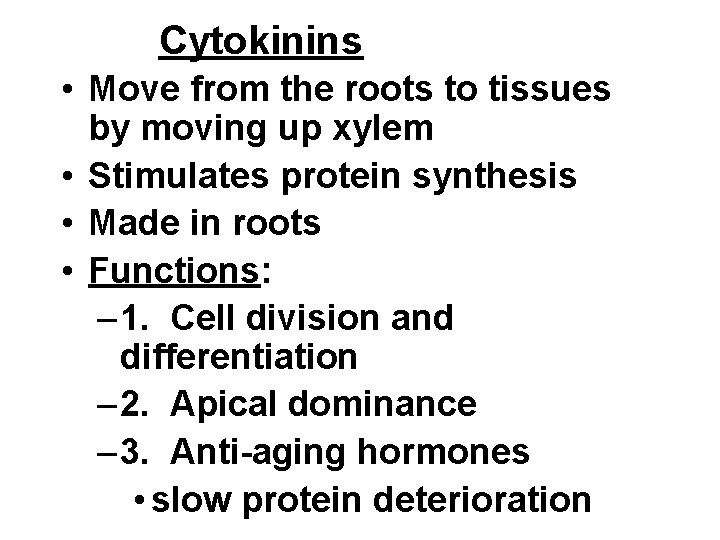
Cytokinins • Move from the roots to tissues by moving up xylem • Stimulates protein synthesis • Made in roots • Functions: – 1. Cell division and differentiation – 2. Apical dominance – 3. Anti-aging hormones • slow protein deterioration
Gibberellins • Stimulate elongation of cells • Inhibits root growth • Stimulate flower part development- bolting • Signals seeds to break dormancy and germinate
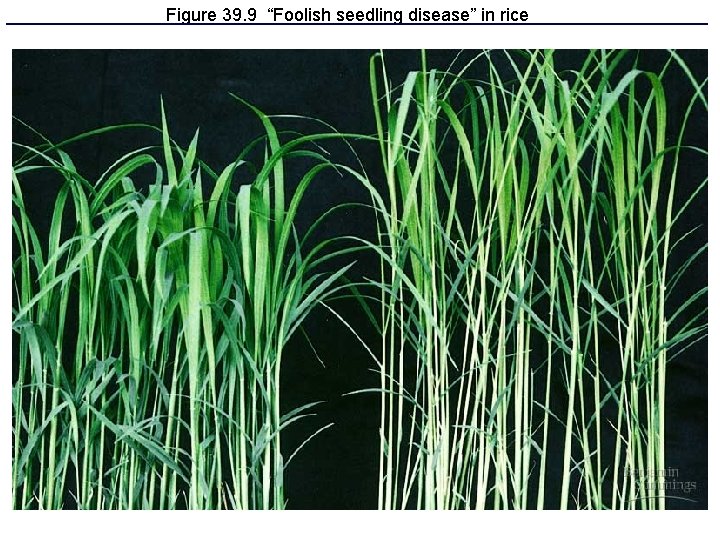
Figure 39. 9 “Foolish seedling disease” in rice
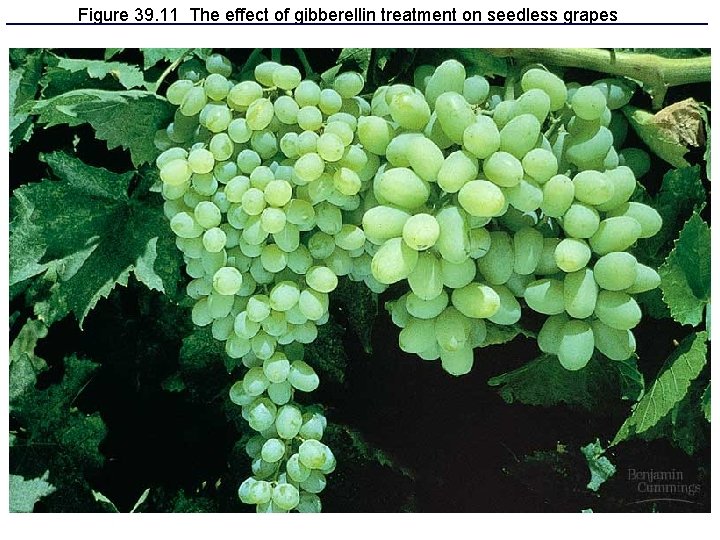
Figure 39. 11 The effect of gibberellin treatment on seedless grapes
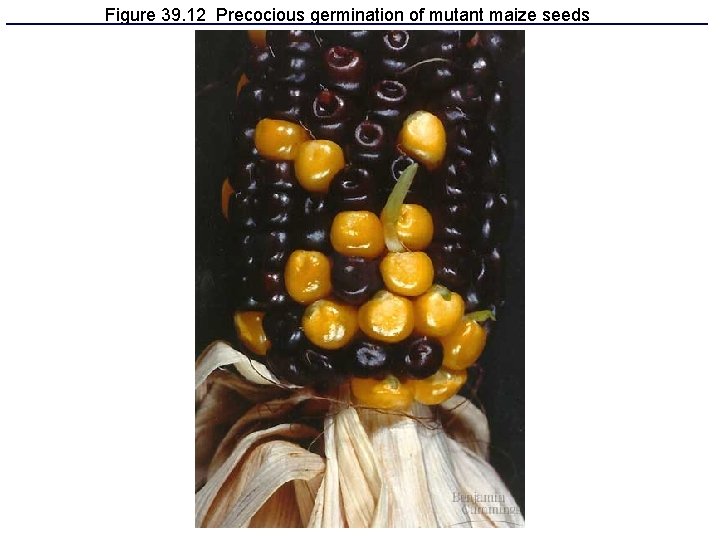
Abscisic Acid (ABA) • Growth inhibitor • returns seeds to dormancy • inhibits cell division in vascular cambium • causes rapid closing of stoma during dry periods • promotes positive geotropism
Figure 39. 12 Precocious germination of mutant maize seeds
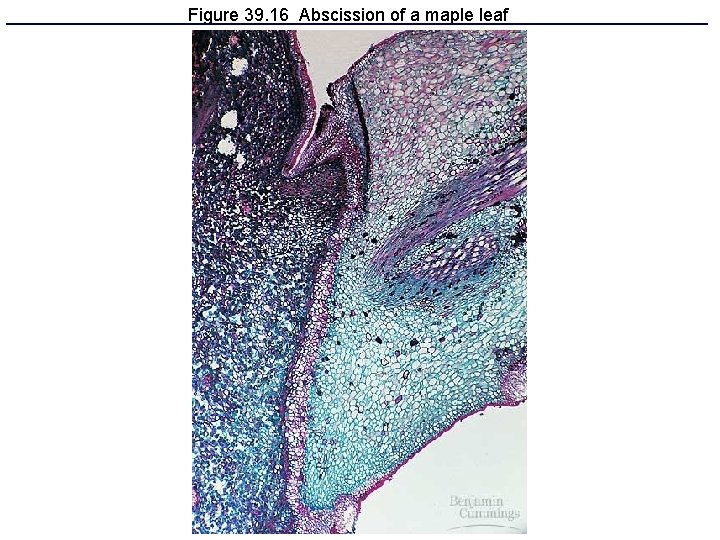
Ethylene • Gaseous hormone • High [auxin] induces release of ethylene • Causes senescence (aging) • Fruit ripening – one bad apple does spoil the whole bunch • Abscission – loss of leaves on deciduous trees
Figure 39. 16 Abscission of a maple leaf
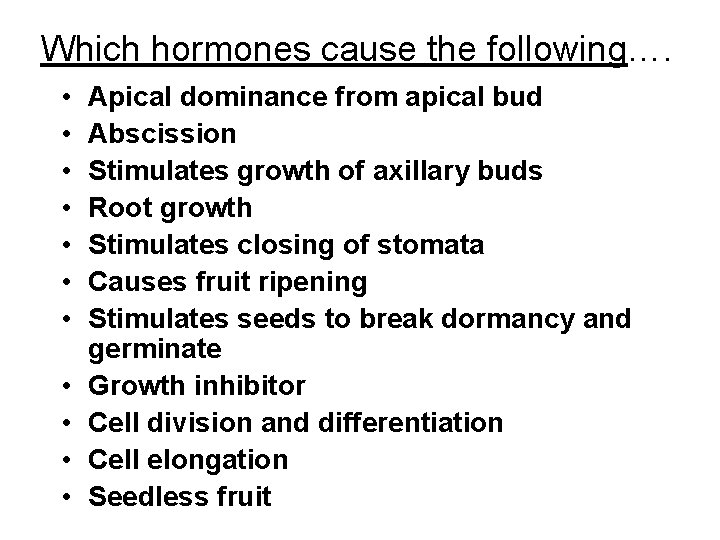
Which hormones cause the following…. • • • Apical dominance from apical bud Abscission Stimulates growth of axillary buds Root growth Stimulates closing of stomata Causes fruit ripening Stimulates seeds to break dormancy and germinate Growth inhibitor Cell division and differentiation Cell elongation Seedless fruit
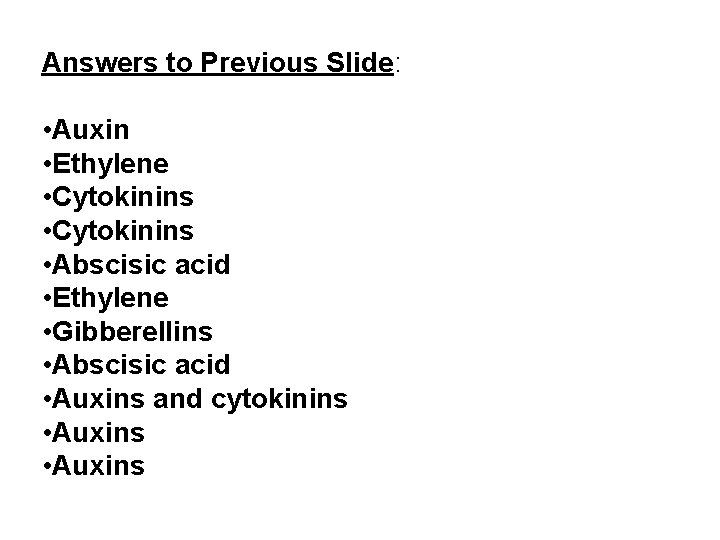
Answers to Previous Slide: • Auxin • Ethylene • Cytokinins • Abscisic acid • Ethylene • Gibberellins • Abscisic acid • Auxins and cytokinins • Auxins
Which hormone is made at each location? • Made in roots and transported upwards • Found in meristems of apical buds and seed embryos • Found in tissues of ripening fruit • Leaves stems, roots and green fruit
Answers to Previous Slide: • Cytokinins • Auxins • Ethylene • Abscisic Acid
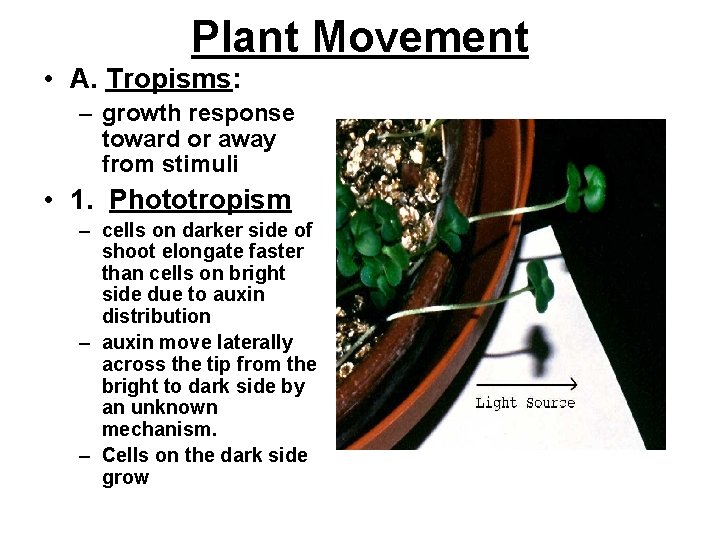
Plant Movement • A. Tropisms: – growth response toward or away from stimuli • 1. Phototropism – cells on darker side of shoot elongate faster than cells on bright side due to auxin distribution – auxin move laterally across the tip from the bright to dark side by an unknown mechanism. – Cells on the dark side grow
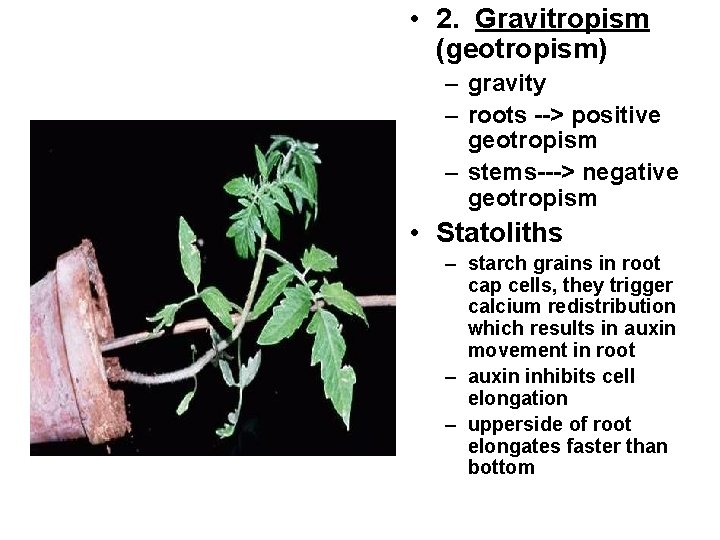
• 2. Gravitropism (geotropism) – gravity – roots --> positive geotropism – stems---> negative geotropism • Statoliths – starch grains in root cap cells, they trigger calcium redistribution which results in auxin movement in root – auxin inhibits cell elongation – upperside of root elongates faster than bottom
Thigmotropism • growth in response to touch • tendrils contacts solid and coils • increased production of ethylene 3. • ` Hydrotropism • growth toward water • willow tree 4.