
Control Systems CS Lecture4 5 6 Lag Compensation

- Slides: 51
Control Systems (CS) Lecture-4 -5 -6 Lag Compensation & Lag-Lead Compensation Dr. Imtiaz Hussain Associate Professor Mehran University of Engineering & Technology Jamshoro, Pakistan email: imtiaz. hussain@faculty. muet. edu. pk URL : http: //imtiazhussainkalwar. weebly. com/ 1
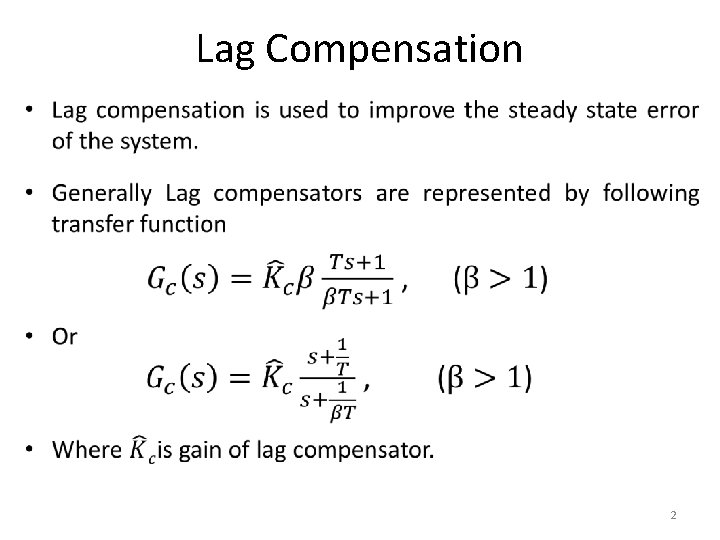
Lag Compensation • 2
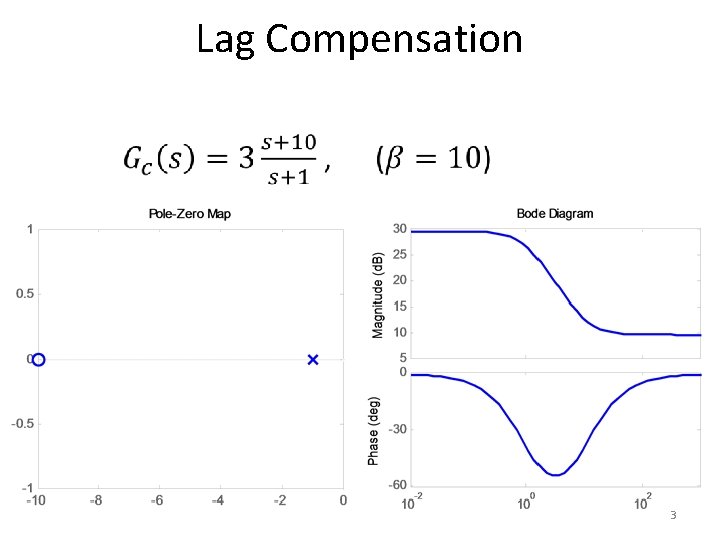
Lag Compensation 3
Lag Compensation • Consider the problem of finding a suitable compensation network for the case where the system exhibits satisfactory transientresponse characteristics but unsatisfactory steady-state characteristics. • Compensation in this case essentially consists of increasing the open loop gain without appreciably changing the transientresponse characteristics. • This means that the root locus in the neighborhood of the dominant closed-loop poles should not be changed appreciably, but the open-loop gain should be increased as much as needed. 4
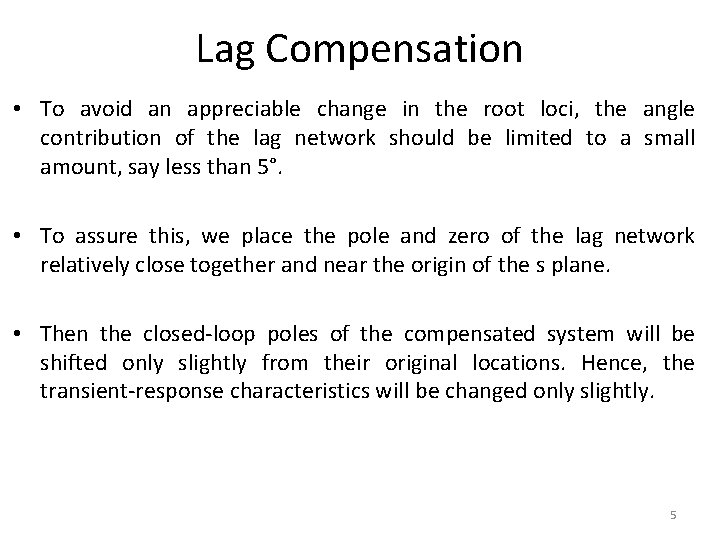
Lag Compensation • To avoid an appreciable change in the root loci, the angle contribution of the lag network should be limited to a small amount, say less than 5°. • To assure this, we place the pole and zero of the lag network relatively close together and near the origin of the s plane. • Then the closed-loop poles of the compensated system will be shifted only slightly from their original locations. Hence, the transient-response characteristics will be changed only slightly. 5
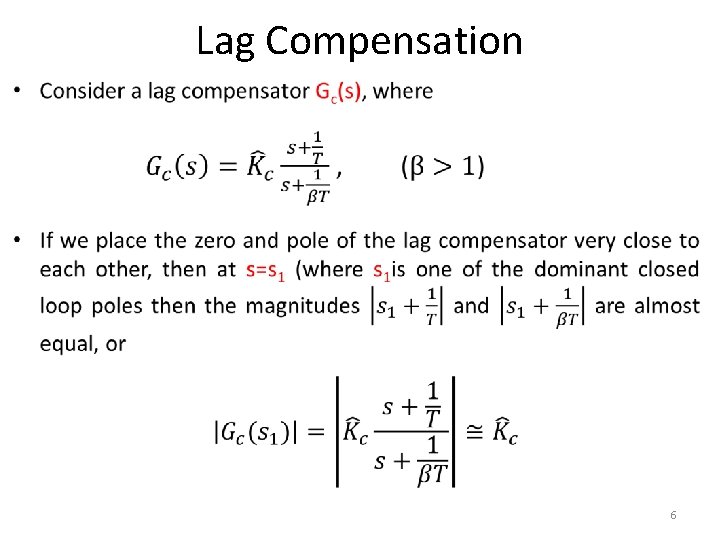
Lag Compensation • 6
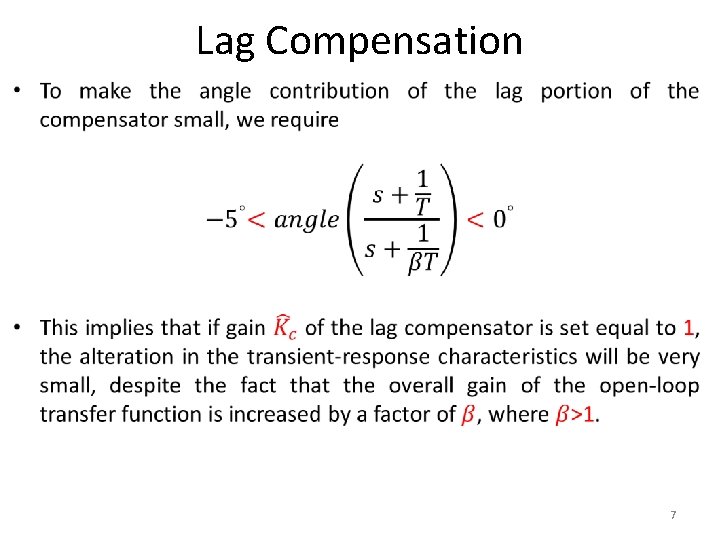
Lag Compensation • 7
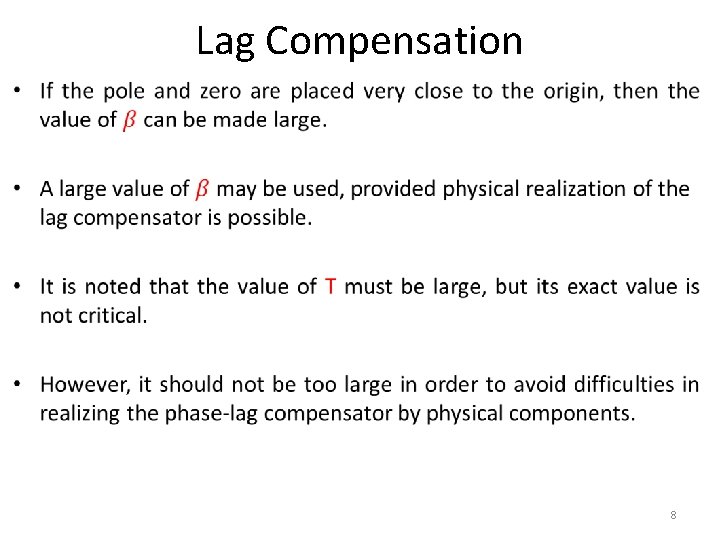
Lag Compensation • 8
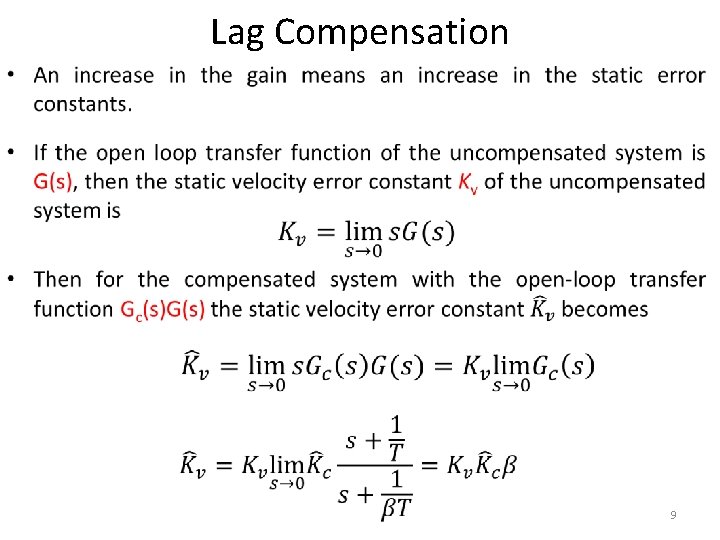
Lag Compensation • 9
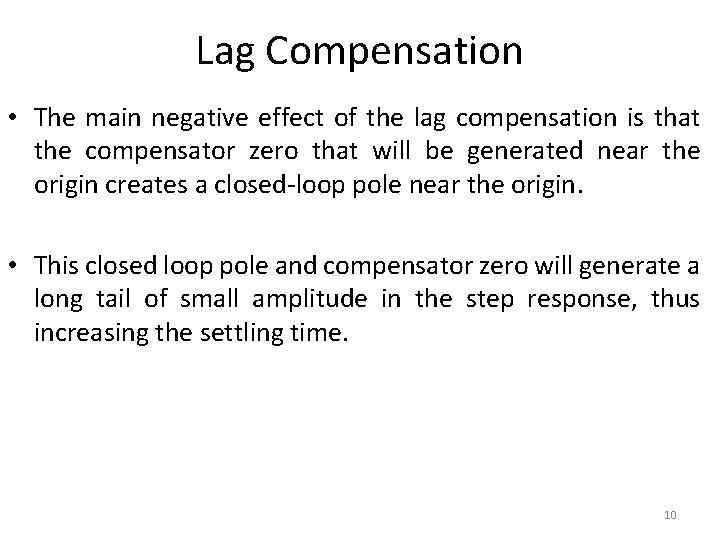
Lag Compensation • The main negative effect of the lag compensation is that the compensator zero that will be generated near the origin creates a closed-loop pole near the origin. • This closed loop pole and compensator zero will generate a long tail of small amplitude in the step response, thus increasing the settling time. 10
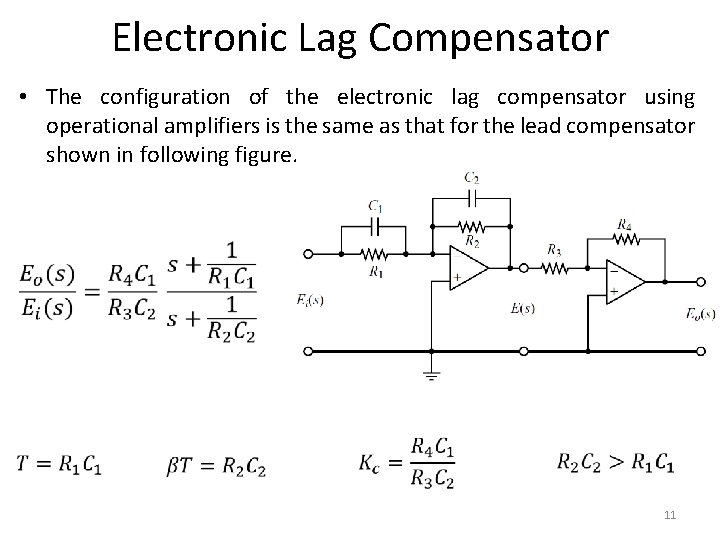
Electronic Lag Compensator • The configuration of the electronic lag compensator using operational amplifiers is the same as that for the lead compensator shown in following figure. 11
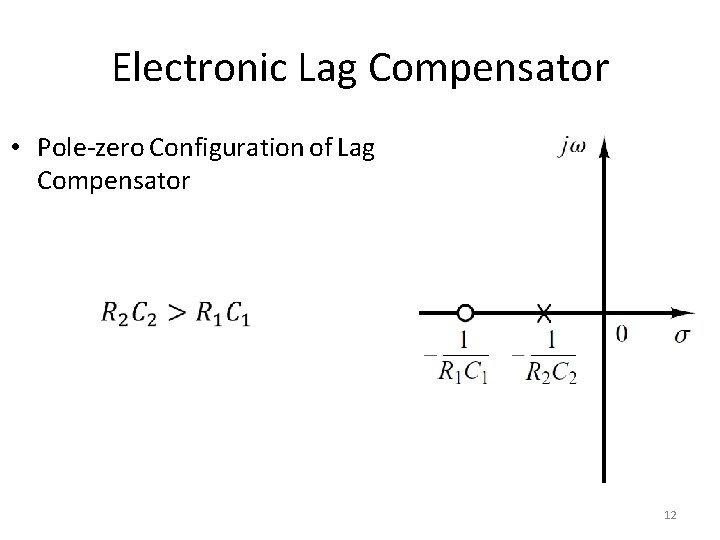
Electronic Lag Compensator • Pole-zero Configuration of Lag Compensator 12
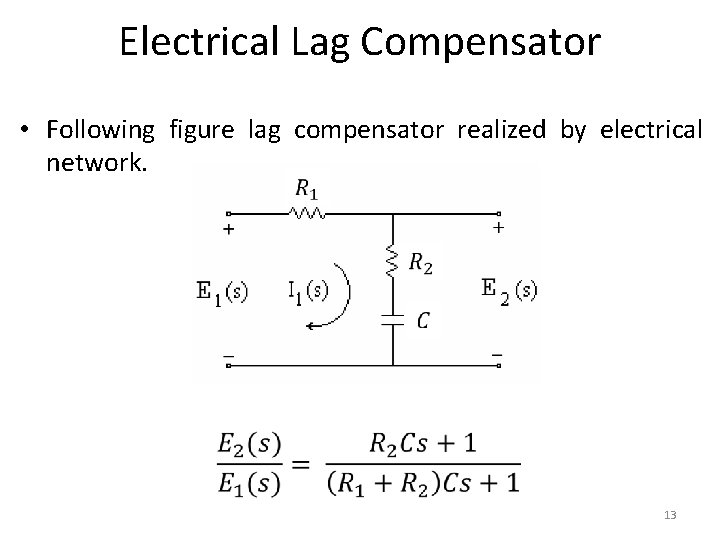
Electrical Lag Compensator • Following figure lag compensator realized by electrical network. 13
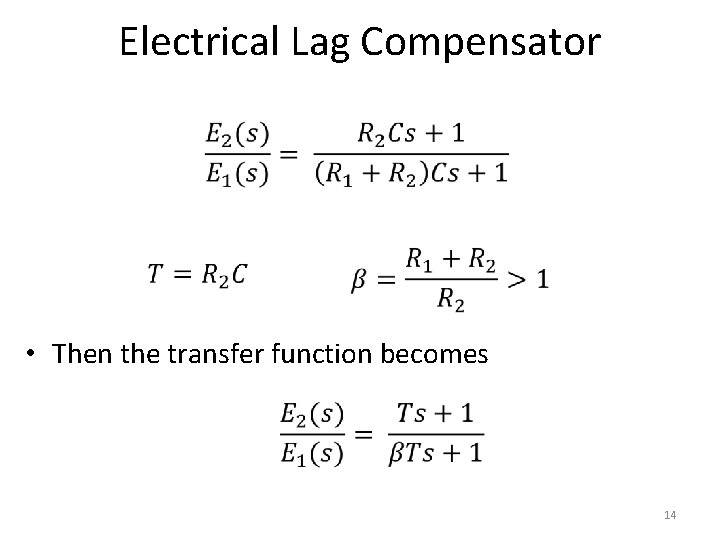
Electrical Lag Compensator • Then the transfer function becomes 14
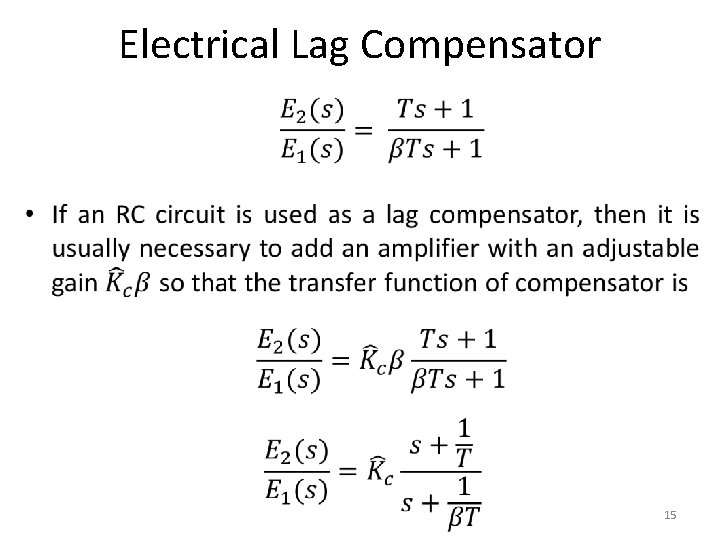
Electrical Lag Compensator • 15
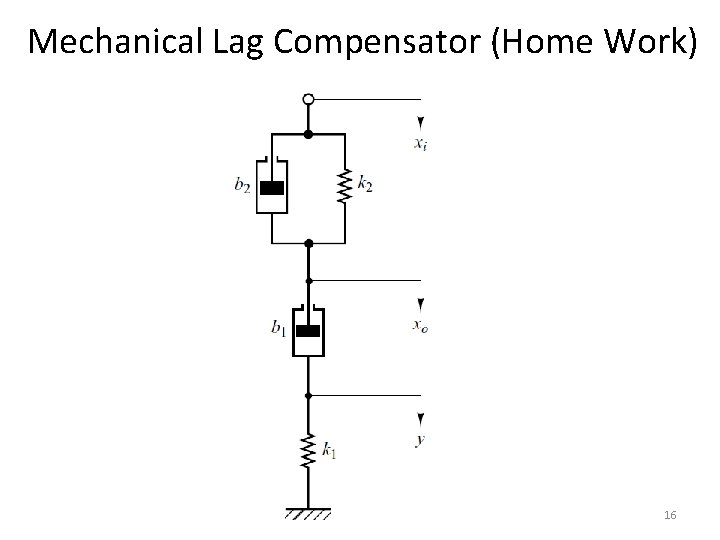
Mechanical Lag Compensator (Home Work) 16
Design Procedure • The procedure for designing lag compensators by the rootlocus method may be stated as follows. • We will assume that the uncompensated system meets the transient-response specifications by simple gain adjustment. • If this is not the case then we need to design a lag-lead compensator which we will discuss in next few classes. 17
Design Procedure • Step-1 – Draw the root-locus plot for the uncompensated system whose open-loop transfer function is G(s). – Based on the transient-response specifications, locate the dominant closed-loop poles on the root locus. 18
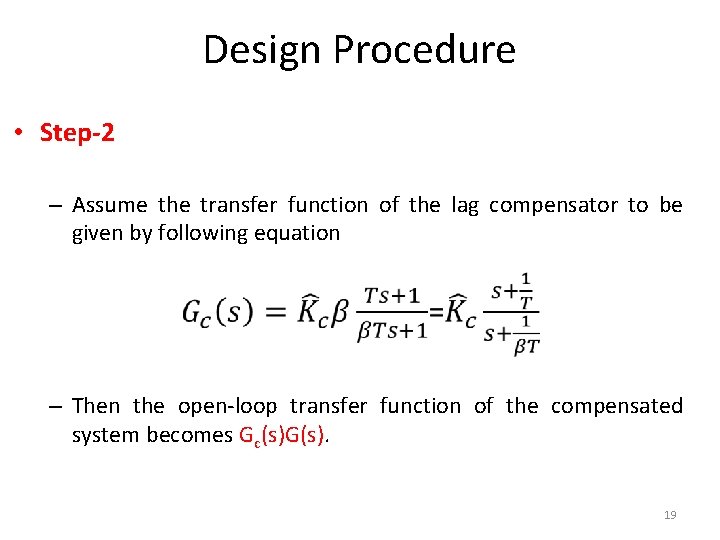
Design Procedure • Step-2 – Assume the transfer function of the lag compensator to be given by following equation – Then the open-loop transfer function of the compensated system becomes Gc(s)G(s). 19
Design Procedure • Step-3 – Evaluate the particular static error constant specified in the problem. – Determine the amount of increase in the static error constant necessary to satisfy the specifications. 20
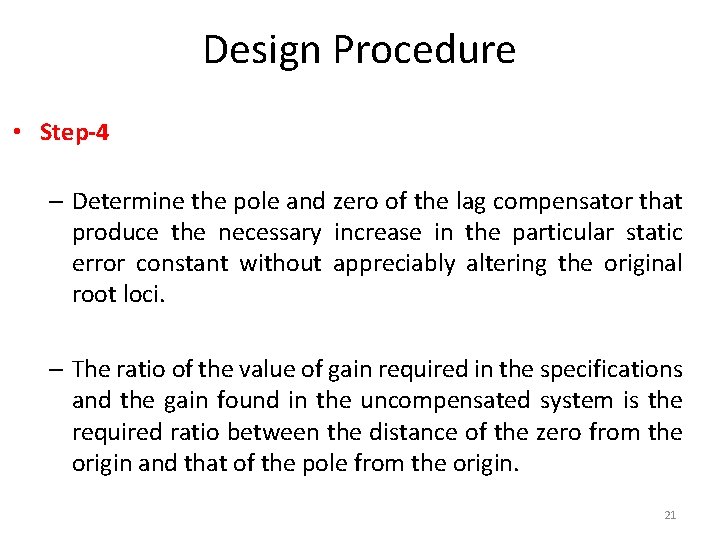
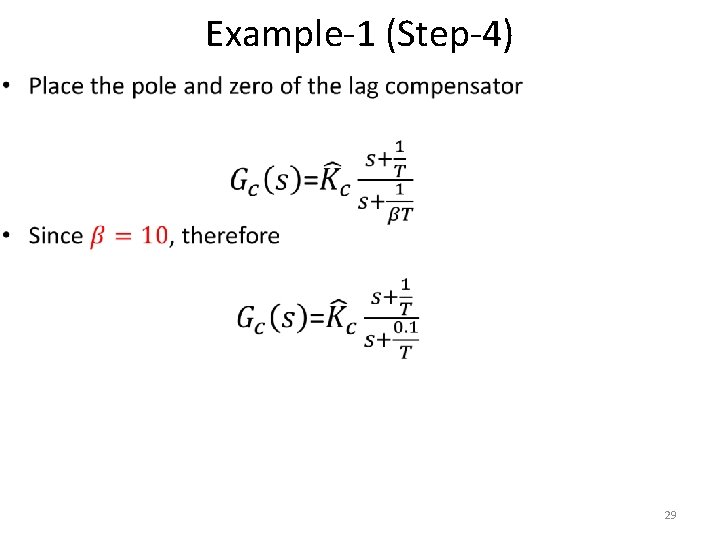
Design Procedure • Step-4 – Determine the pole and zero of the lag compensator that produce the necessary increase in the particular static error constant without appreciably altering the original root loci. – The ratio of the value of gain required in the specifications and the gain found in the uncompensated system is the required ratio between the distance of the zero from the origin and that of the pole from the origin. 21
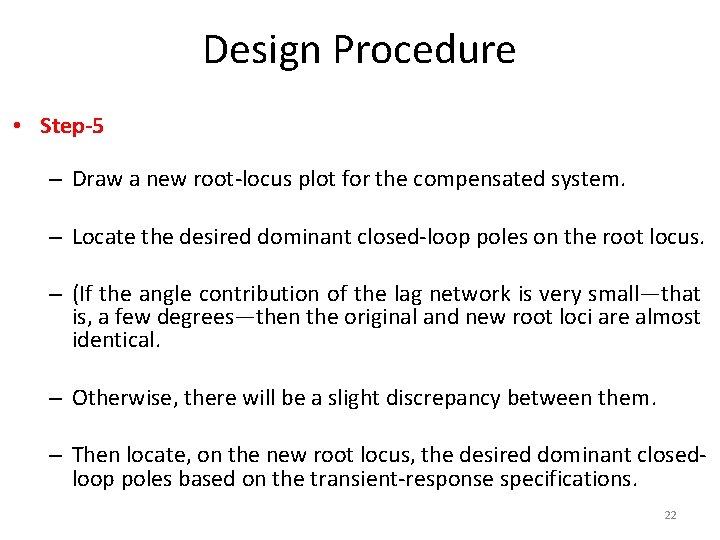
Design Procedure • Step-5 – Draw a new root-locus plot for the compensated system. – Locate the desired dominant closed-loop poles on the root locus. – (If the angle contribution of the lag network is very small—that is, a few degrees—then the original and new root loci are almost identical. – Otherwise, there will be a slight discrepancy between them. – Then locate, on the new root locus, the desired dominant closedloop poles based on the transient-response specifications. 22
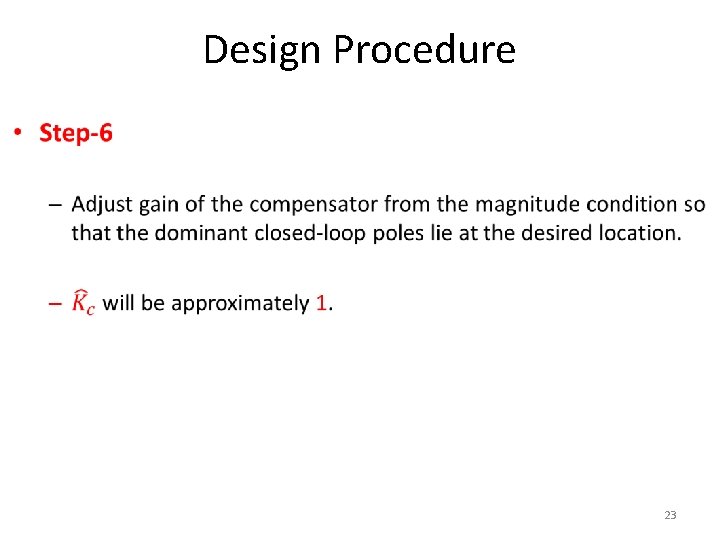
Design Procedure • 23
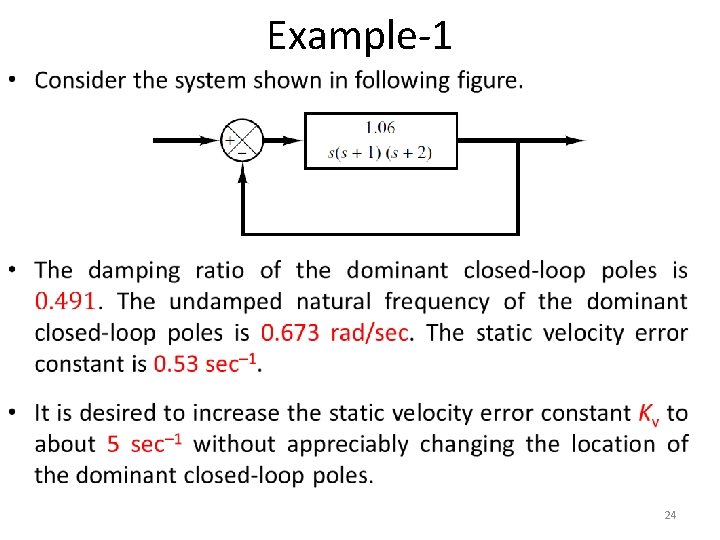
Example-1 • 24
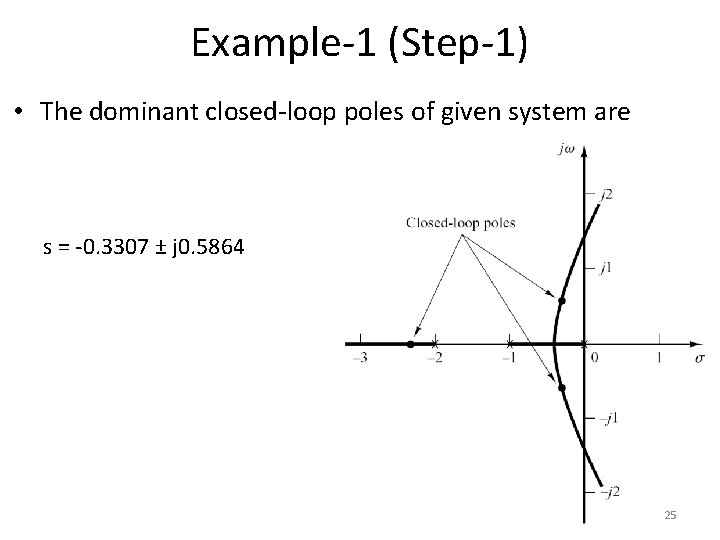
Example-1 (Step-1) • The dominant closed-loop poles of given system are s = -0. 3307 ± j 0. 5864 25
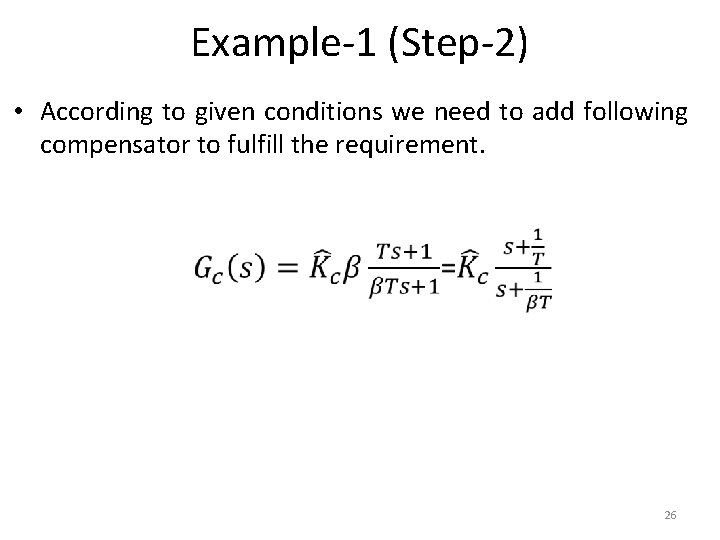
Example-1 (Step-2) • According to given conditions we need to add following compensator to fulfill the requirement. 26
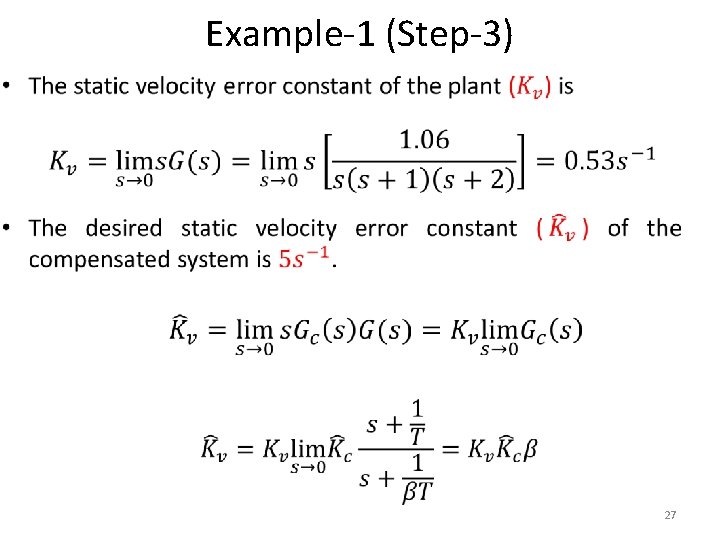
Example-1 (Step-3) • 27
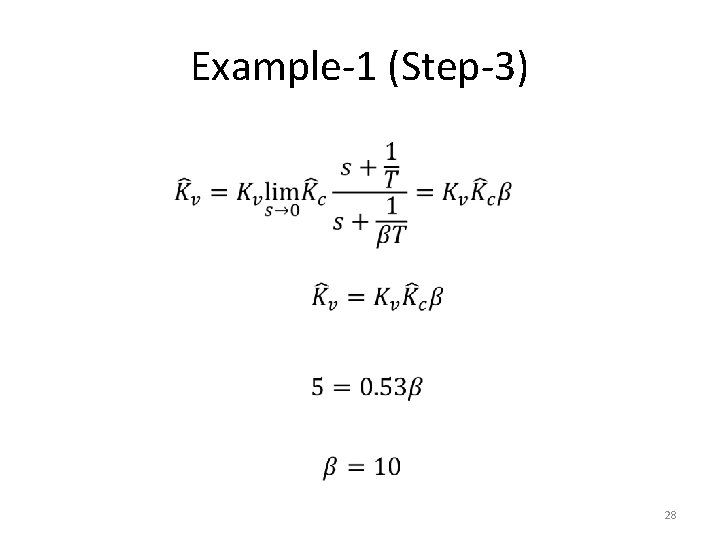
Example-1 (Step-3) 28
Example-1 (Step-4) • 29
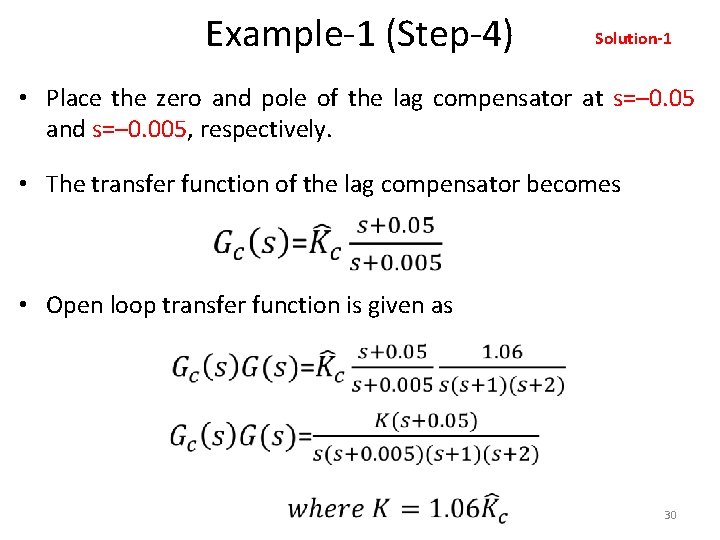
Example-1 (Step-4) Solution-1 • Place the zero and pole of the lag compensator at s=– 0. 05 and s=– 0. 005, respectively. • The transfer function of the lag compensator becomes • Open loop transfer function is given as 30
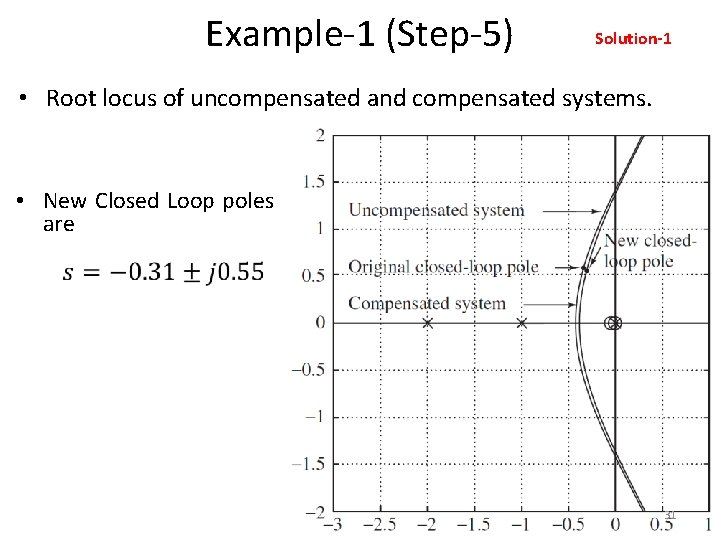
Example-1 (Step-5) Solution-1 • Root locus of uncompensated and compensated systems. • New Closed Loop poles are 31
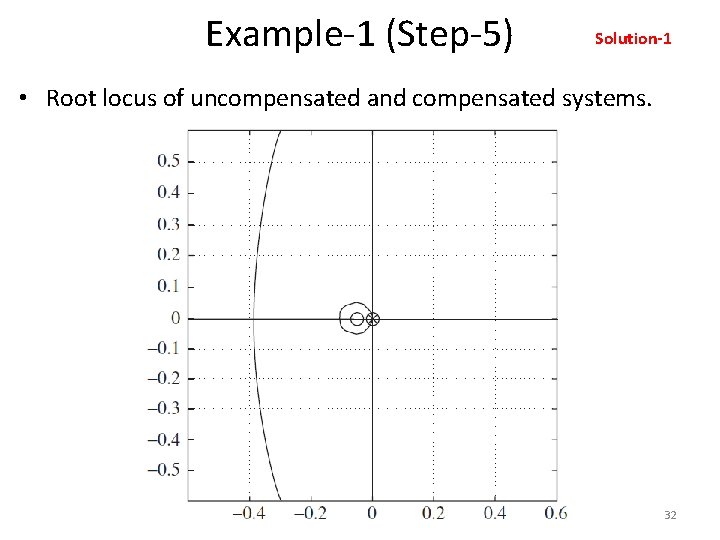
Example-1 (Step-5) Solution-1 • Root locus of uncompensated and compensated systems. 32
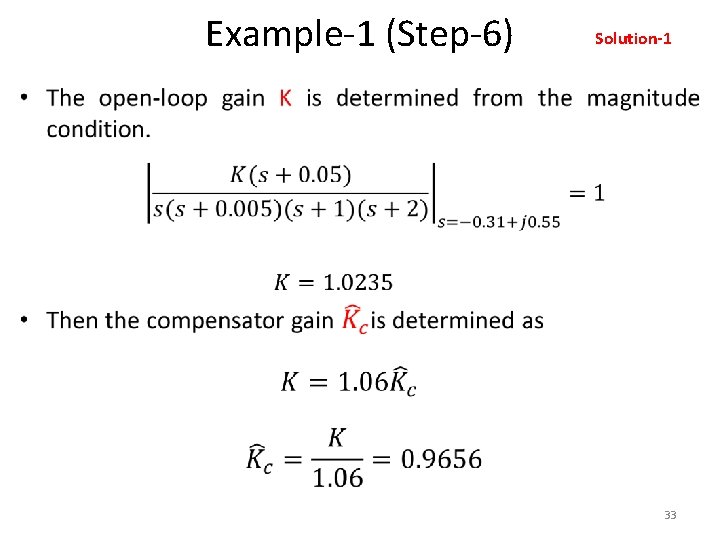
Example-1 (Step-6) Solution-1 • 33
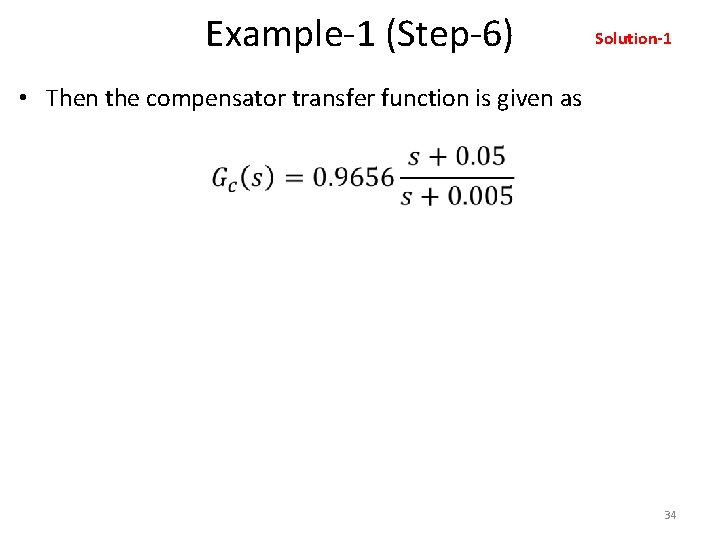
Example-1 (Step-6) Solution-1 • Then the compensator transfer function is given as 34
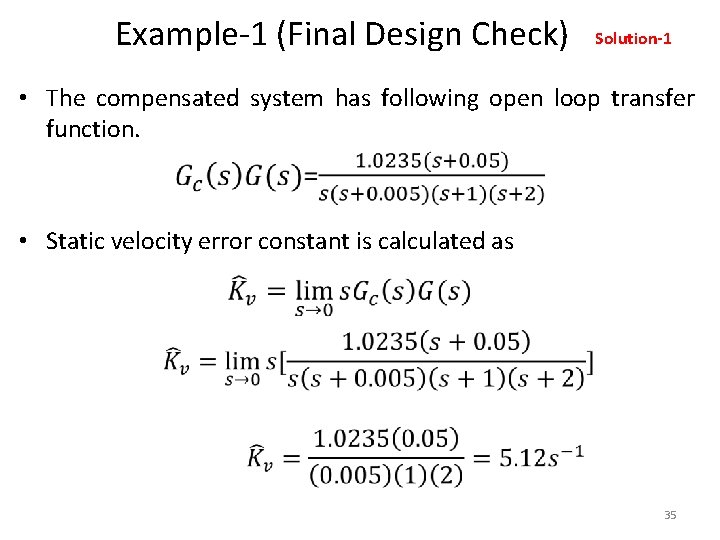
Example-1 (Final Design Check) Solution-1 • The compensated system has following open loop transfer function. • Static velocity error constant is calculated as 35
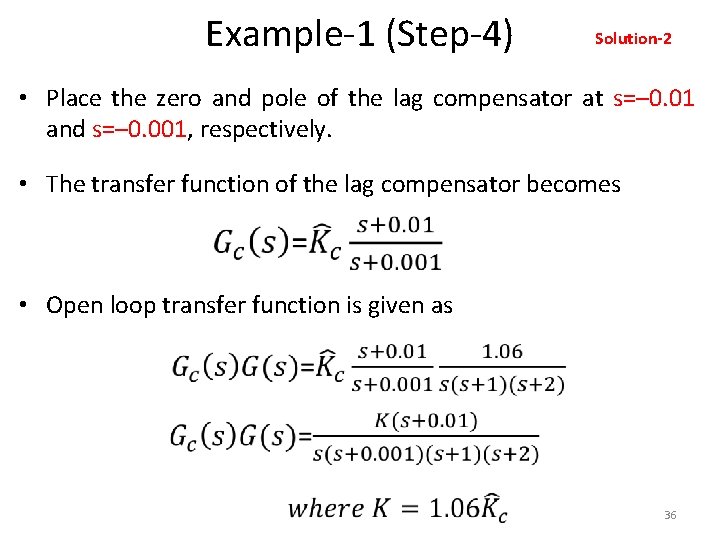
Example-1 (Step-4) Solution-2 • Place the zero and pole of the lag compensator at s=– 0. 01 and s=– 0. 001, respectively. • The transfer function of the lag compensator becomes • Open loop transfer function is given as 36
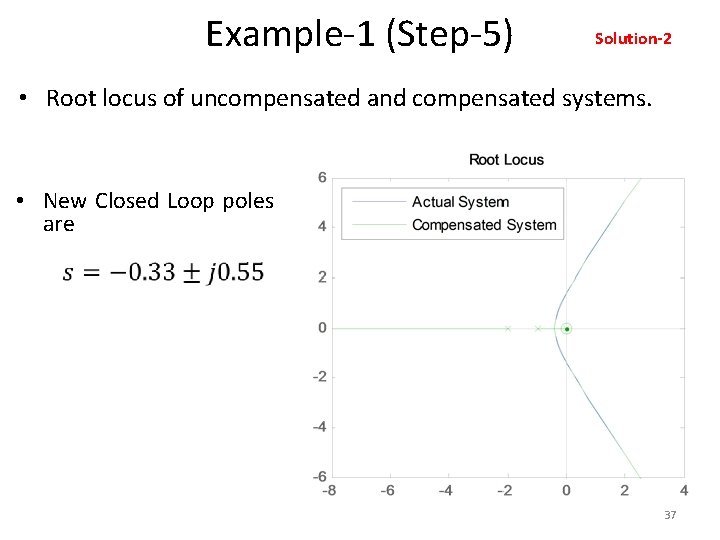
Example-1 (Step-5) Solution-2 • Root locus of uncompensated and compensated systems. • New Closed Loop poles are 37
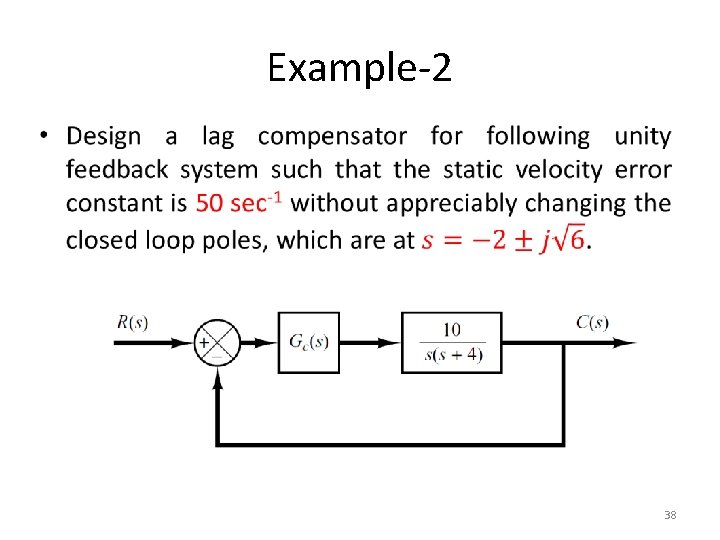
Example-2 • 38
Lag-Lead Compensation • Lead compensation basically speeds up the response and increases the stability of the system. • Lag compensation improves the steady-state accuracy of the system, but reduces the speed of the response. • If improvements in both transient response and steady-state response are desired, then both a lead compensator and a lag compensator may be used simultaneously. • Rather than introducing both a lead compensator and a lag compensator as separate units, however, it is economical to use a single lag–lead compensator. 39
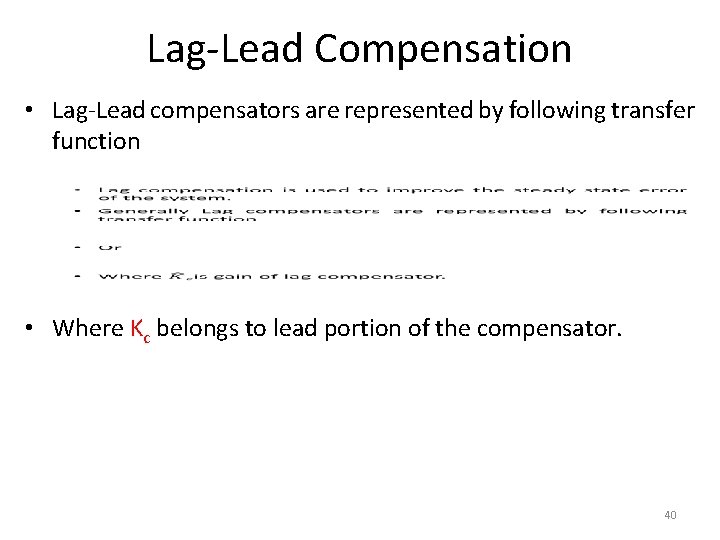
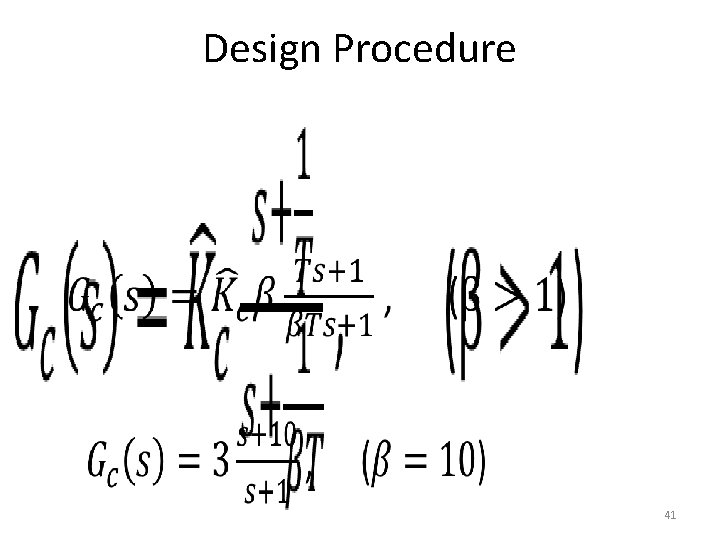
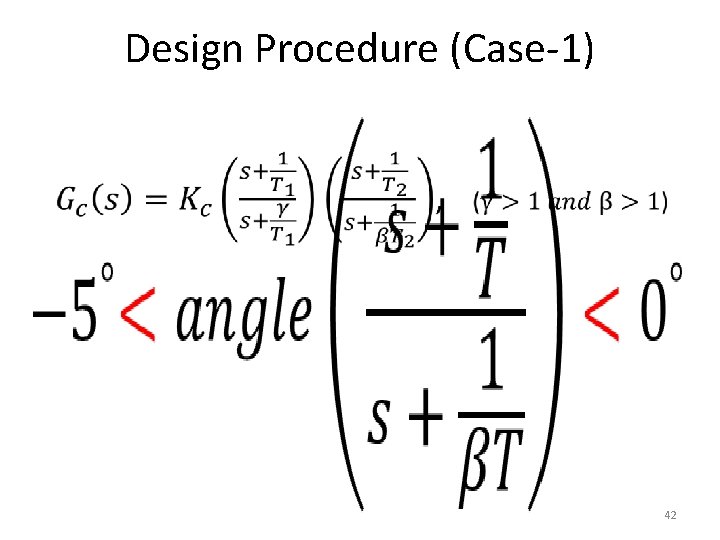
Lag-Lead Compensation • Lag-Lead compensators are represented by following transfer function • Where Kc belongs to lead portion of the compensator. 40
Design Procedure • 41
Design Procedure (Case-1) • 42
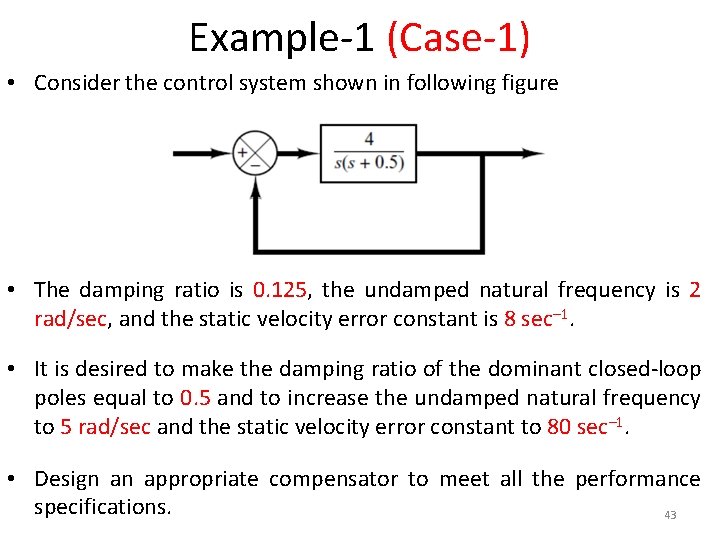
Example-1 (Case-1) • Consider the control system shown in following figure • The damping ratio is 0. 125, the undamped natural frequency is 2 rad/sec, and the static velocity error constant is 8 sec– 1. • It is desired to make the damping ratio of the dominant closed-loop poles equal to 0. 5 and to increase the undamped natural frequency to 5 rad/sec and the static velocity error constant to 80 sec– 1. • Design an appropriate compensator to meet all the performance specifications. 43
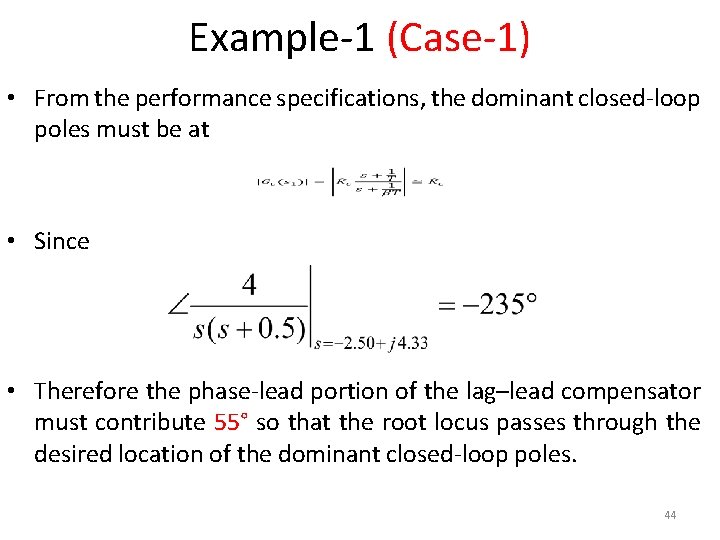
Example-1 (Case-1) • From the performance specifications, the dominant closed-loop poles must be at • Since • Therefore the phase-lead portion of the lag–lead compensator must contribute 55° so that the root locus passes through the desired location of the dominant closed-loop poles. 44
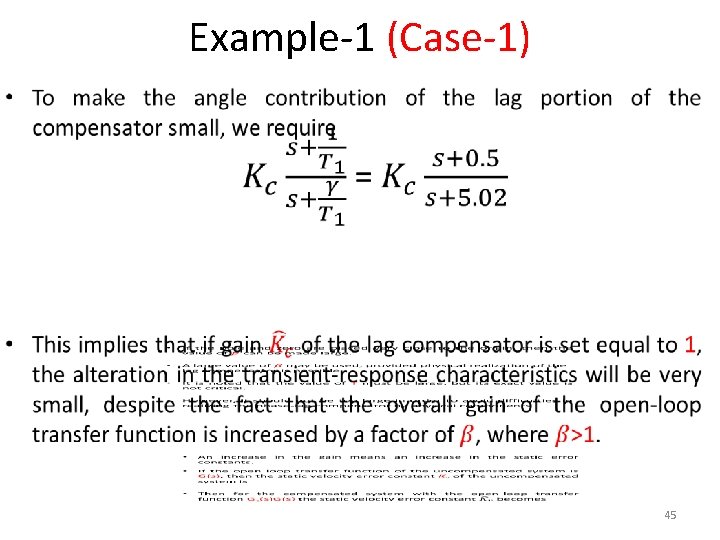
Example-1 (Case-1) • 45
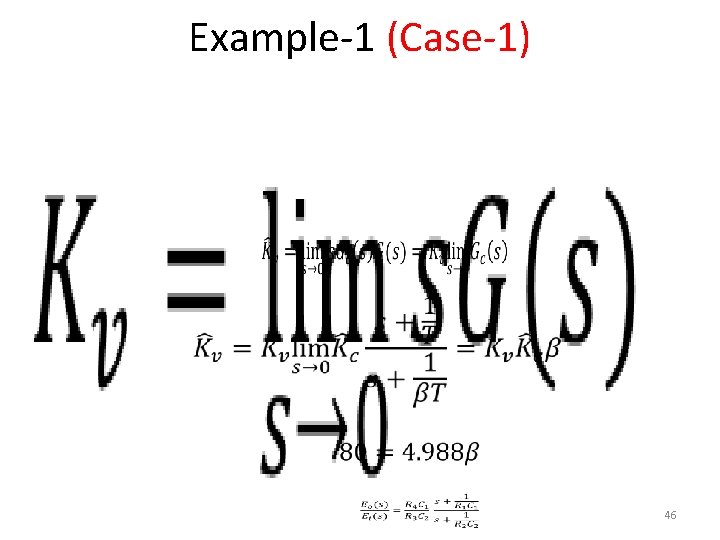
Example-1 (Case-1) • 46
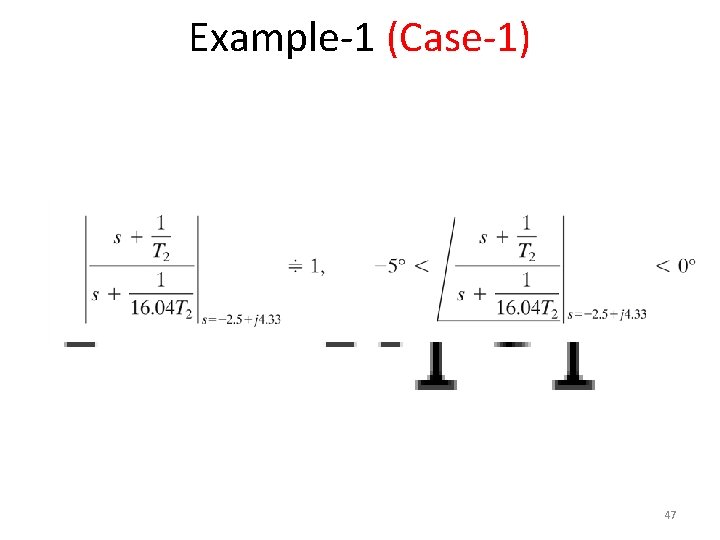
Example-1 (Case-1) • 47
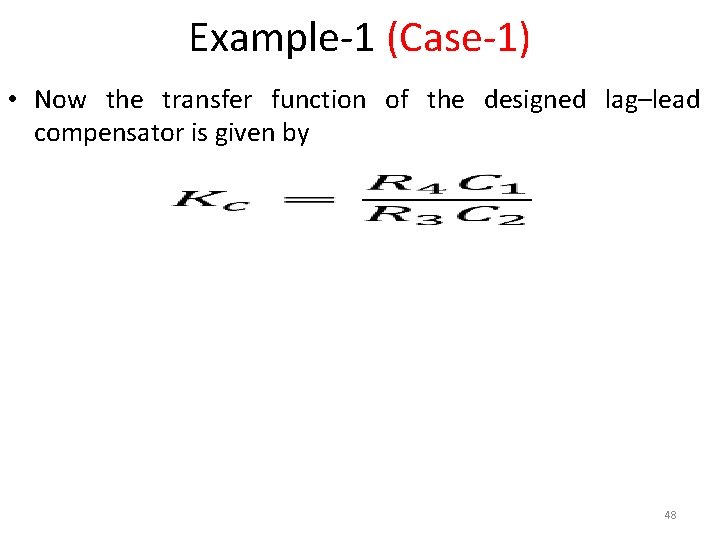
Example-1 (Case-1) • Now the transfer function of the designed lag–lead compensator is given by 48
Example-1 (Case-2) Home Work 49
Home Work • Electronic Lag-Lead Compensator • Electrical Lag-Lead Compensator • Mechanical Lag-Lead Compensator 50
To download this lecture visit http: //imtiazhussainkalwar. weebly. com/ END OF LECTURES-4 -5 -6 51