
Control Surface Mass Balancing Procedure Cviko Vidakovic BCore
Control Surface Mass Balancing Procedure. Cviko Vidakovic, B-Core Inc. October 4, 2014
Agenda i. Why Balance Moving Surfaces ii. Flutter, Aeroelasticity iii. Moving Surface Moment Theory iv. Balancing Moving Surface Step by Step v. Requirements for Control Surface Balancing vi. Control Surface Mass Balancing Log Sheet vii. Related papers to read from SAWE Canada Chapter 2

Mass balance weights http: //en. wikipedia. org/wiki/Aileron To prevent control surface flutter (aeroelastic flutter), the center of lift of the control surface should be behind the center of gravity of that surface. To achieve this, lead weights may be added to the front of the aileron. In some aircraft the aileron construction may be too heavy to allow this system to work without huge weight increases. In this case, the weight may be added to a lever arm to move the weight well out in front to the aileron body. These balance weights are tear drop shaped (to reduce drag), which make them appear quite different from spades, although both project forward and below the aileron. In addition to reducing flutter, mass balances also reduce the stick forces required to move the control surface in flight. SAWE Canada Chapter 3
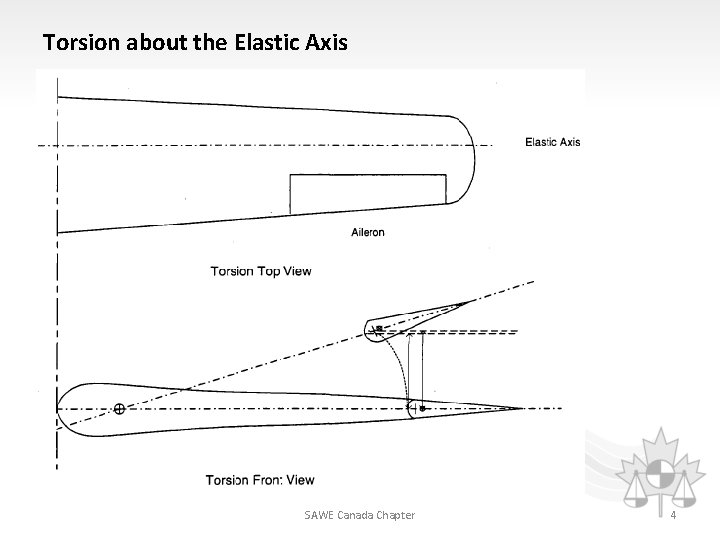
Torsion about the Elastic Axis SAWE Canada Chapter 4
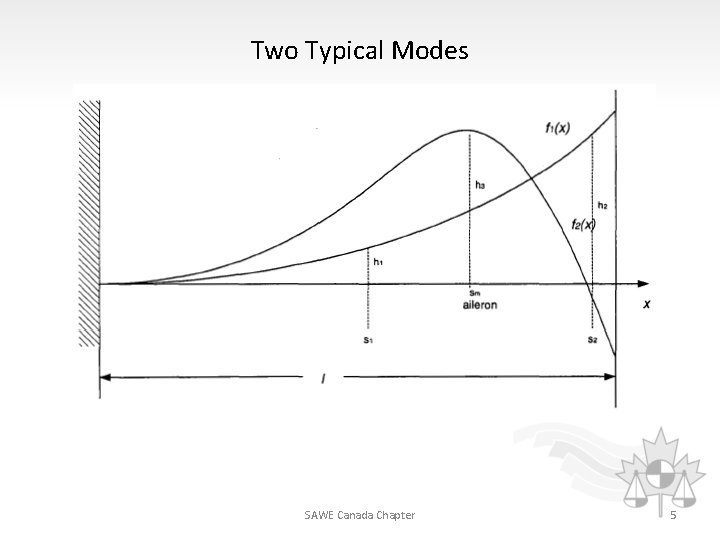
Two Typical Modes SAWE Canada Chapter 5
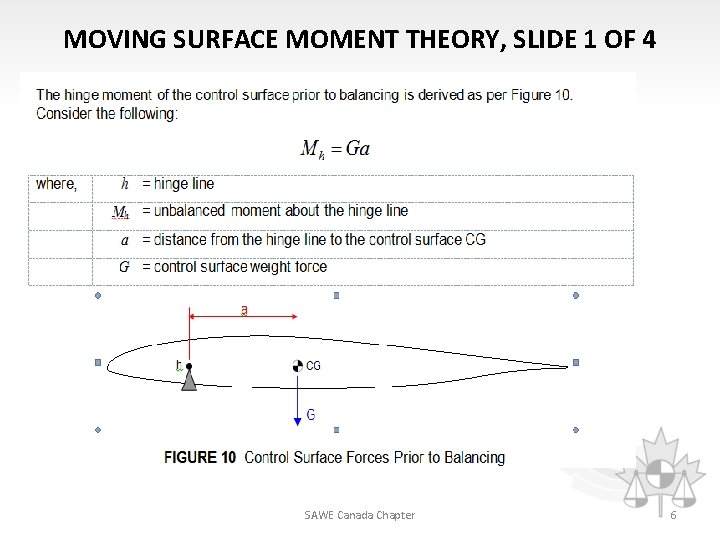
MOVING SURFACE MOMENT THEORY, SLIDE 1 OF 4 SAWE Canada Chapter 6
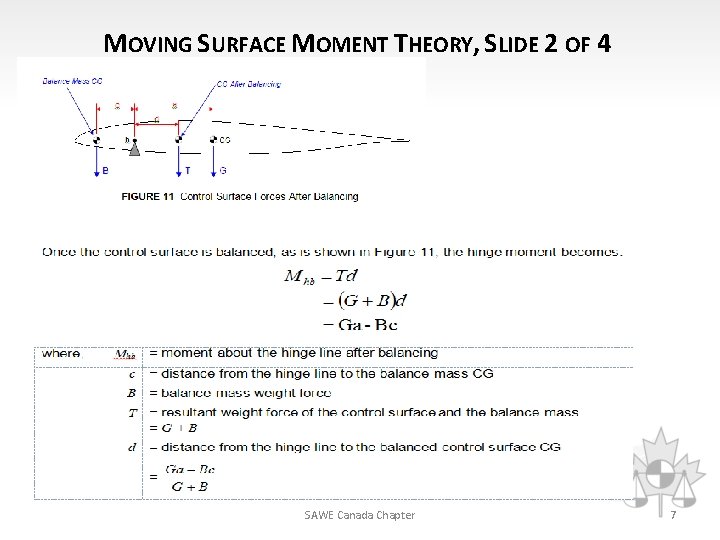
MOVING SURFACE MOMENT THEORY, SLIDE 2 OF 4 SAWE Canada Chapter 7
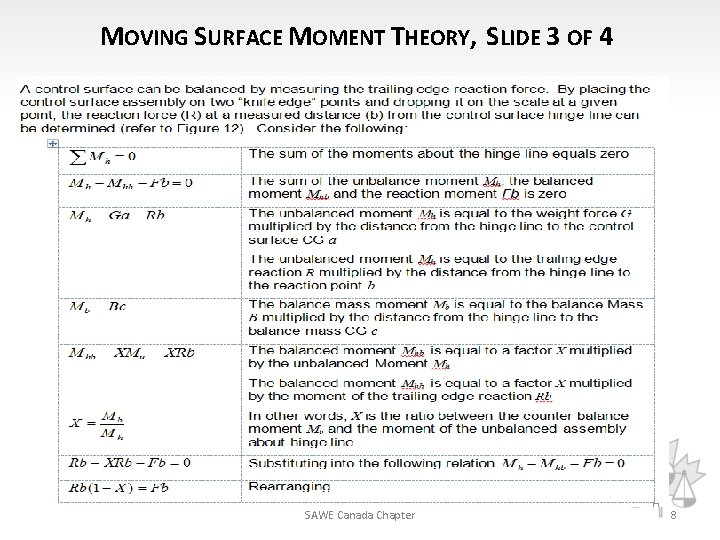
MOVING SURFACE MOMENT THEORY, SLIDE 3 OF 4 SAWE Canada Chapter 8
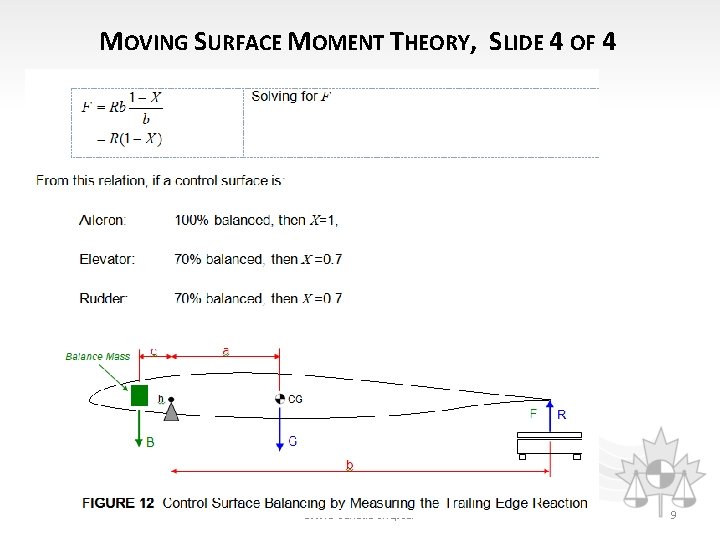
MOVING SURFACE MOMENT THEORY, SLIDE 4 OF 4 SAWE Canada Chapter 9
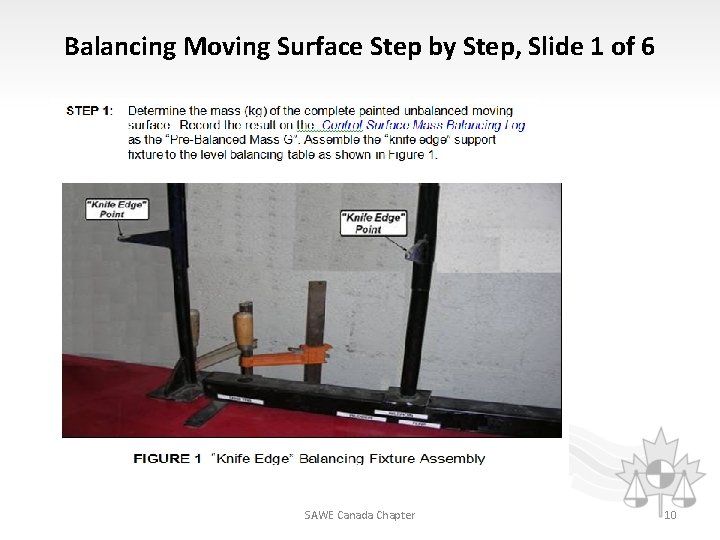
Balancing Moving Surface Step by Step, Slide 1 of 6 SAWE Canada Chapter 10
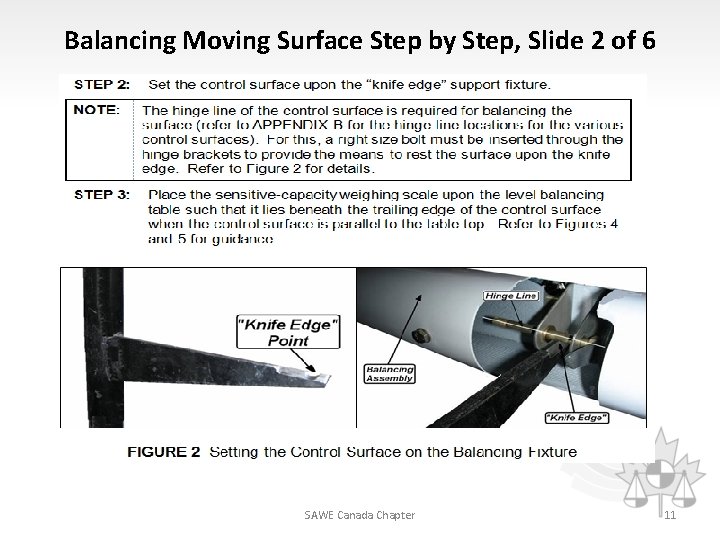
Balancing Moving Surface Step by Step, Slide 2 of 6 SAWE Canada Chapter 11
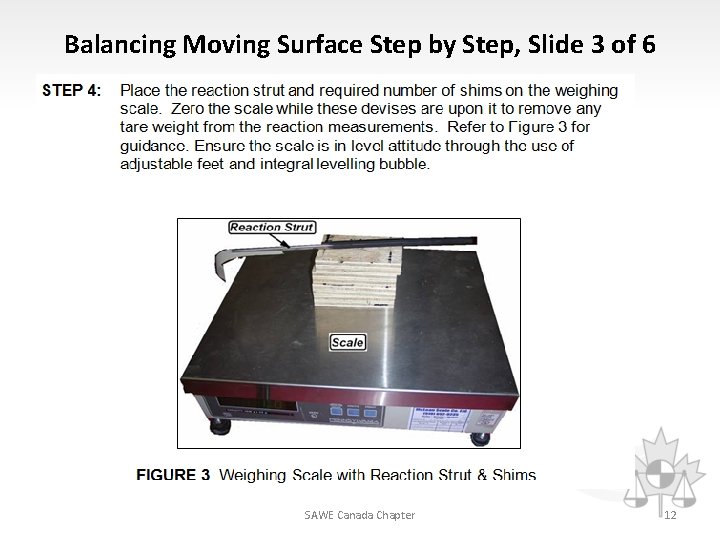
Balancing Moving Surface Step by Step, Slide 3 of 6 SAWE Canada Chapter 12
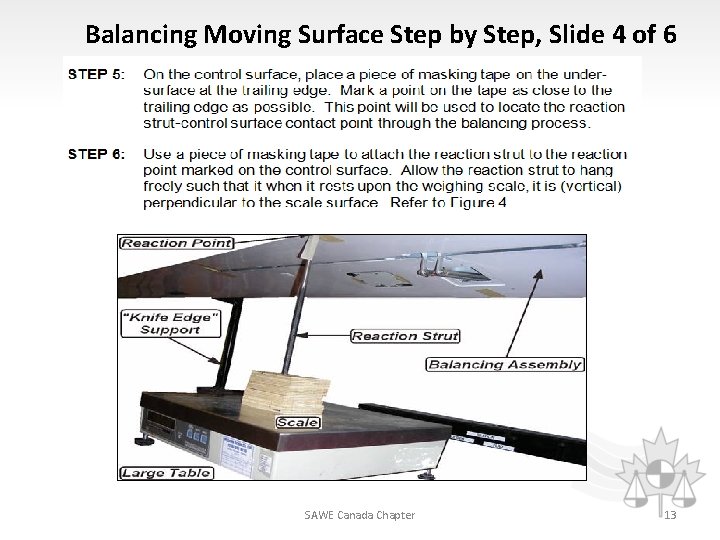
Balancing Moving Surface Step by Step, Slide 4 of 6 SAWE Canada Chapter 13
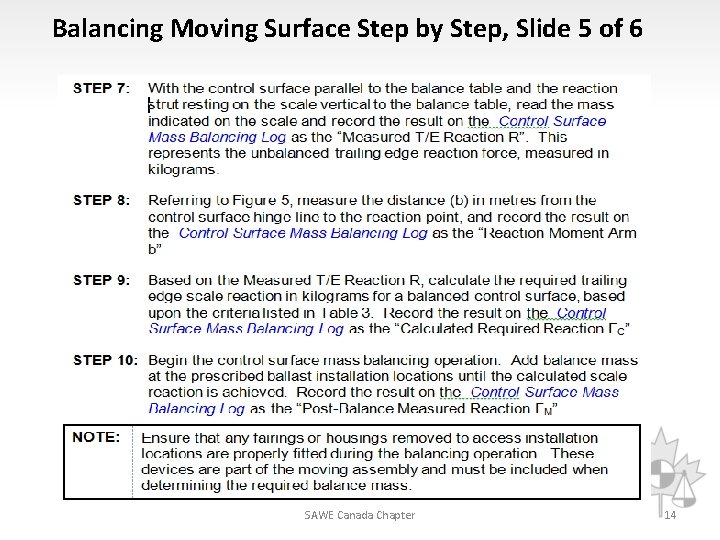
Balancing Moving Surface Step by Step, Slide 5 of 6 SAWE Canada Chapter 14
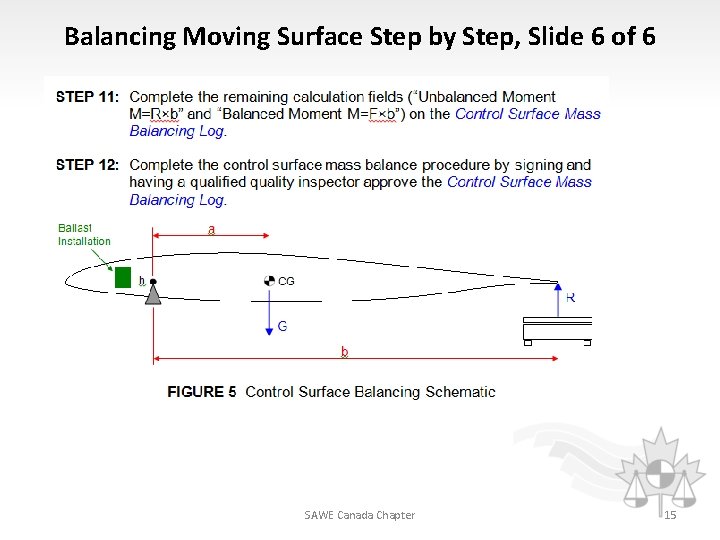
Balancing Moving Surface Step by Step, Slide 6 of 6 SAWE Canada Chapter 15
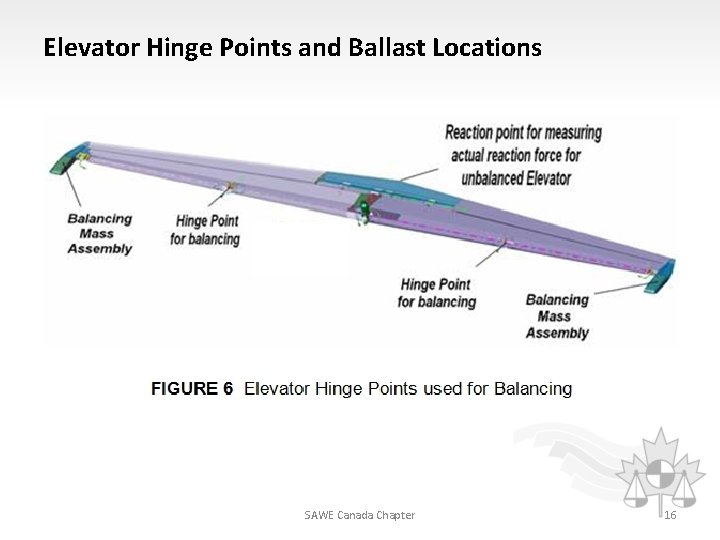
Elevator Hinge Points and Ballast Locations SAWE Canada Chapter 16
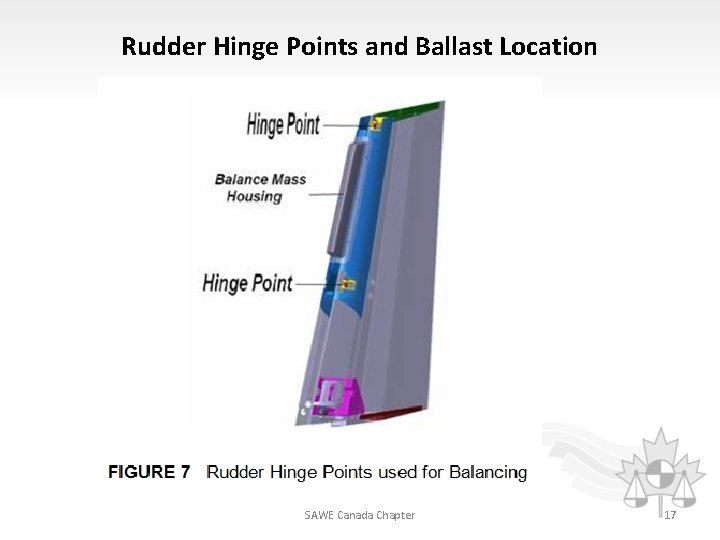
Rudder Hinge Points and Ballast Location SAWE Canada Chapter 17
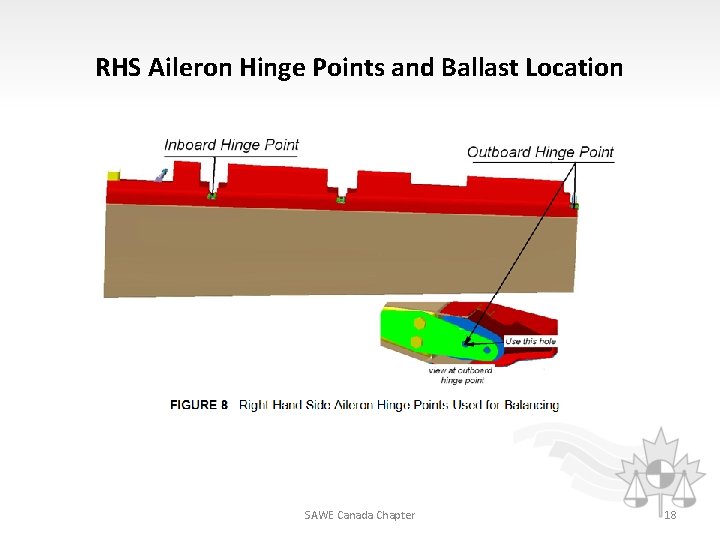
RHS Aileron Hinge Points and Ballast Location SAWE Canada Chapter 18
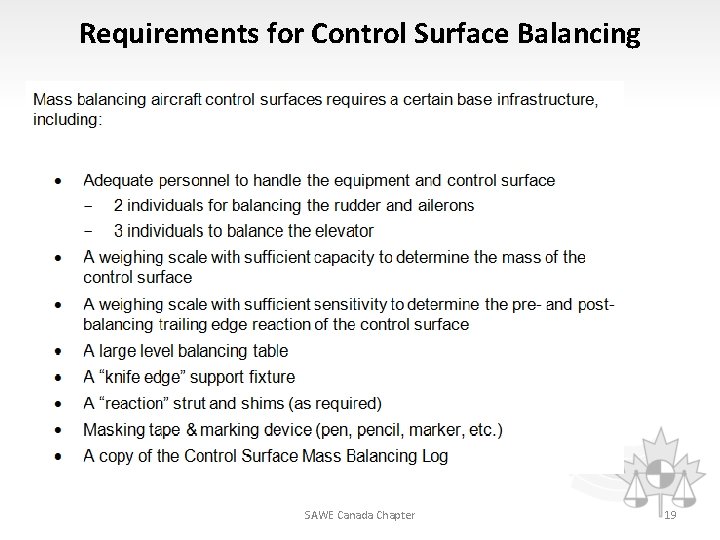
Requirements for Control Surface Balancing SAWE Canada Chapter 19
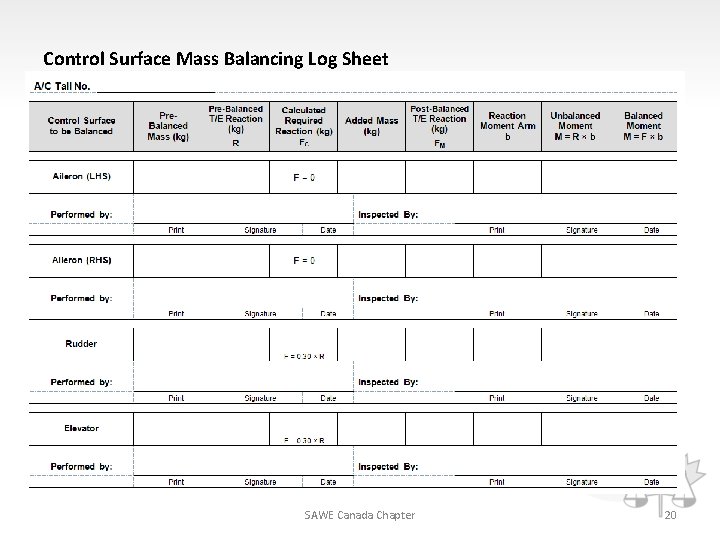
Control Surface Mass Balancing Log Sheet SAWE Canada Chapter 20
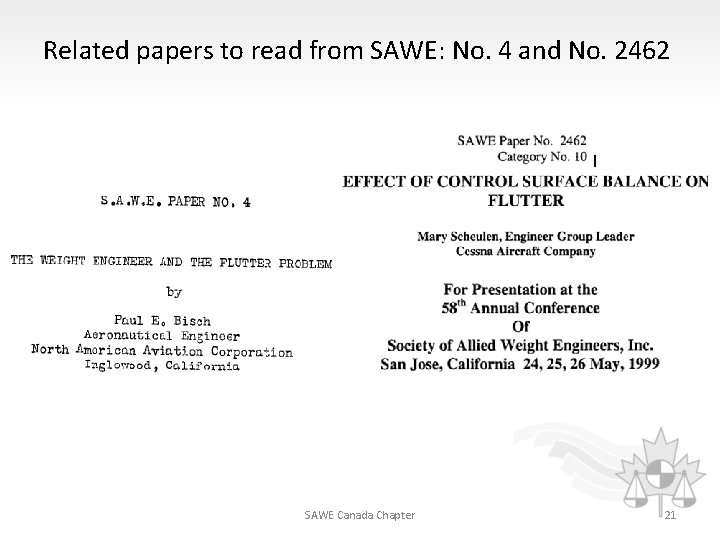
Related papers to read from SAWE: No. 4 and No. 2462 SAWE Canada Chapter 21
- Slides: 21