
CONTROL OF HEMOSTASIS Jerrold H Levy MD Professor


- Slides: 39
CONTROL OF HEMOSTASIS Jerrold H. Levy, MD Professor of Anesthesiology Deputy Chair for Research Emory University School of Medicine Division of Cardiothoracic Anesthesiology and Critical Care Emory Healthcare Atlanta, Georgia
SIMPLIFIED CLINICIAN’S VIEW OF HEMOSTASIS Platelet/coagulation factor activation Lots of exciting biochemistry CLOT
COMPONENTS OF HEMOSTASIS n. Vasculature n. Coagulation n. Platelets proteins
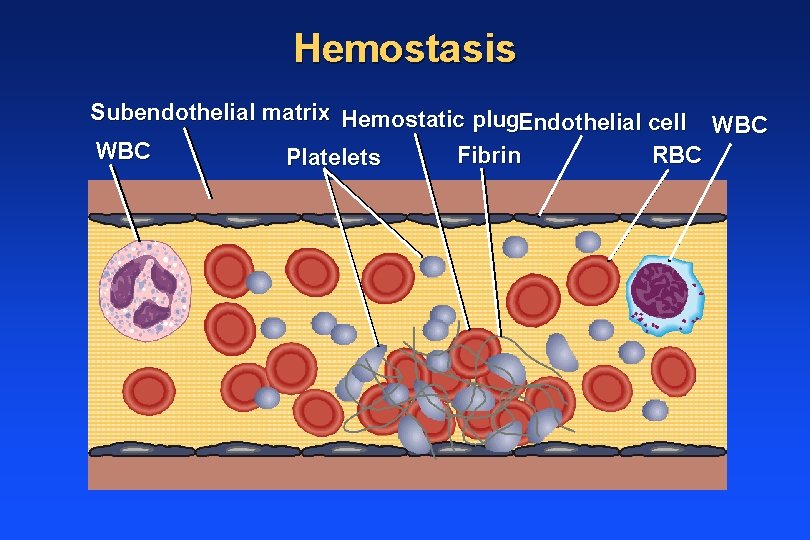
Hemostasis Subendothelial matrix Hemostatic plug. Endothelial cell WBC Fibrin RBC Platelets
5 COAGULATION PATHWAYS
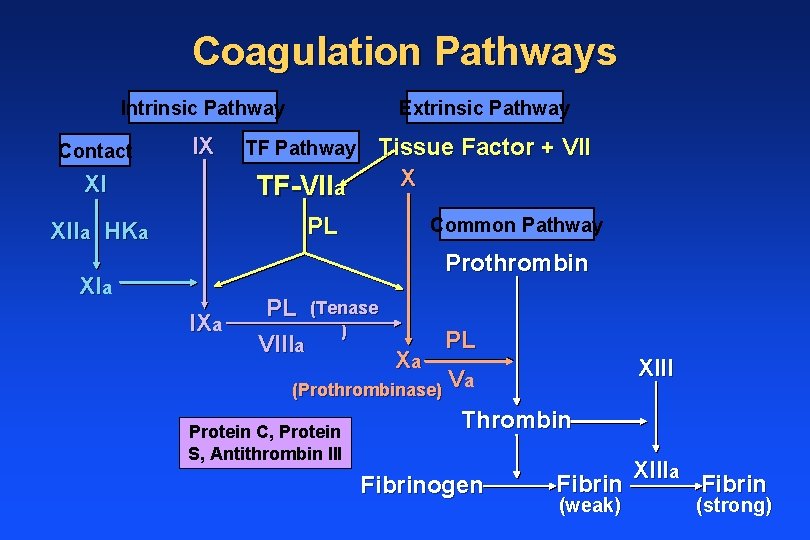
Coagulation Pathways Intrinsic Pathway Extrinsic Pathway IX Tissue Factor + VII X Contact XI TF Pathway TF-VIIa PL XIIa HKa Common Pathway Prothrombin XIa IXa PL (Tenase ) VIIIa Xa PL XIII Va (Prothrombinase) Protein C, Protein S, Antithrombin III Thrombin Fibrinogen Fibrin (weak) XIIIa Fibrin (strong)
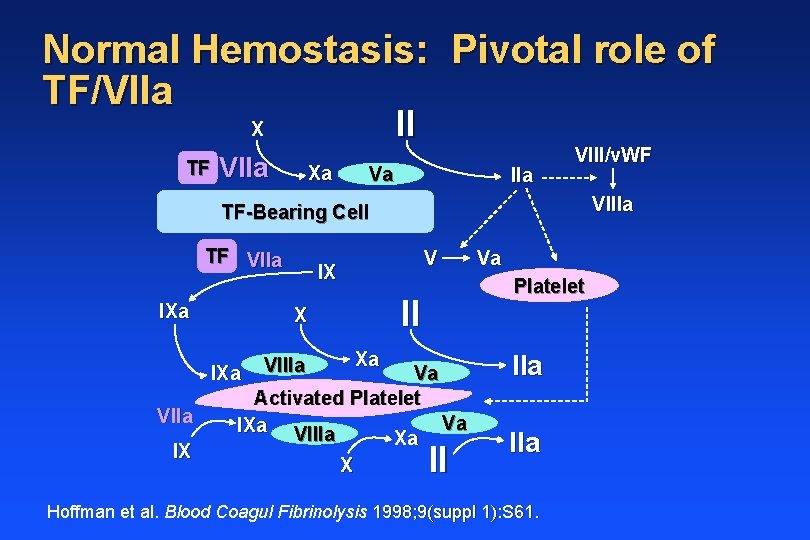
Normal Hemostasis: Pivotal role of TF/VIIa II X TF VIIa Xa Va IIa VIII/v. WF VIIIa TF-Bearing Cell TF VIIa IX VIIIa Va Platelet II X IXa VIIa V IX Xa Va Activated Platelet Va IXa VIIIa Xa X II IIa Hoffman et al. Blood Coagul Fibrinolysis 1998; 9(suppl 1): S 61.
8 PLATELET ACTIVATION PATHWAYS
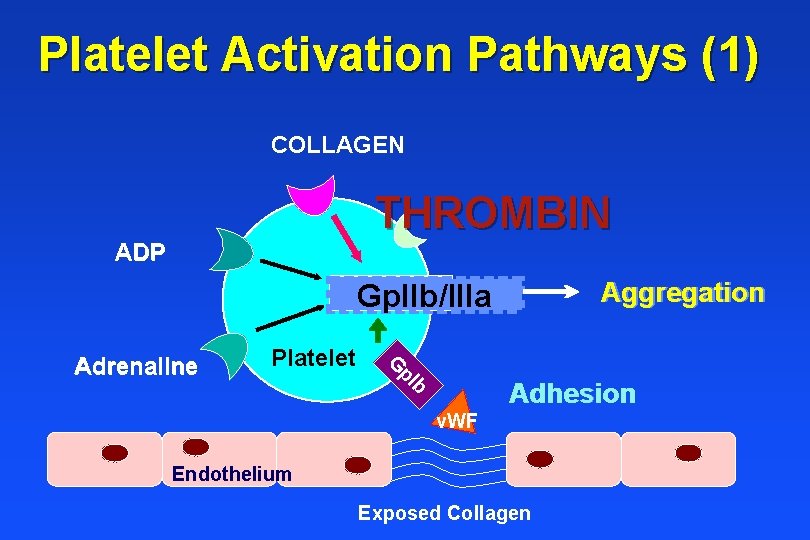
Platelet Activation Pathways (1) COLLAGEN THROMBIN ADP Aggregation Gp. IIb/IIIa Platelet G p. I Adrenaline b Adhesion v. WF Endothelium Exposed Collagen
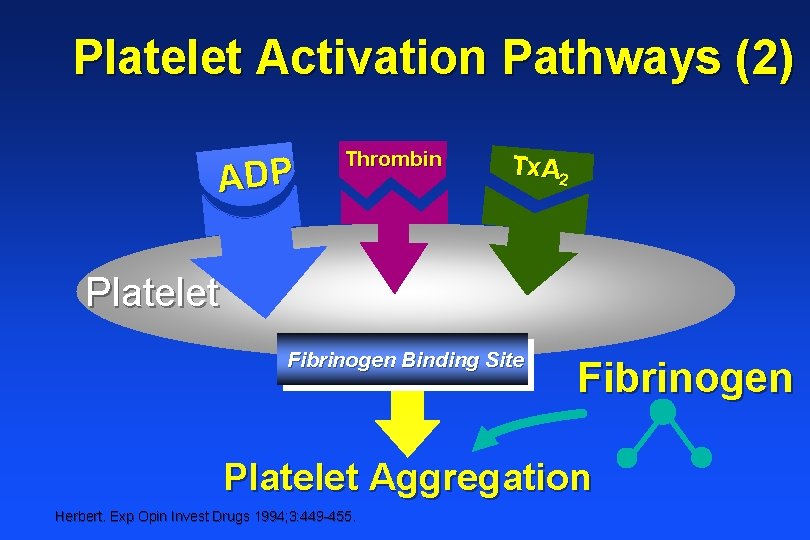
Platelet Activation Pathways (2) ADP Thrombin Tx. A 2 Platelet Fibrinogen Binding Site Fibrinogen Platelet Aggregation Herbert. Exp Opin Invest Drugs 1994; 3: 449 -455.
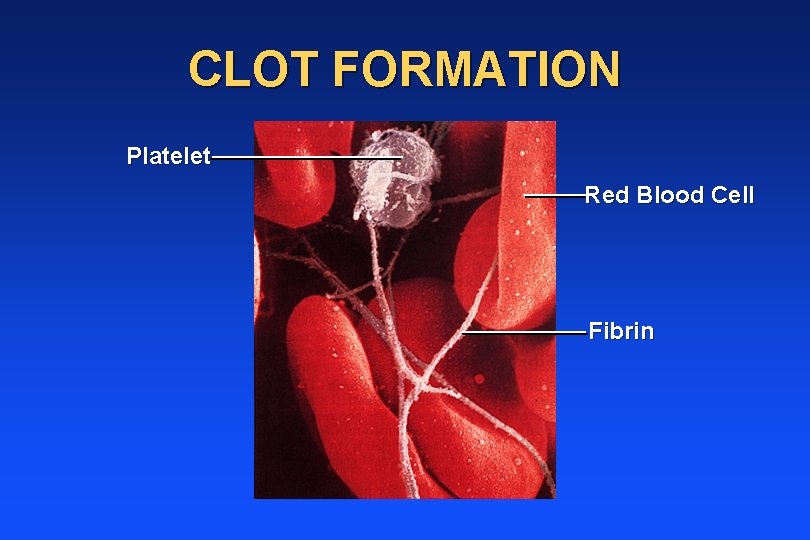
CLOT FORMATION Platelet Red Blood Cell Fibrin
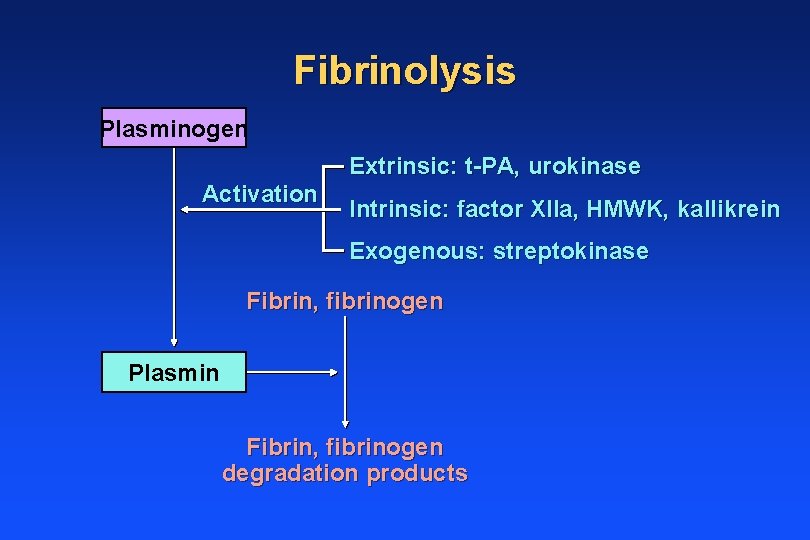
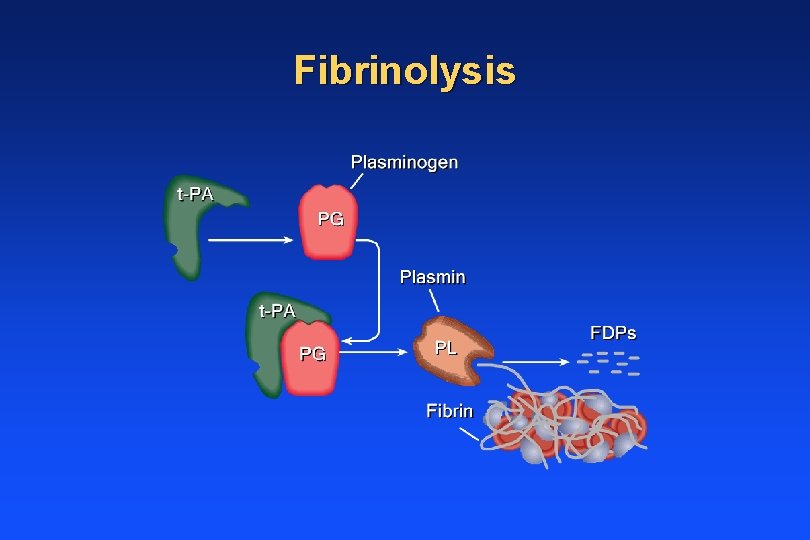
Fibrinolysis Plasminogen Extrinsic: t-PA, urokinase Activation Intrinsic: factor XIIa, HMWK, kallikrein Exogenous: streptokinase Fibrin, fibrinogen Plasmin Fibrin, fibrinogen degradation products
13 FIBRINOLYSIS
Fibrinolysis
15 CONDITIONS PRODUCING COAGULOPATHY
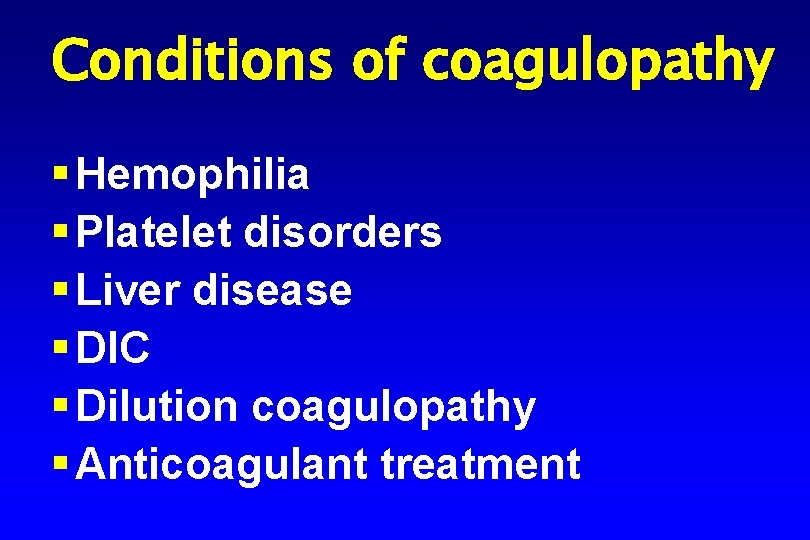
Conditions of coagulopathy § Hemophilia § Platelet disorders § Liver disease § DIC § Dilution coagulopathy § Anticoagulant treatment
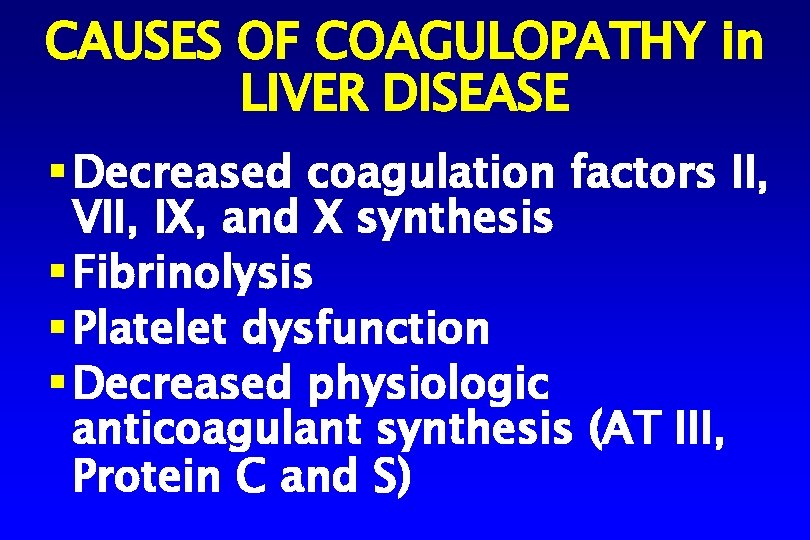
CAUSES OF COAGULOPATHY in LIVER DISEASE § Decreased coagulation factors II, VII, IX, and X synthesis § Fibrinolysis § Platelet dysfunction § Decreased physiologic anticoagulant synthesis (AT III, Protein C and S)
HEMOSTASIS : ROLE OF FACTOR VII and TISSUE FACTOR 18
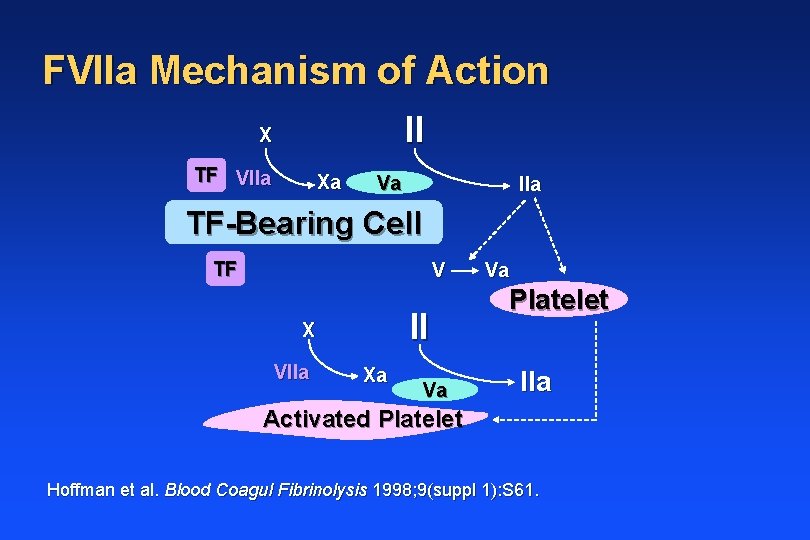
FVIIa Mechanism of Action II X TF VIIa Xa Va IIa TF-Bearing Cell TF V II X VIIa Xa Va Va Platelet IIa Activated Platelet Hoffman et al. Blood Coagul Fibrinolysis 1998; 9(suppl 1): S 61.
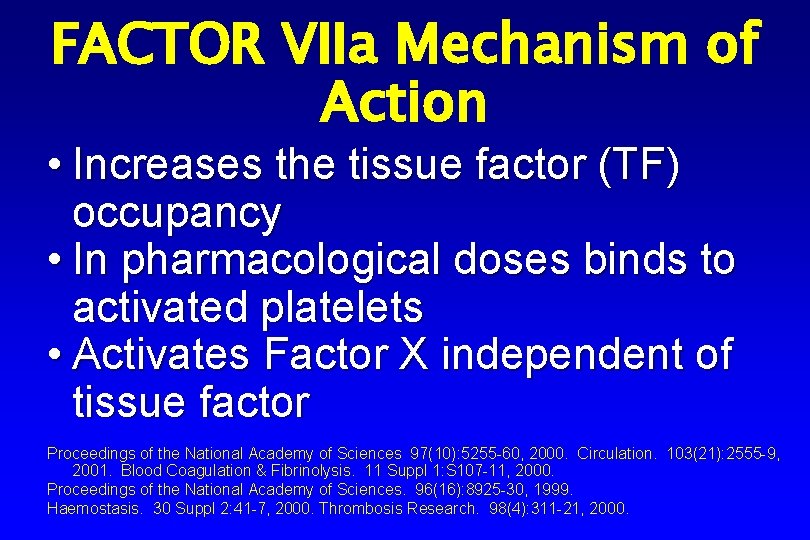
FACTOR VIIa Mechanism of Action • Increases the tissue factor (TF) occupancy • In pharmacological doses binds to activated platelets • Activates Factor X independent of tissue factor Proceedings of the National Academy of Sciences 97(10): 5255 -60, 2000. Circulation. 103(21): 2555 -9, 2001. Blood Coagulation & Fibrinolysis. 11 Suppl 1: S 107 -11, 2000. Proceedings of the National Academy of Sciences. 96(16): 8925 -30, 1999. Haemostasis. 30 Suppl 2: 41 -7, 2000. Thrombosis Research. 98(4): 311 -21, 2000.
21 CONTACT ACTIVATION AND CARDIOPULMONA RY BYPASS
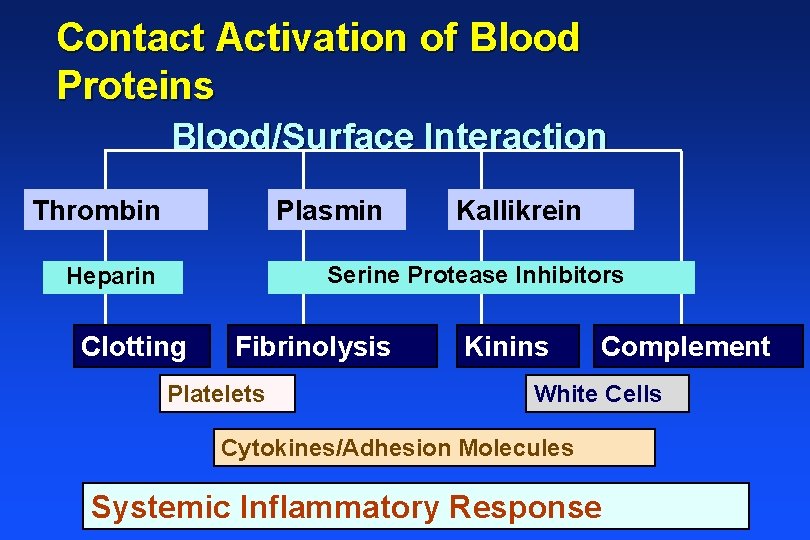
Contact Activation of Blood Proteins Blood/Surface Interaction Thrombin Plasmin Kallikrein Serine Protease Inhibitors Heparin Clotting Fibrinolysis Platelets Kinins Complement White Cells Cytokines/Adhesion Molecules Systemic Inflammatory Response
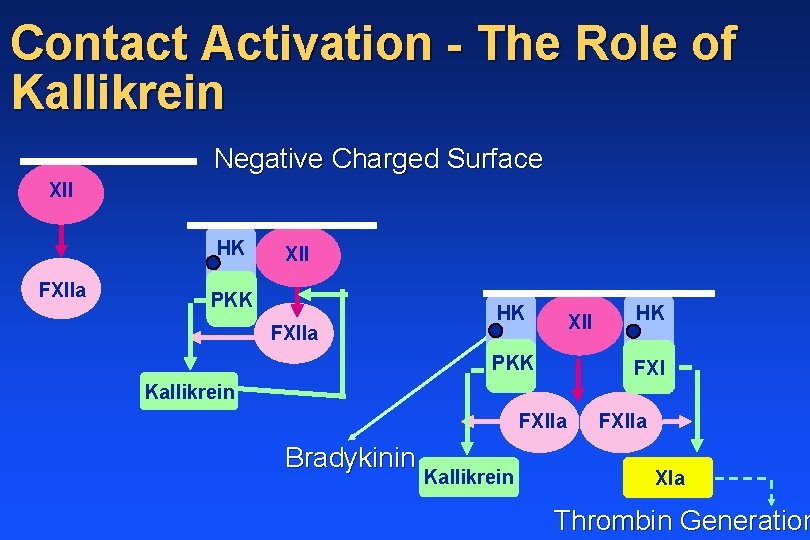
Contact Activation - The Role of Kallikrein Negative Charged Surface XII HK FXIIa XII PKK FXIIa HK XII PKK HK FXI Kallikrein FXIIa Bradykinin Kallikrein FXIIa XIa Thrombin Generation
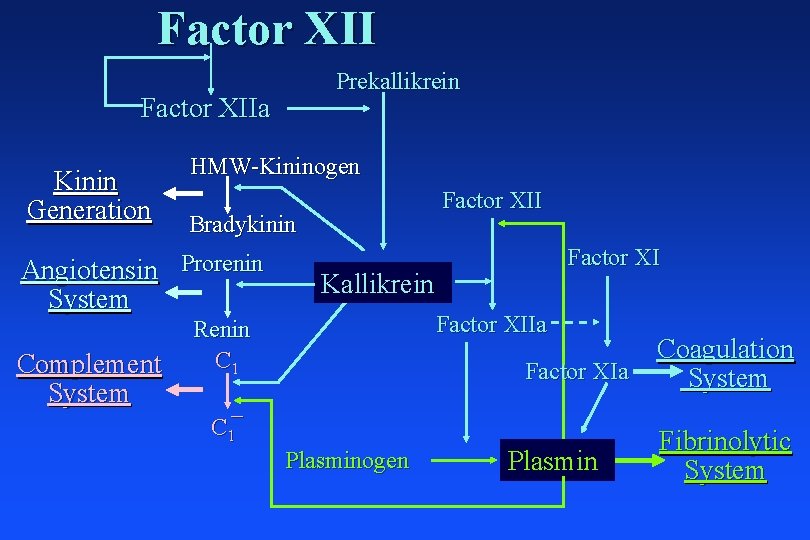
Factor XII Prekallikrein Factor XIIa Kinin Generation HMW-Kininogen Bradykinin Angiotensin Prorenin System Complement System Factor XII Factor XI Kallikrein Factor XIIa Renin C 1 Coagulation Factor XIa System _ C 1 Plasminogen Plasmin Fibrinolytic System
25 ANTICOAGULAN TS/ ANTITHROMBIN S
ANTITHROMBINS/ ANTICOAGULANTS n Argatroban n Bivalirudin (Angiomax) n Hirudin: r-lepirudin, (Refludan) n Low molecular weight heparin (LMWH)/Xa inhibitors n Warfarin Levy JH: Novel IV antithrombins. Am Heart J 2001: 141: 1043
LMWH n Anti-Xa activity greater than AT activity, purified from UFH, MWt 4500 -6000 n Long duration of action, not reversible with protamine n Included enoxaparin (Lovenox), dalteparin (Fragmin), tinzaparin (Innohep)
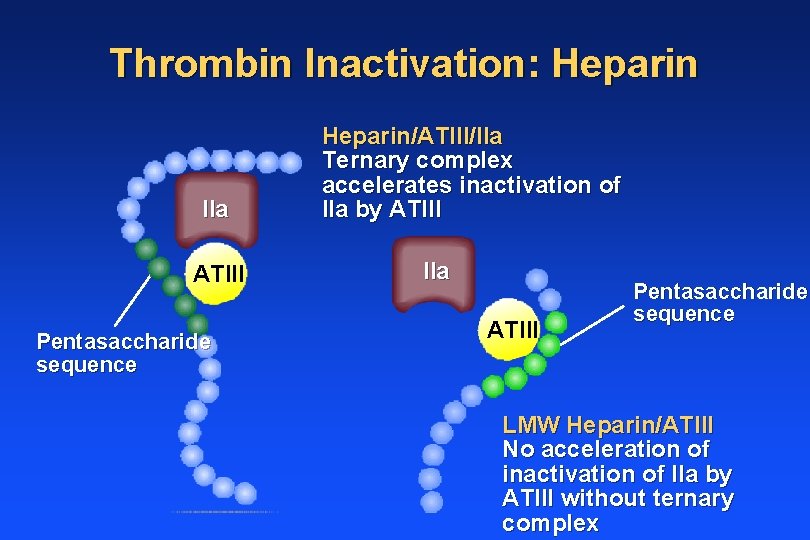
Thrombin Inactivation: Heparin IIa ATIII Pentasaccharide sequence Heparin/ATIII/IIa Ternary complex accelerates inactivation of IIa by ATIII IIa ATIII Pentasaccharide sequence LMW Heparin/ATIII No acceleration of inactivation of IIa by ATIII without ternary complex
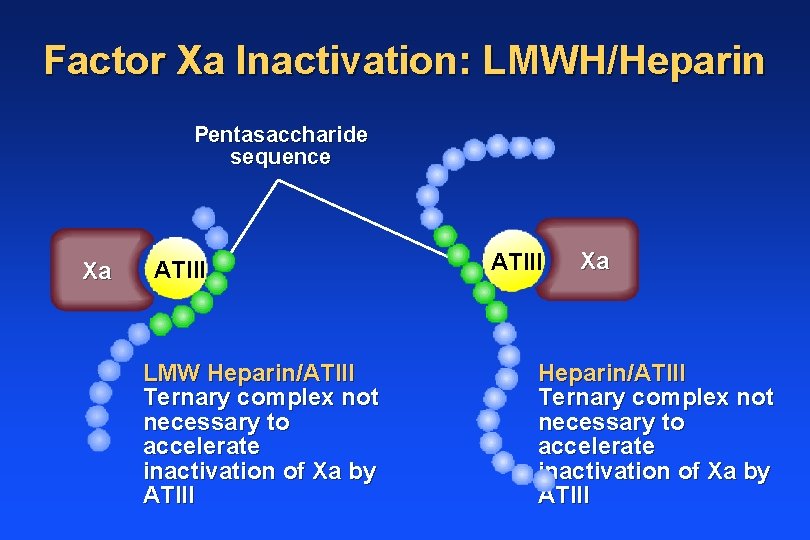
Factor Xa Inactivation: LMWH/Heparin Pentasaccharide sequence Xa ATIII LMW Heparin/ATIII Ternary complex not necessary to accelerate inactivation of Xa by ATIII Xa Heparin/ATIII Ternary complex not necessary to accelerate inactivation of Xa by ATIII
LMWH—Clinical Applications n Prevention of DVT/PE u In patients undergoing hip replacement, during & following hospitalization u In patients undergoing knee replacement u In patients undergoing abdominal surgery who are at risk of TE complications n Treatment of DVT/PE n Ischemic complications of unstable angina and non -Q wave MI
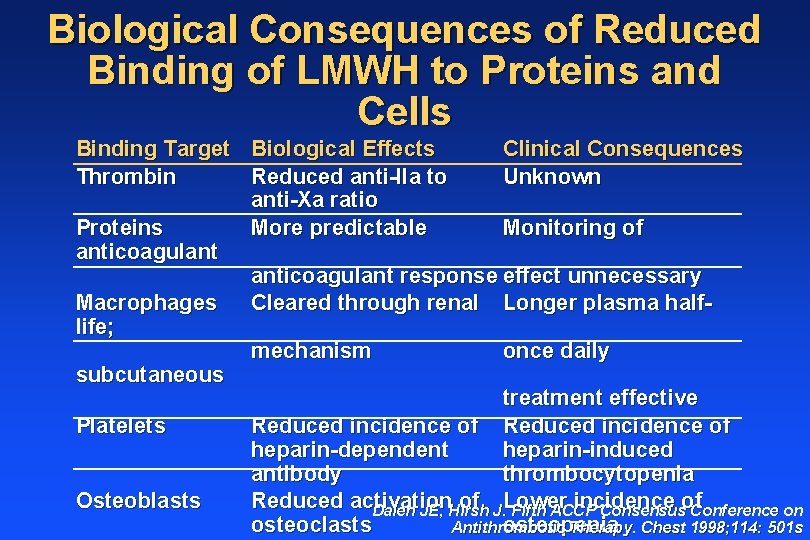
Biological Consequences of Reduced Binding of LMWH to Proteins and Cells Binding Target Thrombin Proteins anticoagulant Macrophages life; subcutaneous Platelets Osteoblasts Biological Effects Reduced anti-IIa to anti-Xa ratio More predictable Clinical Consequences Unknown Monitoring of anticoagulant response effect unnecessary Cleared through renal Longer plasma halfmechanism once daily treatment effective Reduced incidence of heparin-dependent heparin-induced antibody thrombocytopenia Reduced activation of J. Lower incidence Dalen JE, Hirsh Fifth ACCP Consensusof Conference on osteoclasts osteopenia Antithrombotic Therapy. Chest 1998; 114: 501 s
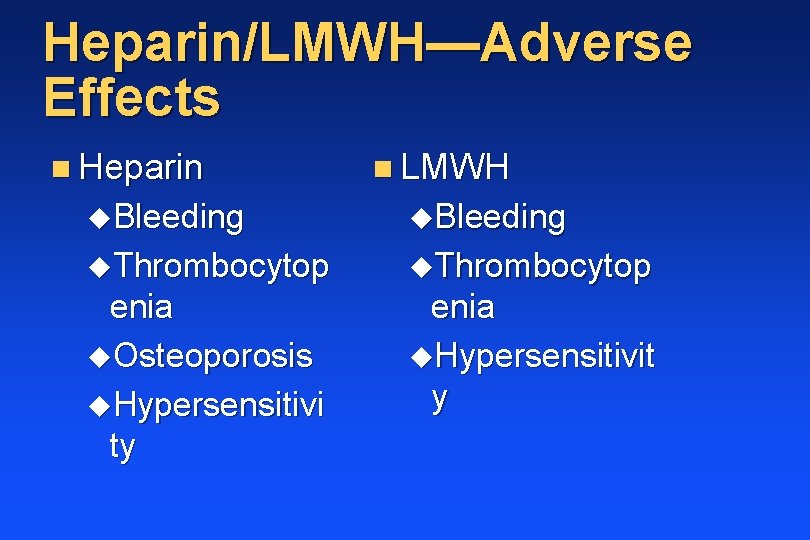
Heparin/LMWH—Adverse Effects n Heparin n LMWH u. Bleeding u. Thrombocytop enia u. Osteoporosis u. Hypersensitivi ty enia u. Hypersensitivit y
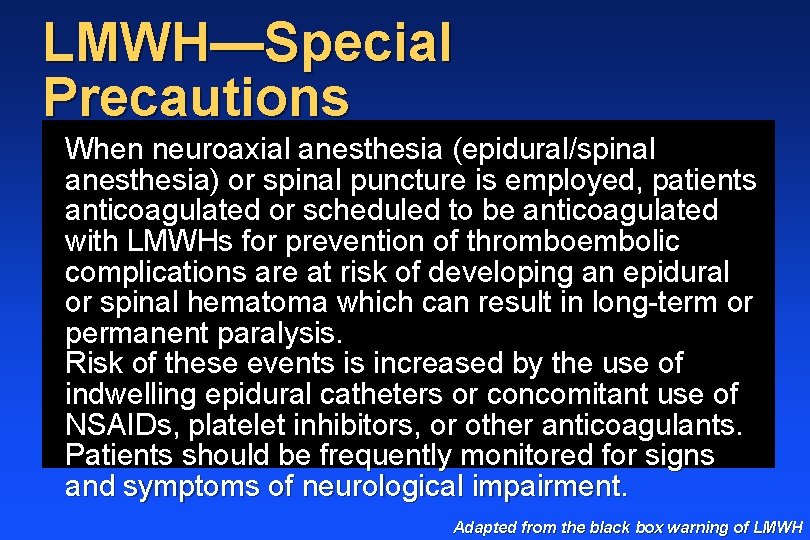
LMWH—Special Precautions When neuroaxial anesthesia (epidural/spinal anesthesia) or spinal puncture is employed, patients anticoagulated or scheduled to be anticoagulated with LMWHs for prevention of thromboembolic complications are at risk of developing an epidural or spinal hematoma which can result in long-term or permanent paralysis. Risk of these events is increased by the use of indwelling epidural catheters or concomitant use of NSAIDs, platelet inhibitors, or other anticoagulants. Patients should be frequently monitored for signs and symptoms of neurological impairment. Adapted from the black box warning of LMWH
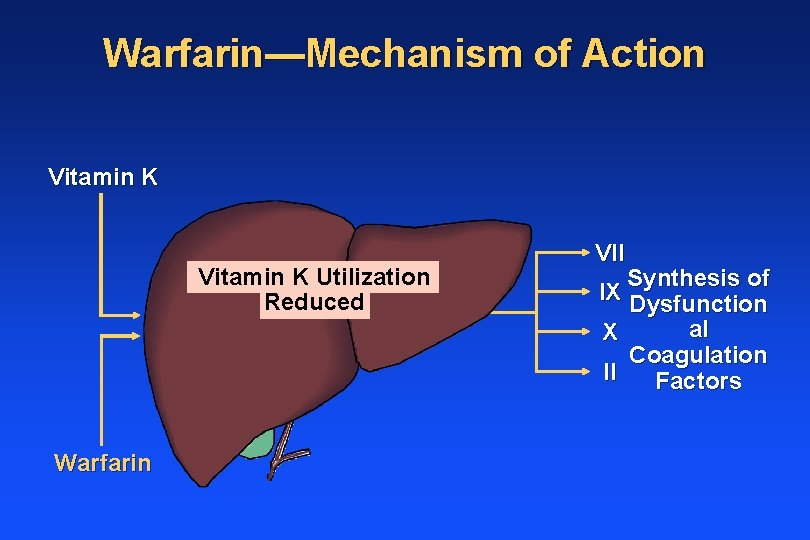
Warfarin—Mechanism of Action Vitamin K Utilization Reduced Warfarin VII Synthesis of IX Dysfunction al X Coagulation II Factors
Warfarin—Indications n Prophylaxis and/or treatment of: u. Venous thrombosis and its extension u. Pulmonary embolism n Thromboembolic complications associated with AF and/or cardiac valve replacement n Reduce risk of death, recurrent MI, and thromboembolic events such as stroke or systemic embolization after MI
Elimination Half-Lives of Vitamin K-Dependent Proteins Protein Factor VII Factor IX Factor II Factor X Half-Life 4– 6 hours 24 hours 60 hours 48– 72 hours Protein C Protein S 8 hours 30 hours
Warfarin—Contraindications Risk of hemorrhage is greater than benefits of therapy n Pregnancy n Hemorrhagic tendencies or blood dyscrasias n Traumatic surgery with large open areas, recent or contemplated surgery of CNS or eye n Bleeding tendencies with active ulceration or overt bleeding n Senility, alcoholism, psychosis or other lack of patient cooperation n Spinal puncture and procedures with potential for uncontrollable bleeding n
Warfarin—Adverse Effects n Fatal or non-fatal hemorrhage from any tissue or organ n Necrosis of skin and other tissues n Other adverse reactions reported less frequently include: u. Systemic cholesterol microembolization u. Alopecia u. Purple toes syndrome, urticaria, dermatitis including bullous eruptions
LOVE=HEMOSTASI S Everybody talks about it, nobody understands it. JH Levy 2000 39