
Control of Gene Expression D Jones TWO METHODS
- Slides: 23
Control of Gene Expression D. Jones
TWO METHODS OF GENE CONTROL Adjust the activity of the enzymes present allosteric enzymes inhibitors Feedback inhibition activators Vary the number of enzymes made Control the rate of transcription
Operon Model 1961 Jacob & Monod Operon A unit of genes with related functions common in bacteria and phages
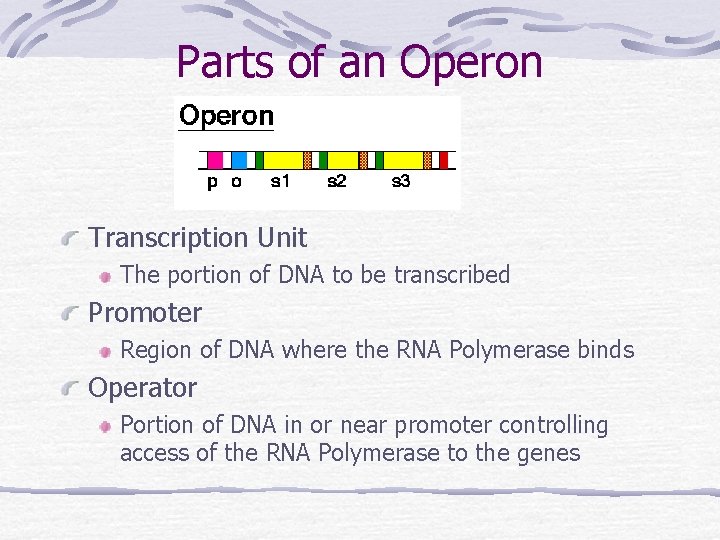
Parts of an Operon Transcription Unit The portion of DNA to be transcribed Promoter Region of DNA where the RNA Polymerase binds Operator Portion of DNA in or near promoter controlling access of the RNA Polymerase to the genes
Function of an Operon Control the production of enzymes depending on metabolic needs Controls many enzymes of the same pathway at one time
Control of the operator Regulatory (repressor) protein Protein that binds to the operator Blocks attachment of RNA Polymerase Binding is reversible Many are allosteric Regulatory gene in a different location from the transcription unit Has its own promoter
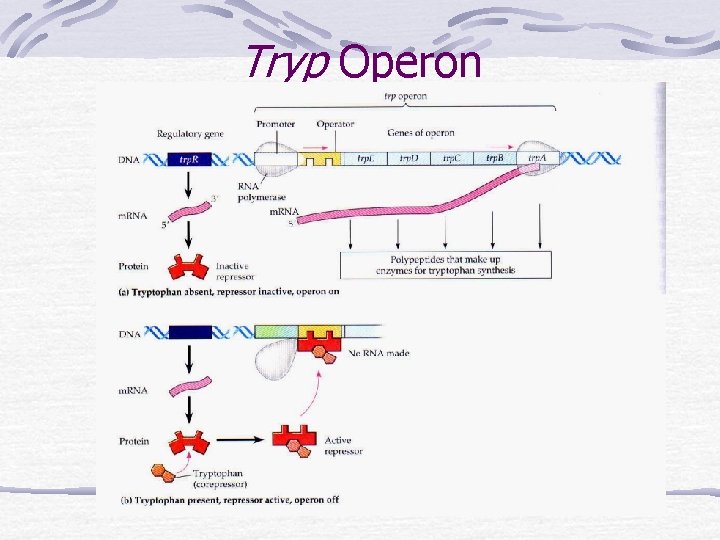
Tryp Operon Controls the production of the amino acid tryptophan in E. coli Contains 5 genes Produces 5 enzymes for production of tryptophan Repressible – is on until inhibited by small protein “turns off” when tryptophan is in the environment Regulatory gene is tryp. R
Tryp Operon
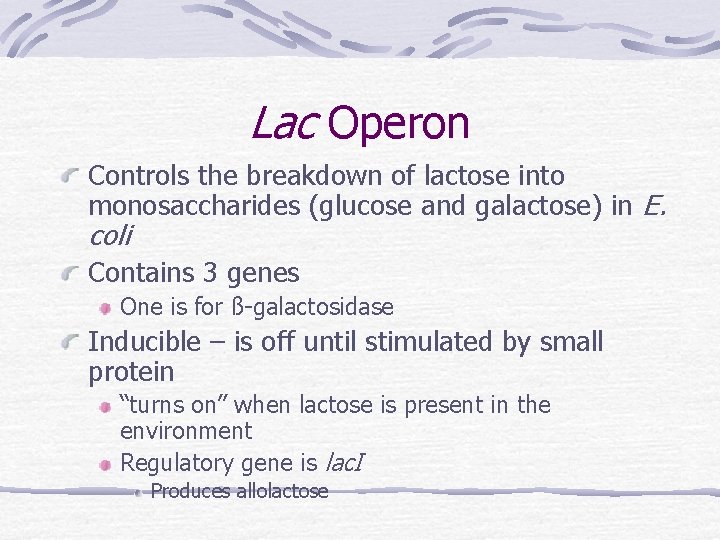
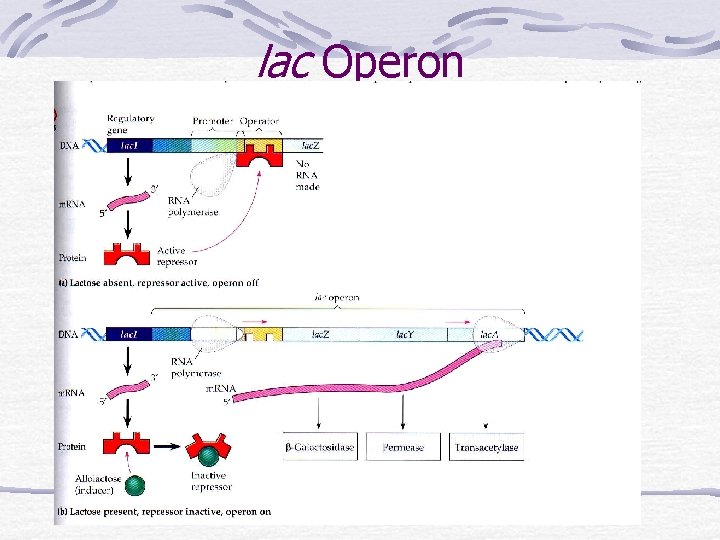
Lac Operon Controls the breakdown of lactose into monosaccharides (glucose and galactose) in E. coli Contains 3 genes One is for ß-galactosidase Inducible – is off until stimulated by small protein “turns on” when lactose is present in the environment Regulatory gene is lac. I Produces allolactose
lac Operon
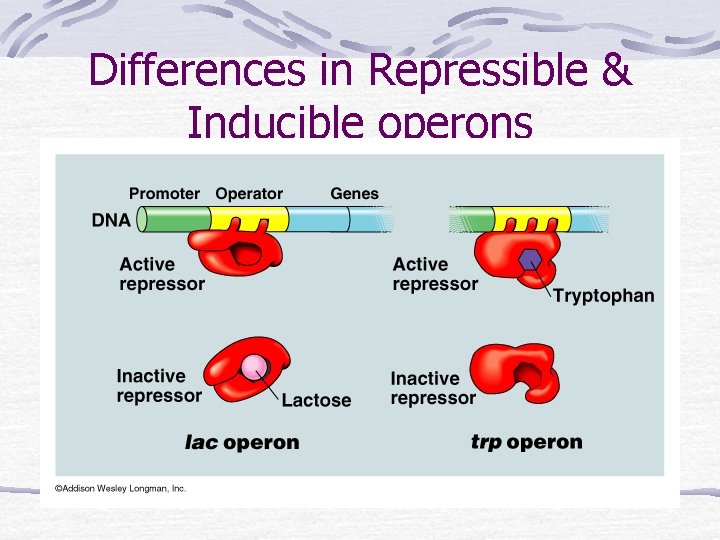
Differences in Repressible & Inducible operons
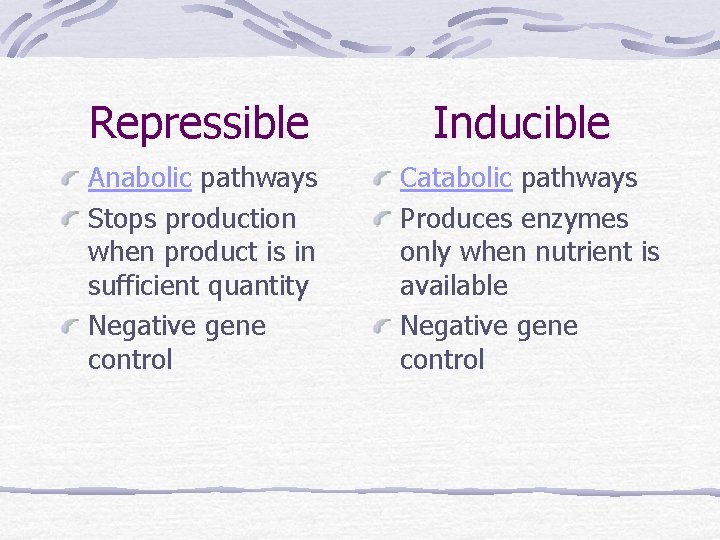
Repressible Anabolic pathways Stops production when product is in sufficient quantity Negative gene control Inducible Catabolic pathways Produces enzymes only when nutrient is available Negative gene control
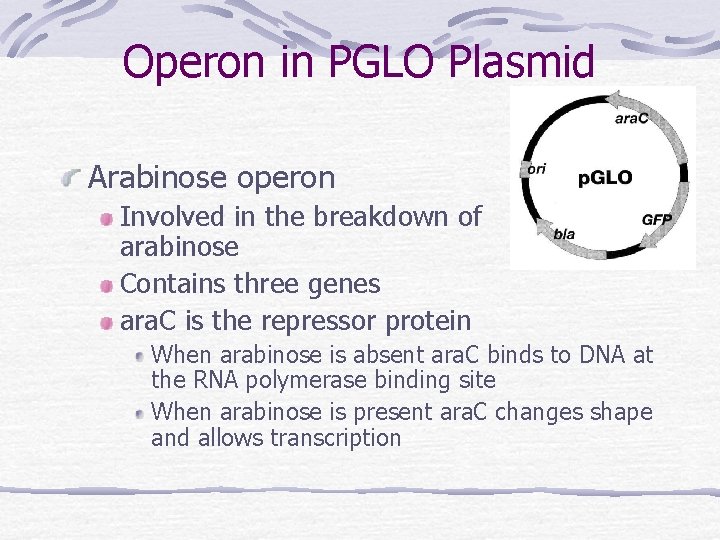
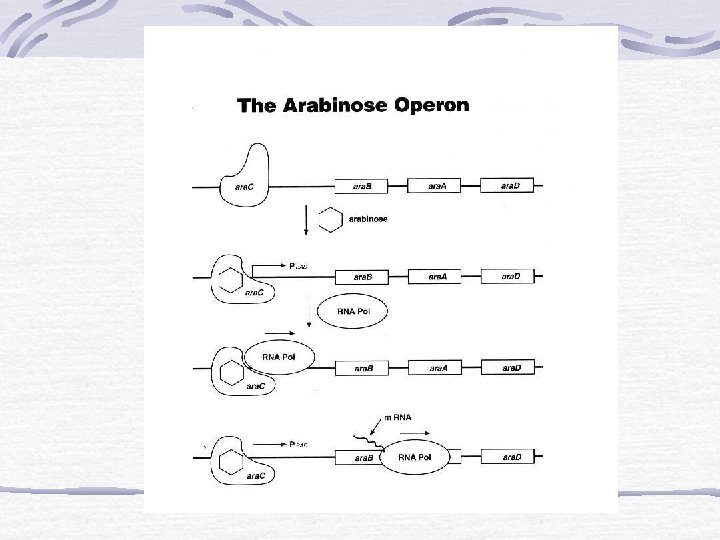
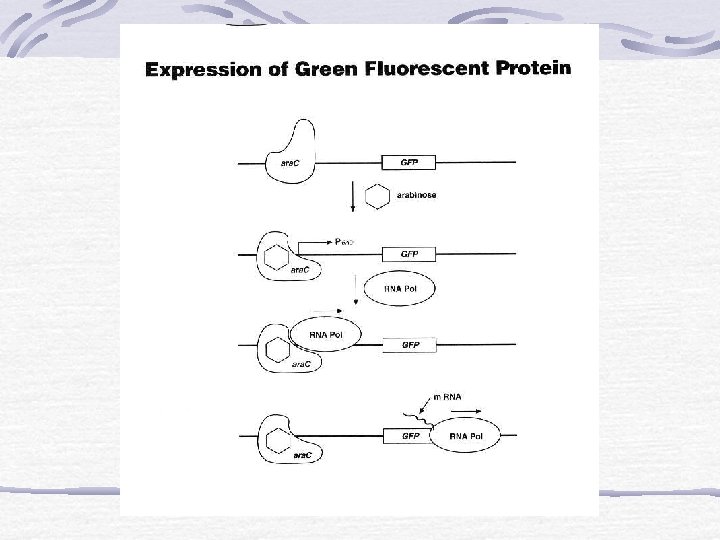
Operon in PGLO Plasmid Arabinose operon Involved in the breakdown of arabinose Contains three genes ara. C is the repressor protein When arabinose is absent ara. C binds to DNA at the RNA polymerase binding site When arabinose is present ara. C changes shape and allows transcription
QUIZ What is the repressor of the arabinose operon? Is the arabinose operon inducible or repressible? Is the arabinose operon similar to the lac operon or to the tryp operon?
ANSWERS The repressor of the arabinose operon is ara. C. The arabinose operon is inducible The arabinose operon is more similar to the lac operon.
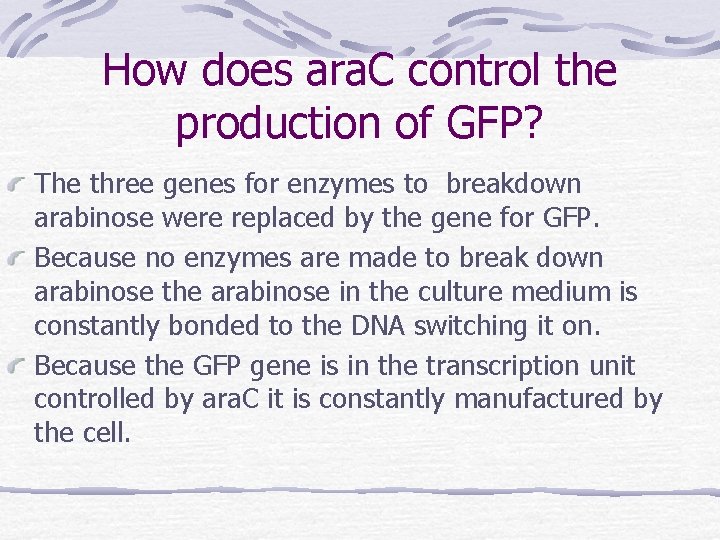
How does ara. C control the production of GFP? The three genes for enzymes to breakdown arabinose were replaced by the gene for GFP. Because no enzymes are made to break down arabinose the arabinose in the culture medium is constantly bonded to the DNA switching it on. Because the GFP gene is in the transcription unit controlled by ara. C it is constantly manufactured by the cell.
THE END (at least for today)
Anabolic – combining small molecules to make larger molecules
Catabolic – breaking large molecules into smaller molecules
Gene –a unit of genetic information in the DNA
Phage (bacteriophage) a virus that attacks bacteria