
Control of Breathing 1 Breathing control centers in
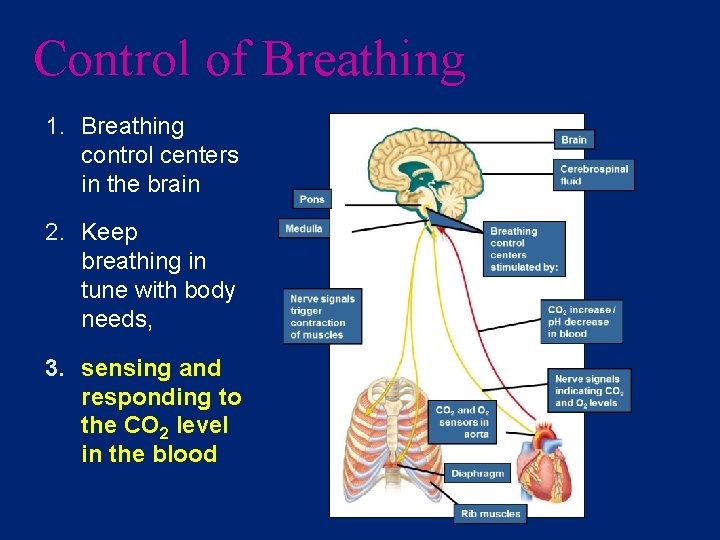
Control of Breathing 1. Breathing control centers in the brain 2. Keep breathing in tune with body needs, 3. sensing and responding to the CO 2 level in the blood
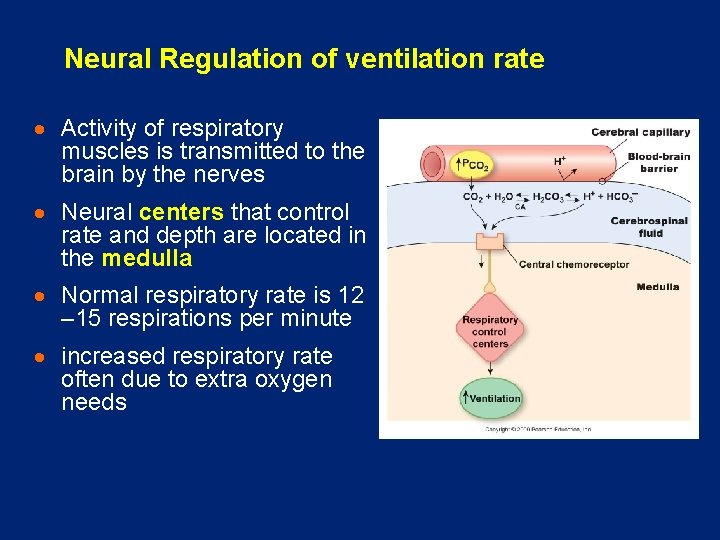
Neural Regulation of ventilation rate · Activity of respiratory muscles is transmitted to the brain by the nerves · Neural centers that control rate and depth are located in the medulla · Normal respiratory rate is 12 – 15 respirations per minute · increased respiratory rate often due to extra oxygen needs

Factors Influencing Respiratory Rate and Depth · Chemical factors · Carbon dioxide levels · Level of carbon dioxide in the blood is the main regulatory chemical for respiration · Oxygen levels is Less effective than changes in blood CO 2 level · Changes in Co 2 and O 2 concentration in the blood are detected by chemoreceptors in the aorta and carotid artery · Information is sent to the medulla oblongata
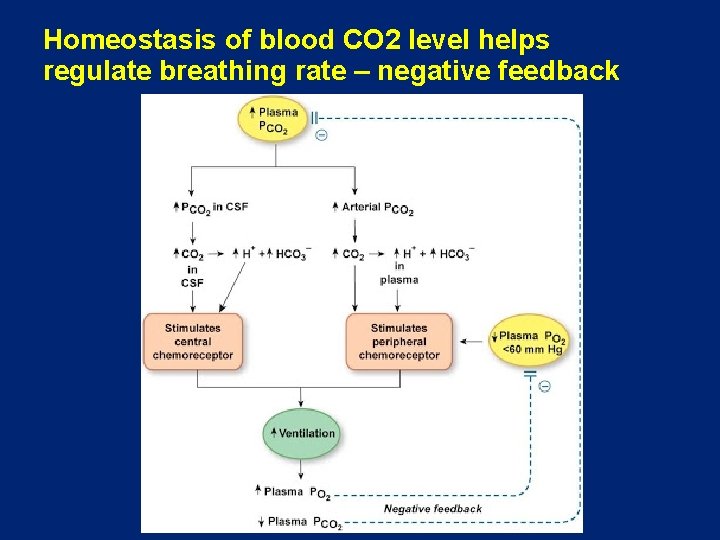
Homeostasis of blood CO 2 level helps regulate breathing rate – negative feedback
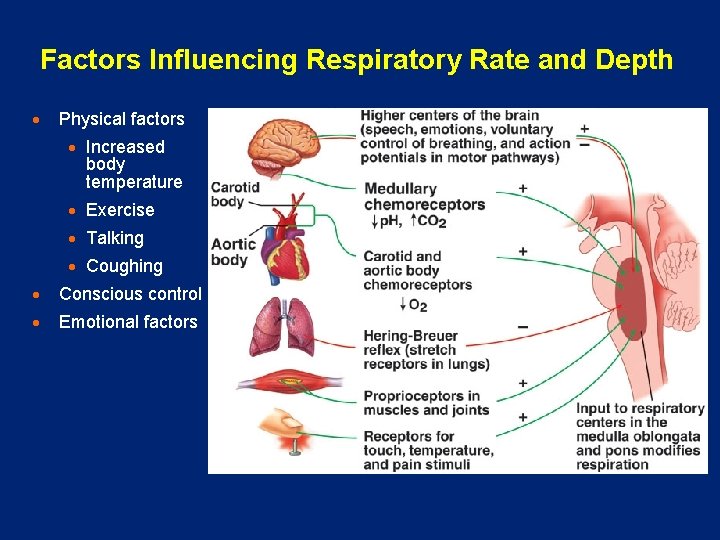
Factors Influencing Respiratory Rate and Depth · Physical factors · Increased body temperature · Exercise · Talking · Coughing · Conscious control · Emotional factors
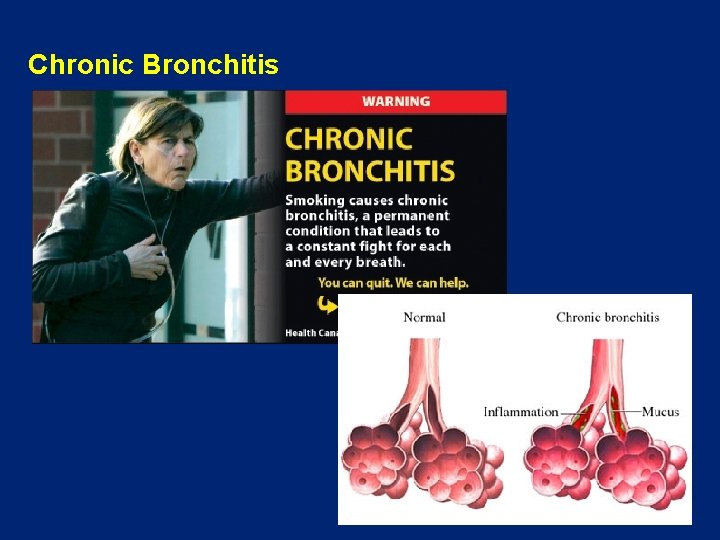
Chronic Bronchitis
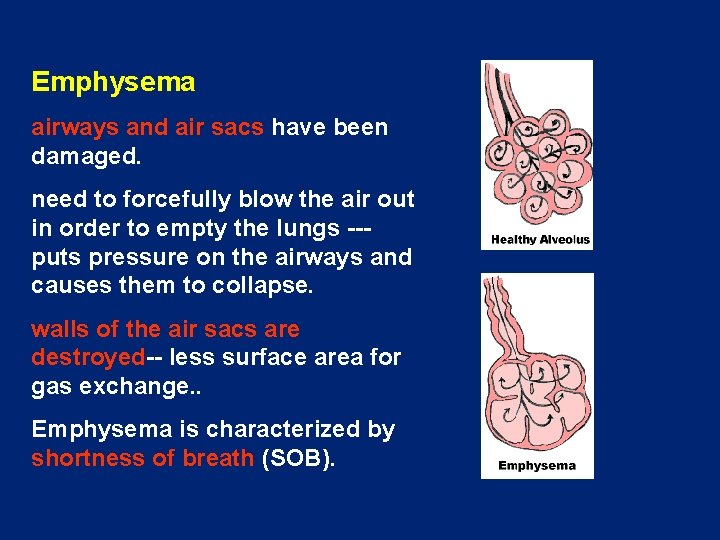
Emphysema airways and air sacs have been damaged. need to forcefully blow the air out in order to empty the lungs --puts pressure on the airways and causes them to collapse. walls of the air sacs are destroyed-- less surface area for gas exchange. . Emphysema is characterized by shortness of breath (SOB).
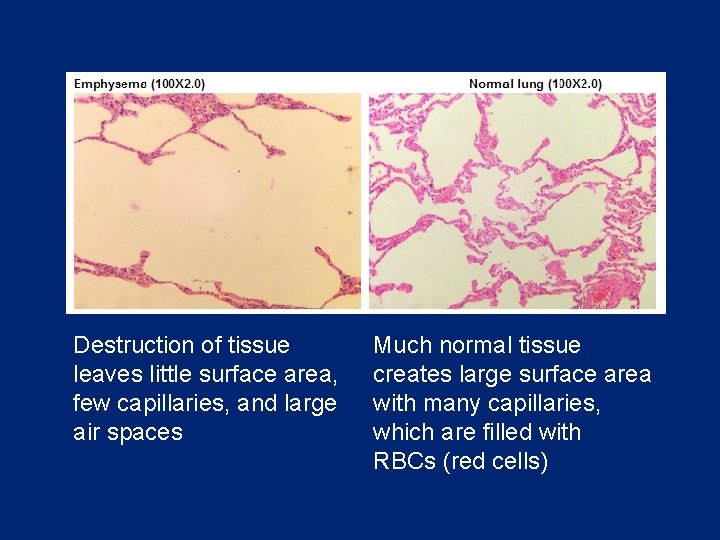
Destruction of tissue leaves little surface area, few capillaries, and large air spaces Much normal tissue creates large surface area with many capillaries, which are filled with RBCs (red cells)
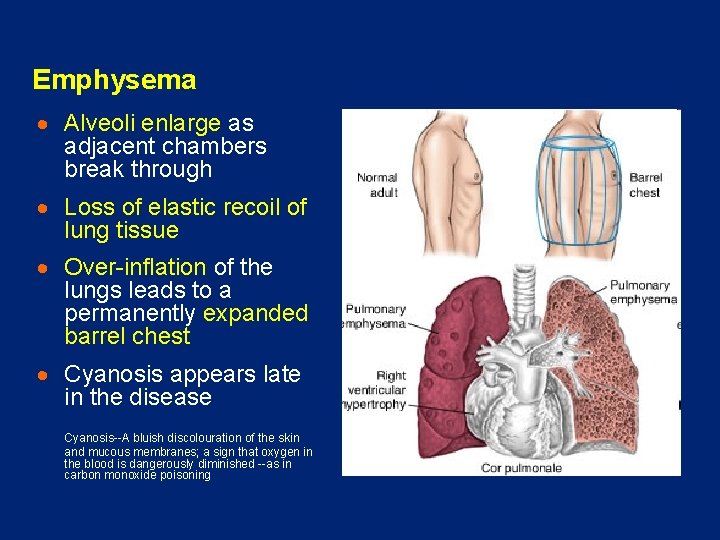
Emphysema · Alveoli enlarge as adjacent chambers break through · Loss of elastic recoil of lung tissue · Over-inflation of the lungs leads to a permanently expanded barrel chest · Cyanosis appears late in the disease Cyanosis--A bluish discolouration of the skin and mucous membranes; a sign that oxygen in the blood is dangerously diminished --as in carbon monoxide poisoning
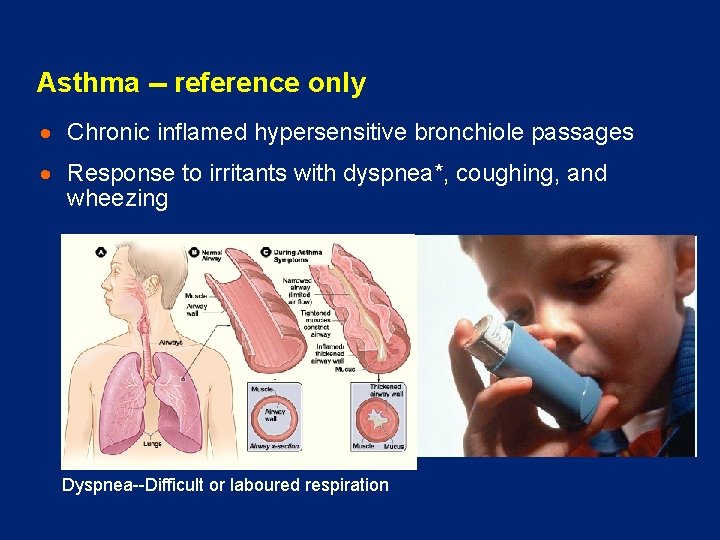
Asthma -- reference only · Chronic inflamed hypersensitive bronchiole passages · Response to irritants with dyspnea*, coughing, and wheezing Dyspnea--Difficult or laboured respiration
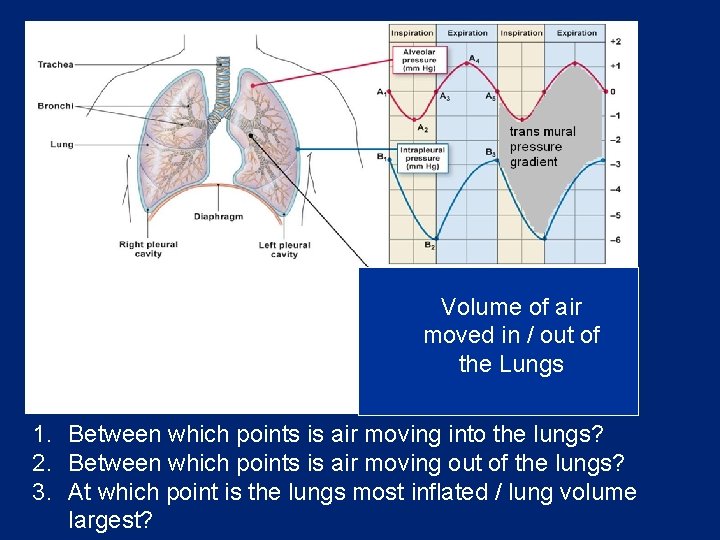
Volume of air moved in / out of the Lungs 1. Between which points is air moving into the lungs? 2. Between which points is air moving out of the lungs? 3. At which point is the lungs most inflated / lung volume largest?
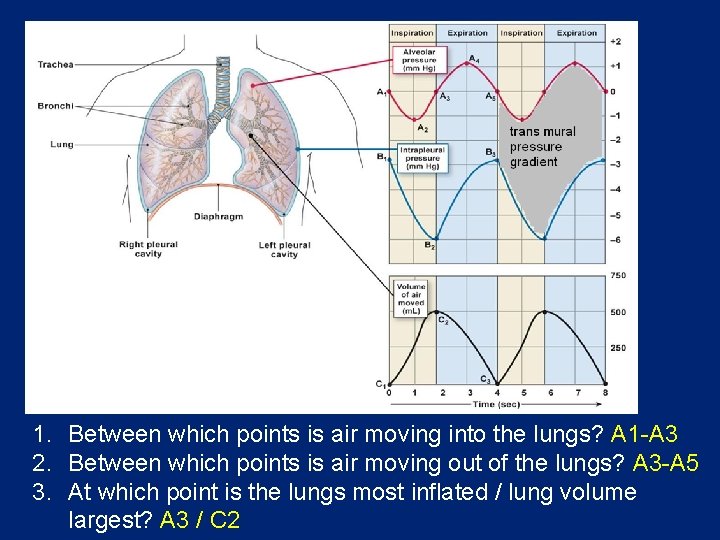
1. Between which points is air moving into the lungs? A 1 -A 3 2. Between which points is air moving out of the lungs? A 3 -A 5 3. At which point is the lungs most inflated / lung volume largest? A 3 / C 2
- Slides: 12