
Control Bleeding and Hypovolemic Shock Core Skills Control
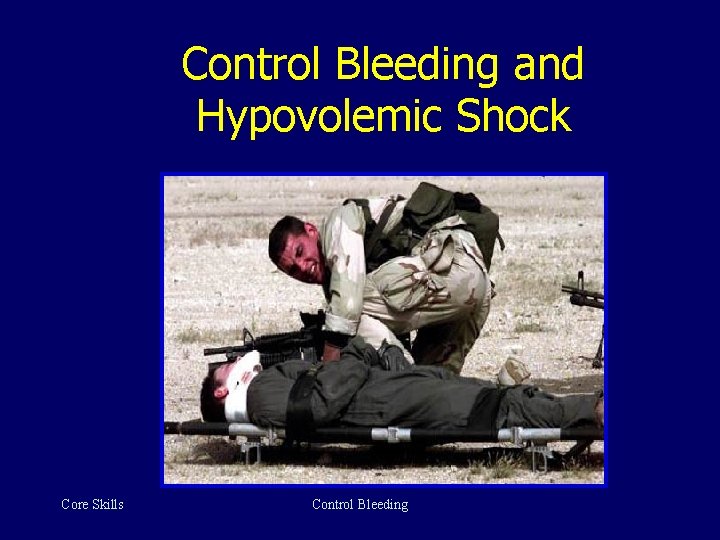
Control Bleeding and Hypovolemic Shock Core Skills Control Bleeding

Introduction n Review methods of controlling bleeding Hemorrhage control save lives ABC Measures – – n Clear the airway/restoring breathing Stop the bleeding Protect the wound Treat/prevent shock A-B-C measures apply to all injuries Core Skills Control Bleeding 2
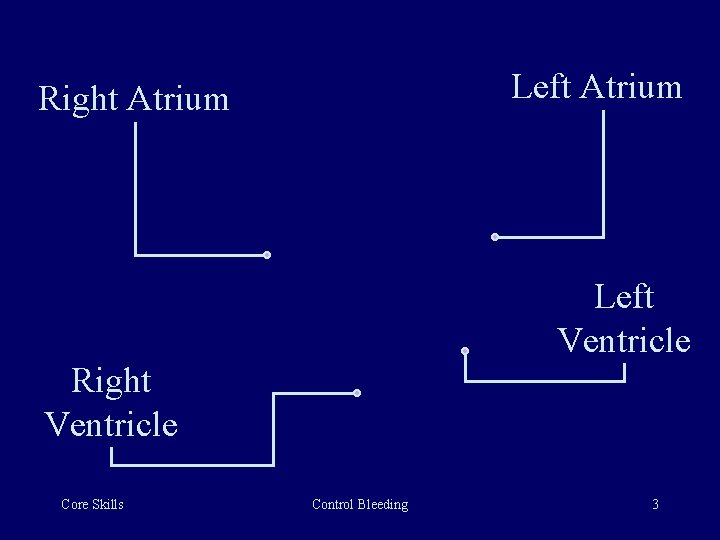
Left Atrium Right Atrium Left Ventricle Right Ventricle Core Skills Control Bleeding 3
Function of Blood n Transport O² and nutrients to the cells n Removes CO² and other waste products n Detoxification and elimination Core Skills Control Bleeding 4
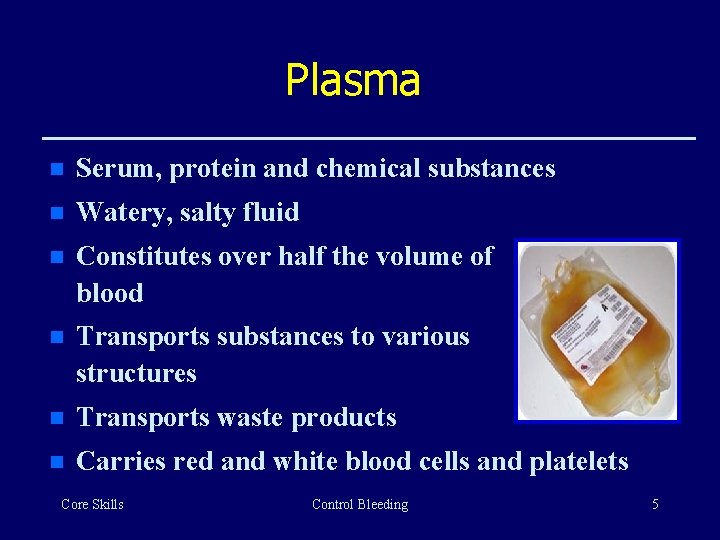
Plasma n Serum, protein and chemical substances n Watery, salty fluid n Constitutes over half the volume of blood n Transports substances to various structures n Transports waste products n Carries red and white blood cells and platelets Core Skills Control Bleeding 5
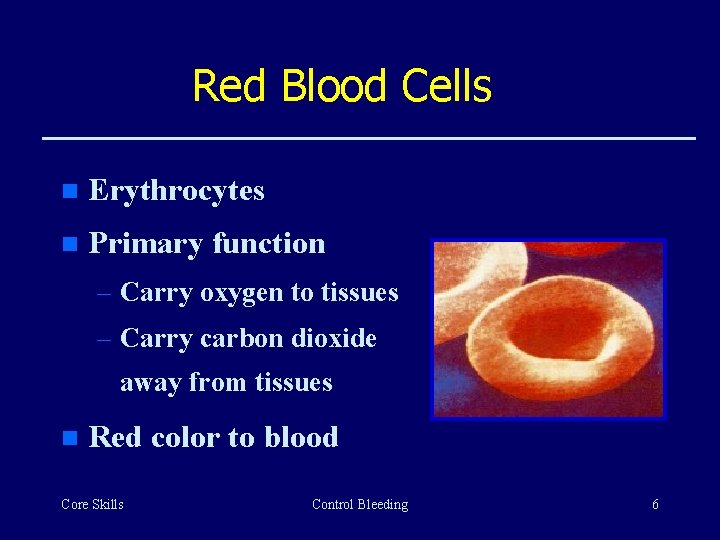
Red Blood Cells n Erythrocytes n Primary function – Carry oxygen to tissues – Carry carbon dioxide away from tissues n Red color to blood Core Skills Control Bleeding 6
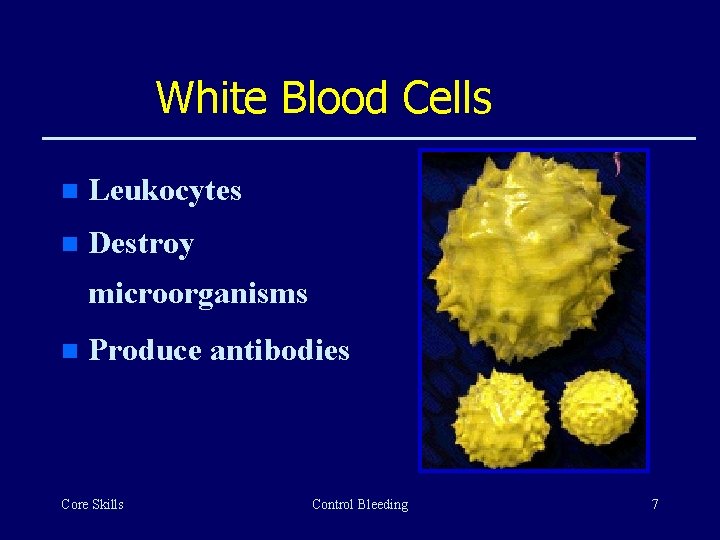
White Blood Cells n Leukocytes n Destroy microorganisms n Produce antibodies Core Skills Control Bleeding 7
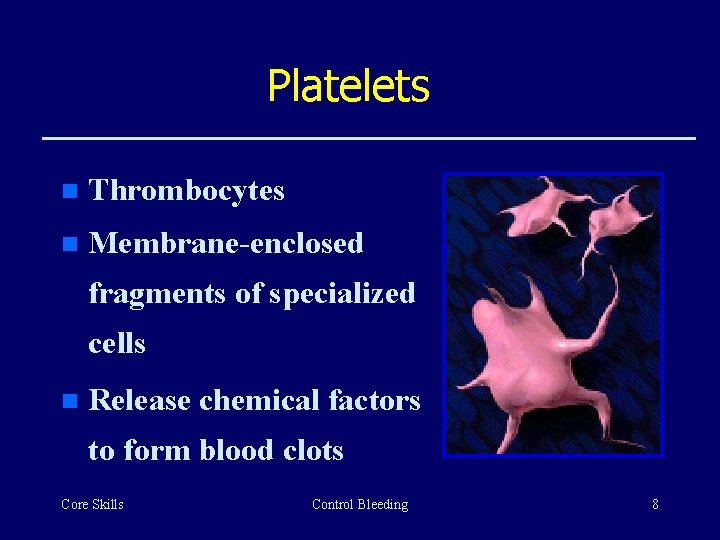
Platelets n Thrombocytes n Membrane-enclosed fragments of specialized cells n Release chemical factors to form blood clots Core Skills Control Bleeding 8

Pulses n n Left ventricle contracts Peripheral pulse – – n Radial Brachial Posterior tibial Dorsalis pedis Central pulses – Carotid – Femoral Core Skills Control Bleeding 9
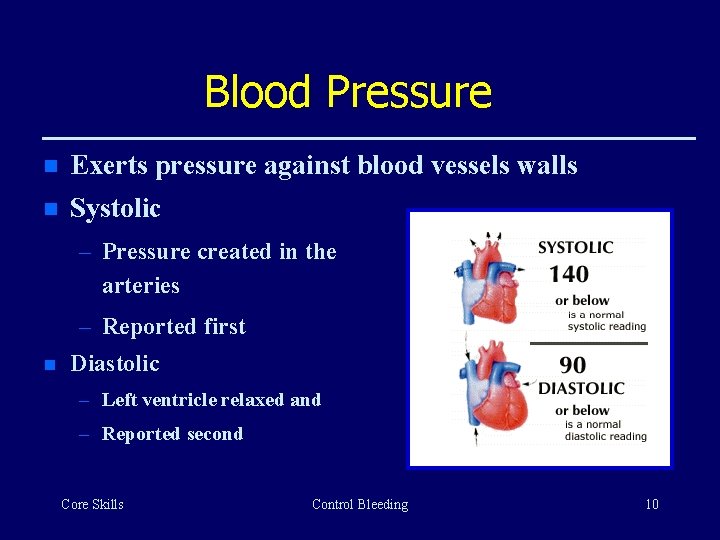
Blood Pressure n Exerts pressure against blood vessels walls n Systolic – Pressure created in the arteries n – Reported first Diastolic – Left ventricle relaxed and refilling – Reported second Core Skills Control Bleeding 10
Blood Hemorrhage or bleeding n Escape of blood from capillaries, veins, and arteries n Adult body: n – Contains approximately 5 to 6 liters of blood – 1 pint of blood without harmful effects – 2 pints may cause shock Core Skills Control Bleeding 11
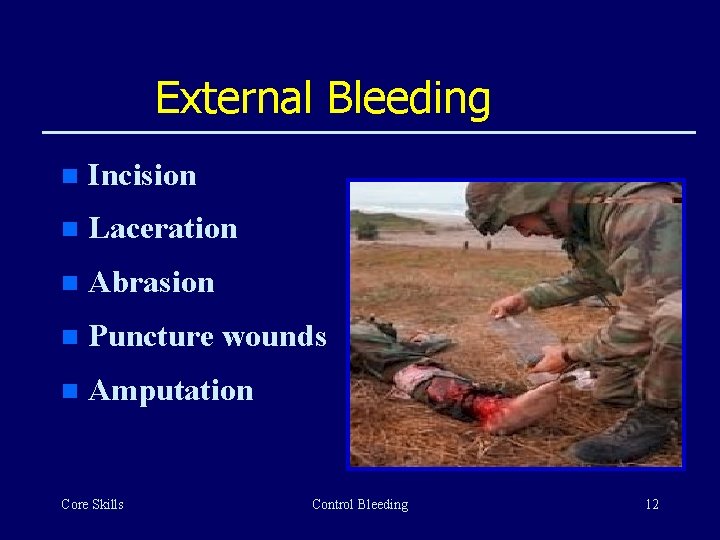
External Bleeding n Incision n Laceration n Abrasion n Puncture wounds n Amputation Core Skills Control Bleeding 12
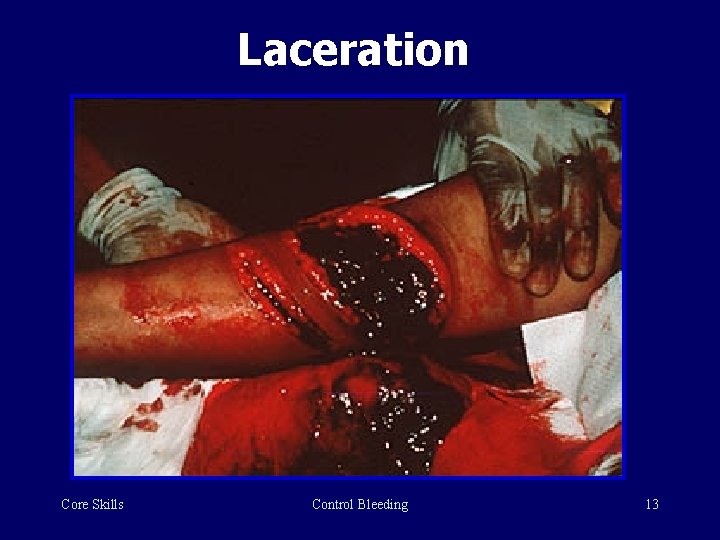
Laceration Core Skills Control Bleeding 13

Puncture Wound Core Skills Control Bleeding 14
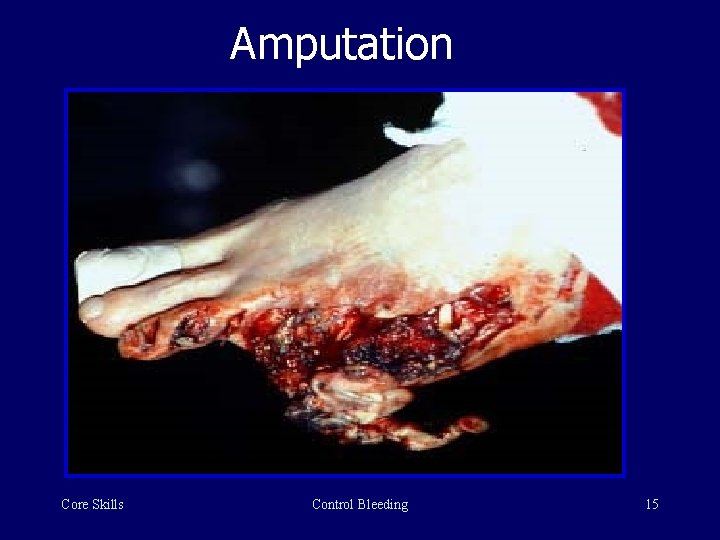
Amputation Core Skills Control Bleeding 15
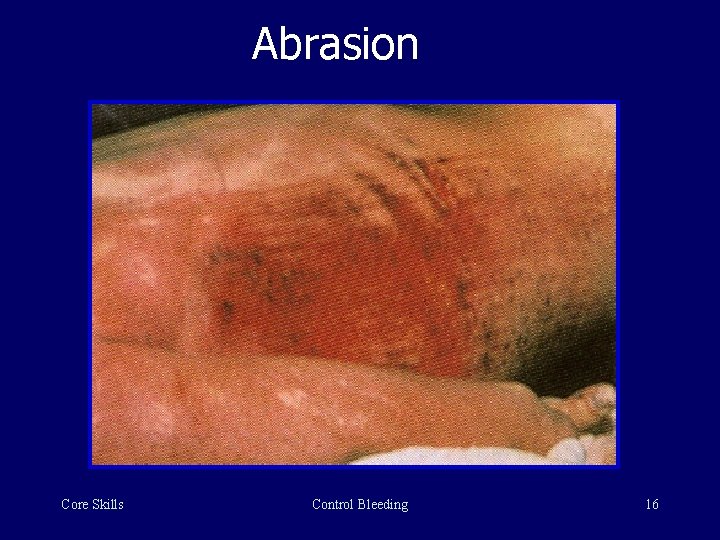
Abrasion Core Skills Control Bleeding 16
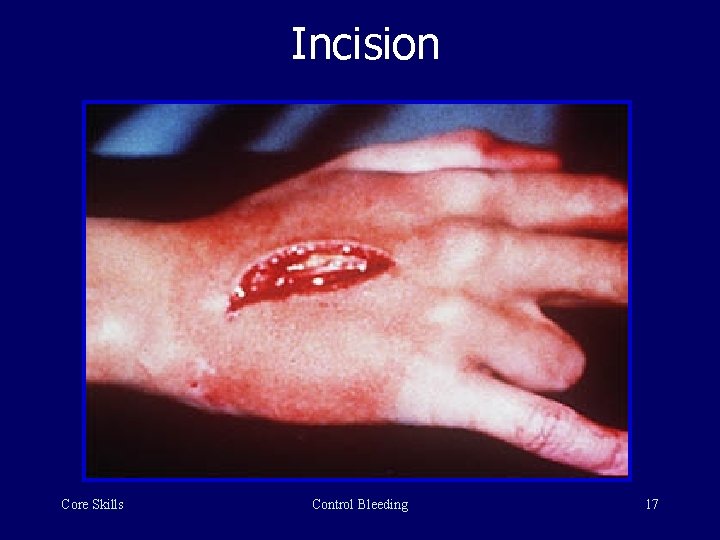
Incision Core Skills Control Bleeding 17

Internal Bleeding n Not always obvious n Suspicion based on mechanism of injury – Falls – Blast injuries – Penetrating trauma Core Skills Control Bleeding 18
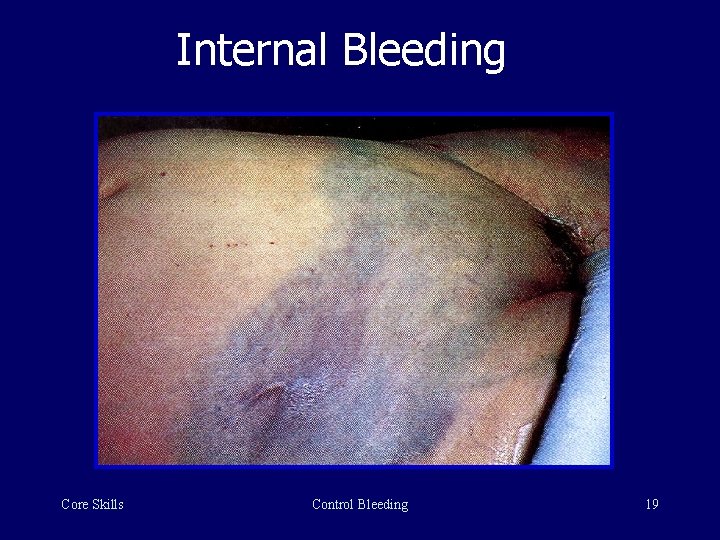
Internal Bleeding Core Skills Control Bleeding 19
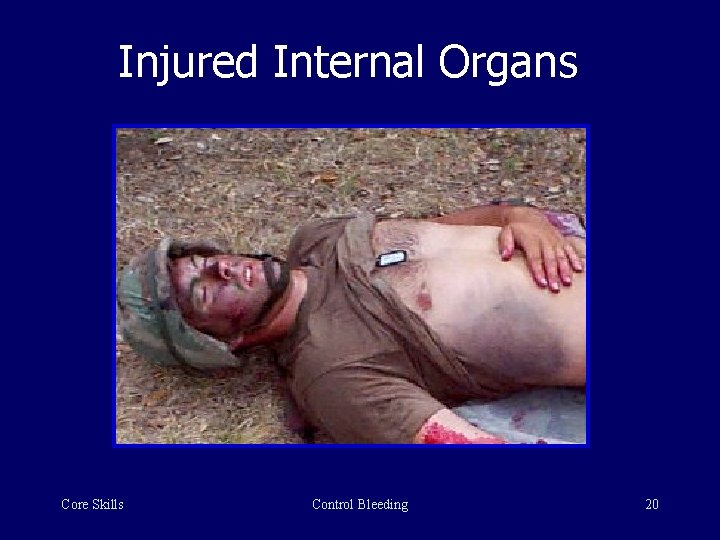
Injured Internal Organs Core Skills Control Bleeding 20

Sources of Bleeding n n n Arterial Rapid, profuse and pulsating; bright red in color Venous Steady flow; dark red or maroon in color Capillary Slow and oozing; often clots spontaneously Core Skills Control Bleeding 21
Hypovolemic Shock Ø Inadequate tissue perfusion Ø Causes Hemorrhage Severe burns Severe vomiting and/or diarrhea Core Skills Control Bleeding 22
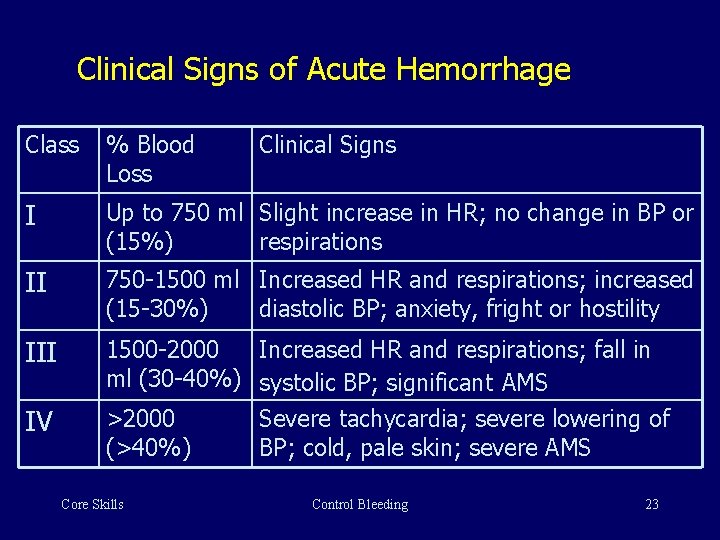
Clinical Signs of Acute Hemorrhage Class % Blood Loss I Up to 750 ml Slight increase in HR; no change in BP or (15%) respirations II 750 -1500 ml Increased HR and respirations; increased (15 -30%) diastolic BP; anxiety, fright or hostility III 1500 -2000 Increased HR and respirations; fall in ml (30 -40%) systolic BP; significant AMS >2000 Severe tachycardia; severe lowering of (>40%) BP; cold, pale skin; severe AMS IV Core Skills Clinical Signs Control Bleeding 23
Other Common Signs of Hypovolemic Shock ü Cold, clammy skin ü Cyanosis- nail beds, lips and ear lobes ü Weak, thready, rapid pulse ü Shallow respirations ü Oliguria ü Listlessness, stupor, LOC ü Excessive thirst Core Skills Control Bleeding 24
Internal Signs of Hemorrhage v Soft tissue bruising v Abdominal tenderness v Hemoptysis v Hematemesis v Melena Core Skills Control Bleeding 25

Treatment-Direct Pressure First, expose the wound!!! n Place a sterile dressing over the wound apply pressure n Use a bandage or cravat to tie a knot over the dressing covering the wound n Core Skills Control Bleeding 26
Treatment-Elevation Raise injured extremity above the heart n Used together with direct pressure n Use an object to maintain elevation n Utilize bystanders n Core Skills Control Bleeding 27
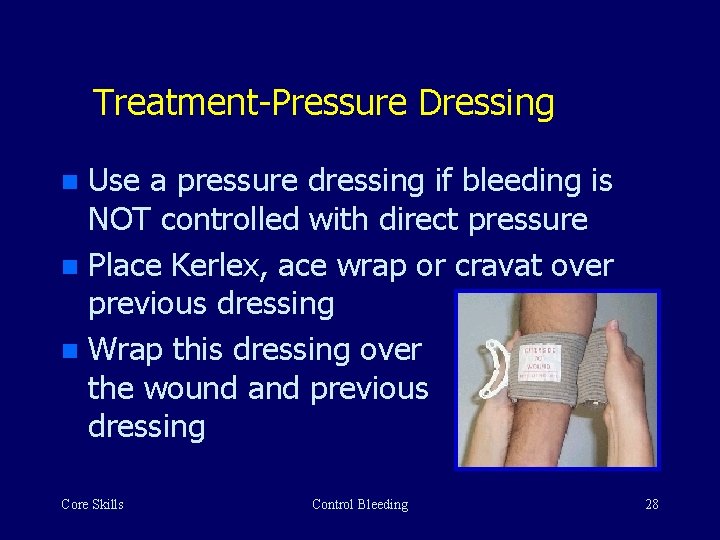
Treatment-Pressure Dressing Use a pressure dressing if bleeding is NOT controlled with direct pressure n Place Kerlex, ace wrap or cravat over previous dressing n Wrap this dressing over the wound and previous dressing n Core Skills Control Bleeding 28

Pressure Points Severe bleeding n Bleeding not controlled by direct pressure and elevation n Apply pressure to appropriate pressure point n ( Core Skills Control Bleeding 29
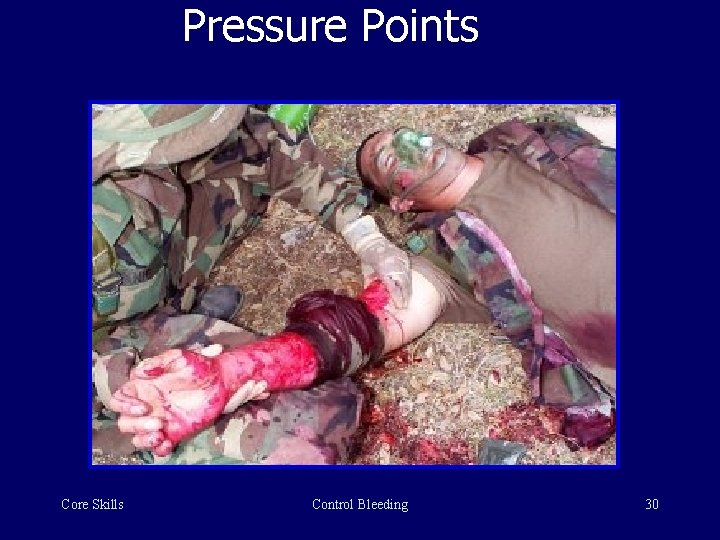
Pressure Points Core Skills Control Bleeding 30
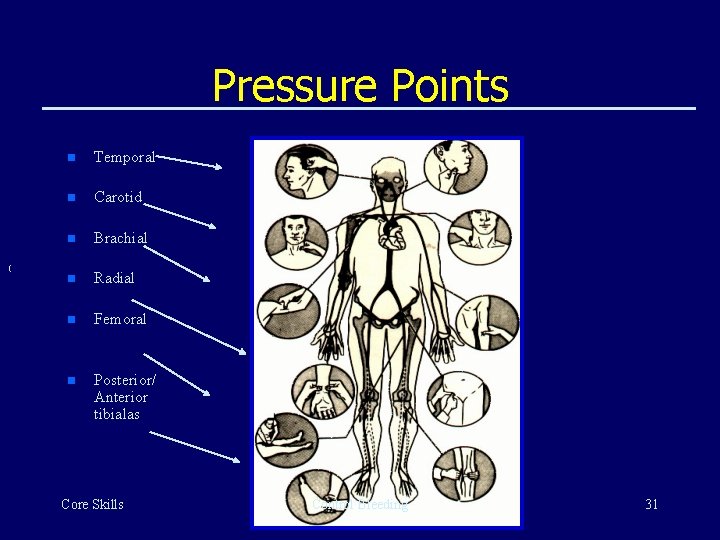
Pressure Points ( n Temporal n Carotid n Brachial n Radial n Femoral n Posterior/ Anterior tibialas Core Skills Control Bleeding 31
Brachial Pressure Point Lower part of the upper arm n Above the elbow in the groove between muscles n Using fingers or thumb n Apply pressure to the inside of the arm over the bone n Core Skills Control Bleeding 32
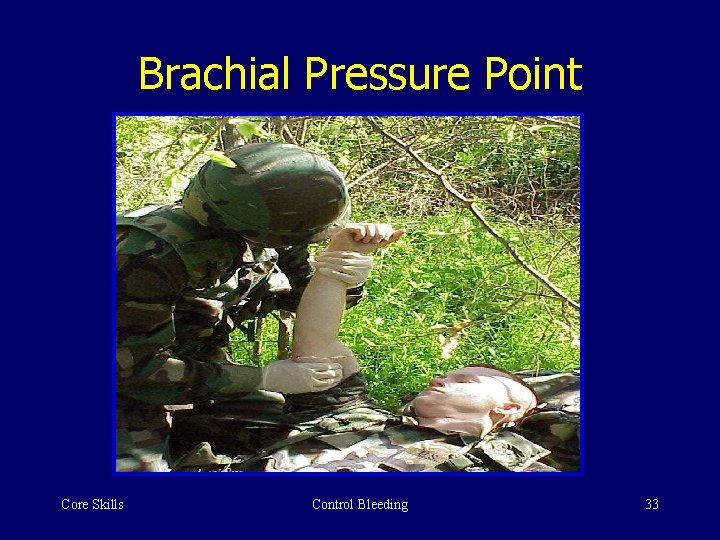
Brachial Pressure Point Core Skills Control Bleeding 33
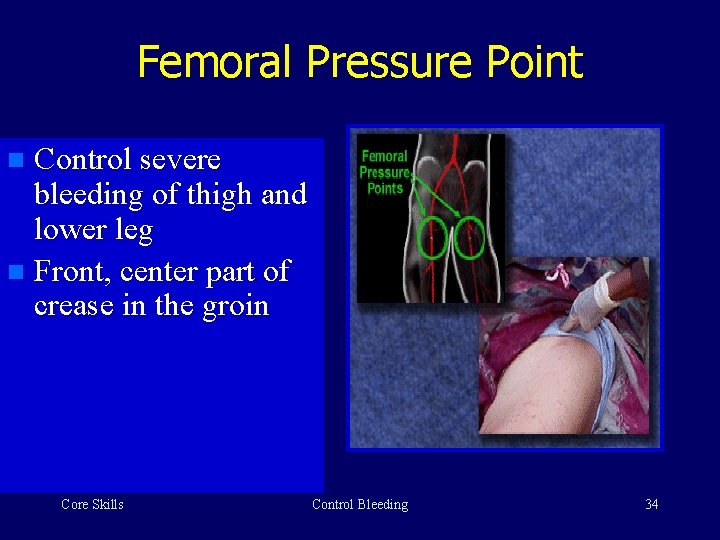
Femoral Pressure Point Control severe bleeding of thigh and lower leg n Front, center part of crease in the groin n Core Skills Control Bleeding 34
Application of Pressure Points n Position the casualty on his or her back n Kneel on opposite side from wound n Place heel of hand directly on pressure point n Lean forward to apply pressure n If bleeding is not controlled – Press directly over artery – Press heel of other hand on fingertips Core Skills Control Bleeding 35
Splinting Immobilization is one of the best ways to stop bleeding n Broken bone fragments may grate on blood vessels n Muscular activity can increase rate of blood flow n Air splints used to apply direct pressure n Core Skills Control Bleeding 36
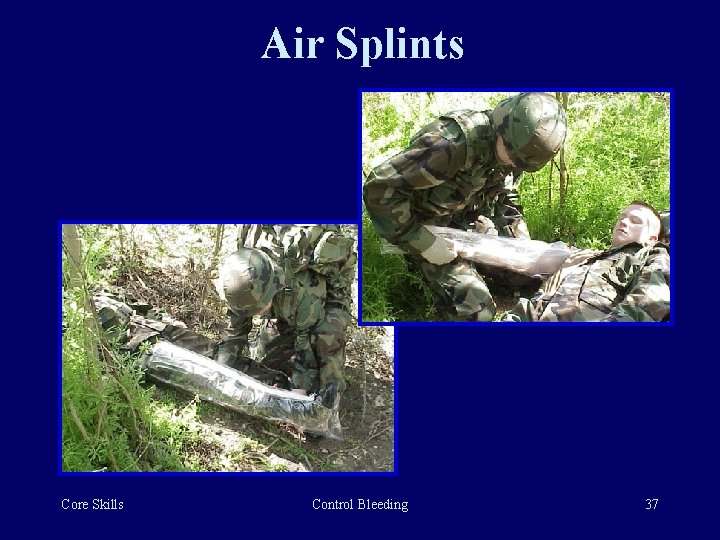
Air Splints Core Skills Control Bleeding 37
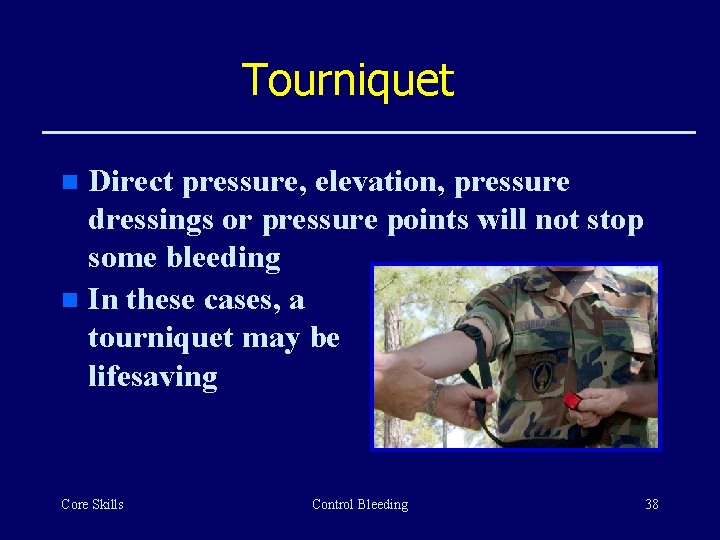
Tourniquet Direct pressure, elevation, pressure dressings or pressure points will not stop some bleeding n In these cases, a tourniquet may be lifesaving n Core Skills Control Bleeding 38
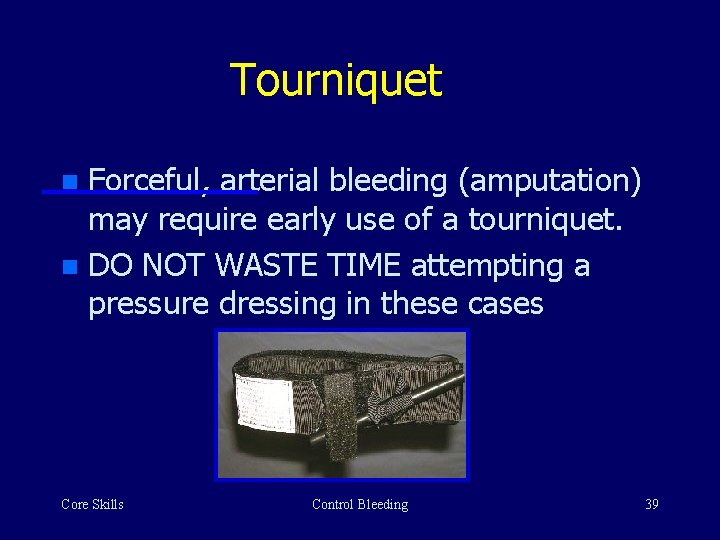
Tourniquet Forceful, arterial bleeding (amputation) may require early use of a tourniquet. n DO NOT WASTE TIME attempting a pressure dressing in these cases n Core Skills Control Bleeding 39
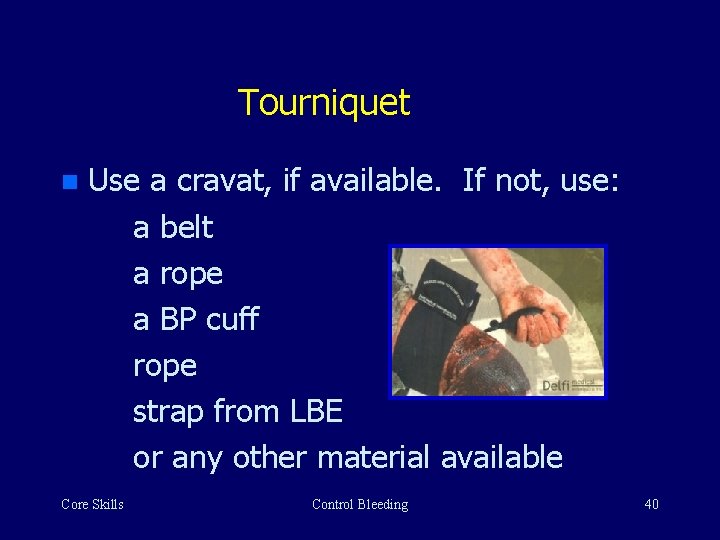
Tourniquet n Use a cravat, if available. If not, use: a belt a rope a BP cuff rope strap from LBE or any other material available Core Skills Control Bleeding 40
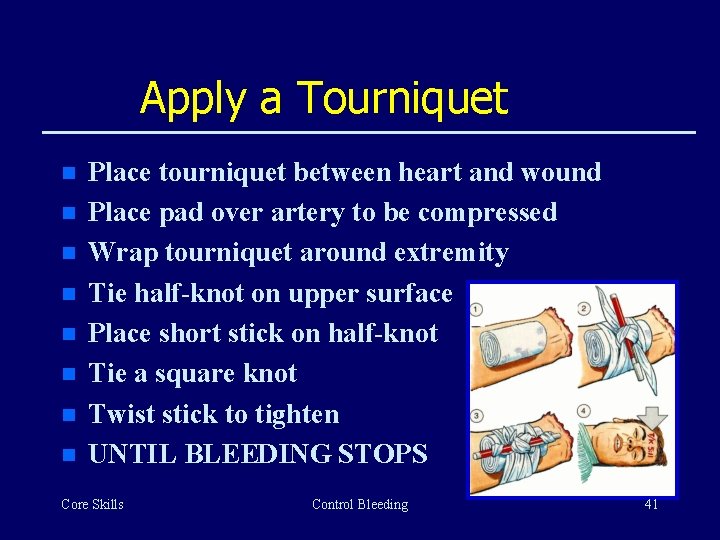
Apply a Tourniquet n n n n Place tourniquet between heart and wound Place pad over artery to be compressed Wrap tourniquet around extremity Tie half-knot on upper surface Place short stick on half-knot Tie a square knot Twist stick to tighten UNTIL BLEEDING STOPS Core Skills Control Bleeding 41
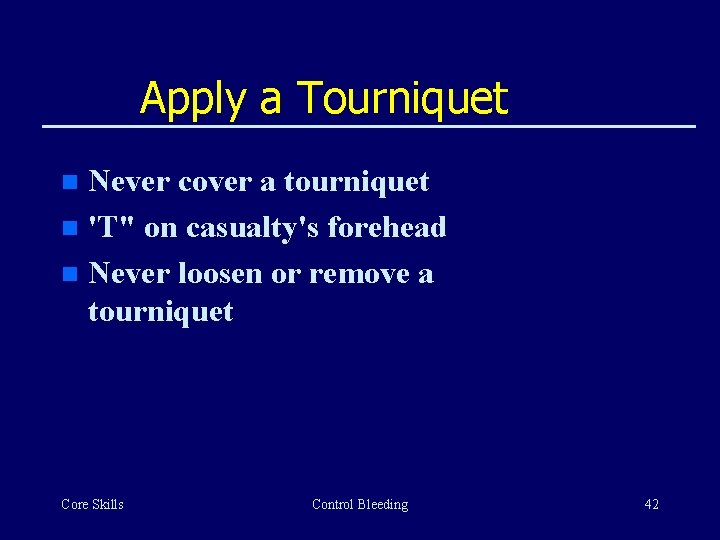
Apply a Tourniquet Never cover a tourniquet n 'T" on casualty's forehead n Never loosen or remove a tourniquet n Core Skills Control Bleeding 42
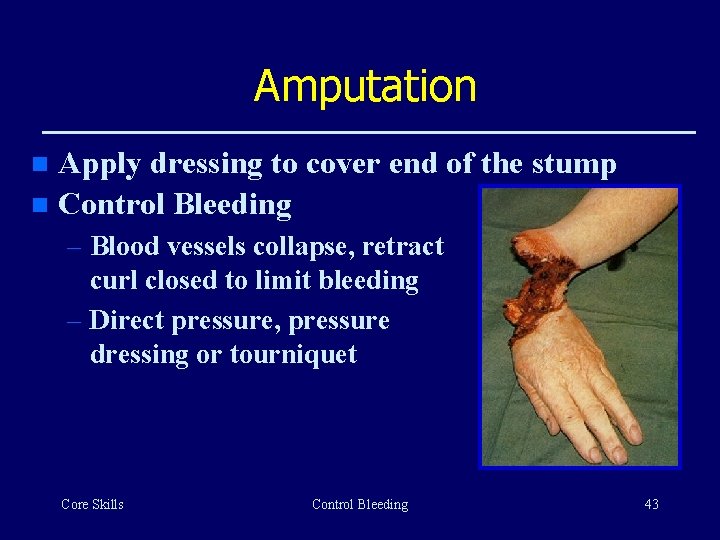
Amputation Apply dressing to cover end of the stump n Control Bleeding n – Blood vessels collapse, retract curl closed to limit bleeding – Direct pressure, pressure dressing or tourniquet Core Skills Control Bleeding or 43
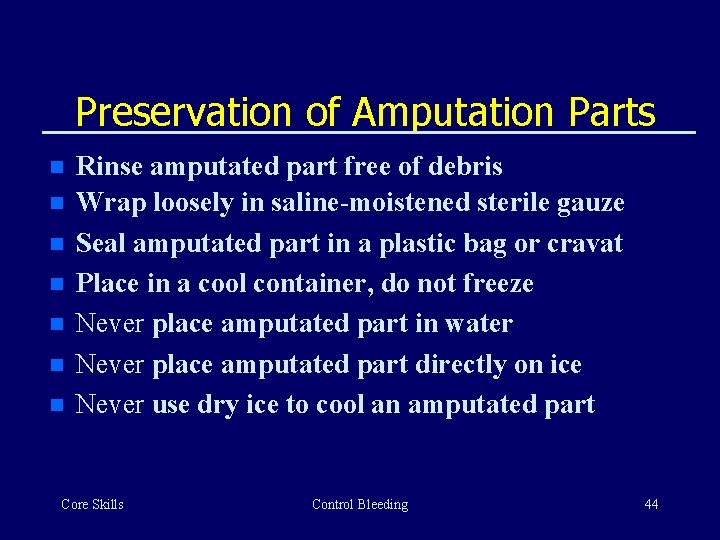
Preservation of Amputation Parts n n n n Rinse amputated part free of debris Wrap loosely in saline-moistened sterile gauze Seal amputated part in a plastic bag or cravat Place in a cool container, do not freeze Never place amputated part in water Never place amputated part directly on ice Never use dry ice to cool an amputated part Core Skills Control Bleeding 44
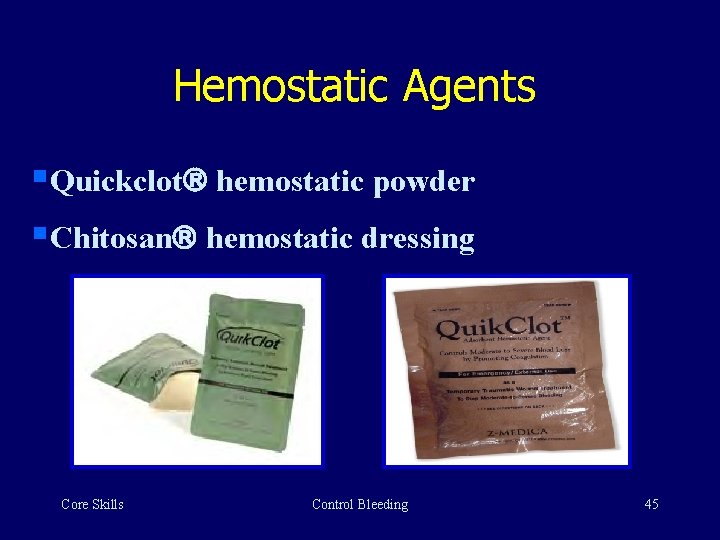
Hemostatic Agents §Quickclot hemostatic powder §Chitosan hemostatic dressing Core Skills Control Bleeding 45
Treatment Goals n Directed at adequate oxygenation and ventilation n STOP THE BLEEDING n Maintain circulation with fluid replacement Core Skills Control Bleeding 46
Treatment ABCs v Circulation and hemorrhage control v -IV access v -Control external bleeding v Baseline vitals v Brief neuro exam v Position casualty and expose hemorrhage sites v Core Skills Control Bleeding 47
Treatment Maintain body temperature n IV fluid administration- 2 large bore IVs n Perform serial neurological exams every 5 minutes n Perform vital signs every 5 minutes n Transport to medical facility ASAP n Core Skills Control Bleeding 48

Hextend § Superficial (> 50% of injured § Significant extremity or truncal § Significant blood loss • Incoherent • Loss of radial pulse Core Skills Control Bleeding 49

Summary A&P of Circulatory System n Identify Hemorrhage and Hypovolemic Shock n Provide Treatment for Hemorrhage n Provide Treatment for Hypovolemic Shock n Core Skills Control Bleeding 50
QUESTIONS ? ? Core Skills Control Bleeding 51
- Slides: 51