
Contribution Analysis Toolkit Training Part 3 Data Interpretation

Contribution Analysis Toolkit Training: Part 3 - Data Interpretation Hoi-Fei Mok, Mike Steinhoff, Eli Yewdall September 20, 2018
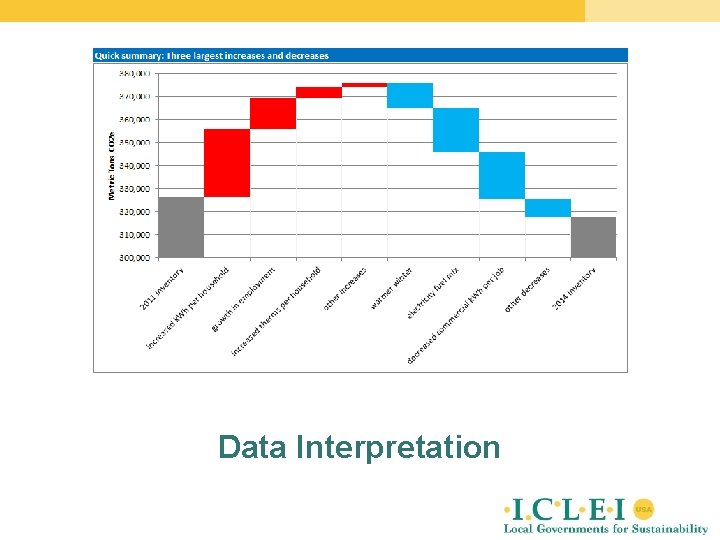
Data Interpretation
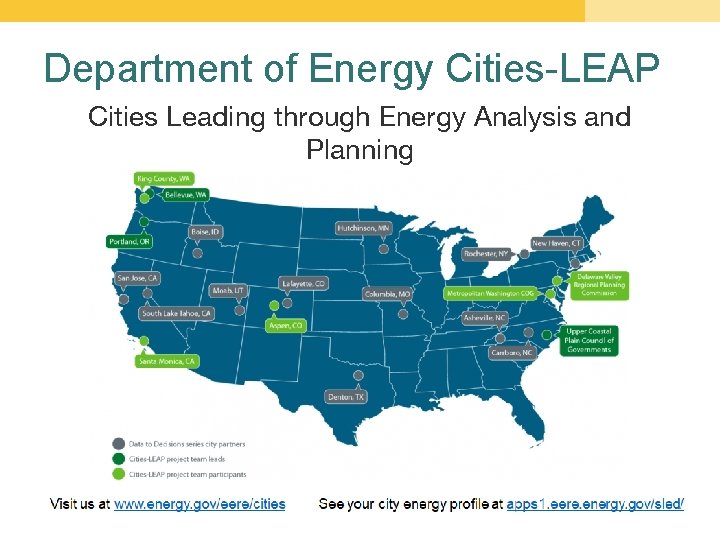
Department of Energy Cities-LEAP Cities Leading through Energy Analysis and Planning
Review Toolkit / Project • Goal is to: –Better understand drivers of change between inventories, –Account for external sources of noise in the data, –Get better indicators of overall progress to inform further CAP planning • Toolkit contains an Excel workbook, data collection templates, lots of documentation. Available at icleiusa. org

Transportation • Population growth • Local programs • Vehicle fuel economy Transportation chart • VMT person

Solid Waste • Population growth • GDP person • Incineration to landfilling shift • Waste characterization shift • Waste model difference • Local programs Solid Waste chart
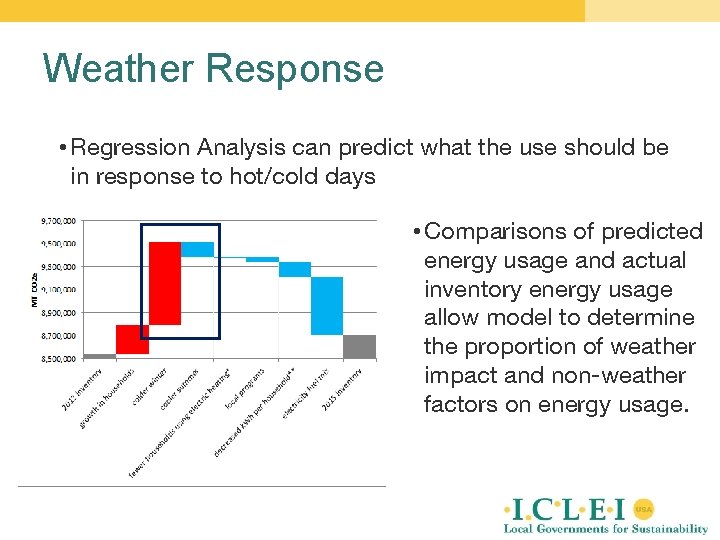
Weather Response • Regression Analysis can predict what the use should be in response to hot/cold days • Comparisons of predicted energy usage and actual inventory energy usage allow model to determine the proportion of weather impact and non-weather factors on energy usage.
Weather Response • Waterfall chart outputs are not an indication that overall trend between the inventory years is upward or downward, but that the specific years were warmer or cooler relative to each other. • Outputs of the regression step can be used to consider climate change impact on community energy use
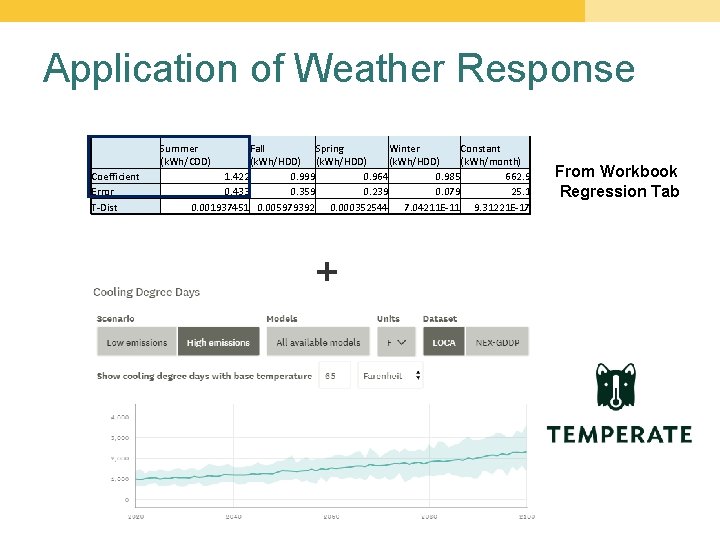
Application of Weather Response Summer (k. Wh/CDD) Coefficient Error T-Dist Fall Spring Winter Constant (k. Wh/HDD) (k. Wh/month) 1. 422 0. 999 0. 964 0. 985 662. 9 0. 433 0. 359 0. 239 0. 079 25. 1 0. 001937451 0. 005979392 0. 000352544 7. 04211 E-11 9. 31221 E-17 + From Workbook Regression Tab
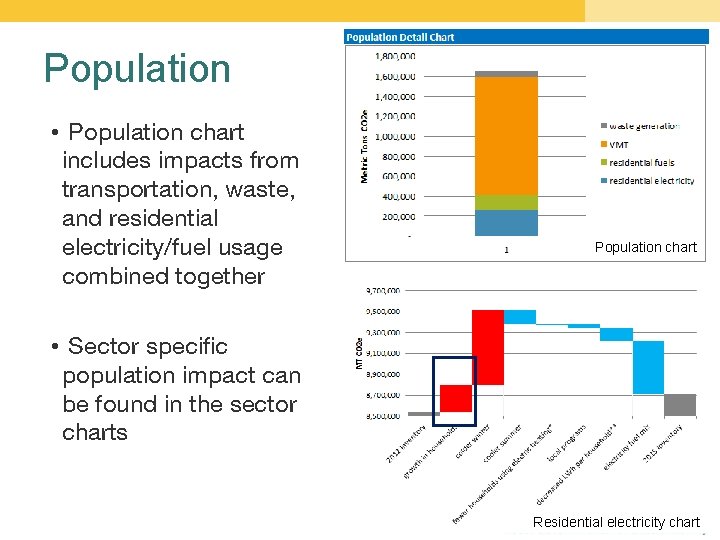
Population • Population chart includes impacts from transportation, waste, and residential electricity/fuel usage combined together Population chart • Sector specific population impact can be found in the sector charts Residential electricity chart
Application of Population Increase Data • Results can be used to create a useful indicator for comparison • Population-Related Increases / New Resident –Vs • Baseline inventory MTCO 2 e / capita • Are we growing ‘efficiently’ compared to baseline?

Residential Energy • Weather • Electricity fuel mix • Electric heating • Local programs • Household growth • k. Wh/therms per household Residential Electricity chart
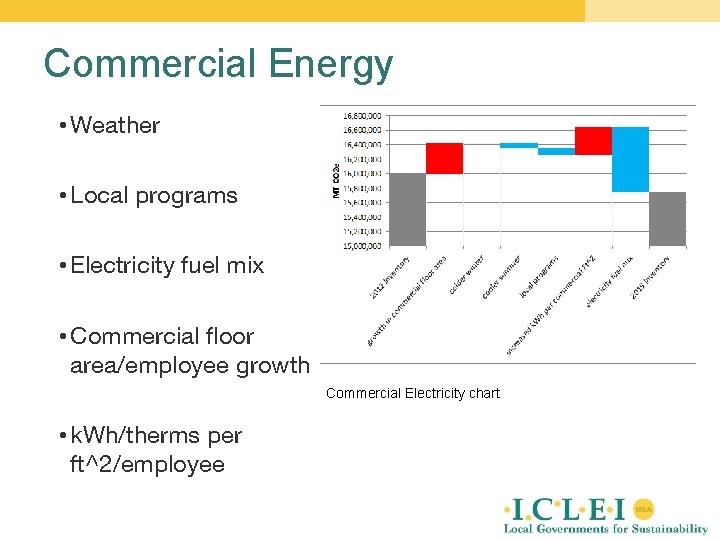
Commercial Energy • Weather • Local programs • Electricity fuel mix • Commercial floor area/employee growth Commercial Electricity chart • k. Wh/therms per ft^2/employee
Activity Intensity Changes • Per capita or per employee changes are determined after accounting for weather. • The net effect of everything else –occupant behavior, –changes to building types and uses, –federal appliance standards, –utility efficiency programs, –etc
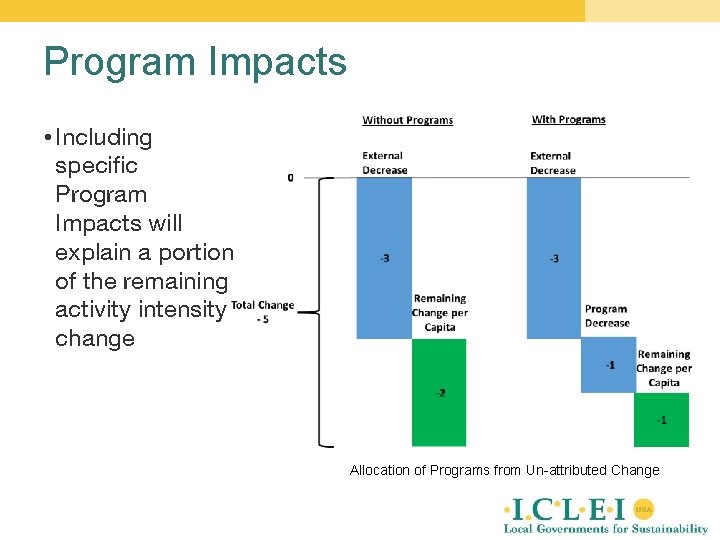
Program Impacts • Including specific Program Impacts will explain a portion of the remaining activity intensity change Allocation of Programs from Un-attributed Change

Program Impacts • Note that the analysis is constrained by the total change that happened between the two inventories • If your program impact is bigger than the net additional change, the remaining change to intensity would flip direction. • “…After accounting for our programs, residents used more energy Allocation of Programs that Exceed Un-attributed Change
Not for Forecasting • There is a tendency to want to use the trends of the past to predict the future • Two observations is no basis for a trend, this is not recommended. –Lots of year-to-year variability that you don’t want to extrapolate
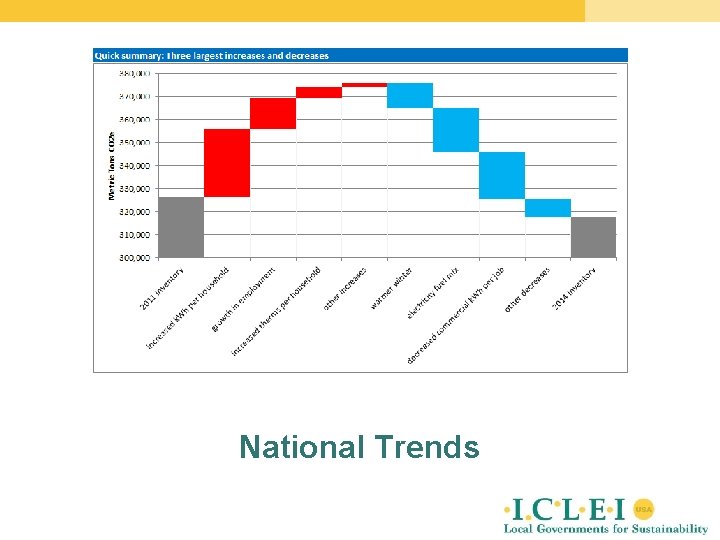
National Trends
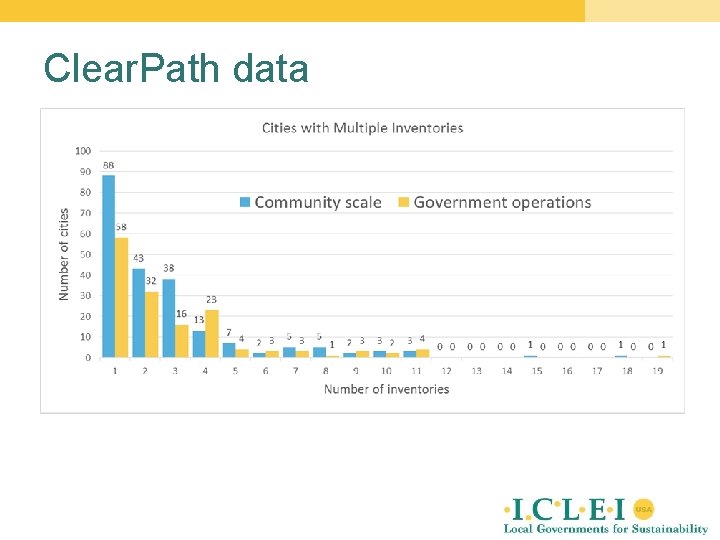
Clear. Path data
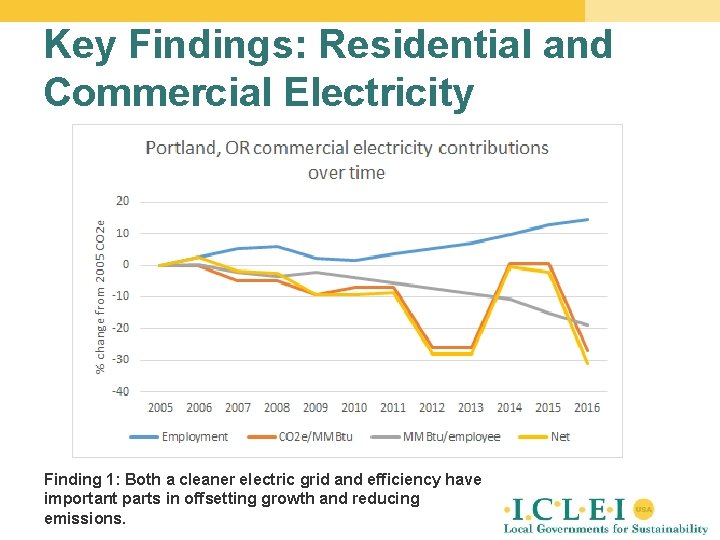
Key Findings: Residential and Commercial Electricity Finding 1: Both a cleaner electric grid and efficiency have important parts in offsetting growth and reducing emissions.
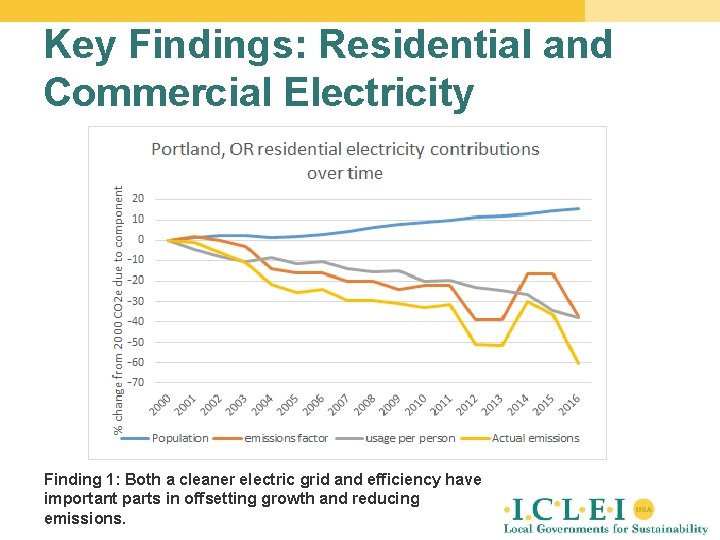
Key Findings: Residential and Commercial Electricity Finding 1: Both a cleaner electric grid and efficiency have important parts in offsetting growth and reducing emissions.
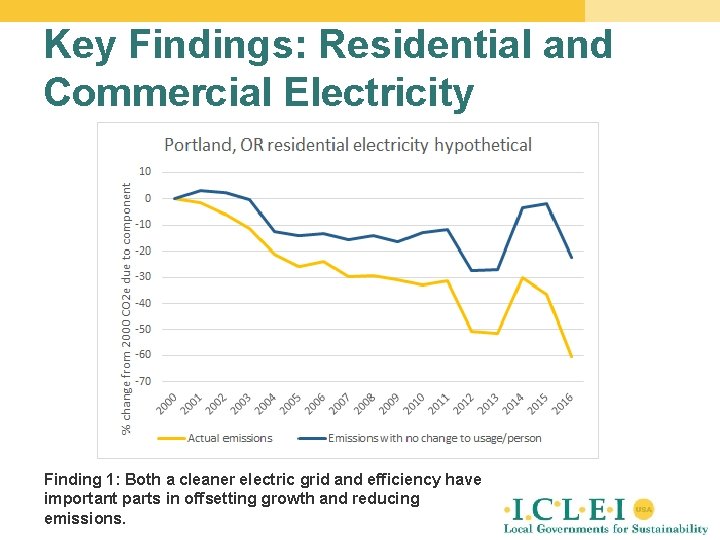
Key Findings: Residential and Commercial Electricity Finding 1: Both a cleaner electric grid and efficiency have important parts in offsetting growth and reducing emissions.
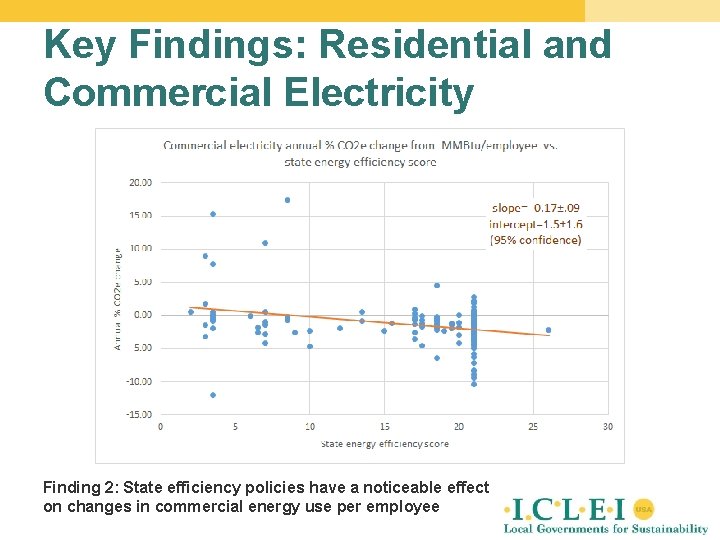
Key Findings: Residential and Commercial Electricity Finding 2: State efficiency policies have a noticeable effect on changes in commercial energy use per employee
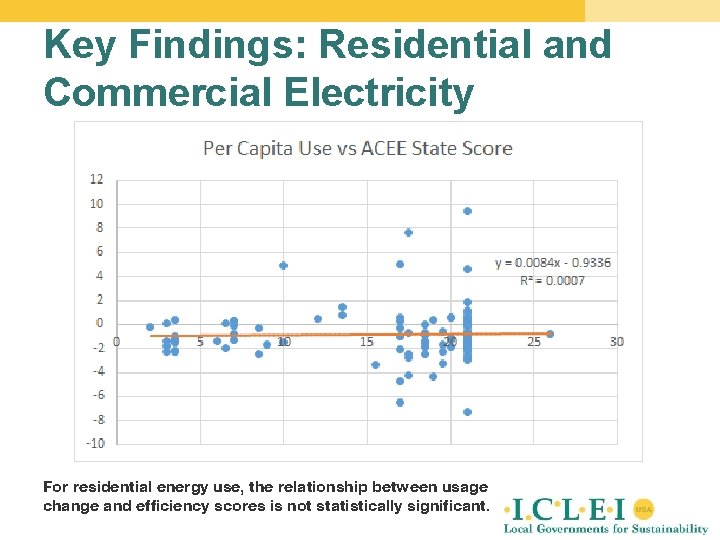
Key Findings: Residential and Commercial Electricity For residential energy use, the relationship between usage change and efficiency scores is not statistically significant.
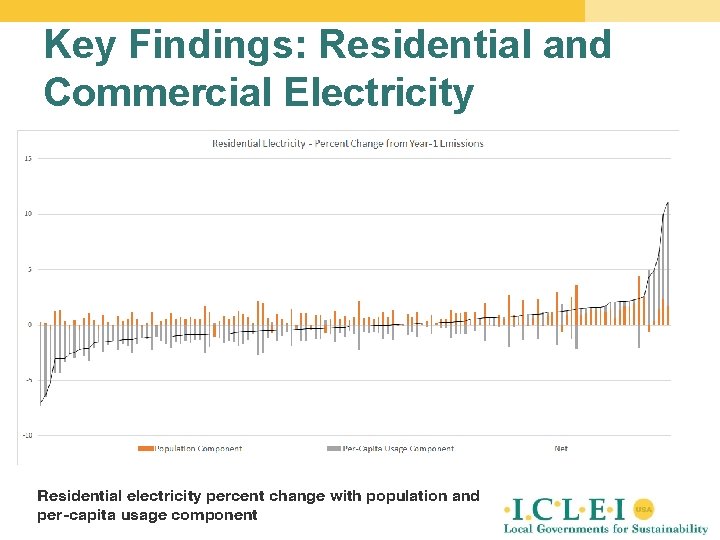
Key Findings: Residential and Commercial Electricity Residential electricity percent change with population and per-capita usage component
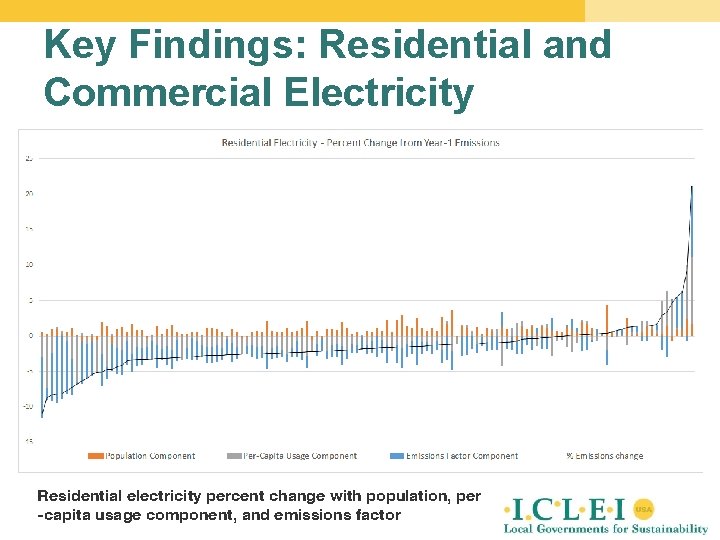
Key Findings: Residential and Commercial Electricity Residential electricity percent change with population, per -capita usage component, and emissions factor
Key Findings: On-Road Transportation Finding 1: Both more efficient vehicles and reduced vehicle miles person have important parts in offsetting growth and reducing emissions.
Key Findings: On-Road Transportation Finding 1: Both more efficient vehicles and reduced vehicle miles person have important parts in offsetting growth and reducing emissions.
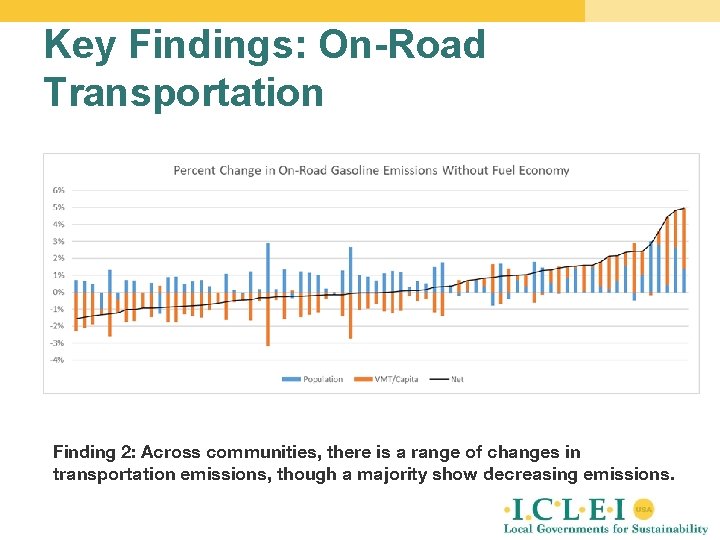
Key Findings: On-Road Transportation Finding 2: Across communities, there is a range of changes in transportation emissions, though a majority show decreasing emissions.
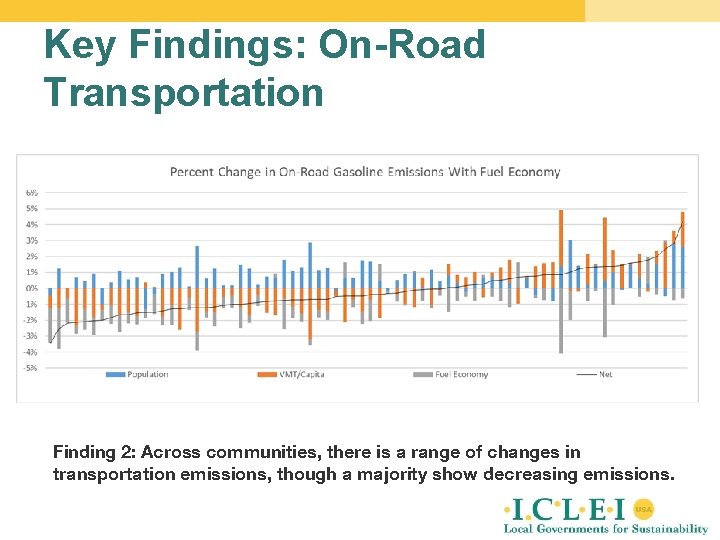
Key Findings: On-Road Transportation Finding 2: Across communities, there is a range of changes in transportation emissions, though a majority show decreasing emissions.
Summary: • State and Federal Action to clean the grid and improve transport efficiency are important • Yes, local action makes a difference, even if external factors seem much bigger • Both are necessary!

Thank You Hoi-Fei Mok Hoi-fei. mok@iclei. org Michael Steinhoff Michael. steinhoff@iclei. org Eli Yewdall Eli. yewdall@iclei. org ICLEI USA Headquarters 1536 Wynkoop St #901 Denver, CO 80202 (510) 844 -0699 icleiusa. org @ICLEI_USA
- Slides: 32