
Contraction to a normal hydrogenburning star Birth out
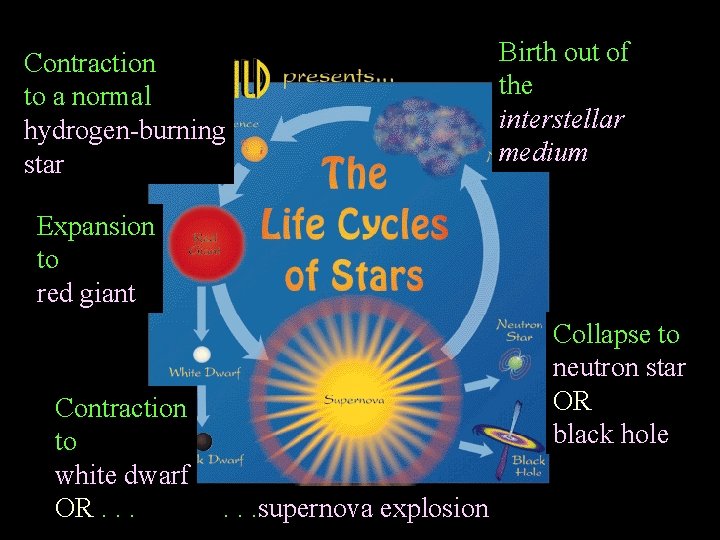
Contraction to a normal hydrogen-burning star Birth out of the interstellar medium Expansion to red giant Contraction to white dwarf OR. . . Collapse to neutron star OR black hole. . . supernova explosion
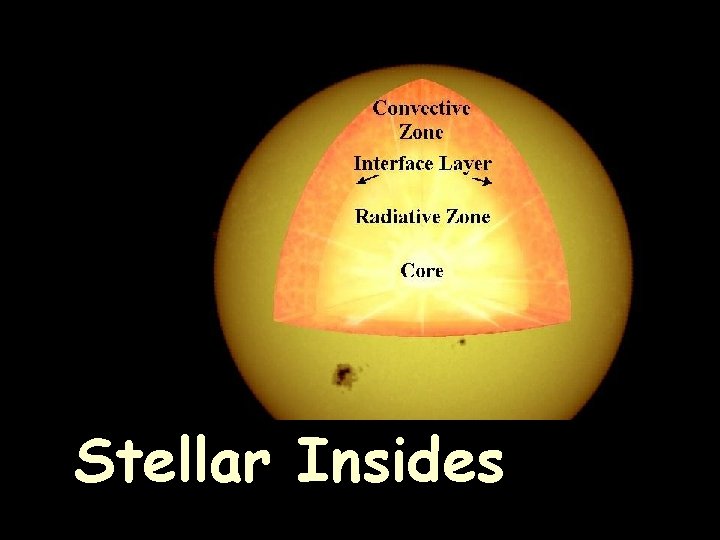
Stellar Insides
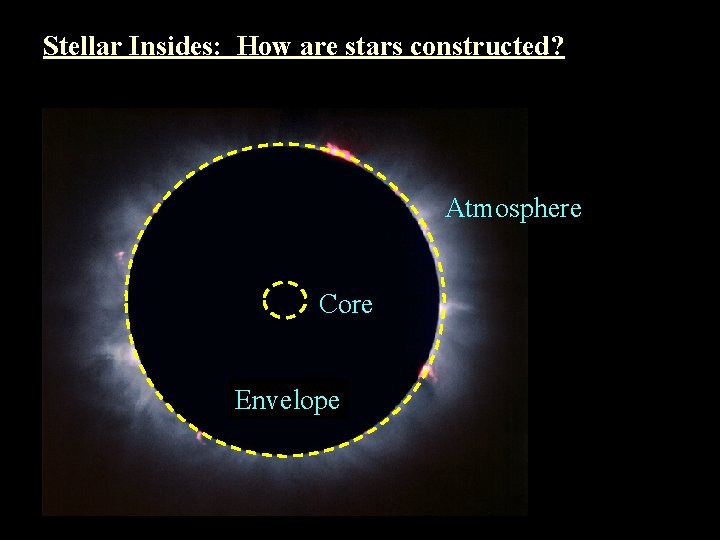
Stellar Insides: How are stars constructed? Atmosphere Core Envelope
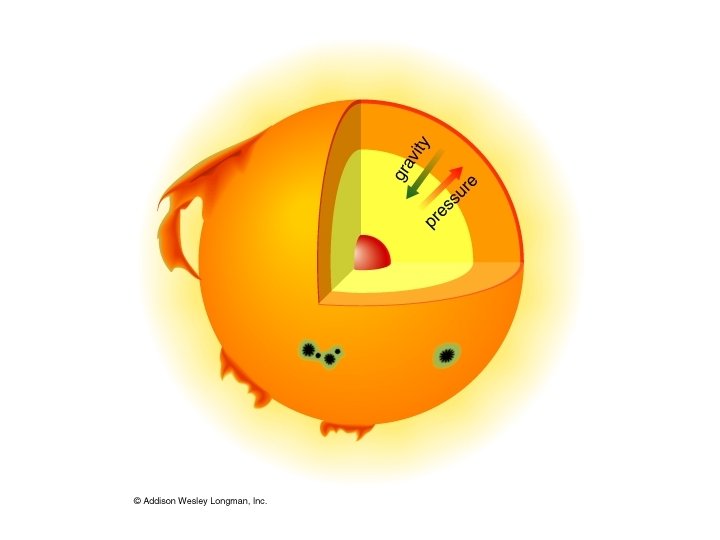
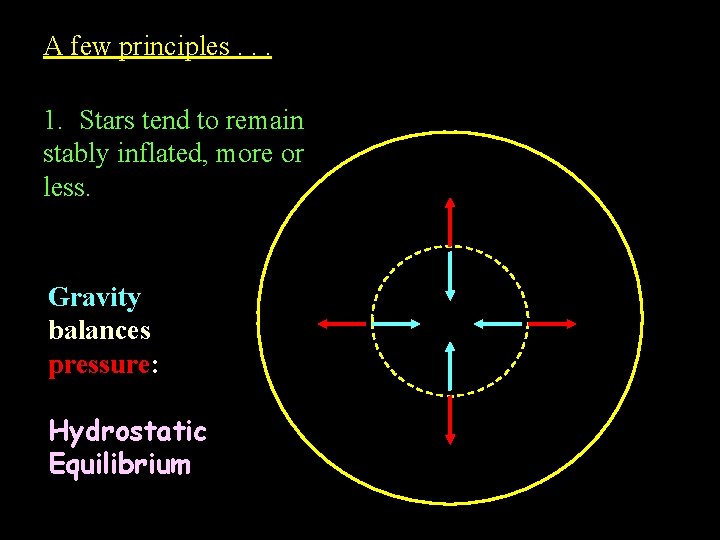
A few principles. . . 1. Stars tend to remain stably inflated, more or less. Gravity balances pressure: Hydrostatic Equilibrium
Center of Sun: 3 billion atmospheres
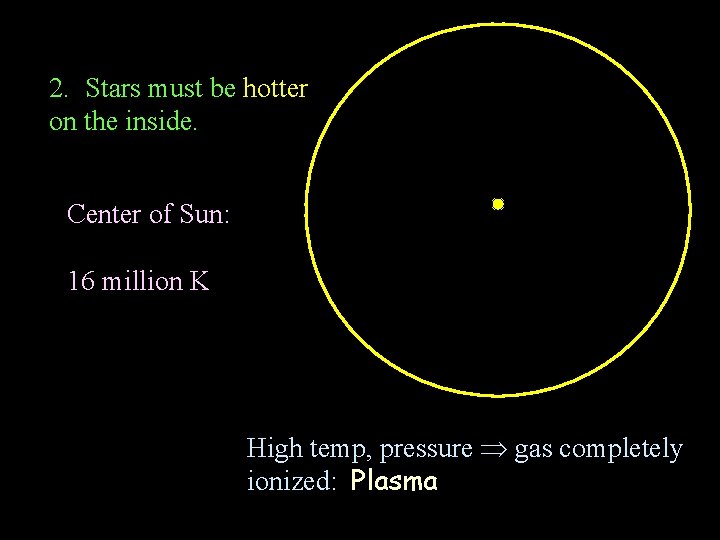
2. Stars must be hotter on the inside. Center of Sun: 16 million K High temp, pressure gas completely ionized: Plasma
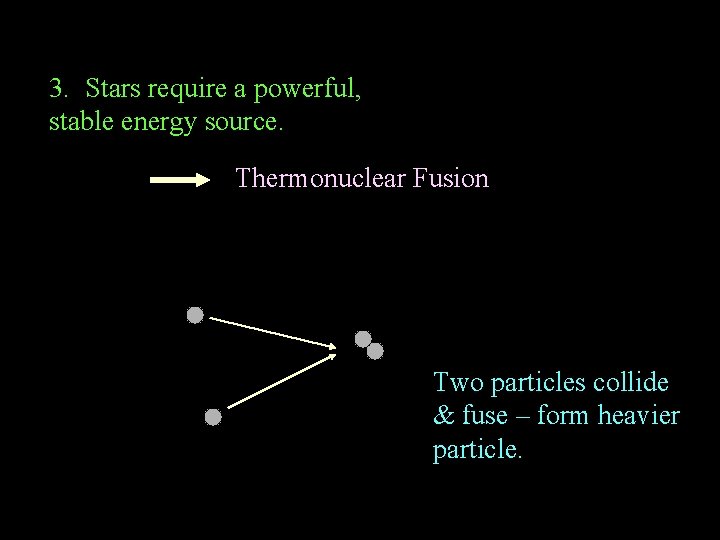
3. Stars require a powerful, stable energy source. Thermonuclear Fusion Two particles collide & fuse – form heavier particle.
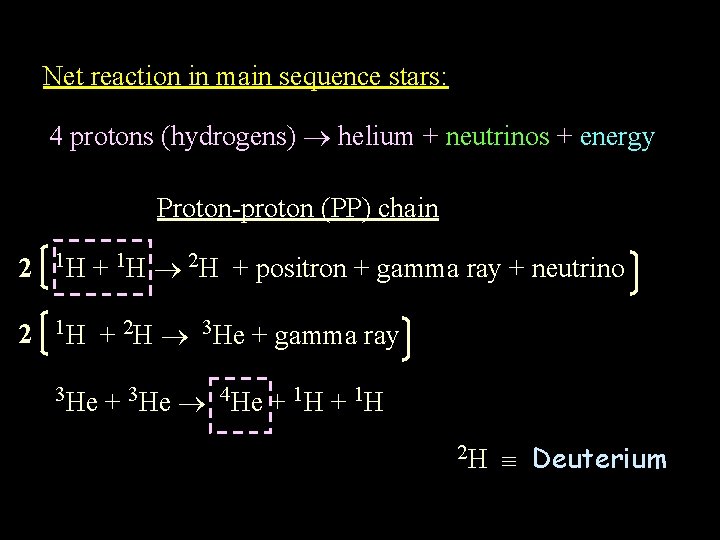
Net reaction in main sequence stars: 4 protons (hydrogens) helium + neutrinos + energy Proton-proton (PP) chain 2 1 H + 1 H 2 H + positron + gamma ray + neutrino 2 1 H + 2 H 3 He + gamma ray 3 He + 3 He 4 He + 1 H 2 H Deuterium
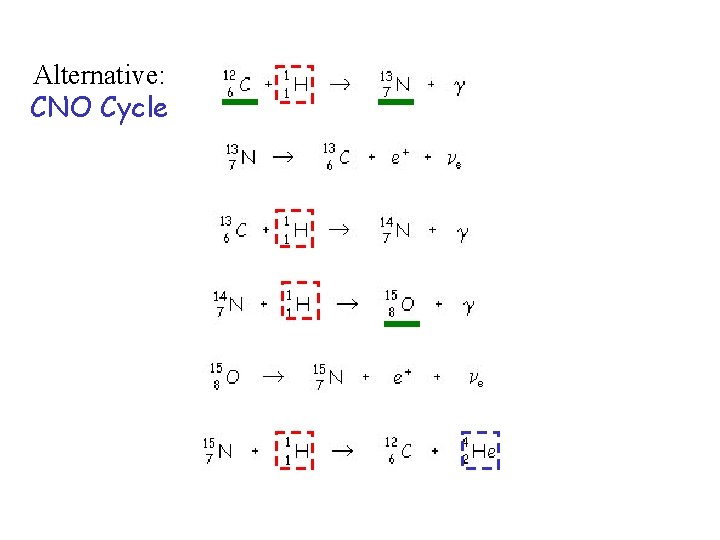
Alternative: CNO Cycle
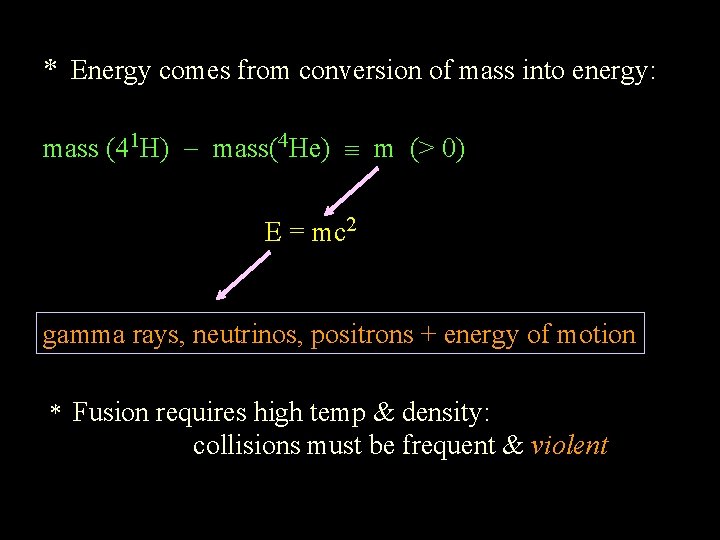
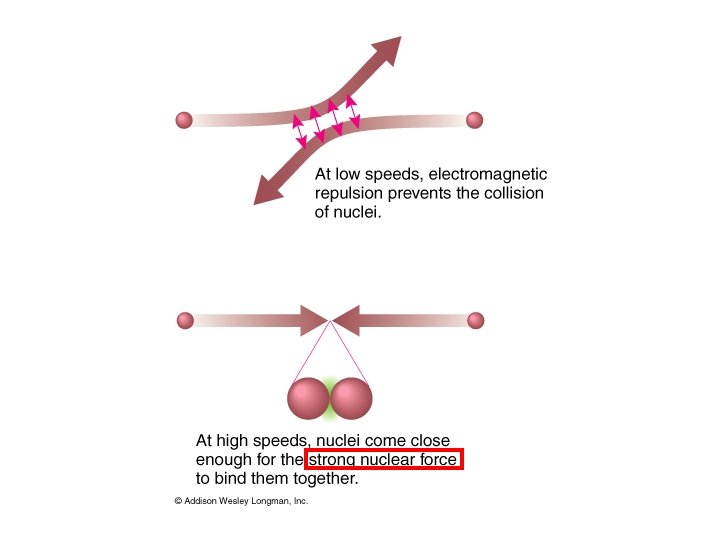
* Energy comes from conversion of mass into energy: mass (41 H) mass(4 He) m (> 0) E = mc 2 gamma rays, neutrinos, positrons + energy of motion * Fusion requires high temp & density: collisions must be frequent & violent
* Important consequence: creation of elements that did not previously exist! Nucleosynthesis
Sun’s luminosity = 3. 9 1026 Watt Sun converts 4 million tons hydrogen to energy per second! Stars lose mass over time!
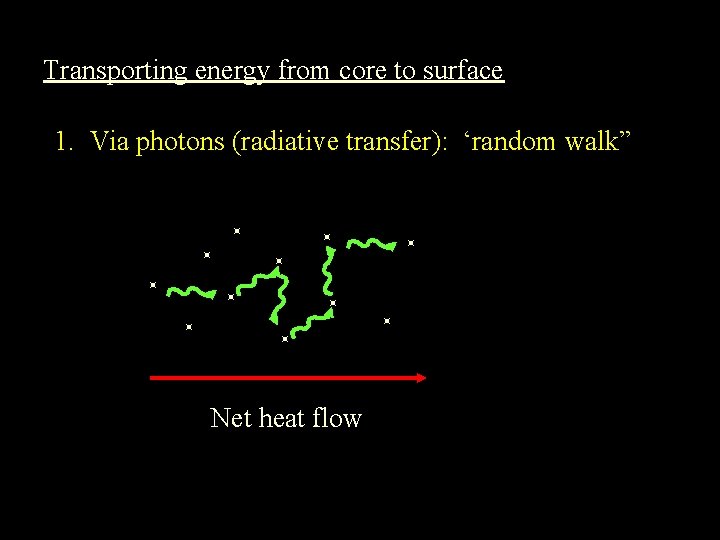
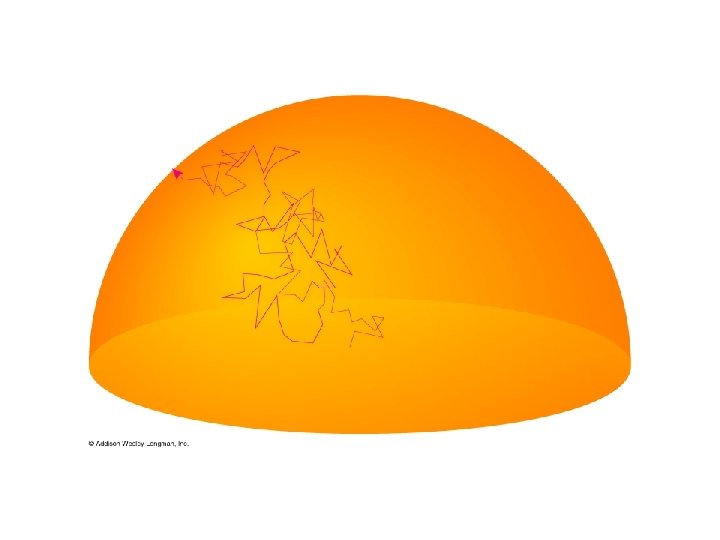
Transporting energy from core to surface 1. Via photons (radiative transfer): ‘random walk” Net heat flow
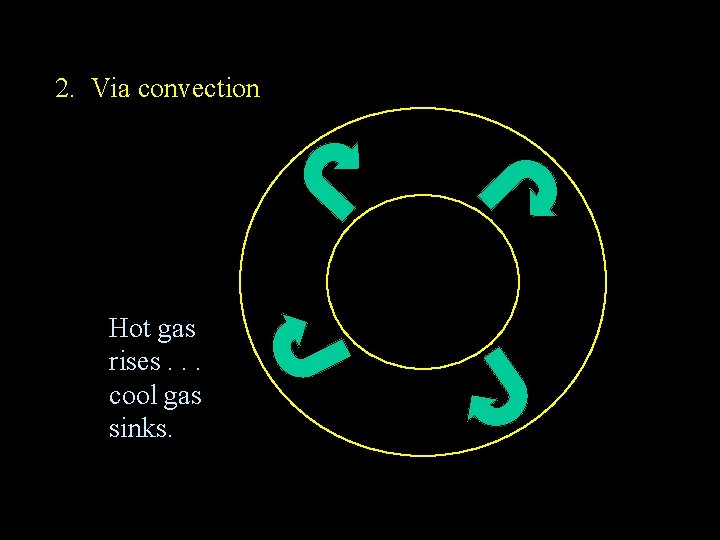
2. Via convection Hot gas rises. . . cool gas sinks.
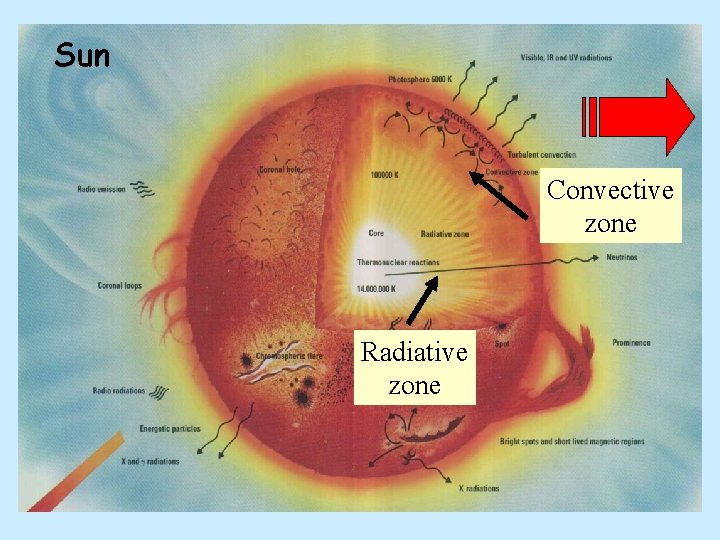
Sun Convective zone Radiative zone
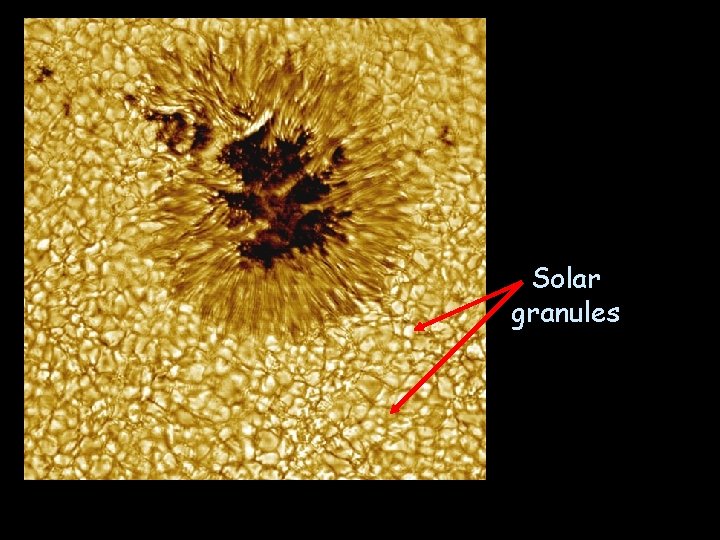
Solar granules
- Slides: 19