
CONTRACT SURETY BONDS 101 THE BASICS OF BONDING
CONTRACT SURETY BONDS 101: THE BASICS OF BONDING
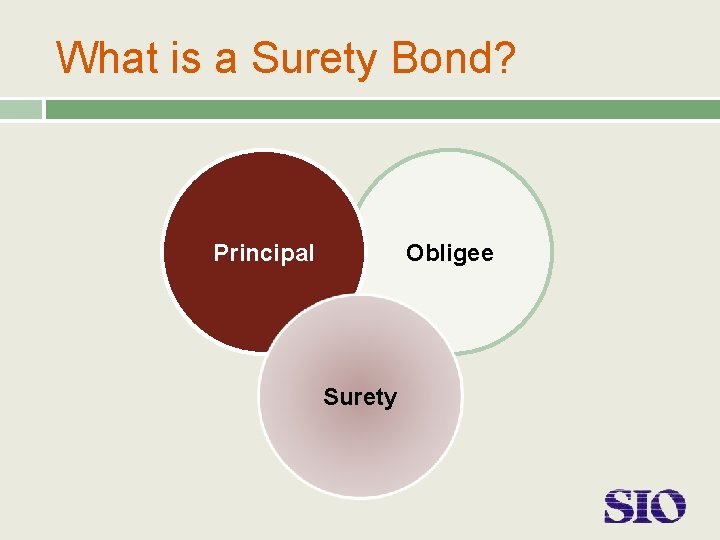
What is a Surety Bond? Principal Obligee Surety

Surety Bonds Mandated on Public Works Federal Heard Act (1894) Miller Act (1935) State & Local “Little Miller Acts”
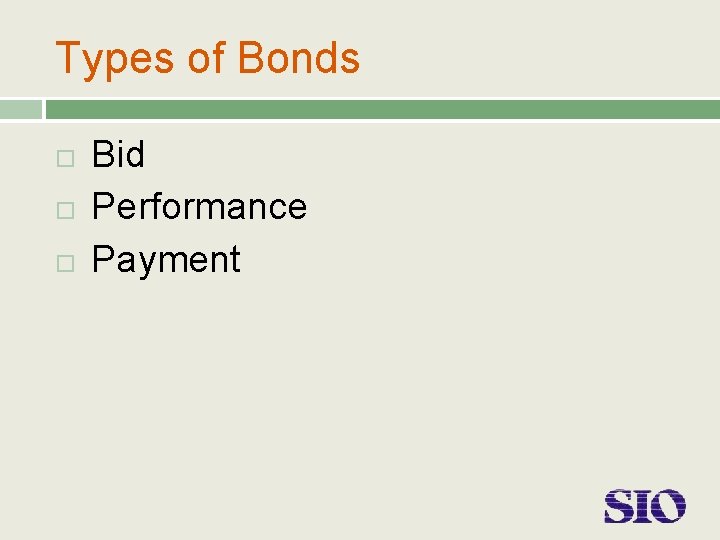
Types of Bonds Bid Performance Payment
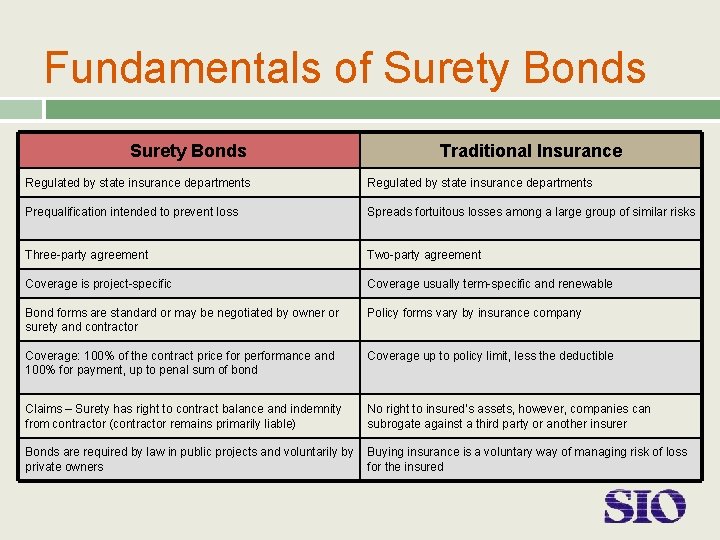
Fundamentals of Surety Bonds Traditional Insurance Regulated by state insurance departments Prequalification intended to prevent loss Spreads fortuitous losses among a large group of similar risks Three-party agreement Two-party agreement Coverage is project-specific Coverage usually term-specific and renewable Bond forms are standard or may be negotiated by owner or surety and contractor Policy forms vary by insurance company Coverage: 100% of the contract price for performance and 100% for payment, up to penal sum of bond Coverage up to policy limit, less the deductible Claims – Surety has right to contract balance and indemnity from contractor (contractor remains primarily liable) No right to insured’s assets, however, companies can subrogate against a third party or another insurer Bonds are required by law in public projects and voluntarily by private owners Buying insurance is a voluntary way of managing risk of loss for the insured

Role of the Producer Prequalification Process Attorneys Lenders Contractor Auditors Advisory Group Producer Surety Company
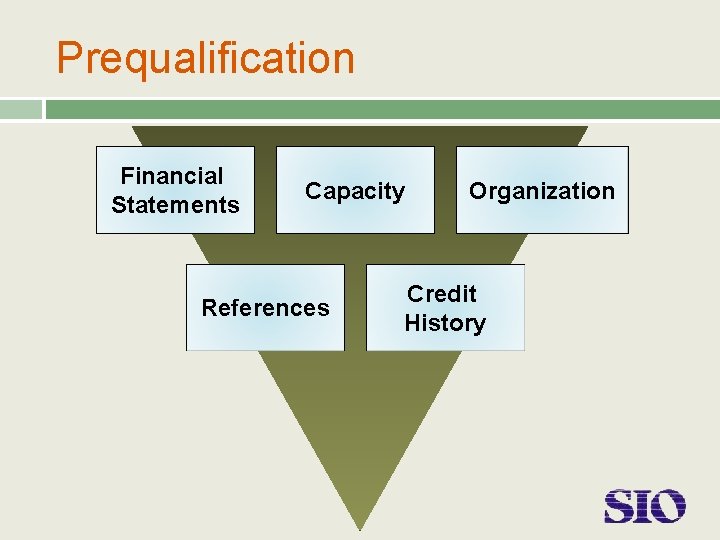
Prequalification Financial Statements Capacity References Organization Credit History
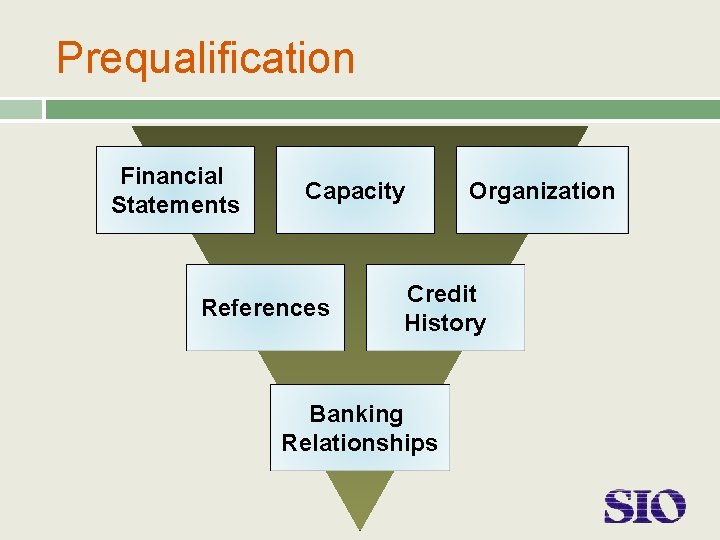
Prequalification Financial Statements Capacity References Organization Credit History Banking Relationships
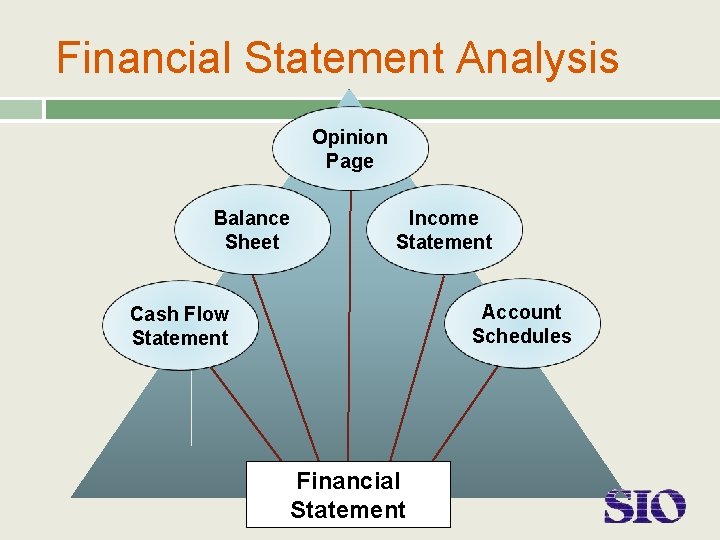
Financial Statement Analysis Opinion Page Balance Sheet Income Statement Account Schedules Cash Flow Statement Financial Statement
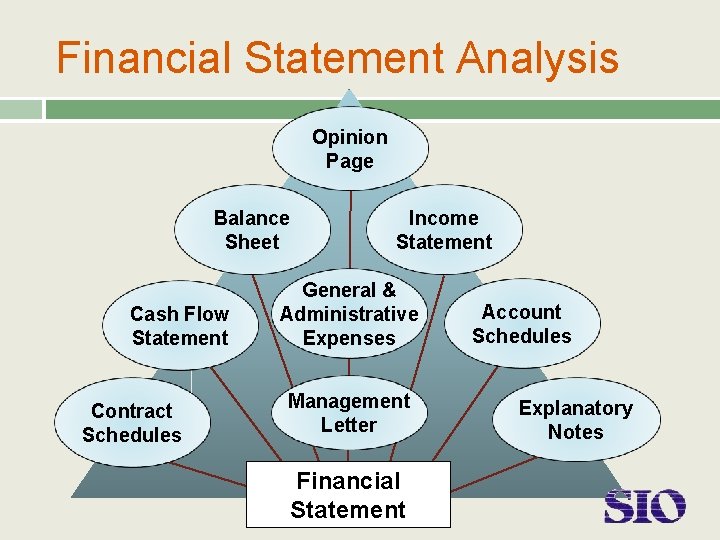
Financial Statement Analysis Opinion Page Balance Sheet Cash Flow Statement Contract Schedules Income Statement General & Administrative Expenses Management Letter Financial Statement Account Schedules Explanatory Notes
Benefits of Bonds Financial security Construction assurance
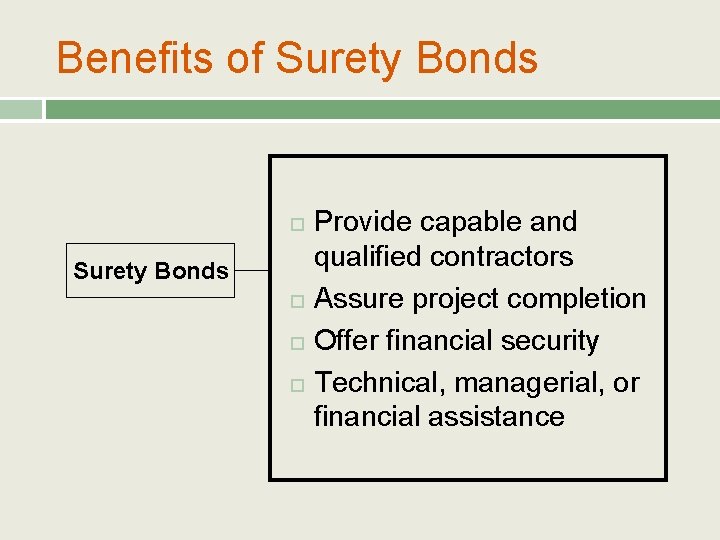
Benefits of Surety Bonds Provide capable and qualified contractors Assure project completion Offer financial security Technical, managerial, or financial assistance
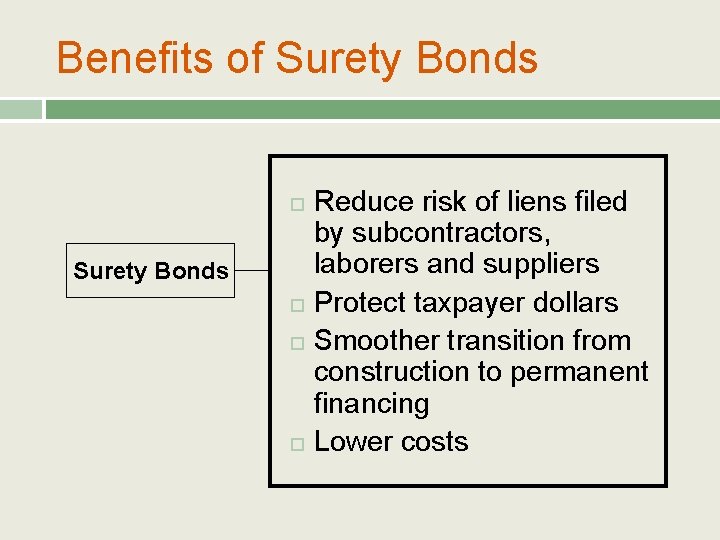
Benefits of Surety Bonds Reduce risk of liens filed by subcontractors, laborers and suppliers Protect taxpayer dollars Smoother transition from construction to permanent financing Lower costs
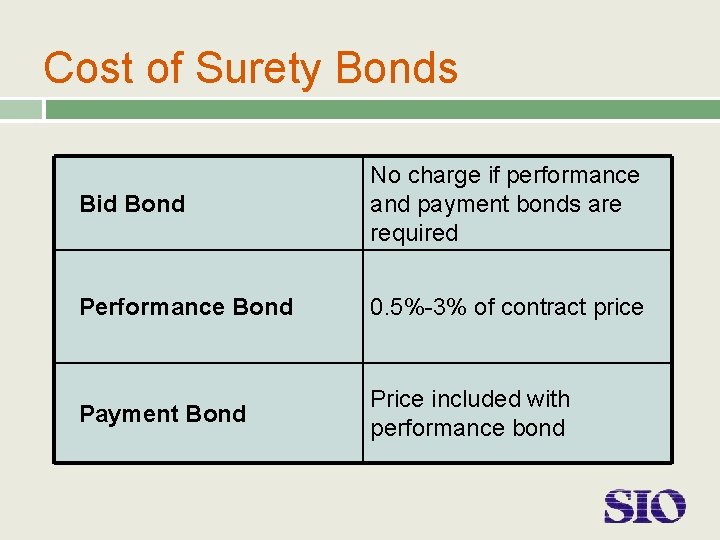
Cost of Surety Bonds Bid Bond No charge if performance and payment bonds are required Performance Bond 0. 5%-3% of contract price Payment Bond Price included with performance bond
For More Information Surety Information Office (SIO) www. sio. org | sio@sio. org SIO is a joint initiative of The National Association of Surety Bond Producers (NASBP) and Surety & Fidelity Association of America (SFAA).
- Slides: 15