
Contraception Resources from the CDC 2016 U S








- Slides: 42
Contraception Resources from the CDC: 2016 U. S. Medical Eligibility Criteria for Contraceptive Use Division of Reproductive Health Centers for Disease Control and Prevention National Center for Chronic Disease Prevention and Health Promotion Division of Reproductive Health
Disclaimer q The findings and conclusions in this report are those of the author and do not necessarily represent the official position of the Centers for Disease Control and Prevention
Objectives q Describe the U. S. Medical Eligibility Criteria for Contraceptive Use, 2016 (U. S. MEC) q Identify intended use and target audience q Explain how to use the U. S. MEC q Discuss the guidance in specific situations, based on clinical scenarios
U. S. Medical Eligibility Criteria for Contraceptive Use, 2016 q Safe use of contraceptive methods by women and men with certain characteristics or medical conditions q Target audience: health care providers q Purpose: to assist health care providers when they counsel patients about contraceptive use and to serve as a source of clinical guidance q Content: more than 1800 recommendations for over 120 conditions and subconditions
Methods for 2016 U. S. MEC q q Adapted from WHO guidelines On-going monitoring of published evidence Expert meeting in August 2014 to discuss scope Expert meeting in August 2015 to review evidence and discuss specific recommendations § CDC staff and outside authors conducted independent systematic reviews to inform recommendations § These systematic reviews have been e-published § CDC determined final recommendations
Why is evidence-based guidance for contraceptive use needed? q q To base family planning practices on the best available evidence To address misconceptions regarding who can safely use contraception To remove unnecessary medical barriers To improve access and quality of care in family planning
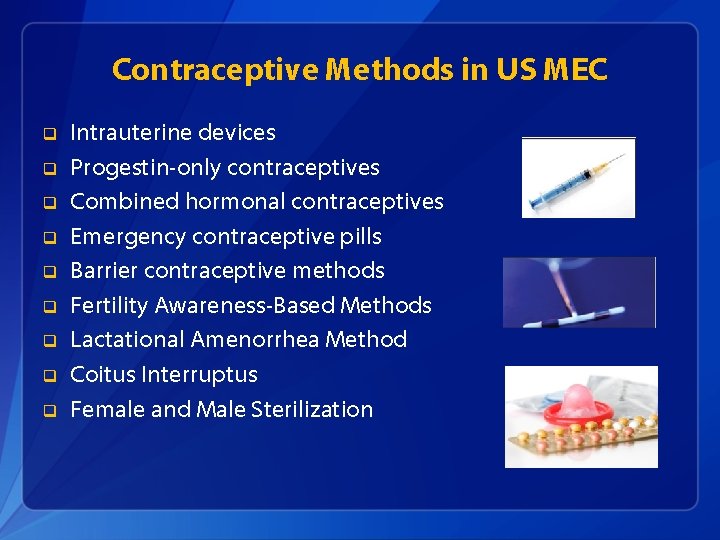
Contraceptive Methods in US MEC q q q q q Intrauterine devices Progestin-only contraceptives Combined hormonal contraceptives Emergency contraceptive pills Barrier contraceptive methods Fertility Awareness-Based Methods Lactational Amenorrhea Method Coitus Interruptus Female and Male Sterilization
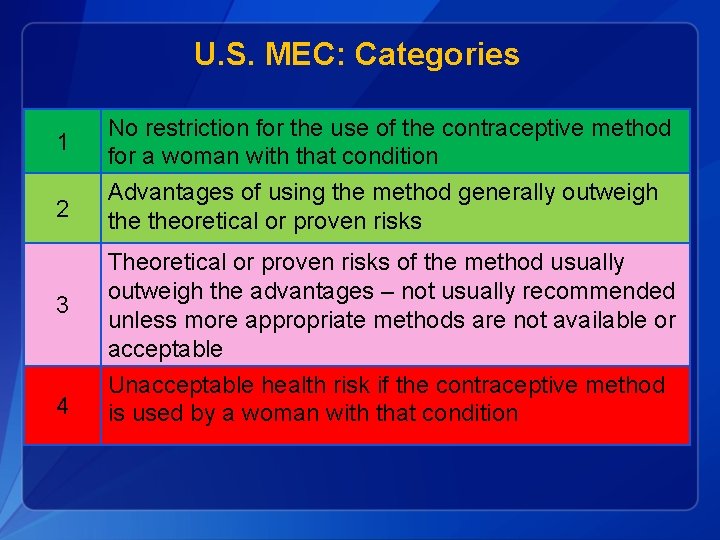
U. S. MEC: Categories 1 No restriction for the use of the contraceptive method for a woman with that condition 2 Advantages of using the method generally outweigh theoretical or proven risks 3 Theoretical or proven risks of the method usually outweigh the advantages – not usually recommended unless more appropriate methods are not available or acceptable 4 Unacceptable health risk if the contraceptive method is used by a woman with that condition
Example: Smoking and Contraceptive Use Cu IUD: Copper IUD; LNG-IUD: Levonorgestrel IUD; DMPA: Depo-Medroxyprogesterone Acetate; POPs: Progestin-only pills; CHCs: Combined hormonal contraceptives including pills, patch, and ring
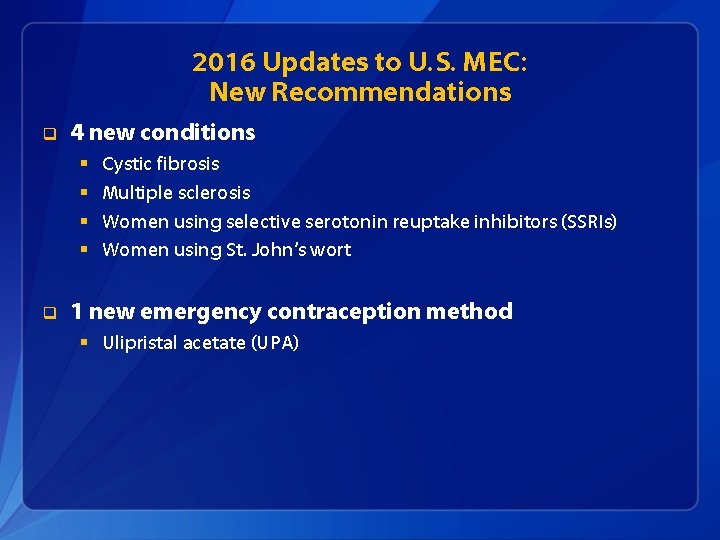
2016 Updates to U. S. MEC: New Recommendations q 4 new conditions § § q Cystic fibrosis Multiple sclerosis Women using selective serotonin reuptake inhibitors (SSRIs) Women using St. John’s wort 1 new emergency contraception method § Ulipristal acetate (UPA)
2016 Updates to U. S. MEC: Changes to Existing Recommendations q Hormonal methods (Implants, DMPA, POP, CHCs) § § q Migraine headaches Superficial venous disease Women using antiretroviral therapy Women with known dyslipidemia Intrauterine devices (Cu-IUD, LNG-IUD) § § Gestational trophoblastic disease Postpartum and breastfeeding women Human immunodeficiency virus Factors related to sexually transmitted diseases
CLINICAL SCENARIOS
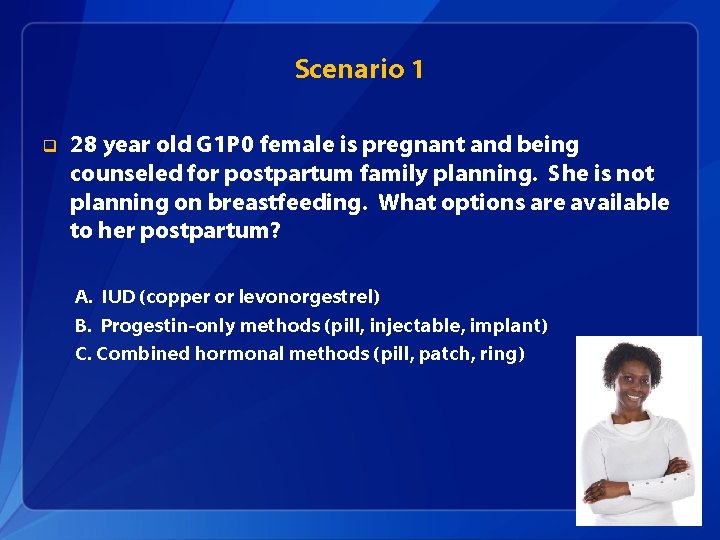
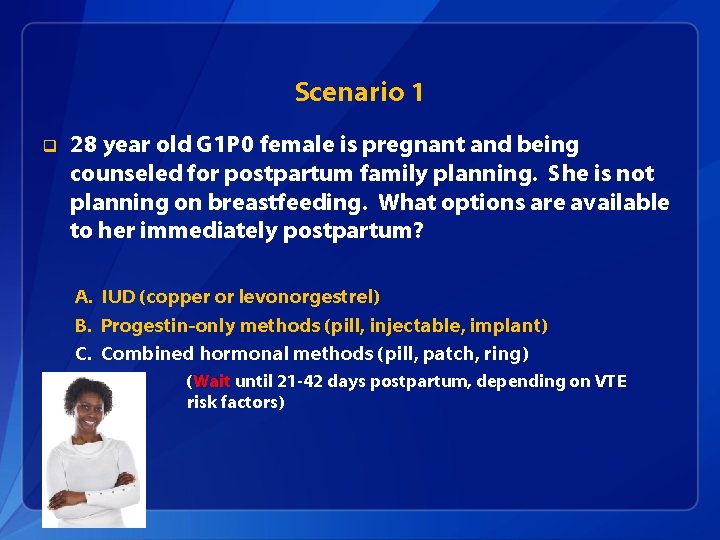
Scenario 1 q 28 year old G 1 P 0 female is pregnant and being counseled for postpartum family planning. She is not planning on breastfeeding. What options are available to her postpartum? A. IUD (copper or levonorgestrel) B. Progestin-only methods (pill, injectable, implant) C. Combined hormonal methods (pill, patch, ring)
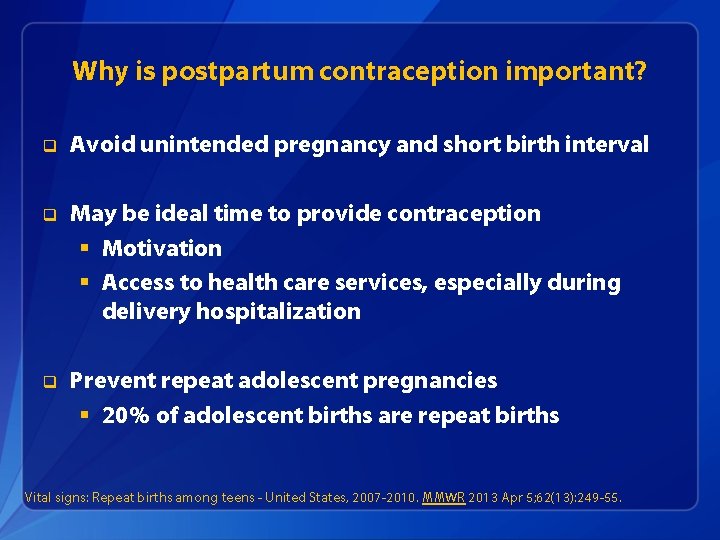
Why is postpartum contraception important? q Avoid unintended pregnancy and short birth interval q May be ideal time to provide contraception § Motivation § Access to health care services, especially during delivery hospitalization q Prevent repeat adolescent pregnancies § 20% of adolescent births are repeat births Vital signs: Repeat births among teens - United States, 2007 -2010. MMWR 2013 Apr 5; 62(13): 249 -55.
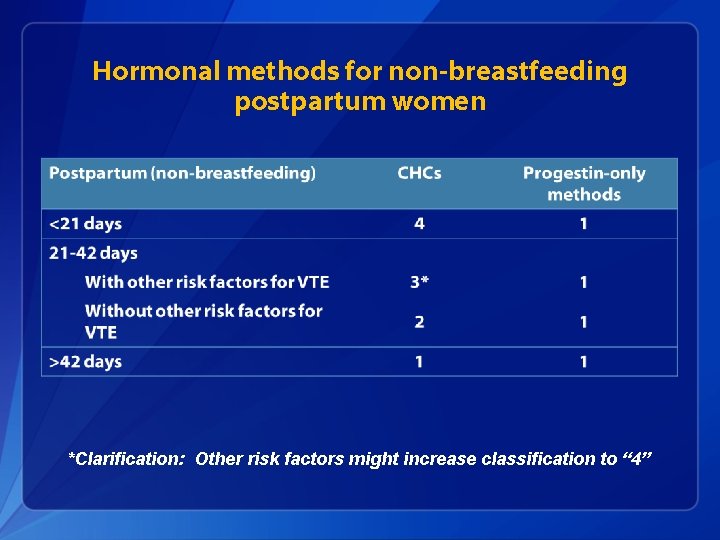
Hormonal methods for non-breastfeeding postpartum women *Clarification: Other risk factors might increase classification to “ 4”
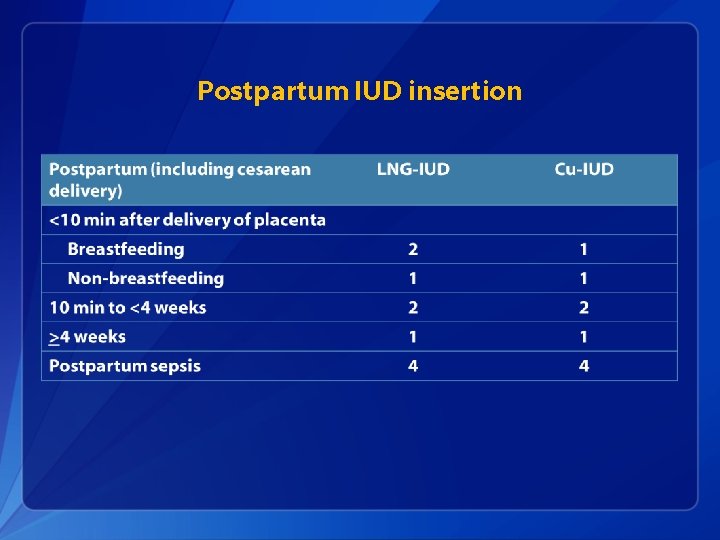
Postpartum IUD insertion
Scenario 1 q 28 year old G 1 P 0 female is pregnant and being counseled for postpartum family planning. She is not planning on breastfeeding. What options are available to her immediately postpartum? A. IUD (copper or levonorgestrel) B. Progestin-only methods (pill, injectable, implant) C. Combined hormonal methods (pill, patch, ring) (Wait until 21 -42 days postpartum, depending on VTE risk factors)
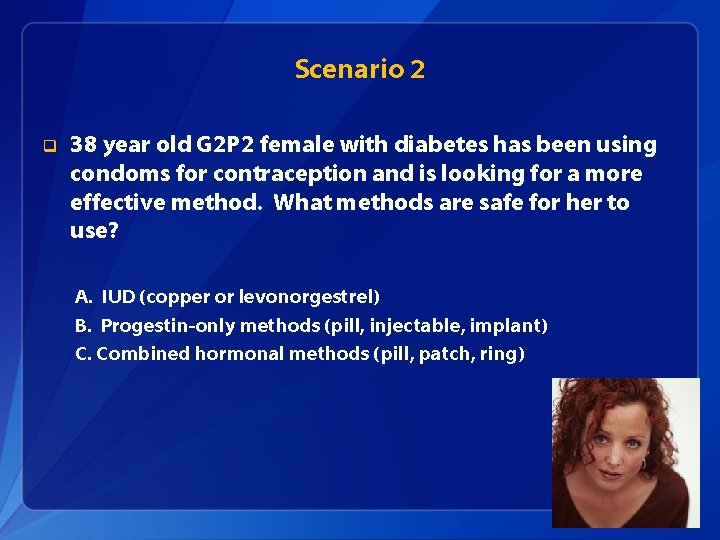
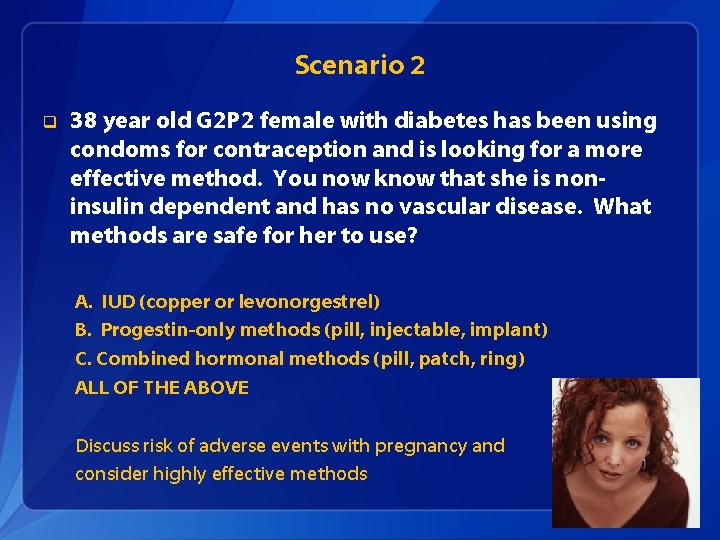
Scenario 2 q 38 year old G 2 P 2 female with diabetes has been using condoms for contraception and is looking for a more effective method. What methods are safe for her to use? A. IUD (copper or levonorgestrel) B. Progestin-only methods (pill, injectable, implant) C. Combined hormonal methods (pill, patch, ring)
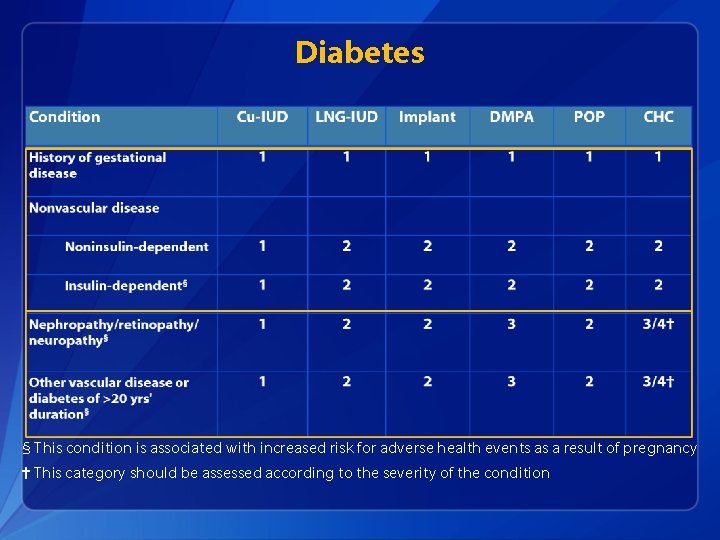
Diabetes § This condition is associated with increased risk for adverse health events as a result of pregnancy † This category should be assessed according to the severity of the condition
Scenario 2 q 38 year old G 2 P 2 female with diabetes has been using condoms for contraception and is looking for a more effective method. You now know that she is noninsulin dependent and has no vascular disease. What methods are safe for her to use? A. IUD (copper or levonorgestrel) B. Progestin-only methods (pill, injectable, implant) C. Combined hormonal methods (pill, patch, ring) ALL OF THE ABOVE Discuss risk of adverse events with pregnancy and consider highly effective methods
Scenario 3 q A 30 year old female has a history of migraine headaches with light sensitivity. She does not experience any visual warning signs for a coming headache. She is interested in starting contraception. What methods are safe for her to consider? A. Combined hormonal methods (pill, patch, ring) B. Progestin implant C. Intrauterine device
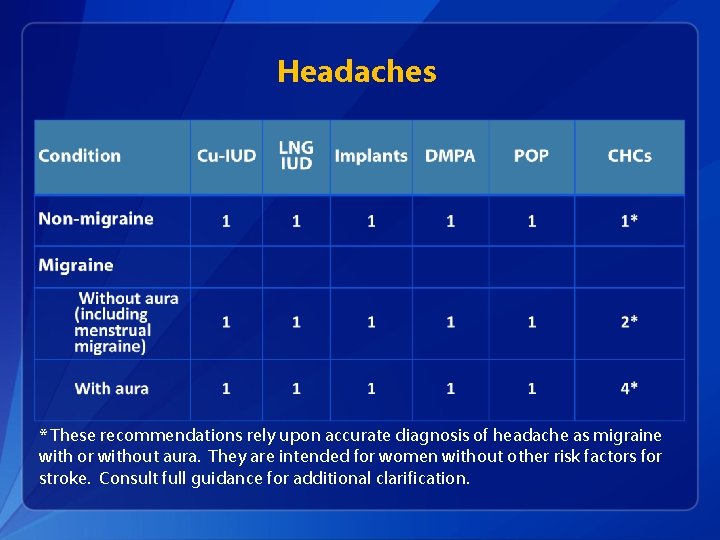
Headaches * These recommendations rely upon accurate diagnosis of headache as migraine with or without aura. They are intended for women without other risk factors for stroke. Consult full guidance for additional clarification.
Scenario 3 q A 30 year old female has a history of migraine headaches with light sensitivity. She does not experience any visual warning signs for a coming headache. She is interested in starting contraception. What methods are safe for her to consider? Answer: A. Combined hormonal methods (pill, patch, ring) B. Progestin implant C. Intrauterine device All of the above, so long as she does not have other risk factors for stroke. (If so, progestin-only methods and IUDs are safe or generally safe to use. )
Scenario 4: q A 19 y. o. woman comes to the office desiring an IUD. She has a history of chlamydia 6 months ago that was treated, and reports one new partner since then. § Q: Given her STD risk factors, can you place an IUD today?
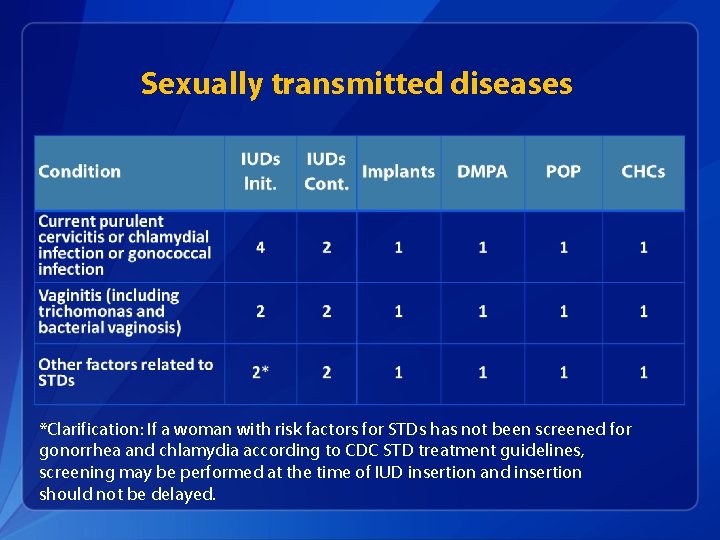
Sexually transmitted diseases *Clarification: If a woman with risk factors for STDs has not been screened for gonorrhea and chlamydia according to CDC STD treatment guidelines, screening may be performed at the time of IUD insertion and insertion should not be delayed.
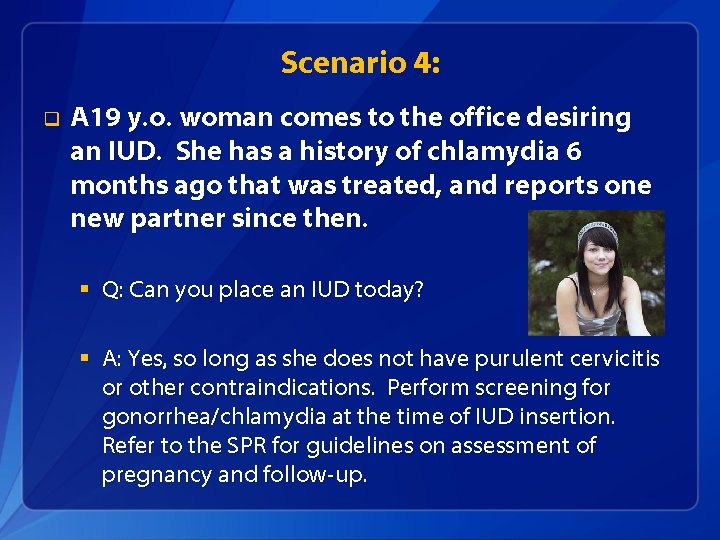
Scenario 4: q A 19 y. o. woman comes to the office desiring an IUD. She has a history of chlamydia 6 months ago that was treated, and reports one new partner since then. § Q: Can you place an IUD today? § A: Yes, so long as she does not have purulent cervicitis or other contraindications. Perform screening for gonorrhea/chlamydia at the time of IUD insertion. Refer to the SPR for guidelines on assessment of pregnancy and follow-up.
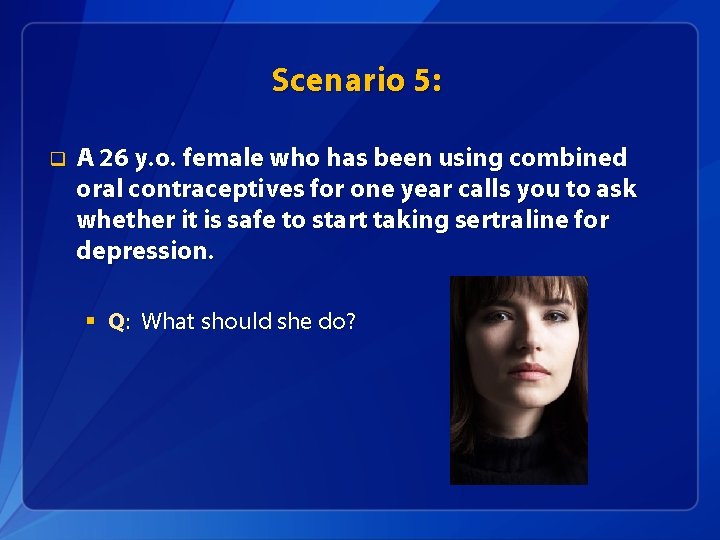
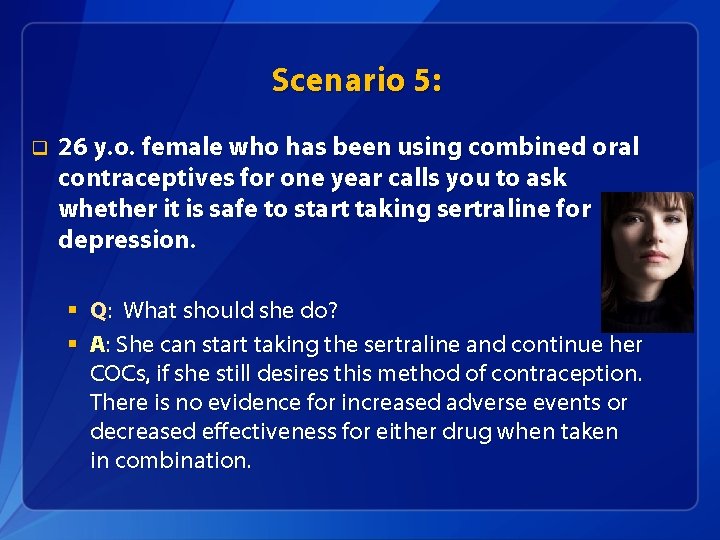
Scenario 5: q A 26 y. o. female who has been using combined oral contraceptives for one year calls you to ask whether it is safe to start taking sertraline for depression. § Q: What should she do?
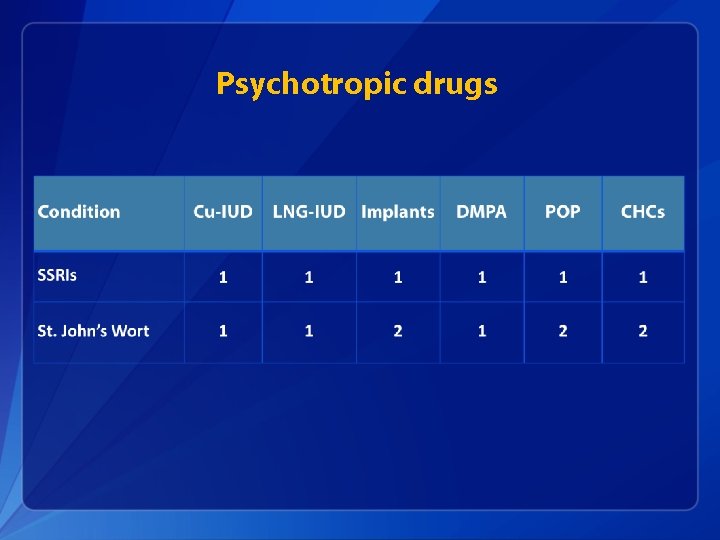
Psychotropic drugs
Scenario 5: q 26 y. o. female who has been using combined oral contraceptives for one year calls you to ask whether it is safe to start taking sertraline for depression. § Q: What should she do? § A: She can start taking the sertraline and continue her COCs, if she still desires this method of contraception. There is no evidence for increased adverse events or decreased effectiveness for either drug when taken in combination.
Take Home Messages, U. S. MEC q U. S. MEC can help providers decrease barriers to choosing contraceptive methods q Most women can safely use most contraceptive methods q Certain conditions are associated with increased risk for adverse health events as a result of pregnancy q q Affected women may especially benefit from highly effective contraception for family planning Women, and couples should be informed of the full range of methods to decide what will be best for them
U. S. Selected Practice Recommendations for Contraceptive Use, 2016 q Recommendations for contraceptive management questions q Target audience: health care providers q Purpose: to assist health care providers when they counsel patients on contraceptive use and to serve as a source of clinical guidance q Content: Guidance for common contraceptive management topics such as: § § How to be reasonably certain that a woman is not pregnant When to start contraception Medically indicated exams and tests Follow-up and management of problems
Accessing the MEC and SPR in everyday practice
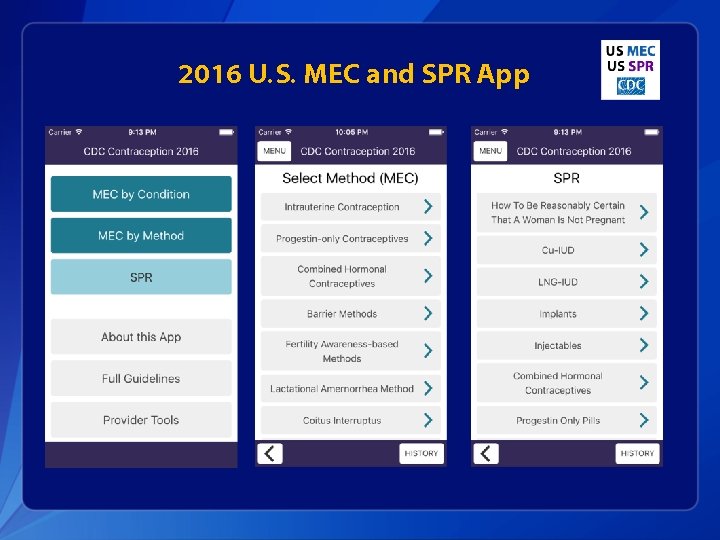
2016 U. S. MEC and SPR App
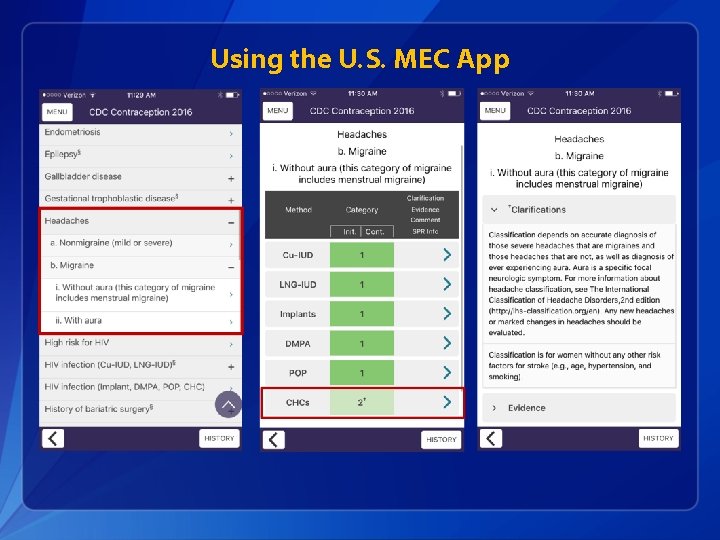
Using the U. S. MEC App
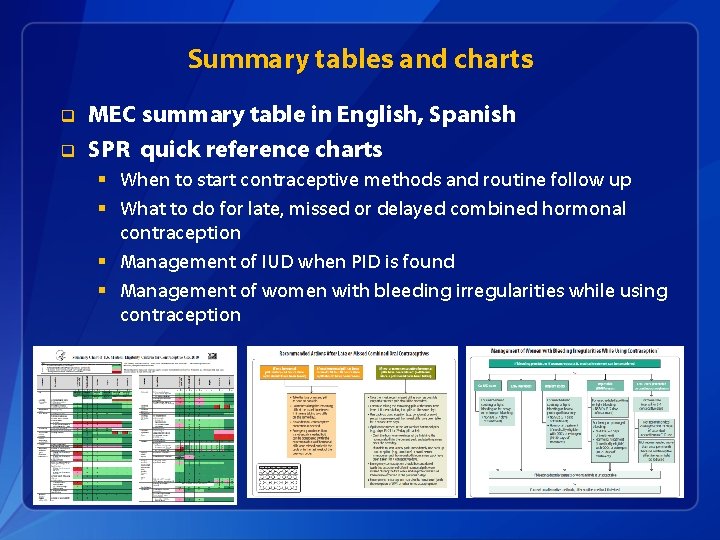
Summary tables and charts q q MEC summary table in English, Spanish SPR quick reference charts § When to start contraceptive methods and routine follow up § What to do for late, missed or delayed combined hormonal contraception § Management of IUD when PID is found § Management of women with bleeding irregularities while using contraception
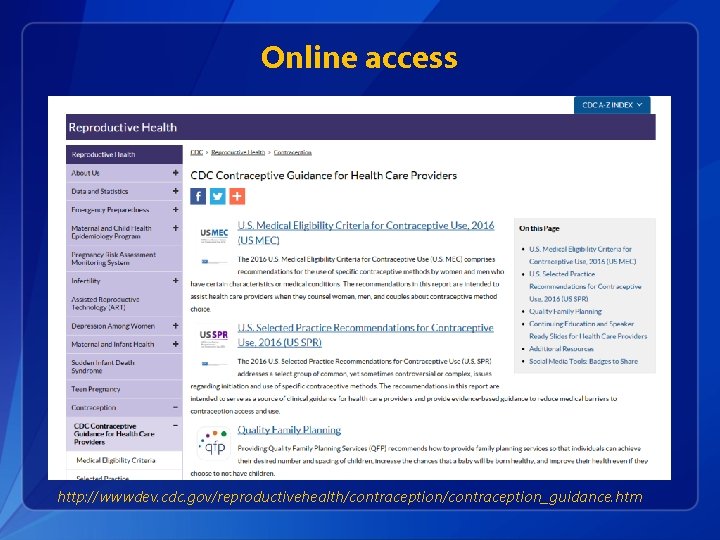
Online access http: //wwwdev. cdc. gov/reproductivehealth/contraception_guidance. htm
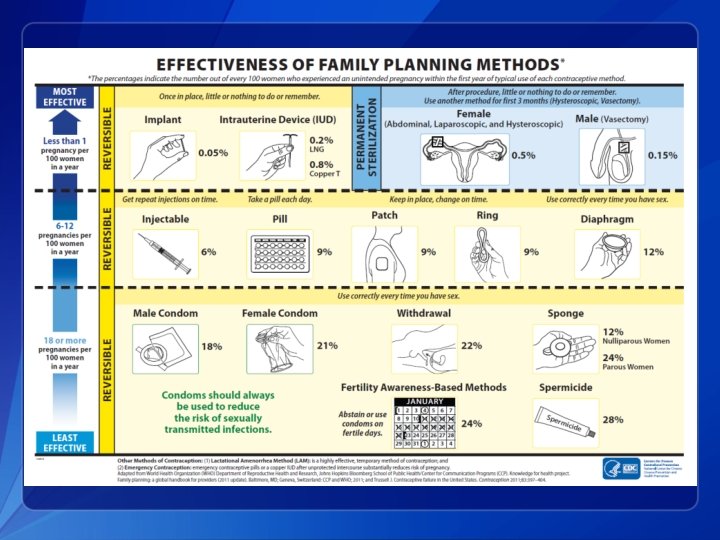
Other Tools and Aids q q q q MEC Wheel Continuing Education Activities Speaker-ready slides Contraceptive Effectiveness Charts Online alerts to receive updates e. Book for SPR Residency training and certification
Resources q CDC evidence-based family planning guidance documents: http: //www. cdc. gov/reproductivehealth/contraception_guidance. htm q Sign up to receive alerts!