
CONTRACEPTION January 2020 1 List the various types




- Slides: 38
CONTRACEPTION January 2020
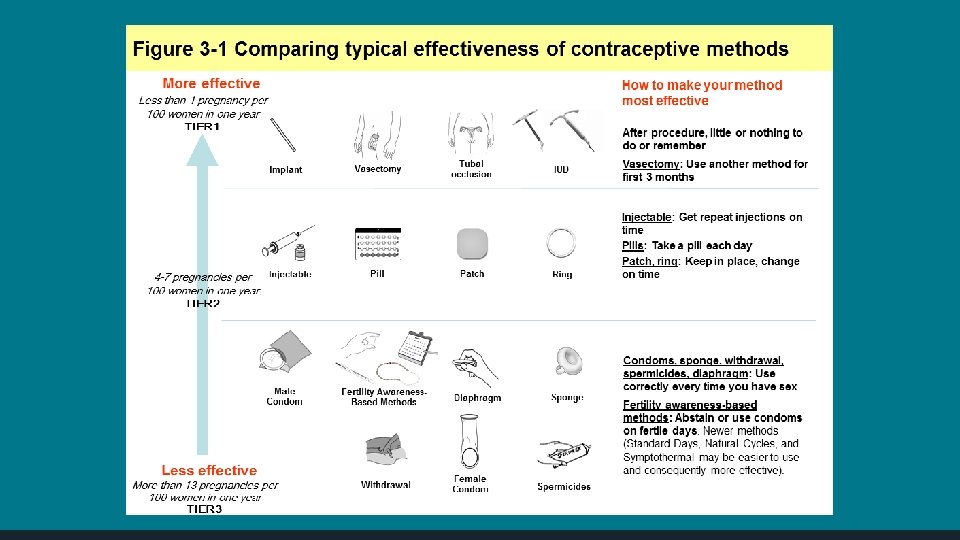
1. List the various types of contraceptives Learning Objectives 2. Discuss the ”reality rates” of the different types of contraceptives 3. Name the contraceptives that help reduce the risk of STIs 4. Discuss possible serious consequences of contraceptive techniques.
What is Contraception? The deliberate prevention of conception or impregnation by any of various drugs, techniques, or devices; birth control. 1 A more accurate real - life definition: Methods used to Reduce the chance of getting pregnant.
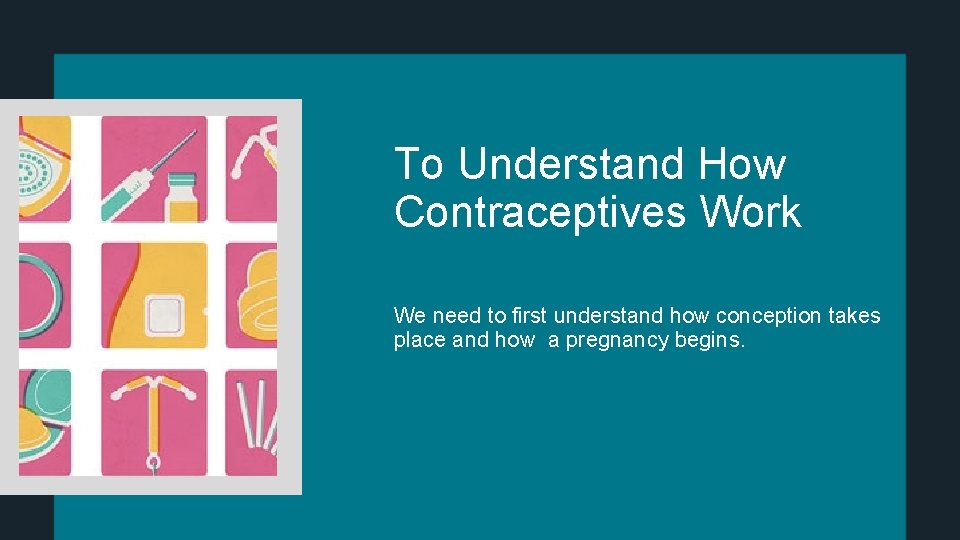
To Understand How Contraceptives Work We need to first understand how conception takes place and how a pregnancy begins.
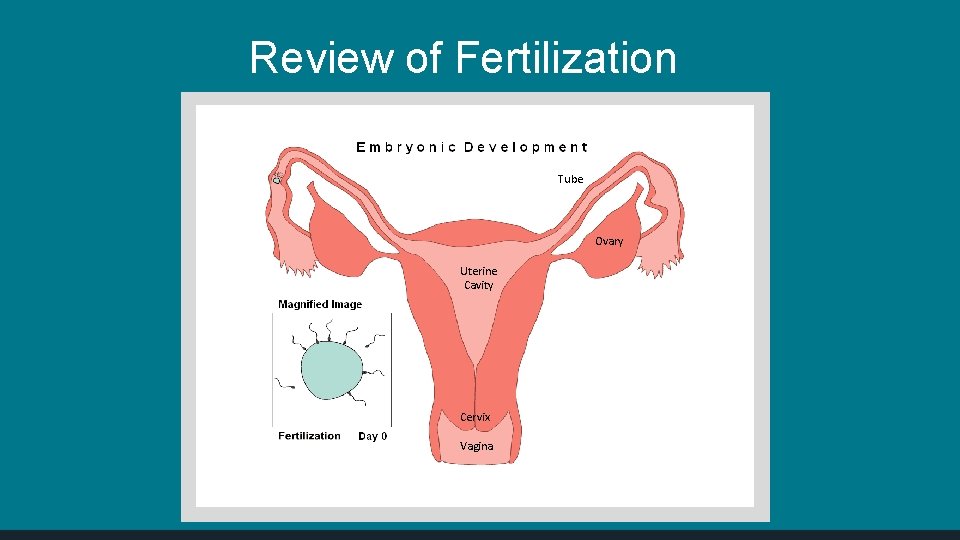
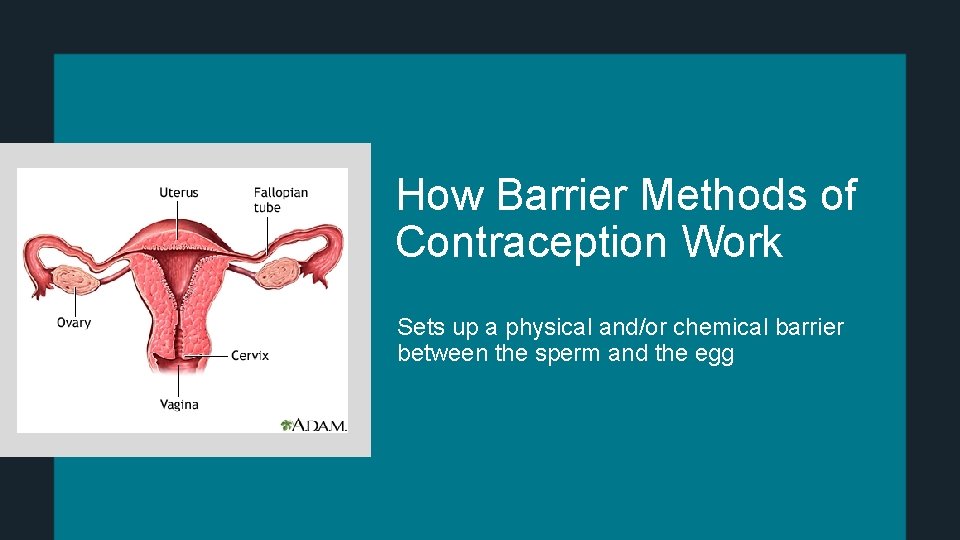
Review of Fertilization Egg and Sperm Fallopian Tube Ovary Uterine Cavity Cervix Vagina
When Does Pregnancy Occur? With fertilization? With implantation? When does life begin?
Fertilization Demonstration https: //www. youtube. com/watch? v=q. Pza. YNXNy. JU
Fertility Awareness-Based Methods of Contraception Identifying the “fertile window”
Withdrawal When the male takes his penis out of the vagina before he ejaculates.
How Barrier Methods of Contraception Work Sets up a physical and/or chemical barrier between the sperm and the egg
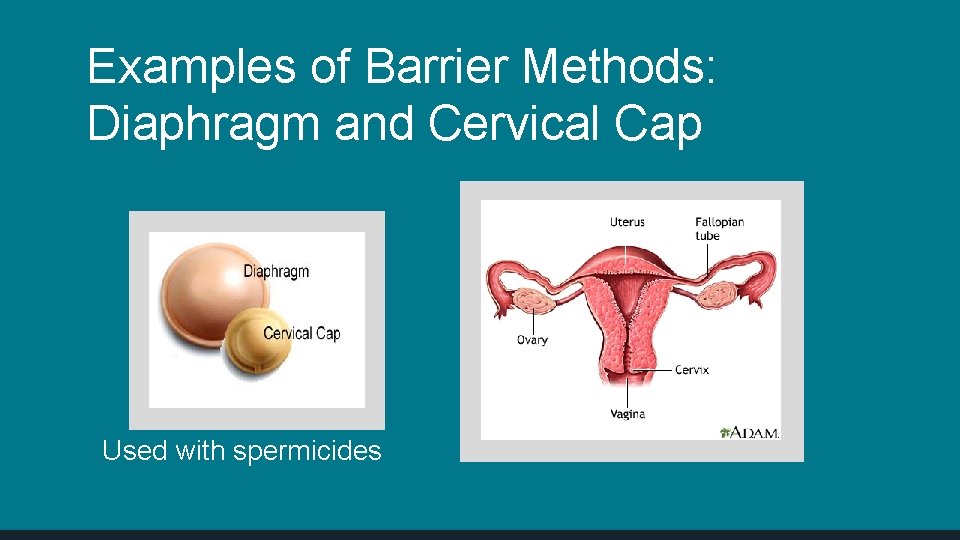
Examples of Barrier Methods: Diaphragm and Cervical Cap Used with spermicides
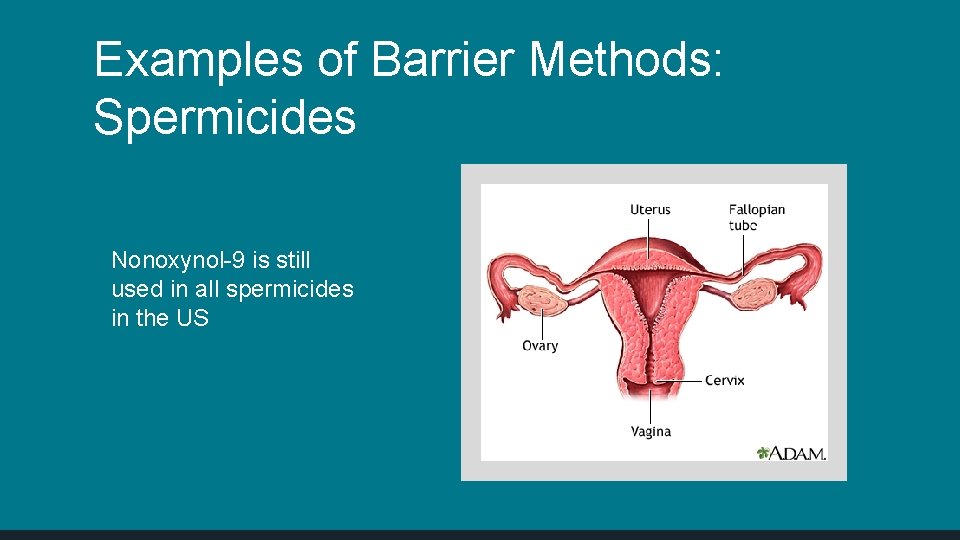
Examples of Barrier Methods: Spermicides Nonoxynol-9 is still used in all spermicides in the US
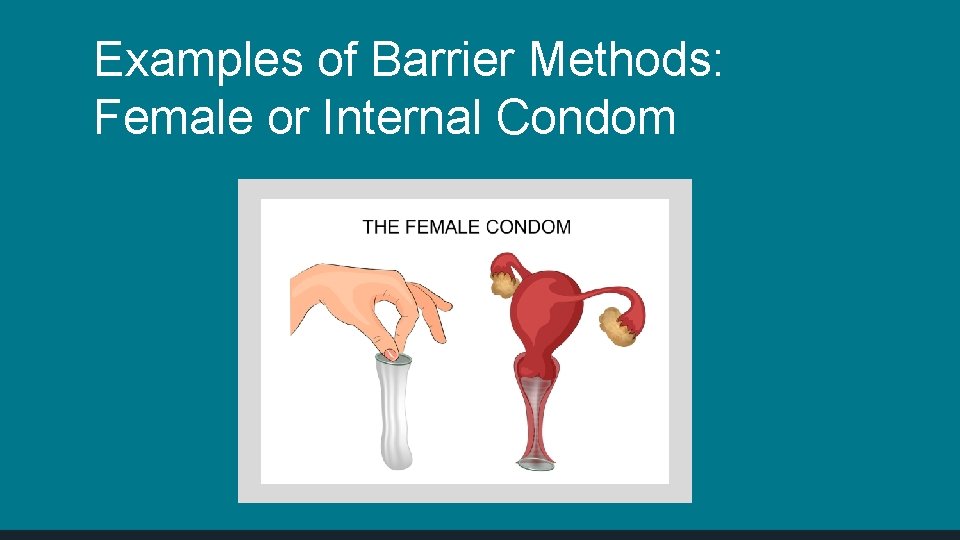
Examples of Barrier Methods: Female or Internal Condom
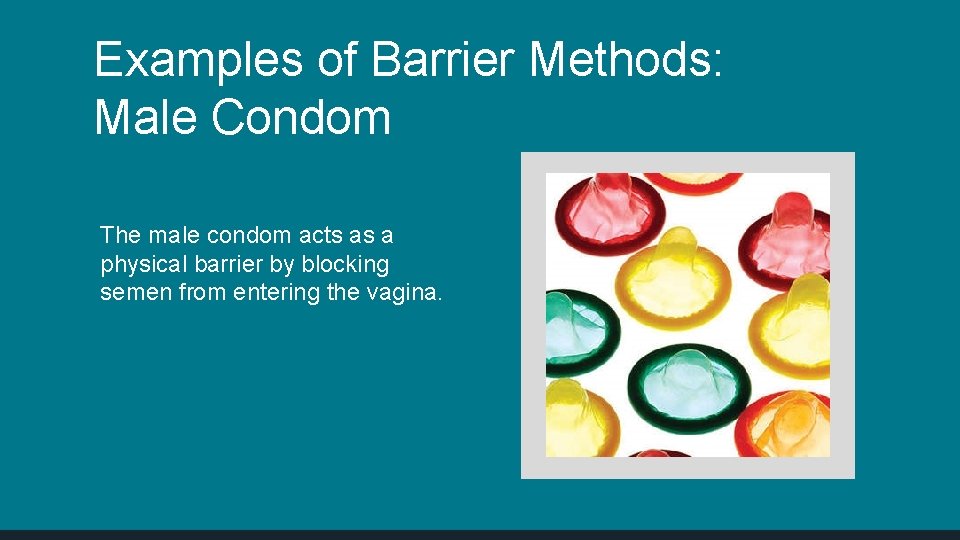
Examples of Barrier Methods: Male Condom The male condom acts as a physical barrier by blocking semen from entering the vagina.
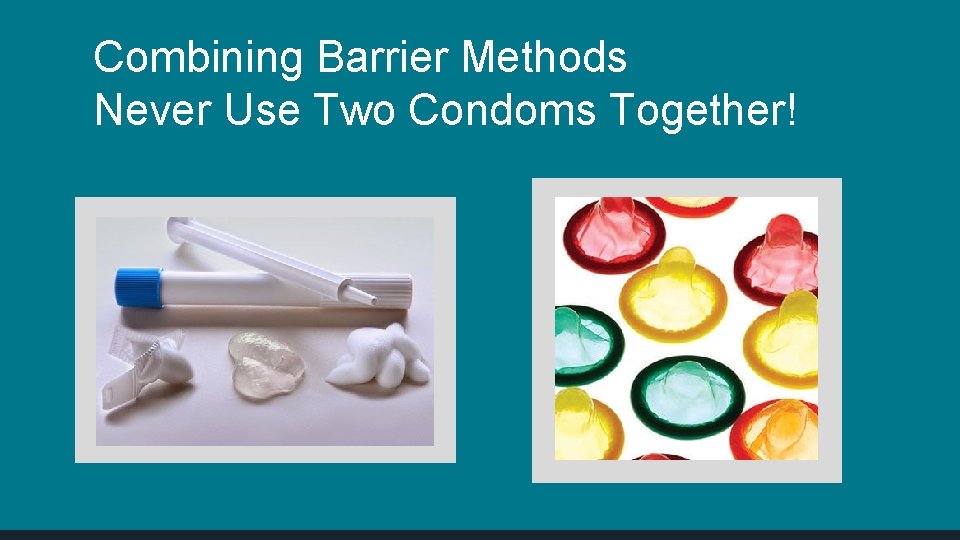
Combining Barrier Methods Never Use Two Condoms Together!
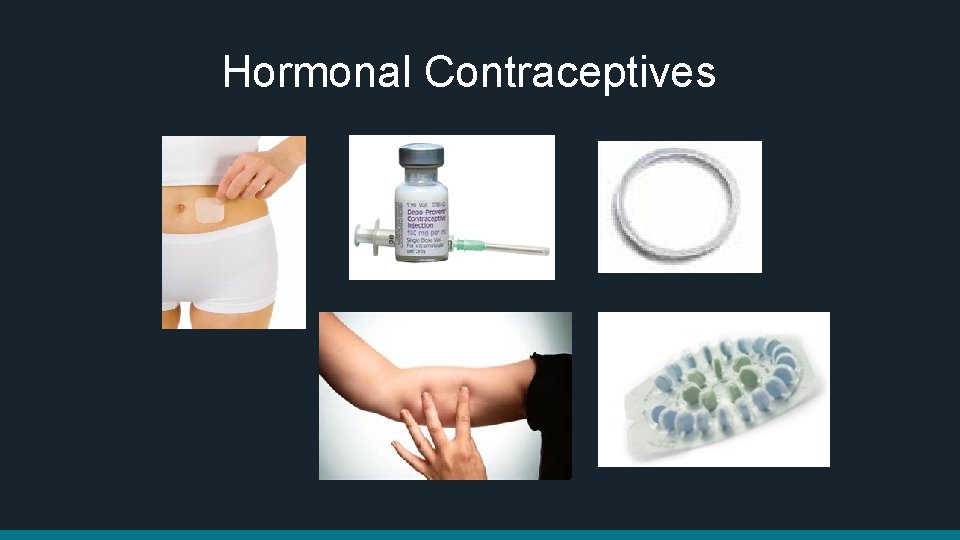
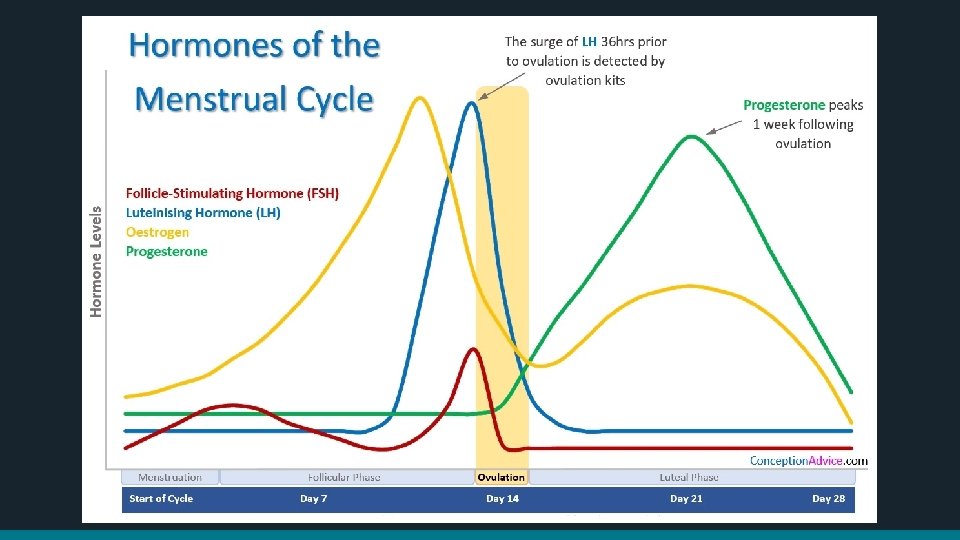
Hormonal Contraceptives
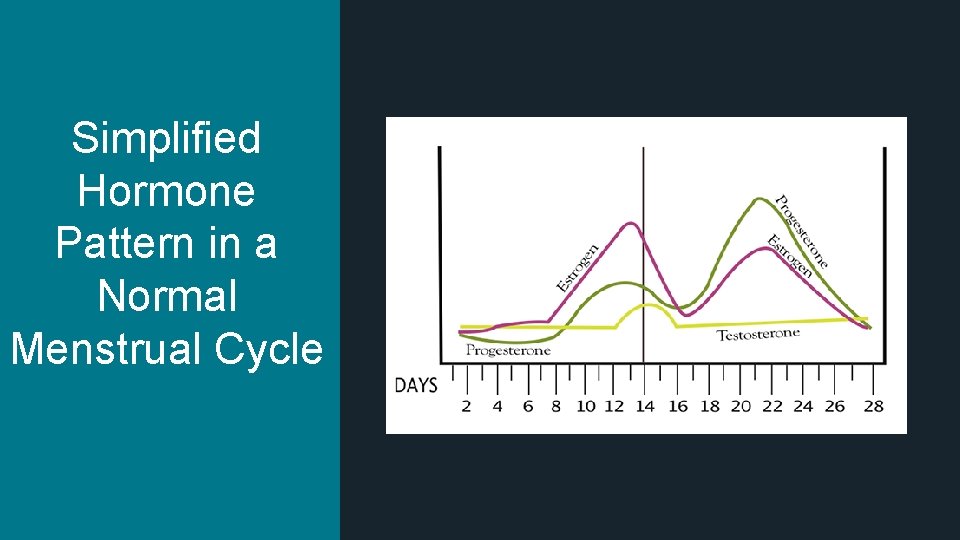
Simplified Hormone Pattern in a Normal Menstrual Cycle
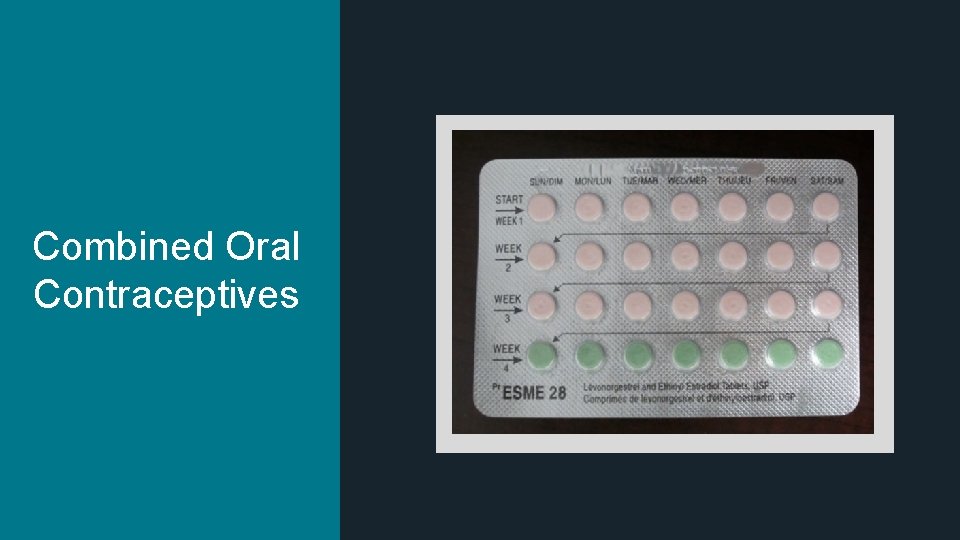
Combined Oral Contraceptives
Combined Oral Contraceptives Advantages Disadvantages • Spontaneous sex • Reversable birth control • Must be taken correctly and consistently • Effective when taken correctly and consistently • Annoying side effects (nausea, spotting, period cessation) • Therapeutic effects ( reduces painful and/or heavy periods, PMS, acne, migraines) • Increased risk of rare, but serious side effects
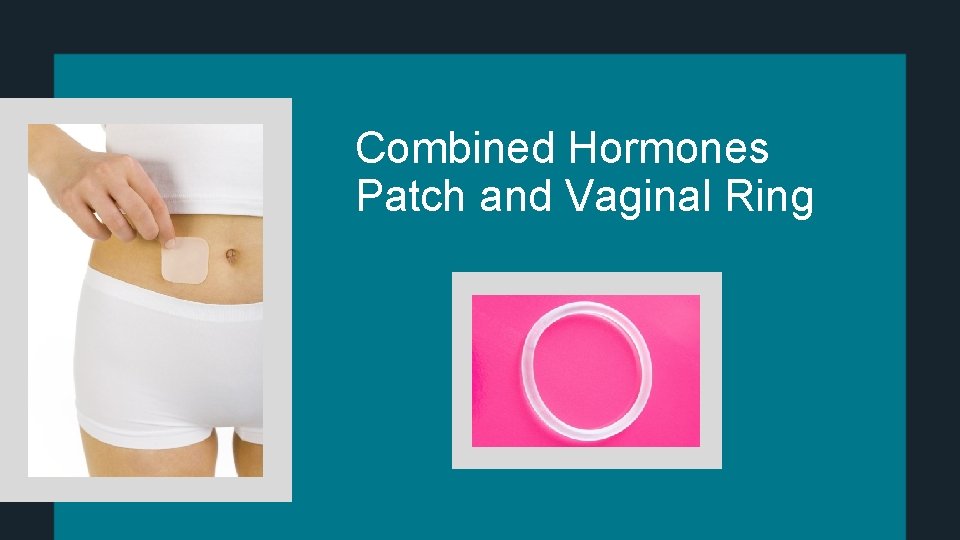
Combined Hormones Patch and Vaginal Ring
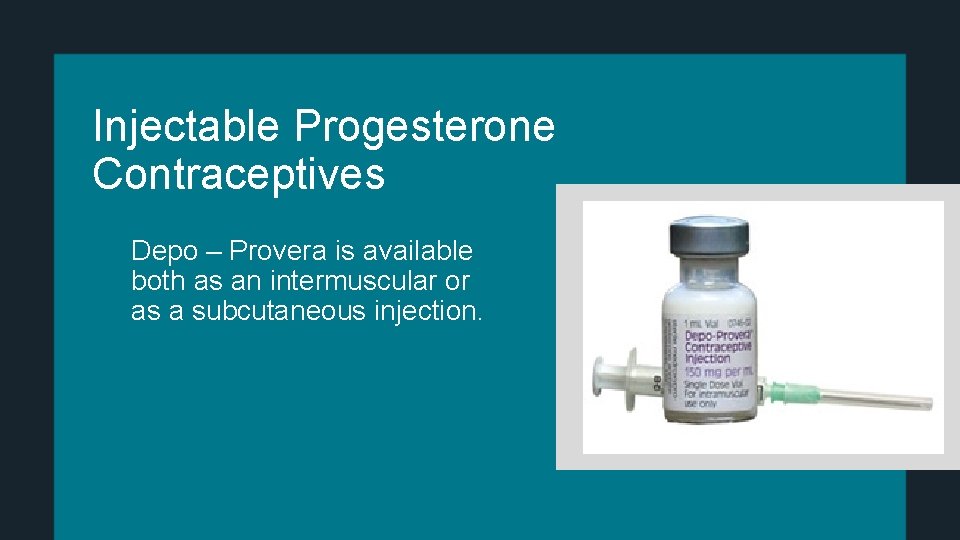
Injectable Progesterone Contraceptives Depo – Provera is available both as an intermuscular or as a subcutaneous injection.
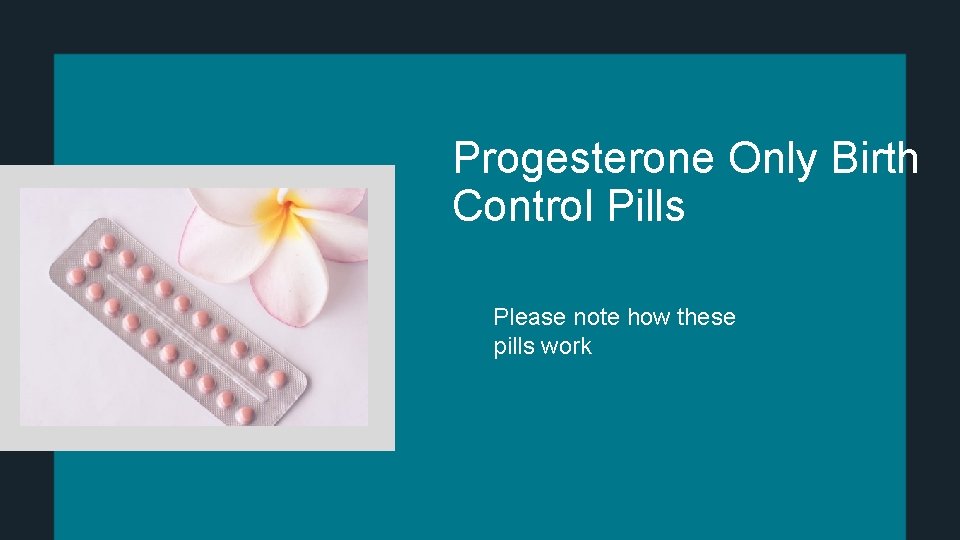
Progesterone Only Birth Control Pills Please note how these pills work
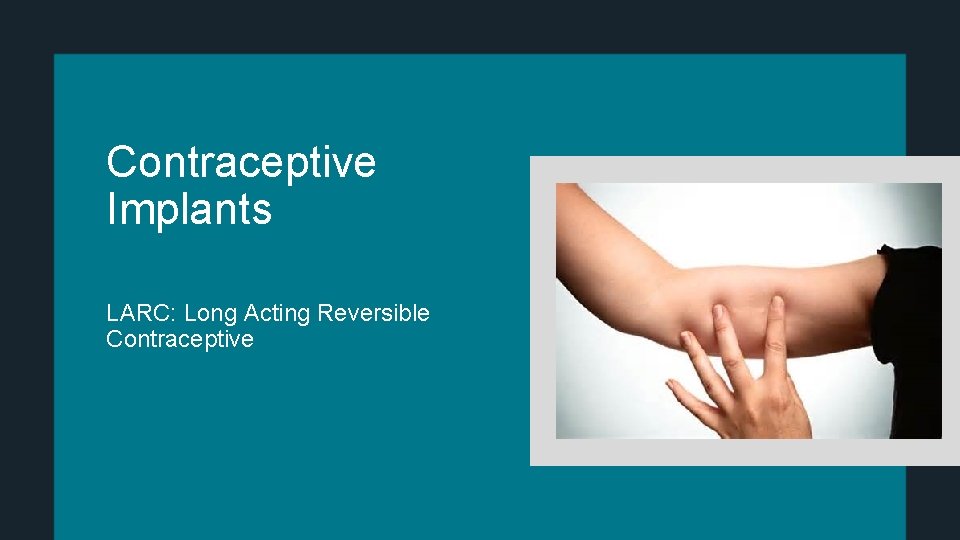
Contraceptive Implants LARC: Long Acting Reversible Contraceptive
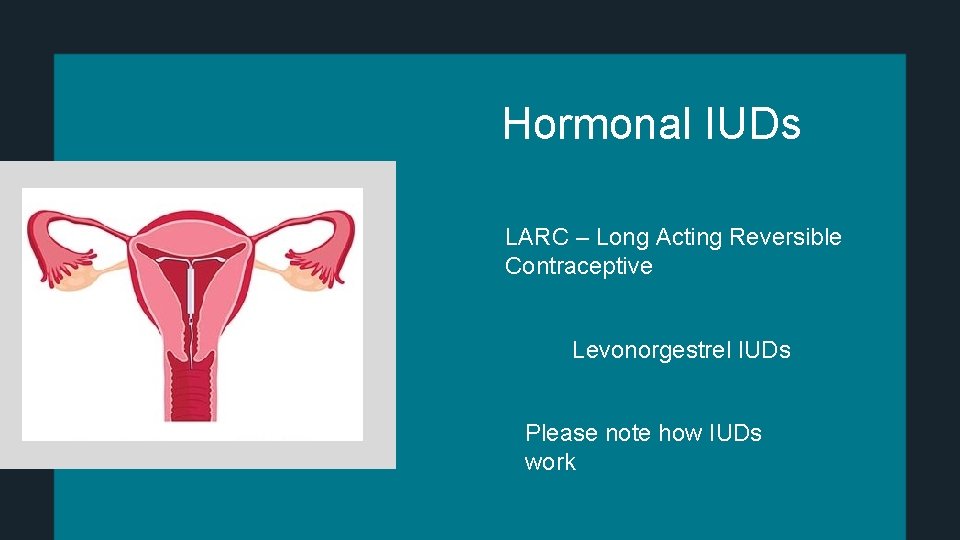
Hormonal IUDs LARC – Long Acting Reversible Contraceptive Levonorgestrel IUDs Please note how IUDs work
Hormonal Birth Control and Breast Cancer
Hormonal Emergency Contraceptive Methods The morning after pill
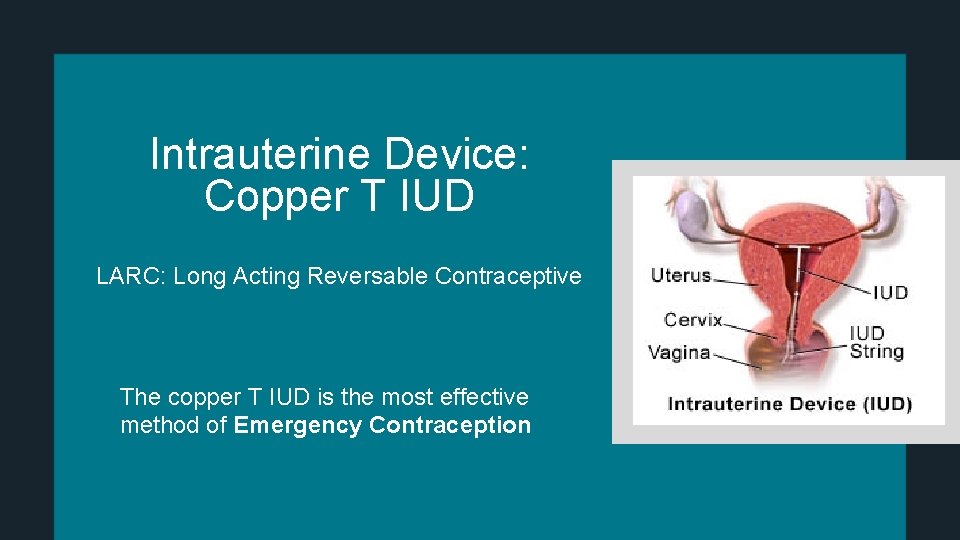
Intrauterine Device: Copper T IUD LARC: Long Acting Reversable Contraceptive The copper T IUD is the most effective method of Emergency Contraception
Long Acting Reversible Contraceptives (LARCS) • IUDs and Implants are referred to as LARCS (Long Acting Reversible Contraceptives). • LARCS are very effective contraceptive methods because they are not user-dependent. • LARCS are being recommended for adolescents by the World Health Organization, CDC, ACOG, and AAP.
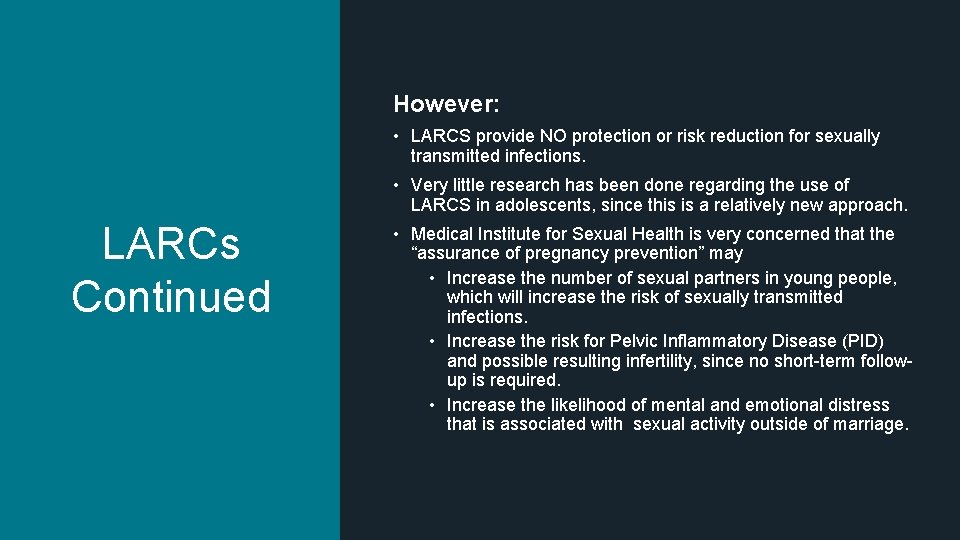
However: • LARCS provide NO protection or risk reduction for sexually transmitted infections. • Very little research has been done regarding the use of LARCS in adolescents, since this is a relatively new approach. LARCs Continued • Medical Institute for Sexual Health is very concerned that the “assurance of pregnancy prevention” may • Increase the number of sexual partners in young people, which will increase the risk of sexually transmitted infections. • Increase the risk for Pelvic Inflammatory Disease (PID) and possible resulting infertility, since no short-term followup is required. • Increase the likelihood of mental and emotional distress that is associated with sexual activity outside of marriage.
What is contraception? The deliberate prevention of conception or impregnation by any of various drugs, techniques, or devices; birth control. 1 A more accurate real - life definition: Methods used to Reduce the chance of getting pregnant.
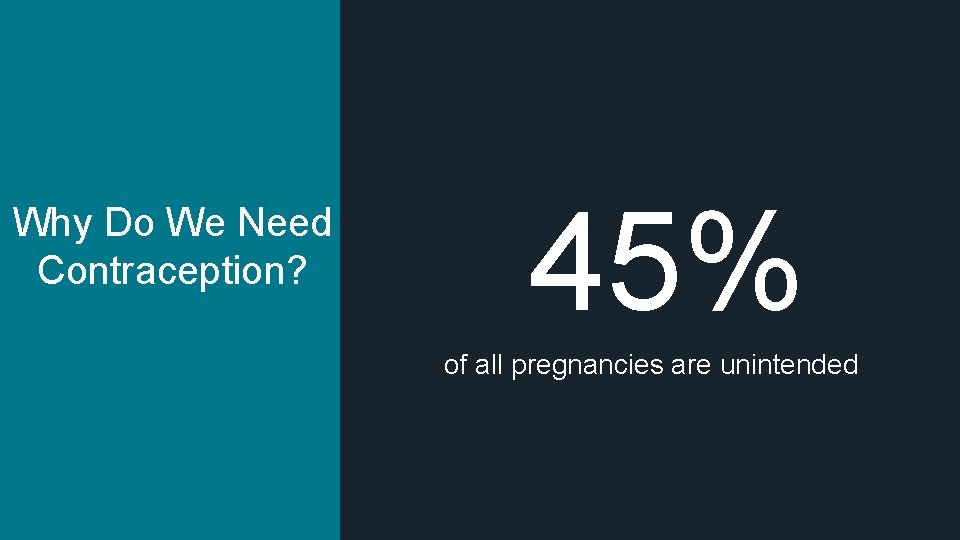
Why Do We Need Contraception? 45% of all pregnancies are unintended
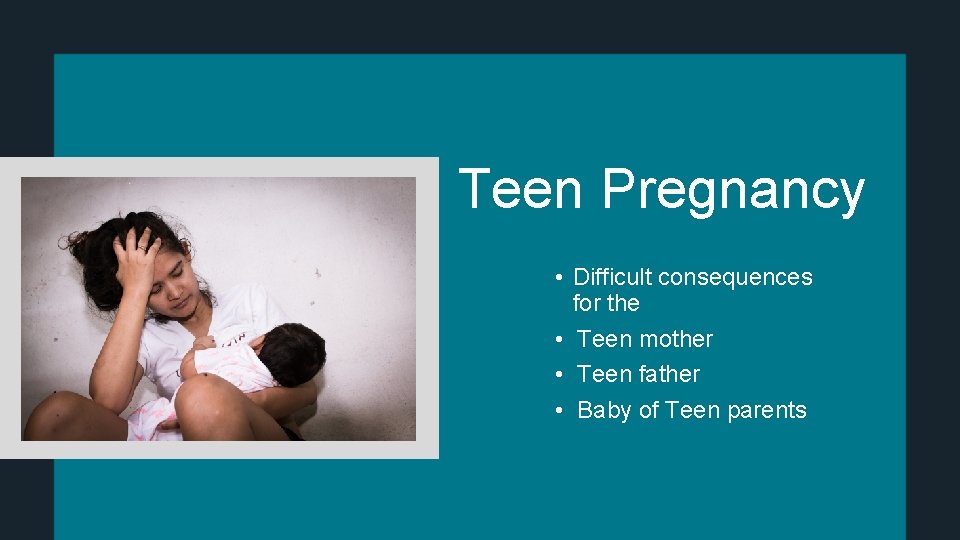
Teen Pregnancy • Difficult consequences for the • Teen mother • Teen father • Baby of Teen parents
But… 45% of all unintended pregnancies result from contraceptive failure!
Dare We Ask if There is a Better Way? Abstinence from sexual activity prevents 1. Pregnancy 2. Sexually Transmitted Infections 3. Emotional distress associated with sexual activity