
Continuous Probability CSE 312 Spring 21 Lecture 16
Continuous Probability CSE 312 Spring 21 Lecture 16
Today Continuous Probability Density Function Cumulative Distribution Function Goal for today is to get intuition on what’s different in the continuous case. Your goal today is to start building up a gut-feeling of what’s happening. ASK QUESTIONS, (always, but today especially).
Continuous Random Variables We’ll need continuous probability spaces and continuous random variables to describe experiments that have uncountably-infinite sample spaces. e. g. all real numbers How long until the next bus shows up? What location does a dart land?
Continuous Random Variables Wait, we’re computer scientists. Computers don’t do real numbers, why should we? Continuous random variables will be a useful model for enormous sample spaces. The math will be easier. Example: polling a large population. The sample space is actually discrete. But we’re going to round the result anyway. Make it continuous first for easier math, then round.
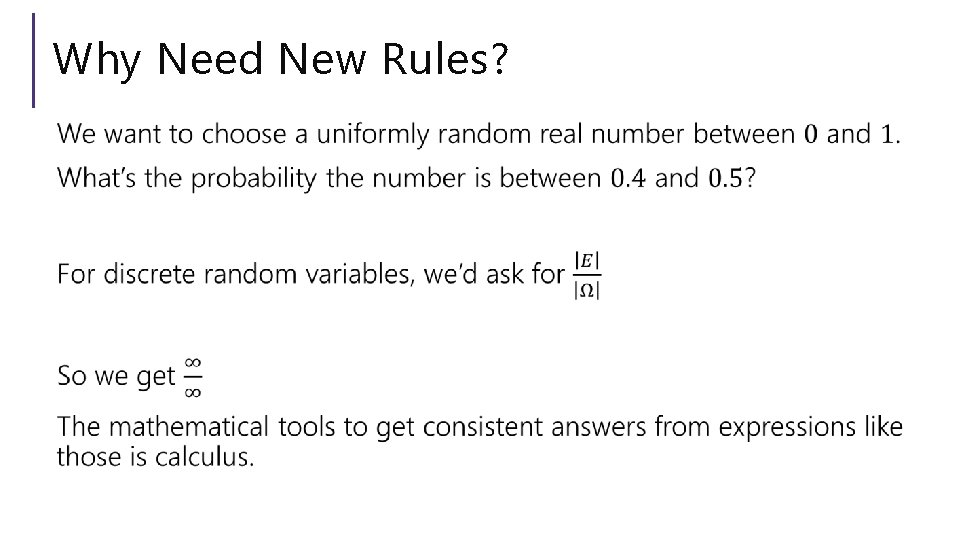
Why Need New Rules?
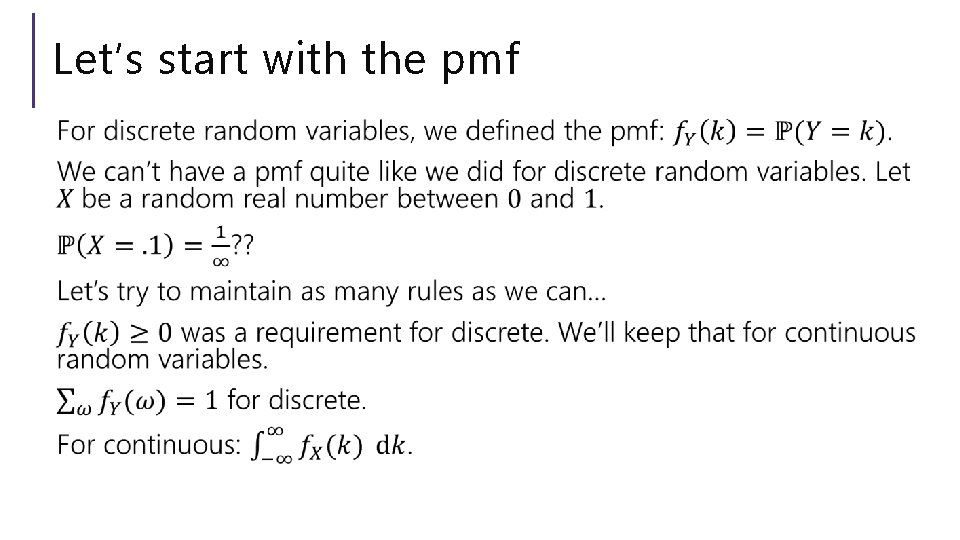
Let’s start with the pmf
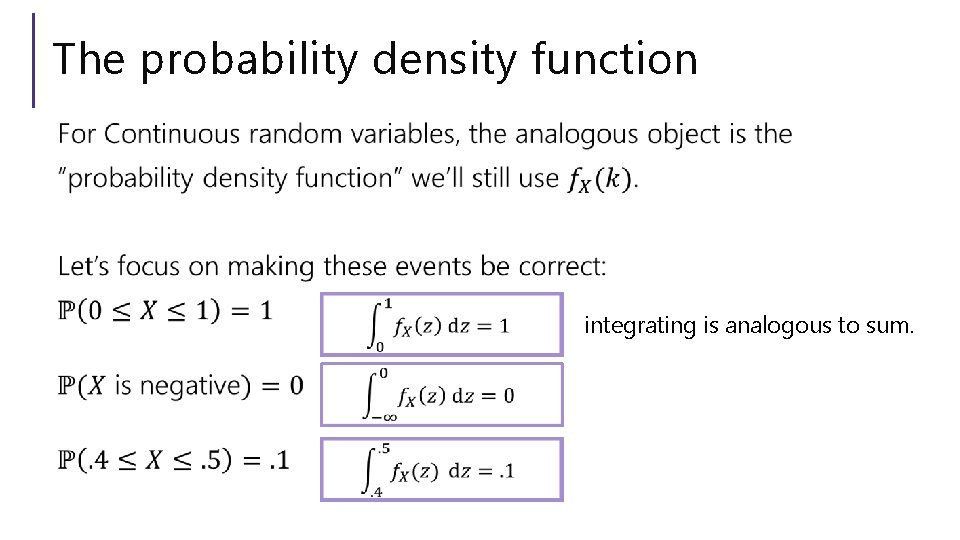
The probability density function integrating is analogous to sum.
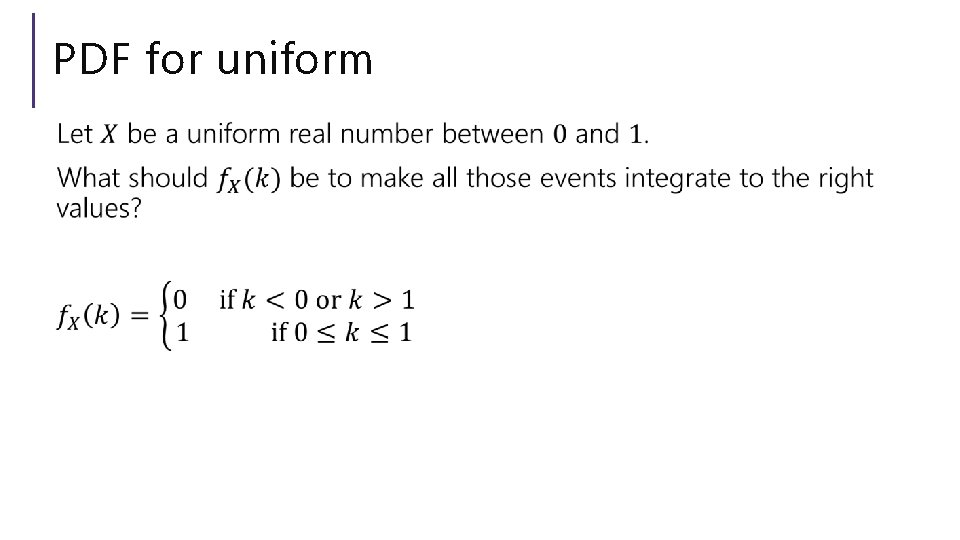
PDF for uniform
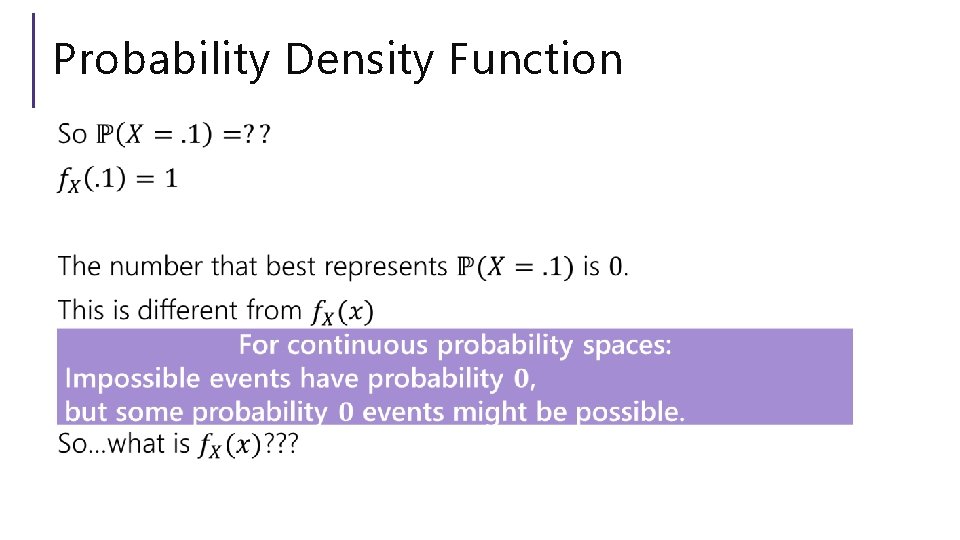
Probability Density Function

Using the PDF . 2 . 5
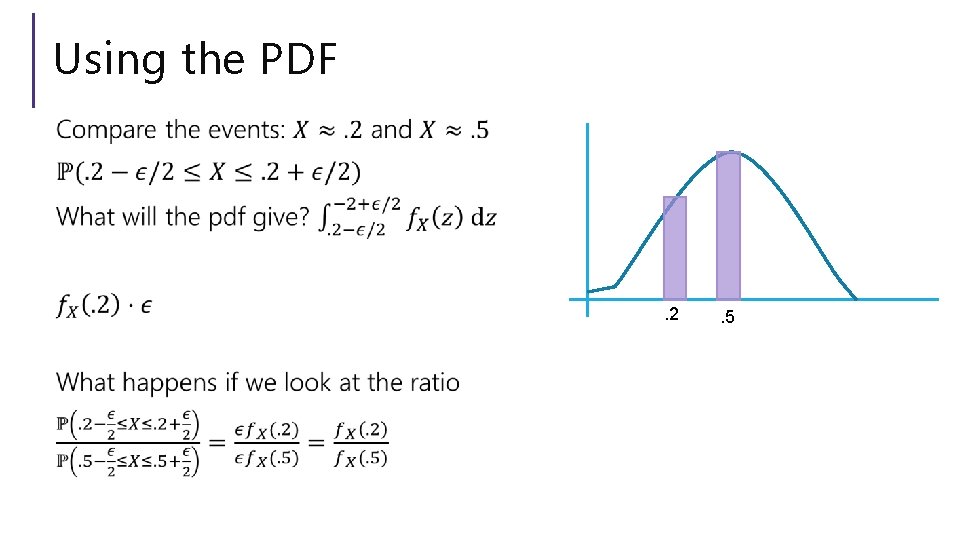
Using the PDF . 2 . 5

So what’s the pdf?
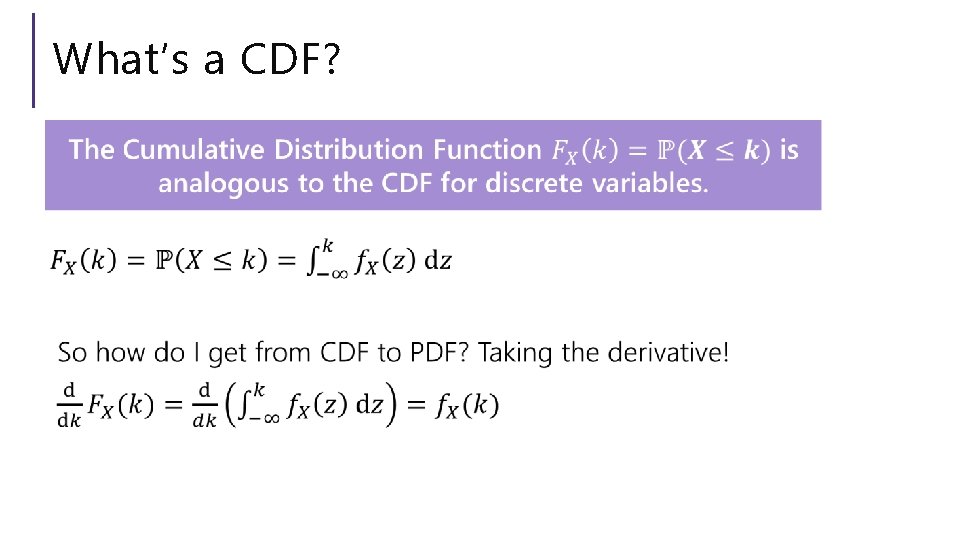
What’s a CDF?
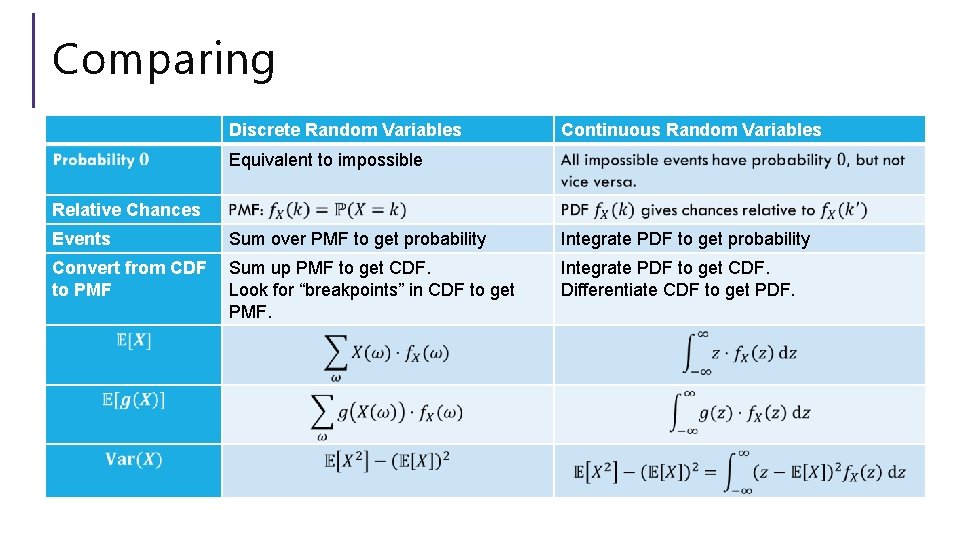
Comparing Discrete Random Variables Continuous Random Variables Equivalent to impossible Relative Chances Events Sum over PMF to get probability Integrate PDF to get probability Convert from CDF to PMF Sum up PMF to get CDF. Look for “breakpoints” in CDF to get PMF. Integrate PDF to get CDF. Differentiate CDF to get PDF.
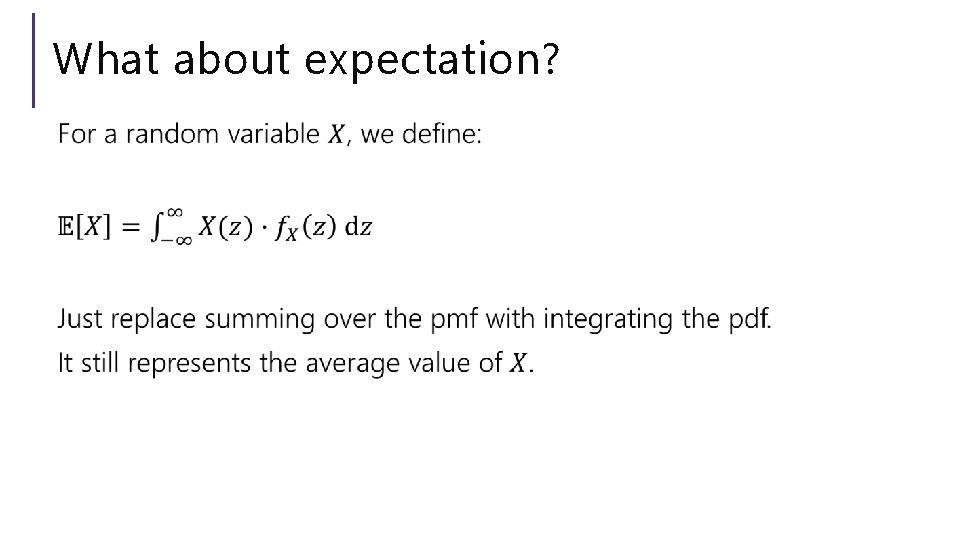
What about expectation?
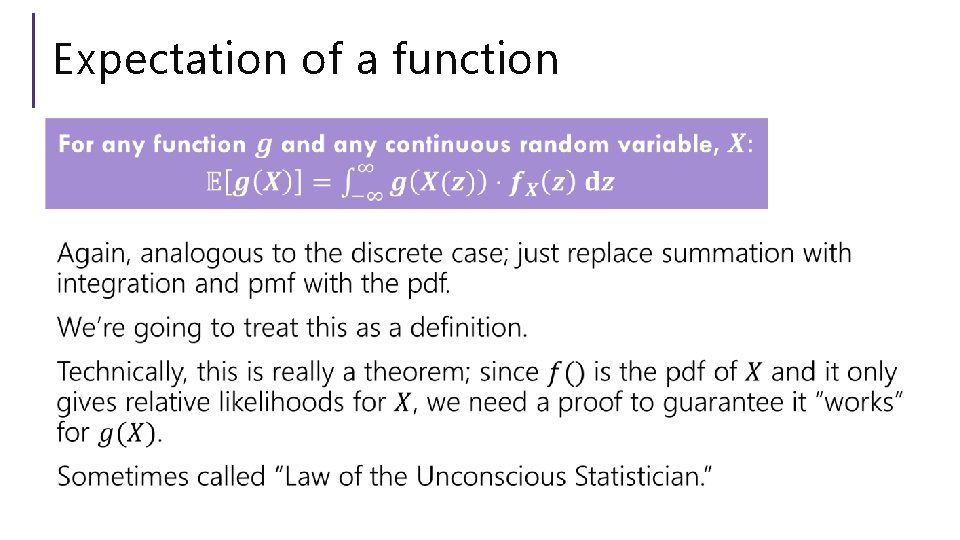
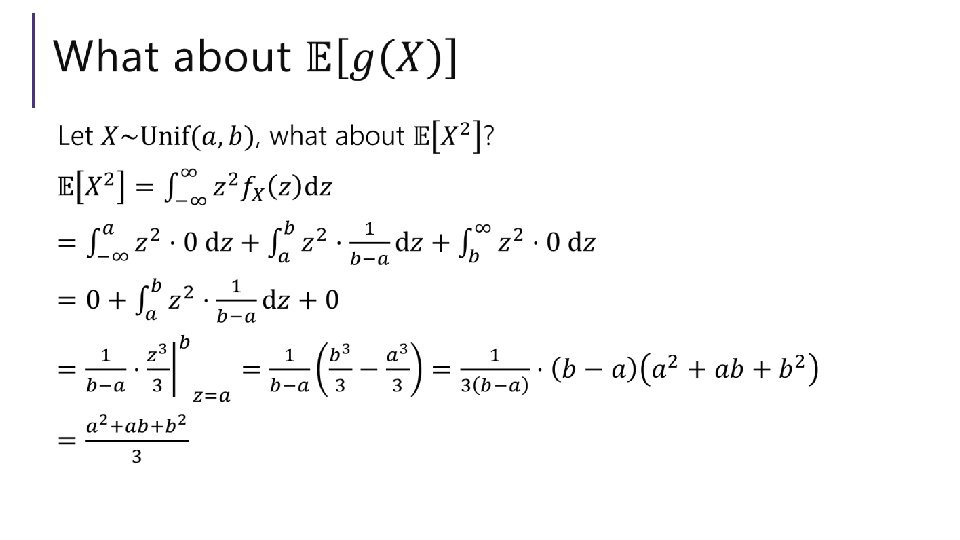
Expectation of a function
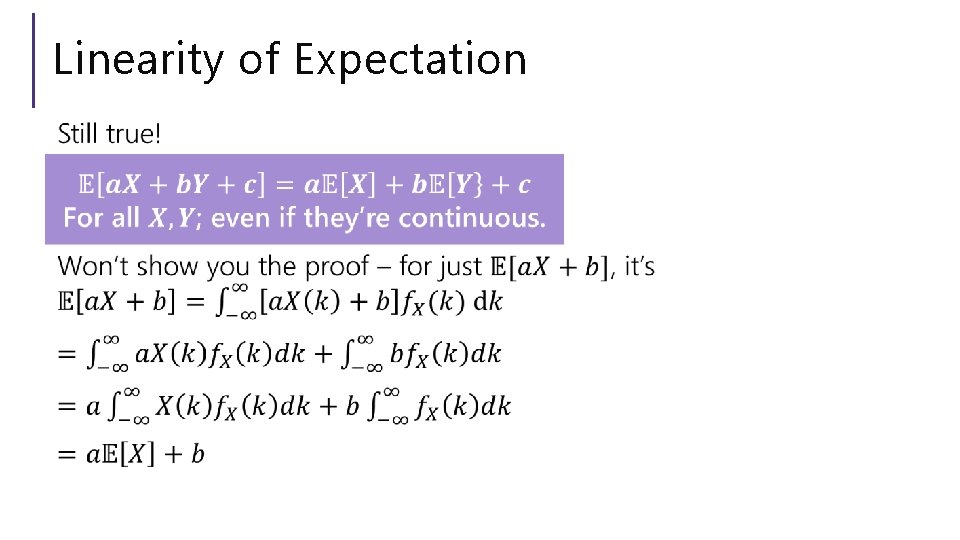
Linearity of Expectation
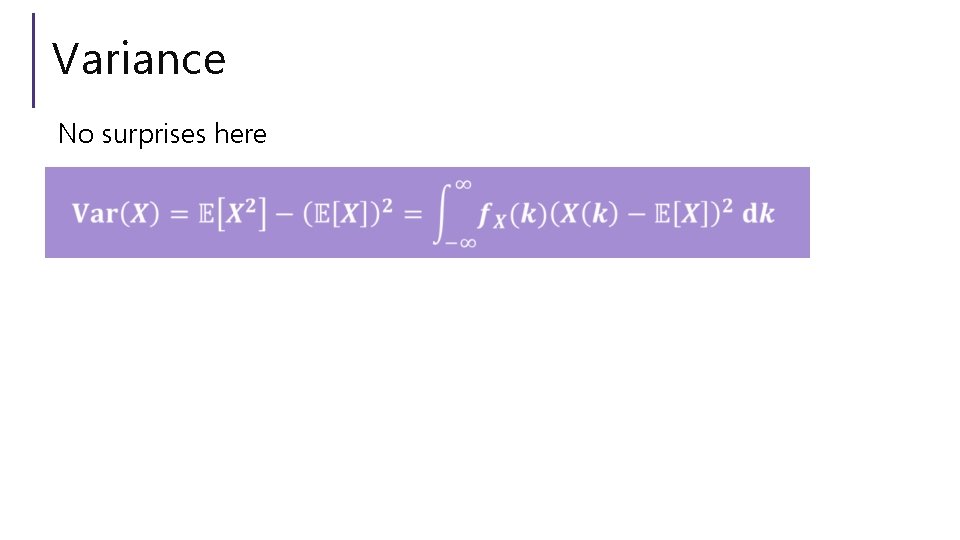
Variance No surprises here
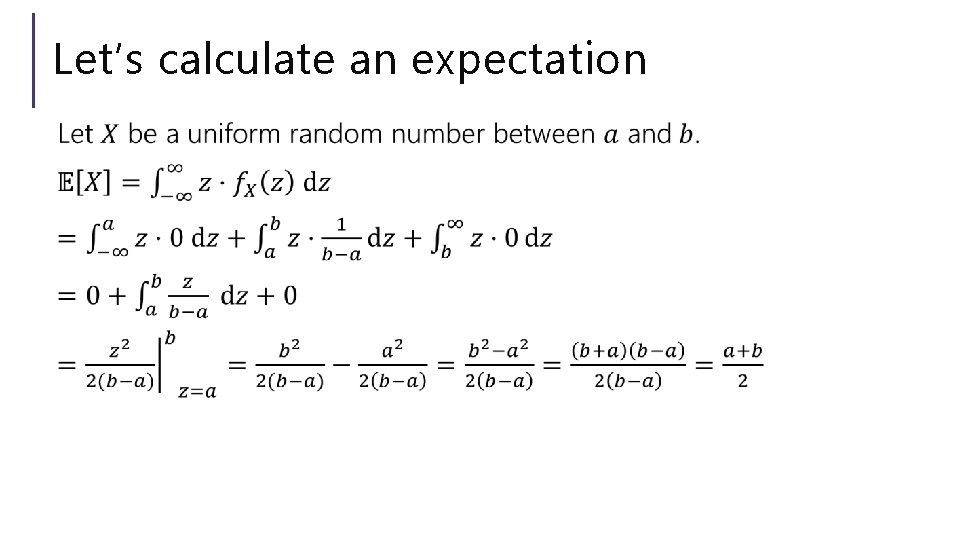
Let’s calculate an expectation
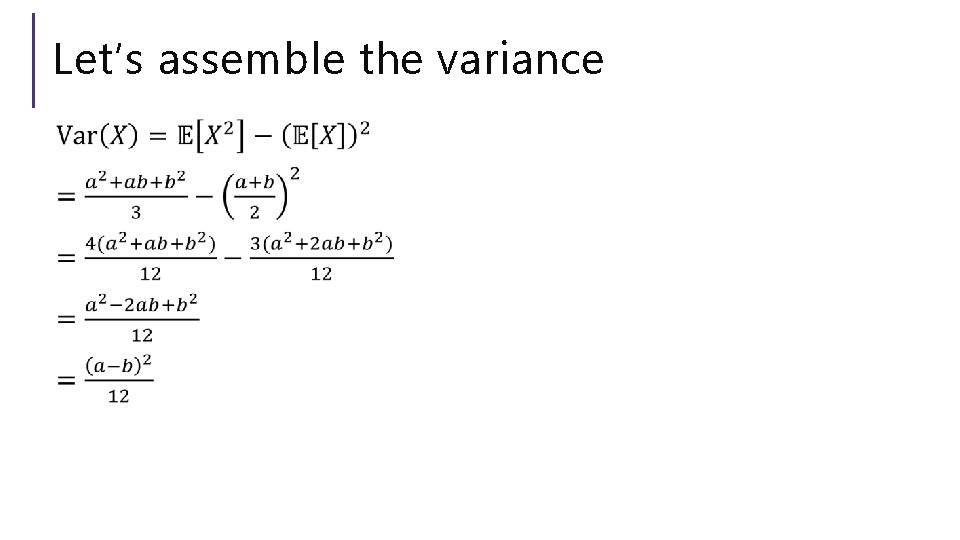
Let’s assemble the variance
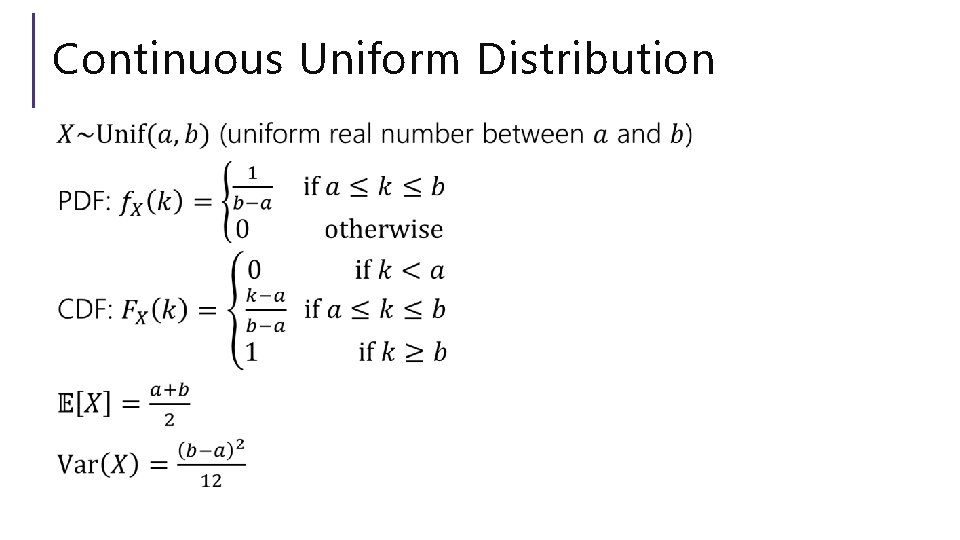
Continuous Uniform Distribution
- Slides: 22