
Continuous Culture Sweta Sushmita Tigga LectureB Sc Microbiology
Continuous Culture Sweta Sushmita Tigga Lecture-B. Sc Microbiology, Sem-III Department of Microbiology DSPMU, Ranchi
Continuous Culture • A continuous culture system is an open system • In the continuous culture growth vessel a known volume of fresh medium is added at a constant rate while an equal volume of spent culture medium (which also contains cells) is removed at the same rate.

Continuous Culture
Continuous Culture i. Keep the biomass constant in a bioreactor ii. Control the concentration of limiting nutrients iii. The ultimate process is to increase the productivity of process by maintaining the cultures close to its maximum specific growth rate prolonging these maximum production state until the culture is addressed to mutation or the product of loosing its specification
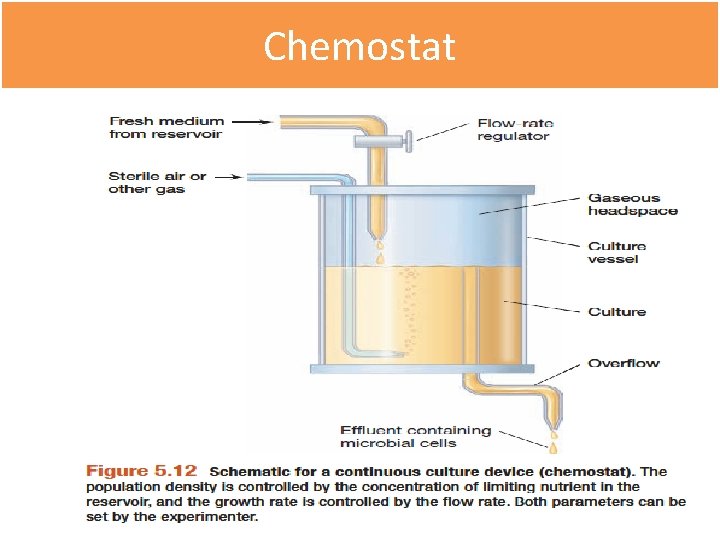
Chemostat
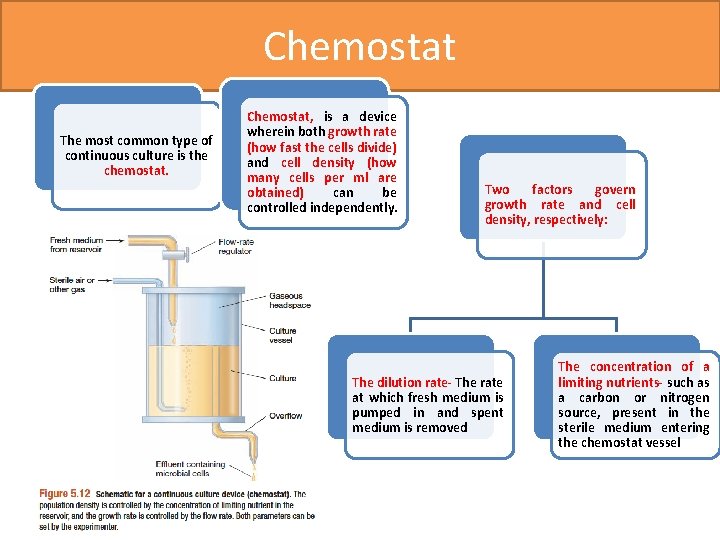
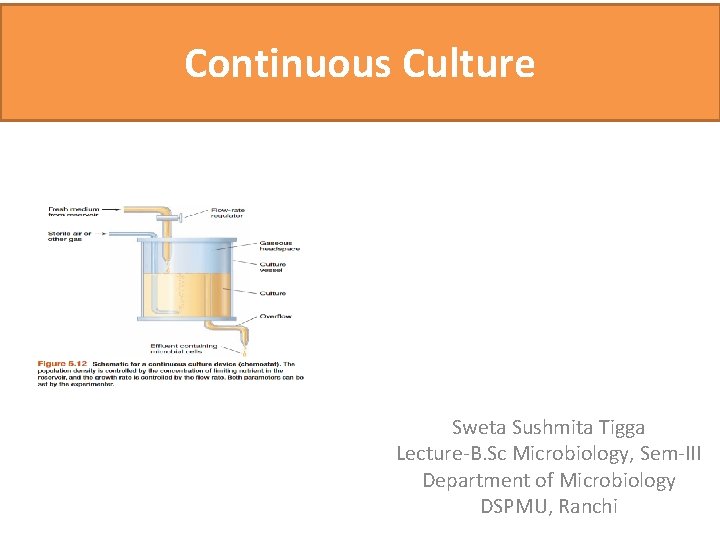
Chemostat The most common type of continuous culture is the chemostat. Chemostat, is a device wherein both growth rate (how fast the cells divide) and cell density (how many cells per ml are obtained) can be controlled independently. Two factors govern growth rate and cell density, respectively: The dilution rate- The rate at which fresh medium is pumped in and spent medium is removed The concentration of a limiting nutrients- such as a carbon or nitrogen source, present in the sterile medium entering the chemostat vessel
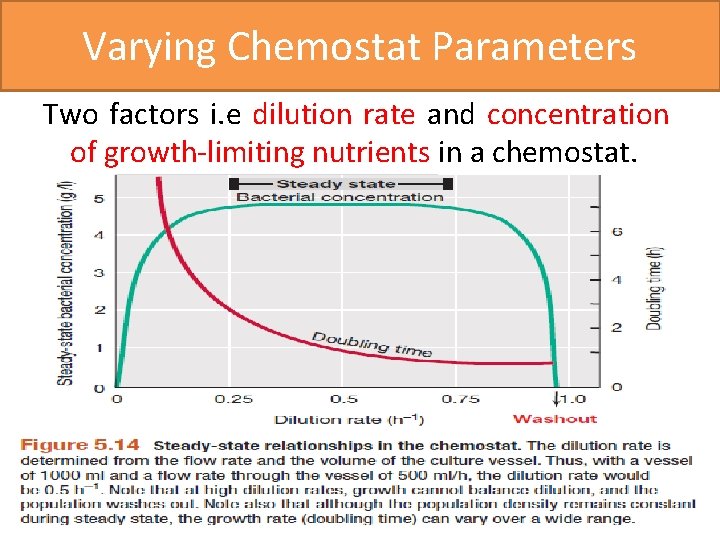
Varying Chemostat Parameters Two factors i. e dilution rate and concentration of growth-limiting nutrients in a chemostat.
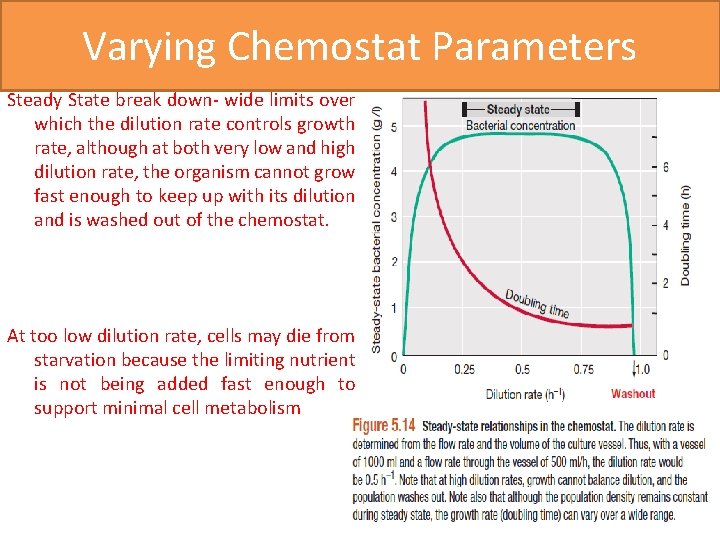
Varying Chemostat Parameters Steady State break down- wide limits over which the dilution rate controls growth rate, although at both very low and high dilution rate, the organism cannot grow fast enough to keep up with its dilution and is washed out of the chemostat. At too low dilution rate, cells may die from starvation because the limiting nutrient is not being added fast enough to support minimal cell metabolism
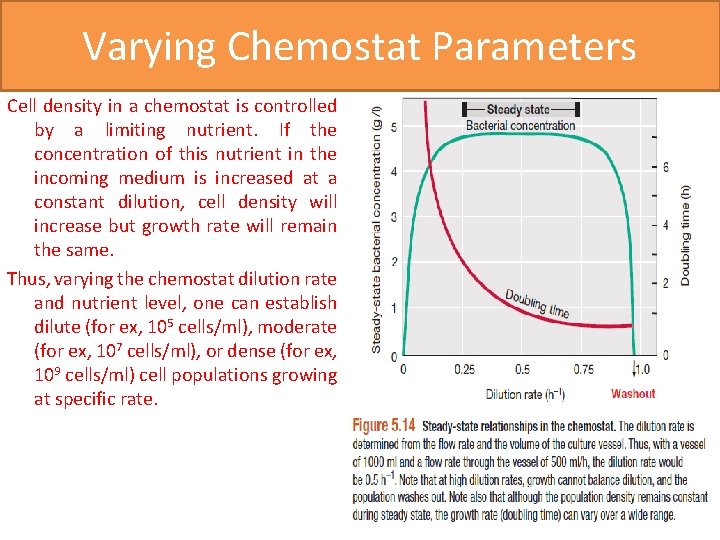
Varying Chemostat Parameters Cell density in a chemostat is controlled by a limiting nutrient. If the concentration of this nutrient in the incoming medium is increased at a constant dilution, cell density will increase but growth rate will remain the same. Thus, varying the chemostat dilution rate and nutrient level, one can establish dilute (for ex, 105 cells/ml), moderate (for ex, 107 cells/ml), or dense (for ex, 109 cells/ml) cell populations growing at specific rate.
Chemostat
- Slides: 10