
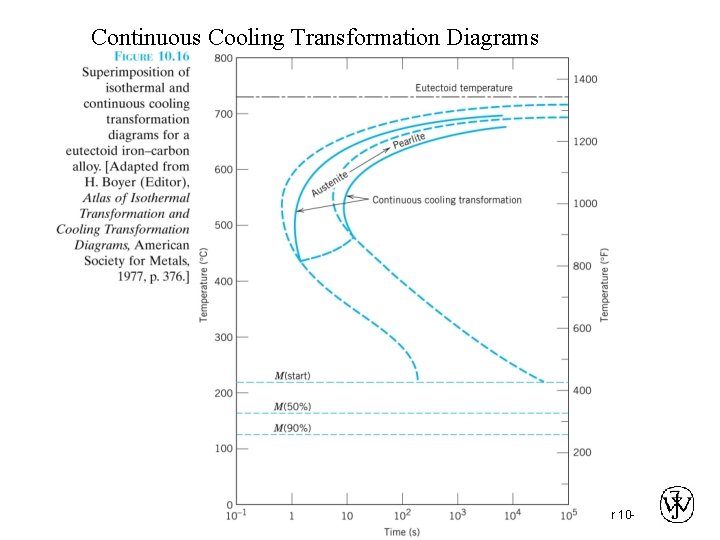
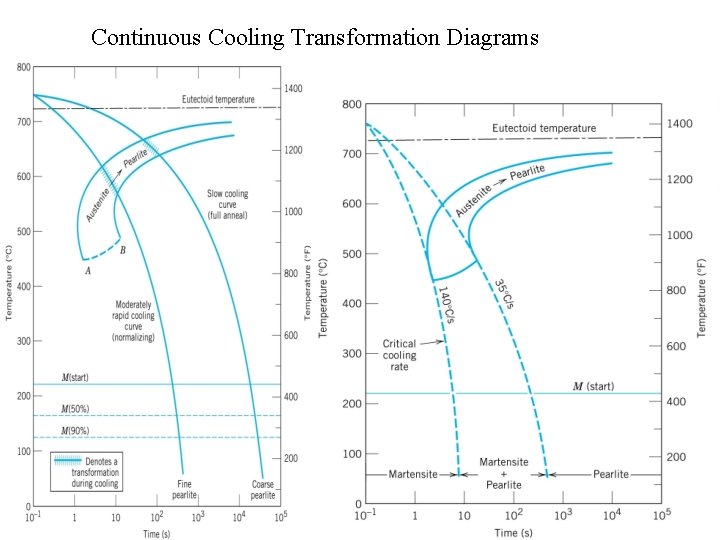
Continuous Cooling Transformation Diagrams Chapter 10 Continuous Cooling
- Slides: 7
Continuous Cooling Transformation Diagrams Chapter 10 -
Continuous Cooling Transformation Diagrams Chapter 10 -
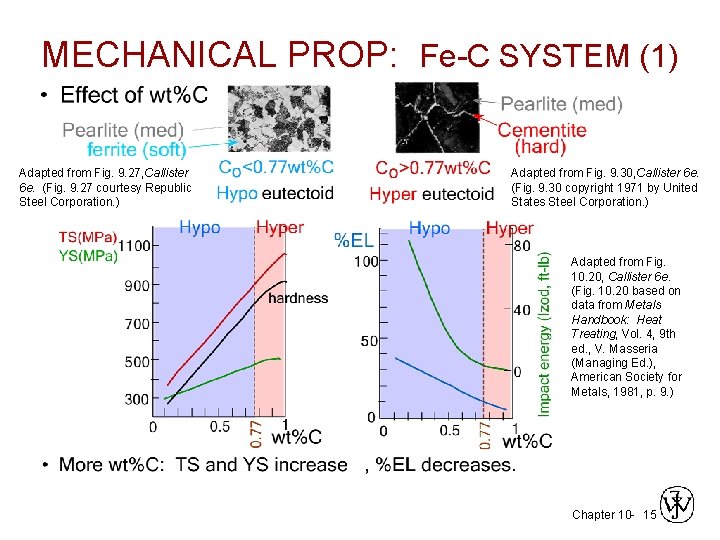
MECHANICAL PROP: Fe-C SYSTEM (1) Adapted from Fig. 9. 27, Callister 6 e. (Fig. 9. 27 courtesy Republic Steel Corporation. ) Adapted from Fig. 9. 30, Callister 6 e. (Fig. 9. 30 copyright 1971 by United States Steel Corporation. ) Adapted from Fig. 10. 20, Callister 6 e. (Fig. 10. 20 based on data from Metals Handbook: Heat Treating, Vol. 4, 9 th ed. , V. Masseria (Managing Ed. ), American Society for Metals, 1981, p. 9. ) Chapter 10 - 15
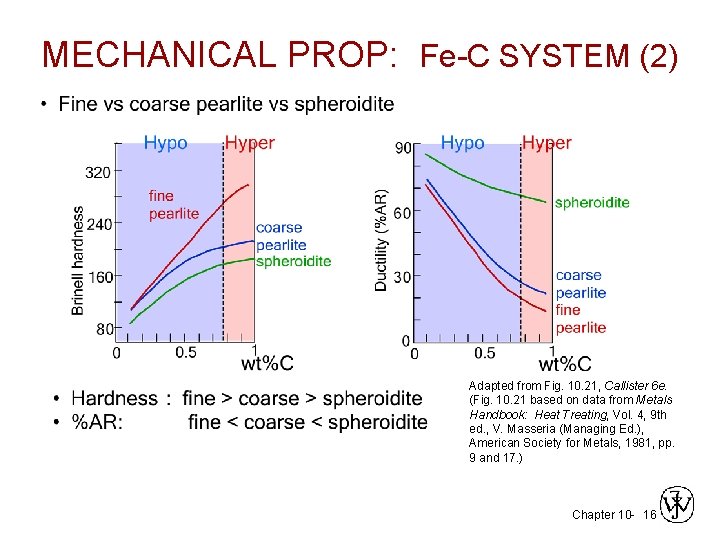
MECHANICAL PROP: Fe-C SYSTEM (2) Adapted from Fig. 10. 21, Callister 6 e. (Fig. 10. 21 based on data from Metals Handbook: Heat Treating, Vol. 4, 9 th ed. , V. Masseria (Managing Ed. ), American Society for Metals, 1981, pp. 9 and 17. ) Chapter 10 - 16
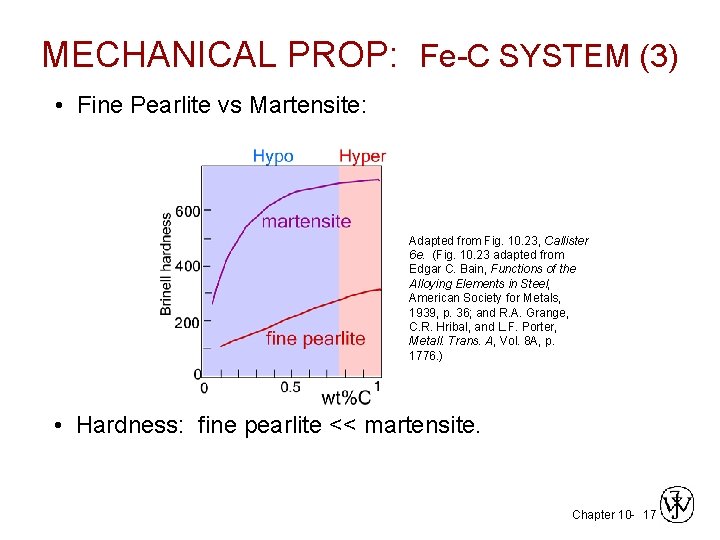
MECHANICAL PROP: Fe-C SYSTEM (3) • Fine Pearlite vs Martensite: Adapted from Fig. 10. 23, Callister 6 e. (Fig. 10. 23 adapted from Edgar C. Bain, Functions of the Alloying Elements in Steel, American Society for Metals, 1939, p. 36; and R. A. Grange, C. R. Hribal, and L. F. Porter, Metall. Trans. A, Vol. 8 A, p. 1776. ) • Hardness: fine pearlite << martensite. Chapter 10 - 17
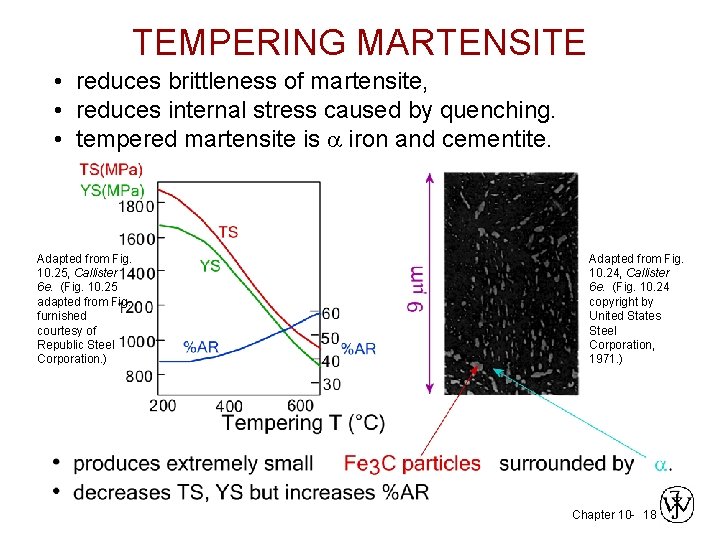
TEMPERING MARTENSITE • reduces brittleness of martensite, • reduces internal stress caused by quenching. • tempered martensite is a iron and cementite. Adapted from Fig. 10. 25, Callister 6 e. (Fig. 10. 25 adapted from Fig. furnished courtesy of Republic Steel Corporation. ) Adapted from Fig. 10. 24, Callister 6 e. (Fig. 10. 24 copyright by United States Steel Corporation, 1971. ) Chapter 10 - 18
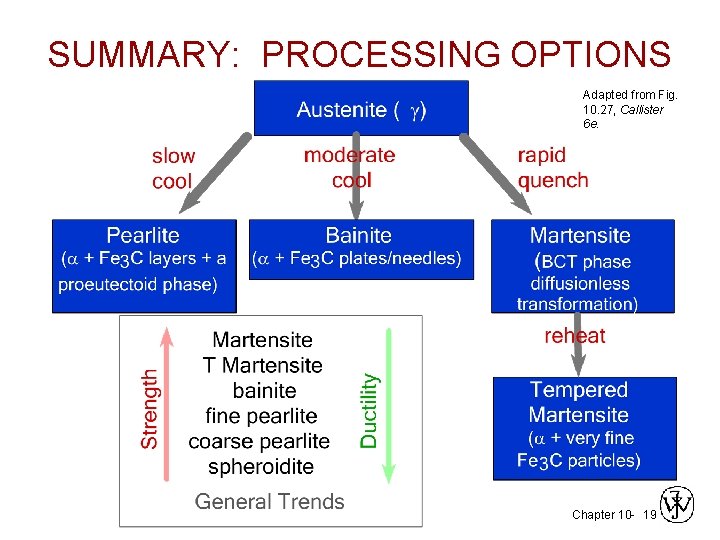
SUMMARY: PROCESSING OPTIONS Adapted from Fig. 10. 27, Callister 6 e. Chapter 10 - 19