
Continuous and Intermittent Exercise in Chronic Heart Failure
- Slides: 16
Continuous and Intermittent Exercise in Chronic Heart Failure Patients Louisa Beale 1, John Silberbauer 2, Guy Lloyd 2, Peter Watt 1, Gary Brickley 1 1. Chelsea School Research Centre, University of Brighton, Eastbourne, East Sussex BN 20 7 SR 2. Eastbourne District General Hospital, Eastbourne, East Sussex BN 21 2 UD
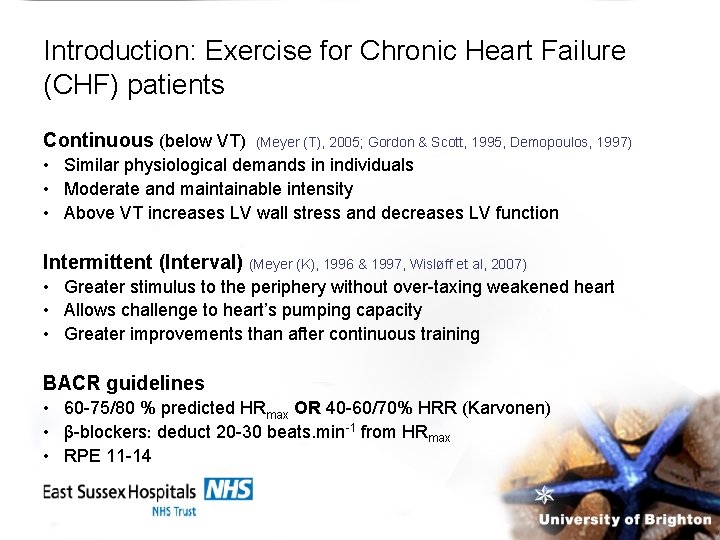
Introduction: Exercise for Chronic Heart Failure (CHF) patients Continuous (below VT) (Meyer (T), 2005; Gordon & Scott, 1995, Demopoulos, 1997) • Similar physiological demands in individuals • Moderate and maintainable intensity • Above VT increases LV wall stress and decreases LV function Intermittent (Interval) (Meyer (K), 1996 & 1997, Wisløff et al, 2007) • Greater stimulus to the periphery without over-taxing weakened heart • Allows challenge to heart’s pumping capacity • Greater improvements than after continuous training BACR guidelines • 60 -75/80 % predicted HRmax OR 40 -60/70% HRR (Karvonen) • β-blockers: deduct 20 -30 beats. min-1 from HRmax • RPE 11 -14
Aim To compare exercise training intensities derived from cardiopulmonary exercise testing with current exercise prescription guidelines in CHF • What are the acute responses to continuous (CON) and intermittent (INT) exercise at an intensity equivalent to 90% VT? • Are current BACR guidelines likely to prescribe an exercise intensity at or below VT?
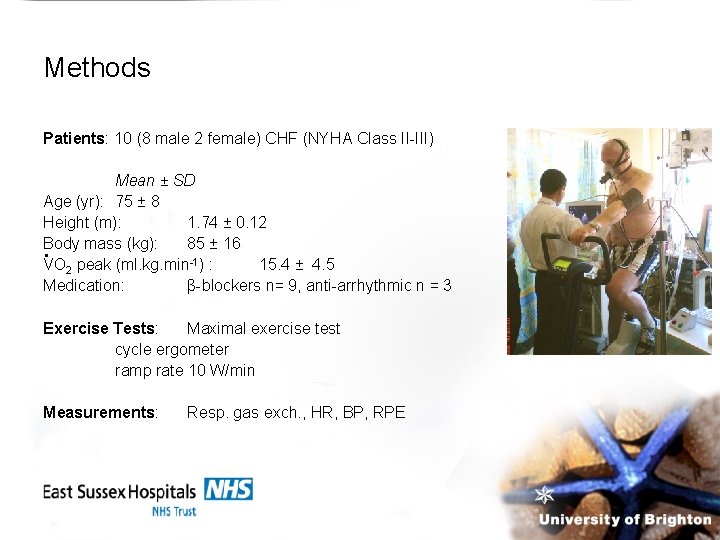
Methods Patients: 10 (8 male 2 female) CHF (NYHA Class II-III) Mean ± SD Age (yr): 75 ± 8 Height (m): 1. 74 ± 0. 12 Body mass (kg): 85 ± 16. VO 2 peak (ml. kg. min-1) : 15. 4 ± 4. 5 Medication: β-blockers n= 9, anti-arrhythmic n = 3 Exercise Tests: Maximal exercise test cycle ergometer ramp rate 10 W/min Measurements: Resp. gas exch. , HR, BP, RPE
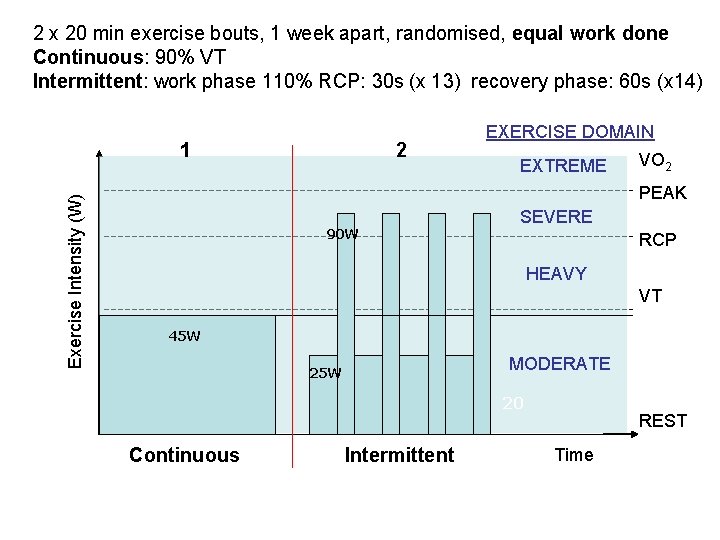
2 x 20 min exercise bouts, 1 week apart, randomised, equal work done Continuous: 90% VT Intermittent: work phase 110% RCP: 30 s (x 13) recovery phase: 60 s (x 14) Exercise Intensity (W) 1 2 EXERCISE DOMAIN EXTREME VO 2 PEAK 90 W SEVERE RCP HEAVY VT average workload 45 W MODERATE 25 W 20 Continuous Intermittent REST Time
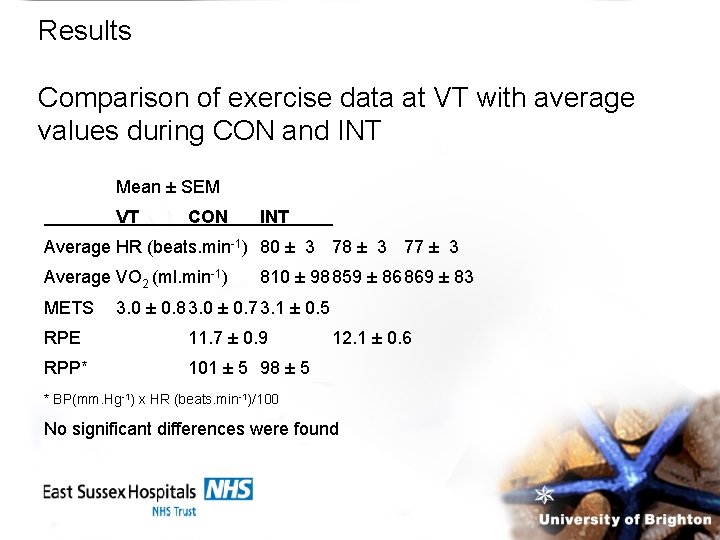
Results Comparison of exercise data at VT with average values during CON and INT Mean ± SEM VT CON INT Average HR (beats. min-1) 80 ± 3 78 ± 3 77 ± 3 Average VO 2 (ml. min-1) METS 810 ± 98 859 ± 86 869 ± 83 3. 0 ± 0. 8 3. 0 ± 0. 7 3. 1 ± 0. 5 RPE 11. 7 ± 0. 9 RPP* 101 ± 5 98 ± 5 12. 1 ± 0. 6 * BP(mm. Hg-1) x HR (beats. min-1)/100 No significant differences were found
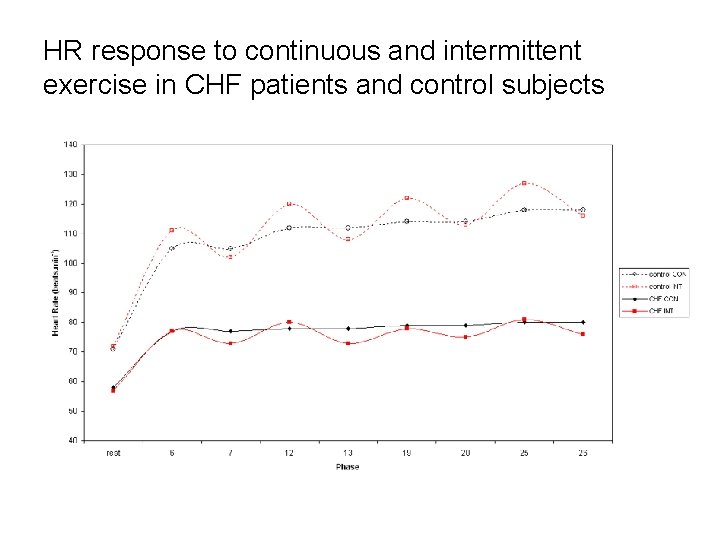
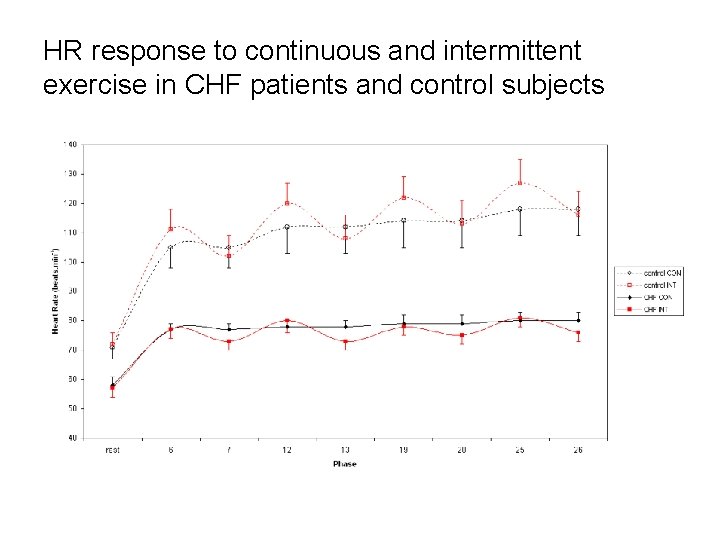
HR response to continuous and intermittent exercise in CHF patients and control subjects
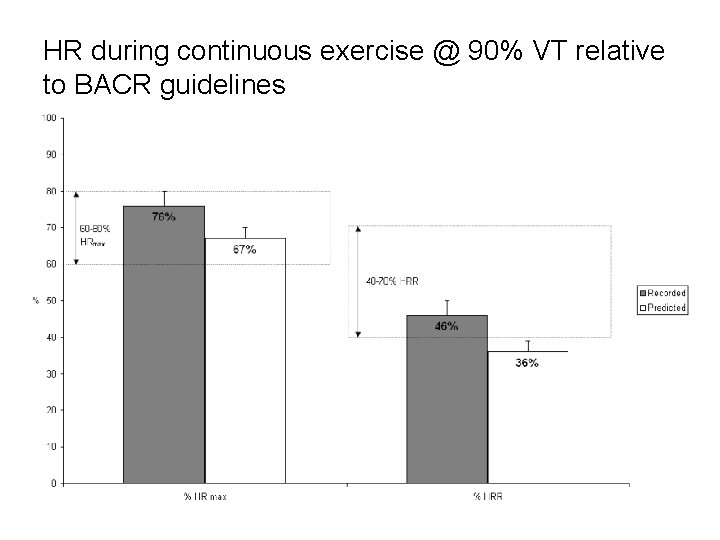
HR during continuous exercise @ 90% VT relative to BACR guidelines
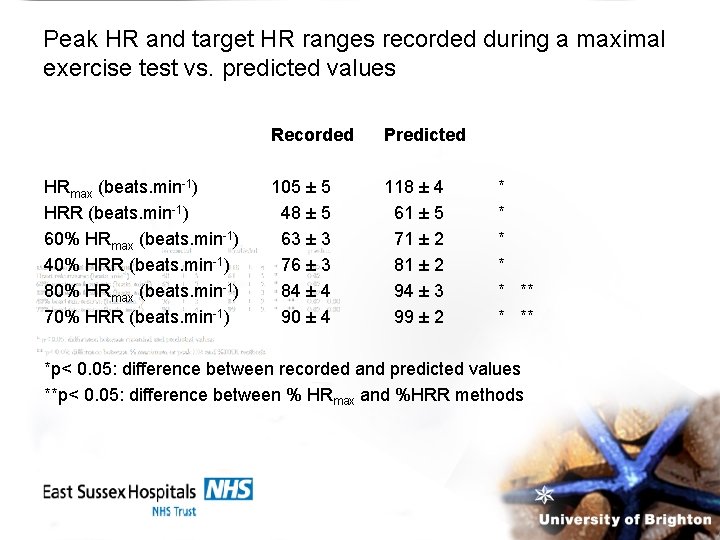
Peak HR and target HR ranges recorded during a maximal exercise test vs. predicted values HRmax (beats. min-1) HRR (beats. min-1) 60% HRmax (beats. min-1) 40% HRR (beats. min-1) 80% HRmax (beats. min-1) 70% HRR (beats. min-1) Recorded Predicted 105 ± 5 48 ± 5 63 ± 3 76 ± 3 84 ± 4 90 ± 4 118 ± 4 61 ± 5 71 ± 2 81 ± 2 94 ± 3 99 ± 2 * * ** *p< 0. 05: difference between recorded and predicted values **p< 0. 05: difference between % HRmax and %HRR methods
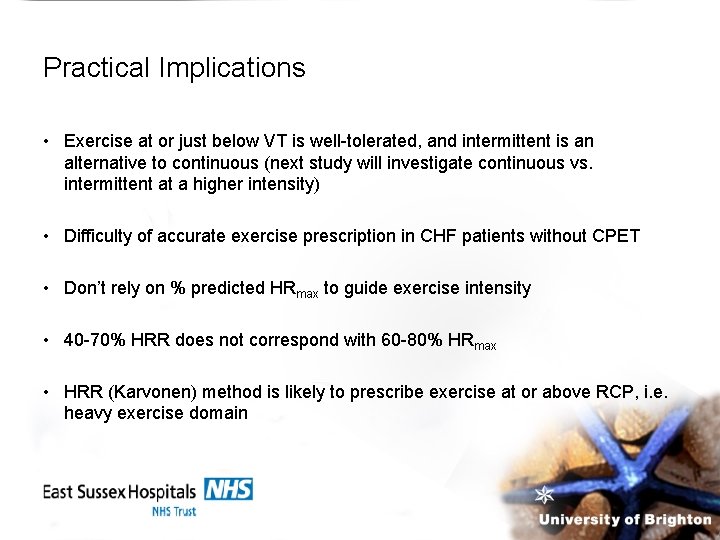
Practical Implications • Exercise at or just below VT is well-tolerated, and intermittent is an alternative to continuous (next study will investigate continuous vs. intermittent at a higher intensity) • Difficulty of accurate exercise prescription in CHF patients without CPET • Don’t rely on % predicted HRmax to guide exercise intensity • 40 -70% HRR does not correspond with 60 -80% HRmax • HRR (Karvonen) method is likely to prescribe exercise at or above RCP, i. e. heavy exercise domain
Continuous and Intermittent Exercise in Chronic Heart Failure Patients Louisa Beale 1, John Silberbauer 2, Guy Lloyd 2, Peter Watt 1, Gary Brickley 1 1. Chelsea School Research Centre, University of Brighton, Eastbourne, BN 20 7 SR 2. Eastbourne District General Hospital, Eastbourne BN 21 2 UD ANY QUESTIONS?
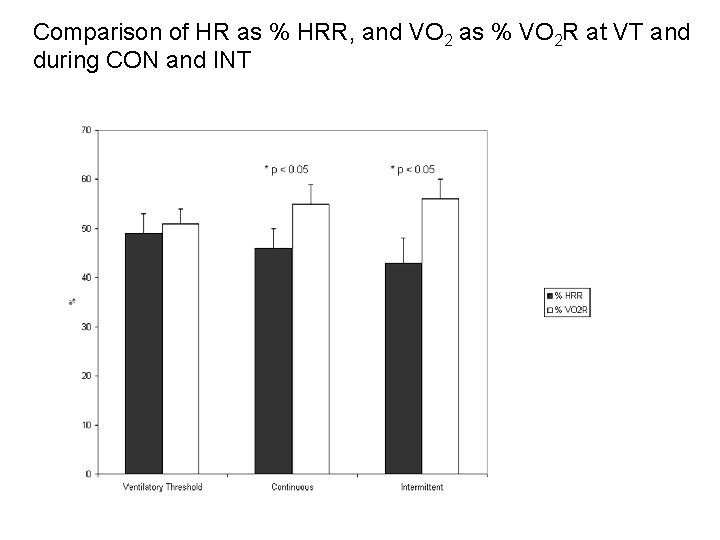
Comparison of HR as % HRR, and VO 2 as % VO 2 R at VT and during CON and INT
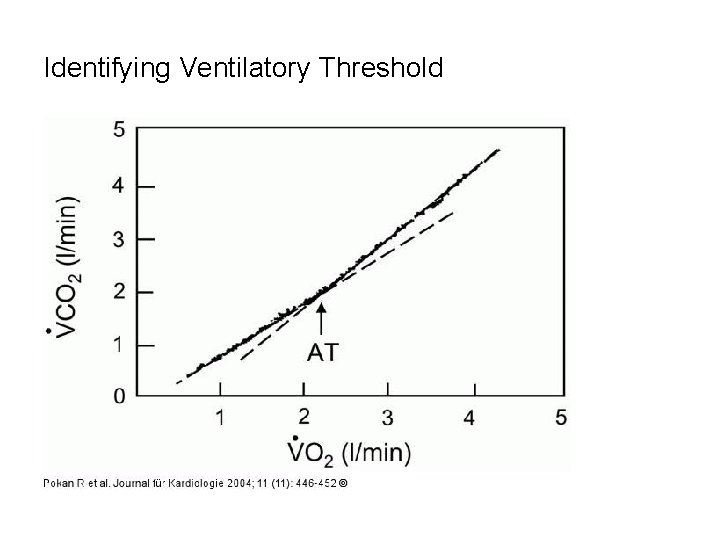
Identifying Ventilatory Threshold
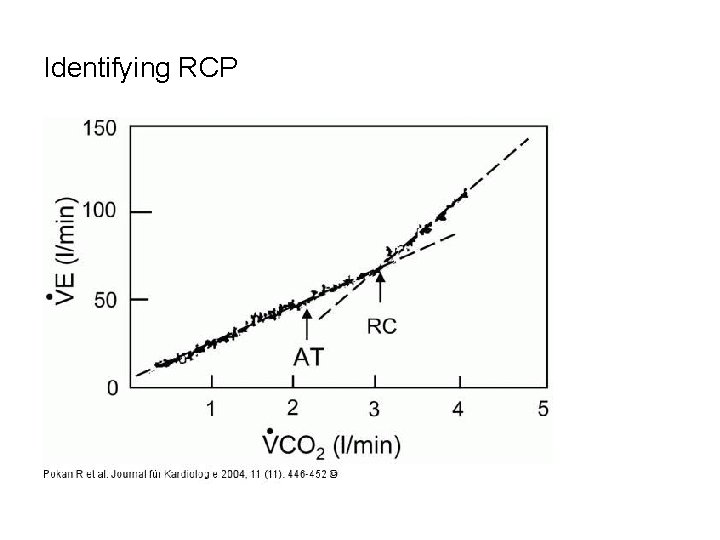
Identifying RCP
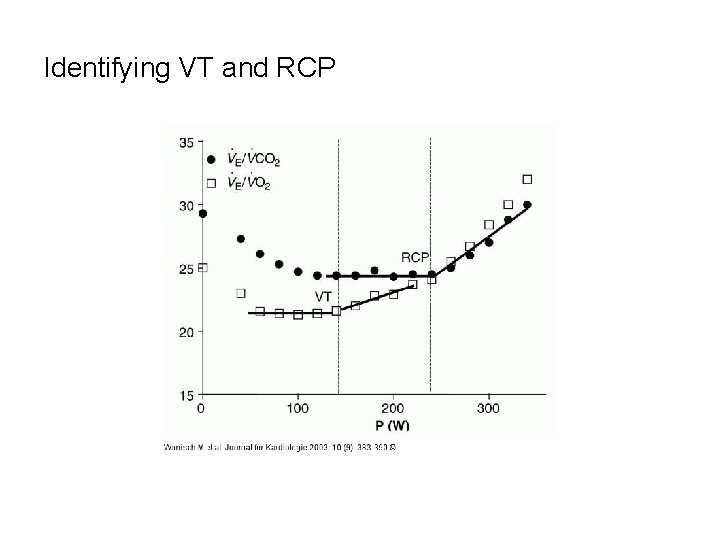
Identifying VT and RCP
HR response to continuous and intermittent exercise in CHF patients and control subjects