
Continuity of Phonon Dispersion Curves of Anisotropic Ionic
- Slides: 18
Continuity of Phonon Dispersion Curves of Anisotropic Ionic Materials Yan Li, W. C. Kerr, and N. A. W. Holzwarth Department of Physics, Wake Forest University Supported by NSF Grant DMR-1507942 and by WFU contributions to the DEAC Computer Cluster Outline 1. Motivation 2. Formalism 3. Example – boron nitride Ref. Li, Kerr, & Holzwarth, J. Phys. : Condens. Matter 32, 055402 (2020) 3/3/2020 March APS 2020 1
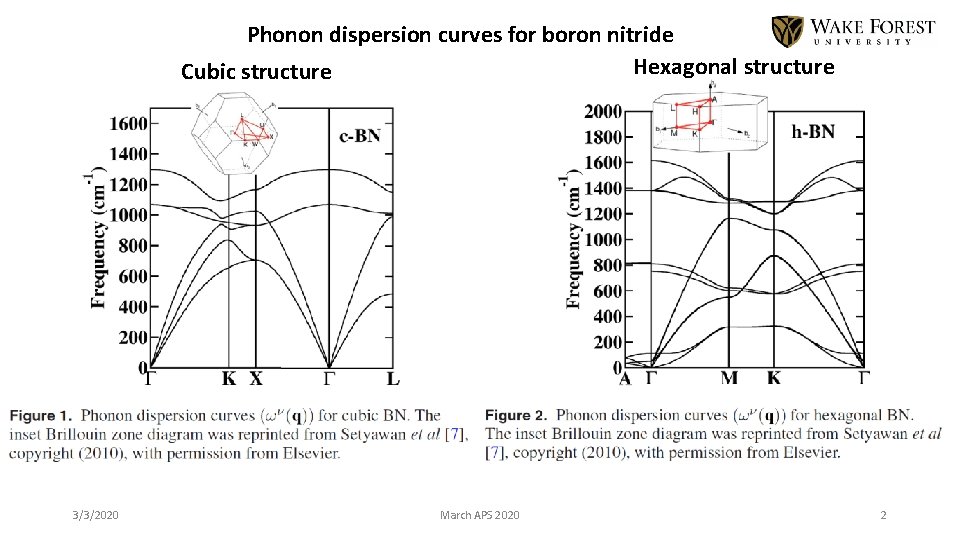
Phonon dispersion curves for boron nitride Hexagonal structure Cubic structure 3/3/2020 March APS 2020 2
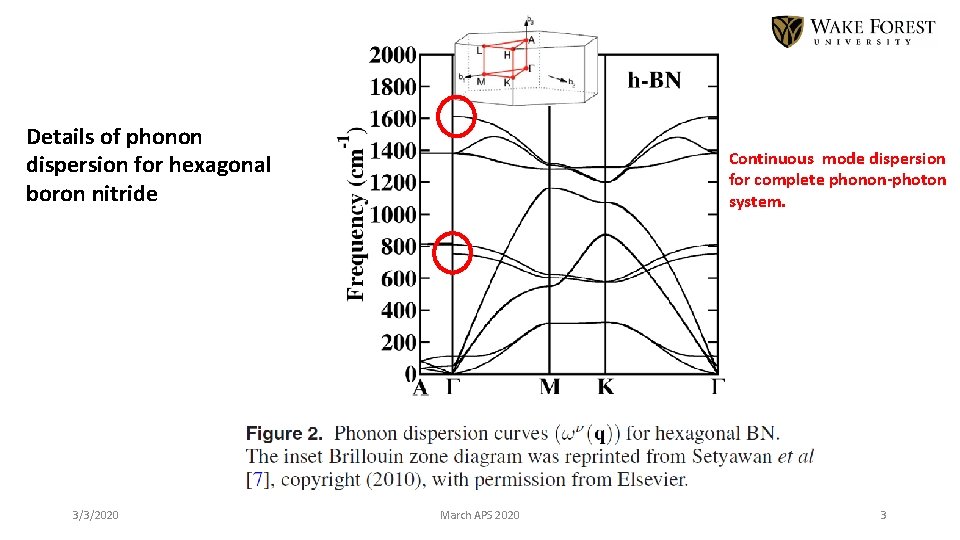
Details of phonon dispersion for hexagonal boron nitride 3/3/2020 Continuous mode dispersion for complete phonon-photon system. March APS 2020 3
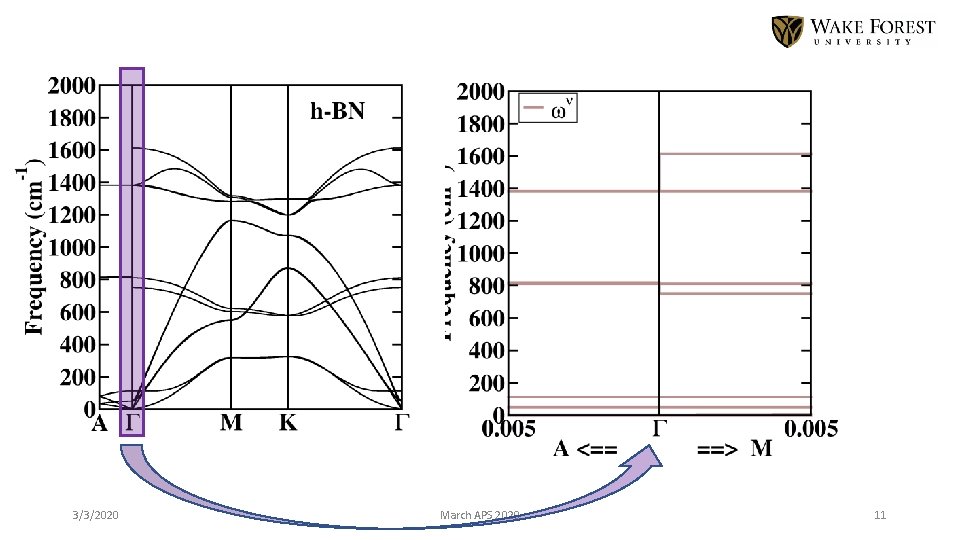
Basic physics - K. Huang worked out the basic features of phonon-photon coupling in ionic lattices in 1951. 1 New wrinkles – The parameters needed to analyze the phonon-photon coupling can be calculated from first principles using density functional theory (DFT) and density functional perturbation theory (DFPT), available in ABINIT and QUANTUM ESPRESSO, for example. Apparent ‘discontinuities’ or mode ‘disappearances’ in the phonon dispersion curves of ionic materials for q 0 in hexagonal and other anisotropic materials are caused by the directional dependence of the Born effective charge tensor. The full dispersion curves of the phonon–photon system, including both longitudinal and transverse modes, are continuous functions of wavevector. 1. K. Huang, Proc. Roy. Soc. A 208 352 -365 (1951) 3/3/2020 March APS 2020 4
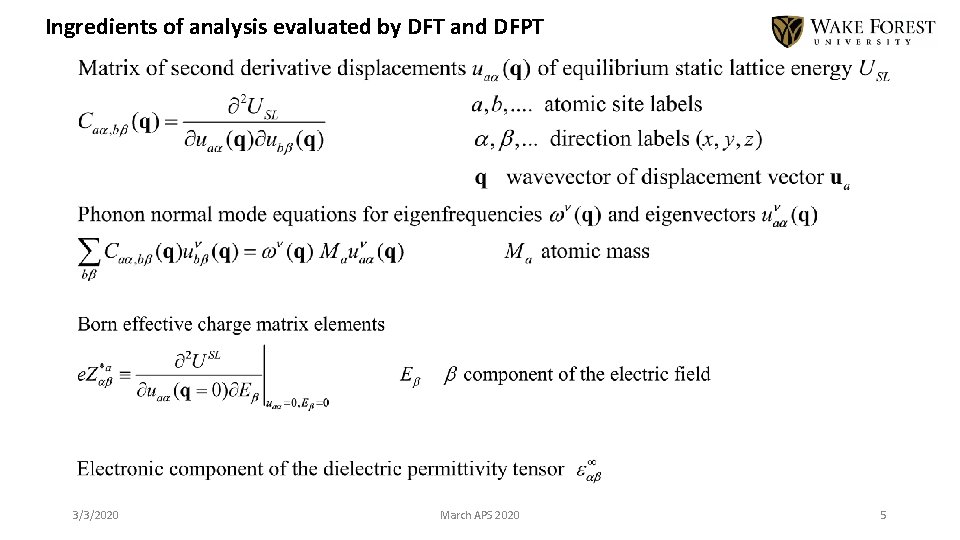
Ingredients of analysis evaluated by DFT and DFPT 3/3/2020 March APS 2020 5
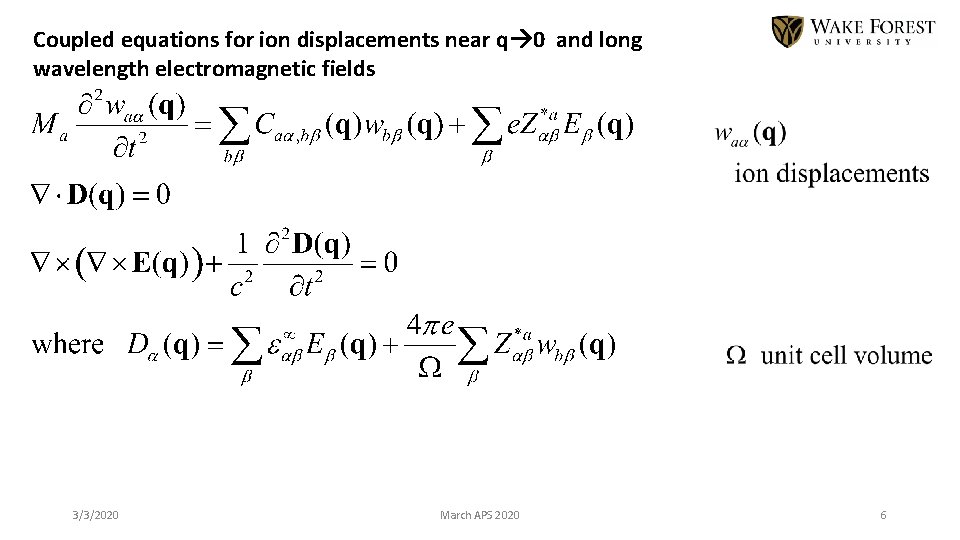
Coupled equations for ion displacements near q 0 and long wavelength electromagnetic fields 3/3/2020 March APS 2020 6
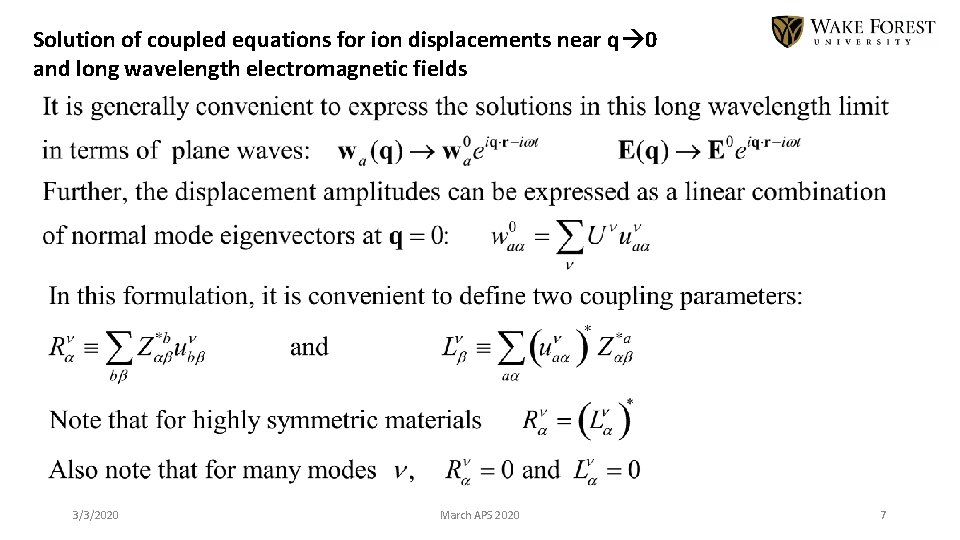
Solution of coupled equations for ion displacements near q 0 and long wavelength electromagnetic fields 3/3/2020 March APS 2020 7
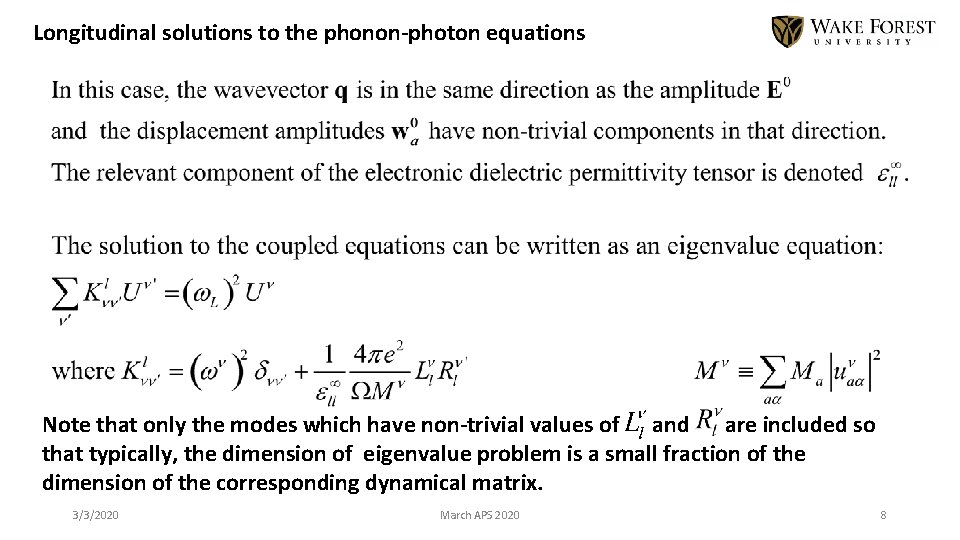
Longitudinal solutions to the phonon-photon equations Note that only the modes which have non-trivial values of and are included so that typically, the dimension of eigenvalue problem is a small fraction of the dimension of the corresponding dynamical matrix. 3/3/2020 March APS 2020 8
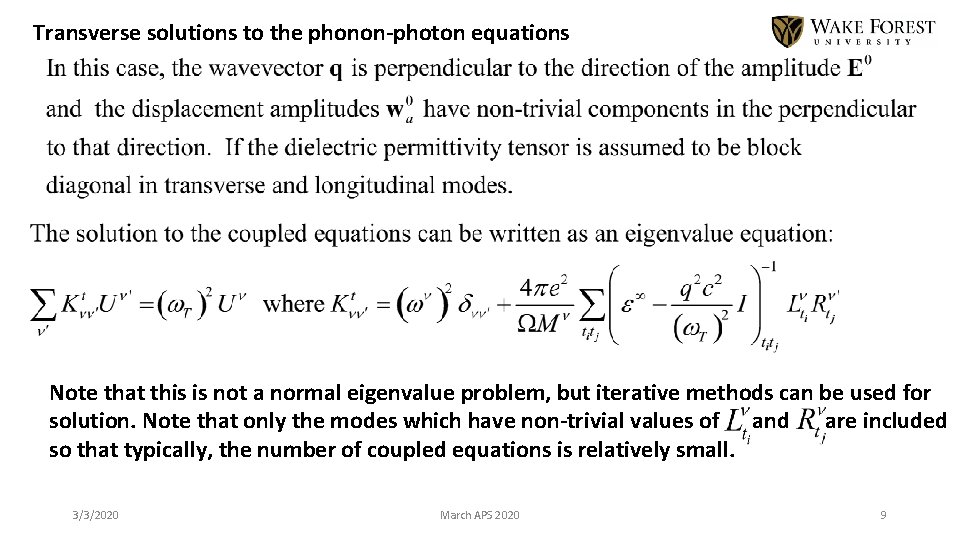
Transverse solutions to the phonon-photon equations Note that this is not a normal eigenvalue problem, but iterative methods can be used for solution. Note that only the modes which have non-trivial values of and are included so that typically, the number of coupled equations is relatively small. 3/3/2020 March APS 2020 9
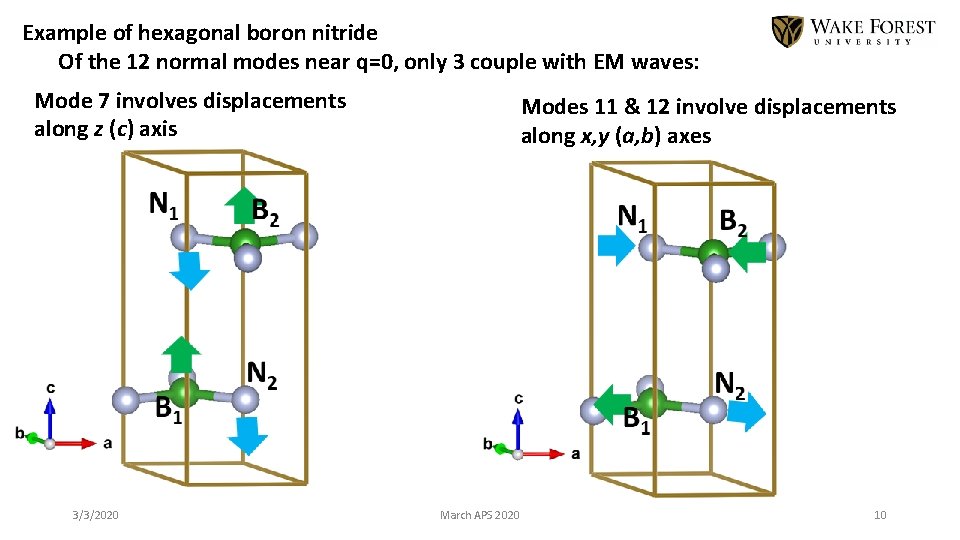
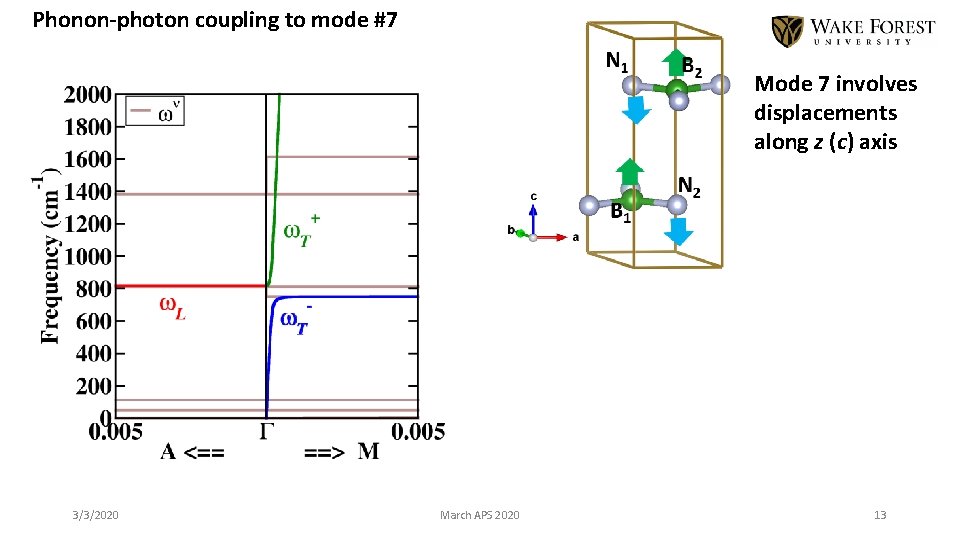
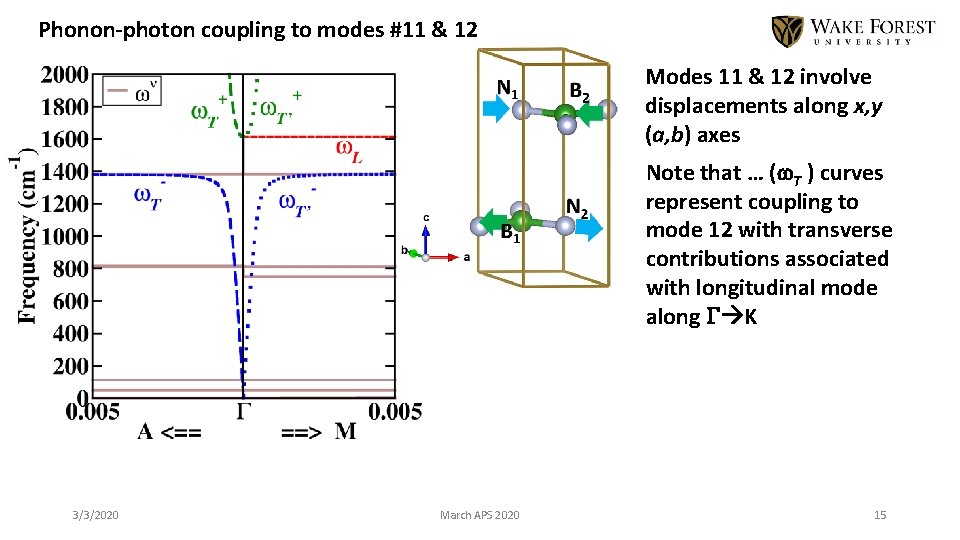
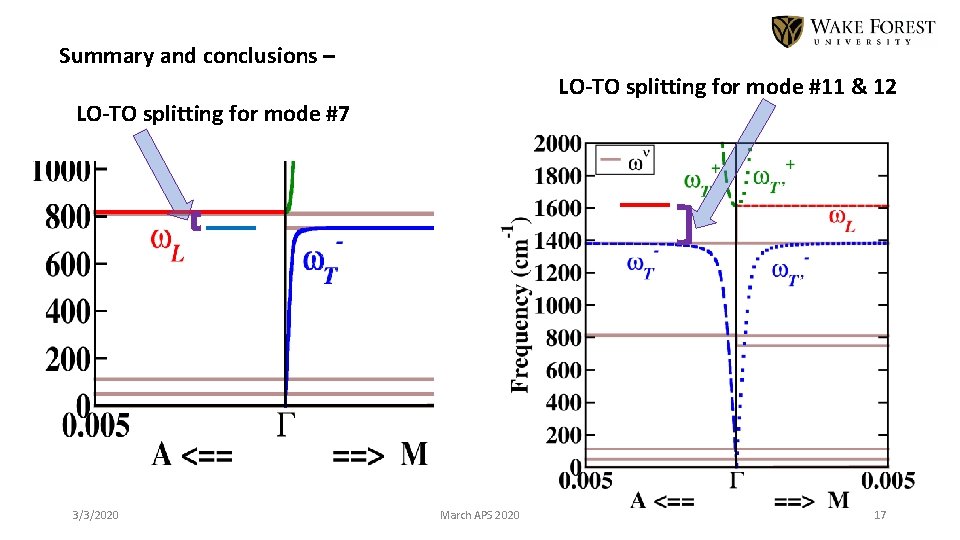
Example of hexagonal boron nitride Of the 12 normal modes near q=0, only 3 couple with EM waves: Mode 7 involves displacements along z (c) axis 3/3/2020 Modes 11 & 12 involve displacements along x, y (a, b) axes March APS 2020 10
3/3/2020 March APS 2020 11
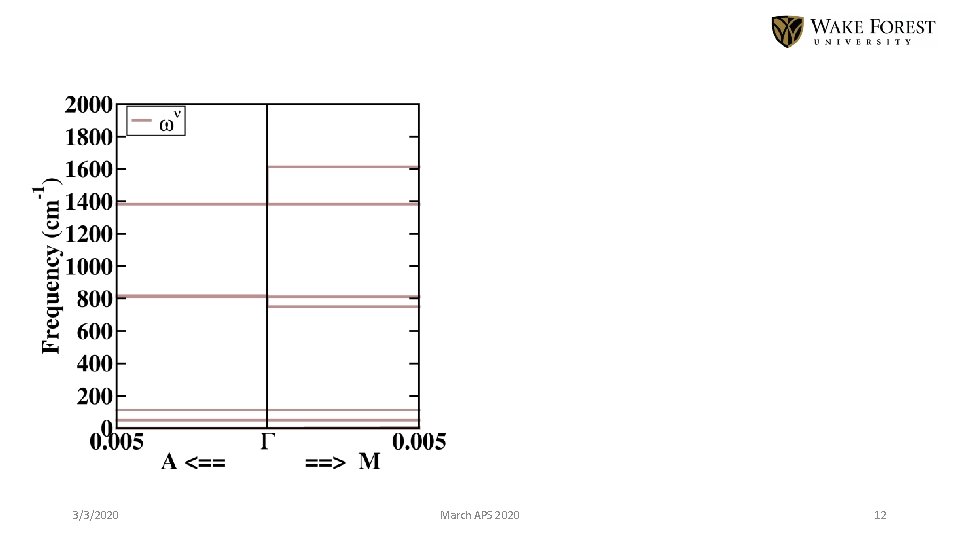
3/3/2020 March APS 2020 12
Phonon-photon coupling to mode #7 Mode 7 involves displacements along z (c) axis 3/3/2020 March APS 2020 13
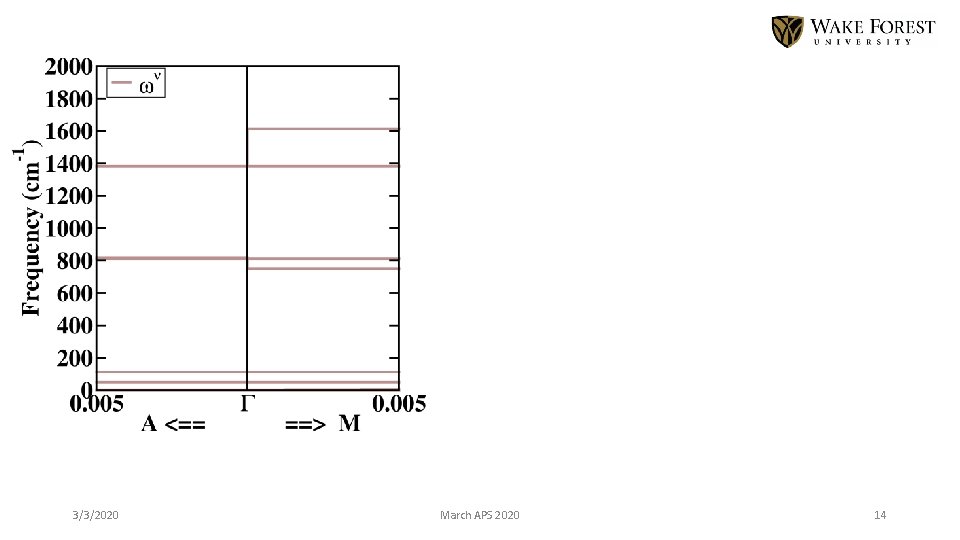
3/3/2020 March APS 2020 14
Phonon-photon coupling to modes #11 & 12 Modes 11 & 12 involve displacements along x, y (a, b) axes Note that … (w. T ) curves represent coupling to mode 12 with transverse contributions associated with longitudinal mode along G K 3/3/2020 March APS 2020 15
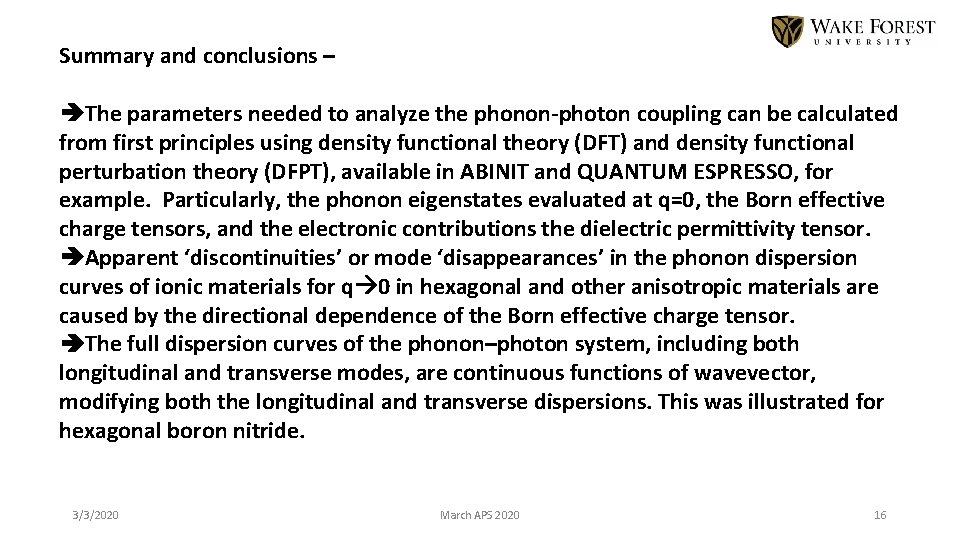
Summary and conclusions – The parameters needed to analyze the phonon-photon coupling can be calculated from first principles using density functional theory (DFT) and density functional perturbation theory (DFPT), available in ABINIT and QUANTUM ESPRESSO, for example. Particularly, the phonon eigenstates evaluated at q=0, the Born effective charge tensors, and the electronic contributions the dielectric permittivity tensor. Apparent ‘discontinuities’ or mode ‘disappearances’ in the phonon dispersion curves of ionic materials for q 0 in hexagonal and other anisotropic materials are caused by the directional dependence of the Born effective charge tensor. The full dispersion curves of the phonon–photon system, including both longitudinal and transverse modes, are continuous functions of wavevector, modifying both the longitudinal and transverse dispersions. This was illustrated for hexagonal boron nitride. 3/3/2020 March APS 2020 16
Summary and conclusions – LO-TO splitting for mode #11 & 12 LO-TO splitting for mode #7 3/3/2020 March APS 2020 17
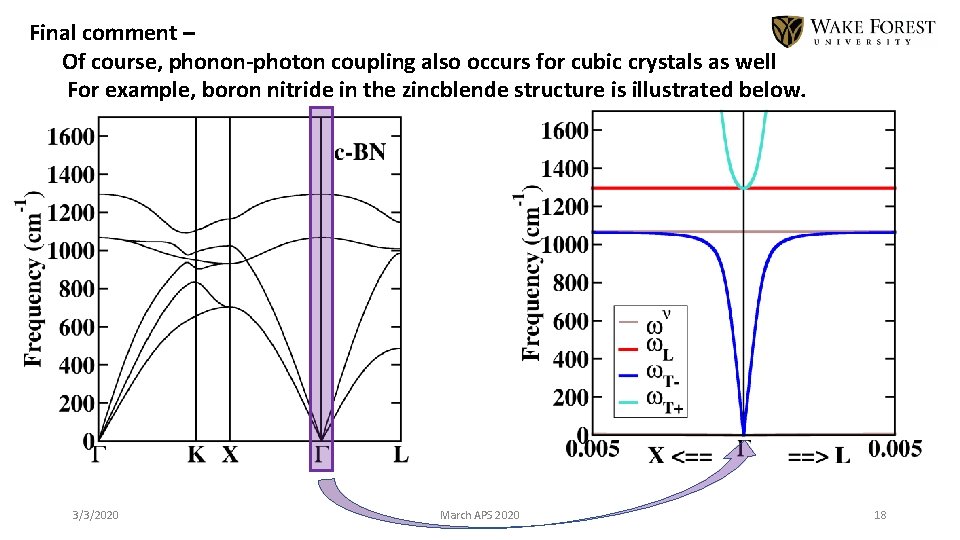
Final comment – Of course, phonon-photon coupling also occurs for cubic crystals as well For example, boron nitride in the zincblende structure is illustrated below. 3/3/2020 March APS 2020 18