
CONTINUITY OF OPERATIONS PLANNING FOR HOSPITALS HEALTHCARE ORGANIZATIONS
- Slides: 17
CONTINUITY OF OPERATIONS PLANNING FOR HOSPITALS & HEALTHCARE ORGANIZATIONS IMPORTANCE OF EXECUTIVE-LEVEL SUPPORT Presentation for Hospital & Healthcare Organization Executives Developed By: Central New York Health Emergency Preparedness Coalition Continuity Of Operations Work Group
OBJECTIVES Understand what a COOP plan is Define COOP objectives Understand COOP ROI Define the Understand benefits of a importance of COOP plan Executive support Define the resources needed to start
WHAT IS CONTINUITY OF OPERATIONS PLANNING? C O O P Ensuring the continued operation of the organization’s essential functions and resuming business functions to a normal state following an emergency event. The plan is used in the event of substantial, localized damage to direct patient care departments or facility wide loss of structural integrity and services Where loss of service poses significant physical, operational and business challenges and risks Continuity of the service somewhere within the facility or relocation of services externally is integral to ongoing facility viability and community support.
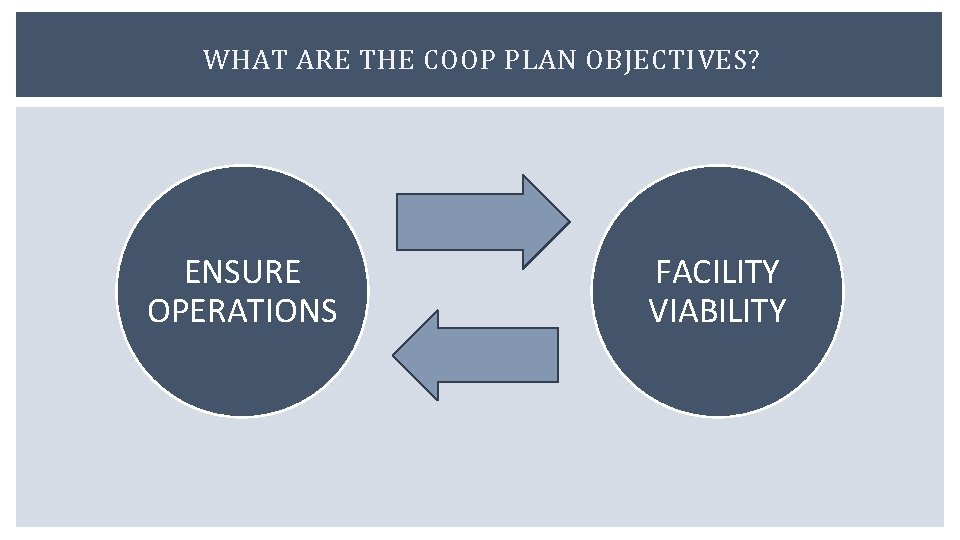
WHAT ARE THE COOP PLAN OBJECTIVES? ENSURE OPERATIONS FACILITY VIABILITY
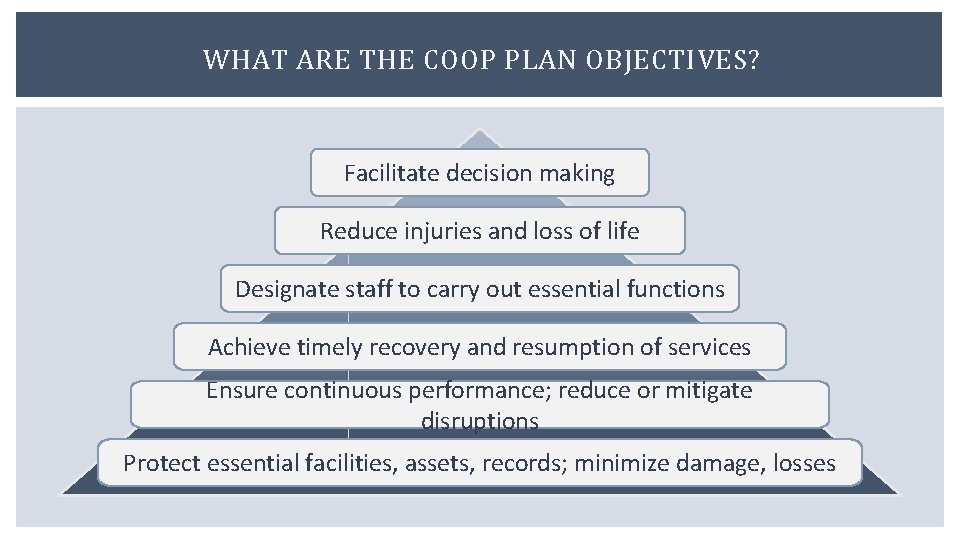
WHAT ARE THE COOP PLAN OBJECTIVES? Facilitate decision making Reduce injuries and loss of life Designate staff to carry out essential functions Achieve timely recovery and resumption of services Ensure continuous performance; reduce or mitigate disruptions Protect essential facilities, assets, records; minimize damage, losses
WHAT ABOUT OUR EMERGENCY OPERATIONS PLAN? § Continuity plan strategies will be integrated with emergency planning; § The COOP plan will be used in addition to the Emergency Operations Plan (EOP) to resume/return business functions to a normal state.
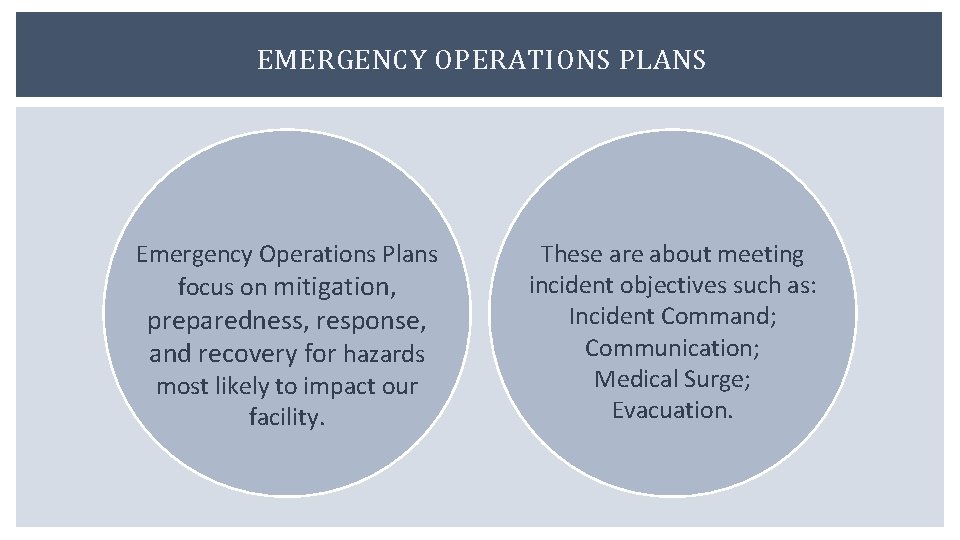
EMERGENCY OPERATIONS PLANS Emergency Operations Plans focus on mitigation, preparedness, response, and recovery for hazards most likely to impact our facility. These are about meeting incident objectives such as: Incident Command; Communication; Medical Surge; Evacuation.
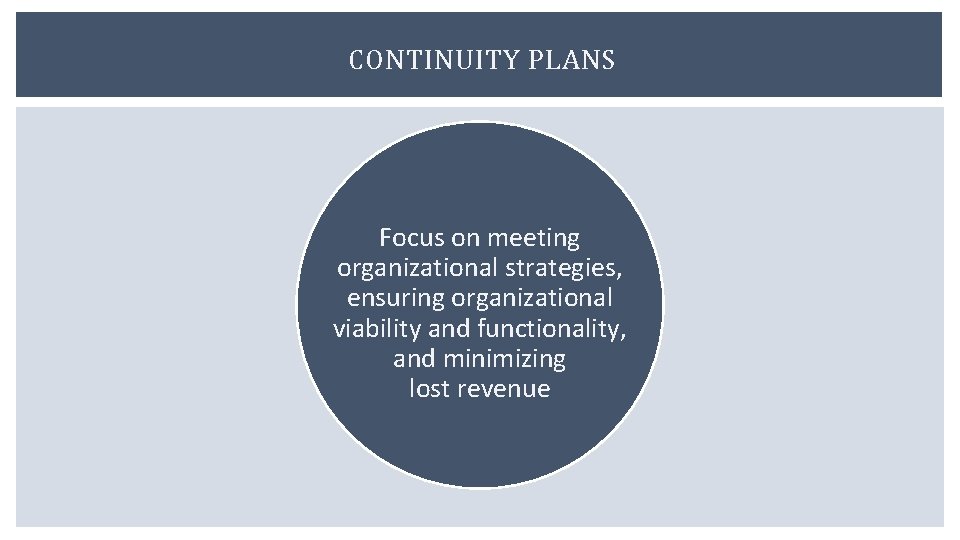
CONTINUITY PLANS Focus on meeting organizational strategies, ensuring organizational viability and functionality, and minimizing lost revenue
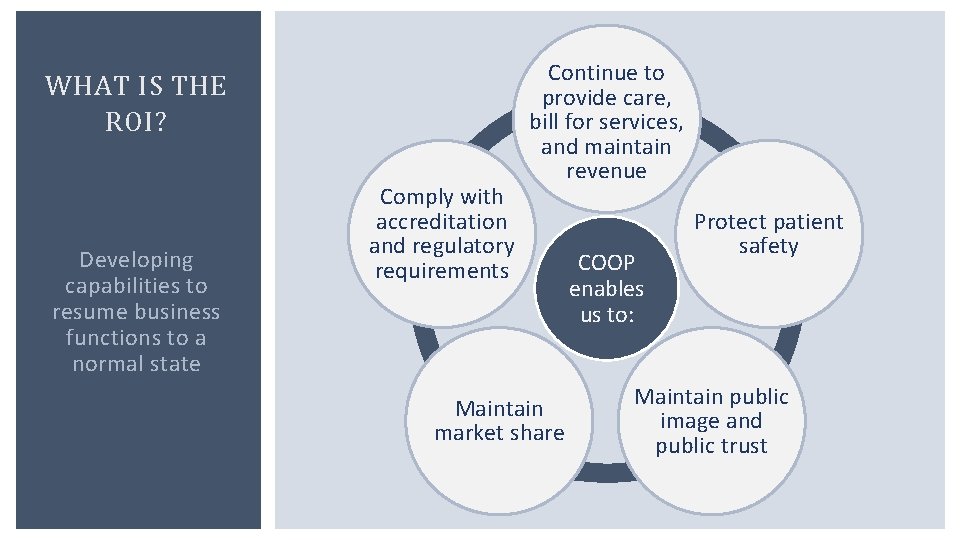
WHAT IS THE ROI? Developing capabilities to resume business functions to a normal state Comply with accreditation and regulatory requirements Continue to provide care, bill for services, and maintain revenue Maintain market share COOP enables us to: Protect patient safety Maintain public image and public trust
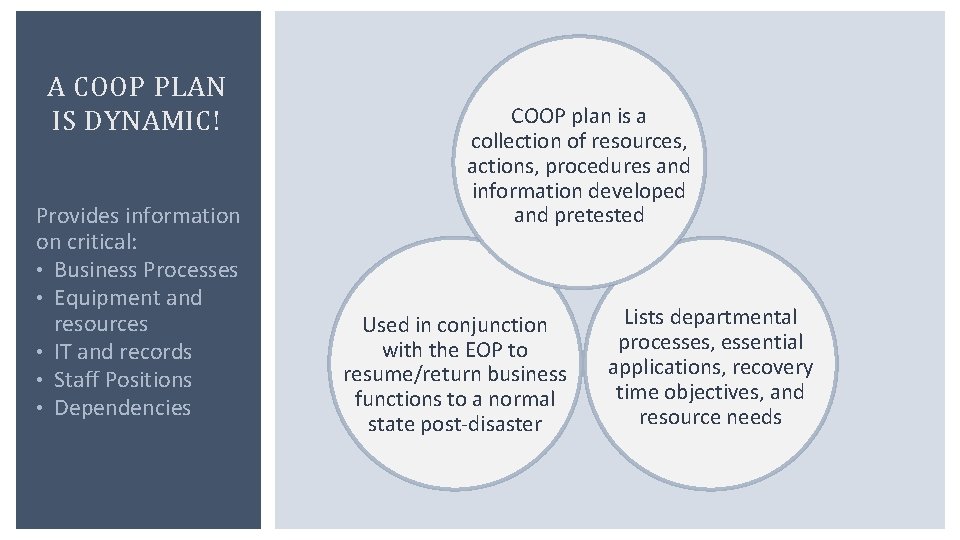
A COOP PLAN IS DYNAMIC! Provides information on critical: • Business Processes • Equipment and resources • IT and records • Staff Positions • Dependencies COOP plan is a collection of resources, actions, procedures and information developed and pretested Used in conjunction with the EOP to resume/return business functions to a normal state post-disaster Lists departmental processes, essential applications, recovery time objectives, and resource needs
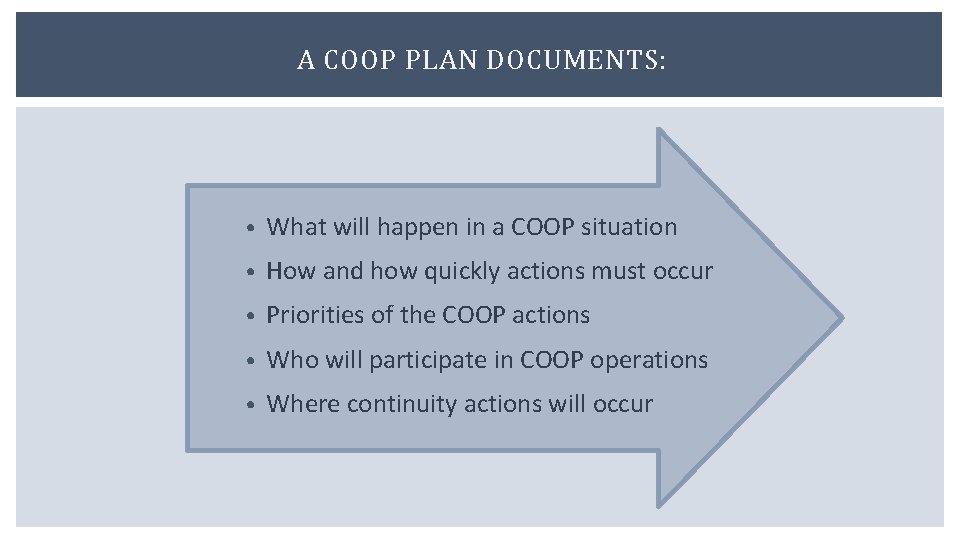
A COOP PLAN DOCUMENTS: • What will happen in a COOP situation • How and how quickly actions must occur • Priorities of the COOP actions • Who will participate in COOP operations • Where continuity actions will occur
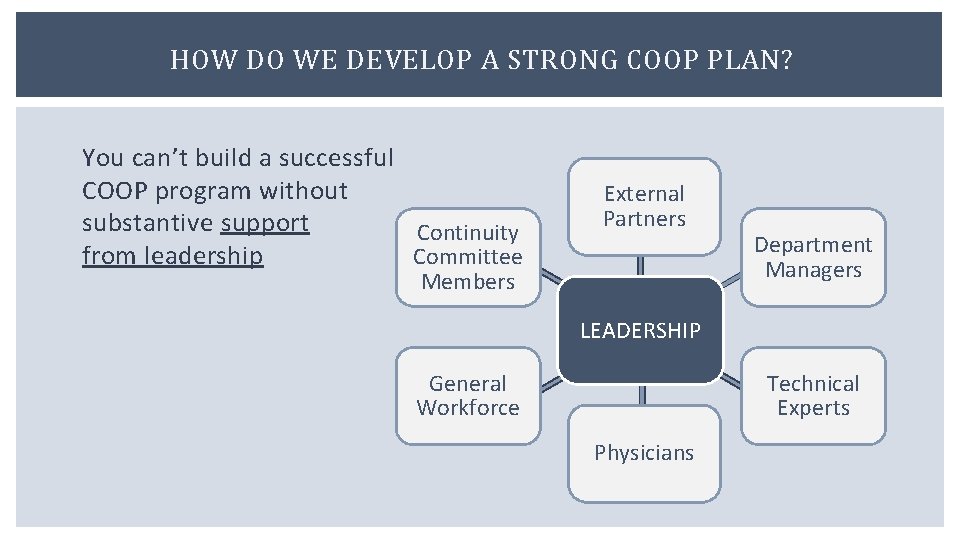
HOW DO WE DEVELOP A STRONG COOP PLAN? You can’t build a successful COOP program without substantive support Continuity from leadership Committee External Partners Members Department Managers LEADERSHIP General Workforce Technical Experts Physicians
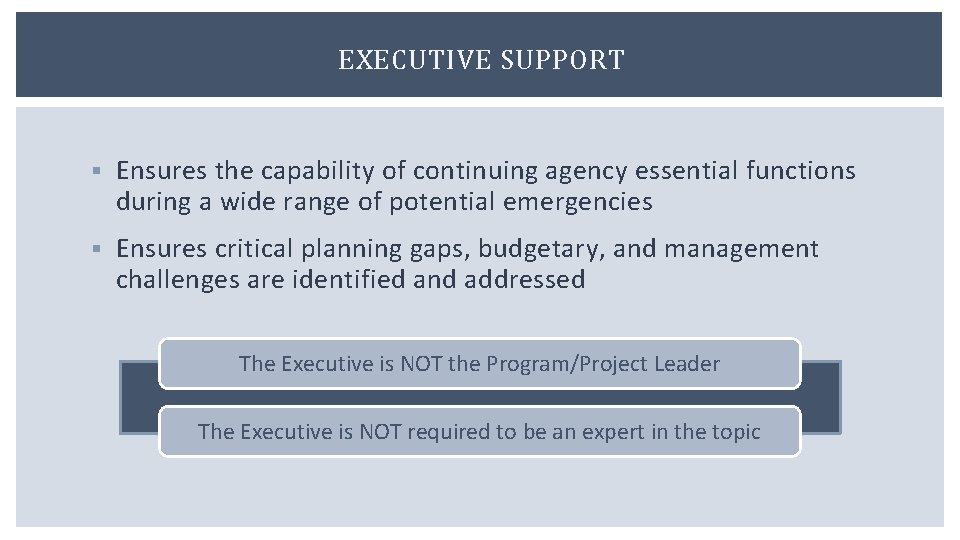
EXECUTIVE SUPPORT § Ensures the capability of continuing agency essential functions during a wide range of potential emergencies § Ensures critical planning gaps, budgetary, and management challenges are identified and addressed The Executive is NOT the Program/Project Leader The Executive is NOT required to be an expert in the topic
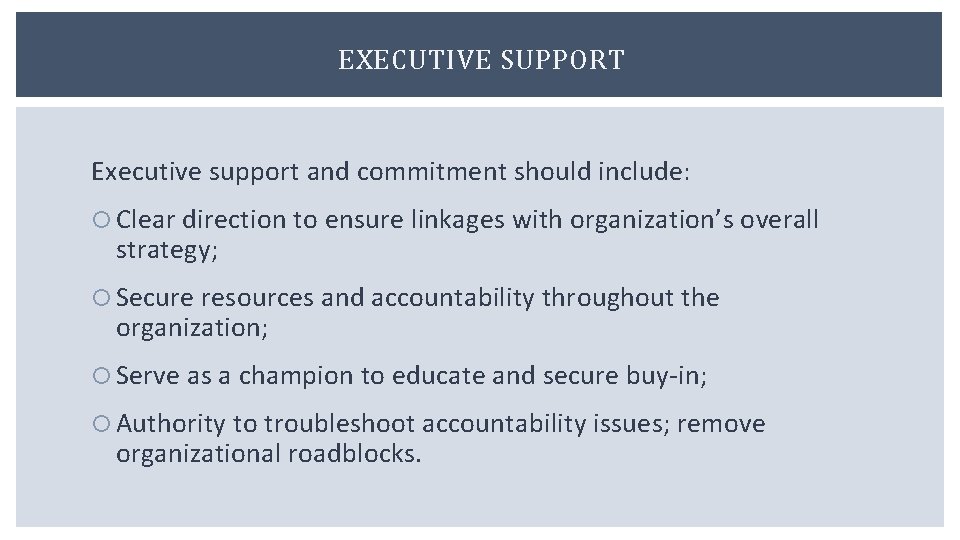
EXECUTIVE SUPPORT Executive support and commitment should include: Clear direction to ensure linkages with organization’s overall strategy; Secure resources and accountability throughout the organization; Serve as a champion to educate and secure buy-in; Authority to troubleshoot accountability issues; remove organizational roadblocks.
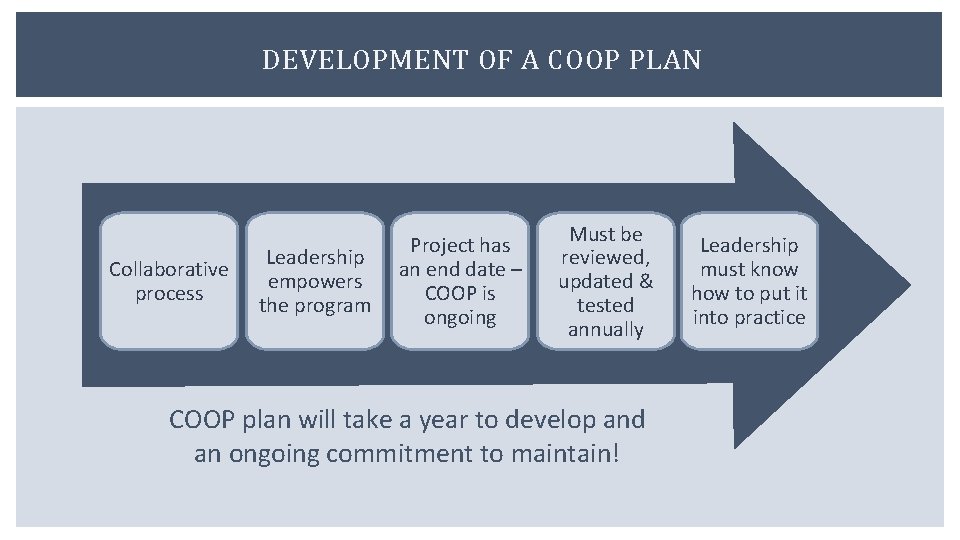
DEVELOPMENT OF A COOP PLAN Collaborative process Leadership empowers the program Project has an end date – COOP is ongoing Must be reviewed, updated & tested annually COOP plan will take a year to develop and an ongoing commitment to maintain! Leadership must know how to put it into practice
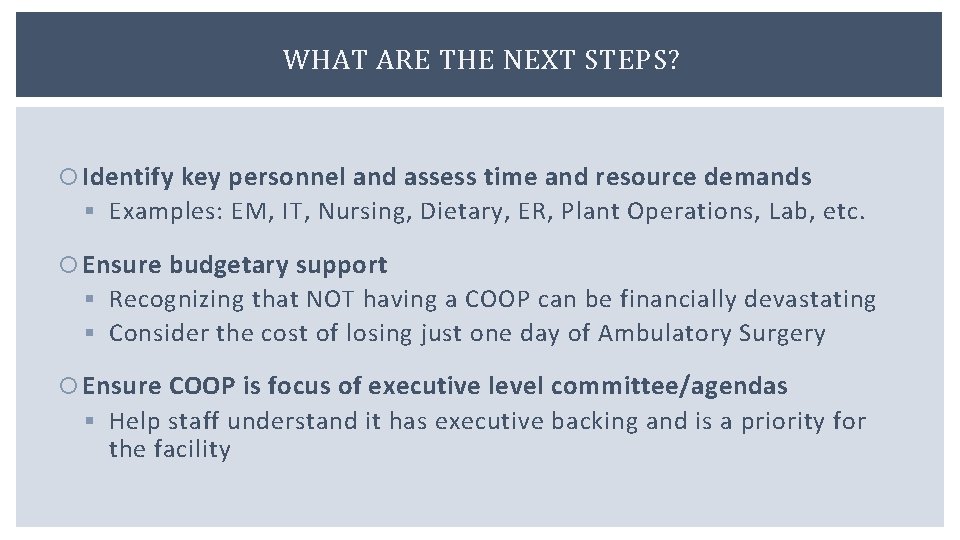
WHAT ARE THE NEXT STEPS? Identify key personnel and assess time and resource demands § Examples: EM, IT, Nursing, Dietary, ER, Plant Operations, Lab, etc. Ensure budgetary support § Recognizing that NOT having a COOP can be financially devastating § Consider the cost of losing just one day of Ambulatory Surgery Ensure COOP is focus of executive level committee/agendas § Help staff understand it has executive backing and is a priority for the facility
QUESTIONS? Thank you for your time and commitment to Continuity Planning