
Continued What are enzymes Efficient biological catalysts Produced
Continued……… What are enzymes? • Efficient biological catalysts • Produced by all living organisms • Proteins with three-dimensional structure Why use enzymes? Because they • Target specific substrates • Accelerate reactions • Work under mild conditions • Replace harsh chemicals • Are easy to use and safe • Are biodegradable
Continued……. How are enzymes produced? • Enzymes are produced by fermentation of microorganisms • The raw materials are renewable resources such as potato starch, soya bean meal, salt and sugars • Waste products can be used as fertilizer
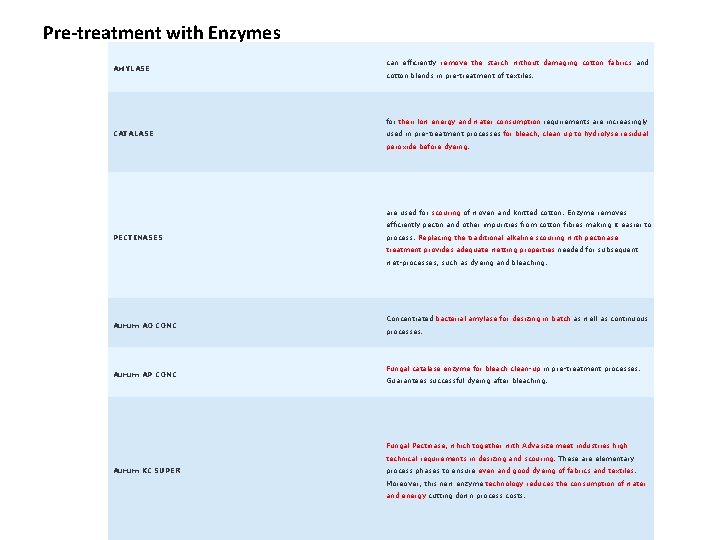
Pre-treatment with Enzymes AMYLASE can efficiently remove the starch without damaging cotton fabrics and cotton blends in pre-treatment of textiles. for their low energy and water consumption requirements are increasingly CATALASE used in pre-treatment processes for bleach, clean up to hydrolyse residual peroxide before dyeing. are used for scouring of woven and knitted cotton. Enzyme removes efficiently pectin and other impurities from cotton fibres making it easier to PECTINASES process. Replacing the traditional alkaline scouring with pectinase treatment provides adequate wetting properties needed for subsequent wet-processes, such as dyeing and bleaching. Aurum AO CONC Aurum AP CONC Concentrated bacterial amylase for desizing in batch as well as continuous processes. Fungal catalase enzyme for bleach clean-up in pre-treatment processes. Guarantees successful dyeing after bleaching. Fungal Pectinase, which together with Advasize meet industries high technical requirements in desizing and scouring. These are elementary Aurum KC SUPER process phases to ensure even and good dyeing of fabrics and textiles. Moreover, this new enzyme technology reduces the consumption of water and energy cutting down process costs.
Denim Stone-washing and Bio-polishing • Specially CELLULASES are used for denim wash in order to match special requirements of this widely used fabric and its processes. • Cellulase enzymes offer cost-effectiveness and value for denim finishing. • Cellulases usually contain different cellulase activities in unique combinations, which make these enzymes powerful in creating a rich variety of effects on denim meeting the ever-changing needs of fashion.
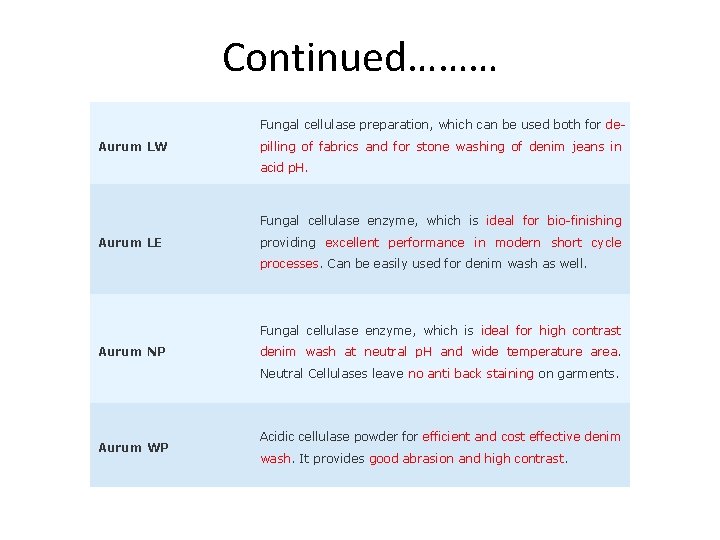
Continued……… Fungal cellulase preparation, which can be used both for de. Aurum LW pilling of fabrics and for stone washing of denim jeans in acid p. H. Fungal cellulase enzyme, which is ideal for bio-finishing Aurum LE providing excellent performance in modern short cycle processes. Can be easily used for denim wash as well. Fungal cellulase enzyme, which is ideal for high contrast Aurum NP denim wash at neutral p. H and wide temperature area. Neutral Cellulases leave no anti back staining on garments. Aurum WP Acidic cellulase powder for efficient and cost effective denim wash. It provides good abrasion and high contrast.
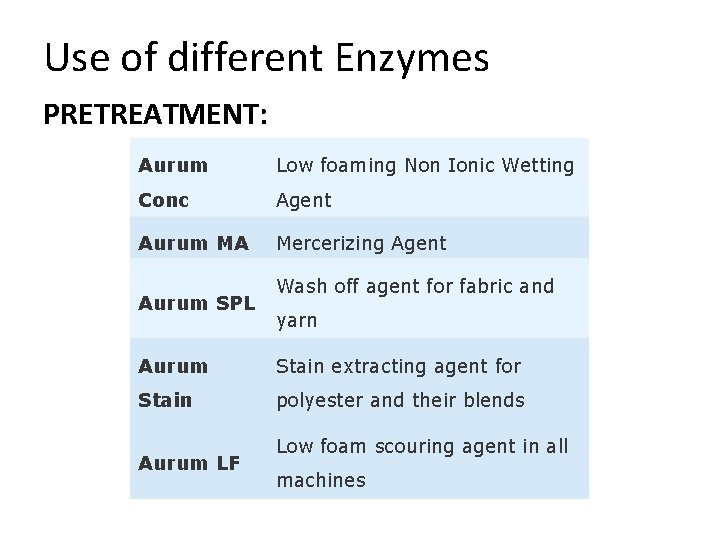
Use of different Enzymes PRETREATMENT: Aurum Low foaming Non Ionic Wetting Conc Agent Aurum MA Mercerizing Agent Aurum SPL Wash off agent for fabric and yarn Aurum Stain extracting agent for Stain polyester and their blends Aurum LF Low foam scouring agent in all machines
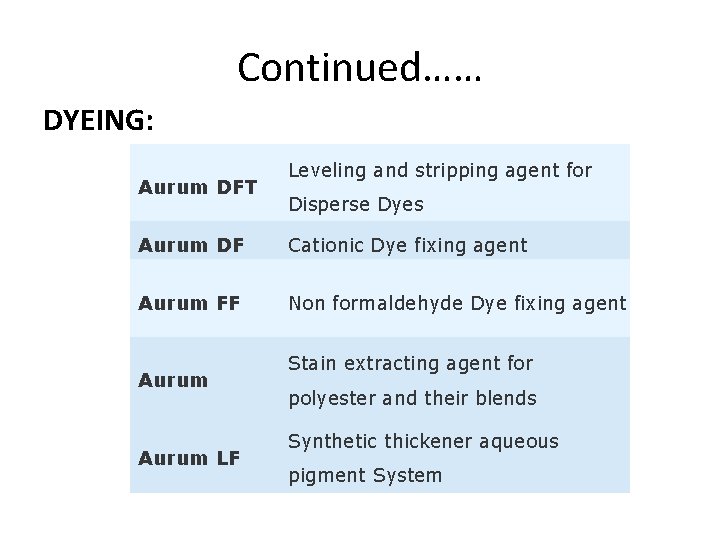
Continued…… DYEING: Aurum DFT Leveling and stripping agent for Disperse Dyes Aurum DF Cationic Dye fixing agent Aurum FF Non formaldehyde Dye fixing agent Aurum LF Stain extracting agent for polyester and their blends Synthetic thickener aqueous pigment System
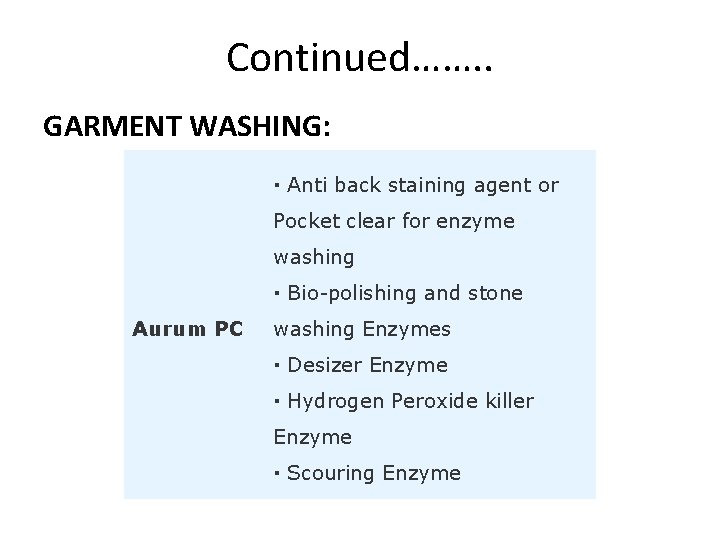
Continued……. . GARMENT WASHING: · Anti back staining agent or Pocket clear for enzyme washing · Bio-polishing and stone Aurum PC washing Enzymes · Desizer Enzyme · Hydrogen Peroxide killer Enzyme · Scouring Enzyme
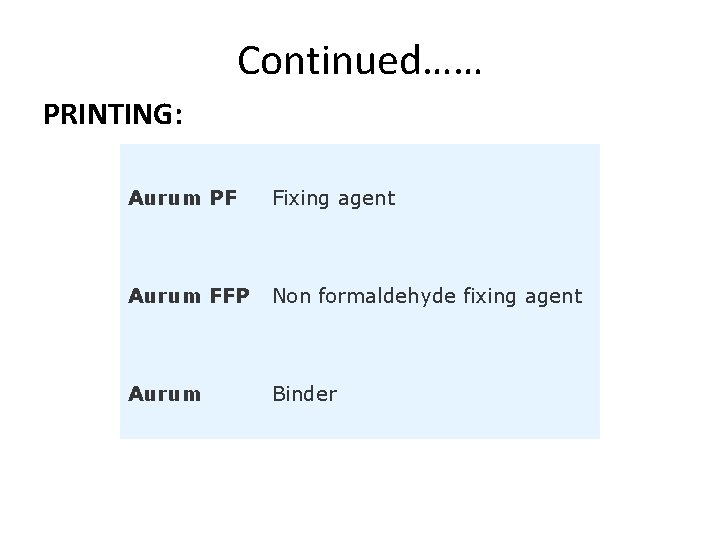
Continued…… PRINTING: Aurum PF Fixing agent Aurum FFP Non formaldehyde fixing agent Aurum Binder
- Slides: 9