
Continued Thoracic Apical Convex Growth Despite Vertebral Body
Continued Thoracic Apical Convex Growth Despite Vertebral Body Stapling (VBS) Richard Schwend, MD Robert Tung, BS Division of Orthopedic Surgery Children's Mercy Hospital, Kansas City, MO 11 th International Congress on Early Onset Scoliosis (ICEOS) November 16 -17, 2017 1

Disclosure • Richard Schwend • Medtronic consultant • POSNA President and BOD member • AAP Section on Orthopaedics Executive Committee • PPW Medical Advisory Board • Miracle Feet Medical Advisory Board 2
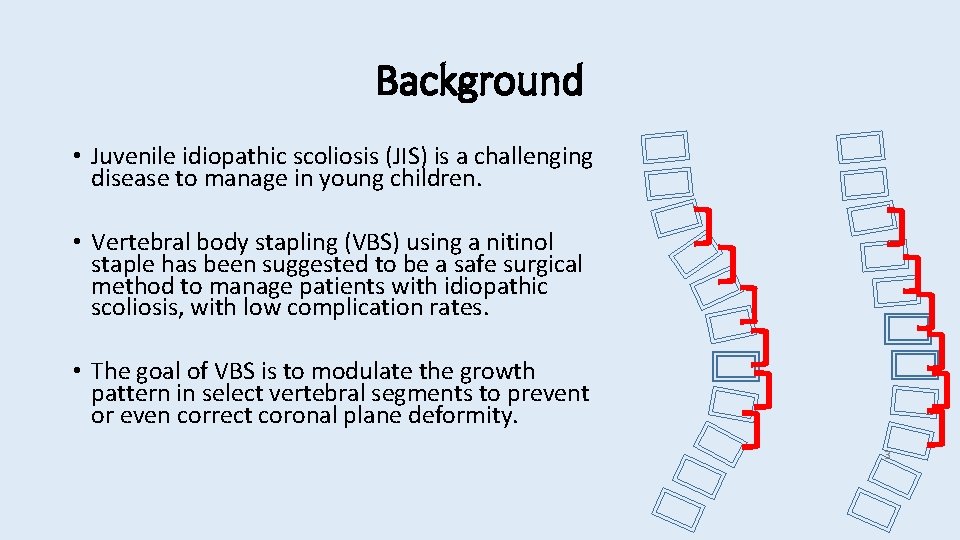
Background • Juvenile idiopathic scoliosis (JIS) is a challenging disease to manage in young children. • Vertebral body stapling (VBS) using a nitinol staple has been suggested to be a safe surgical method to manage patients with idiopathic scoliosis, with low complication rates. • The goal of VBS is to modulate the growth pattern in select vertebral segments to prevent or even correct coronal plane deformity. 3
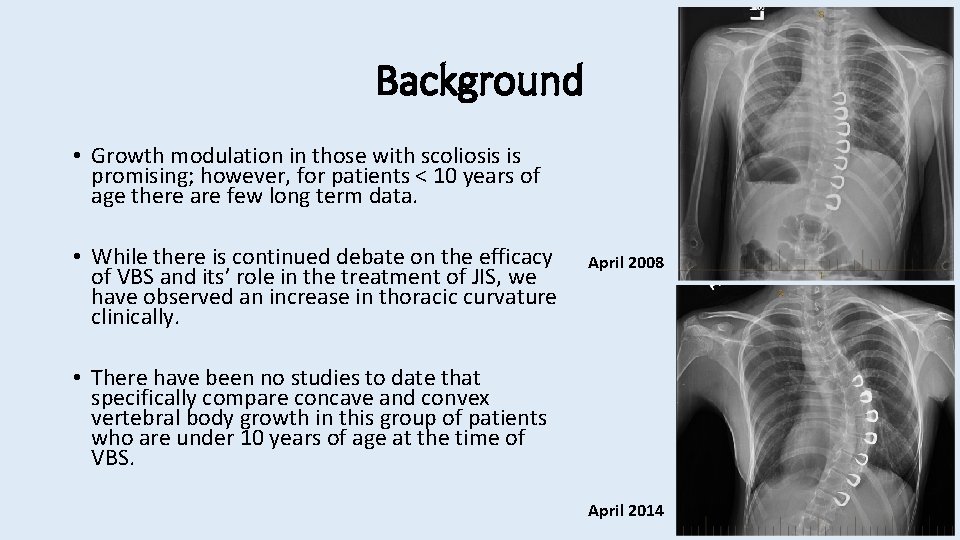
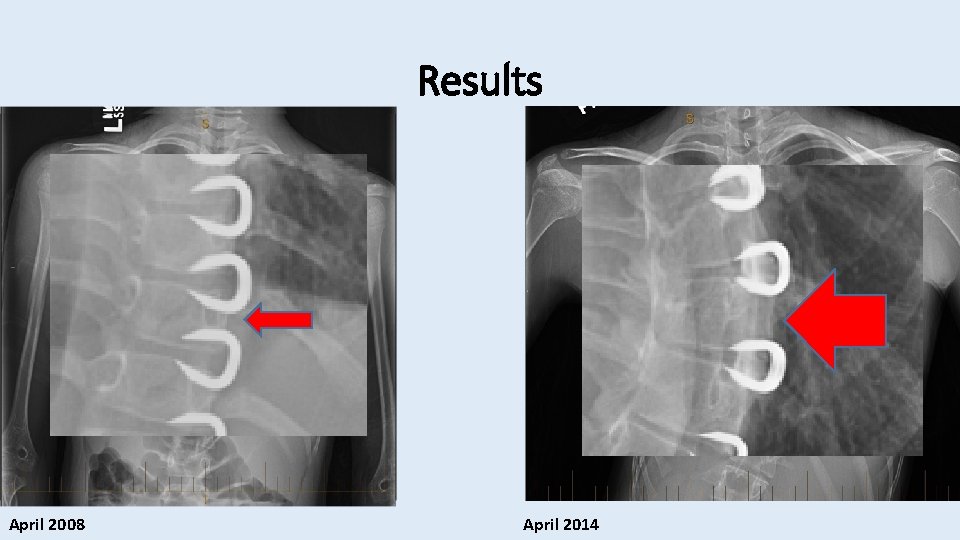
Background • Growth modulation in those with scoliosis is promising; however, for patients < 10 years of age there are few long term data. • While there is continued debate on the efficacy of VBS and its’ role in the treatment of JIS, we have observed an increase in thoracic curvature clinically. April 2008 • There have been no studies to date that specifically compare concave and convex vertebral body growth in this group of patients who are under 10 years of age at the time of VBS. April 2014 4
Hypothesis • Study Objective: To evaluate the radiographic outcome (>5 years) of JIS patients who received VBS before age 11 years. • Study Hypothesis: • The thoracic spine deformity will continue to progress over time. • Convex spine growth will be similar to concave spine growth. 5
Methods • IRB approved review of 8 patients with thoracic JIS who underwent VBS with a minimum 5 -year follow-up since 2007. • Exclusion Criteria • Growing rods in place • Primary lumbar or thoracolumbar deformity. • Radiographs were obtained at preoperative, first postoperative visit, and final postoperative visit. • Coronal Cobb angle and thoracic kyphosis was measured at each time point. • Vertebral body height (convex and concave) was measured first postoperative and final postoperative visit. 6
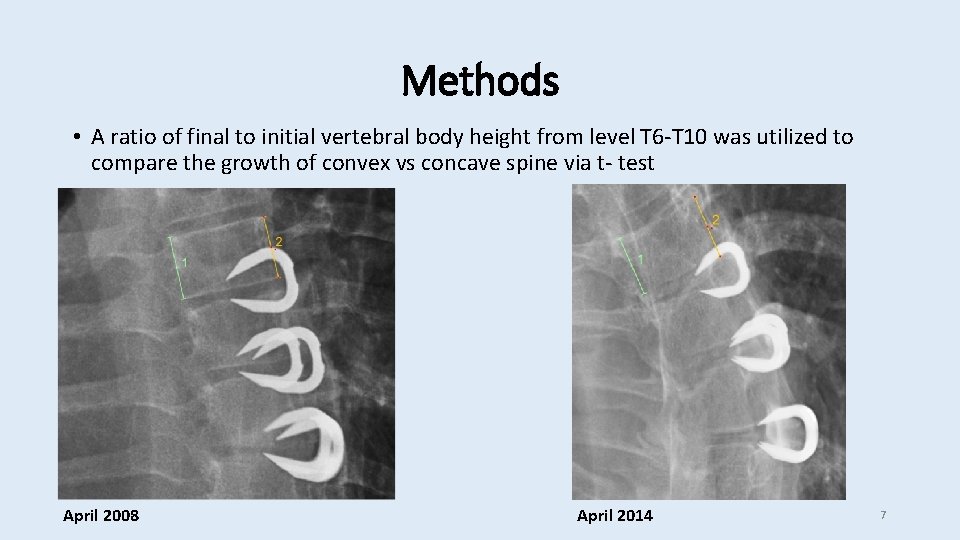
Methods • A ratio of final to initial vertebral body height from level T 6 -T 10 was utilized to compare the growth of convex vs concave spine via t- test April 2008 April 2014 7
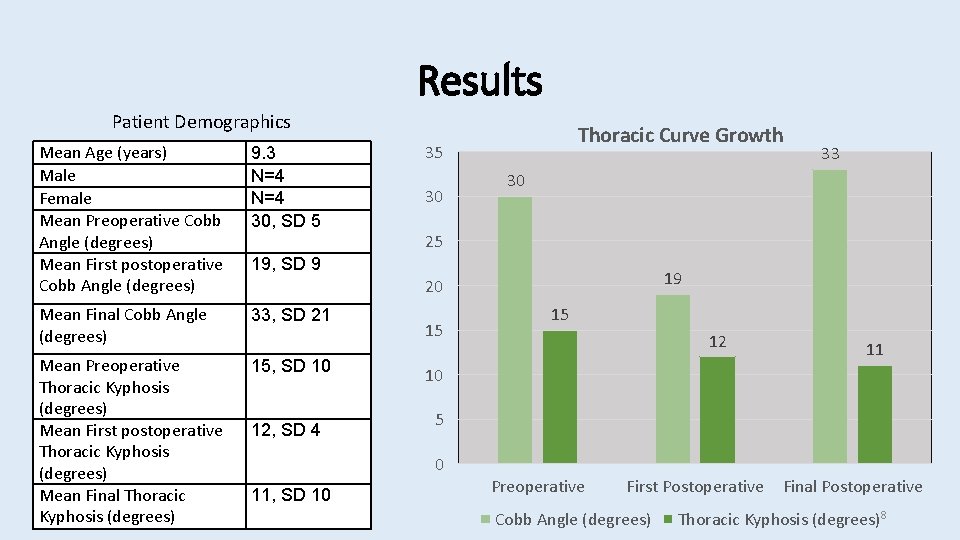
Results Patient Demographics Mean Age (years) Male Female Mean Preoperative Cobb Angle (degrees) Mean First postoperative Cobb Angle (degrees) 9. 3 N=4 30, SD 5 Mean Final Cobb Angle (degrees) 33, SD 21 Mean Preoperative Thoracic Kyphosis (degrees) Mean First postoperative Thoracic Kyphosis (degrees) Mean Final Thoracic Kyphosis (degrees) 15, SD 10 Thoracic Curve Growth 35 30 30 25 19, SD 9 19 20 12, SD 4 15 15 12 11 10 5 0 11, SD 10 33 Preoperative First Postoperative Cobb Angle (degrees) Final Postoperative Thoracic Kyphosis (degrees)8
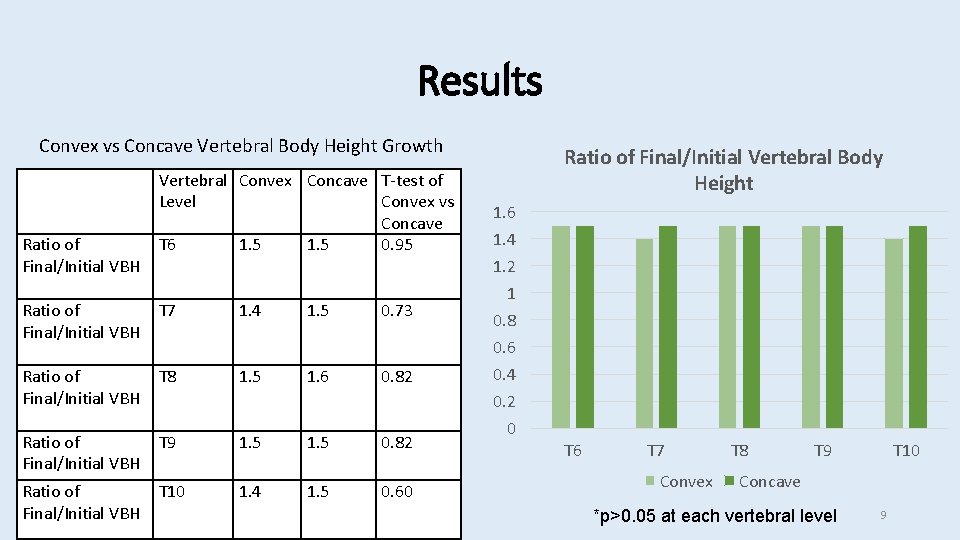
Results Convex vs Concave Vertebral Body Height Growth Ratio of Final/Initial VBH Ratio of Final/Initial VBH Vertebral Convex Concave T-test of Level Convex vs Concave T 6 1. 5 0. 95 T 7 1. 4 1. 5 0. 73 T 8 1. 5 1. 6 0. 82 T 9 1. 5 0. 82 T 10 1. 4 1. 5 0. 60 Ratio of Final/Initial Vertebral Body Height 1. 6 1. 4 1. 2 1 0. 8 0. 6 0. 4 0. 2 0 T 6 T 7 Convex T 8 T 9 T 10 Concave *p>0. 05 at each vertebral level 9
Results April 2008 April 2014
Discussion • VBS of the convex spine did not modulate growth of the convex vertebral body compared to its corresponding concave vertebral body. • VBS resulted in an initial postoperative improvement of Cobb angle followed by a continued Cobb angle over time. • Thoracic kyphosis was modestly decreased over time. 11
Limitations • Small sample size • Accuracy of radiographic measurements • Other parameters of growth • Did not follow growth to maturity 12

Acknowledgements • Children's Mercy Hospital, Kansas City, MO • Julia Leamon, Clinical Research Coordinator 13
- Slides: 13