
Continue Biologics Throughout Pregnancy Uma Mahadevan MD Associate
Continue Biologics Throughout Pregnancy Uma Mahadevan MD Associate Professor of Medicine Co-Medical Director UCSF Center for Colitis and Crohn’s Disease
Key Points n Once pregnant, even with inactive disease, there is an increased risk of complications – Moderate to severe disease increases risk n n n Preterm birth is associated with significant infant mortality, morbidity and developmental delay Transfer of biologics across the placenta begins as soon as week 6 of gestation Interrupted anti-TNF therapy leads to antibody formation and loss of response
BEING IN REMISSION ON LOW RISK MEDICATION IS THE BEST OPTION FOR A HEALTHY PREGNANCY
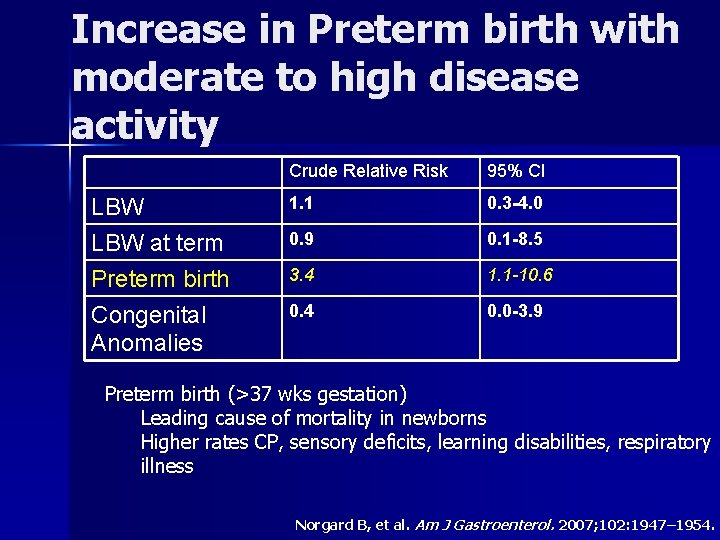
Increase in Preterm birth with moderate to high disease activity Crude Relative Risk 95% CI LBW at term Preterm birth 1. 1 0. 3 -4. 0 0. 9 0. 1 -8. 5 3. 4 1. 1 -10. 6 Congenital Anomalies 0. 4 0. 0 -3. 9 Preterm birth (>37 wks gestation) Leading cause of mortality in newborns Higher rates CP, sensory deficits, learning disabilities, respiratory illness Norgard B, et al. Am J Gastroenterol. 2007; 102: 1947– 1954.
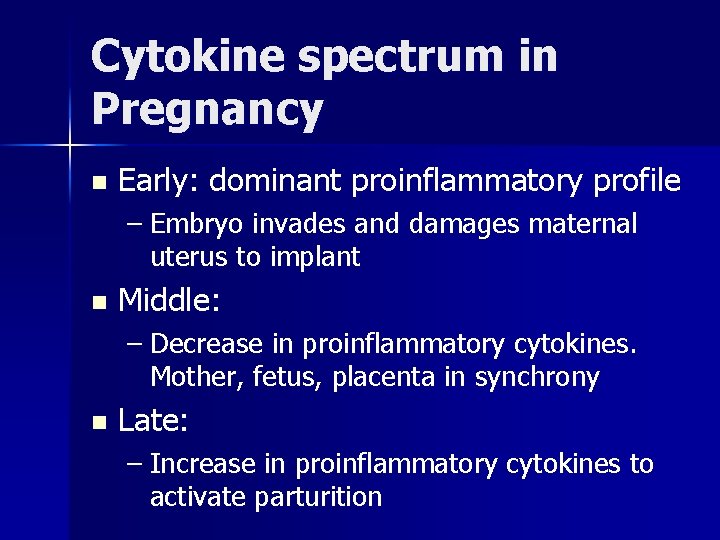
Cytokine spectrum in Pregnancy n Early: dominant proinflammatory profile – Embryo invades and damages maternal uterus to implant n Middle: – Decrease in proinflammatory cytokines. Mother, fetus, placenta in synchrony n Late: – Increase in proinflammatory cytokines to activate parturition
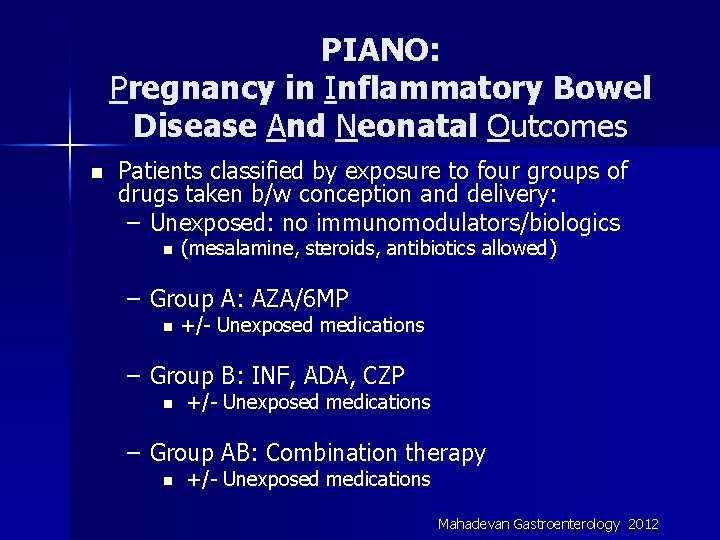
PIANO: Pregnancy in Inflammatory Bowel Disease And Neonatal Outcomes n Patients classified by exposure to four groups of drugs taken b/w conception and delivery: – Unexposed: no immunomodulators/biologics n (mesalamine, steroids, antibiotics allowed) – Group A: AZA/6 MP n +/- Unexposed medications – Group B: INF, ADA, CZP n +/- Unexposed medications – Group AB: Combination therapy n +/- Unexposed medications Mahadevan Gastroenterology 2012
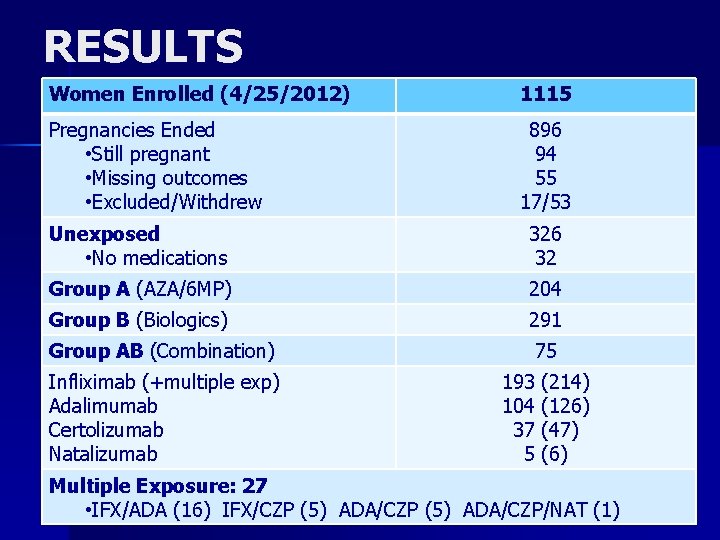
RESULTS Women Enrolled (4/25/2012) 1115 Pregnancies Ended • Still pregnant • Missing outcomes • Excluded/Withdrew 896 94 55 17/53 Unexposed • No medications 326 32 Group A (AZA/6 MP) 204 Group B (Biologics) 291 Group AB (Combination) 75 Infliximab (+multiple exp) Adalimumab Certolizumab Natalizumab 193 104 37 5 (214) (126) (47) (6) Multiple Exposure: 27 • IFX/ADA (16) IFX/CZP (5) ADA/CZP/NAT (1)
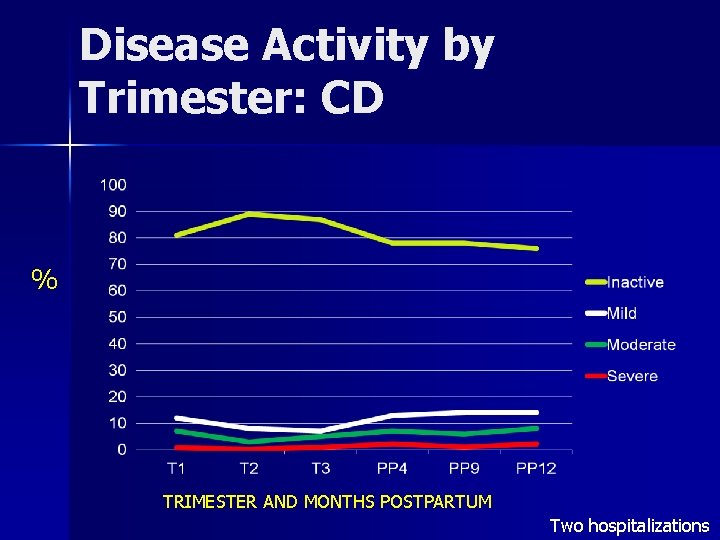
Disease Activity by Trimester: CD % TRIMESTER AND MONTHS POSTPARTUM Two hospitalizations
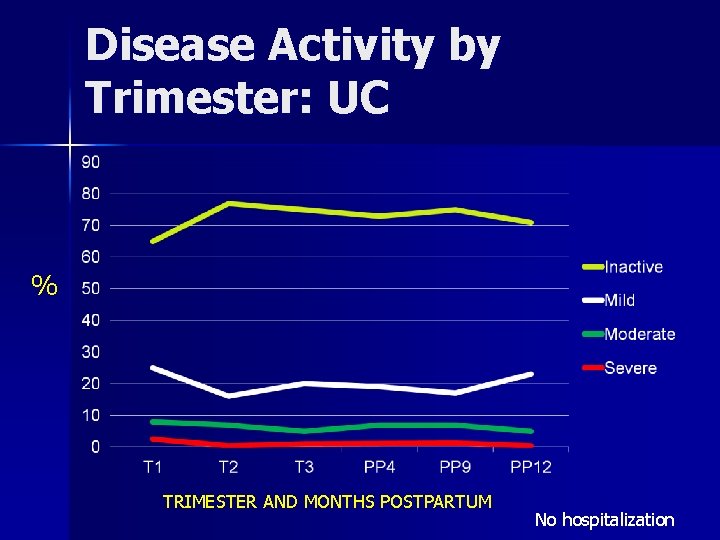
Disease Activity by Trimester: UC % TRIMESTER AND MONTHS POSTPARTUM No hospitalization
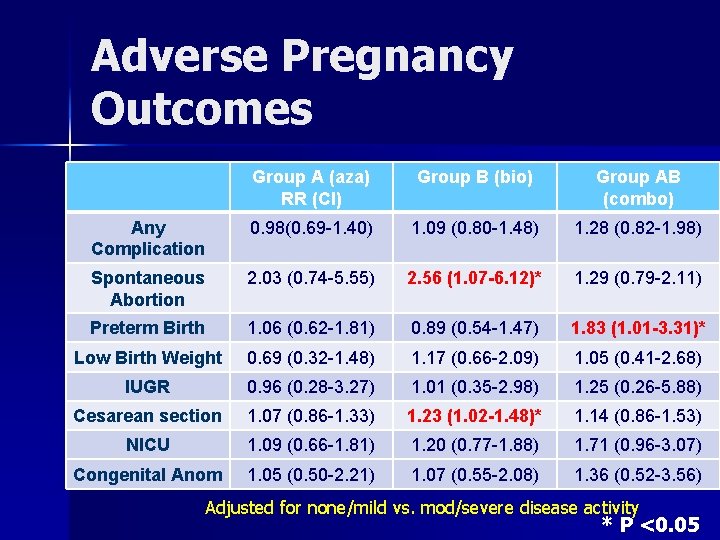
Adverse Pregnancy Outcomes Group A (aza) RR (CI) Group B (bio) Group AB (combo) Any Complication 0. 98(0. 69 -1. 40) 1. 09 (0. 80 -1. 48) 1. 28 (0. 82 -1. 98) Spontaneous Abortion 2. 03 (0. 74 -5. 55) 2. 56 (1. 07 -6. 12)* 1. 29 (0. 79 -2. 11) Preterm Birth 1. 06 (0. 62 -1. 81) 0. 89 (0. 54 -1. 47) 1. 83 (1. 01 -3. 31)* Low Birth Weight 0. 69 (0. 32 -1. 48) 1. 17 (0. 66 -2. 09) 1. 05 (0. 41 -2. 68) IUGR 0. 96 (0. 28 -3. 27) 1. 01 (0. 35 -2. 98) 1. 25 (0. 26 -5. 88) Cesarean section 1. 07 (0. 86 -1. 33) 1. 23 (1. 02 -1. 48)* 1. 14 (0. 86 -1. 53) NICU 1. 09 (0. 66 -1. 81) 1. 20 (0. 77 -1. 88) 1. 71 (0. 96 -3. 07) Congenital Anom 1. 05 (0. 50 -2. 21) 1. 07 (0. 55 -2. 08) 1. 36 (0. 52 -3. 56) Adjusted for none/mild vs. mod/severe disease activity * P <0. 05
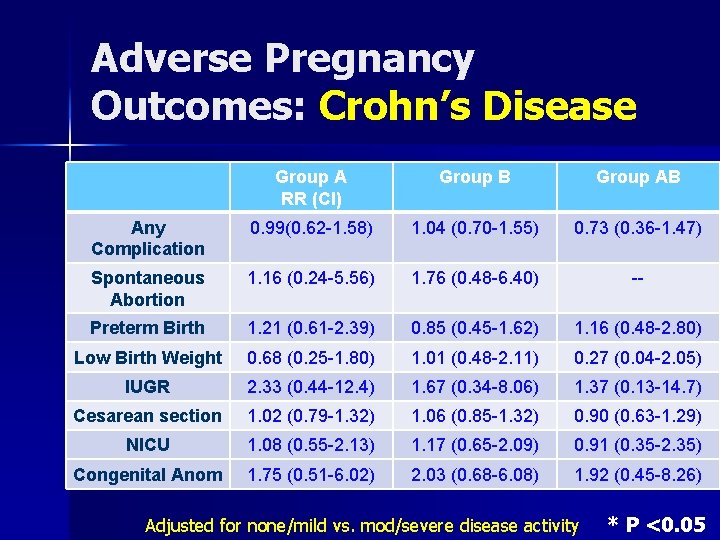
Adverse Pregnancy Outcomes: Crohn’s Disease Group A RR (CI) Group B Group AB Any Complication 0. 99(0. 62 -1. 58) 1. 04 (0. 70 -1. 55) 0. 73 (0. 36 -1. 47) Spontaneous Abortion 1. 16 (0. 24 -5. 56) 1. 76 (0. 48 -6. 40) -- Preterm Birth 1. 21 (0. 61 -2. 39) 0. 85 (0. 45 -1. 62) 1. 16 (0. 48 -2. 80) Low Birth Weight 0. 68 (0. 25 -1. 80) 1. 01 (0. 48 -2. 11) 0. 27 (0. 04 -2. 05) IUGR 2. 33 (0. 44 -12. 4) 1. 67 (0. 34 -8. 06) 1. 37 (0. 13 -14. 7) Cesarean section 1. 02 (0. 79 -1. 32) 1. 06 (0. 85 -1. 32) 0. 90 (0. 63 -1. 29) NICU 1. 08 (0. 55 -2. 13) 1. 17 (0. 65 -2. 09) 0. 91 (0. 35 -2. 35) Congenital Anom 1. 75 (0. 51 -6. 02) 2. 03 (0. 68 -6. 08) 1. 92 (0. 45 -8. 26) Adjusted for none/mild vs. mod/severe disease activity * P <0. 05
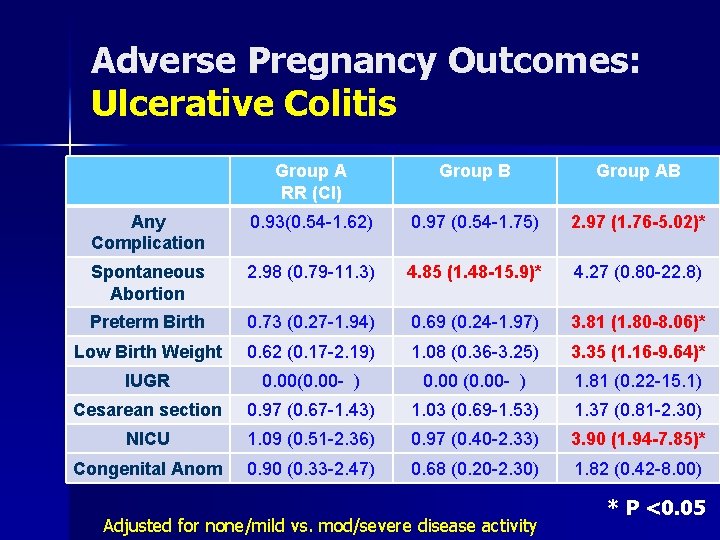
Adverse Pregnancy Outcomes: Ulcerative Colitis Group A RR (CI) Group B Group AB Any Complication 0. 93(0. 54 -1. 62) 0. 97 (0. 54 -1. 75) 2. 97 (1. 76 -5. 02)* Spontaneous Abortion 2. 98 (0. 79 -11. 3) 4. 85 (1. 48 -15. 9)* 4. 27 (0. 80 -22. 8) Preterm Birth 0. 73 (0. 27 -1. 94) 0. 69 (0. 24 -1. 97) 3. 81 (1. 80 -8. 06)* Low Birth Weight 0. 62 (0. 17 -2. 19) 1. 08 (0. 36 -3. 25) 3. 35 (1. 16 -9. 64)* IUGR 0. 00(0. 00 - ) 0. 00 (0. 00 - ) 1. 81 (0. 22 -15. 1) Cesarean section 0. 97 (0. 67 -1. 43) 1. 03 (0. 69 -1. 53) 1. 37 (0. 81 -2. 30) NICU 1. 09 (0. 51 -2. 36) 0. 97 (0. 40 -2. 33) 3. 90 (1. 94 -7. 85)* Congenital Anom 0. 90 (0. 33 -2. 47) 0. 68 (0. 20 -2. 30) 1. 82 (0. 42 -8. 00) Adjusted for none/mild vs. mod/severe disease activity * P <0. 05
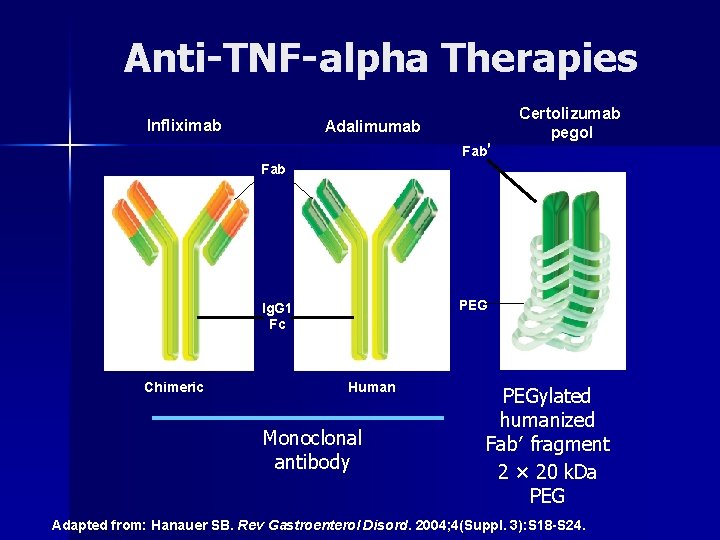
Anti-TNF-alpha Therapies Infliximab Adalimumab Fab′ Certolizumab pegol Fab PEG Ig. G 1 Fc Chimeric Human Monoclonal antibody PEGylated humanized Fab′ fragment 2 × 20 k. Da PEG Adapted from: Hanauer SB. Rev Gastroenterol Disord. 2004; 4(Suppl. 3): S 18 -S 24.
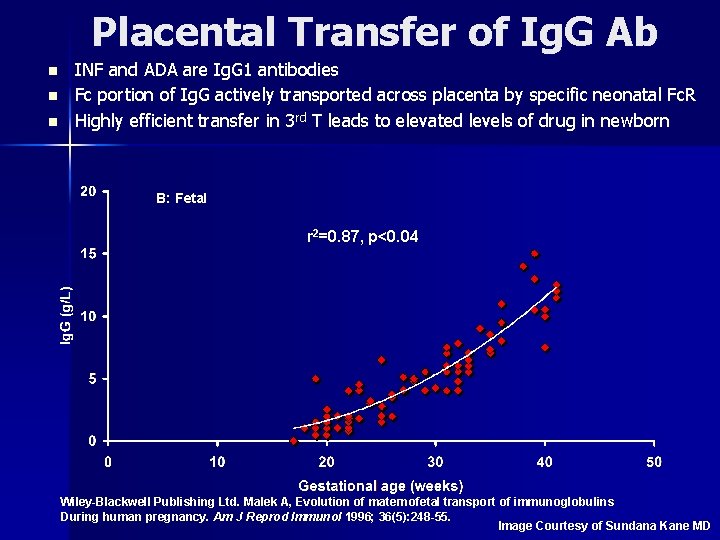
Placental Transfer of Ig. G Ab n n n INF and ADA are Ig. G 1 antibodies Fc portion of Ig. G actively transported across placenta by specific neonatal Fc. R Highly efficient transfer in 3 rd T leads to elevated levels of drug in newborn B: Fetal r 2=0. 87, p<0. 04 Wiley-Blackwell Publishing Ltd. Malek A, Evolution of maternofetal transport of immunoglobulins During human pregnancy. Am J Reprod Immunol 1996; 36(5): 248 -55. Image Courtesy of Sundana Kane MD
Maternal Ig. G and Ig. A are potentially available to the embryo as early as the 6 th week of gestation (coelomic fluid) n Maternal Ig present for the first 6 months of life to aid in fighting infection n
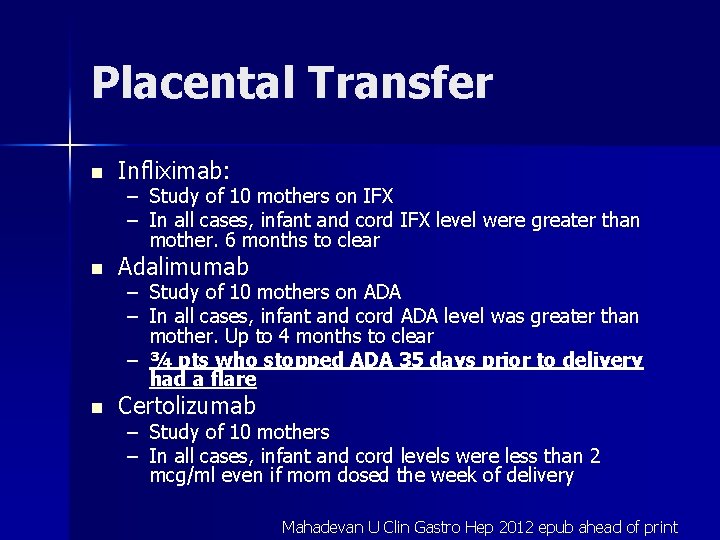
Placental Transfer n n Infliximab: – – Study of 10 mothers on IFX In all cases, infant and cord IFX level were greater than mother. 6 months to clear Adalimumab – – Study of 10 mothers on ADA In all cases, infant and cord ADA level was greater than mother. Up to 4 months to clear – ¾ pts who stopped ADA 35 days prior to delivery had a flare n Certolizumab – Study of 10 mothers – In all cases, infant and cord levels were less than 2 mcg/ml even if mom dosed the week of delivery Mahadevan U Clin Gastro Hep 2012 epub ahead of print
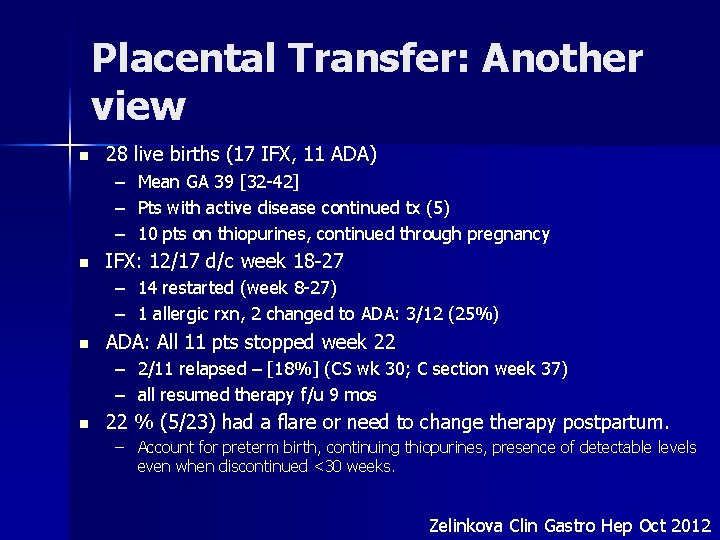
Placental Transfer: Another view n 28 live births (17 IFX, 11 ADA) – – – n Mean GA 39 [32 -42] Pts with active disease continued tx (5) 10 pts on thiopurines, continued through pregnancy IFX: 12/17 d/c week 18 -27 – 14 restarted (week 8 -27) – 1 allergic rxn, 2 changed to ADA: 3/12 (25%) n ADA: All 11 pts stopped week 22 – 2/11 relapsed – [18%] (CS wk 30; C section week 37) – all resumed therapy f/u 9 mos n 22 % (5/23) had a flare or need to change therapy postpartum. – Account for preterm birth, continuing thiopurines, presence of detectable levels even when discontinued <30 weeks. Zelinkova Clin Gastro Hep Oct 2012
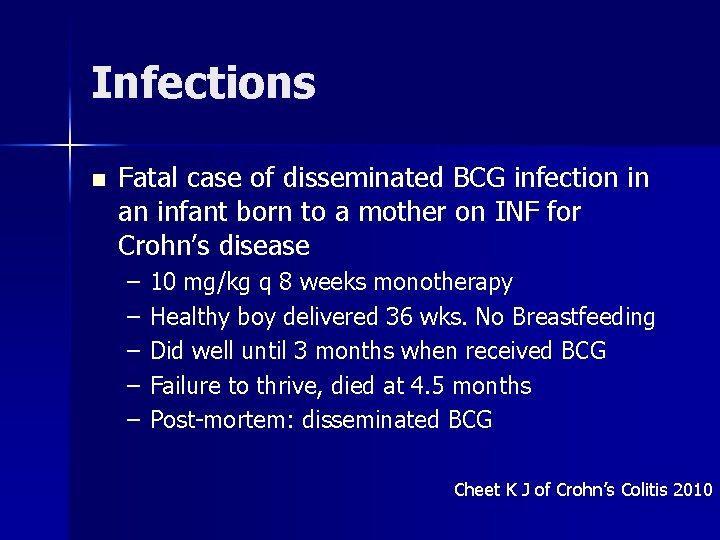
Infections n Fatal case of disseminated BCG infection in an infant born to a mother on INF for Crohn’s disease – – – 10 mg/kg q 8 weeks monotherapy Healthy boy delivered 36 wks. No Breastfeeding Did well until 3 months when received BCG Failure to thrive, died at 4. 5 months Post-mortem: disseminated BCG Cheet K J of Crohn’s Colitis 2010
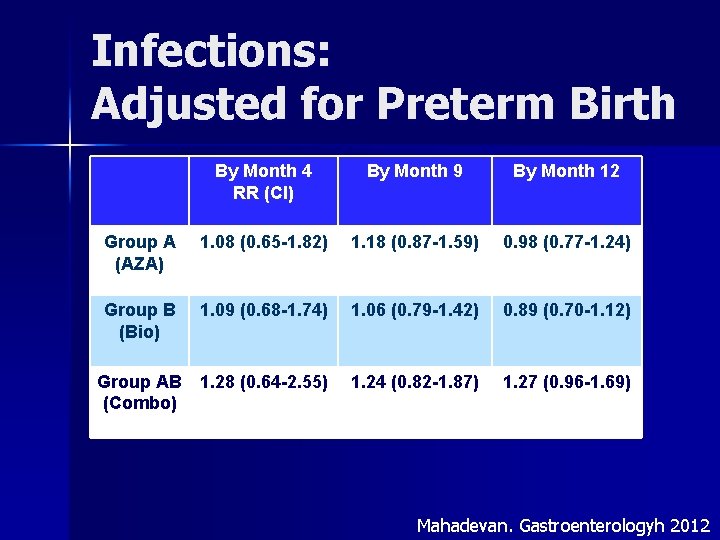
Infections: Adjusted for Preterm Birth By Month 4 RR (CI) By Month 9 By Month 12 Group A (AZA) 1. 08 (0. 65 -1. 82) 1. 18 (0. 87 -1. 59) 0. 98 (0. 77 -1. 24) Group B (Bio) 1. 09 (0. 68 -1. 74) 1. 06 (0. 79 -1. 42) 0. 89 (0. 70 -1. 12) Group AB 1. 28 (0. 64 -2. 55) (Combo) 1. 24 (0. 82 -1. 87) 1. 27 (0. 96 -1. 69) Mahadevan. Gastroenterologyh 2012
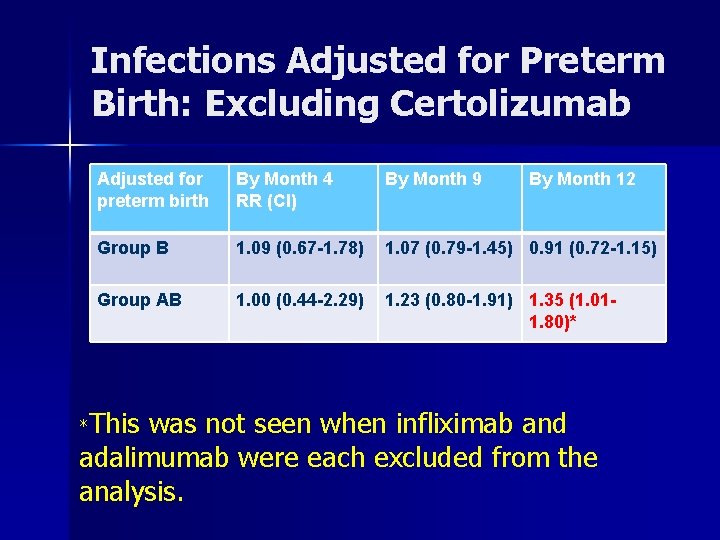
Infections Adjusted for Preterm Birth: Excluding Certolizumab Adjusted for preterm birth By Month 4 RR (CI) By Month 9 Group B 1. 09 (0. 67 -1. 78) 1. 07 (0. 79 -1. 45) 0. 91 (0. 72 -1. 15) Group AB 1. 00 (0. 44 -2. 29) 1. 23 (0. 80 -1. 91) 1. 35 (1. 011. 80)* *This By Month 12 was not seen when infliximab and adalimumab were each excluded from the analysis.
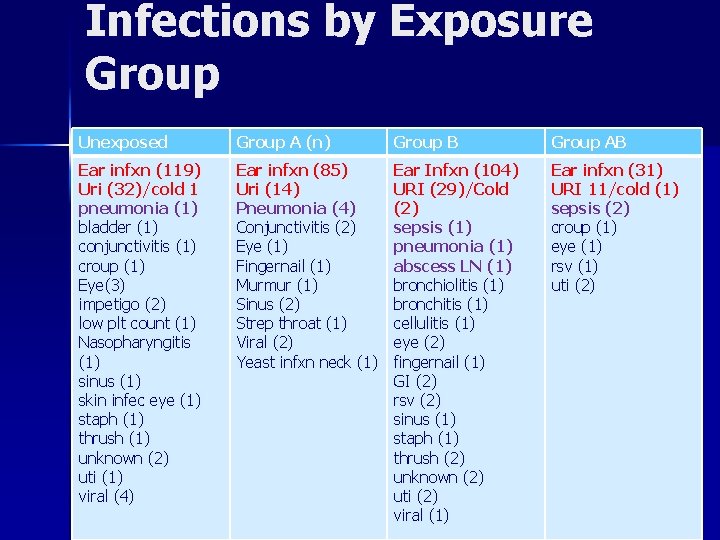
Infections by Exposure Group Unexposed Group A (n) Group B Group AB Ear infxn (119) Uri (32)/cold 1 pneumonia (1) bladder (1) conjunctivitis (1) croup (1) Eye(3) impetigo (2) low plt count (1) Nasopharyngitis (1) sinus (1) skin infec eye (1) staph (1) thrush (1) unknown (2) uti (1) viral (4) Ear infxn (85) Uri (14) Pneumonia (4) Conjunctivitis (2) Eye (1) Fingernail (1) Murmur (1) Sinus (2) Strep throat (1) Viral (2) Yeast infxn neck (1) Ear Infxn (104) URI (29)/Cold (2) sepsis (1) pneumonia (1) abscess LN (1) bronchiolitis (1) bronchitis (1) cellulitis (1) eye (2) fingernail (1) GI (2) rsv (2) sinus (1) staph (1) thrush (2) unknown (2) uti (2) viral (1) Ear infxn (31) URI 11/cold (1) sepsis (2) croup (1) eye (1) rsv (1) uti (2)
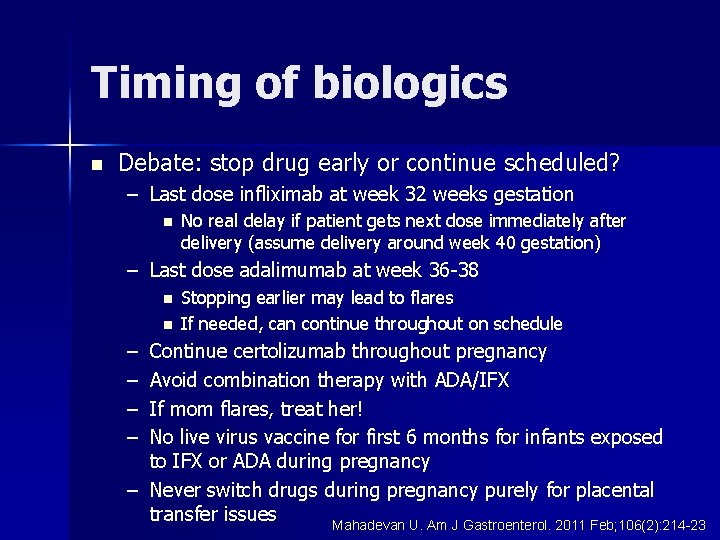
Timing of biologics n Debate: stop drug early or continue scheduled? – Last dose infliximab at week 32 weeks gestation n No real delay if patient gets next dose immediately after delivery (assume delivery around week 40 gestation) – Last dose adalimumab at week 36 -38 n n – – Stopping earlier may lead to flares If needed, can continue throughout on schedule Continue certolizumab throughout pregnancy Avoid combination therapy with ADA/IFX If mom flares, treat her! No live virus vaccine for first 6 months for infants exposed to IFX or ADA during pregnancy – Never switch drugs during pregnancy purely for placental transfer issues Mahadevan U. Am J Gastroenterol. 2011 Feb; 106(2): 214 -23
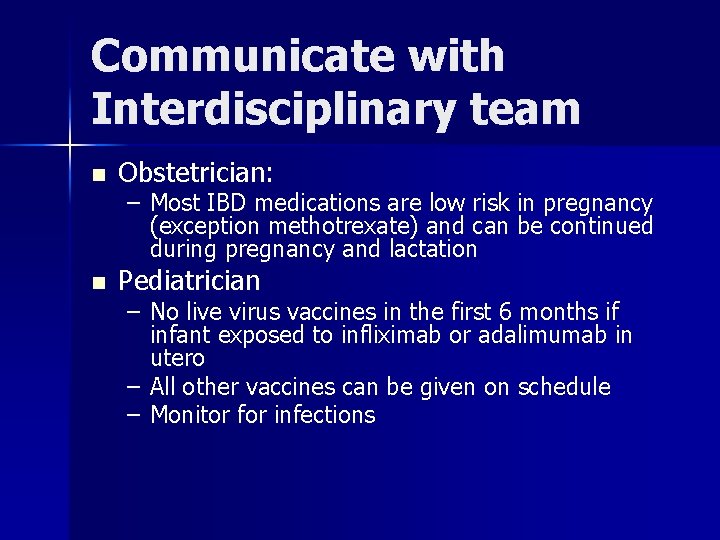
Communicate with Interdisciplinary team n Obstetrician: n Pediatrician – Most IBD medications are low risk in pregnancy (exception methotrexate) and can be continued during pregnancy and lactation – No live virus vaccines in the first 6 months if infant exposed to infliximab or adalimumab in utero – All other vaccines can be given on schedule – Monitor for infections
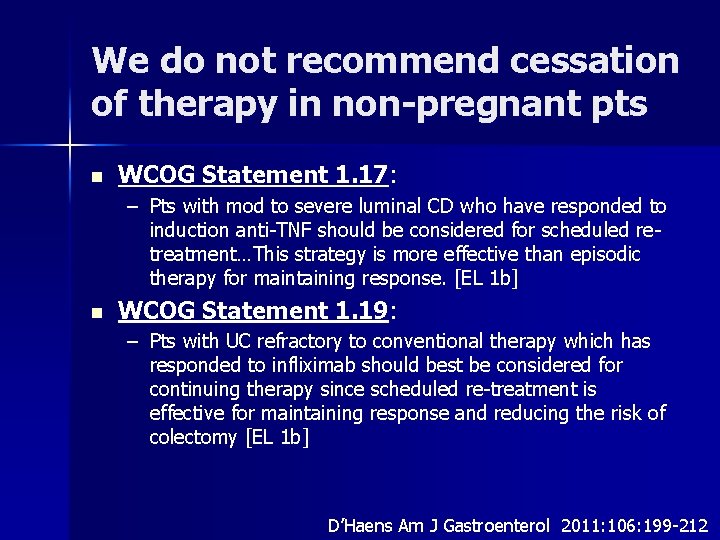
We do not recommend cessation of therapy in non-pregnant pts n WCOG Statement 1. 17: – Pts with mod to severe luminal CD who have responded to induction anti-TNF should be considered for scheduled retreatment…This strategy is more effective than episodic therapy for maintaining response. [EL 1 b] n WCOG Statement 1. 19: – Pts with UC refractory to conventional therapy which has responded to infliximab should best be considered for continuing therapy since scheduled re-treatment is effective for maintaining response and reducing the risk of colectomy [EL 1 b] D’Haens Am J Gastroenterol 2011: 106: 199 -212
Summary n We teach all our patients the importance of compliance with biologic therapy – Risk of antibody formation – Risk of attenuated response n Pregnant women should not be different! – No increase in the risk of birth defects – No increase in infections in newborns except with combo therapy – Clear risk of increased adverse events with increased disease activity. n Postpartum is important too!

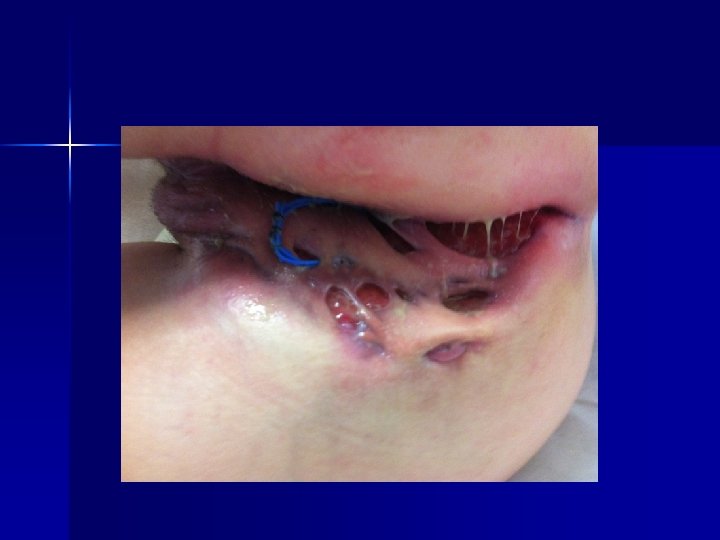
Treat the patient , not your own fears …and if you are still not convinced…
Consensus Statement n n The risks and benefits of biologic therapy during the third trimester should be individually considered Combination therapy with a biologic and immunomodulator should be avoided in pregnancy if possible Certolizumab can be continued throughout pregnancy on schedule Further studies are needed to determine the impact of significant levels of anti-TNF agents on newborn immune development and infection risk
- Slides: 28