
Contingency and Emergency Planning An Airports Perspective 12

- Slides: 21
Contingency and Emergency Planning An Airport’s Perspective 12 OCTOBER 2018
2 Why do we need Emergency & Contingency Plans? § Fulfil regulatory, legal or contractual compliance § Look ahead and prepare than look back and regret § Plan well and be prepared. Saves lives & reputation § Things that can go wrong, will go wrong at some point
3 Emergency Vs Contingency Planning Emergency Planning: § ICAO and EASA requirement § Regulated from local CAAs Contingency Planning: § Operator developed & driven § Aims to maintain efficiency
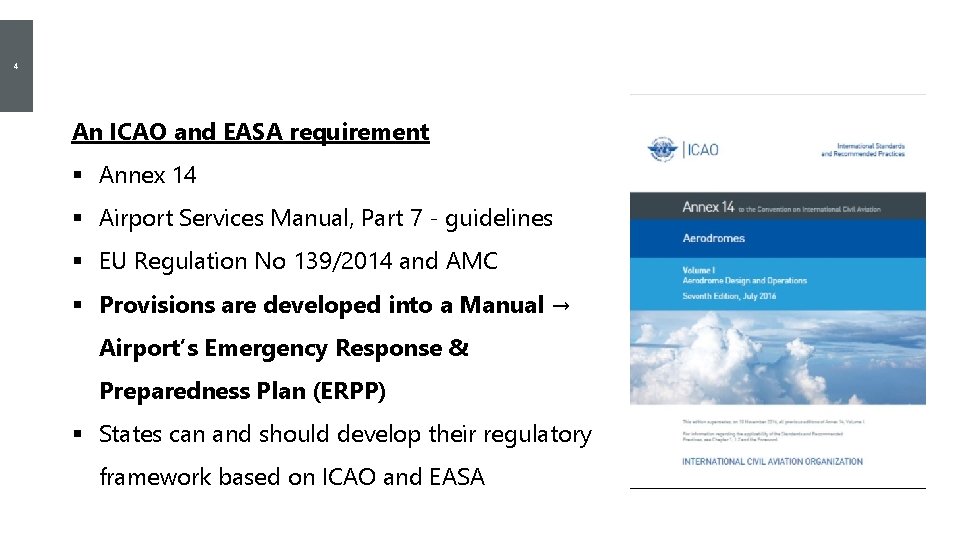
4 Emergency Planning An ICAO and EASA requirement § Annex 14 § Airport Services Manual, Part 7 - guidelines § EU Regulation No 139/2014 and AMC § Provisions are developed into a Manual → Airport’s Emergency Response & Preparedness Plan (ERPP) § States can and should develop their regulatory framework based on ICAO and EASA
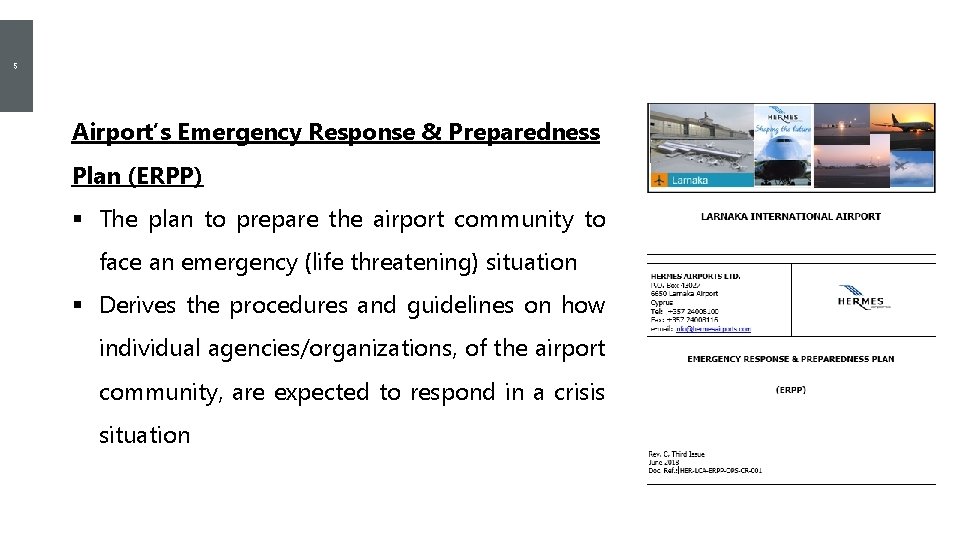
5 Emergency Planning Airport’s Emergency Response & Preparedness Plan (ERPP) § The plan to prepare the airport community to face an emergency (life threatening) situation § Derives the procedures and guidelines on how individual agencies/organizations, of the airport community, are expected to respond in a crisis situation
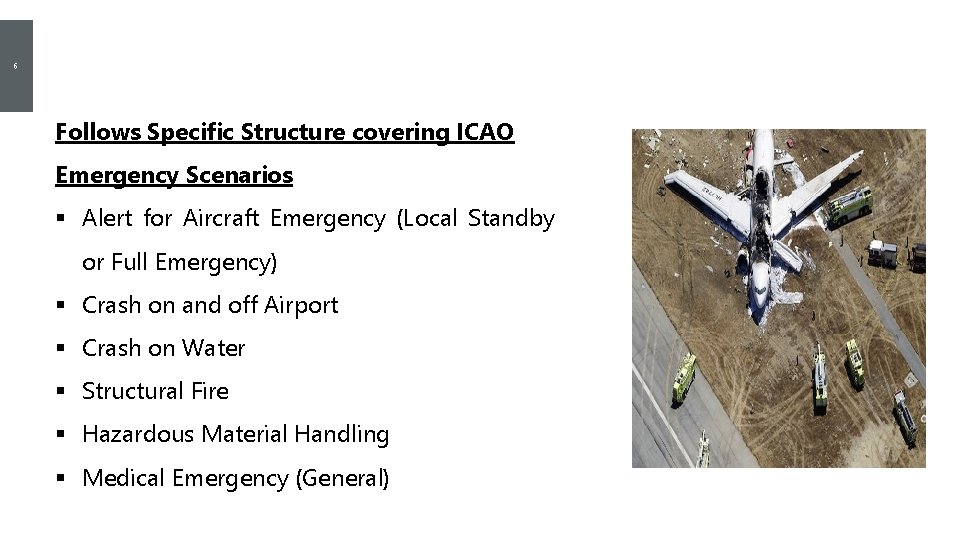
6 Emergency Planning Follows Specific Structure covering ICAO Emergency Scenarios § Alert for Aircraft Emergency (Local Standby or Full Emergency) § Crash on and off Airport § Crash on Water § Structural Fire § Hazardous Material Handling § Medical Emergency (General)
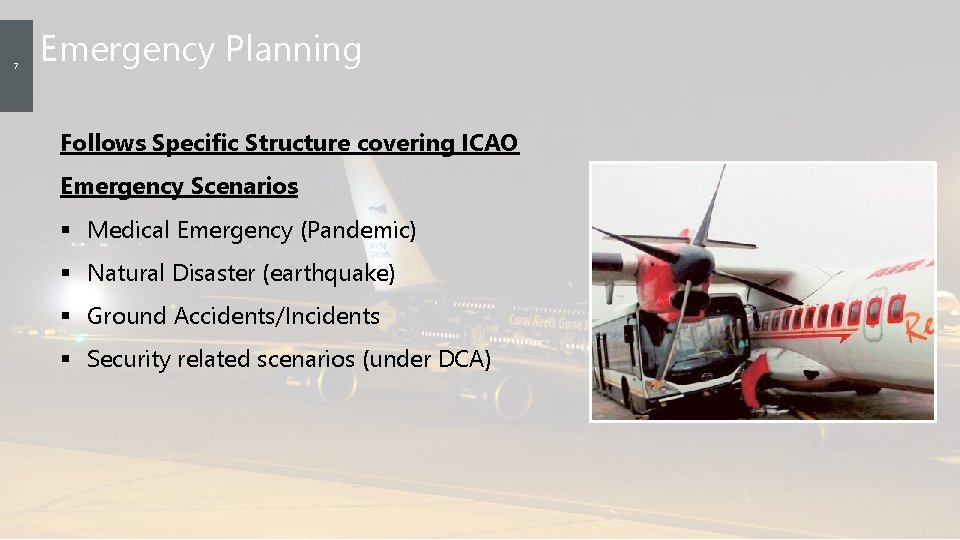
7 Emergency Planning Follows Specific Structure covering ICAO Emergency Scenarios § Medical Emergency (Pandemic) § Natural Disaster (earthquake) § Ground Accidents/Incidents § Security related scenarios (under DCA)
8 Emergency Planning Formalizes processes between all services during each scenario: § Rescue & Fire Fighting § Police § Paramedics / Ambulance / Hospitals § Airline / Passenger-Ground Handler § Civil Aviation Authority / Accident Investigation Board § Airport Operator
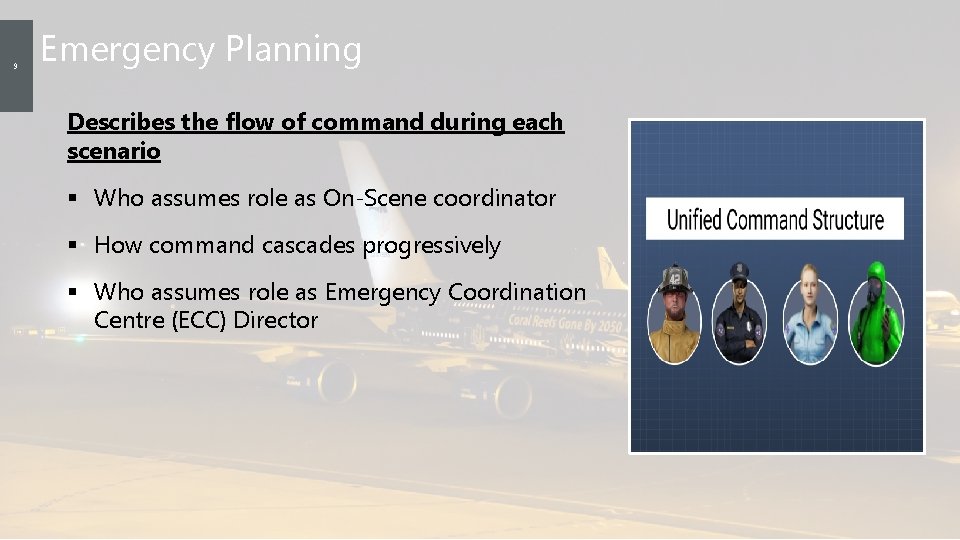
9 Emergency Planning Describes the flow of command during each scenario § Who assumes role as On-Scene coordinator § How command cascades progressively § Who assumes role as Emergency Coordination Centre (ECC) Director
10 Emergency Planning Leaves no margin for guess-work & assumptions Everybody involved needs to know § What to do § When to do it § Where to do it § What means to use
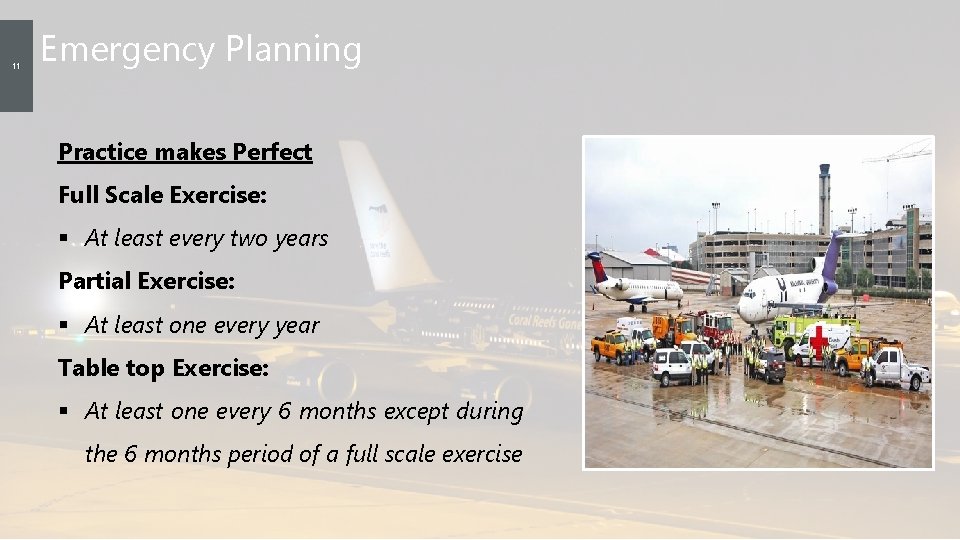
11 Emergency Planning Practice makes Perfect Full Scale Exercise: § At least every two years Partial Exercise: § At least one every year Table top Exercise: § At least one every 6 months except during the 6 months period of a full scale exercise
12 Emergency Planning Criticism Helps! Examine what went wrong during each exercise Build on exercise findings to clear up roles
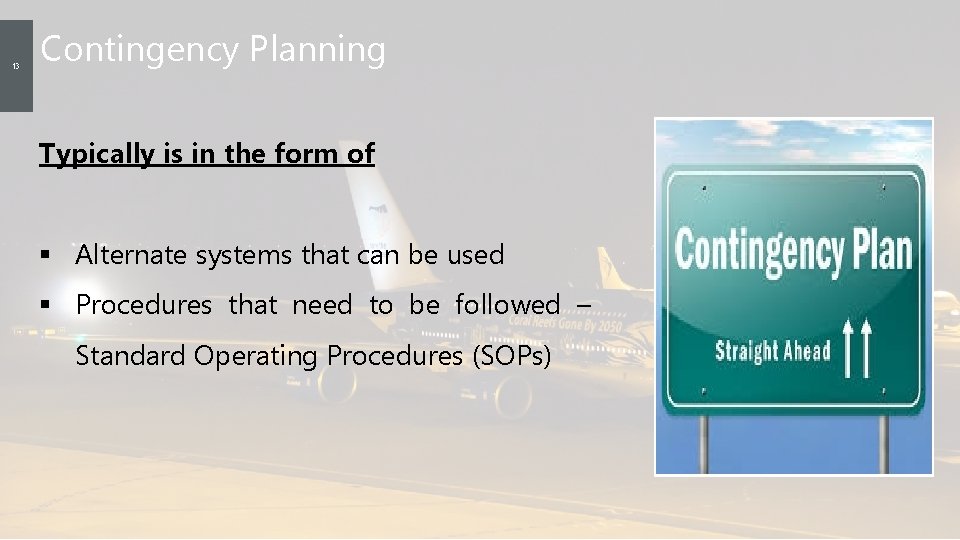
13 Contingency Planning Typically is in the form of § Alternate systems that can be used § Procedures that need to be followed – Standard Operating Procedures (SOPs)
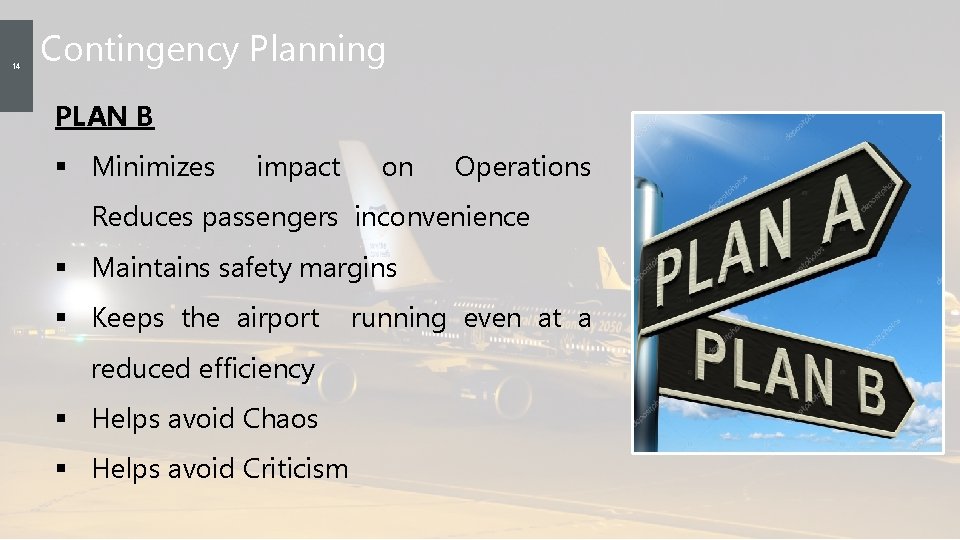
14 Contingency Planning PLAN B § Minimizes impact on Operations Reduces passengers inconvenience § Maintains safety margins § Keeps the airport reduced efficiency § Helps avoid Chaos § Helps avoid Criticism running even at a
15 Contingency Planning § Caters for the interim period until the full recovery of a primary system (actions required until the return to normal functioning) § Covers all major abnormalities which are likely to occur at the airport and might cause an infraction § Prioritizes scenarios depending on the criticality and impact on operations Relies on input and assistance of all stakeholders / service providers
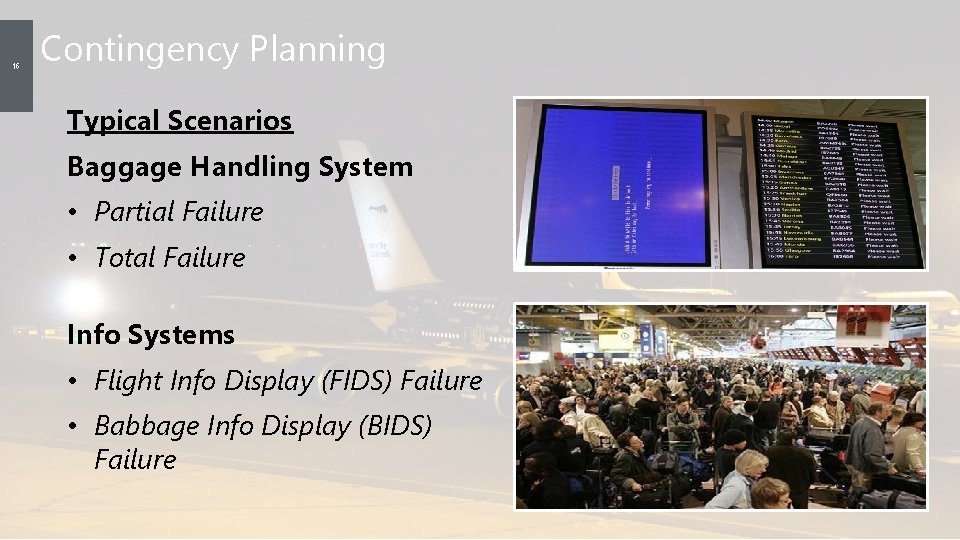
16 Contingency Planning Typical Scenarios Baggage Handling System • Partial Failure • Total Failure Info Systems • Flight Info Display (FIDS) Failure • Babbage Info Display (BIDS) Failure
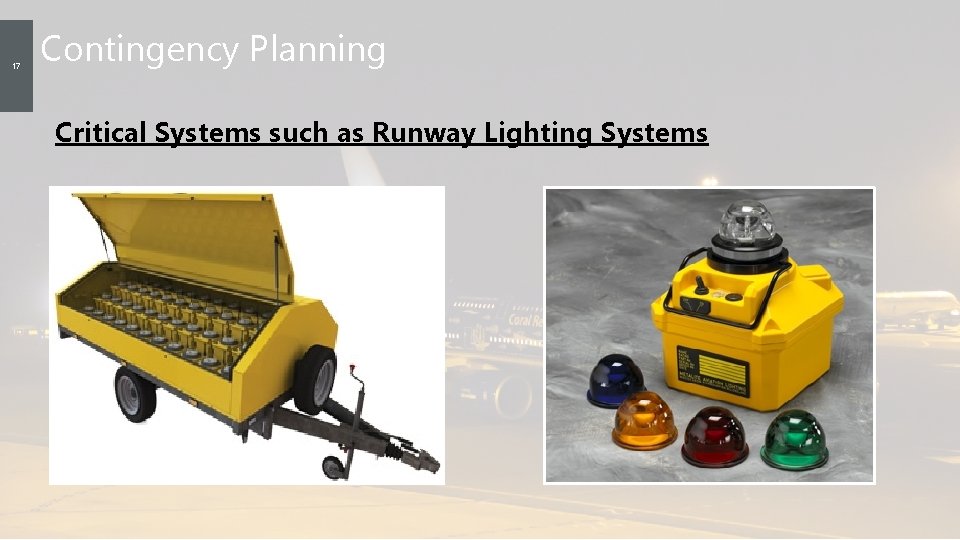
17 Contingency Planning Critical Systems such as Runway Lighting Systems
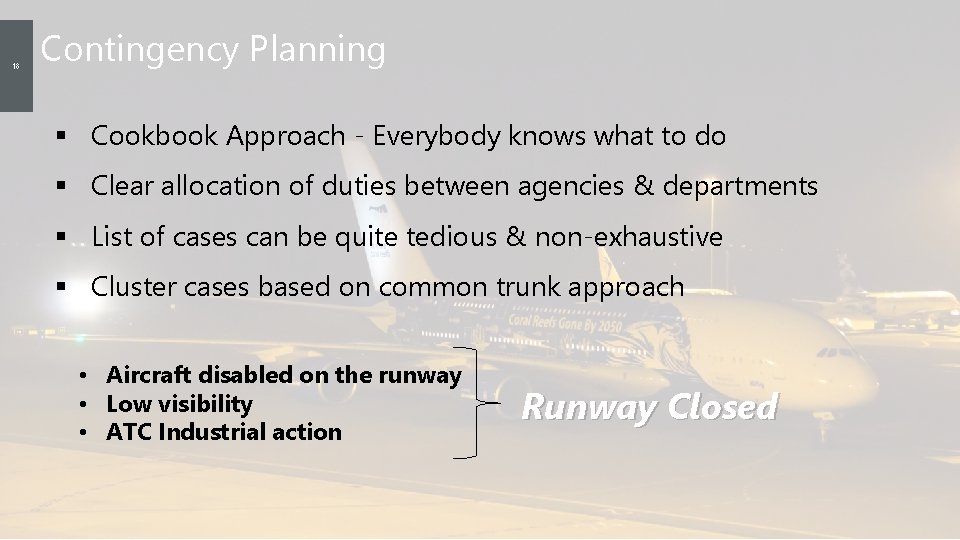
18 Contingency Planning § Cookbook Approach - Everybody knows what to do § Clear allocation of duties between agencies & departments § List of cases can be quite tedious & non-exhaustive § Cluster cases based on common trunk approach • Aircraft disabled on the runway • Low visibility • ATC Industrial action Runway Closed
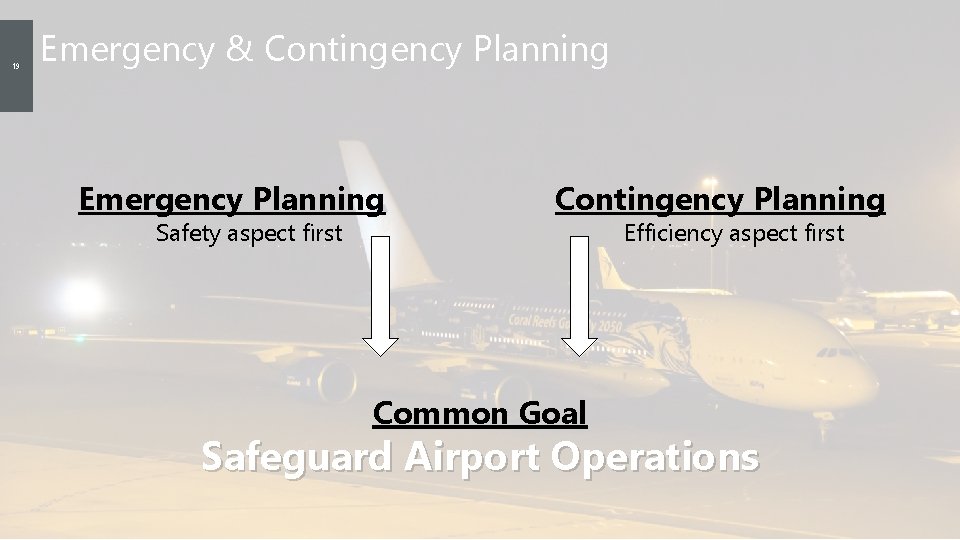
19 Emergency & Contingency Planning Emergency Planning Safety aspect first Contingency Planning Common Goal Efficiency aspect first Safeguard Airport Operations
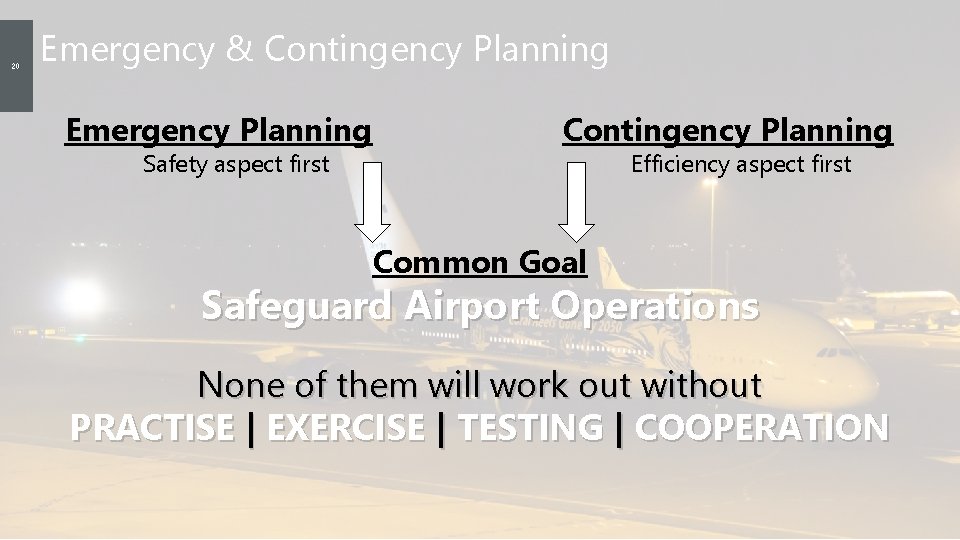
20 Emergency & Contingency Planning Emergency Planning Safety aspect first Contingency Planning Efficiency aspect first Common Goal Safeguard Airport Operations None of them will work out without PRACTISE | EXERCISE | TESTING | COOPERATION