
Continental Drift Continental Drift Theory Proposed by Alfred
Continental Drift
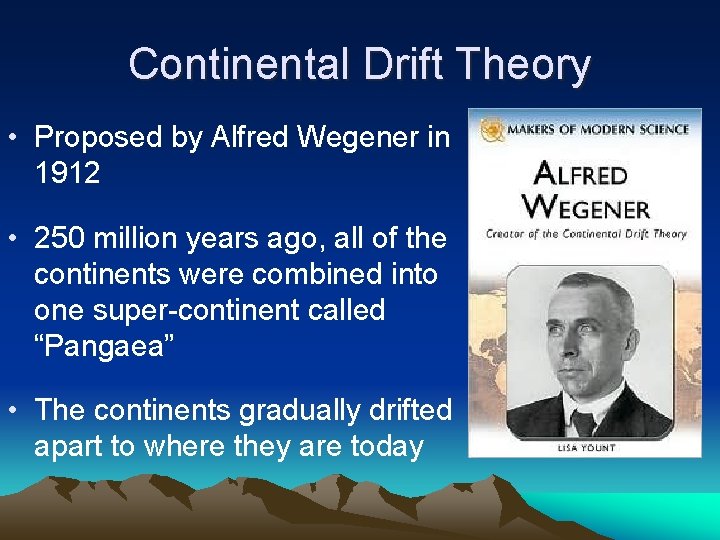
Continental Drift Theory • Proposed by Alfred Wegener in 1912 • 250 million years ago, all of the continents were combined into one super-continent called “Pangaea” • The continents gradually drifted apart to where they are today
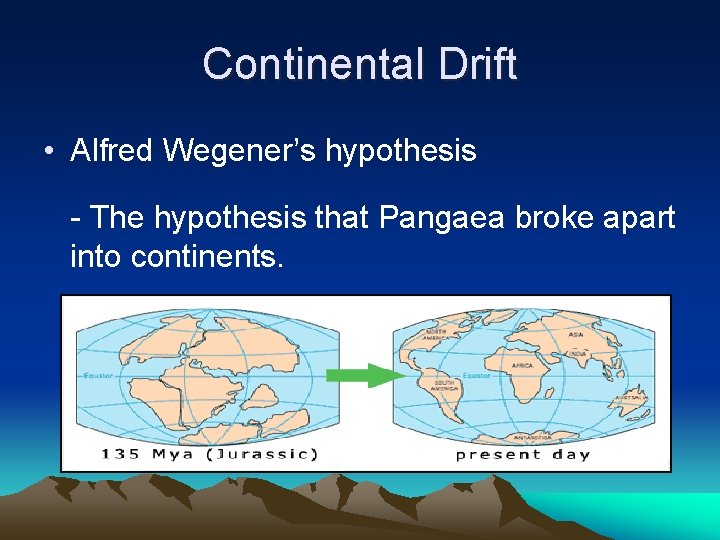
Continental Drift • Alfred Wegener’s hypothesis - The hypothesis that Pangaea broke apart into continents.

Evidence to Support the Theory
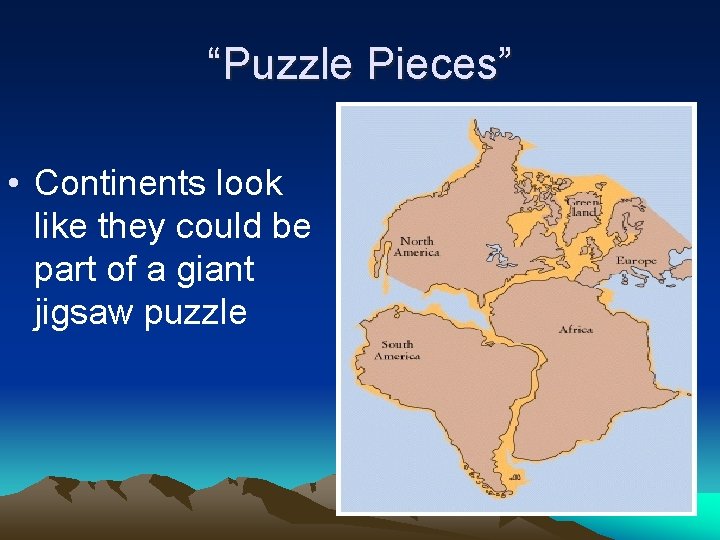
“Puzzle Pieces” • Continents look like they could be part of a giant jigsaw puzzle
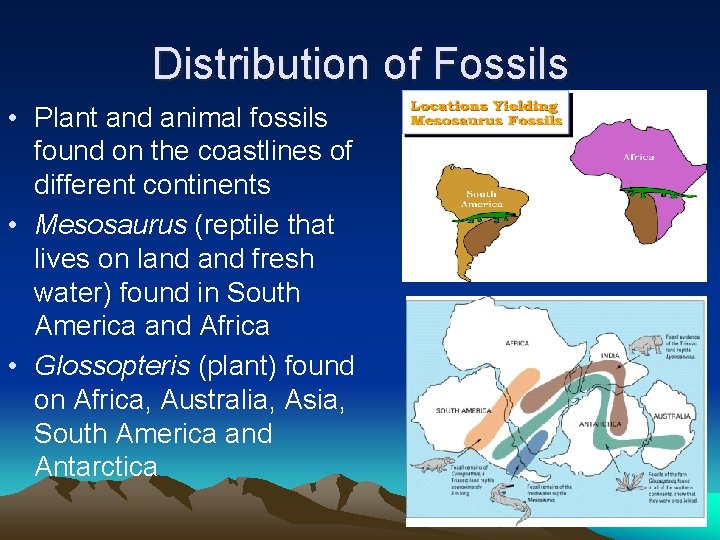
Distribution of Fossils • Plant and animal fossils found on the coastlines of different continents • Mesosaurus (reptile that lives on land fresh water) found in South America and Africa • Glossopteris (plant) found on Africa, Australia, Asia, South America and Antarctica
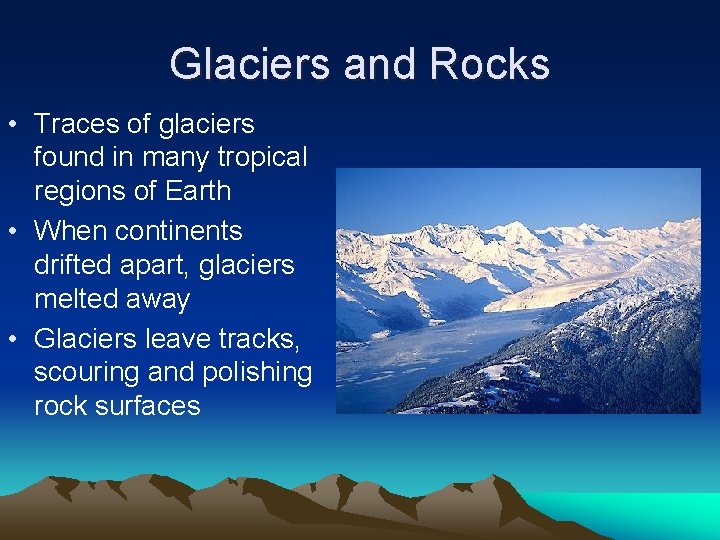
Glaciers and Rocks • Traces of glaciers found in many tropical regions of Earth • When continents drifted apart, glaciers melted away • Glaciers leave tracks, scouring and polishing rock surfaces
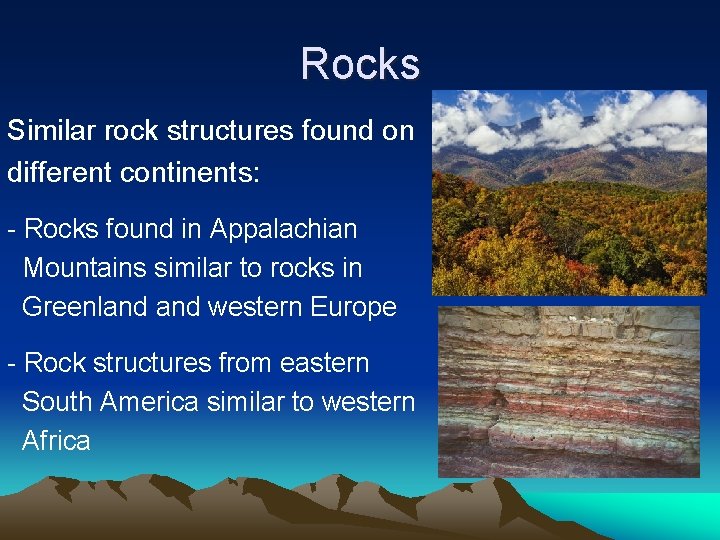
Rocks Similar rock structures found on different continents: - Rocks found in Appalachian Mountains similar to rocks in Greenland western Europe - Rock structures from eastern South America similar to western Africa
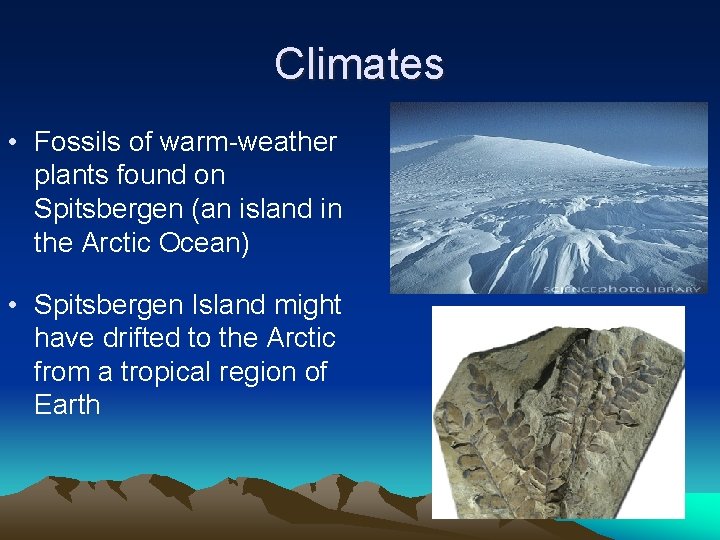
Climates • Fossils of warm-weather plants found on Spitsbergen (an island in the Arctic Ocean) • Spitsbergen Island might have drifted to the Arctic from a tropical region of Earth
Problems With Theory • Theory was not accepted by scientists because there was not enough evidence (NO PROOF!) • Wegener could not explain what caused the continents to break apart and drift away • He hypothesized that continents plow through the ocean floor or that the spinning of Earth on its axis was the cause

Homework (ISN) * Write a 1 paragraph summary and draw a diagram about continental drift theory.
- Slides: 11