
Continental Drift Chapter 10 Section 1 Objectives Summarize
Continental Drift Chapter 10 Section 1 Objectives • Summarize Wegener’s Hypothesis • Describe the Process of sea-floor spreading • Identify Paleomagnetism and how it contributes to sea-floor spreading • Explain how sea-floor spreading provides the mechanism for continental drift
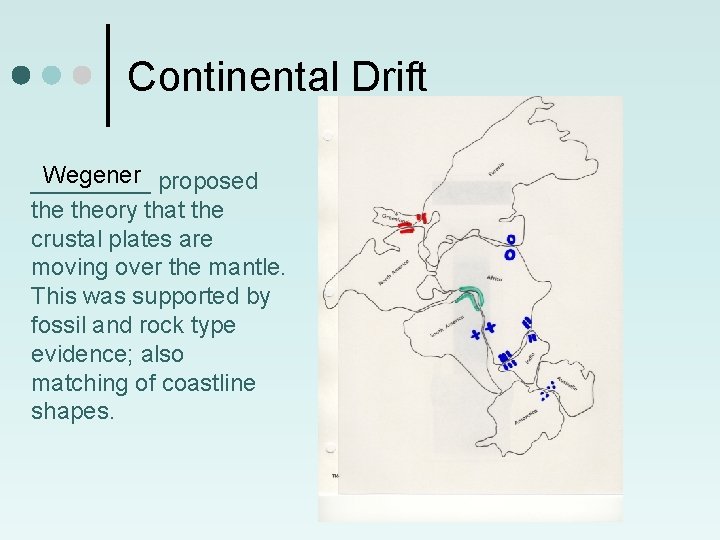
Continental Drift Wegener proposed _____ theory that the crustal plates are moving over the mantle. This was supported by fossil and rock type evidence; also matching of coastline shapes.
Wegener’s Conclusions: 1. That the continents were once joined. Therefore, they must have moved apart over time. 2. Contracting Earth theory was not consistent with the facts. Wegener proposed a mechanism for continental drift: pushing of the continents by gravitational forces that derived from the sun and the moon (similar to tides).
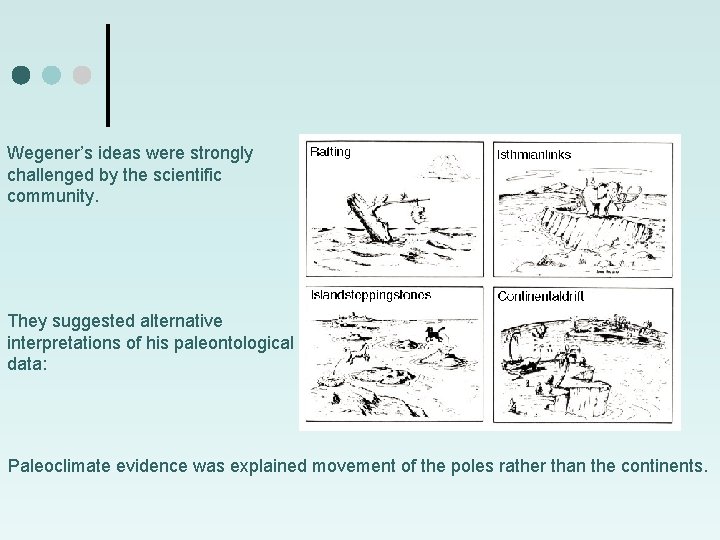
Wegener’s ideas were strongly challenged by the scientific community. They suggested alternative interpretations of his paleontological data: Paleoclimate evidence was explained movement of the poles rather than the continents.
Other evidence was refuted as being “coincidence” or just being incorrect. Errors in Wegener’s data led to easy arguments against some conclusions. He had predicted the North America and Europe were moving away from each other at the rate of 250 cm/year……an impossible rate. (we now know that they are moving apart at a rate up to 3 cm per year) The second Biggest problem: the mechanism that Wegener proposed was impossible and easily demonstrated to be so.
Mid-Ocean Ridges ¢ ¢ The evidence that Wegener needed was not found until almost 20 years after his death Mid-ocean ridges, which are undersea mountain ranges, provided 2 major pieces of evidence l l Sediments that cover the sea floor is thinner closer to a ridge The ocean floor is very young, none of the oceanic rocks are more than 200 million years old, while some rocks on land date to 400 Billion years old
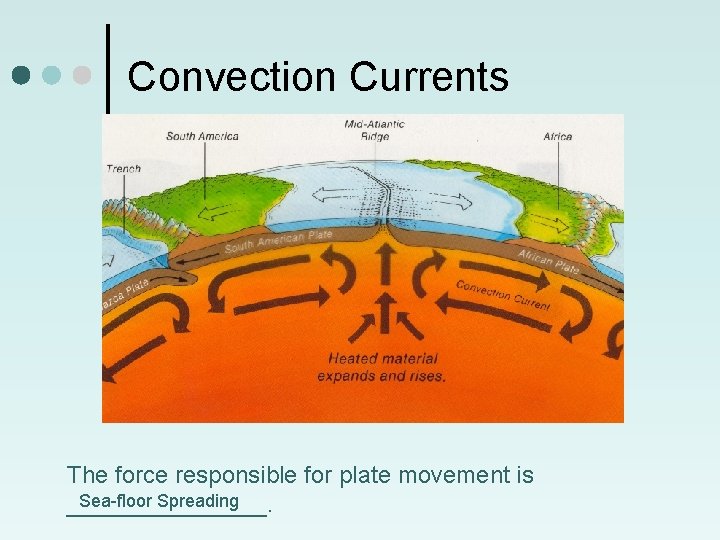
Convection Currents The force responsible for plate movement is Sea-floor Spreading ________.
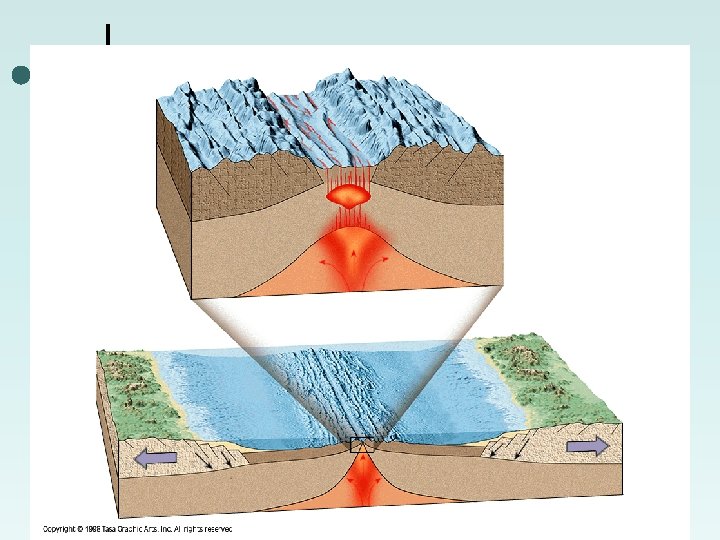
Sea-Floor Spreading ¢ ¢ ¢ Harry Hess suggested in the 1950’s that magma rises to fill the rift (or crack) in the Earth’s crust As the ocean floor moves farther away from the ridge, the magma cools and hardens to form new ocean floor rock In the 1960’s more evidence was discovered to support Hess’ hypothesis and this evidence was discovered through paleomagnetism

Paleomagnetism ¢ ¢ ¢ Paleomagnetism is the study of the magnetic properties of rocks As magma solidifies to form rocks, iron-rich minerals align with the Earth’s magnetic field the same way the compass of a needle does Geologic evidence shows that Earth’s magnetic field did not always point north Some rocks have been discovered pointing in the opposite direction Those that point north are classified in a certain time interval Those pointing south are also in a specific time interval, this is known as magnetic reversals
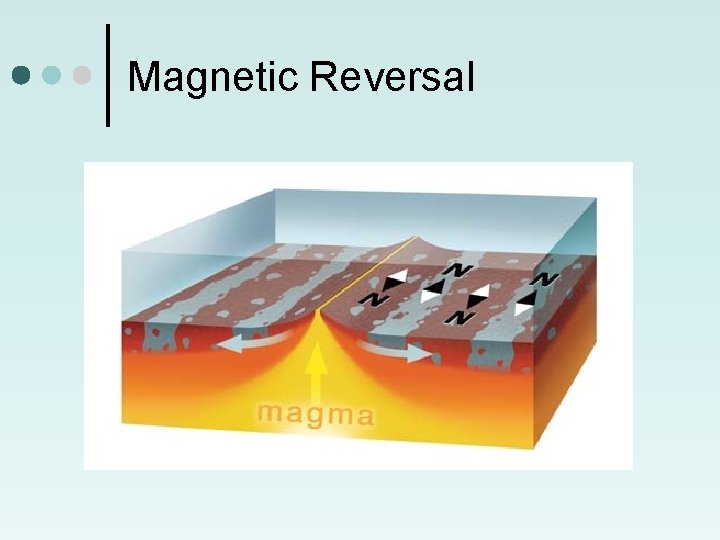
Magnetic Reversal
Paleomagnetism (Cont’d) Scientists also found that the ages of the sea -floor rocks were symmetrical ¢ The youngest rocks were at the center ¢ The older rocks were farther away on either side of the ridge ¢
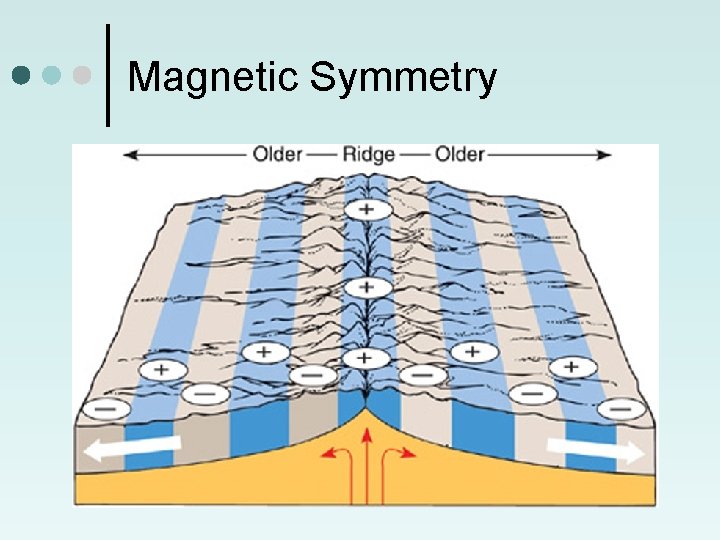
Magnetic Symmetry
Theory of Plate Tectonics ¢ Objectives Summarize the Theory of Plate tectonics l Identify and describe three types of plate boundaries l List and describe three causes of plate movement l
How Continents Move Plate Tectonics is theory that explains why and how continents move ¢ Earths crust and the rigid upper part of the mantle form the lithosphere ¢ The lithosphere is broken into tectonic plates ¢ The plates ride on the asthensophere, a layer of rock that is solid but flows very slowly just below the lithosphere ¢

Two types of Crust ¢ The two types of crust are: Continental crust-low in density that is high in silica l Oceanic Crust- dense rock rich in iron and magnesium l
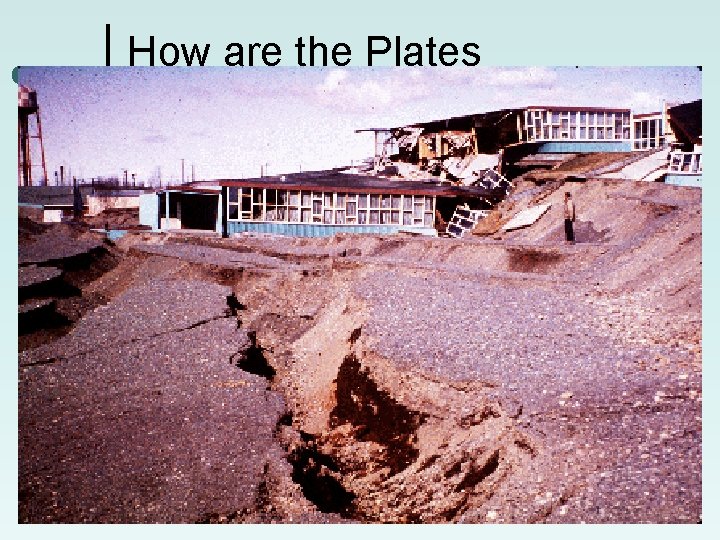
How are the Plates Identified? Scientists identify plate boundaries by studying data from earthquakes ¢ Earthquakes in a certain area are evidence that two or more plates may meet in that area ¢ Volcano locations can also help identify plate boundary locations ¢ Some volcanoes form when magma is created by movement of plates ¢
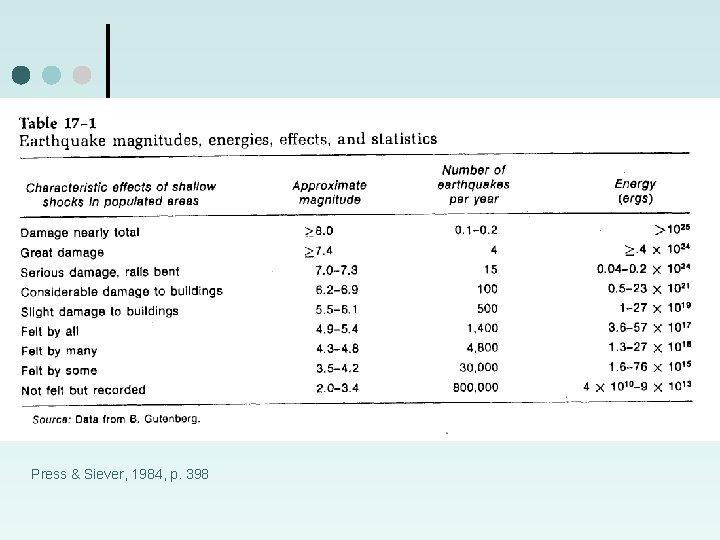
Press & Siever, 1984, p. 398
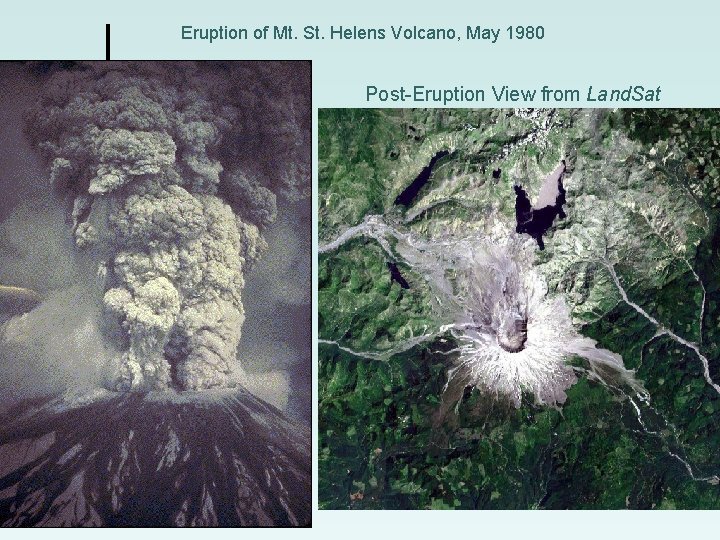
Eruption of Mt. St. Helens Volcano, May 1980 Post-Eruption View from Land. Sat
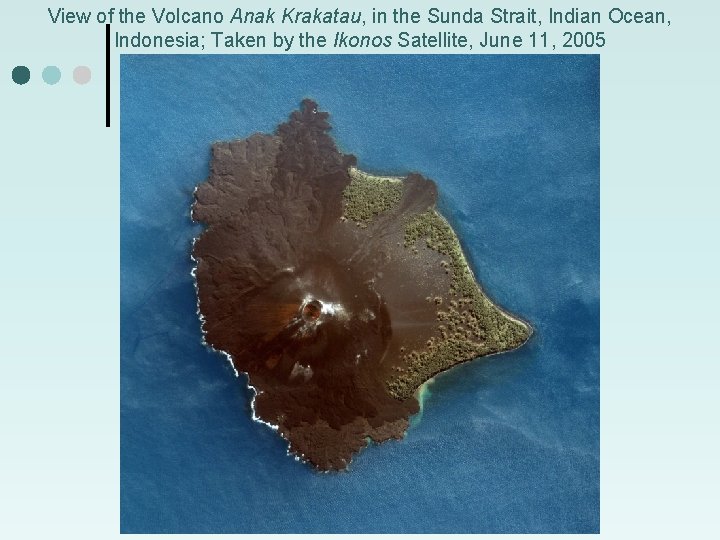
View of the Volcano Anak Krakatau, in the Sunda Strait, Indian Ocean, Indonesia; Taken by the Ikonos Satellite, June 11, 2005
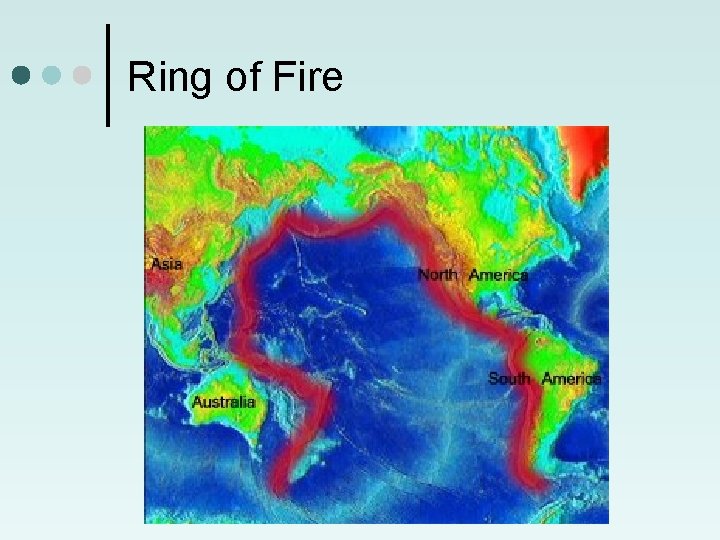
Ring of Fire
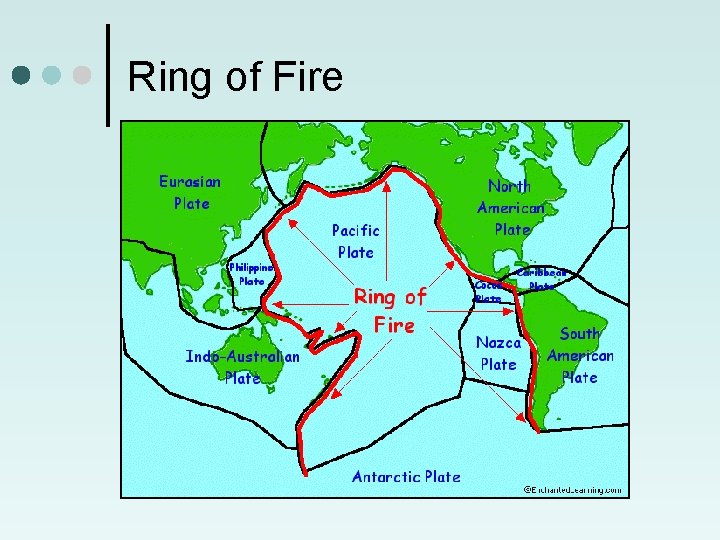
Ring of Fire
Major and Minor Plates ¢ 7 Major Plates are: l • 7 Minor Plates are: Eurasion Plate v. Philippine Plate l North American Plate l South American Plate v. Cocos Plate l Pacific Plate v. Nazca Plate l African Plate v. Juan de Fuca Plate v. Scotia Plate v. Carribean Plate l Indo-Australian Plate v. Arabian Plate l Antarctic Plate
Plate Boundaries The following two slides show maps of the current major plate boundaries and their relative motions. ¢ You should be able to describe various landforms created by different plate movements. ¢
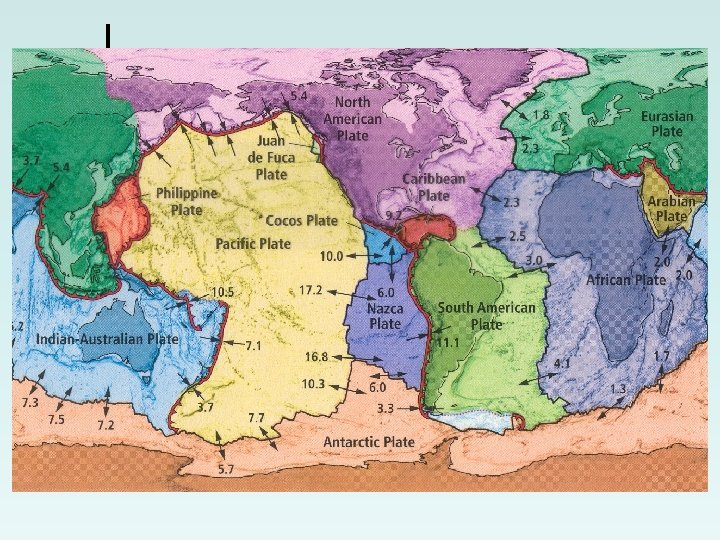
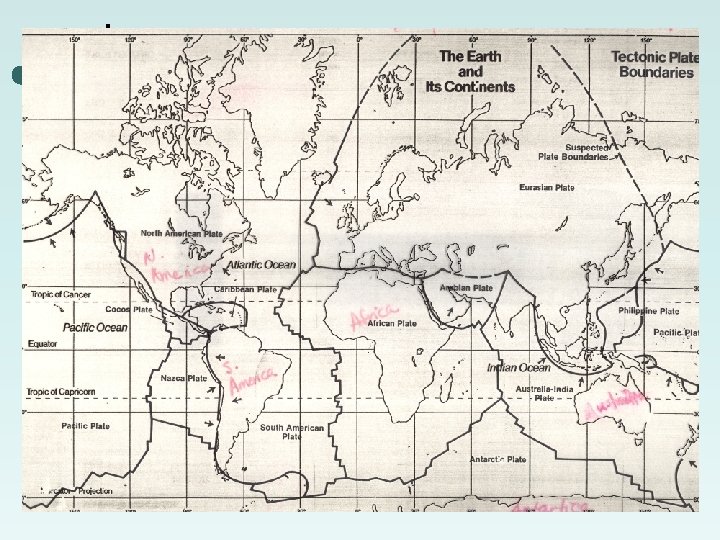
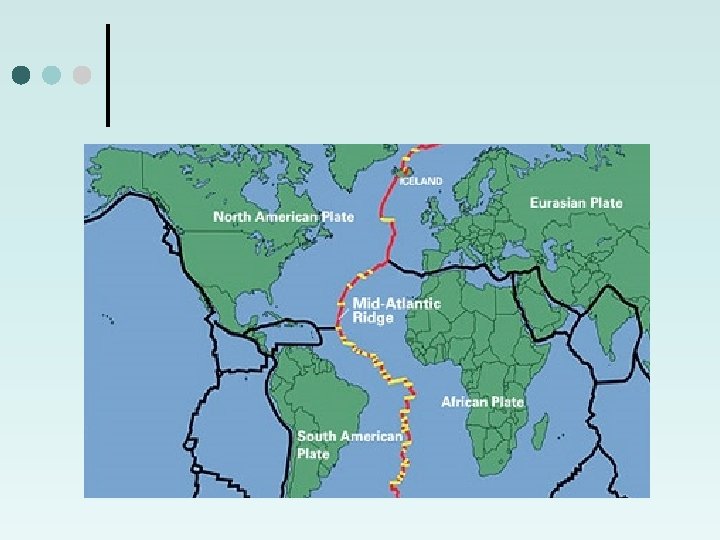

Plate Boundaries apart Divergent Boundary – moving _____ ¢ Convergent Boundary – moving ____ together ¢ Transform Fault Boundary – moving sideways past each other ____________ ¢
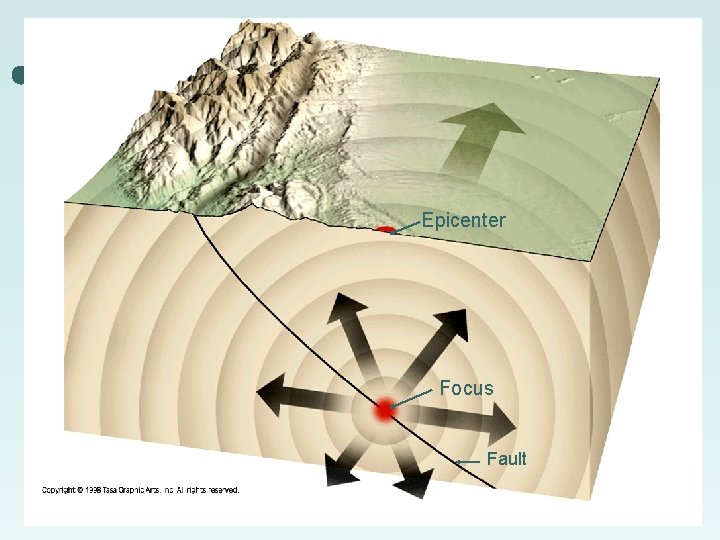
Epicenter Focus Fault
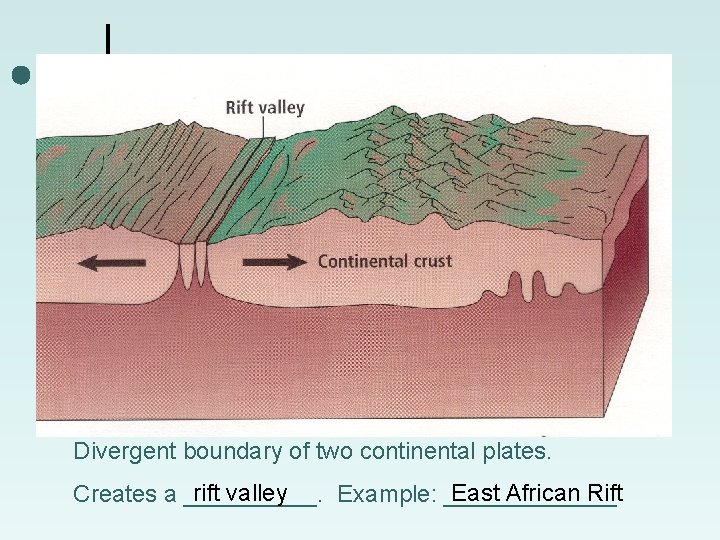
Divergent boundary of two continental plates. rift valley East African Rift Creates a _____. Example: _______

Convergent boundary of two oceanic plates. island arc and a _____. trench Example: _____ Japan Creates an ____
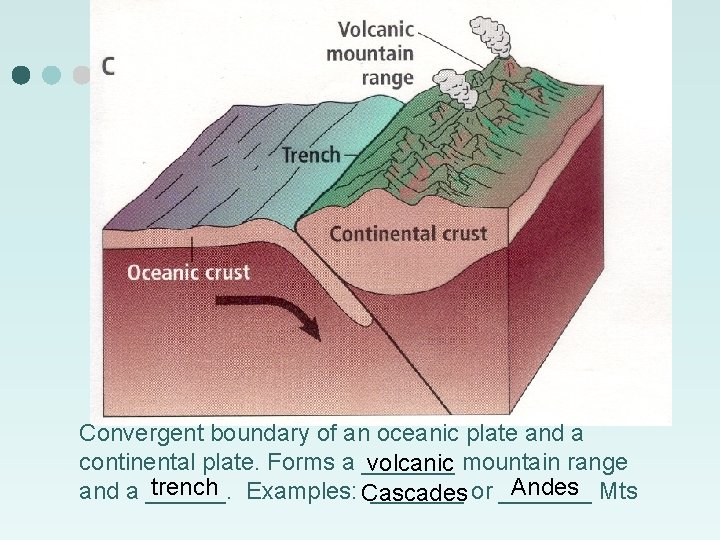
Convergent boundary of an oceanic plate and a continental plate. Forms a _______ volcanic mountain range trench Examples: Cascades Andes Mts and a _______ or _______
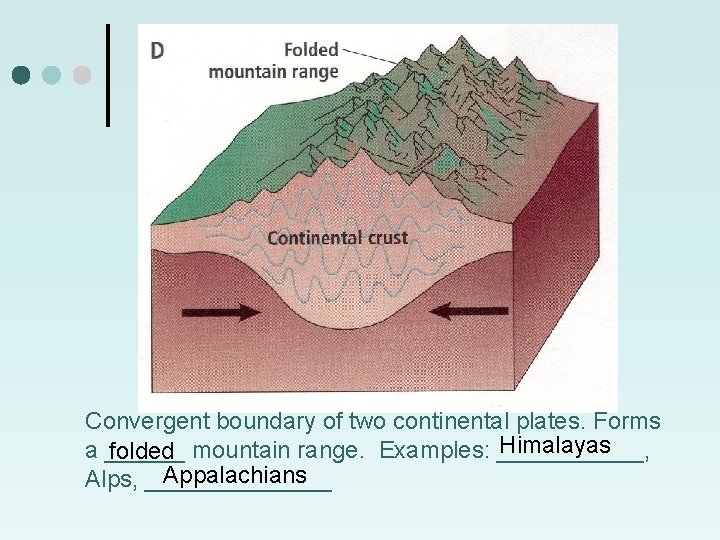
Convergent boundary of two continental plates. Forms Himalayas a ______ folded mountain range. Examples: ______, Appalachians Alps, _______
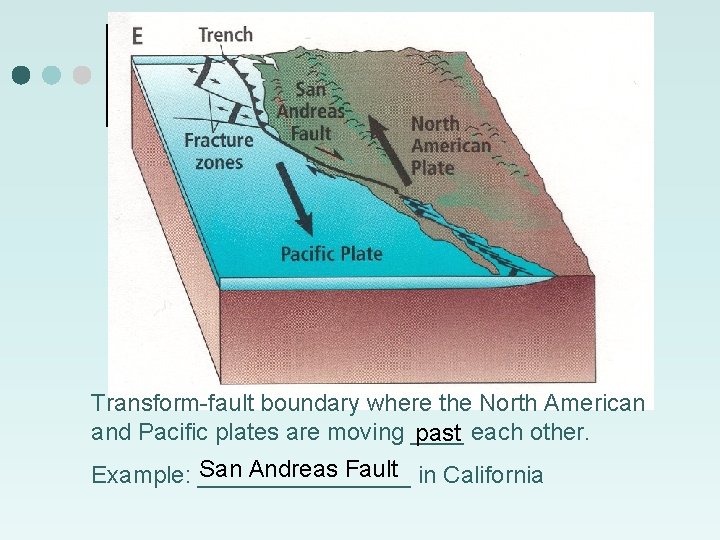
Transform-fault boundary where the North American and Pacific plates are moving ____ past each other. San Andreas Fault in California Example: ________
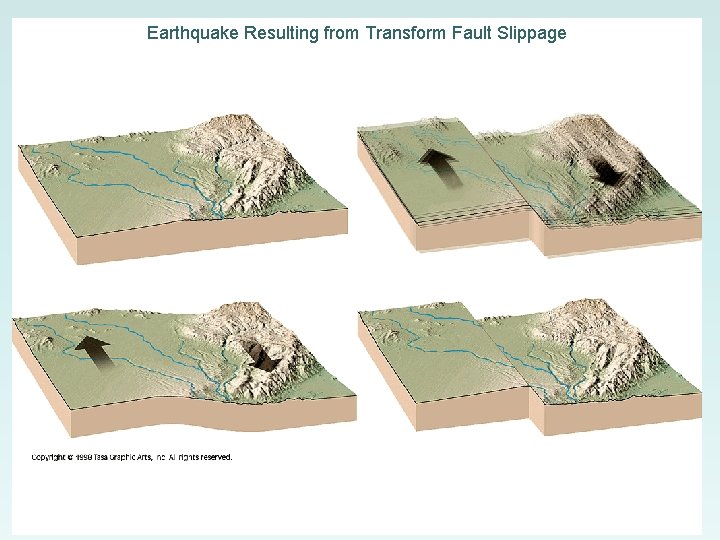
Earthquake Resulting from Transform Fault Slippage
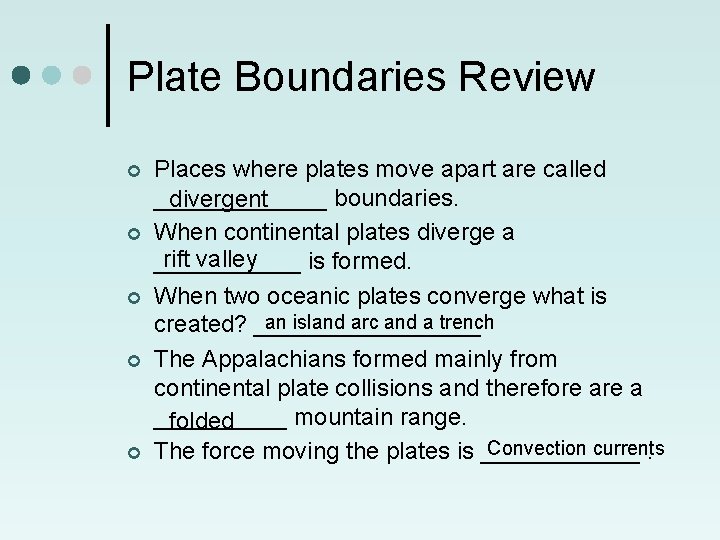
Plate Boundaries Review ¢ ¢ ¢ Places where plates move apart are called _______ boundaries. divergent When continental plates diverge a rift valley ______ is formed. When two oceanic plates converge what is an island arc and a trench created? _________ The Appalachians formed mainly from continental plate collisions and therefore a _____ mountain range. folded Convection currents The force moving the plates is ______.
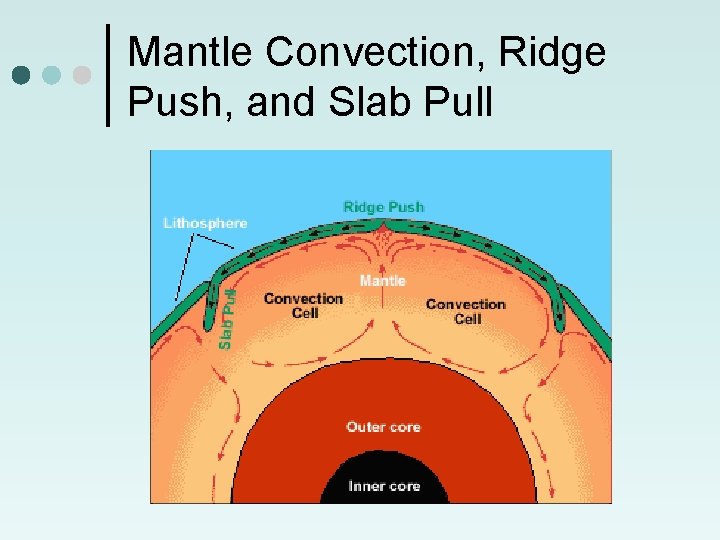
Causes of Plate Motion Mantle convection is the circulation of mantle material ¢ As the hot material rises the cooler denser material sinks into the mantle and warms up ¢ This keeps the cycle going ¢
Mantle Convection, Ridge Push, and Slab Pull

The Changing Continents ¢ Objectives Identify how movements of tectonic plates change Earth’s surface l Summarize how movement of tectonic plates influence climate and life on Earth l Describe the Supercontinent cycle l
Reshaping The Earth’s Crust All the continents that exist today contain large stable rock called cratons ¢ Cratons are older than 540 million years ¢ Rocks within in the cratons that have been exposed are called shields ¢
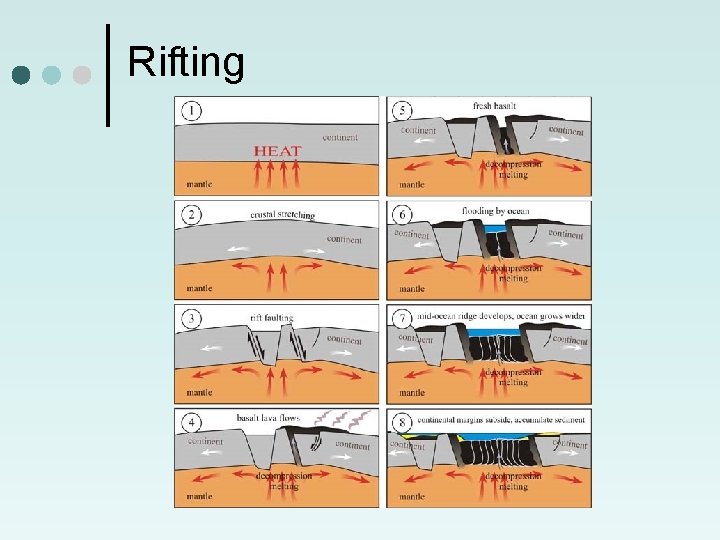
Two Ways Continents can Change ¢ ¢ Continents can change by breaking apart or growing Rifting is the process by which continents break apart l l l New, smaller continents may form as result Scientists believe that heat from the mantle beneath the continent weakens and thins the lithosphere creating a rift
Rifting
Terrane and Continental Growth ¢ ¢ Terrane is a piece of lithosphere that has a unique geologic history that differs from the histories of surrounding lithosphere A terrane can be identified by three (3) characteristics l l l Rock and fossils that differ from surrounding terranes Major faults at boundaries of terranes Magnetic properties generally do not match to surrounding terranes

Terrane created by Subduction
Effects of Continental Change ¢ ¢ ¢ Modern climates are a result of past movements of tectonic plates A continents location in relation to the equator and poles determines climate Also the location of the continents in relation to oceans and other continents can determine climate Evidence shows that ice once covered most of Earth’s continents, even the Sahara Continental movement can also have an affect on organisms As populations separate new species could arise
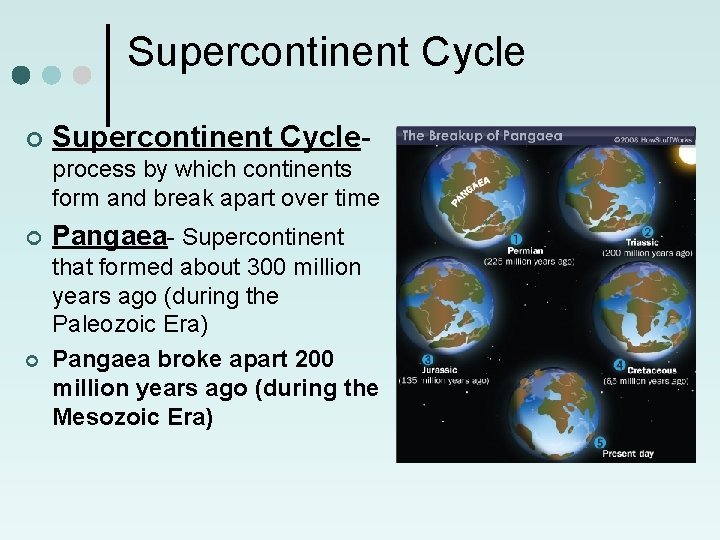
Supercontinent Cycle ¢ Supercontinent Cycleprocess by which continents form and break apart over time ¢ ¢ Pangaea- Supercontinent that formed about 300 million years ago (during the Paleozoic Era) Pangaea broke apart 200 million years ago (during the Mesozoic Era)

250 Million Years From Now?
- Slides: 46