
Continental Drift Alfred Wegener 1912 l l l
- Slides: 13
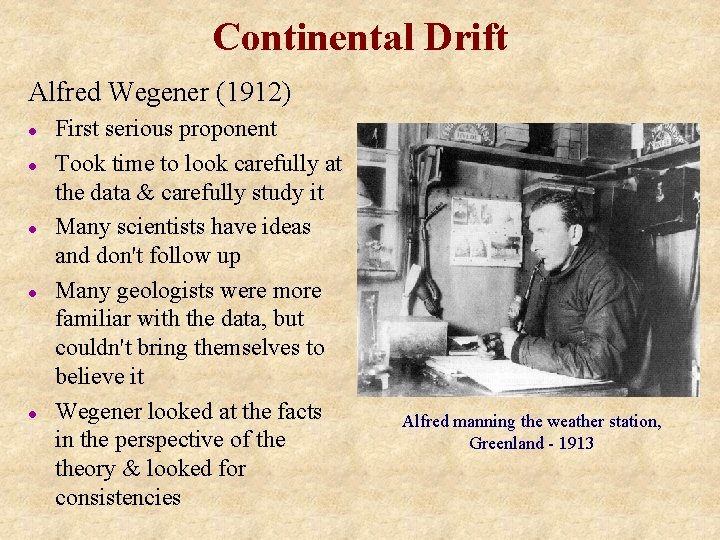
Continental Drift Alfred Wegener (1912) l l l First serious proponent Took time to look carefully at the data & carefully study it Many scientists have ideas and don't follow up Many geologists were more familiar with the data, but couldn't bring themselves to believe it Wegener looked at the facts in the perspective of theory & looked for consistencies Alfred manning the weather station, Greenland - 1913
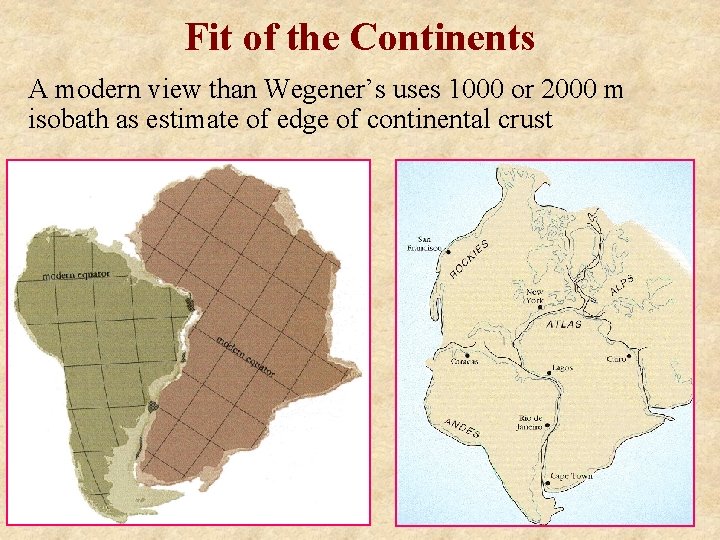
Fit of the Continents A modern view than Wegener’s uses 1000 or 2000 m isobath as estimate of edge of continental crust
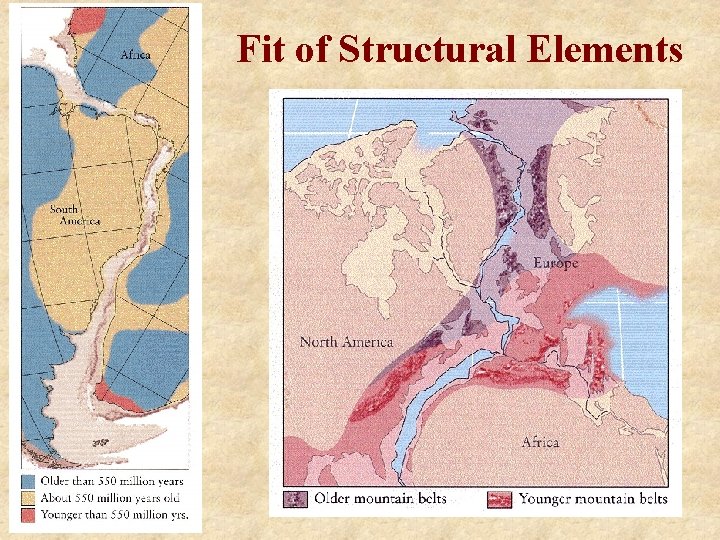
Fit of Structural Elements
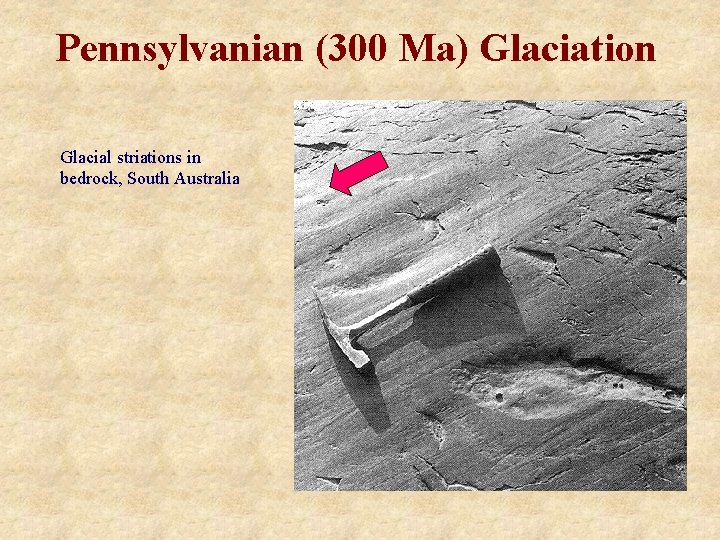
Pennsylvanian (300 Ma) Glaciation Glacial striations in bedrock, South Australia
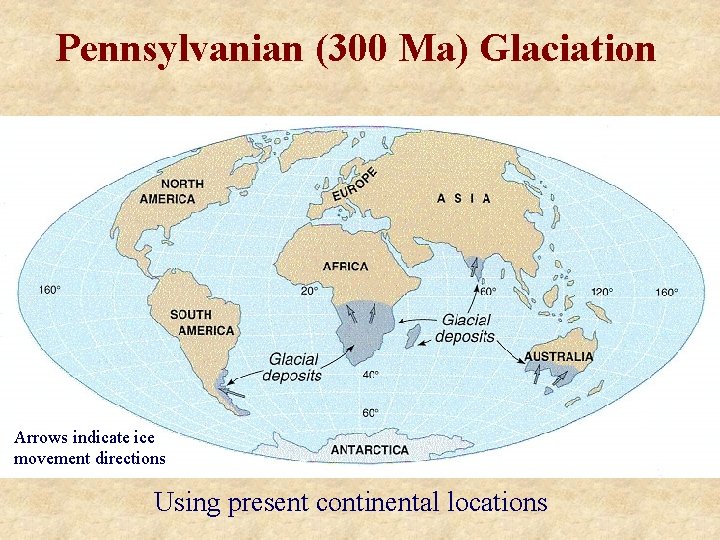
Pennsylvanian (300 Ma) Glaciation Arrows indicate ice movement directions Using present continental locations
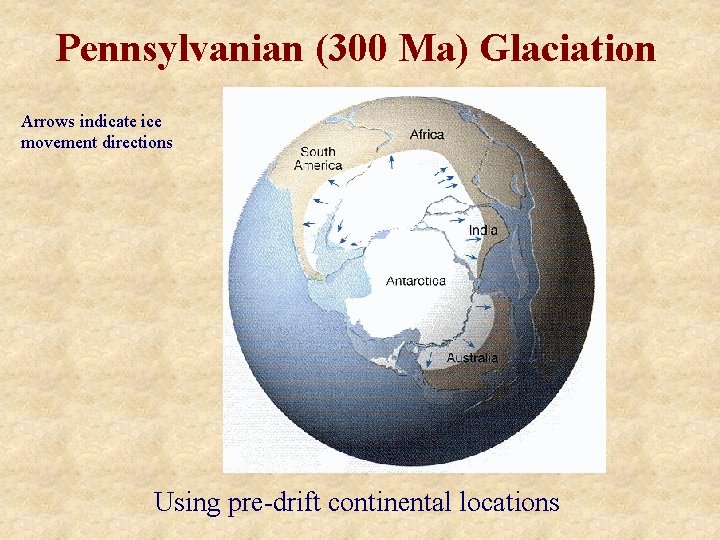
Pennsylvanian (300 Ma) Glaciation Arrows indicate ice movement directions Using pre-drift continental locations
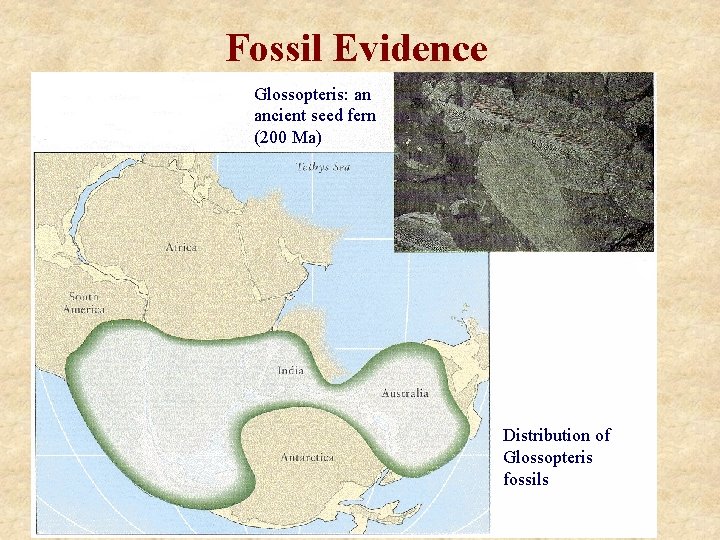
Fossil Evidence Glossopteris: an ancient seed fern (200 Ma) Distribution of Glossopteris fossils
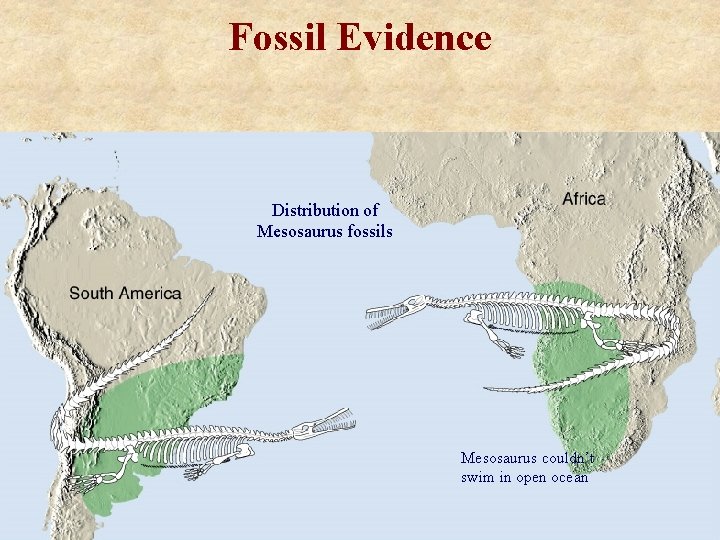
Fossil Evidence Distribution of Mesosaurus fossils Mesosaurus couldn’t swim in open ocean
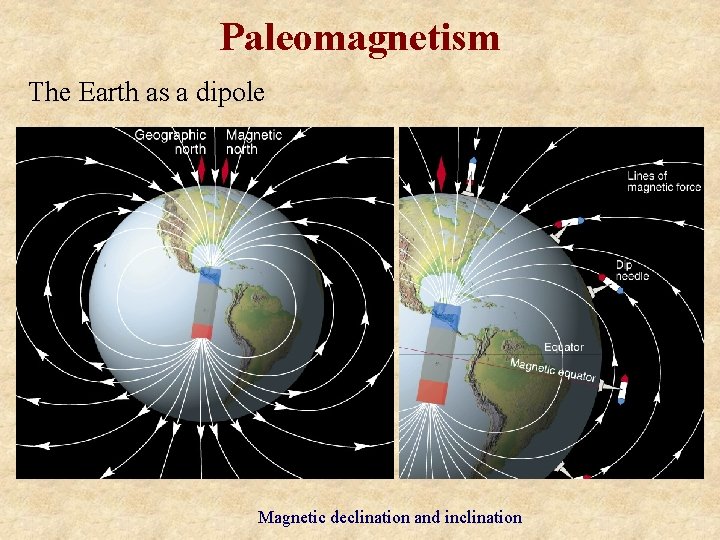
Paleomagnetism The Earth as a dipole Magnetic declination and inclination
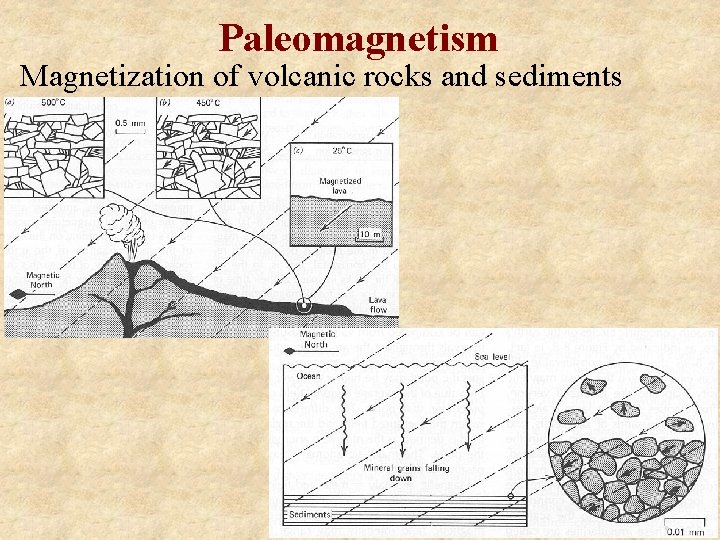
Paleomagnetism Magnetization of volcanic rocks and sediments
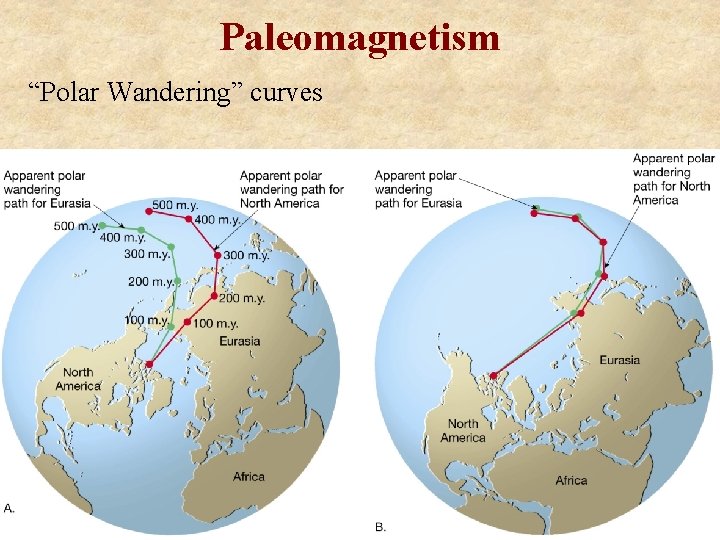
Paleomagnetism “Polar Wandering” curves
l In spite of this data, theory of continental drift died off in the 1950 s, mainly because the geophysicists could not find an adequate mechanism to move the rigid crust and mantle