
Continence and Skin Care You are a Continence


- Slides: 47
Continence and Skin Care: You are a Continence Nurse Mikel Gray, Ph. D, FNP, PNP, CUNP, CCCN, FAANP, FAAN Professor & Nurse Practitioner University of Virginia Department of Urology
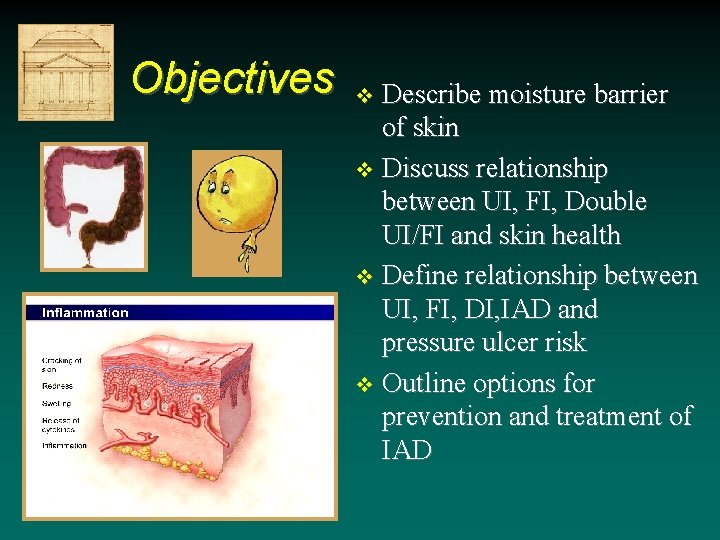
Objectives Describe moisture barrier of skin v Discuss relationship between UI, FI, Double UI/FI and skin health v Define relationship between UI, FI, DI, IAD and pressure ulcer risk v Outline options for prevention and treatment of IAD v
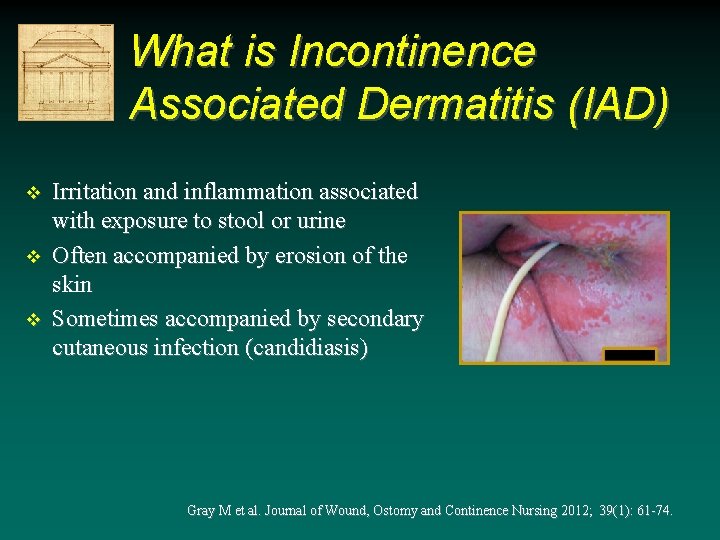
What is Incontinence Associated Dermatitis (IAD) v v v Irritation and inflammation associated with exposure to stool or urine Often accompanied by erosion of the skin Sometimes accompanied by secondary cutaneous infection (candidiasis) Gray M et al. Journal of Wound, Ostomy and Continence Nursing 2012; 39(1): 61 -74.
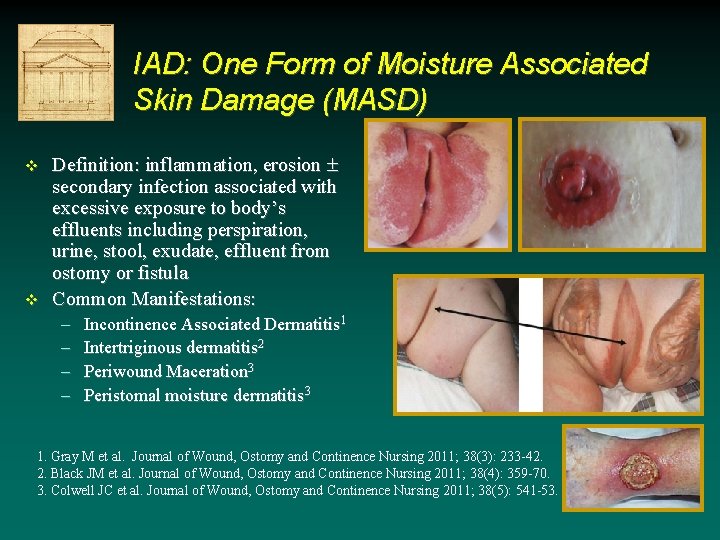
IAD: One Form of Moisture Associated Skin Damage (MASD) v v Definition: inflammation, erosion secondary infection associated with excessive exposure to body’s effluents including perspiration, urine, stool, exudate, effluent from ostomy or fistula Common Manifestations: – – Incontinence Associated Dermatitis 1 Intertriginous dermatitis 2 Periwound Maceration 3 Peristomal moisture dermatitis 3 1. Gray M et al. Journal of Wound, Ostomy and Continence Nursing 2011; 38(3): 233 -42. 2. Black JM et al. Journal of Wound, Ostomy and Continence Nursing 2011; 38(4): 359 -70. 3. Colwell JC et al. Journal of Wound, Ostomy and Continence Nursing 2011; 38(5): 541 -53.
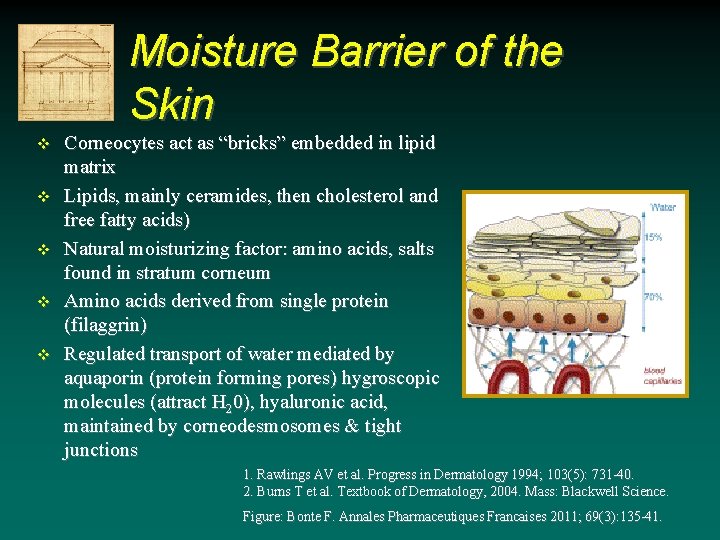
Moisture Barrier of the Skin v v v Corneocytes act as “bricks” embedded in lipid matrix Lipids, mainly ceramides, then cholesterol and free fatty acids) Natural moisturizing factor: amino acids, salts found in stratum corneum Amino acids derived from single protein (filaggrin) Regulated transport of water mediated by aquaporin (protein forming pores) hygroscopic molecules (attract H 20), hyaluronic acid, maintained by corneodesmosomes & tight junctions 1. Rawlings AV et al. Progress in Dermatology 1994; 103(5): 731 -40. 2. Burns T et al. Textbook of Dermatology, 2004. Mass: Blackwell Science. Figure: Bonte F. Annales Pharmaceutiques Francaises 2011; 69(3): 135 -41.
Urine and the Skin v With Prolonged Exposure to Urine – Stratum corneum is hyper-hydrated, rendering it more susceptible to friction and erosion 1 -3 – Urine exposure linked to permeability to pathogenic microorganisms 4 – Prolonged exposure linked to inflammation of skin in laboratory and “real life” settings, effect exacerbated by containment device – Magnitude of erythema linked to ammonia concentration 1. Berg W et al. Pediatric Dermatology 1986; 3: 102. 2. Leyden JJ et al. Archives of Dermatology 1977; 113: 1678. 3. Gray M. Journal of WOC Nursing 2004; 31(1 Suppl): S 2 -9 4. Zimmerer RE et al. Pediatric Dermatology 1986; 3: 95. 5. Larnar J et al. Archives in Dermatological Research 2015; 307: 39 -48.
IAD: Etiologic Factors v Fecal enzymes – Protease & lipase potentially break down both principal elements of moisture barrier 1, 2 – In vivo evidence shows that exposure to digestive enzymes in human skin result in TEWL and p. H 3 – Magnitude of skin changes and occurrence of IAD in children associated with liquid stool and frequency of diaper change 4 1. Atherton DJ Eur Academy Dermatology Venerology 2001; 15 (Supp 1): 1. 2. Gray M. Journal of WOC Nursing 2004; 31(1 Suppl): S 2 -9. 3. Anderson PH et al. Contact Dermatitis 1994; 30(3): 152. 4. Adalat S, Wall D, Goodyear H. Pediatric Dermatology 2007; 24(%): 483 -8.
Absorptive Devices v Mixed effects 1 -3 – Exacerbates hyper-hydrated skin by promoting perspiration & retaining urine and stool; with padding alone: 3 -4 fold within period days u p. H increases from 4. 4 to 7. 1 (without incontinence) u TEWL – With proper use and frequent changes, they wick urine and liquid stool away from skin 1. Grove GL et al. Clinical Problems in Dermatology 1998; 26: 183 2. Zimmerer RE et al. Pediatric Dermatology 1986; 3: 95. 3. Zhai H et al. Skin Research & Technology 2002; 8: 13.
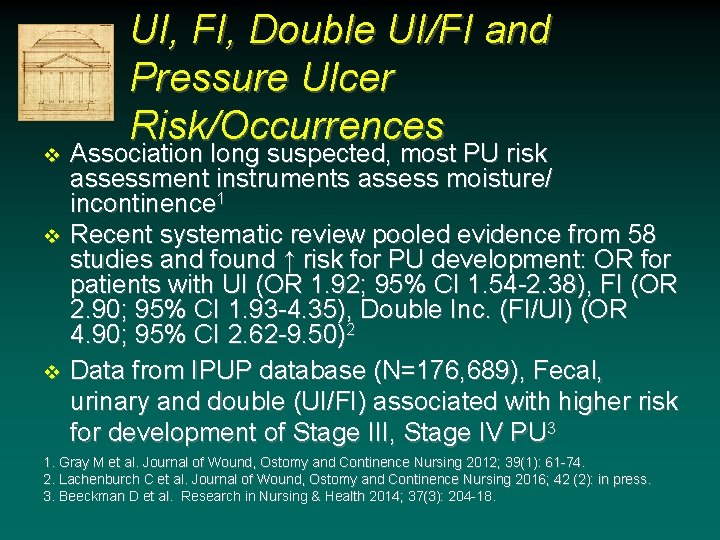
v v v UI, FI, Double UI/FI and Pressure Ulcer Risk/Occurrences Association long suspected, most PU risk assessment instruments assess moisture/ incontinence 1 Recent systematic review pooled evidence from 58 studies and found ↑ risk for PU development: OR for patients with UI (OR 1. 92; 95% CI 1. 54 -2. 38), FI (OR 2. 90; 95% CI 1. 93 -4. 35), Double Inc. (FI/UI) (OR 4. 90; 95% CI 2. 62 -9. 50)2 Data from IPUP database (N=176, 689), Fecal, urinary and double (UI/FI) associated with higher risk for development of Stage III, Stage IV PU 3 1. Gray M et al. Journal of Wound, Ostomy and Continence Nursing 2012; 39(1): 61 -74. 2. Lachenburch C et al. Journal of Wound, Ostomy and Continence Nursing 2016; 42 (2): in press. 3. Beeckman D et al. Research in Nursing & Health 2014; 37(3): 204 -18.
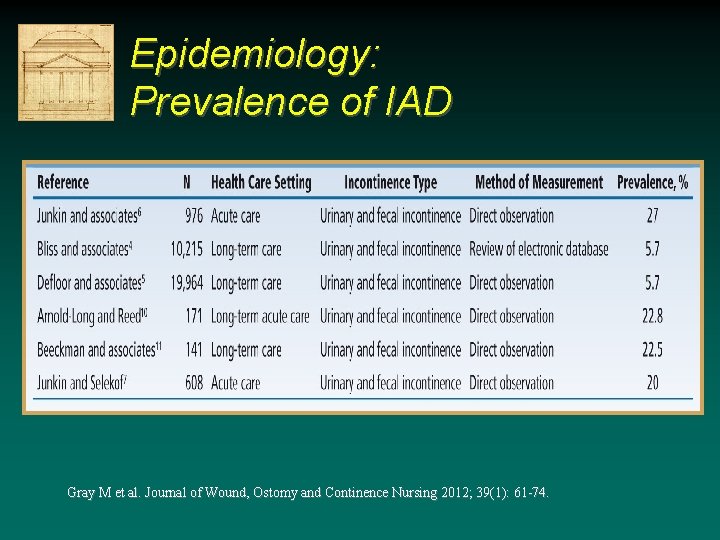
Epidemiology: Prevalence of IAD Gray M et al. Journal of Wound, Ostomy and Continence Nursing 2012; 39(1): 61 -74.
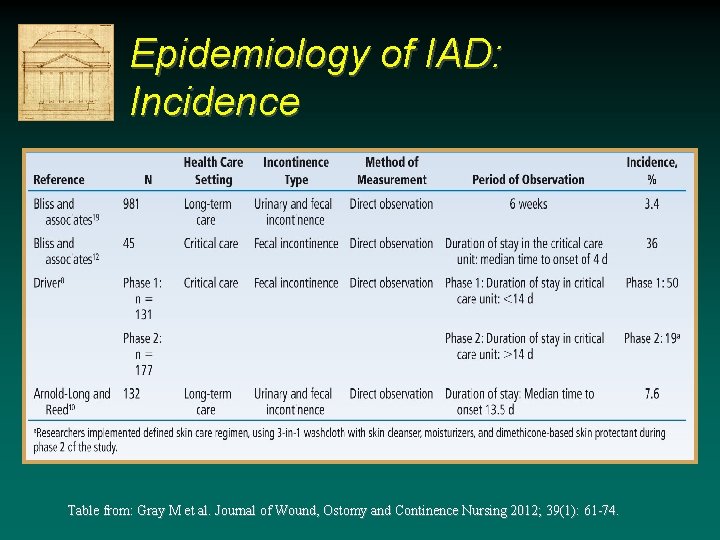
Epidemiology of IAD: Incidence Table from: Gray M et al. Journal of Wound, Ostomy and Continence Nursing 2012; 39(1): 61 -74.
IAD Diagnosis and Screening
Keys to Diagnosis: More than Viewing a Photograph v Identify presence of etiologic factors: UI, FI, double UI/FI; use of containment devices v Determine characteristics, location, distribution, depth of skin damage v Assess for PU risk v Assess for associated factors
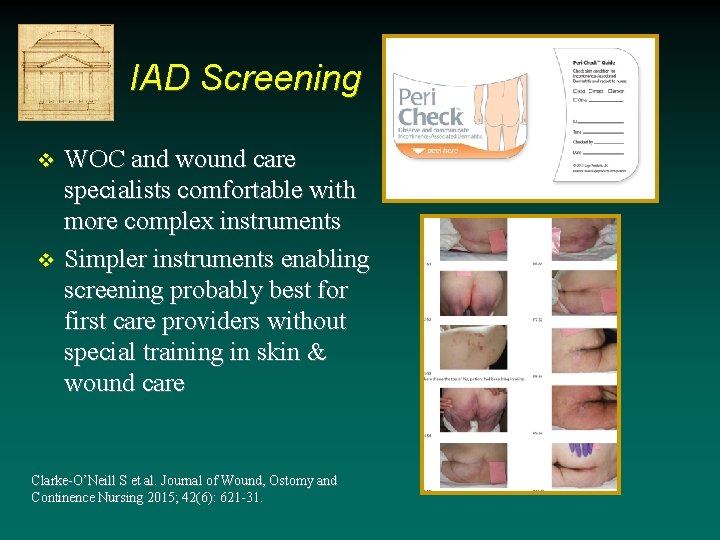
IAD Screening v v WOC and wound care specialists comfortable with more complex instruments Simpler instruments enabling screening probably best for first care providers without special training in skin & wound care Clarke-O’Neill S et al. Journal of Wound, Ostomy and Continence Nursing 2015; 42(6): 621 -31.
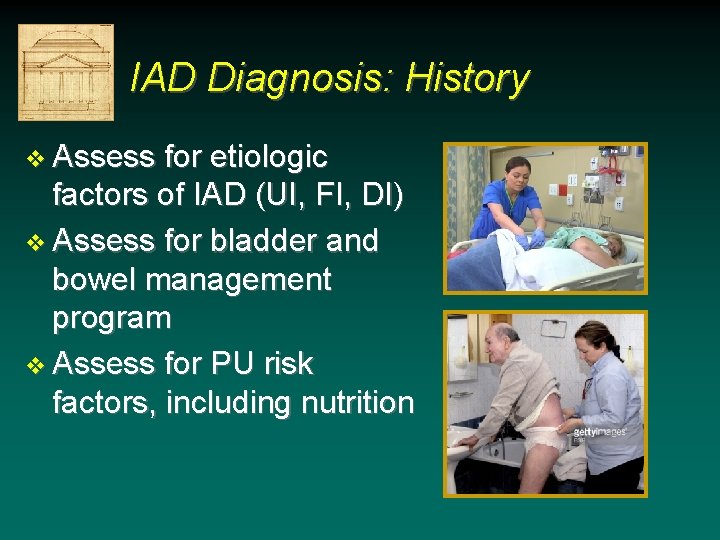
IAD Diagnosis: History v Assess for etiologic factors of IAD (UI, FI, DI) v Assess for bladder and bowel management program v Assess for PU risk factors, including nutrition
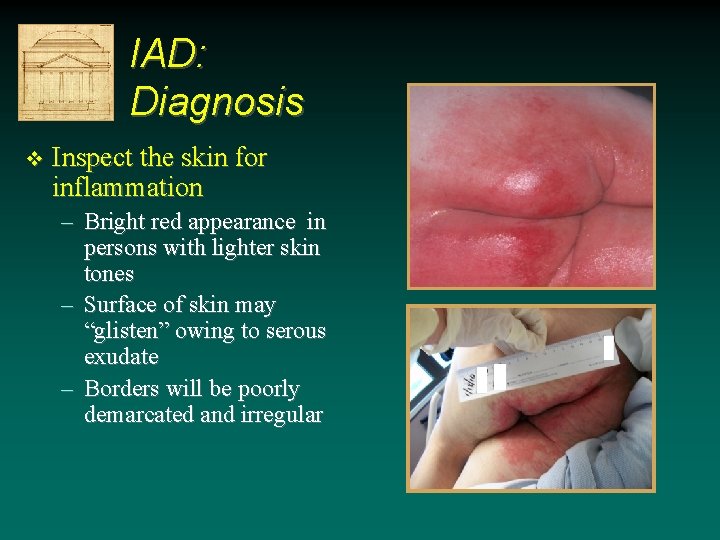
IAD: Diagnosis v Inspect the skin for inflammation – Bright red appearance in persons with lighter skin tones – Surface of skin may “glisten” owing to serous exudate – Borders will be poorly demarcated and irregular
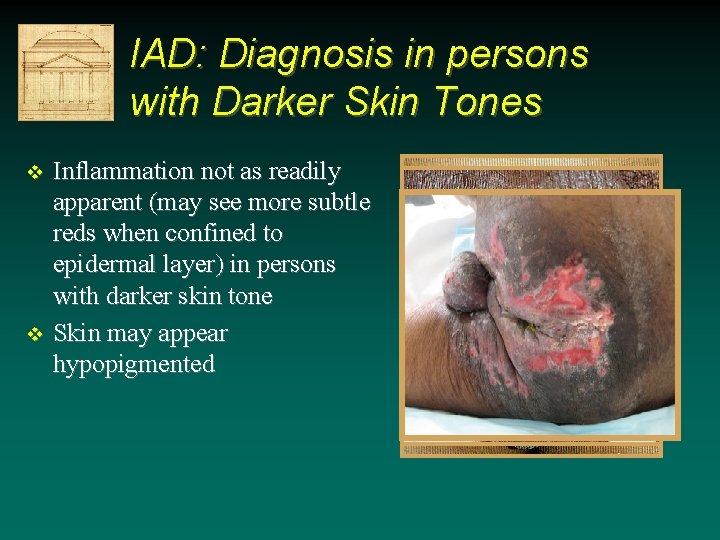
IAD: Diagnosis in persons with Darker Skin Tones v v Inflammation not as readily apparent (may see more subtle reds when confined to epidermal layer) in persons with darker skin tone Skin may appear hypopigmented
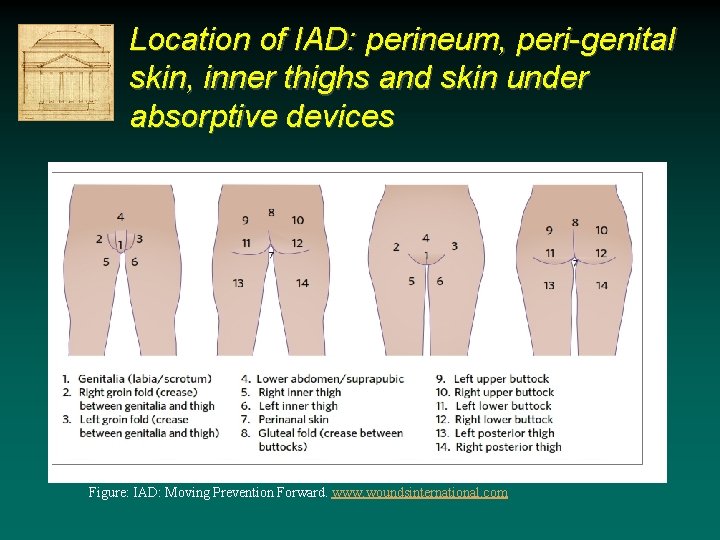
Location of IAD: perineum, peri-genital skin, inner thighs and skin under absorptive devices Figure: IAD: Moving Prevention Forward. www. woundsinternational. com
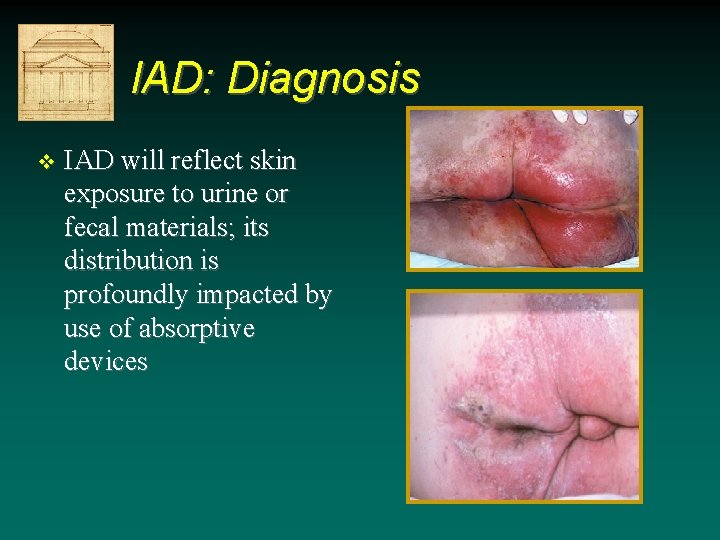
IAD: Diagnosis v IAD will reflect skin exposure to urine or fecal materials; its distribution is profoundly impacted by use of absorptive devices
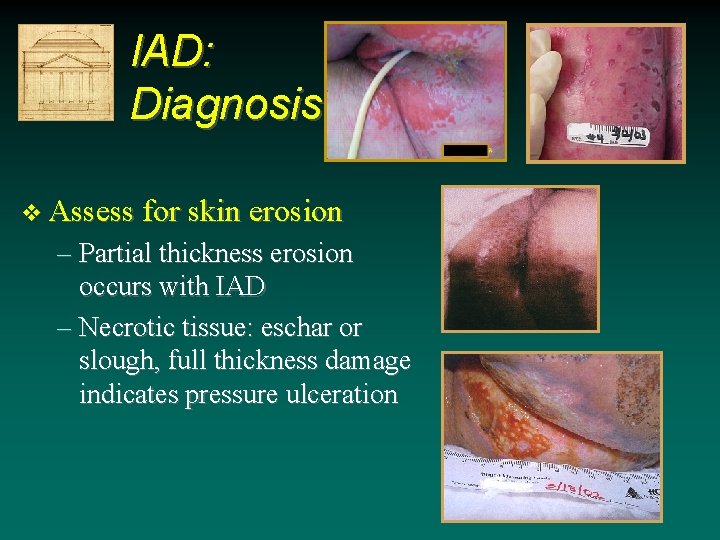
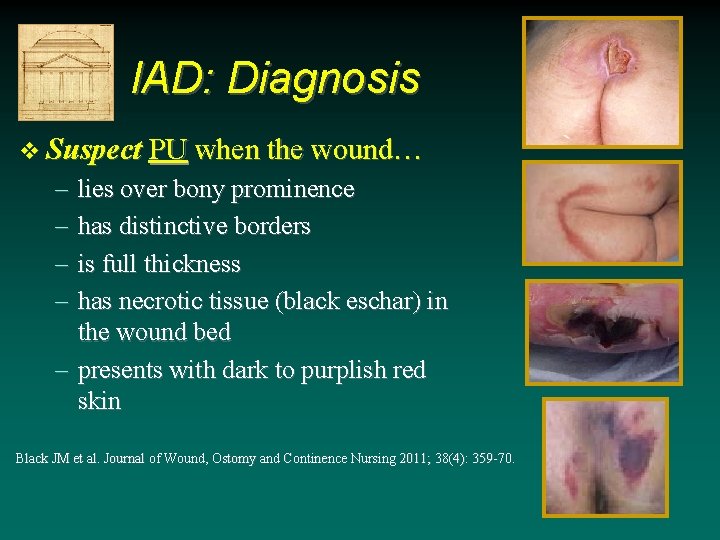
IAD: Diagnosis v Assess for skin erosion – Partial thickness erosion occurs with IAD – Necrotic tissue: eschar or slough, full thickness damage indicates pressure ulceration
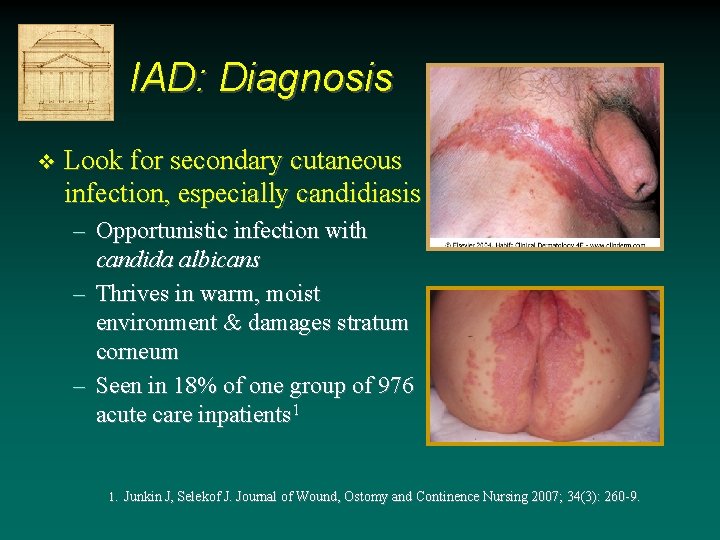
IAD: Diagnosis v Look for secondary cutaneous infection, especially candidiasis – Opportunistic infection with candida albicans – Thrives in warm, moist environment & damages stratum corneum – Seen in 18% of one group of 976 acute care inpatients 1 1. Junkin J, Selekof J. Journal of Wound, Ostomy and Continence Nursing 2007; 34(3): 260 -9.
IAD: Diagnosis v Suspect PU when the wound… – – lies over bony prominence has distinctive borders is full thickness has necrotic tissue (black eschar) in the wound bed – presents with dark to purplish red skin Black JM et al. Journal of Wound, Ostomy and Continence Nursing 2011; 38(4): 359 -70.
Does Technology Play a Role? v 3 technologies have been proposed to enhance diagnosis at the bedside v All attempt to aid clinician to differentiate “bottom up” damage from “top down” damage such as exposure to urine/stool – High Resolution Ultrasonography – Subepidermal moisture detection – Thermal imaging
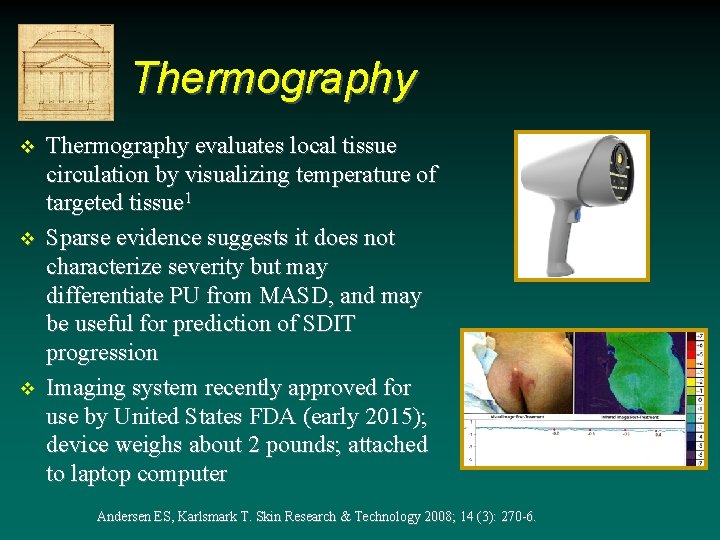
Thermography v v v Thermography evaluates local tissue circulation by visualizing temperature of targeted tissue 1 Sparse evidence suggests it does not characterize severity but may differentiate PU from MASD, and may be useful for prediction of SDIT progression Imaging system recently approved for use by United States FDA (early 2015); device weighs about 2 pounds; attached to laptop computer Andersen ES, Karlsmark T. Skin Research & Technology 2008; 14 (3): 270 -6.
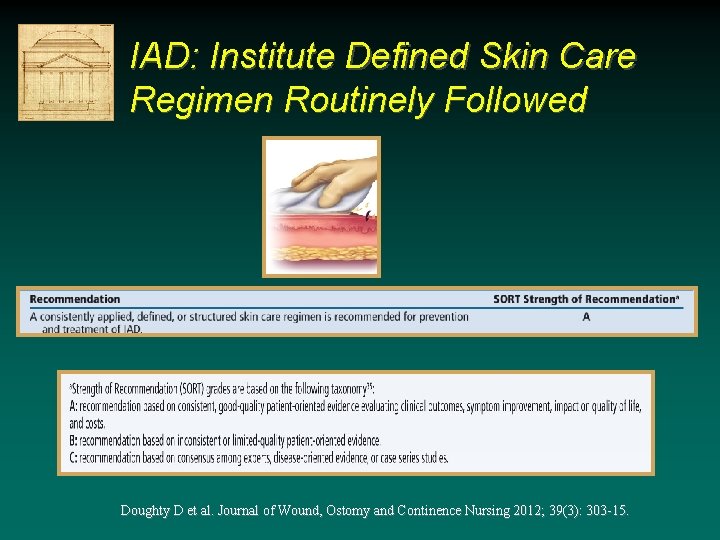
IAD: Institute Defined Skin Care Regimen Routinely Followed Doughty D et al. Journal of Wound, Ostomy and Continence Nursing 2012; 39(3): 303 -15.
IAD: Principles of Prevention & Treatment Cleanse Protect Enhance the Moisture Barrier
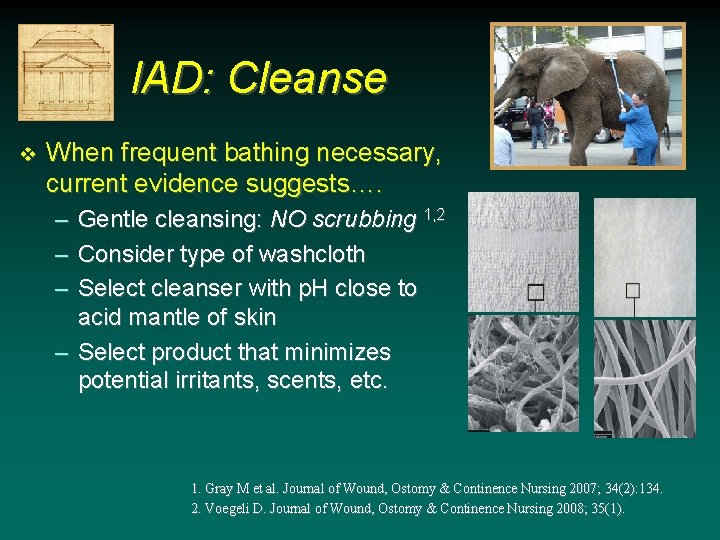
IAD: Cleanse v When frequent bathing necessary, current evidence suggests…. – – – Gentle cleansing: NO scrubbing 1, 2 Consider type of washcloth Select cleanser with p. H close to acid mantle of skin – Select product that minimizes potential irritants, scents, etc. 1. Gray M et al. Journal of Wound, Ostomy & Continence Nursing 2007; 34(2): 134. 2. Voegeli D. Journal of Wound, Ostomy & Continence Nursing 2008; 35(1).
IAD: Cleanse v v Some clinicians have raised concerns about effectiveness of no-rinse cleansers and residue Study comparing bacterial counts in skin of volunteers using controlled bacterial exposure technique (E. coli and Staph aur. ); both CFU dramatically; no differences based on technique 1 Ronner AC et al. Journal of Wound, Ostomy & Continence Nursing 2010; 37(3): 260.
Protect v Skin Protectants should – Act as a “moisture barrier”, protecting skin from deleterious effects of exposure to irritants and excess moisture – Maintain hydration and maintain normal rate of transepidermal water loss (TEWL) – Avoid maceration when left on for prolonged period of time – Options u Ointment based skin protectants u Liquid acrylates (marketed as a skin barrier) Gray M. Skin Protectants in the Treatment of Irritant Dermatitis In: Sek CK. Advances in Wound Care, Volume 1. New Rochelle, NY: Mary Ann Liebert, Inc. 2010.
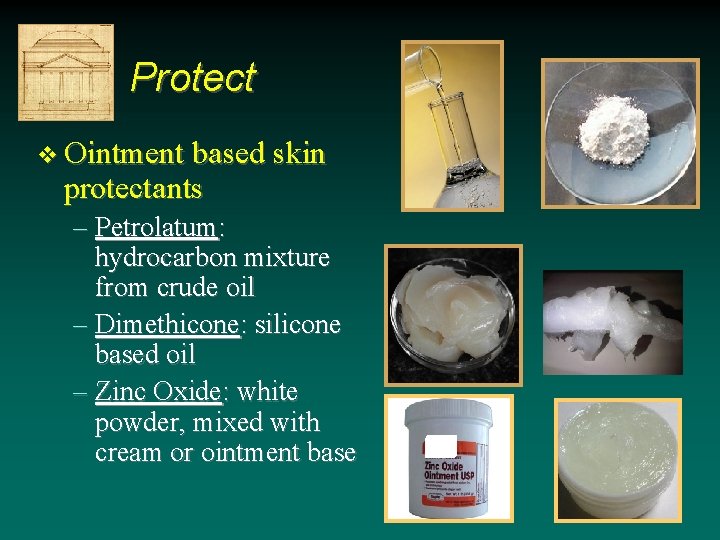
Protect v Ointment based skin protectants – Petrolatum: hydrocarbon mixture from crude oil – Dimethicone: silicone based oil – Zinc Oxide: white powder, mixed with cream or ointment base
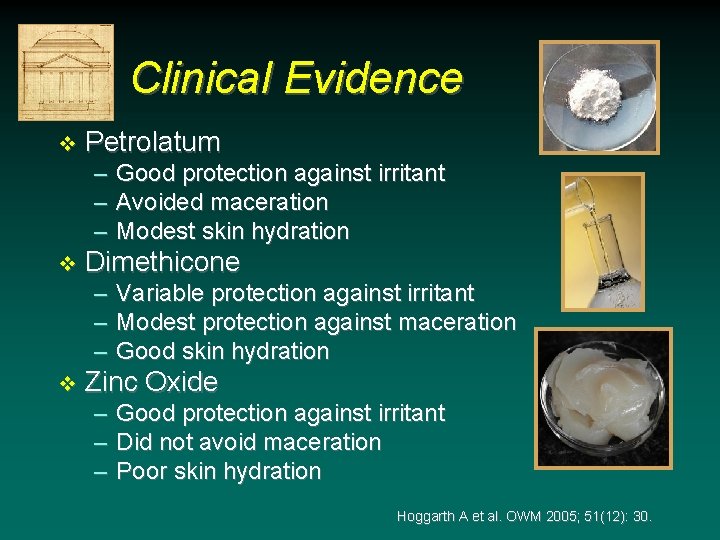
Clinical Evidence v Petrolatum – Good protection against irritant – Avoided maceration – Modest skin hydration v Dimethicone – Variable protection against irritant – Modest protection against maceration – Good skin hydration v Zinc Oxide – Good protection against irritant – Did not avoid maceration – Poor skin hydration Hoggarth A et al. OWM 2005; 51(12): 30.
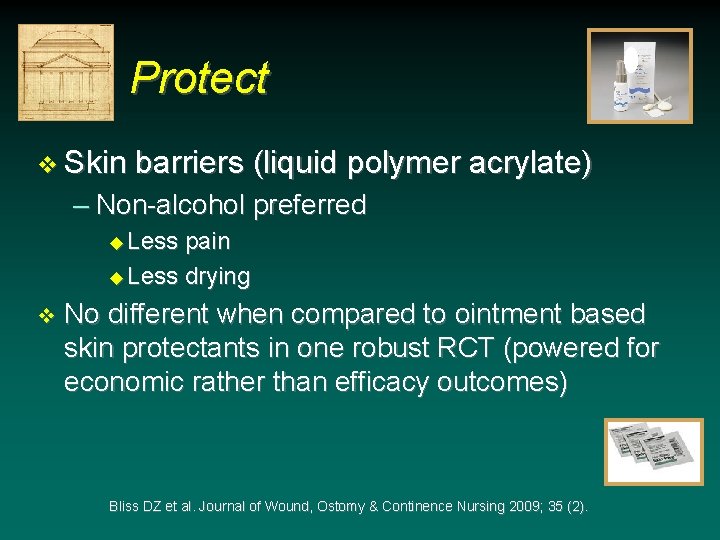
Protect v Skin barriers (liquid polymer acrylate) – Non-alcohol preferred u Less pain u Less drying v No different when compared to ointment based skin protectants in one robust RCT (powered for economic rather than efficacy outcomes) Bliss DZ et al. Journal of Wound, Ostomy & Continence Nursing 2009; 35 (2).
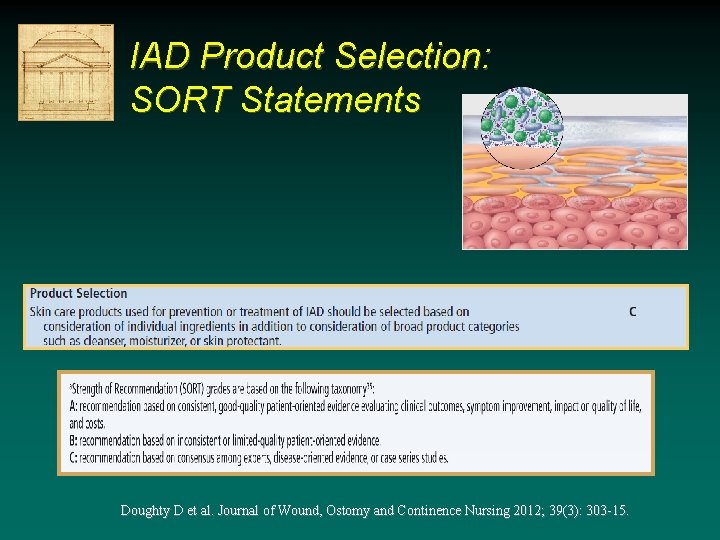
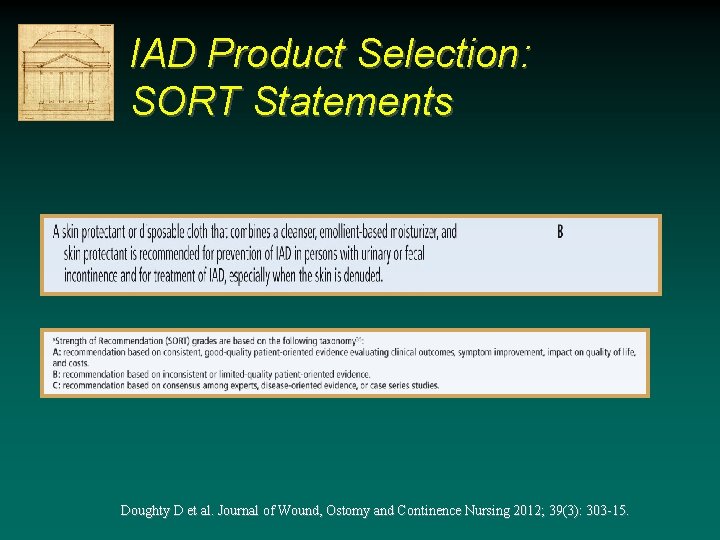
IAD Product Selection: SORT Statements Doughty D et al. Journal of Wound, Ostomy and Continence Nursing 2012; 39(3): 303 -15.
Protect – Product Selection v Not all products with the same active ingredient perform the same… − It is essential to consider overall product formulation and delivery method in order to make a comparison of product 1 − The decision to choose a product should be based on the entire product formulation (including its delivery vehicle) in order to understand its performance as a skin protectant 1 1. West D, Poster presented at the Symposium on Advanced Wound Care Fall, October 2014
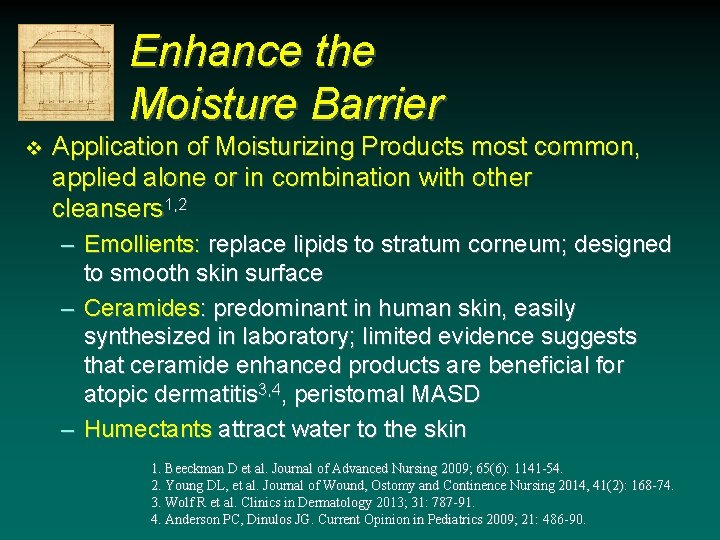
Enhance the Moisture Barrier v Application of Moisturizing Products most common, applied alone or in combination with other cleansers 1, 2 – Emollients: replace lipids to stratum corneum; designed to smooth skin surface – Ceramides: predominant in human skin, easily synthesized in laboratory; limited evidence suggests that ceramide enhanced products are beneficial for atopic dermatitis 3, 4, peristomal MASD – Humectants attract water to the skin 1. Beeckman D et al. Journal of Advanced Nursing 2009; 65(6): 1141 -54. 2. Young DL, et al. Journal of Wound, Ostomy and Continence Nursing 2014, 41(2): 168 -74. 3. Wolf R et al. Clinics in Dermatology 2013; 31: 787 -91. 4. Anderson PC, Dinulos JG. Current Opinion in Pediatrics 2009; 21: 486 -90.
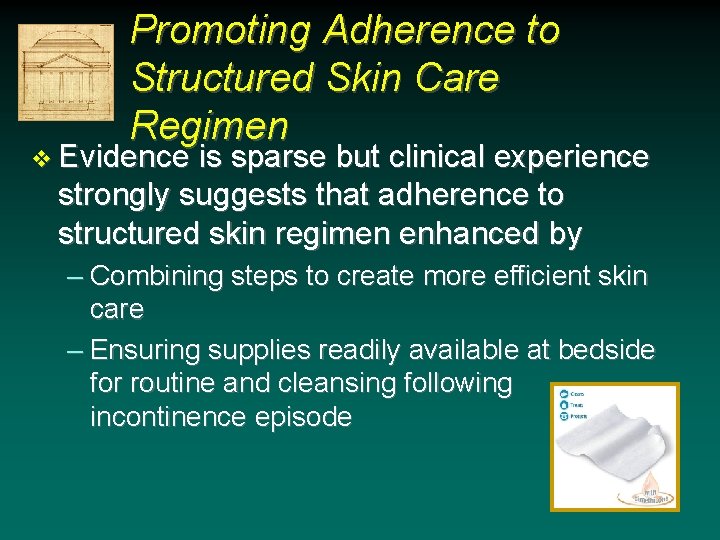
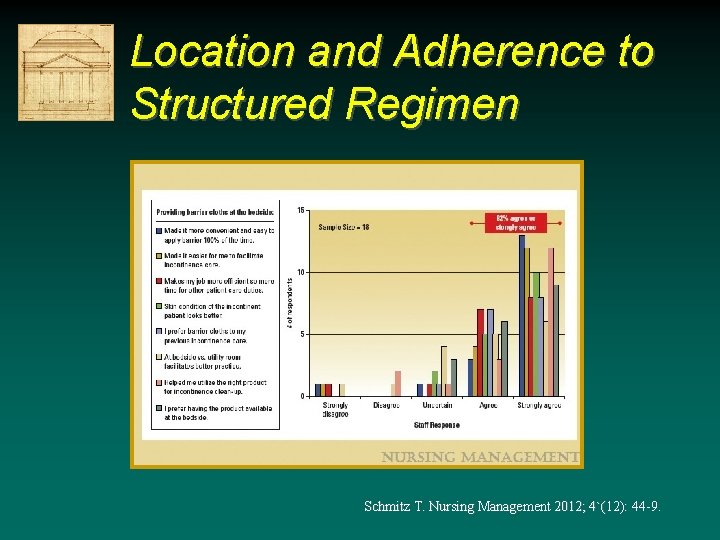
Promoting Adherence to Structured Skin Care Regimen v Evidence is sparse but clinical experience strongly suggests that adherence to structured skin regimen enhanced by – Combining steps to create more efficient skin care – Ensuring supplies readily available at bedside for routine and cleansing following incontinence episode
IAD Product Selection: SORT Statements Doughty D et al. Journal of Wound, Ostomy and Continence Nursing 2012; 39(3): 303 -15.
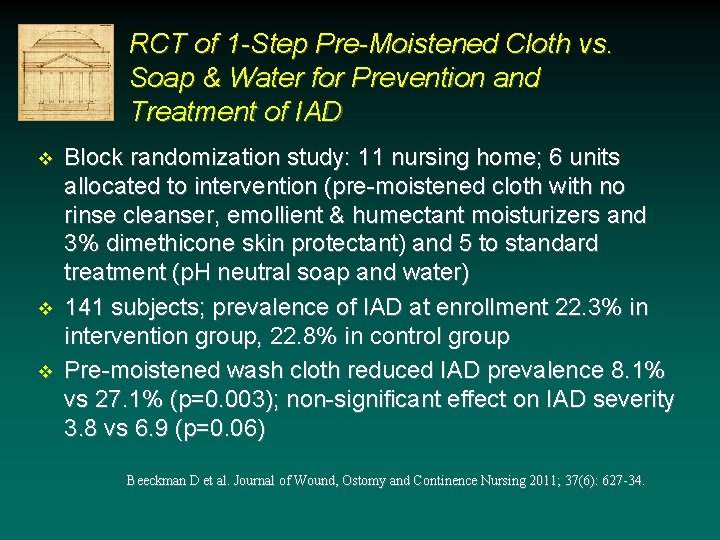
RCT of 1 -Step Pre-Moistened Cloth vs. Soap & Water for Prevention and Treatment of IAD v v v Block randomization study: 11 nursing home; 6 units allocated to intervention (pre-moistened cloth with no rinse cleanser, emollient & humectant moisturizers and 3% dimethicone skin protectant) and 5 to standard treatment (p. H neutral soap and water) 141 subjects; prevalence of IAD at enrollment 22. 3% in intervention group, 22. 8% in control group Pre-moistened wash cloth reduced IAD prevalence 8. 1% vs 27. 1% (p=0. 003); non-significant effect on IAD severity 3. 8 vs 6. 9 (p=0. 06) Beeckman D et al. Journal of Wound, Ostomy and Continence Nursing 2011; 37(6): 627 -34.
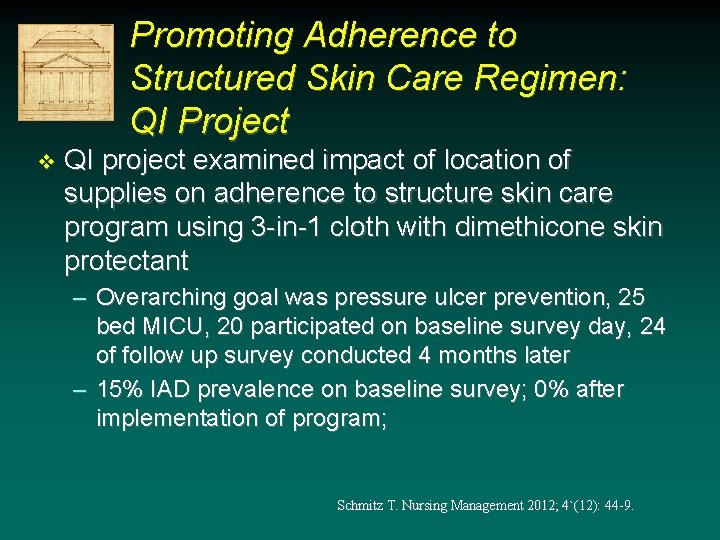
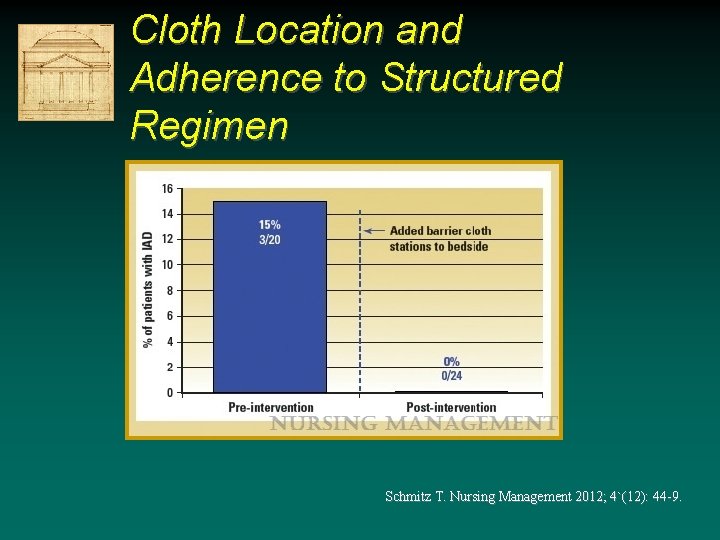
Promoting Adherence to Structured Skin Care Regimen: QI Project v QI project examined impact of location of supplies on adherence to structure skin care program using 3 -in-1 cloth with dimethicone skin protectant – Overarching goal was pressure ulcer prevention, 25 bed MICU, 20 participated on baseline survey day, 24 of follow up survey conducted 4 months later – 15% IAD prevalence on baseline survey; 0% after implementation of program; Schmitz T. Nursing Management 2012; 4`(12): 44 -9.
Location and Adherence to Structured Regimen Schmitz T. Nursing Management 2012; 4`(12): 44 -9.
Cloth Location and Adherence to Structured Regimen Schmitz T. Nursing Management 2012; 4`(12): 44 -9.
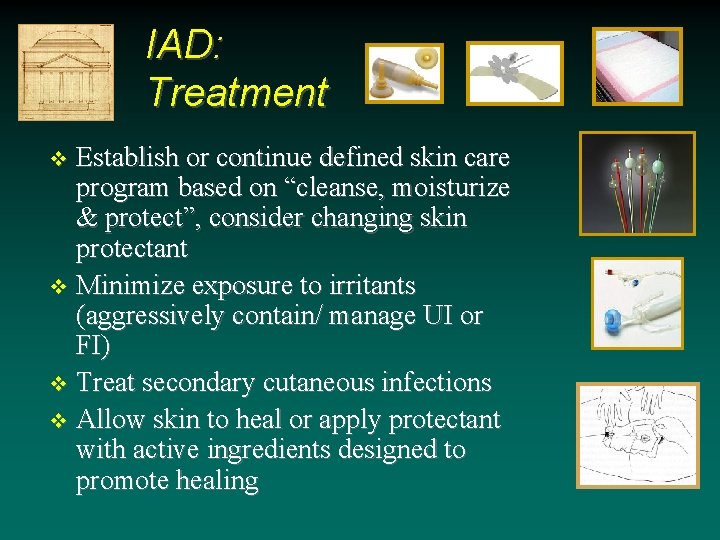
IAD: Treatment Establish or continue defined skin care program based on “cleanse, moisturize & protect”, consider changing skin protectant v Minimize exposure to irritants (aggressively contain/ manage UI or FI) v Treat secondary cutaneous infections v Allow skin to heal or apply protectant with active ingredients designed to promote healing v
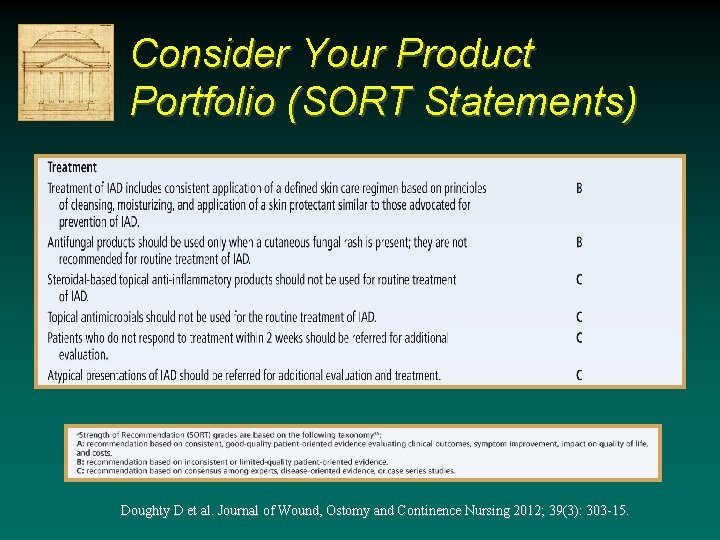
Consider Your Product Portfolio (SORT Statements) Doughty D et al. Journal of Wound, Ostomy and Continence Nursing 2012; 39(3): 303 -15.
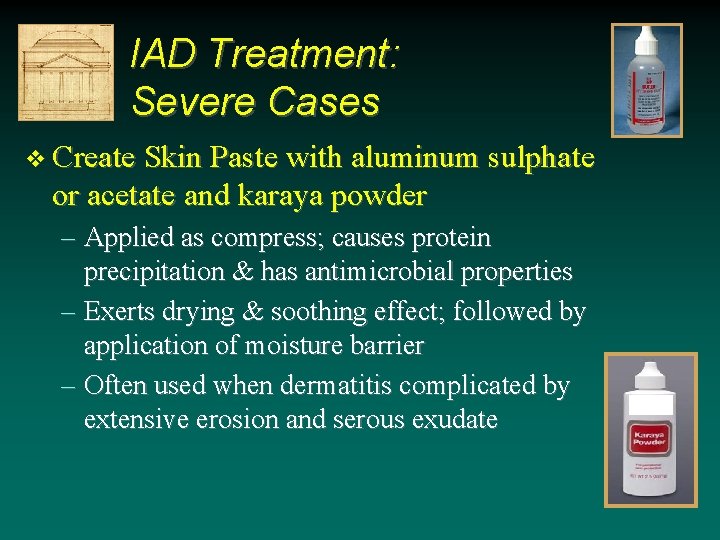
IAD Treatment: Severe Cases v Create Skin Paste with aluminum sulphate or acetate and karaya powder – Applied as compress; causes protein precipitation & has antimicrobial properties – Exerts drying & soothing effect; followed by application of moisture barrier – Often used when dermatitis complicated by extensive erosion and serous exudate
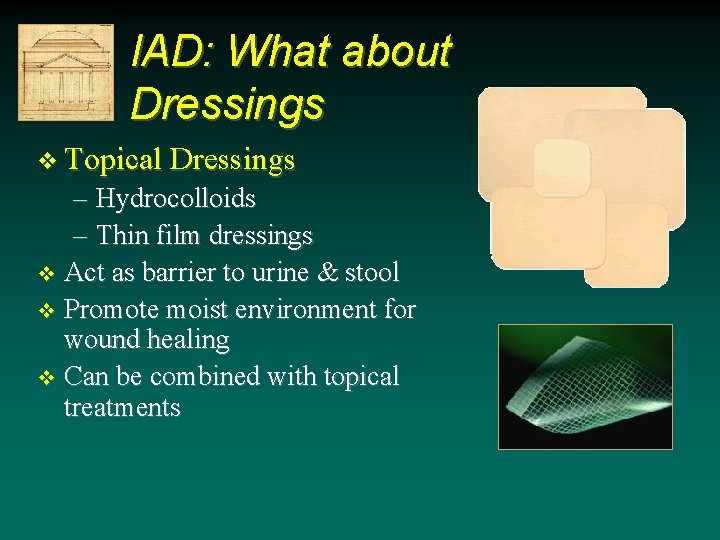
IAD: What about Dressings v Topical Dressings – Hydrocolloids – Thin film dressings v Act as barrier to urine & stool v Promote moist environment for wound healing v Can be combined with topical treatments
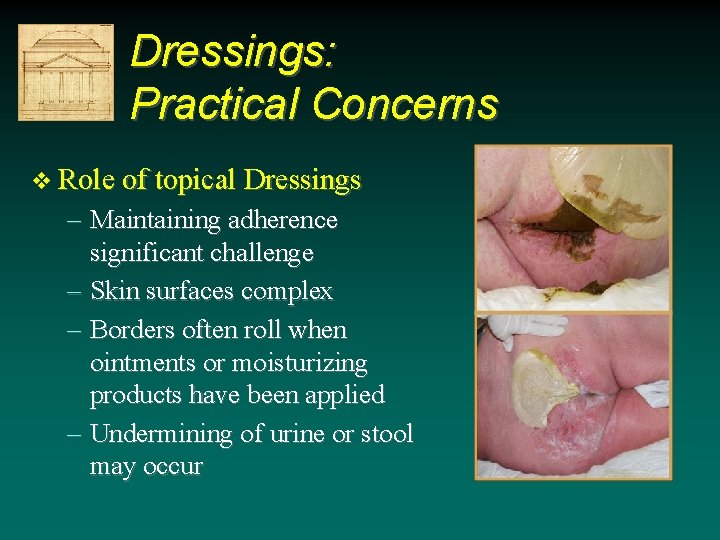
Dressings: Practical Concerns v Role of topical Dressings – Maintaining adherence significant challenge – Skin surfaces complex – Borders often roll when ointments or moisturizing products have been applied – Undermining of urine or stool may occur
Conclusions v IAD remains a prevalent and clinically relevant condition associated with its own sequelae v Strong evidence links IAD and incontinence to ↑ risk for partial and full thickness PU v Structured skin regimen is the cornerstone of IAD prevention and treatment