
CONTEXTUAL CHALLENGE For your NEA you will be
CONTEXTUAL CHALLENGE • For your NEA you will be given a choice of contextual challenges (CC), and from one of them, write your own brief to solve a problem the challenge presents. • As this is a new skill, in year 10 we will work through some challenges together, so you can see how it is done. • As we will be working on this as a class, many of the outcomes will be similar. In the real NEA, everyone’s project will be completely different.
CONTEXTUAL CHALLENGE Environmentally Friendly Storage for a Teenager
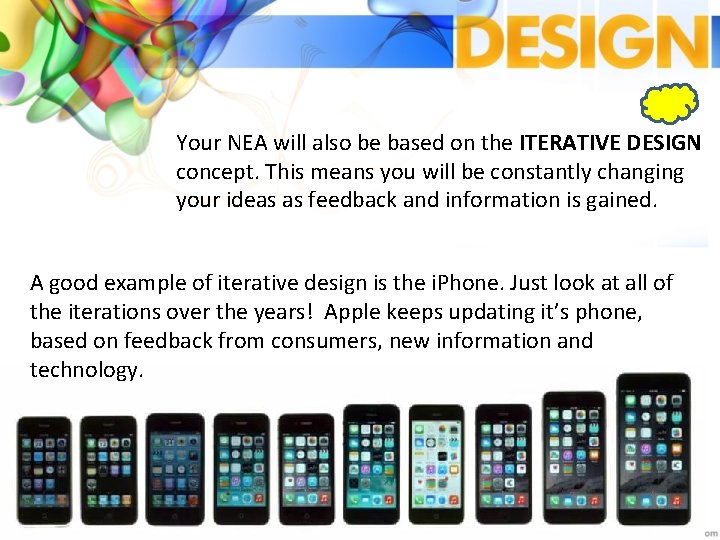
Your NEA will also be based on the ITERATIVE DESIGN concept. This means you will be constantly changing your ideas as feedback and information is gained. A good example of iterative design is the i. Phone. Just look at all of the iterations over the years! Apple keeps updating it’s phone, based on feedback from consumers, new information and technology.
Based on the information you have so far, what material would you make your product from? (Environmentally Friendly Storage for a Teenager)
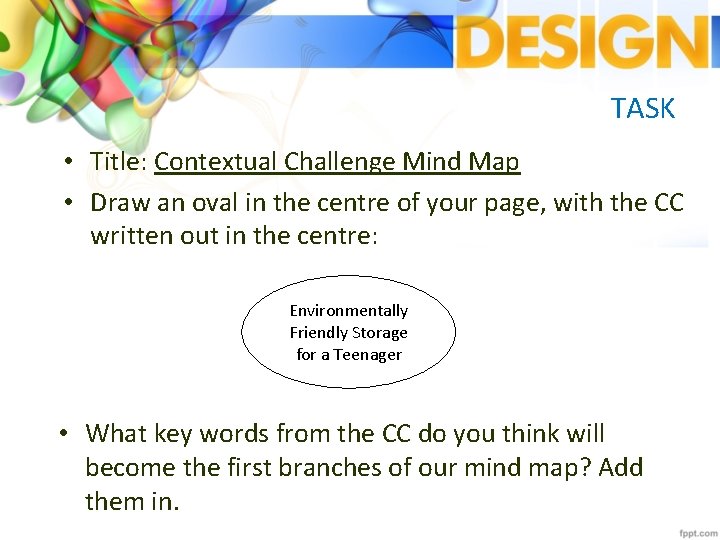
TASK • Title: Contextual Challenge Mind Map • Draw an oval in the centre of your page, with the CC written out in the centre: Environmentally Friendly Storage for a Teenager • What key words from the CC do you think will become the first branches of our mind map? Add them in.
• Working in groups of 3, come up with as many words or topics as you can to expand on each branch. Write down ANYTHING you can think of, no idea is a wrong idea! • You have 5 minutes
POLYMER S Design Brief: To design and make a bag suitable for a 14 -15 year old female to store everything they need for going out shopping on a Saturday afternoon. The bag must be made from plastics which can be recycled after the bag is no longer needed.
POLYMER S Thermoforming or Thermosetting? • Think back to year 7, when you made your pen keepers, or had a go at vacuum forming. • Discuss with the person next to you what the difference is between thermoforming and thermosetting plastics. • You have one minute.
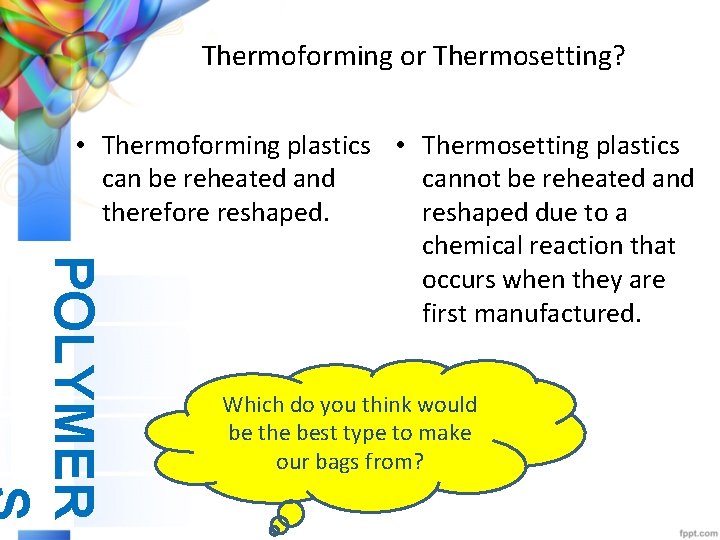
Thermoforming or Thermosetting? POLYMER • Thermoforming plastics • Thermosetting plastics can be reheated and cannot be reheated and therefore reshaped due to a chemical reaction that occurs when they are first manufactured. Which do you think would be the best type to make our bags from?
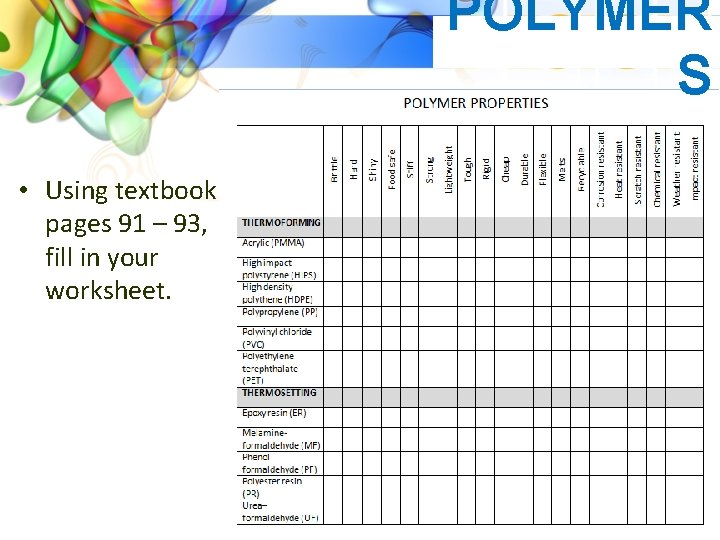
POLYMER S • Using textbook pages 91 – 93, fill in your worksheet.
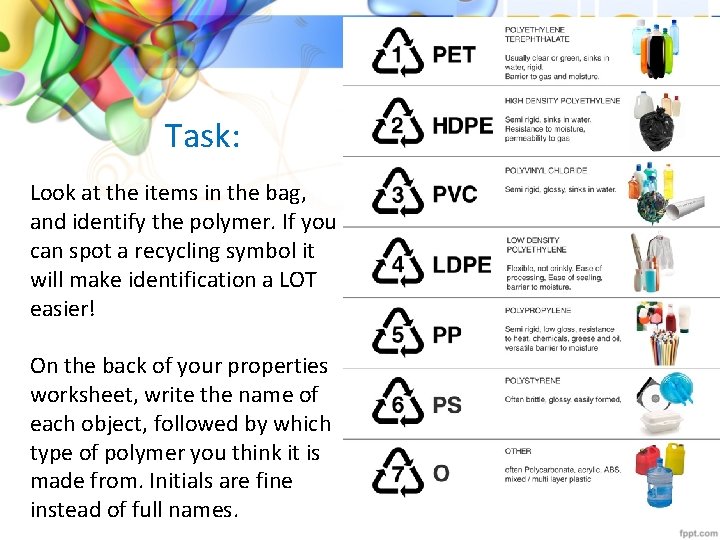
Task: Look at the items in the bag, and identify the polymer. If you can spot a recycling symbol it will make identification a LOT easier! On the back of your properties worksheet, write the name of each object, followed by which type of polymer you think it is made from. Initials are fine instead of full names.
POLYMER S Which Polymer? • Think back to our brief. What properties do you think the polymers we use must have? You now have a lot more information, so now what polymers would you make your bag from?
POLYMER S Homework • Throughout the GCSE course you will be learning about lots of different types of materials. • To keep track of them all, you will be creating a MATERIALS ENCYCLOPAEDIA as you go. • There is a standard format sheet you can use, or you can design your own layout. • You will be given samples of the materials by your teacher. • You will need to buy a lever arch file to keep the pages in.
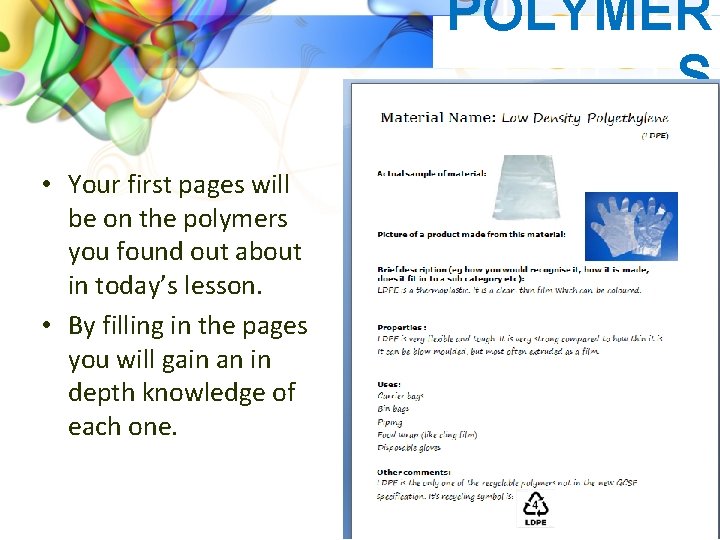
POLYMER S Homework • Your first pages will be on the polymers you found out about in today’s lesson. • By filling in the pages you will gain an in depth knowledge of each one.
- Slides: 14