
Context for Determining the Quality of Herbal Supplements
Context for Determining the Quality of Herbal Supplements DR. MICHAEL TIMS
What Does a Clinician Need to Know �What is Quality? �Proof of Efficacy �Proof of Safety

Labels Five statements are required: 1. Statement of identity (name of the dietary supplement) 2. Net quantity of contents statement (amount of the dietary supplement) 3. Nutrition labeling 4. Ingredient list 5. Name and place of business of the manufacturer, packer, or distributor
Labels – More Detail 1. Expiration dates vs manufactured on dates 2. Proprietary formulas listed in order of quantity 3. Whole herbs vs. isolated standardized extract
Whole Herbs vs. Standardized Extract �Marker compounds: consistent chemistry batch to batch �Clinical trial data �European Monograph E or US Patent �Philosophical grounding
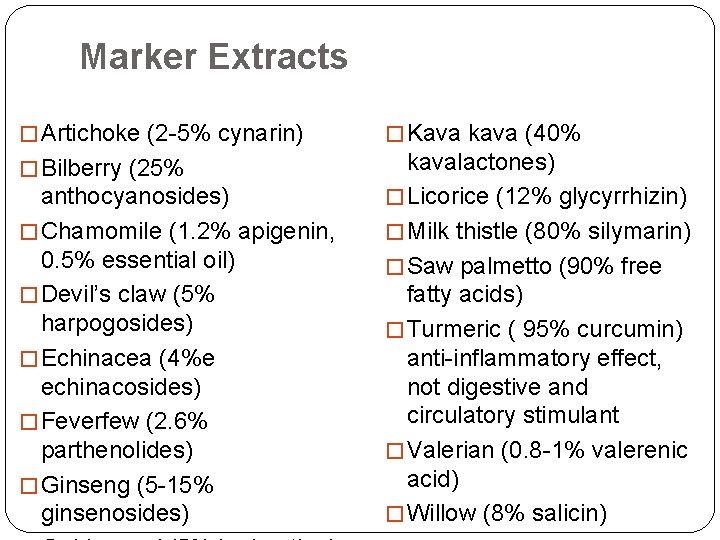
Marker Extracts � Artichoke (2 -5% cynarin) � Kava kava (40% � Bilberry (25% kavalactones) � Licorice (12% glycyrrhizin) � Milk thistle (80% silymarin) � Saw palmetto (90% free fatty acids) � Turmeric ( 95% curcumin) anti-inflammatory effect, not digestive and circulatory stimulant � Valerian (0. 8 -1% valerenic acid) � Willow (8% salicin) anthocyanosides) � Chamomile (1. 2% apigenin, 0. 5% essential oil) � Devil’s claw (5% harpogosides) � Echinacea (4%e echinacosides) � Feverfew (2. 6% parthenolides) � Ginseng (5 -15% ginsenosides)
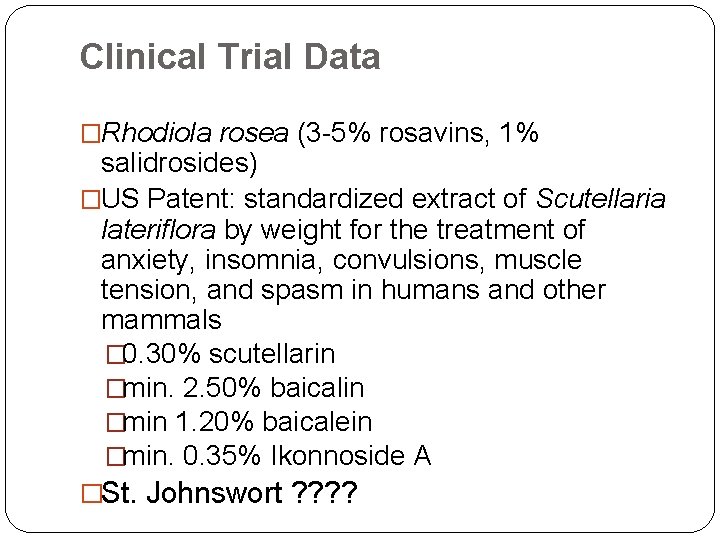
Clinical Trial Data �Rhodiola rosea (3 -5% rosavins, 1% salidrosides) �US Patent: standardized extract of Scutellaria lateriflora by weight for the treatment of anxiety, insomnia, convulsions, muscle tension, and spasm in humans and other mammals � 0. 30% scutellarin �min. 2. 50% baicalin �min 1. 20% baicalein �min. 0. 35% Ikonnoside A �St. Johnswort ? ?
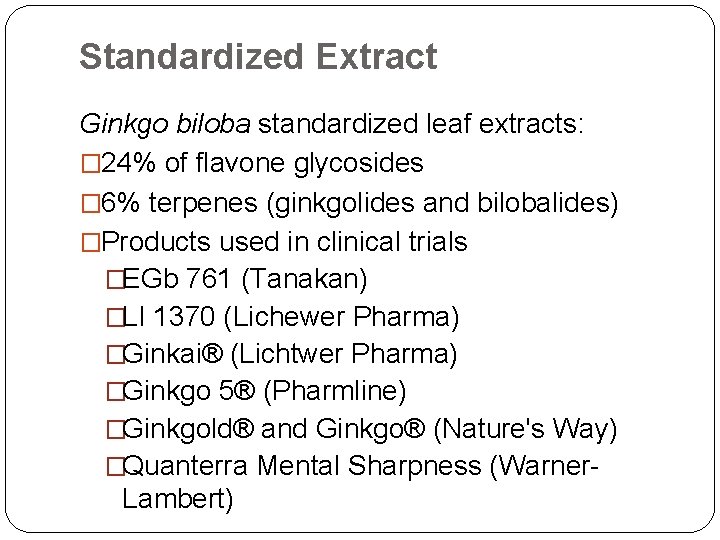
Standardized Extract Ginkgo biloba standardized leaf extracts: � 24% of flavone glycosides � 6% terpenes (ginkgolides and bilobalides) �Products used in clinical trials �EGb 761 (Tanakan) �LI 1370 (Lichewer Pharma) �Ginkai® (Lichtwer Pharma) �Ginkgo 5® (Pharmline) �Ginkgold® and Ginkgo® (Nature's Way) �Quanterra Mental Sharpness (Warner. Lambert)
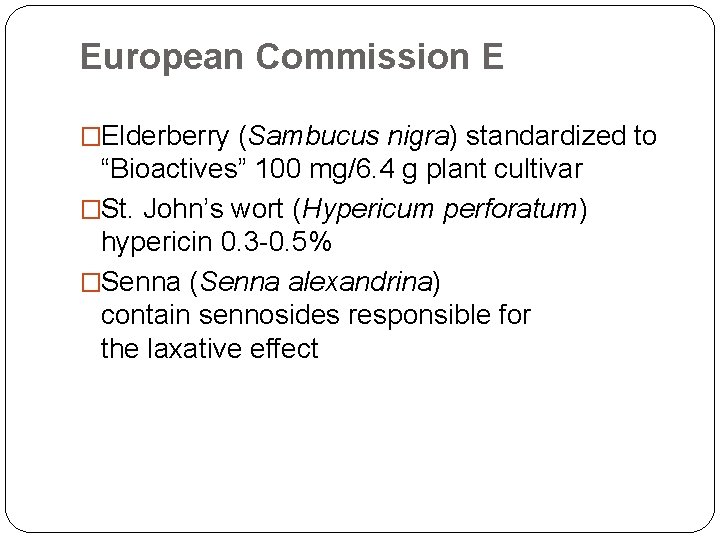
European Commission E �Elderberry (Sambucus nigra) standardized to “Bioactives” 100 mg/6. 4 g plant cultivar �St. John’s wort (Hypericum perforatum) hypericin 0. 3 -0. 5% �Senna (Senna alexandrina) contain sennosides responsible for the laxative effect
How is the Extract Standardized? �Solvent based �Spiking �Cultivar (see cannabis) �Therapeutic action - turmeric
Fillers/Additives � Cellulose: binding, coating, bulking agent � Gelatin: coating and binding agent derived from animal sources � Stearic Acid: naturally occurring fatty acid used for lubricating qualities to help ground material flow through the manufacturing without clumping or sticking to machinery. 1990 rat study claimed it suppressed T cells. � Magnesium Stearate: flow enhancer and binder, made by combining magnesium with stearic acid. � Silicon Dioxide: absorbs moisture as anti-caking agent and flow enhancer. � Carrageenan: from red seaweed and used as a vegan thickening agent. Some studies have suggest that it may cause severe gastrointestinal distress and inflammation. � Potassium Sorbate: natural salt used to extend their shelf life. Some people have a sensitivity or allergy to potassium sorbate which causes nausea and indigestion. � Titanium Dioxide: whitening agent. Considered possibly carcinogenic by the European Chemicals Agency and the
Physician Brands? �Many understand the correct language but are not immersed in the manufacturing process or understand the nature of plant raw material.
Emerson Ecologics Quality Program �Brands complete an application �c. GMP processes �Raw material sourcing - organic �Raw material testing �Final product testing �Emerson conduct a document audit of all SOPs, manufacturing records and analytical documentations. �Product testing through an independent laboratory �On-site audit by Emerson - manufacturers correct
Quality Control vs. Quality Assurance
Quality Control �Systematic procedure to ensure quality �Tests to measure whether each batch meet product specs
Botanical Tests �Meets established specifications (specs) for �Identity �Purity �Strength (concentration) �Composition (formula)
Specifications �Write your own or use someone else’s �Monographs provide specifications - USP, EP, AHP, BP �If none available, proceed as if you were writing • Identity (name) • Pesticides one: • • Description Assay (markers) Moisture Ash • • Microbial standards Packaging Dosing information Labeling
Quality Assurance �Processes used to create a product �Performance logs �Audits to ensure compliance with FDA standards �If you didn’t write it down, it didn’t happen �This includes your training
Criteria for Authoritative Characterization �Identify sample �Representative sample �Purity of sample �Multiple authenticated samples �Trace back to whole material
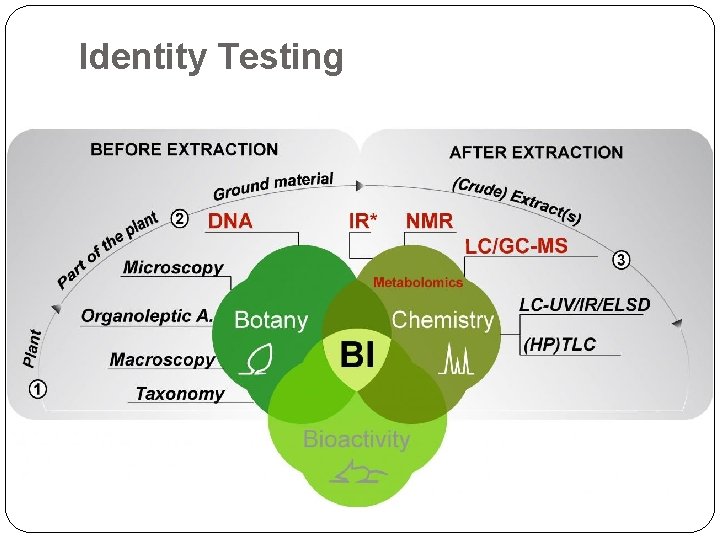
Identity Testing
Identification �Obtained directly from voucher specimen �Whole plant �When identifying morphological characteristics present �Plant part used identified by professional plant systematist or field botanist �Comparison with Botanical Reference Material (BRM) �Multiple authenticated samples
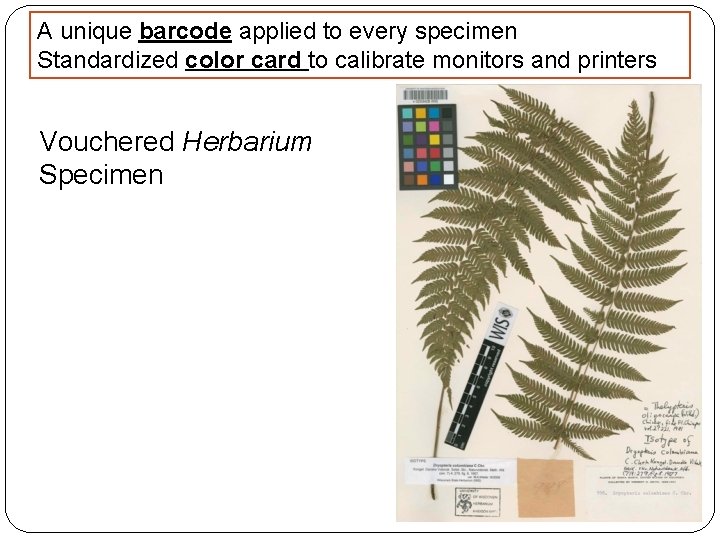
A unique barcode applied to every specimen Standardized color card to calibrate monitors and printers Vouchered Herbarium Specimen
Using Botanical Reference Material �Completeness of botanical survey based on distribution of a plant �Taxonomic features conserved/diverse? �Adequate population sampling �Adequate intra-individual sampling �No defined number of samples �Greater variation greater number of samples
Multiple Samples �No defined number �Account for typical intraspecies variation �Greater variation greater number of samples
How Much to Test �Based on unique aspects of specific properties �Sufficient number of tests must be performed on representative samples necessary to establish identity �Lack of test specificity requires doing more tests
Representative �In trade �Quality associated with medicinal activity �Age �Ecosystem – growing conditions �Species �Plant part
Specificity �Confirm the identity of plant whose putative identify has already been specified �correct plant species �plant parts from known �potential adulterants �Work from a limited subset of commonly marketed medicinal plants, not all plants.
Purity �Adulterants �Filth �Contaminants
Purity - Example � Botanical purity � Japanese Pharmacopoeia (JP) 13 th Edition, 1996 � Ephedrae Herba monograph Purity � “the amount of woody stems…does not exceed 5. 0%” � “Ephedra Herb does not contain stems of Equisetaceae or Gramineae or any other foreign matter”
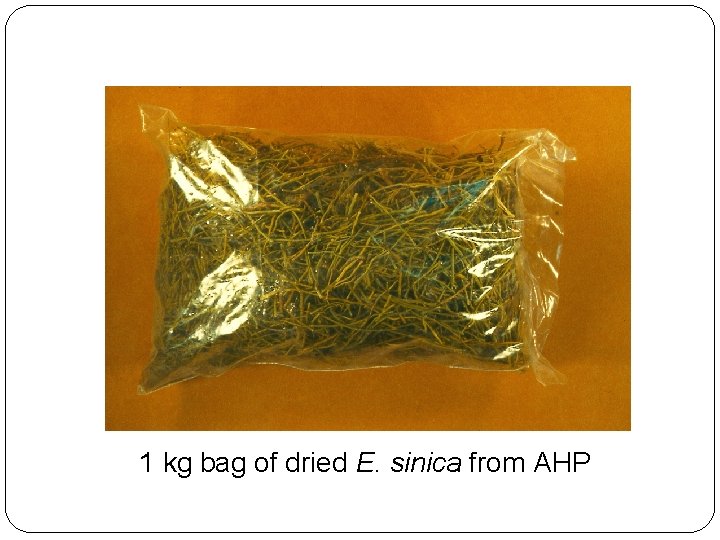
1 kg bag of dried E. sinica from AHP
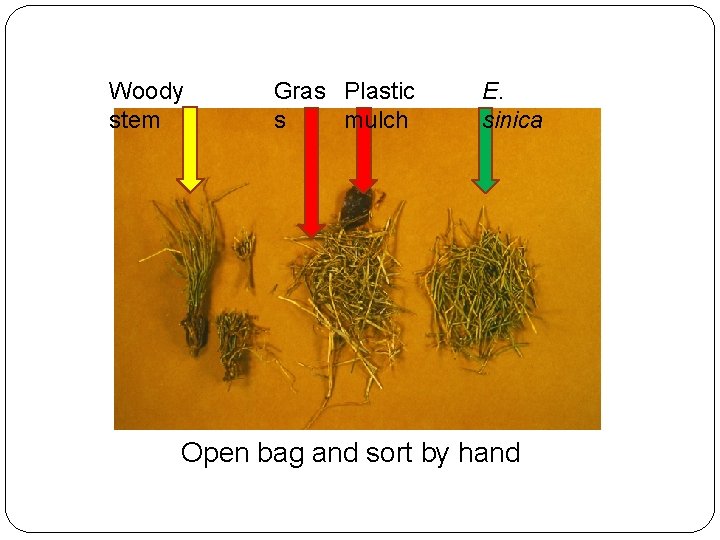
Woody stem Gras Plastic s mulch E. sinica Open bag and sort by hand
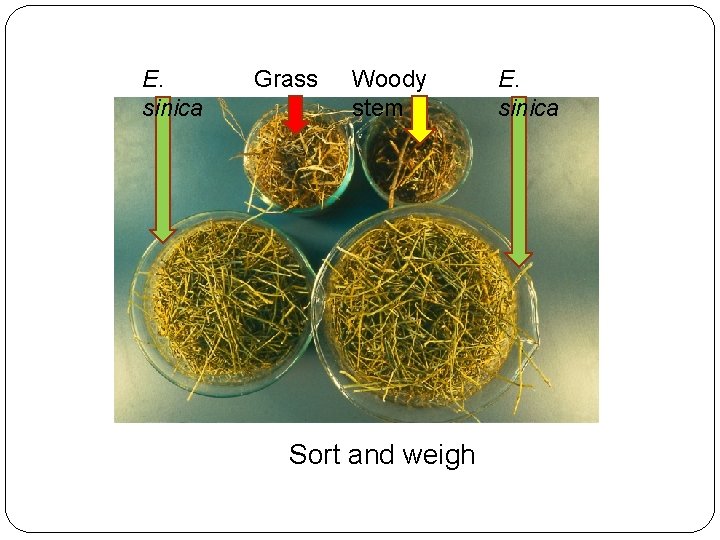
E. sinica Grass Woody stem Sort and weigh E. sinica
Recent Challenges �The New York Attorney General using adulteration as a platform for higher office. In the process, several new issues have come to light. �Devil’s claw – Harpagophytum procumbens (listed in Herbs of Commerce, 1 st ed. ) vs. H. zeyheri (not listed) �DNA barcoding
Extraction and Identity �Ground botanical materials lose their morphological characteristics but can retain their genetic identity and be identified with chemical methods too. �Most comprehensive approaches to botanical authentication based on chemical composition via spectral fingerprinting
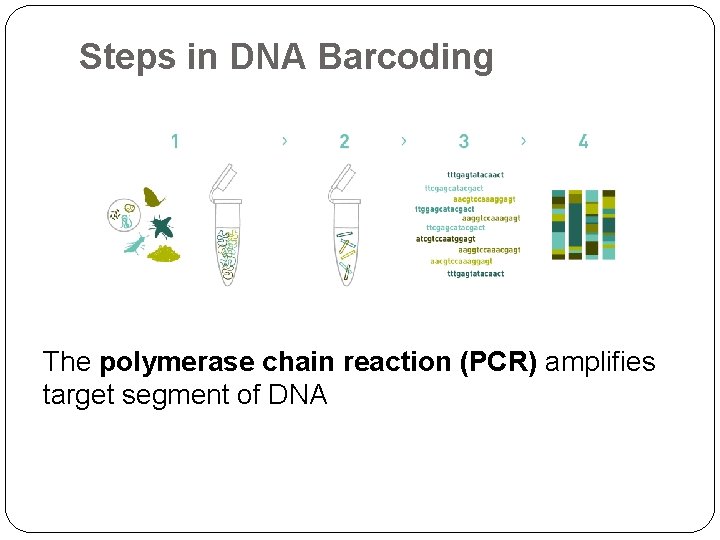
Steps in DNA Barcoding The polymerase chain reaction (PCR) amplifies target segment of DNA
DNA Barcoding – When is it Useful �Used to identify original plant material with missing taxonomic characteristics �Not a finished product �Fit for purpose
Many Potential Sources of Error �Selection of the right primer �DNA degradation during processing �Multiple species with identical sequences �Amplification of non-specific or contaminant sequences �PCR inhibiting compounds isolated along with DNA �Inability to identify plant part, appropriate growing conditions to produce the appropriate chemical profile
Limits to DNA Barcoding �DNA barcoding a process, not a technology �Authenticated only 10% of crude raw materials, and none of the finished products made with extracted ingredients, compared to 90% and 60%, respectively, when using specific DNA authentication methods Harnly, J. et al. (2012) AOAC INTERNATIONAL guidelines for validation of botanical identification methods. J AOAC Int. 95(1): 268 -72.
Limits to DNA Analysis DNA analyses cannot differentiate between the herb tested and either inert inorganic material or foreign organic matter �Inert inorganic material (e. g. , di-calcium phosphate) �Added to small percentage of E. purpurea leaf �DNA result - 100% pure E. purpurea � 400 mg of inert filler and 100 mg of a particular botanical �Doesn’t pass appropriate macroscopic, microscopic, or standard chemical test
Limits to DNA Analysis �Foreign organic matter �Able to detect non-target DNA, since botanicals are not sterile �Fungus Eurotium defined as “contaminant” �Fairly common soil fungus �Selective sensitivity for some organisms results in DNA amplification
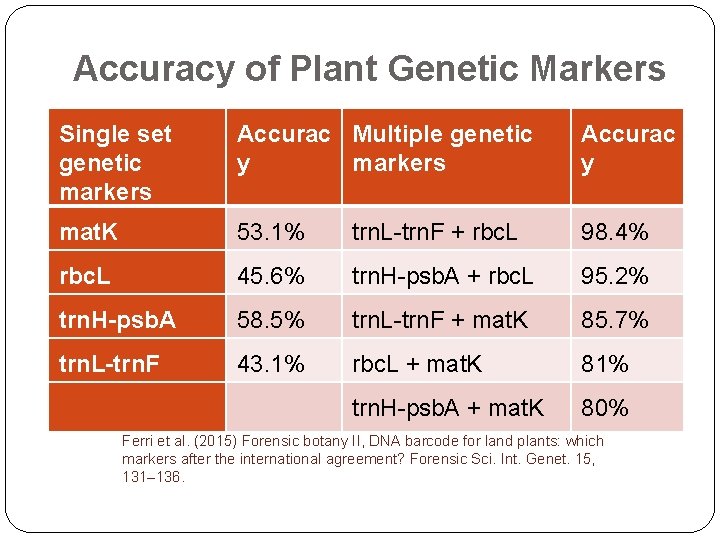
Accuracy of Plant Genetic Markers Single set genetic markers Accurac Multiple genetic y markers Accurac y mat. K 53. 1% trn. L-trn. F + rbc. L 98. 4% rbc. L 45. 6% trn. H-psb. A + rbc. L 95. 2% trn. H-psb. A 58. 5% trn. L-trn. F + mat. K 85. 7% trn. L-trn. F 43. 1% rbc. L + mat. K 81% trn. H-psb. A + mat. K 80% Ferri et al. (2015) Forensic botany II, DNA barcode for land plants: which markers after the international agreement? Forensic Sci. Int. Genet. 15, 131– 136.
In the Future �Plants comprise thousands of species �Requires time to refine methodology and build authenticated DNA reference material libraries �Requires DNA method fit for purpose and validated by a second chemical test �Focus on chloroplast DNA
Orthogonal Methods �HPTLC provides high resolution detection of Echinacea phytochemical target compounds �Complementary use of DNA metabarcoding of Echinacea species detected in 89% �Just DNA, lacked discriminatory resolution at the species level due to introgression within the Echinacea genus �DNA testing provided overall ingredient fidelity of only 43% Raclariu, AC et al. (2018) What’s in the box? Authentication of Echinacea herbal products using DNA metabarcoding and HPTLC. Phytomedicine; 44: 32 -38.
Organoleptic Analysis
Molecular Shape and Sensory Analysis Vanillin - soothing, pleasant aroma. Molecular weight relatively low - fairly volatile. Cooking with vanilla vaporizes it. Eugenol - bay leaves, allspice, and oil of cloves. Fat solubile penetrates tissues and binds more tightly to vanilloid receptor. Fatty tail gives eugenol a stronger odor than vanillin. One bay leaf is enough to season a pot of soup. Zingerone - ginger and a flavor ingredient in mustard oil. Higher molecular weight plus polar side-chain makes zingerone molecules attract each other more strongly than eugenol and vanillin, less volatile. bhoditims. com/2018/09/28/plant-root-chemistry-is-just-an-invitation-to-play/
Descriptive Analysis �Method to describe and quantify the sensory characteristics of stimuli by a panel of trained assessors (ASTM E 253 -15 1998) �Perceives intensities of the sensory characteristics �Useful for tracking sensory changes over time �Lexicon agreement given genetic underpinning of sense �Terms/ descriptors should be orthogonal �Not correlated with each other /overlapping
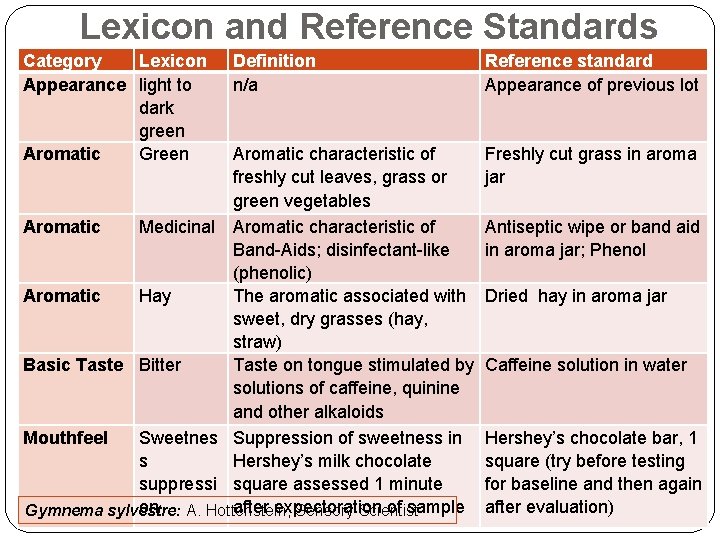
Lexicon and Reference Standards Category Lexicon Appearance light to dark green Aromatic Green Definition n/a Aromatic characteristic of freshly cut leaves, grass or green vegetables Aromatic Medicinal Aromatic characteristic of Band-Aids; disinfectant-like (phenolic) Aromatic Hay The aromatic associated with sweet, dry grasses (hay, straw) Basic Taste Bitter Taste on tongue stimulated by solutions of caffeine, quinine and other alkaloids Mouthfeel Sweetnes Suppression of sweetness in s Hershey’s milk chocolate suppressi square assessed 1 minute on A. Hottenstein, after expectoration of sample Gymnema sylvestre: Sensory Scientist Reference standard Appearance of previous lot Freshly cut grass in aroma jar Antiseptic wipe or band aid in aroma jar; Phenol Dried hay in aroma jar Caffeine solution in water Hershey’s chocolate bar, 1 square (try before testing for baseline and then again after evaluation)
Macroscopic Analysis
Macroscopic �Defined anatomical characteristic of whole or plant part �Must be specific for intended us �Plantago lanceolata (English plantain) vs. Digitalis lanata (Grecian foxglove)
Microscopic Analysis
![Microscopic �Compare to authenticated or in-house reference materials [OR] authoritative technical work �Skills required](http://slidetodoc.com/presentation_image_h2/8e050b5c214777c514e4615caada1913/image-51.jpg "Microscopic �Compare to authenticated or in-house reference materials [OR] authoritative technical work �Skills required")
Microscopic �Compare to authenticated or in-house reference materials [OR] authoritative technical work �Skills required �Must ensure expected characteristic anatomical features present �And the unexpected (adulterating) ones absent
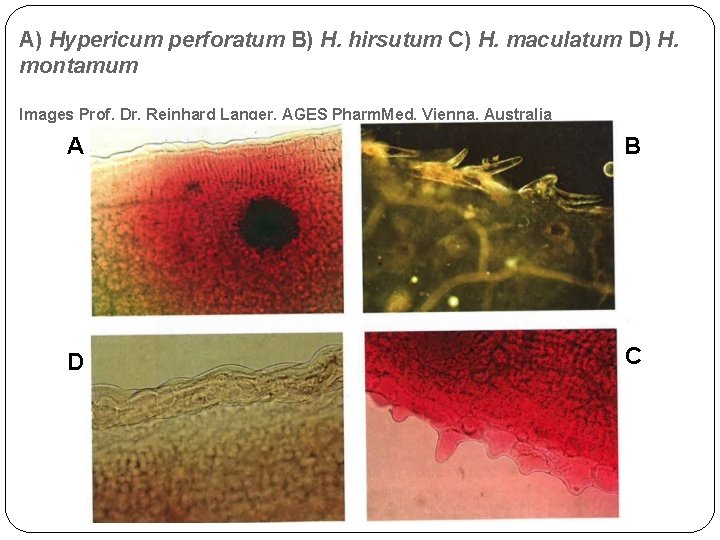
A) Hypericum perforatum B) H. hirsutum C) H. maculatum D) H. montamum Images Prof. Dr. Reinhard Langer, AGES Pharm. Med, Vienna, Australia A B D C
�Look for a suite of characteristics unique to the species �Powdered aerial parts easier to ID than root/rhizome �Diagnostic features found on surface of fragments �Roots use arrangement of tissue to ID �Currently lack the requisite defining characteristics using microscopy in English language texts
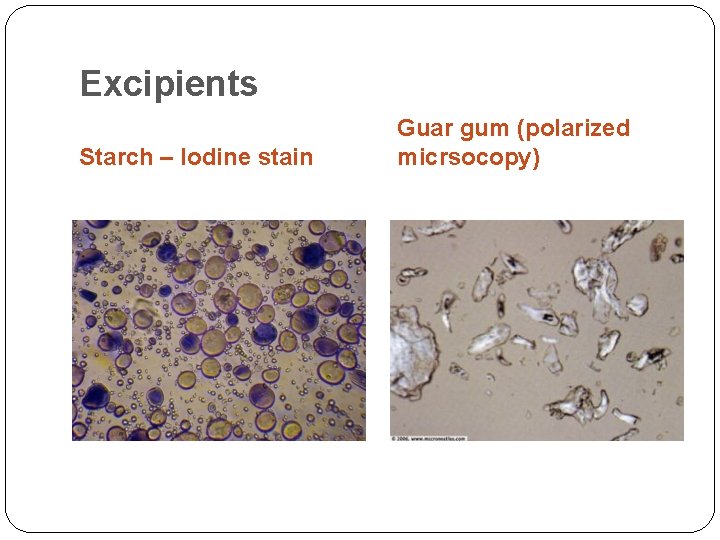
Excipients Starch – Iodine stain Guar gum (polarized micrsocopy)
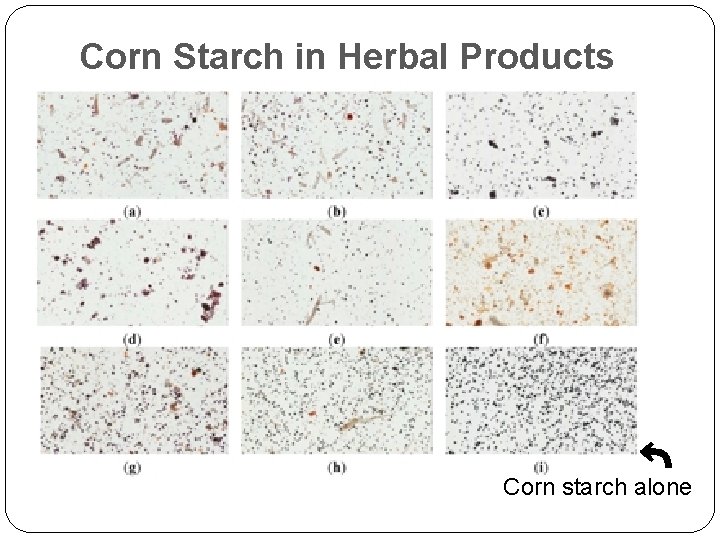
⤴ Corn Starch in Herbal Products Corn starch alone
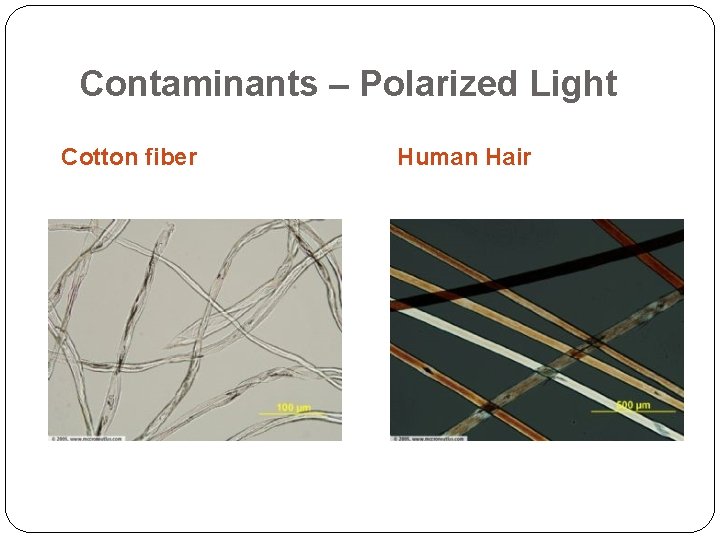
Contaminants – Polarized Light Cotton fiber Human Hair
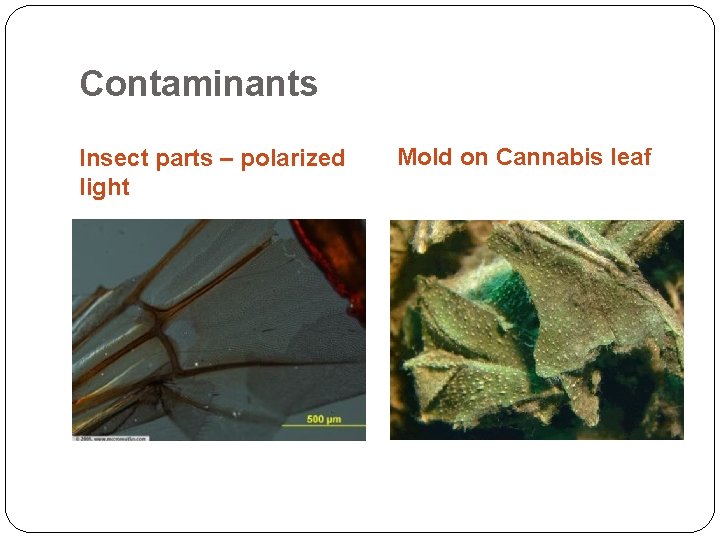
Contaminants Insect parts – polarized light Mold on Cannabis leaf
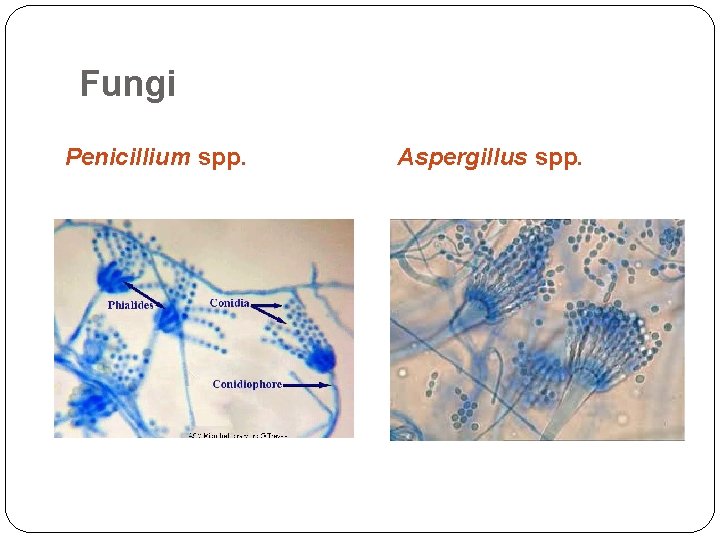
Fungi Penicillium spp. Aspergillus spp.
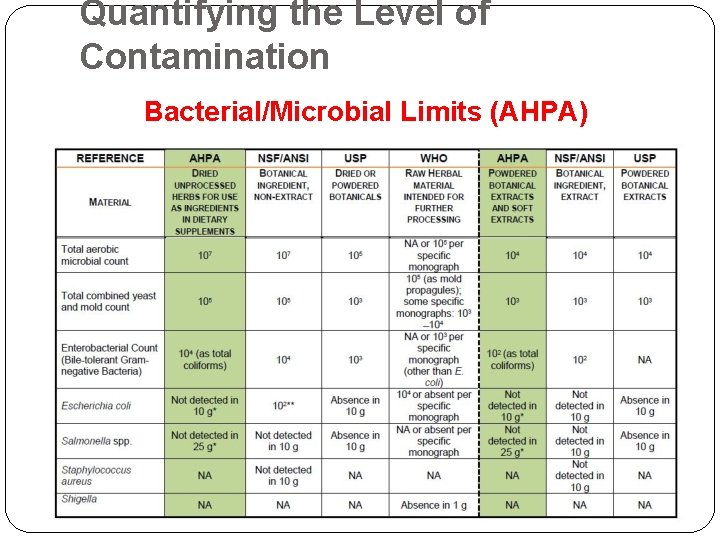
Quantifying the Level of Contamination Bacterial/Microbial Limits (AHPA)
Insuring Measurements: Method Validation
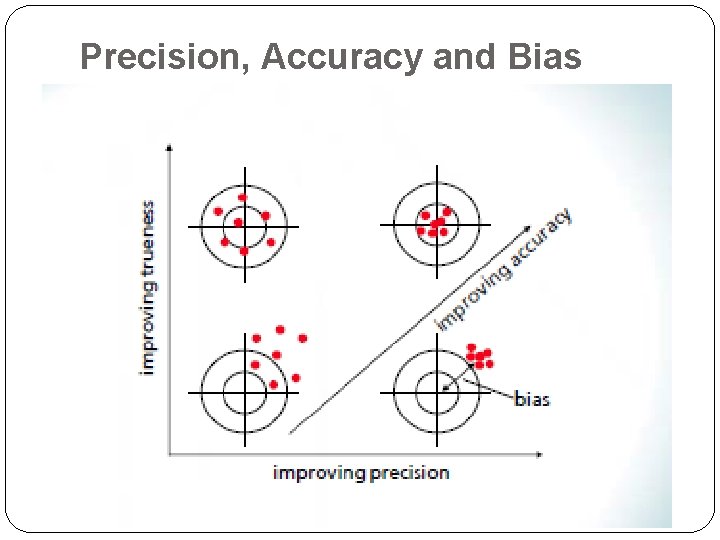
Precision, Accuracy and Bias
Standard Reference Materials (SRMs) � Alkemists Laboratories high-resolution Digital Photo Microscopy and HPTLC Images � American Herbal Pharmacopoeia 100+ authentic botanical reference materials - identity and purity confirmed fit for purpose method � Biopharm Herbal Lab Botanical references with accompanying Co. A, complete with a voucher image, macroscopic/microscopic images, and a full HPTLC identity testing � Botanical Liaisons voucher specimen, representative sample with an inflorescence pressed on archival paper, date and location of harvest of the voucher tracked back to the collector. � Chroma. Dex certified, 4000+ phytochemical reference standards, 500+ BRMs of freeze dried and ground plant material that may also include macro and microscopic images. � Phyto. Lab purified reference substances for botanical identification. � US Pharmacopeia Highly-characterized specimens (identity, strength, quality), and GMP audits. � NSF ensures product and ingredient safety via testing and unannounced
Insuring Phytochemical Complexity: Extraction
Solvent/Systems � Water/alcohol � Polar vs. non-polar solvents � Enzymatic � Supercritical Fluid Extraction (CO 2) � Glycerin � p. H � Heat � Sonication � Distillation � High pressure
Well known example for grounding ideas of solubility and extraction
Coffea �Coffea arabica �Coffea canephora (Robusta) �Differences in required growing conditions �Use of Organoleptic Analysis
Quality Assurance Detecting superior bean �UV fluorescence – mold �Infrared – cell wall thickness Processing �Immediate �Sun-drying �Washing �De-hulling
Roasting �Aromatic precursors (250 molecules) �Heat converts water in bean to pressurized steam � 90 seconds to 40 minutes �Catalyzes chemical reactions �After roasting (800 molecules)
Aromatics �Roses �Darjeeling tea �Chocolate, �Vanilla �Violets �Truffles �Soup �Cheese �Sweat �Cat scent �Sauvignon blanc wine
Numerous extraction methods
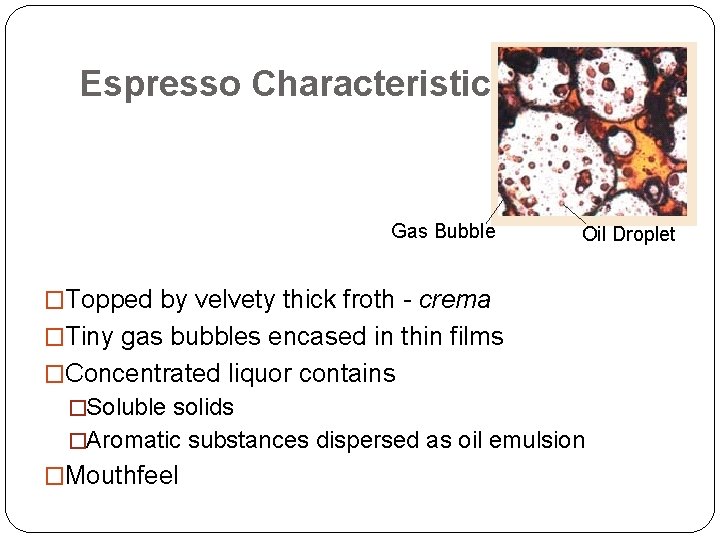
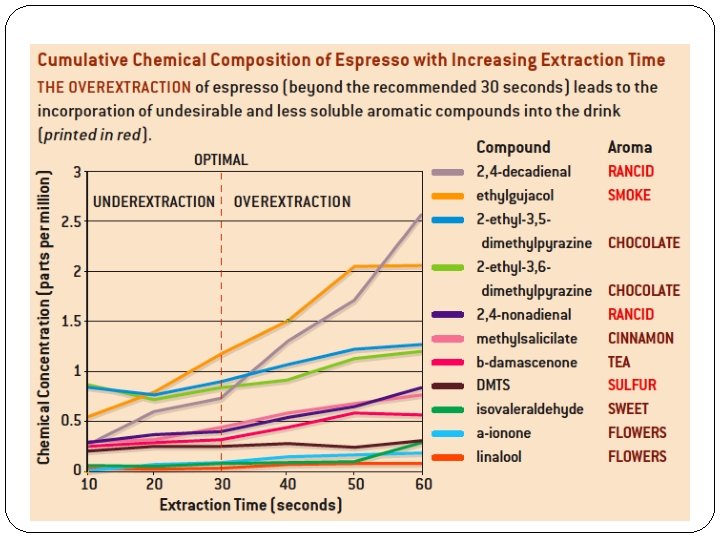
Espresso Characteristics Gas Bubble Oil Droplet �Topped by velvety thick froth - crema �Tiny gas bubbles encased in thin films �Concentrated liquor contains �Soluble solids �Aromatic substances dispersed as oil emulsion �Mouthfeel
Echinacea - Variability
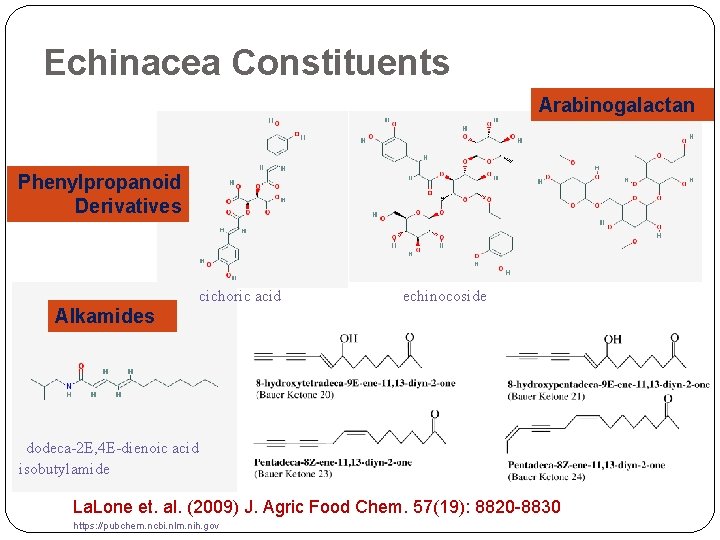
Echinacea Constituents Arabinogalactan Phenylpropanoid Derivatives cichoric acid echinocoside Alkamides dodeca-2 E, 4 E-dienoic acid isobutylamide La. Lone et. al. (2009) J. Agric Food Chem. 57(19): 8820 -8830 https: //pubchem. ncbi. nlm. nih. gov
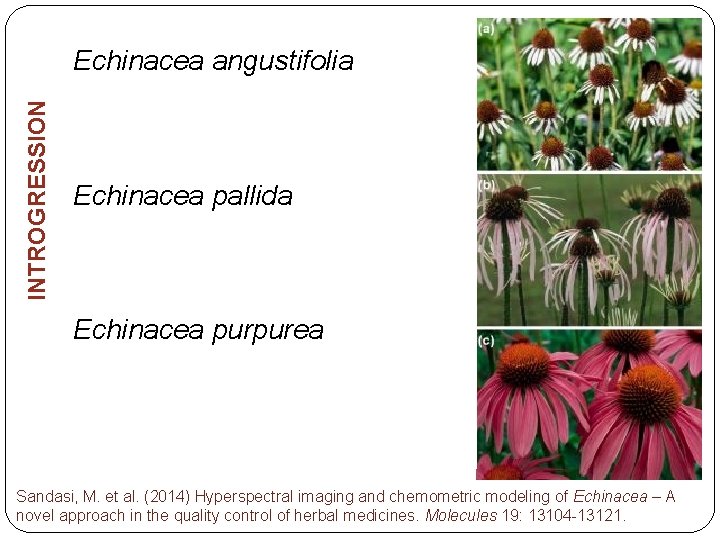
INTROGRESSION Echinacea angustifolia Echinacea pallida Echinacea purpurea Sandasi, M. et al. (2014) Hyperspectral imaging and chemometric modeling of Echinacea – A novel approach in the quality control of herbal medicines. Molecules 19: 13104 -13121.
Uncertainty with Production of Echinacea Products � Ethanol extracts produce higher levels of alkylamides and phenolics � Block inflammatory response, suppressing symptoms of with infection � More concentrated in roots � Signatures? �Echinacoside (phenolic) in E. angustifolia not E. purpurea. �Echinacin (alkylamide) in E. angustifolia and E. pallida.
Uncertainty with Echinacea � Water extracts contain polysaccharides and glycoproteins (arabinorhamnogalactan) � Enhance immunity by increasing production of cytokines � Appear to be present in aerial parts

How do we use a wide range of existing evidence to rationally decide how to extract?
Extraction Issues Roots first extracted with pure ethanol (exclude polysaccharides) and then fractioned as follows: 1. Lipophilic fraction (chloroform fraction) �Essential oils �Alkylamides - E. purpurea and E. angustifolia �Polyenes - E. pallida. 2. Polar fraction (water-soluble fraction) �Contained characteristic caffeic acid derivatives Bauer R, Jurcic K, Puhlmann J, Wagner H. Immunological in vivo and in vitro examinations of Echinacea extracts. Arzneim Forsch 1988; 38: 276 -281.
Fractions 1. Chloroform - E. pallida and E. angustifolia considerably more active than water soluble fractions, which showed negligible activity 2. In contrast, high activity found in watersoluble fractions of the ethanolic extract of E. purpurea.
How Much Alcohol? �Originally interpreted so low-ethanol extracts of Echinacea root optimized �See 45 -60% hydro-alcohol extracts on the market �Experiment tested water-soluble fraction of pure ethanol extract �Supports high percentage ethanol extracts of the root �The Eclectic Physicians used an 80% ethanol extract of E. angustifolia root Bauer R, Remiger P, Jurcic K, Wagner H. Influence of Echinacea extracts on phagocytotic activity. Z Phytother 1989; 10: 43 -48.
Dosing - Echinacea Dosing �Loading vs. maintenance �Priming immune response – endocannabinoid system �Compliance How do you figure this stuff out? �Data �Traditional knowledge
- Slides: 82