
ContentSpecific Vocabulary The Authors Attitude is expressed through
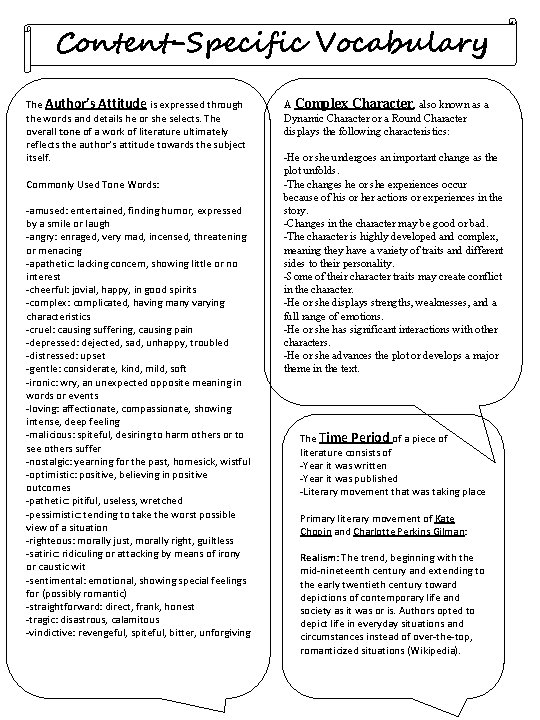
Content-Specific Vocabulary The Author’s Attitude is expressed through the words and details he or she selects. The overall tone of a work of literature ultimately reflects the author’s attitude towards the subject itself. Commonly Used Tone Words: -amused: entertained, finding humor, expressed by a smile or laugh -angry: enraged, very mad, incensed, threatening or menacing -apathetic: lacking concern, showing little or no interest -cheerful: jovial, happy, in good spirits -complex: complicated, having many varying characteristics -cruel: causing suffering, causing pain -depressed: dejected, sad, unhappy, troubled -distressed: upset -gentle: considerate, kind, mild, soft -ironic: wry, an unexpected opposite meaning in words or events -loving: affectionate, compassionate, showing intense, deep feeling -malicious: spiteful, desiring to harm others or to see others suffer -nostalgic: yearning for the past, homesick, wistful -optimistic: positive, believing in positive outcomes -pathetic: pitiful, useless, wretched -pessimistic: tending to take the worst possible view of a situation -righteous: morally just, morally right, guiltless -satiric: ridiculing or attacking by means of irony or caustic wit -sentimental: emotional, showing special feelings for (possibly romantic) -straightforward: direct, frank, honest -tragic: disastrous, calamitous -vindictive: revengeful, spiteful, bitter, unforgiving A Complex Character, also known as a Dynamic Character or a Round Character displays the following characteristics: -He or she undergoes an important change as the plot unfolds. -The changes he or she experiences occur because of his or her actions or experiences in the story. -Changes in the character may be good or bad. -The character is highly developed and complex, meaning they have a variety of traits and different sides to their personality. -Some of their character traits may create conflict in the character. -He or she displays strengths, weaknesses, and a full range of emotions. -He or she has significant interactions with other characters. -He or she advances the plot or develops a major theme in the text. The Time Period of a piece of literature consists of -Year it was written -Year it was published -Literary movement that was taking place Primary literary movement of Kate Chopin and Charlotte Perkins Gilman: Realism: The trend, beginning with the mid-nineteenth century and extending to the early twentieth century toward depictions of contemporary life and society as it was or is. Authors opted to depict life in everyday situations and circumstances instead of over-the-top, romanticized situations (Wikipedia).
- Slides: 1