
Contents page 1 Origins 2 Triangular Trade 3

- Slides: 12
Contents page 1. Origins 2. Triangular Trade 3. Effects of Slave Trade on: Africa 4. Effects of Slave Trade on: Britain 5. The Middle Passage 6. Plantation life 7. Slave Resistance 8. The Abolitionist Campaign 9. Support for the slave trade 10. End of the slave trade
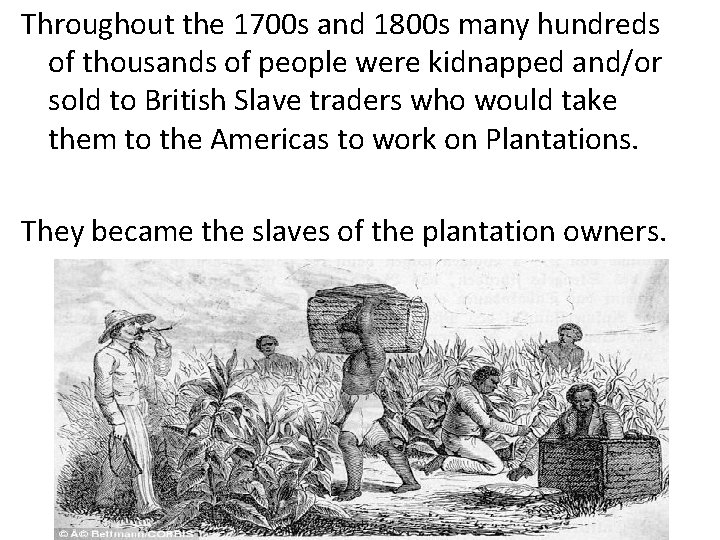
Throughout the 1700 s and 1800 s many hundreds of thousands of people were kidnapped and/or sold to British Slave traders who would take them to the Americas to work on Plantations. They became the slaves of the plantation owners.
Origins of the Slave Trade Explain the connection between the discovery of the New world and the growth of trading of West African Slaves.
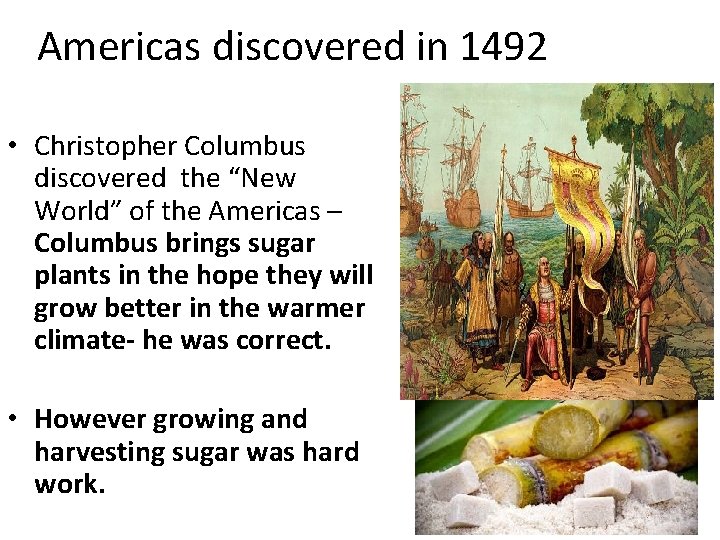
Americas discovered in 1492 • Christopher Columbus discovered the “New World” of the Americas – Columbus brings sugar plants in the hope they will grow better in the warmer climate- he was correct. • However growing and harvesting sugar was hard work.
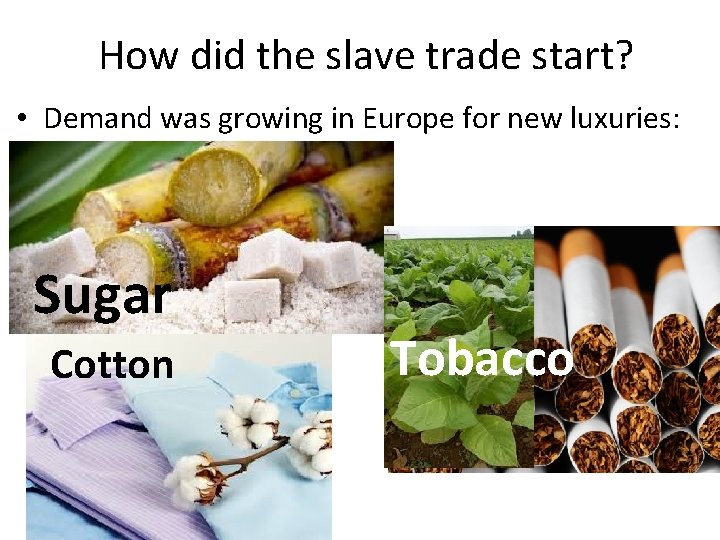
How did the slave trade start? • Demand was growing in Europe for new luxuries: Sugar Cotton Tobacco
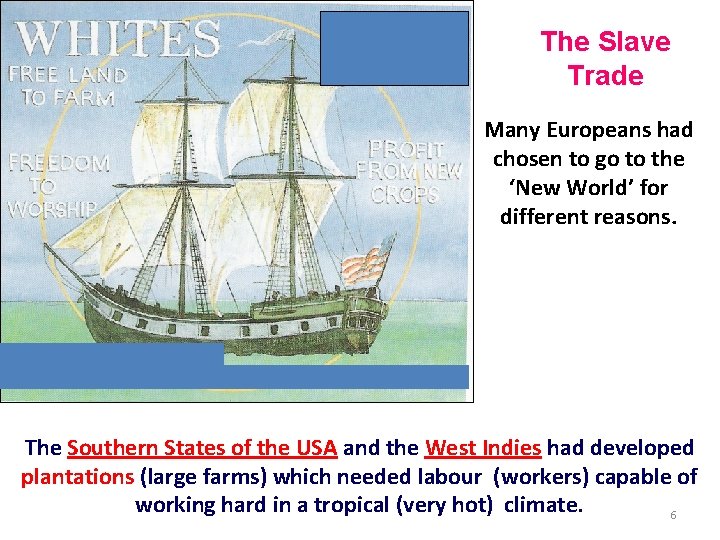
The Slave Trade Many Europeans had chosen to go to the ‘New World’ for different reasons. The Southern States of the USA and the West Indies had developed plantations (large farms) which needed labour (workers) capable of working hard in a tropical (very hot) climate. 6
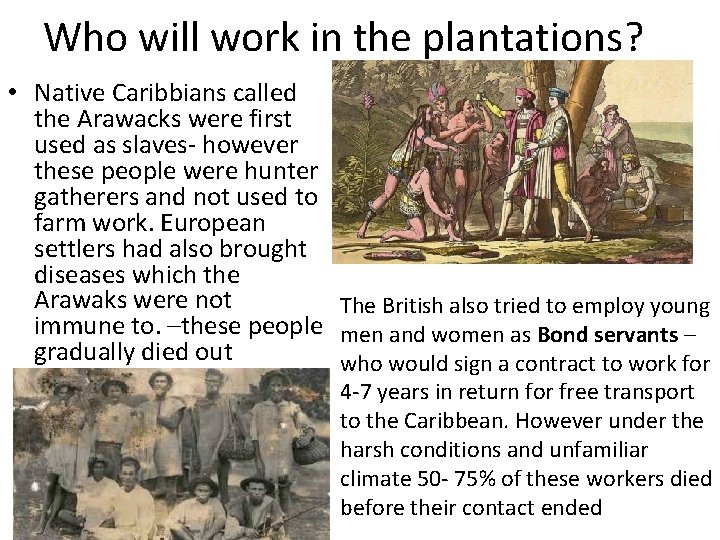
Who will work in the plantations? • Native Caribbians called the Arawacks were first used as slaves- however these people were hunter gatherers and not used to farm work. European settlers had also brought diseases which the Arawaks were not The British also tried to employ young immune to. –these people men and women as Bond servants – gradually died out who would sign a contract to work for 4 -7 years in return for free transport to the Caribbean. However under the harsh conditions and unfamiliar climate 50 - 75% of these workers died before their contact ended
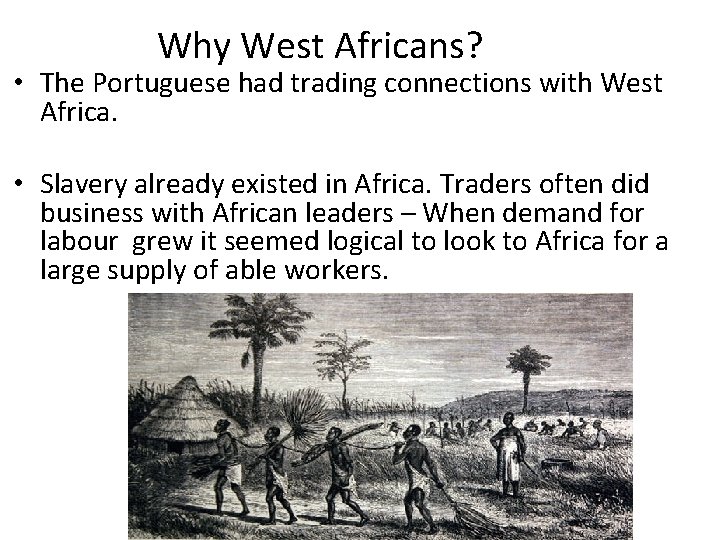
Why West Africans? • The Portuguese had trading connections with West Africa. • Slavery already existed in Africa. Traders often did business with African leaders – When demand for labour grew it seemed logical to look to Africa for a large supply of able workers.
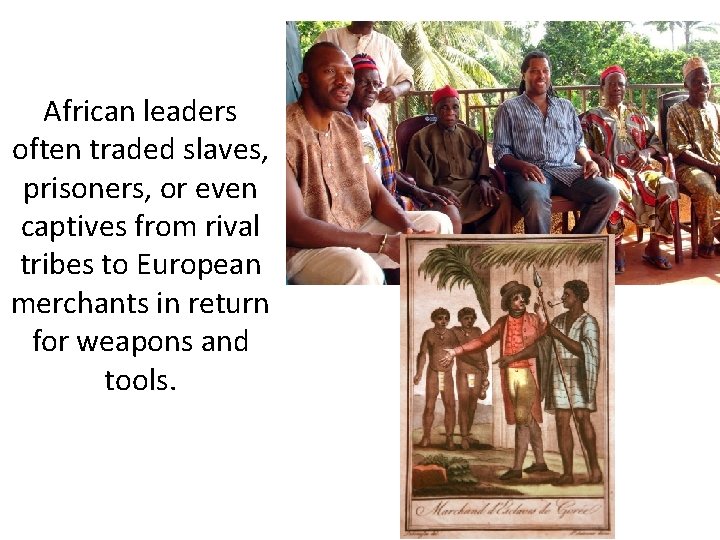
African leaders often traded slaves, prisoners, or even captives from rival tribes to European merchants in return for weapons and tools.
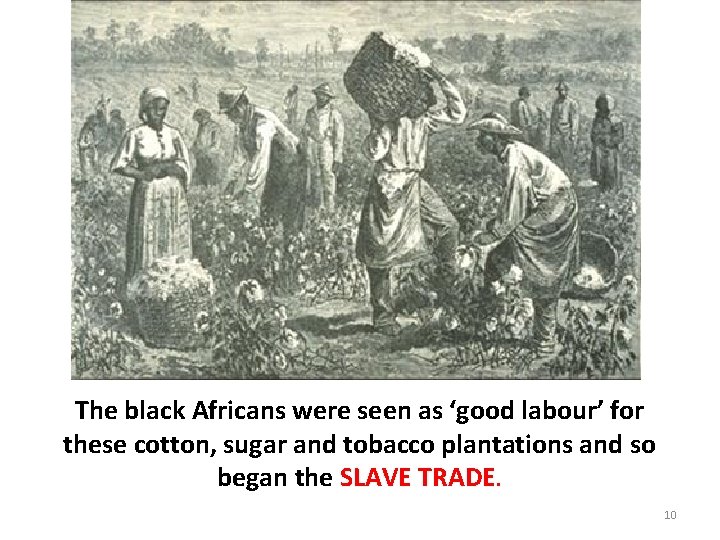
The black Africans were seen as ‘good labour’ for these cotton, sugar and tobacco plantations and so began the SLAVE TRADE. 10
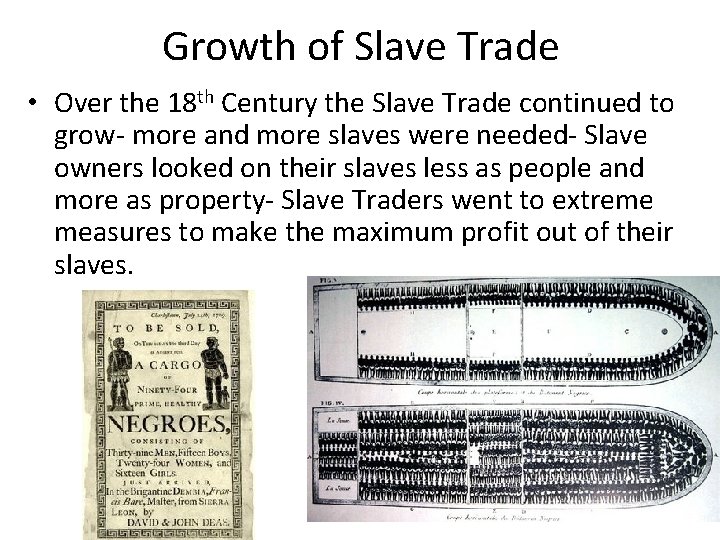
Growth of Slave Trade • Over the 18 th Century the Slave Trade continued to grow- more and more slaves were needed- Slave owners looked on their slaves less as people and more as property- Slave Traders went to extreme measures to make the maximum profit out of their slaves.
Textbook Activity 1 unscramble words to summarise chapter Activity 2 - If this is the answer what is the question