
Contents A Air temperature B Relative humidity C
Contents • A. Air temperature • B. Relative humidity • C. Wind speed and wind direction • D. Air pressure • E. Sunlight intensity
• Points to note when taking measurements: ▪ Take multiple measurements, then calculate the average value ▪ Use the same brand same model of instruments ▪ Pay attention to whether the instruments are blocked by the surrounding environments, human bodies or objects to ensure data accuracy Contents
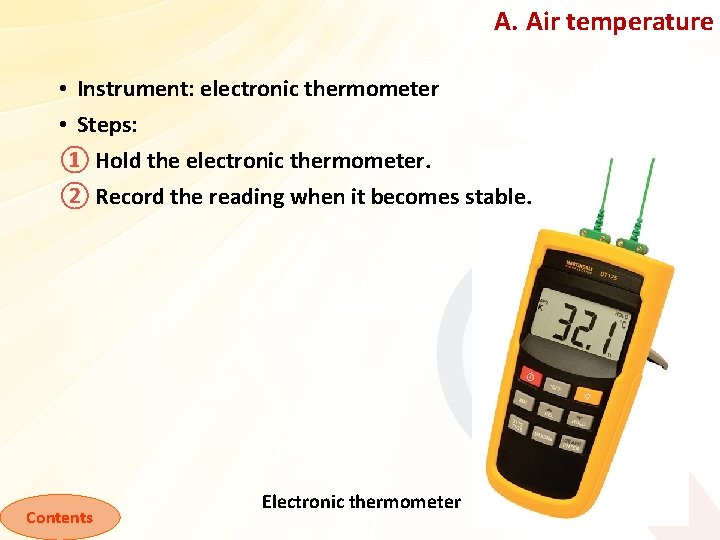
A. Air temperature • Instrument: electronic thermometer • Steps: ① Hold the electronic thermometer. ② Record the reading when it becomes stable. Contents Electronic thermometer
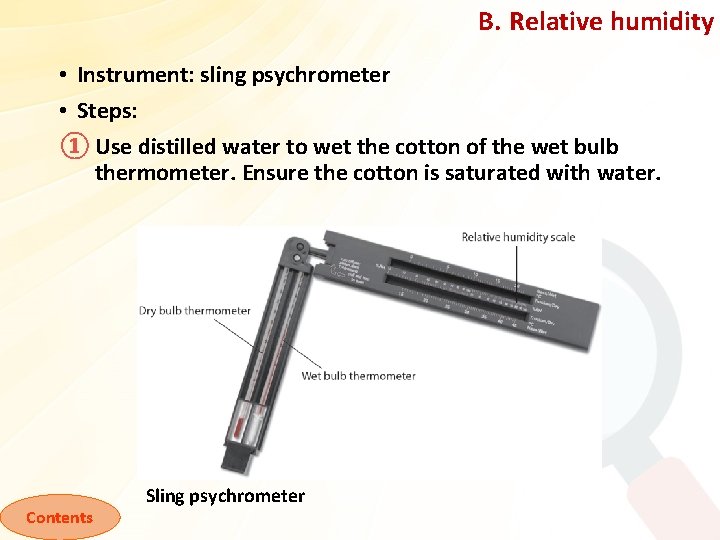
B. Relative humidity • Instrument: sling psychrometer • Steps: ① Use distilled water to wet the cotton of the wet bulb thermometer. Ensure the cotton is saturated with water. Contents Sling psychrometer
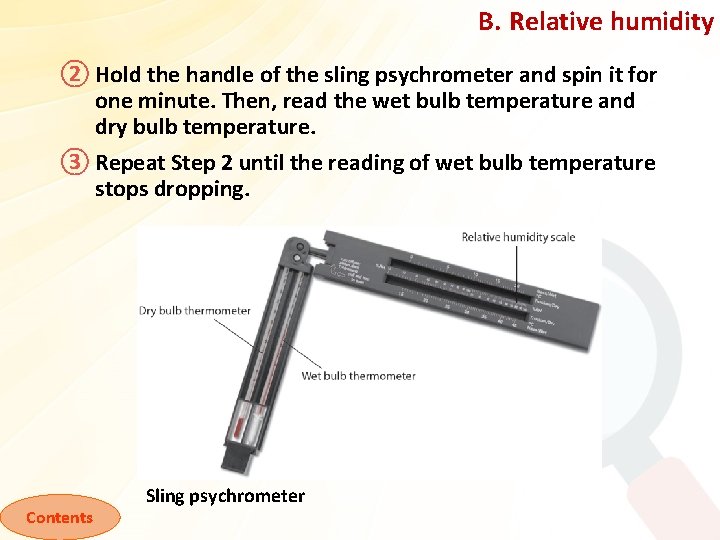
B. Relative humidity ② Hold the handle of the sling psychrometer and spin it for one minute. Then, read the wet bulb temperature and dry bulb temperature. ③ Repeat Step 2 until the reading of wet bulb temperature stops dropping. Contents Sling psychrometer
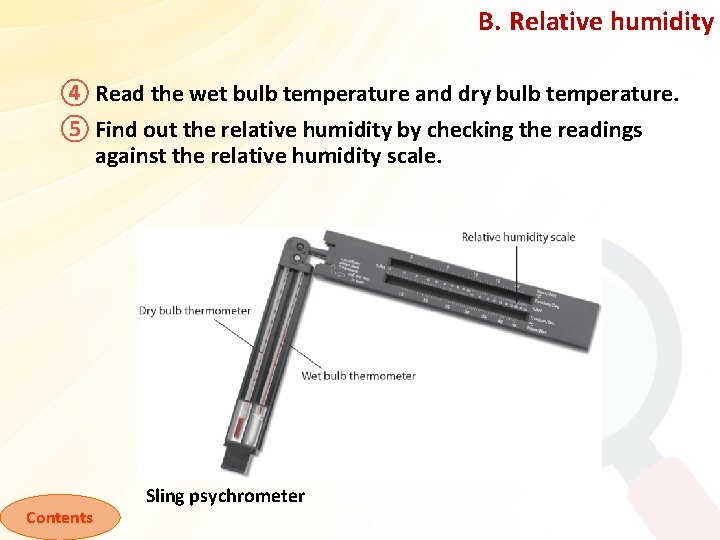
B. Relative humidity ④ Read the wet bulb temperature and dry bulb temperature. ⑤ Find out the relative humidity by checking the readings against the relative humidity scale. Contents Sling psychrometer
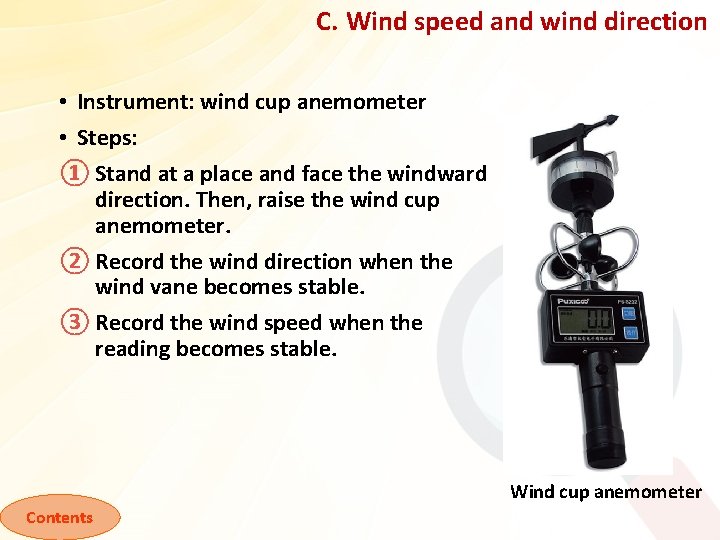
C. Wind speed and wind direction • Instrument: wind cup anemometer • Steps: ① Stand at a place and face the windward direction. Then, raise the wind cup anemometer. ② Record the wind direction when the wind vane becomes stable. ③ Record the wind speed when the reading becomes stable. Wind cup anemometer Contents
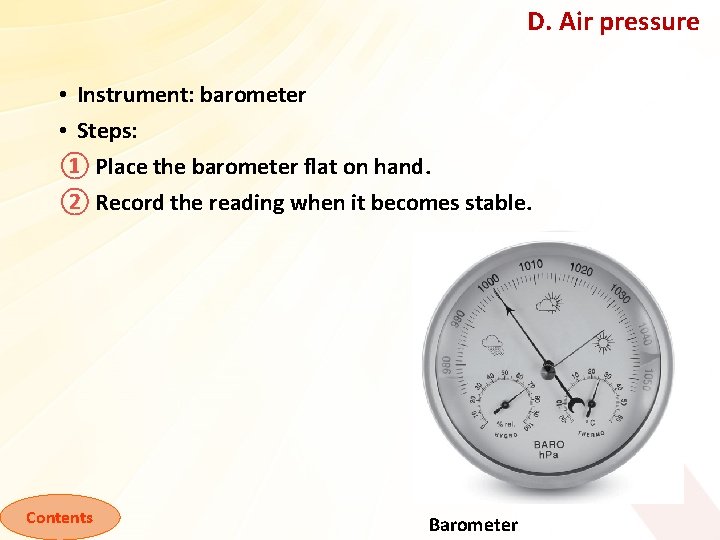
D. Air pressure • Instrument: barometer • Steps: ① Place the barometer flat on hand. ② Record the reading when it becomes stable. Contents Barometer
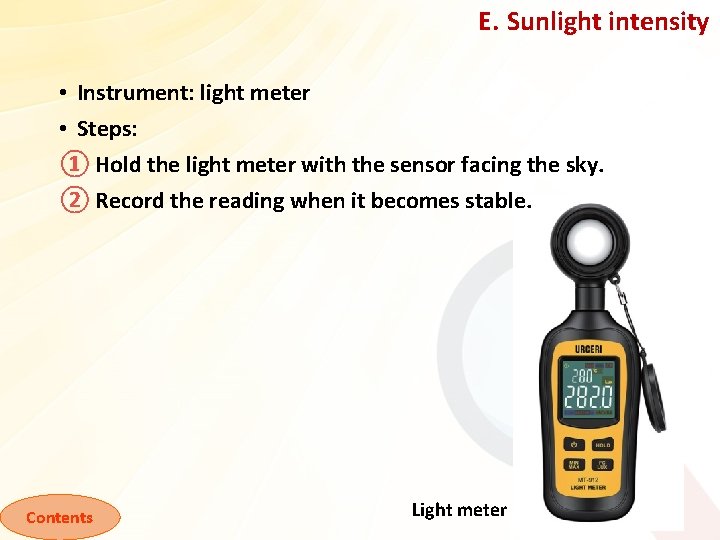
E. Sunlight intensity • Instrument: light meter • Steps: ① Hold the light meter with the sensor facing the sky. ② Record the reading when it becomes stable. Contents Light meter

End
- Slides: 11